Tag: Nivea

  • Shopee announces regional partnership with NIVEA across Southeast Asia

    Shopee announces regional partnership with NIVEA across Southeast Asia

    Shopee, the leading e-commerce platform in Southeast Asia and Taiwan, announced its partnership with global skin care brand, NIVEA across six key markets. Shopee users in Singapore, Malaysia, Thailand, Indonesia, Vietnam and the Philippines can now enjoy convenient access to an array of skin care essentials by NIVEA on the platform. To mark the launch, NIVEA will be holding an opening sale from 10 to 13 May, featuring discounts of up to 55% off all NIVEA products on its Official Store on Shopee.

    The partnership was officiated with a Memorandum of Understanding signing ceremony on 9th May, represented by Chris Feng, Chief Executive Officer of Shopee, and Holger Welters, President Director of Indonesia and Philippine Beiersdorf 

    Feng said, “Our users form the core of all our strategies, and the launch of NIVEA on Shopee is aligned with our commitment to continuously improve our product offerings to cater to the needs of our users. We believe that our partnership with NIVEA will improve our skin care category and help strengthen our positioning as the best e-commerce platform. We are pleased to welcome NIVEA as an official Shopee partner, and look forward to working closely with them to deliver greater choices and cost-savings for users across the region.”

    Based on a study by Statista, the global skin care market has been growing steadily over the years, and is estimated to hit 180 billion U.S. dollars by 2024. At the forefront of this growth is the APAC beauty market which achieved a compound annual growth rate (CAGR) of 6% over the past years, and makes up more than half of the total global beauty sales; demonstrating an increasing demand for beauty products, including skin care, by consumers in the region.

    “E-commerce has continued to gain traction in the region as a result of increasing internet and smartphone penetration. Expanding our business online will provide consumers with convenience and access to NIVEA products, and provide them with value-added services such as different payment and shipping options,” said

    Holger Welters, President Director of Indonesia and Philippine Beiersdorf

    “As a key brand under Beiersdorf, NIVEA’s corporate vision is to be the number one in skin care in all our relevant markets and categories. We believe that our partnership with Shopee as the leading mobile e-commerce platform in Southeast Asia will help us reach more consumers in the region, and provide them with access to the complete range of NIVEA products, as well as exclusive items and promotions. To provide consumers with peace of mind when shopping for NIVEA products online, we recommend our consumers to always purchase from an official online store, such as our NIVEA Official Store on Shopee,” concluded Welters.

    All NIVEA products can be found via the NIVEA Official Store on Shopee Mall. All Shopee Mall products come with 15 days free return, 100% authentic guarantee, and free shipping.

  • Beiersdorf celebrates expansion of its Bangkok production facility with First Stone ceremony

    Beiersdorf celebrates expansion of its Bangkok production facility with First Stone ceremony

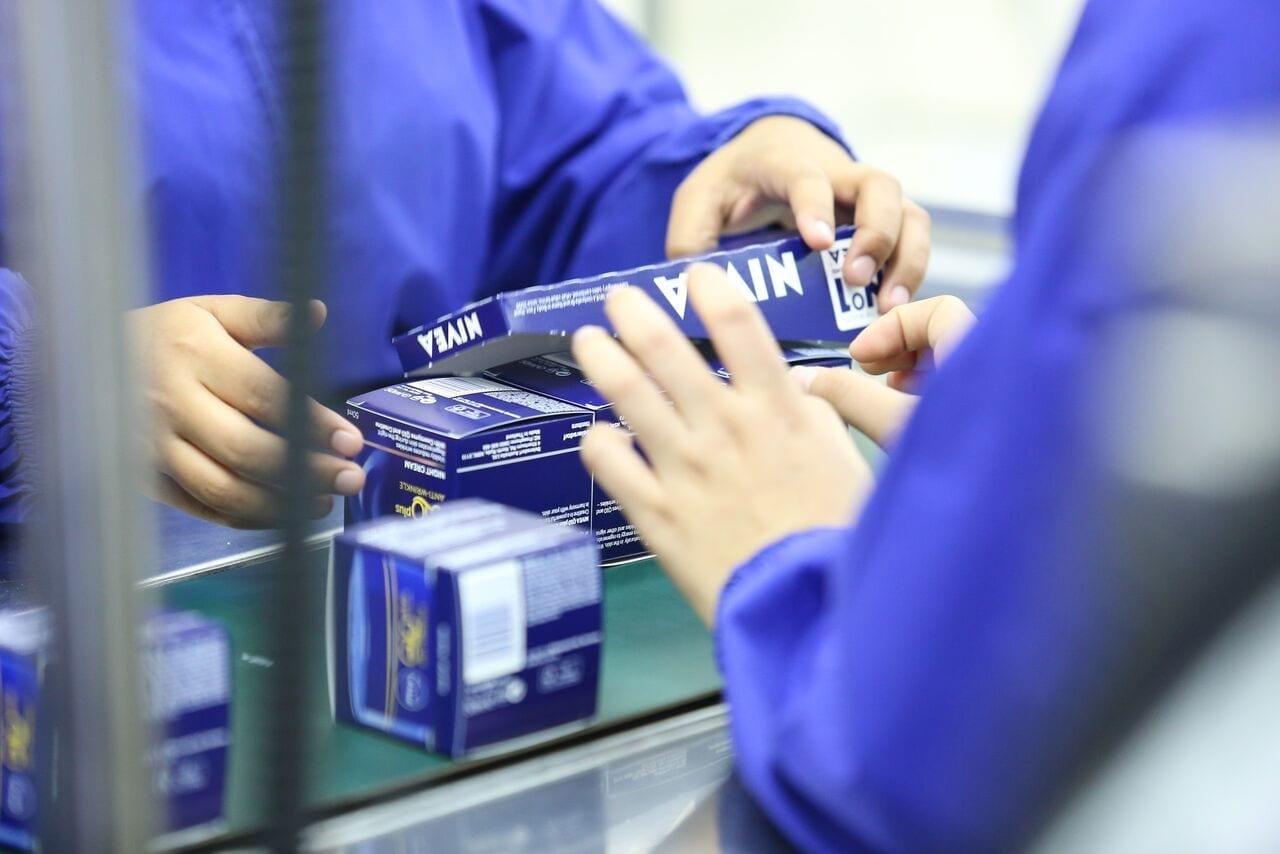
    Beiersdorf, owner of world leading brands such as NIVEA and Eucerin, has begun work on the expansion of its skincare products factory in Bangkok. The group’s industrial unit, located in Bangplee will be an investment of €47.4 million for the company.

    Its offices and production center together employ more than 700 staff and manufacture products for two of its brands, NIVEA and Eucerin, for the Thai market and export to 43 other countries. This expansion is reflective of the continued growth this cosmetics giant has enjoyed within the region.

    Mr. Markus Daburger, Beiersdorf Thailand says: “The Pailin Project is Beiersdorf’s commitment towards doubling production performance in order to support the demand of the region. As a representative of Beiersdorf Thailand, we appreciate the on-going support of the Government and local agencies in our expansion project, which not only sees the production line expand, but also our Beiersdorf family, as up to 200 jobs new will be created in the next years. We are proud to say that the Pailin Project in Thailand is now the second biggest hub of the company after Germany.”

    A key target of the project is to improve the working environment for all employees, with cutting-edge innovation, structured offices, optimized work ergonomics and CE-standard machines as well as a refurbishment of the existing production building. The compounding area will be renewed with four mixers replaced while the factory entrance, canteen, offices and recreation area will all be refurbished, too.

    Efficiency is also a key consideration. Line performance will be improved to see production peak at 240 bottles per minute on a single line. The expansion will include a solar-paneled roof with the capability to produce 500kW of power, and is on target to achieve a gold LEED (Leadership in Energy and Environment Design) certification. The U.S Green Building Council’s prestigious certification serves as a project management tool to achieve more sustainable, high-performance green buildings.

    The expansion, due to house new production lines for Deo Roll-Ons, has a building footprint dimension of 72m x 97m and a construction area of 9,679m2. This vast project is scheduled for completion in the first quarter of 2019 and will begin production of Roll-Ons in the following quarter. The existing building will be refurbished to accommodate Lip Care production which will begin in the middle of 2020.


  • Failed Pepsi, Nivea ads show industry’s diversity problem

    Failed Pepsi, Nivea ads show industry’s diversity problem

    ‘Between Nivea’s ‘white is purity’ ad and Pepsi’s ‘Black soda matters’ ad, I think it’s time to open my ‘Ask a Black person’ consulting firm.’ Recent high-profile advertising missteps by Pepsi and skin-care company Nivea underscored anew Madison Avenue’s awkward relationship with racial diversity at a time when the United States is becoming less white.

    PepsiCo’s ill-fated “Moments” spot, featuring model Kendall Jenner, was quickly pulled with an apology after being vilified for trivializing the “Black Lives Matter” movement.

    Nivea also apologized and withdrew an ad for a deodorant after its “White is Purity” pitch was embraced by white supremacists.

    Social media had a field day with the botched campaigns, which seemed to suggest scant progress from the white male bubble of the 1960s depicted in the popular television series “Mad Men.”

    “Between Nivea’s ‘white is purity’ ad and Pepsi’s ‘Black soda matters’ ad, I think it’s time to open my ‘Ask a Black person’ consulting firm,” comedian Travon Free said on Twitter.

    In fact, data shows a diversity deficit in a sector that both reflects and molds public sentiment.

    Only 4.1 percent of advertising industry employees in the country are African Americans, well below their 13.3 percent of the overall population. Latinos account for 12.3 percent of the industry, compared with 17.6 percent of the population.

    Nearly half of respondents among advertising employees said the industry was “terrible” or “not great” at hiring diverse professionals, with another 25 percent describing it as “mediocre,” according to a survey released last September by the American Association of Advertising Agencies.

    The trade group’s outgoing president Nancy Hill made publicly calling out “racist and misogynistic behavior” her New Years resolution for 2017.

    “I have realized given the current climate in our country and our industry, that doing that privately is tantamount to condoning the behavior,” Hill said in a column on a marketing industry website.

    “Others involved need to know that this industry does not tolerate this kind of thinking and its resulting behavior any longer.”

    Some major advertisers, such as Verizon, General Mills and Hewlett-Packard have threatened to fire firms that aren’t diverse enough.

    Pepsi misfires

    The demise of the Pepsi spot has especially provoked intense discussion throughout the industry. The company is led by Indian-born chief executive Indra Nooyi, a vocal proponent of diversity.

    A poll showed 40 percent on respondents blamed the debacle on lack of diversity or diversity of thought, while 25 percent said it reflected an overzealous approach to attracting millennials and 13 percent blaming the fact that it was made by Pepsi’s in-house creative team and did not involve an outside firm.

    The spot follows Jenner as she is stirred from a fashion shoot by a handsome Asian cellist to join an unspecified but peaceful street protest with people of all ethnicities, including African American street dancers.

    The two-and-a-half minute short film culminates with Jenner handing a Pepsi to a handsome grinning police officer, a move that draws wild applause from the crowd, including from a hijab-wearing photographer who nods in agreement as she records the moment.

    The spot spurred instant ridicule, most witheringly from Bernice King, who posted a picture of her father, Martin Luther King, being apprehended at a civil rights march by police.

    “If only Daddy would have known about the power of #Pepsi,” King wrote on Twitter.

    History repeating?

    Kelly O’Keefe, a professor of brand strategy at Virginia Commonwealth University, said the spot was shockingly heavyhanded in its constant hawking of cola.

    It reflected a “cloistered view of the world and distorted view of diversity,” he said, adding that the spot has dominated discussion in class this week.

    Jake Beniflah, executive director of the Center for Multicultural Science, thought the ad was a spoof when he first saw it because of the omnipresence of the product and in its creation of “utopian” world where every race is shown.

    “Perhaps they thought diversity on camera was enough, but obviously it wasn’t,” Beniflah said. “In fact, it backfired.”

    For Judy Davis, a marketing professor at Eastern Michigan University, the controversy stirred memories of Barbara Gardner Proctor, one of the women she profiled in her book, “Pioneering African American Women in the Advertising Business: Biographies of MAD Black WOMEN.”

    Proctor was fired in the 1960s from a large firm when she refused to work on a campaign that showed black women clamoring in the street for a hair product. The ad was a tasteless allusion to the civil rights movement, she said.

    “It was the same kind of trivialization of a serious social movement and taking that to promote some brand,” Davis said.

    “You would think in 2017 things would be different. But here we are seeing some of the same problems that were present 50 years ago, and I think that’s pretty amazing.”

  • How big brands can make online marketplaces work

    How big brands can make online marketplaces work

    Online marketplaces, those giant shopping sites like eBay and Amazon Marketplace, can be a mixed blessing for brands and merchants.

    Marketplaces offer retailers broad exposure to millions of consumers, as well as delivery, payment and other solutions. Still, most marketplaces leave merchants wanting in one very important aspect: brand control. While the platforms provide virtual shelf space for listing products, merchants are generally limited to one-size-fits-all templates for their online storefronts—thus restricting their ability to set themselves apart from rivals with brand-building presentations and content.

    Not all marketplaces are created equal, however. In China, where marketplaces are overwhelmingly favored by online shoppers, e-commerce leader Alibaba Group has been returning branding power to merchants through the company’s Tmall.com B2C marketplace.

    Tmall, which positions itself as China’s top online destination for domestic and foreign branded merchandise, has developed a suite of tools that allows merchants to customize their Tmall.com storefronts with the logos, fonts and colors for which they’re known the world over, as well as with videos, interactive features and other content. Moreover, merchants can combine these tools with Alibaba’s trove of data on shopping behavior to tailor their storefronts to individual consumers visiting their e-shops at any given moment.

    This approach gives merchants far more than a place on the internet to list and sell products. It offers them the ability to present their brands as effectively as they do on their company-run websites, boosting their opportunity to reach consumers among Alibaba’s 400-million-plus active buyers and build lasting customer relationships. Merchants “have total control,” said Paul Fu, the San Mateo, California-based head of Alibaba’s User Experience Design team.

    This is a significant departure from the “one webpage to serve them all” marketplace model. Tmall offers as many as 55,000 different storefront templates across about 30 different business sectors for merchants to choose from. Another 3,000 templates exist for product pages, and there are a thousand designs for marketing material such as e-mails and SMS alerts, according to Fu. If these packaged solutions don’t satisfy certain merchants, they can design their own right down to the page breaks and <p> tags, and then upload the code to Tmall.

    Major international brands have used this enhanced flexibility to build unique and engaging Tmall storefronts. For example, GoPro, the U.S.-based maker of wearable video cameras, produced a series of videos that appear on its storefront showing GoPro cameras being used in extreme situations, such as geologists staring into the mouth of a volcano or snowboarders doing double backflips as they race down a mountain.

    The Tmall storefronts of other household names such as Starbucks, L’Oreal, Maserati and Zara also offer fully branded experiences that experiences that mirror the look and feel of their corporate e-commerce sites, including multipage navigation according to product category and even full brand histories. Still others take the experience a step further in an attempt to boost the time consumers spend on their pages. Case in point: L’Oreal in the past has given consumers easy-to-follow guides and tips for using its beauty products.

    L’Oreal engaged consumers with hair-coloring tips posted on the company’s Tmall storefront.

    Fu says that Tmall storefronts are based on so-called “responsive” design, which means they look as good on mobile devices as they do on the web. But customization options for Tmall storefronts go even deeper.

    Using consumer data collected by Tmall, merchants can present not just personalized product recommendations based on shopping history to storefront visitors, they can also offer different homepages tailored to particular types of shoppers. For example, German personal-care brand Nivea displays three different storefronts on Tmall depending on whether a shopper is a first-time visitor, new buyer or loyal fan. First-time visitors are shown low-cost products that may tempt them to experiment with the brand. Fans, meanwhile, see sets of higher-value products bundled together as a way to boost their total purchase.

    Three different customers, three different mobile presentations. First-time visitors, new buyers and loyal fans all see products tailored specifically to them when they visit Nivea’s Tmall site.

    By making it possible for merchants to tag and manage their customers by attributes and personalize storefronts for each visitor, individual customers are exposed to highly relevant content, which drives higher conversion rates. Fu said after Nivea implemented personalized storefronts, “the data showed that the browsing conversion rate was improved by 70 percent and transactions increased by 150 percent—more than double the previous number of purchases,” he said. Browsing conversion is the rate at which shoppers click through to find out more about a product.

    Fu says Alibaba analyzes buyers based on five different behaviors: attention, interest, decision, action and sharing, all of which are part of the Tmall shopping cycle. A certain product may draw the attention of a shopper, which prompts him or her to click through to the seller’s store where they can learn more about the item. Then they decide whether or not to bookmark it or add it to their shopping cart; a purchase constitutes action. Sharing comes after, once a consumer tells a friend about their purchase or leaves a review on a merchant’s Tmall store.

    “We provide this capability for the seller to do these kinds of very sophisticated analyses,” Fu said. “Later, because we opened up this technology and data [to merchants], the seller can come up with their own model to do the analysis.”

    Still more tools are to come. Merchants currently log into a content-management system of sorts that lets them set up and manage their storefronts, including text, photos and slide show placement. They can also choose the products they want displayed as recommendations when a shopper is viewing, say, hand cream or razors or a sweater. Up next is a tool that will allow merchants to create banner advertisements on the fly, rather than turning to a designer to handle what is often a time-consuming task. That’s expected this quarter.

    Tmall also helps merchants synch their online stores with their bricks-and-mortar outlets. Fu said the goal is to make sure all points of sale are linked up, including mobile, desktop and offline. One key advantage for merchants to this so-called “omnichannel” approach is the ability to manage inventory across physical and virtual sales channels. Another is the ability to know a buyer’s location so that the nearest warehouse is used for shipping, which speeds up delivery.

    “All areas of the ecosystem are working together for merchants,” Fu said. “Before they had to figure this out on their own. But now we’ve come up with a system, and built the right tools to help them.”

    * Originally published by Alizila.com – the independent, but Alibaba Group-funded website of news about the Chinese eCommerce giant.