
Tag: noida

  • Zepto Delivers 14,000 Gold and Silver Coins an Hour in Festive Shift

    Zepto Delivers 14,000 Gold and Silver Coins an Hour in Festive Shift

    Indian quick-commerce platform Zepto delivered more than 14,000 gold and silver coins per hour at peak demand during Dhanteras, signalling a rapid move away from traditional physical markets.

    Co-founder and chief executive Aadit Palicha revealed that purchases reached nearly 298 precious metal coins in a single minute, demonstrating how instant logistics networks are capturing high-ticket holiday retail alongside everyday staples.

    Competitor Swiggy Instamart witnessed a parallel surge in consumer spending throughout the festive week, logging a 23-fold increase in gold coin orders and a sevenfold increase in silver purchases ahead of Dhanteras.

    Surging Volumes Across Traditional festive Goods

    The rush extended far beyond precious metals into household items tied to Hindu festive rituals. Broom sales climbed 38.6 times compared to an ordinary day, while steel utensil orders rose 20 times and decorative light volumes multiplied by 18.2 times.

    Shoppers also turned to instant delivery for ritual accessories and apparel. Zepto moved roughly 6,000 units of rangoli colours and cotton wicks per hour during peak windows, while men’s kurta orders increased 5.4 times.

    Rival Platforms See High-Ticket Dhanteras Orders

    Rival operator Swiggy Instamart recorded a parallel spike in consumer spending during the festive week. Orders for gold coins surged 23 times in the seven days leading up to Dhanteras, while silver coin transactions expanded sevenfold.

    Basket values reflected immense consumer trust in delivery riders carrying high-ticket goods across Indian metros. One customer spent Rs 1.73 lakh on gold coins in a single checkout, while a shopper in Noida completed nine separate orders totalling nearly Rs 5 lakh.

    Instant Delivery Rewires Indian Festive Commerce

    For neighborhood jewellers and bazaar merchants, the Dhanteras numbers point to an immediate structural challenge. Indian families traditionally visited neighborhood jewellery stores to examine hallmarked coins and purchase brass or steel kitchenware in person, treating the outing as an essential holiday ritual.

    Dark store networks have broken that habit by delivering physical commodities to doorsteps in ten minutes flat. Quick commerce operators now hold high-value inventory in temperature-controlled suburban micro-warehouses, bypassing traditional showroom overheads while offering rapid doorstep fulfilment.

    Dark Store Economics Expand Beyond Groceries

    Grocery orders historically gave quick commerce operators low gross margins, forcing platforms to search for higher-margin merchandise to offset courier fuel and warehouse labour. Precious metals, fashion apparel, and kitchen appliances generate higher basket values that improve order economics instantly.

    The logistical risk shifts squarely to shrink control and rider security. Couriers transporting lakhs worth of bullion through crowded holiday traffic create distinct operational liabilities that ordinary milk and snack deliveries never presented.

    The Trajectory of Ultrafast Retail Diversification

    The pivot into seasonal bullion follows months of aggressive category expansion by quick commerce operators like Zepto and Swiggy Instamart. Platforms initially tested electronics, beauty, and small home appliances before attempting high-security precious metals.

    As platforms compile final order volumes from the broader Diwali shopping window, the key metric remains return rates and inventory turnover across non-grocery categories as dark store operators prepare their merchandise mix for the upcoming wedding season.
  • World’s first digital mall launched in India by Digital Mall of Asia

    World’s first digital mall launched in India by Digital Mall of Asia

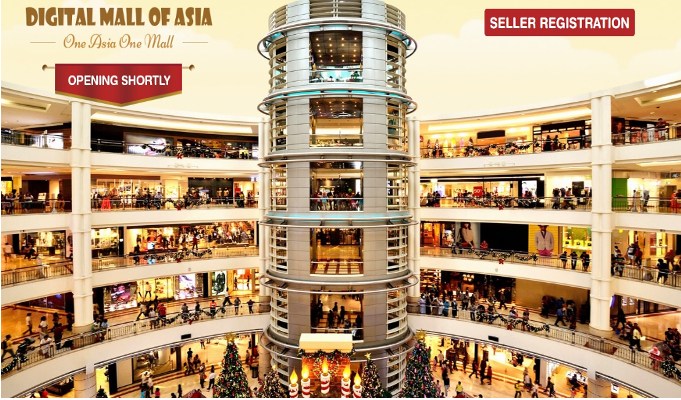
    In a revolutionary development that could potentially redefine the global retail and e-commerce industries, Digital Mall of Asia (DMA), a first-of-its-kind digital e-commerce platform merging the real estate and the digital spaces, has announced the launch of its Noida mall. The launch took place at the company’s registered office in the Film City, Noida, setting an unprecedented example of how online portals and brick-and-mortar retailers can transcend the digital-physical divide to optimize their consumer outreach and revenue generation.

    An initiative by Yokeasia Malls Pvt. Ltd., DMA is a disruptive innovation by an Indian organization recreating the experience of a physical mall in the digital space. In an industry where most of the key names are being run or backed by foreign players, this unique and disruptively innovative initiative by Yokeasia Malls has the potential to put the novelties of Digital India on the world map.

    The Need

    The launch of DMA Noida addresses the challenges that retailers often face and empowers them to maximize their business footprint with innovative digital offerings and an unmatched value proposition. DMA operates on a zero commission model; retailers at DMA don’t have to pay anything apart from the rent, a major revolution in a space where all the major E-commerce players charge somewhere between 5-35 percent of the revenue. Moreover, the organization will provide an immediate settlement of all payments received, ensuring complete transparency and reliability. It is also working towards completely eradicating the issue of the sale of counterfeit or fake merchandise. These unique features, apart from its focus on digital innovation, makes DMA a powerful and pioneering presence in the e-commerce space, both in India and on a global level.

    The Solution

    Going beyond the concept of a typical e-commerce portal, DMA’s Noida mall will have 11 towers with 10 floors each, adding up to a total of more than 5,000 shops and an available inventory currently worth approximately Rs 500 crore. The mall will incorporate visual and sensory elements to offer an immersive, stimulating environment and will have dedicated towers for different categories such as men, women, kids, electronics, home and kitchen, education, financial services, food court, hypermarket, digiplex, and online nightclub. Fundamentally, DMA Noida has all the elements that make up a physical mall, albeit virtually.

    The Value Addition

    By creating a new ‘digital asset’ class providing attractive returns, DMA also envisions to transform the general perception towards the term ‘investment’ while ensuring security, profit, and convenience for investors. The shops in the Noida mall are available for both sale (to investors) and rental (to retailers), whereas the shops in the rest of the 20 cities are available only to rent at present.

    Commenting on the launch and the idea behind, Rishabh Mehra, Managing Director and CEO – Digital Mall of Asia, remarked, “We, at Digital Mall of Asia, are beyond ecstatic to launch our Noida mall and we are certain of its potential to bring about a revolution in the digital and retail space worldwide. This project is aimed at serving many purposes, from an industry-wide transformation to retailer empowerment through our zero-commission model. But most importantly, DMA is our effort against data colonization. I wholeheartedly agree with Mr Mukesh Ambani’s stance on how India’s data must be owned by Indians, and not controlled by global corporations. In this era of data-driven revolution, we hope that DMA’s disruptive innovation sets an example for our contemporaries to follow through and bring the ownership of Indian data back to where it belongs – in our own hands.”

    The launch in Noida also marks DMA’s first step towards a pan-India launch in 20 cities including New Delhi, Mumbai, Bengaluru, Pune, Chandigarh, Jaipur, Lucknow, Coimbatore etc. After a pan-India expansion, DMA plans to expand its operations across the Asian market and has already begun the process of seller registration in China, Japan, South Korea, Malaysia, Thailand, Indonesia, and Singapore.