Tag: nongfu spring

  • Nongfu Spring Brand Value Surges 38% to US$15.3 Billion

    Nongfu Spring Brand Value Surges 38% to US$15.3 Billion

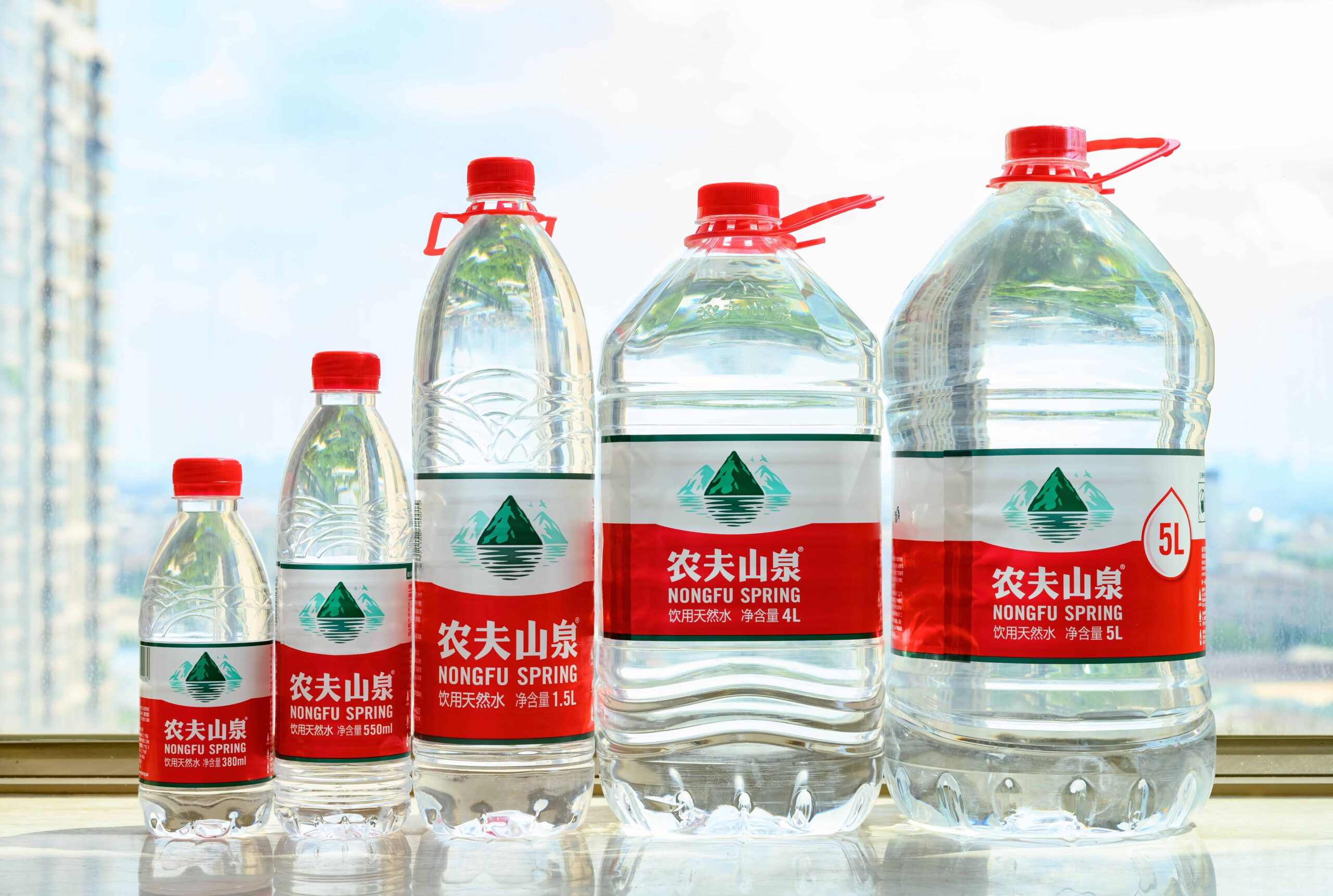
    China’s Nongfu Spring expanded its brand value by 38 per cent to US$15.3bn in 2026, according to the Top 50 Non-Alcoholic Drinks report released this week by Brand Finance.

    The domestic drinks producer added US$4.24bn in value over the past year while US rival Pepsi shed US$5.74bn, falling to US$16.8bn from US$22.5bn in 2025.

    Coca-Cola held onto the top spot at US$46.1bn despite a US$243mn decline from its 2025 valuation. Nongfu Spring climbed from US$11.1bn in 2025, driven by strong demand across bottled water, ready-to-drink tea, and no-sugar drinks.

    Beyond absolute dollar value, the Chinese bottler surpassed Coca-Cola on underlying brand health metrics. Nongfu Spring recorded a Brand Strength Index score of 89.8 out of 100, earning an AAA+ rating. It stands as the only brand among the world’s top ten non-alcoholic beverage makers to retain that top-tier grade. Coca-Cola slipped from AAA+ to AAA, while Pepsi fell from AAA to AAA-.

    Eastroc Enters the Global Top Ten

    China’s presence among global beverage leaders widened further down the table. Eastroc claimed the tenth position globally with a brand value of US$4.99bn and an AAA brand rating.

    The functional drinks specialist lifted its valuation by 62 per cent from US$3.08bn in 2025. That jump followed a deliberate shift away from pure energy drink production into broader hydration categories, backed by export shipments into Southeast Asia, the Middle East, and the United States. Eastroc lifted its Brand Strength Index score to 85.4, up from 82.8 last year.

    Beyond its financial performance, Nongfu Spring has also overtaken Coca-Cola in terms of brand strength to become the strongest non-alcoholic drink brand in 2026, securing an impressive 89.8/100 BSI score.

    Western Incumbents Yield Ground in Asia

    The reordering reflects a structural operational challenge for Western soda giants across Asian retail shelves. For two decades, multinational conglomerates held distribution dominance by trading on universal brand recognition and bottling partnerships. Domestic Asian operators now build distribution routes that are faster and cheaper to run, leaning directly into consumer flight from high-sugar carbonated drinks.

    Retail buyers in primary Asian markets allocate refrigerator shelf space based on inventory turns. Unsweetened ready-to-drink teas and domestic electrolyte waters turn over faster than imported colas in modern trade. That shift pressures margin structures for Coca-Cola and PepsiCo bottlers, who face defensive price discounting to protect volume share against domestic rivals carrying lower production overheads.

    Shifting Consumer Formulations

    The valuation divergence deepens an earlier divide visible in 2025 trading results. While Coca-Cola preserved stability through its Zero Sugar product line, Pepsi absorbed volume contractions across multiple emerging territories as cost-conscious shoppers traded down to local alternatives.

    Nongfu Spring founder Zhong Shanshan countered price wars in mainland China by pairing basic hydration items with higher-margin functional teas. The strategy allowed the producer to absorb retail price deflation while pulling revenue growth out of adjacent categories. Competitor Eastroc mirrored this approach, using electrolyte formulations to establish quick traction in convenience chains across Southeast Asia.

    The test for Asian beverage operators shifts to their overseas balance sheets. Eastroc faces rising marketing costs as it scales shelf distribution in North American and Middle Eastern retail stores, where local listing fees squeeze working capital. Nongfu Spring must protect its mainland operating margins against retail price discounting as competitors prepare their upcoming summer product runs.

  • Zhang Yiming Tops China Wealth List with Nearly $100 Billion Fortune

    Zhang Yiming Tops China Wealth List with Nearly $100 Billion Fortune

    ByteDance founder Zhang Yiming has regained the top spot on China’s wealth ranking with a fortune of nearly US$100 billion, driven by artificial intelligence deployment across his consumer technology empire.

    His net worth surged 43 percent over the past year, displacing bottled water magnate Zhong Shanshan after consumer goods company Nongfu Spring saw its founder’s valuation drop 23 percent to $61 billion.

    The annual Hurun China Rich List, published Tuesday by the Shanghai-based Hurun Research Institute, tracked 1,529 individuals holding fortunes above 5 billion yuan ($750 million) as of Sept. 1. Mainland real estate operators dropped entirely out of the top 100 ranks, completing a decadelong transformation in the engines driving Chinese capital.

    Artificial Intelligence Reshapes Top Ranks

    About 160 individuals on the roster, roughly 10 percent of the total cohort, generated their primary wealth through artificial intelligence applications and foundational hardware. ByteDance accelerated that momentum through consumer-facing tools, deploying the Doubao chatbot into China’s most active automated assistant alongside video-generation software Seedance.

    Newer entrants took immediate command of the top ten. DeepSeek founder Liang Wenfeng, 41, entered the ranking at seventh position with $41.7 billion. Chen Tianshi of semiconductor designer Cambricon Technologies broke into the top 10 for the first time with $30.5 billion, climbing 14 percent.

    Both men now share the distinction of being the youngest self-made entrepreneurs inside the top tier. Zhang, 43, previously held that position.

    Consumer Tech and Hardware Displace Real Estate

    Traditional manufacturing and tech heavyweights shuffled positions behind the top two. Contemporary Amperex Technology founder Robin Zeng Yuqun took third place at $57.3 billion, advancing 17 percent as energy storage demand expanded. Tencent founder Pony Ma Huateng slipped to fourth after his holdings dropped 26 percent to $51.5 billion.

    Appliance manufacturer Midea lifted co-founder He Xiangjian into fifth place. He displaced Xiaomi founder Lei Jun, whose personal valuation dropped by roughly half following market volatility across consumer device lines.

    Hurun Report chairman and chief researcher Rupert Hoogewerf documented the disappearance of residential real estate developers, who accounted for one-third of the top 100 a decade ago. Mainland property names vacated the elite threshold, leaving traditional landlord representation almost solely to established Hong Kong dynasties.

    Today, for the first time ever, not a single mainland property developer remains in the Top 100, the only property names left at the top are the Hong Kong landlord families

    Shifting Capital for Retail and Commercial Operators

    For Asian retail brands and commercial operators, the complete exit of mainland developers marks an irreversible shift in balance-sheet power. Shopping mall construction and commercial master leases across top-tier Chinese cities no longer lean on aggressive land-banking syndicates. Capital flows instead follow software ecosystems, high-efficiency appliances, and hardware components.

    Retail brands across Asia-Pacific face direct exposure to this realigned influence. ByteDance, Tencent, and hardware players dictate consumer acquisition costs and social commerce funnels, leaving commercial landlords with diminishing use over brand tenants. Commercial real estate in Greater China now answers to digital platform power rather than physical site scarcity.

    Hong Kong real estate magnate Li Ka Shing, 98, alongside his son Victor Li Tzar-kuoi, retained a presence in the upper tier with $37.6 billion, up 8 percent. Their persistence reflects mature, diversified infrastructure holding models that survived the residential developer debt unraveling on the mainland.

    The Long Unwind of Property Fortunes

    The transition began after regulatory tightening dismantled debt-fueled expansion strategies among mainland developers. Wealth figures tumbled over multiple assessment cycles, dragging property founders off the boards as credit channels dried up and homebuyer transactions slumped.

    Zhang last held the top position in 2024 before brief market contractions reordered the roster. ByteDance expanded its global digital commerce revenue alongside domestic video and messaging traffic throughout the intervening period, shielding its equity value from regional property fallout.

    Commercial landlords and retail chains will watch ByteDance’s commercial monetization pacing across Doubao and enterprise AI tools in the coming quarters, alongside Nongfu Spring’s ability to protect core beverage shelf pricing against domestic discounters.