Tag: norway

  • Li Auto Delays European Debut to First Quarter 2027 with Norway and Netherlands Rollout

    Li Auto Delays European Debut to First Quarter 2027 with Norway and Netherlands Rollout

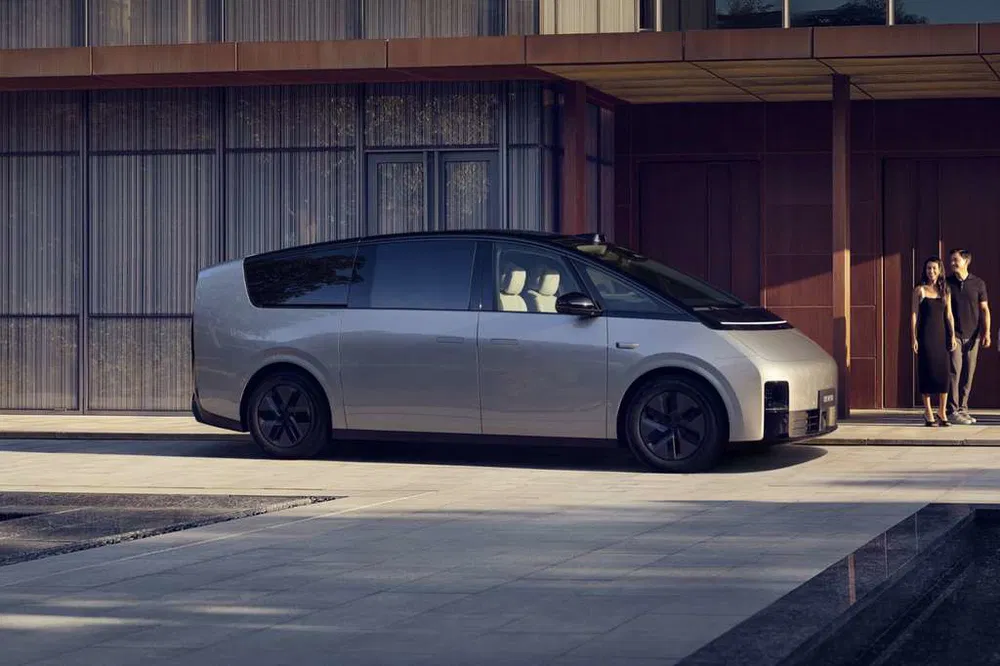
    Li Auto pushed its European market debut to the first quarter of 2027 on Monday. The company revealed the battery-electric Li 6 SUV in Paris ahead of initial sales in Norway and the Netherlands.

    That timeline delays European showroom arrivals from late 2026. Management previously gave a fourth-quarter 2026 target during an August earnings call.

    Benjamin Baum, senior exterior design director at Li Auto, presented the vehicle on October 12 during the opening day of the Paris Motor Show. Known as the i6 in China, the export model carries the shorter Li 6 badge for European buyers. Deliveries will focus first on Norway and the Netherlands before expanding across other European markets. Localized versions of the brand’s extended-range hybrid models will arrive at an unannounced date.

    European Target Selection and Vehicle Architecture

    Norway and the Netherlands serve as proving grounds for Chinese electric carmakers entering Europe. Both countries offer dense charging networks and high EV adoption rates. Li Auto chose pure electric drivetrains for Western Europe while prioritizing extended-range hybrids in Central Asia and the Middle East to match local charging infrastructure. In July, it introduced the L9 extended-range SUV in Kazakhstan and Uzbekistan. That rollout drew technical support from an engineering center established in Munich in January 2025.

    Engineers built the European specification to meet Euro NCAP five-star crash test standards. Formal safety assessments will follow once local market deliveries begin. Under the floor sits a 96 kilowatt-hour fast-charging battery pack. It delivers an operating range of up to 780 kilometers under China Light-Duty Test Cycle standards. Li Auto designs the battery cells internally and outsources cell fabrication to suppliers CALB and Sunwoda, though it builds the completed packs in-house.

    Domestic Pressure Drives Overseas Export Push

    Selling abroad has become a commercial necessity for Chinese carmakers facing brutal price competition and slowing domestic volume growth. Li Auto delivered 31,817 vehicles in September. That was a 6.29 per cent drop from the same month last year and a 15.56 per cent slide from August. Total deliveries across the first nine months of the year reached 293,436 units, down 1.25 per cent compared to the identical period in 2025.

    Rivals like Nio and Xpeng have already built retail distribution channels across Northern Europe. They found that building brand recognition is expensive and sales accumulate slowly. Li Auto must now set up physical showrooms, service centers, and software localization across multiple languages while fighting established European premium marques. CEO Li Xiang stated on Weibo that the company will adapt to local conditions and enter when ready. He pointed to compact vehicle dimensions suited to European urban street layouts.

    Model Refresh Precedes Export Program

    In China, the i6 remains Li Auto’s primary volume driver. Cumulative domestic sales have exceeded 190,000 units since its debut. In August alone, the vehicle accounted for 16,979 deliveries, representing roughly 45 per cent of the manufacturer’s total monthly output. Order books for the initial model generation closed on September 11 to clear assembly lines for an updated 2026 edition.

    Dealerships across China began displaying static models of the refreshed 2026 i6 at 485 locations on October 11. The updated variant adds adaptive beam matrix headlights and twin 150-degree reclining zero-gravity front seats. It also includes a 29-inch panoramic front display, Li Auto’s proprietary Mach M100 driving assistance processor, and Qualcomm Snapdragon silicon.

    Customer test drives and official retail sales for the 2026 i6 begin across China on October 28. Initial customer handovers follow in early November ahead of planned European export shipments.

  • Marine Harvest to open 2000 salmon restaurants in China

    Marine Harvest to open 2000 salmon restaurants in China

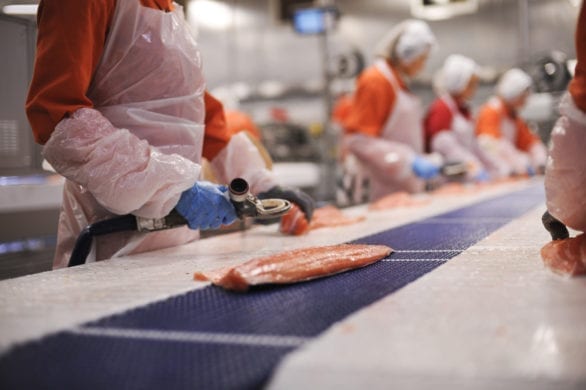
    Salmon farmer Marine Harvest is currently developing its brand Supreme Salmon in Taiwan, working with local top chefs and promoting on social media, the firm’s CEO, Alf-Helge Aarskog, said at the North Atlantic Seafood forum last week.

    At present, yearly salmon consumption per capita in China averages only 0.1 kilogram, compared with 1.3kg in the US and 3.1kg in France. The figure that indicates the large growth potential for demand on that market, Aarskog noted.

    Marine Harvest aims to implement a franchise concept for its Supreme Salmon restaurants in Taiwan, Hong Kong and mainland China.

    By 2025, the firm is planning to open 2,000 restaurants there, selling 40,000 metric tons of head-on, gutted (HOG) Atlantic salmon and generating a turnover of $2 billion, Aarskog said.

    Marine Harvest believes the chain — which serves dishes such as salmon gyoza, salmon risotto and salmon fried rice — will help expand demand for the farmed fish among the country’s growing middle class.

    Salmon consumption in China tends to be limited to hotels and upmarket restaurants, and the company is hoping that availability through its restaurants as well as products sold under the same brand in retail outlets will make the fish more accessible to ordinary consumers.

    “Our market research shows that Chinese consumers are looking at salmon as high end, tasty, modern and healthy. However they do not know much about the product and they want more variety in how to eat and prepare it,” said Ola Brattvoll, chief operating officer of Marine Harvest’s sales and marketing unit.

    Marine Harvest also plans to roll out a fast-moving consumer goods model in retail across Taiwan, Hong Kong and mainland China.

    Supreme Salmon retail sales are expected to rise to 20,000t of HOG salmon, with a turnover of $600m by 2025, Aarskog said.

    In 2013, Marine Harvest launched the Supreme Salmon concept in Taiwan, following a period of in-depth pan-Asian research on consumer habits.

  • Indonesia, Norway to expand energy cooperation

    Indonesia, Norway to expand energy cooperation

    Indonesia and Norway have agreed to expand energy cooperation and business-to-business contacts in various sectors of energy development.

    The agreement was reached during an Indonesia-Norway bilateral energy meeting in Stavanger recently, according to Hartyo Harkomoyo, spokesman of the Indonesian Embassy in Oslo.

    Harkomoyo quoted Norwegian Oil and Energy Deputy Minister Ingvil Smines Tybring-Gjedde as saying at the meeting that the country was keen to share its expertise and experiences with Indonesia for the development of the energy sector.

    In response to the statement of the Norwegian oil and energy deputy minister, Energy and Natural Resources Ministrys director for oil and gas development program Agus Cahyono Adi, who led the Indonesian delegation at the meeting, noted that Indonesia was ready to host the Indonesia-Norway energy dialog in March 2017.

    Adi remarked that during the energy dialog, the two countries will discuss governance and regulation in oil and gas exploration, the use of Carbon Capture Storage technology and enhanced oil recovery to revive old wells, and the development of new and renewable energy, among others.

    In the meantime, Indonesian Ambassador to Norway Yuwono A. Putranto said energy is one of the key areas of cooperation in the partnership between Indonesia and Norway.

    In order to focus on the partnership, Indonesia and Norway have agreed on the mechanism to hold regular meetings through dialog in the energy sector every two years.