Retail News CRM

Tag: ntt

  • NTT DOCOMO GLOBAL & Accenture Pioneer Universal Wallet Infrastructure: A Leap Forward in Digital Trust Services

    NTT DOCOMO GLOBAL & Accenture Pioneer Universal Wallet Infrastructure: A Leap Forward in Digital Trust Services

    NTT DOCOMO GLOBAL and Accenture, two major players in the global tech industry, have recently entered into a partnership to create and grow a Universal Wallet Infrastructure (UWI) platform. This platform is designed to bolster digital trust services across diverse sectors, governments, and geographical locations.

    The infrastructure being developed by NTT DOCOMO GLOBAL and Accenture will permit organizations to issue, verify, and manage digital credentials and tokens associated with identity, payment, assets, and documents. A key focus of the platform is interoperability and compliance, ensuring secure data transfer while adhering to user consent and regulatory norms.

    As businesses and public institutions are under increasing pressure to safely handle data in progressively digital and AI-centric environments, demands for transparency and control over personal data usage are also rising among individuals. By integrating decentralized technologies with current enterprise systems, UWI seeks to address these issues, reducing dependence on centralized data structures.

    Establishing a Trustworthy Digital Environment

    The platform is designed to foster secure, real-time data sharing between organizations, while also facilitating AI-powered services at the network edge. Through enabling users to regulate access to their data, UWI aims to bolster trust and provide organizations with access to consent-based, verifiable information to support their operations, innovation, and customer services.

    Several potential applications of the UWI platform have been identified, encompassing government services aiming to decrease fraud and administrative burdens, employers managing recruitment and workforce mobility processes, and travel and transportation systems seeking to simplify identity verification across borders and service providers.

    Leadership Commentary

    Hiroki Kuriyama, President and CEO of NTT DOCOMO GLOBAL, spoke enthusiastically about the partnership, stating that it would speed up the global implementation of UWI, creating a new basis for digital trust worldwide. He also emphasized the growing importance of effective digital IDs and electronic credentials across national borders, highlighting the platform’s objectives of providing verifiable authentication and innovative trust models on a global scale.

    Atsushi Egawa, Chairman of Accenture, Japan, and co-CEO, Asia-Pacific, Accenture, also expressed optimism about the collaboration. He highlighted the synergies created by combining Accenture’s deep expertise in technology strategy, data, and AI with NTT DOCOMO GLOBAL’s well-established strengths in network infrastructure operations and advanced internet technologies. He believes this collaboration will pave the way for new AI-powered experiences that revolutionize how businesses and customers connect.

    Questions & Answers

    What is the main aim of the Universal Wallet Infrastructure platform?

    The platform aims to establish a secure and reliable digital trust environment, allowing organizations to issue, verify, and manage digital credentials related to identity, payments, assets, and documents.

    How will the UWI platform benefit its users?

    UWI will allow users to control access to their data, thereby increasing trust while providing organizations access to consent-based, reliable information to support their operations, innovation, and customer services.

    What potential applications does the UWI platform have?

    The platform can be utilized in numerous ways, such as reducing fraud in government services, streamlining recruitment and workforce mobility processes for employers, and simplifying identity verification in travel and transportation systems across borders and service providers.

  • NTT and Broadcom Team Up to Revolutionize Data Centers with Energy-Efficient Optical Chips

    NTT and Broadcom Team Up to Revolutionize Data Centers with Energy-Efficient Optical Chips

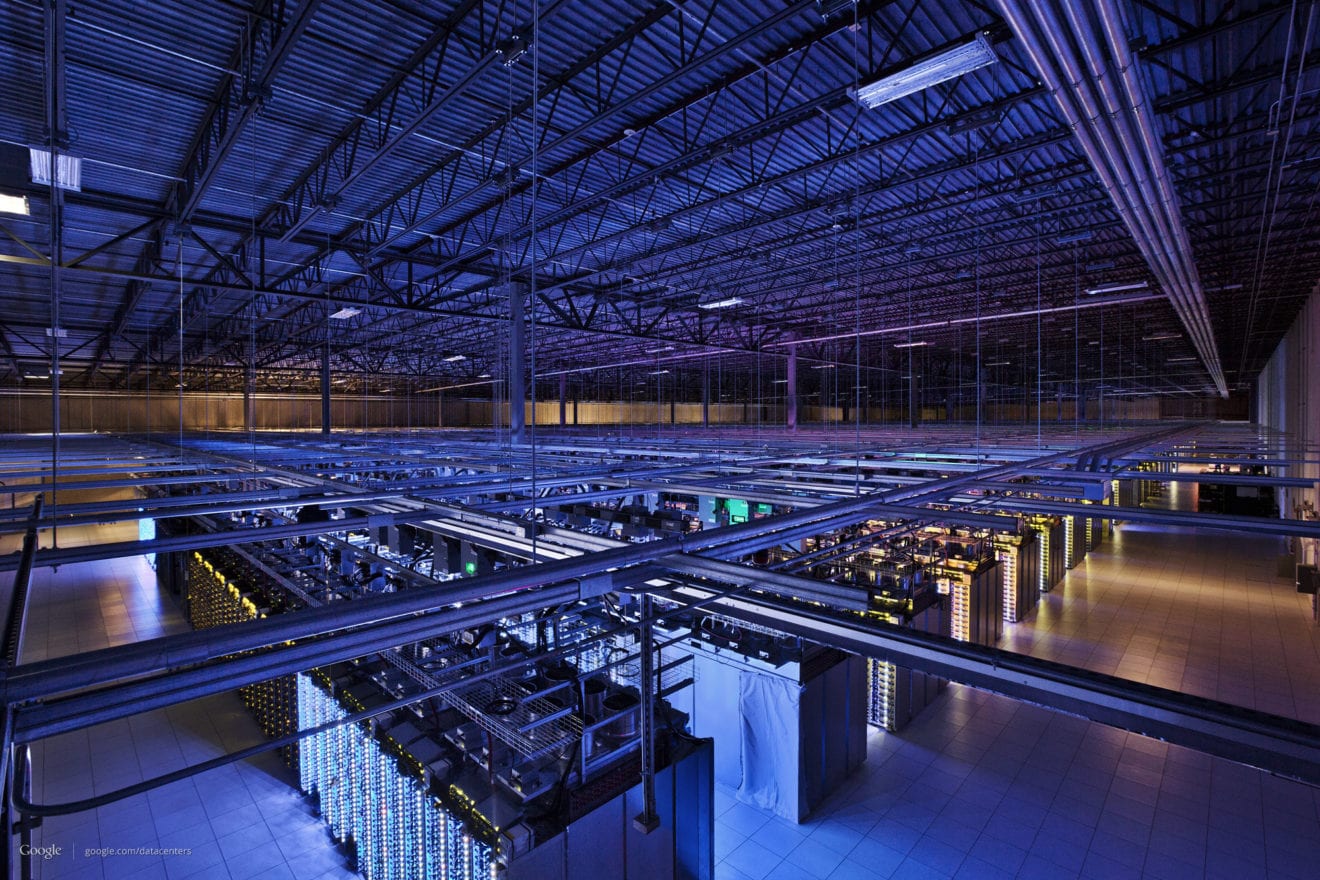
    In a significant move toward sustainable technology, Japanese telecommunications giant NTT has teamed up with U.S. chipmaker Broadcom and other key partners to pioneer optical-based semiconductor packages. This innovative collaboration aims to cut energy consumption in data centers, a must in an era where soaring energy demands are increasingly linked to the rise of generative AI workloads.

    Driving Significant Energy Reductions

    NTT revealed that these groundbreaking devices, set to hit the market next year, could potentially reduce data center power usage by as much as 50%. This prospect is particularly crucial as organizations worldwide grapple with the intense energy requirements posed by AI advancements.

    Harnessing the Power of Light

    The partnership advances NTT’s Innovative Optical and Wireless Network (IOWN) initiative, which seeks to revolutionize information infrastructure through light-based communication technologies. By replacing traditional electrical wiring with optical signals, these new devices promise considerable enhancements in both processing speed and energy efficiency.

    “What counts most is to help society cut the use of electricity,” said NTT President and CEO, Shimada Akira, during a recent press conference announcing the collaboration.

    Forging Ahead in the AI Landscape

    By integrating optical interconnects into semiconductor packages, NTT and its allies aim to deliver processors that enable quicker and more efficient AI computations. The firm plans to supply these advanced products to U.S. companies developing generative AI systems, highlighting NTT’s expanding role in shaping the AI-driven digital infrastructure landscape. This is not just a step forward; it’s a leap into the future for tech processing efficiency.

    Commitment to Sustainable Solutions

    This initiative places NTT at the forefront of a vital global effort to achieve high-performance computing while adhering to environmental sustainability. As data volumes surge, the pressure to balance cutting-edge AI innovation with ecological responsibility has never been greater, and NTT’s efforts are a noteworthy contribution to this ongoing challenge.

    Questions & Answers

    How will the new optical-based semiconductor packages affect data center operations?
    The new packages are expected to reduce energy consumption in data centers by up to 50%, significantly improving efficiency, especially with the increasing demands of generative AI workloads.

    What is the IOWN initiative, and how does it relate to this partnership?
    The IOWN initiative, spearheaded by NTT, focuses on creating a next-generation information infrastructure through light-based communication technologies, aiming to replace traditional electrical systems to enhance processing speed and energy efficiency.

    Who will benefit from the new technology being developed?
    U.S. firms working on generative AI systems will be the primary beneficiaries, as NTT plans to supply these advanced optical devices to bolster their efforts in AI and digital infrastructure.

  • NTT DATA Partners with AWS to Launch Innovative AI-Powered Contact Center Solutions

    NTT DATA Partners with AWS to Launch Innovative AI-Powered Contact Center Solutions

    In a significant move aimed at transforming customer service, NTT DATA has inked a strategic collaboration agreement with Amazon Web Services (AWS) to deploy AI-driven contact center solutions via Amazon Connect, AWS’s innovative cloud-based platform.

    Launching a New Era of Customer Experience

    As part of this partnership, NTT DATA will unveil the Managed Customer Experience (MCX) for Connect, a dynamic modular platform set to fast-track customer experience (CX) enhancements across various industries. This platform blends NTT DATA’s extensive experience in contact centers and managed services with the agile capabilities of Amazon Connect, enabling quicker deployment, tailored interactions, and insightful data-driven engagement.

    Enhancing Engagement Across Channels

    MCX for Connect aims to offer a comprehensive suite of solutions that includes voice and digital interaction channels, in-depth reporting and analytics, AI-enabled services, and seamless integrations with key business applications like CRM and IT service management tools. With the integration of conversational AI agents, real-time sentiment analysis, intelligent call routing, and predictive service capabilities, this platform is designed to elevate critical metrics such as average handle time, first-call resolution rate, and overall customer satisfaction. After all, who wouldn’t want to have a chatbot that can not only chat but charm?

    A Tailored Approach for Diverse Industries

    This collaboration draws heavily on NTT DATA’s proprietary customer experience technologies, including advanced speech analytics and the Smart AI Agent Ecosystem. The upcoming solutions will particularly focus on sectors with complex customer interactions, including financial services, healthcare, telecommunications, and retail.

    Sashen Naidu, Global VP of Customer Experience at NTT DATA, emphasized the strategic advantage this collaboration brings, stating, “By combining NTT DATA’s contact center heritage, digital transformation expertise, and client experience innovation with Amazon Connect’s powerful cloud-native capabilities, we are helping customers reimagine how they engage with their customers and stay ahead in an increasingly competitive landscape.”

    Looking Ahead with Innovative Solutions

    NTT DATA will be responsible for the global delivery, implementation, hosting, security, and managed services of these solutions, which are set to roll out to clients in the coming months. This partnership could redefine how businesses interact with consumers, ushering in a new era of customer service powered by technology.

    Questions & Answers

    What is the main goal of NTT DATA’s collaboration with AWS?
    The primary aim is to deliver advanced AI-powered contact center solutions using Amazon Connect, enhancing customer experience across various industries.

    What features does the Managed Customer Experience for Connect offer?
    The platform offers a range of solutions including voice and digital channels, AI-enabled services, real-time sentiment analysis, and integrations with business applications to improve customer service metrics.

    Which industries will benefit most from this new platform?
    The solutions are particularly tailored for sectors such as financial services, healthcare, telecommunications, and retail, addressing their unique customer interaction challenges.

  • NTT SmartConnect and Megaport Unveil Innovative Cloud and IX Services in Japan

    NTT SmartConnect and Megaport Unveil Innovative Cloud and IX Services in Japan

    NTT SmartConnect Corporation, operating from Osaka, is poised to enhance Japan’s digital landscape with its latest venture. Under the leadership of President and CEO Kento Miyaoku, the company has announced a strategic partnership with Megaport Japan K.K., a renowned global network service provider based in Brisbane, Australia, and led by CEO Michael Reid. This collaboration will culminate in the opening of a new connection point that promises to transform the way businesses in Japan access cloud services.

    A Milestone in Connectivity

    Situated within the Sonezaki Data Center in the heart of Osaka, this connection point is set to launch on Wednesday, July 23, 2025. With Megaport’s multi-cloud connectivity service, businesses will soon find themselves at the intersection of innovation and efficiency. The service boasts connections to over 975 data centers and supports more than 410 service providers, including industry heavyweights such as Amazon Web Services (AWS), Microsoft Azure, and Salesforce.

    Clients can look forward to a suite of benefits, including seamless bandwidth adjustments, cost savings, rapid deployment of services, and streamlined connections to diverse cloud solutions. In a world where digital agility is paramount, this development could serve as a much-needed shot in the arm for companies eager to expand their capabilities.

    A New Era with MegaIX

    In addition to its connectivity services, this initiative marks the debut of Megaport’s internet exchange (IX) service, dubbed MegaIX, in Japan—an offering that will now be available from the Sonezaki Data Center.

    NTT SmartConnect’s forward-thinking approach highlights a commitment to not only enhancing customer business efficiency but also supporting global expansion. As Miyaoku noted, this collaboration stands as a testament to their joint vision of pioneering seamless digital connectivity in the Asian market.

    In a move that might remind you of the first time your favorite band released a surprise album, this partnership marks an exciting chapter for Japan’s retail and tech sectors, one that promises to generate a buzz and reshape digital commerce.

    Questions & Answers

    How will the new connection point benefit businesses in Japan?
    The new connection point will provide seamless multi-cloud connectivity, enabling businesses to adjust bandwidth, save costs, deploy services quickly, and connect effectively to major cloud platforms.

    What specific service is Megaport introducing in Japan with this collaboration?
    Megaport is launching its internet exchange service, MegaIX, in Japan, enhancing connectivity options from the Sonezaki Data Center.

    What are NTT SmartConnect’s future plans regarding this partnership?
    NTT SmartConnect aims to continue collaborating with Megaport to improve customer business efficiency and facilitate global expansion opportunities.

  • NTT Com’s Osaka 7 Data Center Earns NVIDIA DGX-Ready Certification

    NTT Com’s Osaka 7 Data Center Earns NVIDIA DGX-Ready Certification

    This certification validates the data center as a secure location for enterprises to run AI and other demanding applications using NVIDIA-accelerated computing infrastructure. The certification was awarded to the Osaka 7 Data Center (OS7) in Ibaraki City, Osaka Prefecture.

    The NVIDIA DGX-Ready Data Center program certifies data centers’ ability to host high-density accelerated computing systems like the NVIDIA DGX platform and accommodate supercomputer clusters like NVIDIA DGX SuperPOD, considering storage and cooling facilities.

    NTT Com has also joined the NVIDIA Partner Network as a data center provider. Within the OS7 data center, NTT Com offers high-quality network services, exceptional connectivity with Internet Exchange (IX) points, and optimal network environments. The facility can accommodate the high-density racks needed for applications like generative AI (GenAI), making it ideal for operators looking to host cutting-edge and large-scale computing systems.

    OS7 plans to become a Green Nexcenter® colocation data center equipped to support liquid-cooling systems for high-density and accelerated computing systems. NTT Com also offers the “APN Dedicated Line Plan powered by IOWN” service, which connects data centers with ultra-high-speed wide bandwidth, cloud-based NVIDIA GPU services, and other networking and storage facilities.

    OS7, operational since December 2019, features a server room area of approximately 4,600 m2 and has plans to expand its surface area to around 9,500 m2.

    To meet the increasing demand for generative AI and other advanced applications, NTT Com plans to equip more data centers with Green Nexcenter® facilities. The first of these will be offered at the Yokohama 1 Data Center in March 2025, along with OS7 in the Kansai region.

    Additionally, Green Nexcenter® will be standard equipment at the Keihanna Data Center, scheduled to open in March 2026 in Seika-Cho, Kyoto Prefecture. Overall, NTT Com is committed to providing state-of-the-art data center facilities to support the evolving needs of enterprises in the digital age.

  • Telkomsel Trials Facial Recognition for Prepaid SIM Registration

    Telkomsel Trials Facial Recognition for Prepaid SIM Registration

    This makes Telkomsel the second telecom company in the country to adopt this biometric technology.

    On Friday, Telkomsel announced that it is trialing facial recognition in its customer service portal, GraPARI Online, and the MyGraPARI app.

    The facial scan compares the individual’s features with government identity databases to confirm the customer’s identity. Facial recognition will be used alongside current validation methods like Population Identification Numbers (NIK) and Family Card Numbers (KK).

    Telkomsel’s MyGraPARI has been indirectly using facial recognition by supporting eKTP, the digital version of Indonesia’s ID card that includes biometric data. MyGraPARI also offers fingerprint scanning as an ID verification option.

    Telkomsel’s Sales Director, Adiwinahyu Basuki Sigit, mentioned that facial recognition will simplify and secure the process of registering and replacing prepaid cards, while also enhancing personal data protection.

    He stated, “This biometric technology not only streamlines the registration process but also supports the implementation of Know Your Customer (KYC) standards to ensure the accuracy of customer data and reduce the risk of fraud and identity theft in today’s digital age.”

    Telkomsel’s announcement follows XL Axiata’s launch of a new prepaid SIM card registration process using facial recognition after a successful trial last month.

    These developments signify that facial recognition technology is becoming more prevalent in Indonesia, especially among government agencies and companies. There is a notable focus on immigration checkpoints.

  • NTT DOCOMO and NEC Test Energy Efficiency of AWS Graviton2 for 5G SA Core

    NTT DOCOMO and NEC Test Energy Efficiency of AWS Graviton2 for 5G SA Core

    NTT DOCOMO and NEC Corporation announced the completion of a trial to test the energy efficiency and high performance of AWS Graviton2 processors across key elements of the 5G core network (5GC). The trial demonstrated an average of a 72% reduction in power consumption against incumbent x86 processors using NEC’s 5GC software running on AWS Graviton2. The trial tested performance within a 5GC hybrid cloud environment leveraging AWS Graviton2 and DOCOMO’s on-premises Network Functions Virtualization (NFV) infrastructure.

    These results support the future realization of a hybrid cloud environment for telecommunication networks, which enables mobile operators to provide enhanced disaster-resilient networks to customers.

    AWS Graviton2 processors deliver a major leap in performance and help reduce the carbon footprint of IT workloads through energy efficiency. Traditionally, many telecommunication workloads need to reside on edge infrastructure, which have power and real estate constraints. AWS Graviton2 offers efficiency with very low cost, low power and a low hardware footprint. In this proof of concept, the use of Graviton2 reduced power consumption of 5GC by 72% on average.

    Following the completion of this first phase, the companies will now conduct a second phase trial to test the 5GC network function on AWS Outposts equipped with Graviton2 processors on DOCOMO’s premises.

    “We are delighted to announce that we achieved a significant reduction of power consumption of 5GC thanks to NEC’s advanced, cloud-native 5GC software and AWS’s innovative and highly efficient Graviton2,” said Naoki Tani, executive vice president, chief technology officer and executive general manager of the R&D innovation division of NTT DOCOMO. “We will continue collaborating on the PoC with NEC and AWS for future delivery of environmentally friendly and disaster-resilient 5G network service to our customers.”

    “The significant power reduction achieved through this trial indicates a big step forward in commercializing environmentally friendly, sustainable, next-generation mobile infrastructure. NEC will continue adopting cutting-edge, low-power technologies, such as Graviton2, for its UPF and vRAN domains. We aim to further contribute to building a sustainable society through provision of sustainable virtual networks and the realization of next-generation, low-power mobile infrastructure,” said Atsuo Kawamura, executive vice president, NEC.

    “Like many industries, telecommunications companies want to be able to ensure sustainability operations while maintaining the high-performance and quality of service their customers need and expect,” noted Adolfo Hernandez, vice president and general manager, telecom industry business unit at AWS. “AWS is committed to building a sustainable business for our customers and the planet and is thrilled to see the power savings Graviton2 delivers in telecommunications. We look forward to continuing to work with NTT DOCOMO and NEC to further expand the use of cloud and AWS technologies to advance sustainability and resiliency goals.”

  • Japan bans handset-mobile service bundles

    Japan bans handset-mobile service bundles

    The Japanese government has passed a new bill aimed at reducing mobile prices for consumers and stimulating competition in the mobile market. The new bill includes provisions banning operators from offering bundled device and mobile plans under a single price package.

    The new law, which is due to take effect as early as the third quarter, is aimed at addressing a practice that consumers and lawmakers have complained make it difficult to compare prices between operators.

    Incumbent operators NTT Docomo, SoftBank and KDDI have been under pressure to reduce their mobile charges to help alleviate the financial pressure on consumers. As part of its efforts, the government has been seeking to address the issue of mobile operators offering device subsidies in exchange for relatively high prices for mobile services.

    Responding to this pressure, Docomo last month introduced a simplified fee structure that it says will have the effect of reducing mobile rates by up to 40%, and its rivals are considering following suit.

    The amended legislation also introduces new penalties for companies using misleading sales tactics, as well as a new registration requirement for handset retailers for regulatory purposes.

  • Docomo, Itochu Logistics test IoT for delivery-fleet management in US

    Docomo, Itochu Logistics test IoT for delivery-fleet management in US

    Japan’s NTT Docomo and Itochu Logistics are planning to trial an IoT solution for delivery fleet management in the US.

    The solution uses devices compatible with low-power, wide-area LTE-M technology to track the status of outsourced trucks in their fleets.

    The trial will begin in the United States on May 1, 2019.

    According to the companies, the solution involves placing hand-held, battery- or solar-powered devices in trucks to collect data, such as truck locations and frequency of sudden braking, which will be sent through an LTE network to a dedicated website.

    The solution can also provide temperature, humidity, brightness, etc. data depending on delivery needs, as well as notify customers via email when the trucks approach their destinations.Itochu Logistics USA expects to save time using the solution compared to the conventional method of manually phoning drivers to confirm their locations and estimated delivery times.

    The solution will be tested for its effectiveness in supporting the management and safety of truck fleets at Itochu Logistics USA’s delivery-trick network and logistics system.

    “While most delivery trucks are equipped with GPS devices, the location data typically is available to the owner but not to logistics/transport companies that retain the trucks on an outsourced basis,” the companies said.

    “The solution’s easily deployed LTE-M devices, however, will give logistics/transport companies dedicated access to location and other useful information about trucks operating temporarily in their fleets.”

    The trial is part of the Globiot global-IoT initiative that Docomo launched on July 2, 2018.

    The Japanese mobile giant said it expects the solution will be marketed widely throughout US, Japan, and Asia.

  • Japanese telcos assigned 5G spectrum

    Japanese telcos assigned 5G spectrum

    Japan’s telecom ministry has allocated 5G mobile spectrum to incumbent operators NTT Docomo, KDDI, and Softbank, as well as local e-commerce giant Rakuten.

    The Ministry of Internal Affairs and Communications has approved the allocation of spectrum after determining that the companies’ applications met the conditions of the allocation.

    The four companies plan to invest heavily in 5G, spending a combined 1.6 trillion yen ($14.4 billion) over the next five years. Docomo is planning the largest spend, with goals to invest at least 795 billion yen in 5G over this time.

    The four plan to commence commercial 5G services in 2020, with KDDI and SoftBank planning to commence advertising for its services in March.

    Rakuten Mobile, Japan’s upcoming newest market entrant, meanwhile plans to commence 4G services in October 2019 and 5G services in June 2020.

    The conditions for the allocation of spectrum included commitments to commence services in every prefecture of the nation within two years, and set up 5G base stations in at least half the country within five years.

    According to the report, Docomo and KDDI are each targeting more than 90% 5G population coverage by the end of the five years, while SoftBank is targeting 64% coverage while Rakuten is aiming for 56%.

  • HTHKH to buy full control of mobile business

    HTHKH to buy full control of mobile business

    Hutchison Telecommunications Hong Kong Holdings (HTHKH) has arranged to buy out Japan’s NTT Docomo‘s share of its mobile businesses for $60 million.

    Under the agreement, HTHKH will acquire Docomo’s 24.1% interest in Hutchison Telephone Company Limited (HTCL) and its 24.1% stake in Hutchison 3G Hong Kong Holdings (H3GHK), making both companies wholly-owned subsidiaries.

    In an announcement, HTHKH said acquiring full control of its mobile business will increase the value of HTHKH shares, enhance operational efficiency and save costs by eliminating resources expended on shareholder communications.

    The transaction is expected to close on May 31. HTHKH plans to use the proceeds from the disposal of its fixed line business in 2017 to pay for the purchase.

    HTHKH and Docomo have agreed to discuss potential ways of extending their mutually beneficial relationship despite no longer being tied through a shareholder relationship.

    The companies have agreed to enter a consultation and cooperation agreement upon the closing of the transaction to explore the feasibility of collaboration in the field of mobile telecommunications products and services.

  • Docomo to expand overseas 5G trials

    Docomo to expand overseas 5G trials

    Japan’s NTT Docomo has arranged with partners in the US, Israel and Japan to collaborate on 5G trials in Guam, with the aim of verifying 5G-compatible systems and equipment for business solutions.

    Under the collaboration, NTT Docomo will provide the 5G test network, while solution partners will provide 5G-based products and services for use by testing by local field partners.

    These field partners comprise the electricity utility Guam Power Authority, the University of Guam, local wedding services provider ARLUIS Wedding Guam and United Airlines Guam.

    The Guam Power Authority will test 5G VR training solutions provided by Israel’s Humaneyes Technologies, as well as 5G monitoring with AI technology developed by Aegis Systems.

    The University of Guam office of IT will test a 5G AI-based robot system for identifying examinees from PLEN Robotic, and 5G monitoring with AI technology from US-based Smart Home Sentry.

    ARLUIS Wedding Guam will test a 5G multi-screen video live streaming solution from AMATELUS, while the United Airlines Guam Marathon Organizer will test a series of 5G drones, tourism, sports photo upload and 5G robotics solutions.

    Docomo also announced that it has opened a new 5G Open Lab in Guam, its first center outside of Japan for testing and verifying 5G technologies.

    A number of Japanese and overseas companies have already announced an intention use the facility to collaborate on cross-border 5G testing in partnership with Docomo.

  • Docomo invests in semiconductor startup QD Laser

    Docomo invests in semiconductor startup QD Laser

    Japanese mobile giant NTT Docomo, through its subsidiary NTT Docomo Ventures, has invested in QD Laser for an undisclosed amount.

    QD Laser – which was founded in 2006 as an offshoot of Fujitsu Ltd with funding from Mitsui Ventures – develops and manufactures semiconductor lasers, retinal scanning laser eyewear, and other products based on quantum dot laser technology.

    By leveraging its nanocrystal technology, the Kanagawa-based firm achieved mass production of quantum dot lasers capable of operating stably even at high temperature.

    In 2018, QD Laser applied its technology to incorporate a compact laser projector with extremely small output into a spectacle-type device, and commercialized what was claimed to be the world’s first retinal scanning laser eyewear that directly projects an image onto the user’s retina for image display.

    The technology for projecting a direct image onto the retina using a laser does not require the user to focus their eyes to see an image, so it is expected to improve the quality of life of patients with ametropia or corneal opacity and weak-sighted individuals.

    The technology can also be applied for realizing natural-looking augmented reality (AR) that people with normal vision can experience.

    Docomo said it has high expectations for potentials of the retinal scanning laser eyewear developed by QD Laser for resolving various social issues and contribute to creating new services through AR.

  • NTT Docomo trials 5G at 305km/hr

    NTT Docomo trials 5G at 305km/hr

    Japan’s NTT Docomo, parent company NTT and vendor NEC have jointly achieved the first 5G transmission between a 28-GHz base station and a 5G mobile station in a car moving at 305km/hr.

    The trial also achieved a 1.1Gbps high-speed data transmission to a 5G mobile station moving at 293km/hr as well as fast handover between 5G  base stations and a 5G mobile station moving at 290km/hr.

    During the trial at the Japan Automobile Research Institute, a test environment was created using a car traveling at speeds similar to that of Japan’s bullet train high-speed railways.

    To overcome the challenges associated with long-range transmission of 28-GHz radio waves, the base and mobile stations were both equipped with beamforming and beam tracking technology.

    The 5G base station also used massive MIMO antennas with 96 elements and supporting up to two beams, and two antenna units per base station.

    Docomo also succeeded in a wireless live transmission of 4K, 120 frame per second video from a car moving at speeds of 200km/hr using NTT’s real-time 4K high frame rate HEVC codec.

    Sony Business Solutions Corporation provided the 4K camera for the trial, while Docomo Team Dandelion Racing manager Dandelion Limited tuned the trial car for an ultra-high-mobility environment and operated the car on the test course.

  • NTT Com launches lowest latency Tokyo-Chicago link

    NTT Com launches lowest latency Tokyo-Chicago link

    Japan’s NTT Com has launched a new ultra-low latency connectivity service between the financial markets of Tokyo in Japan and Chicago in the United States.

    The operator said the JPX-Chicago Co-Location Direct service offers the industry’s lowest latency for connectivity between Japan Exchange Group’s (JPX) colocation centre and the Cermak data center used by Chicago’s financial market.

    A point of presence in the JPX colocation center links directly to NTT Com’s PC-1 subsea cable to support high frequency trading between the two markets.

    Customers will be able to seamlessly use cross connections in both centres to ensure trades are implemented as quickly as possible.

    NTT Com also delivers connectivity services between JPX and financial markets in Hong Kong and Singapore.