Tag: NTU

  • NTU Singapore launches seventh satellite

    NTU Singapore launches seventh satellite

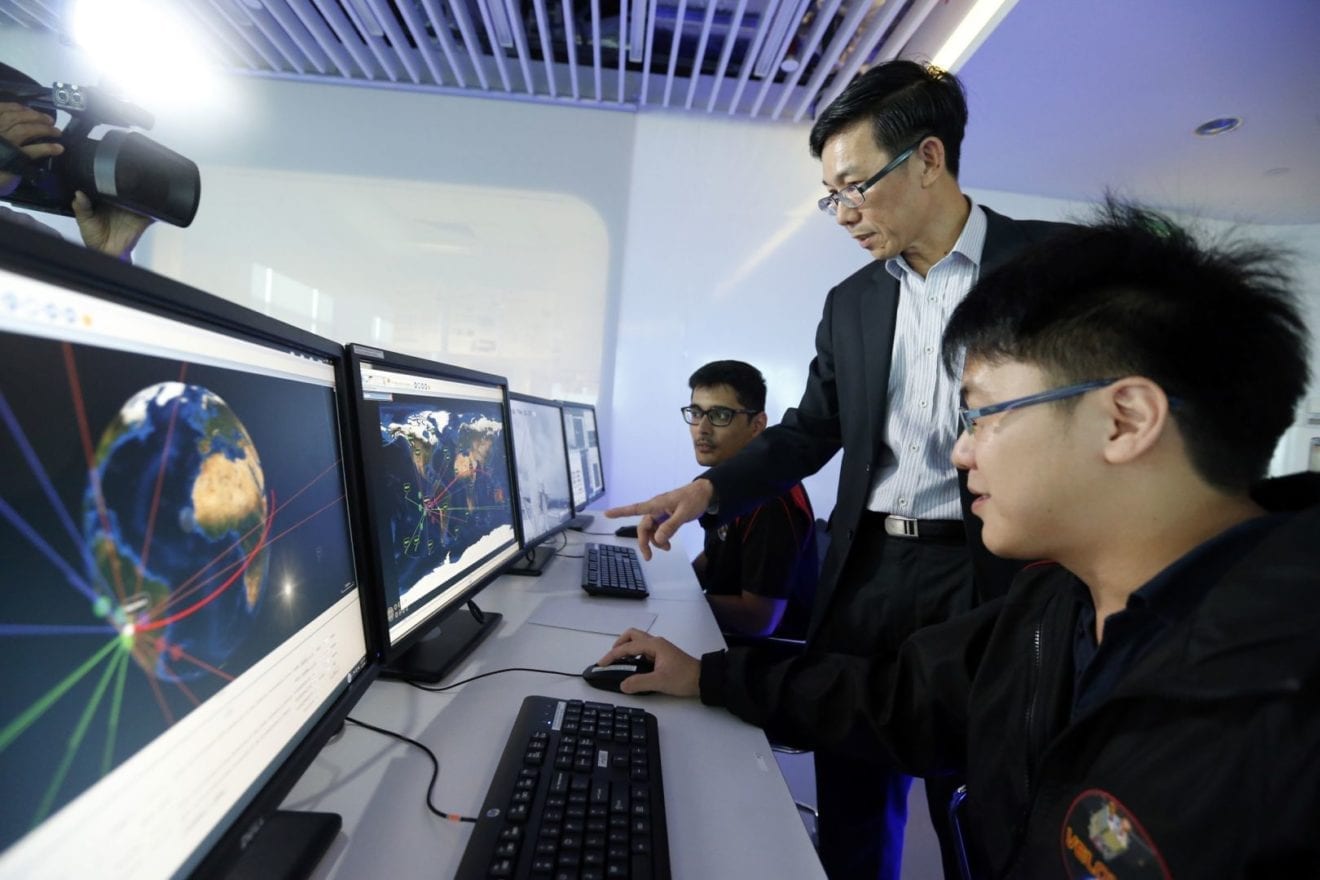
    Nanyang Technological University, Singapore (NTU Singapore) has launched its seventh satellite, the AOBA VELOX-III, into space from the International Space Station (ISS) on 16 January.

    It is the first Singapore satellite to be launched from the ISS, the 110-meter habitable human-made satellite that orbits the Earth. Unlike the conventional way of launching a satellite directly into space from a rocket, the two-kilogram VELOX-III was shot into orbit around the earth using a special launcher by a Japanese astronaut at the ISS.

    The AOBA VELOX-III is a joint project between NTU and Japan’s Kyushu Institute of Technology (Kyutech), one of Japan’s leading universities for satellite research and engineering. It is now orbiting 400 kilometers above Earth and will be conducting several tests, including the made-in-NTU micro-propulsion system, a new wireless communication system developed by Kyutech and experiments to evaluate the durability of commercial off-the-shelf microprocessors in space.

    “The successful deployment of the AOBA VELOX-III is a testament to the strong satellite engineering expertise at NTU. Building up the local satellite talent pool and developing disruptive technologies like the micro-thruster in the AOBA VELOX-III is important for Singapore’s budding space industry,” said Lim Wee Seng, director of the NTU Satellite Research Center.

    He said the NTU will now be developing its second joint satellite with Kyutech, which could lead to small and maneuverable satellites being used as space probes in future.

    Professor Mengu Cho, Director of Kyutech’s Laboratory of Spacecraft Environment Interaction Engineering, said the launch of AOBA VELOX-III is the tangible result of research collaboration between Kyutech and NTU for the past three years. AOBA VELOX-III is an important milestone in the Japan-Singapore inter-university space exploration.

    “We are looking forward to another joint satellite that is under development and scheduled to be launched in 2018. The long-term goal of the Kyutech-NTU joint space program is to do a lunar mission using the technologies demonstrated by these two satellites.”

    Professor Yoon Soon Fatt, Chair of NTU’s School of Electrical and Electronic Engineering, said conducting real satellite missions are key to training local talents for Singapore’s future satellite industry.

    “Satellite technology is a field that requires strong expertise across several disciplines, from power systems and batteries to integrated circuits and wireless communications,” he said.

    “The actual designing, building and operating real satellites in space gives a huge boost to the learning journey of our students and is an unparalleled experience for those seeking careers in the space industry.“

    Lim added that these space experiments by AOBA VELOX-III will enhance the university’s satellite building capabilities, paving the way for the next generation of nanosatellites that are more advanced and reliable.
  • New NTU lifestyle hub taking shape

    New NTU lifestyle hub taking shape

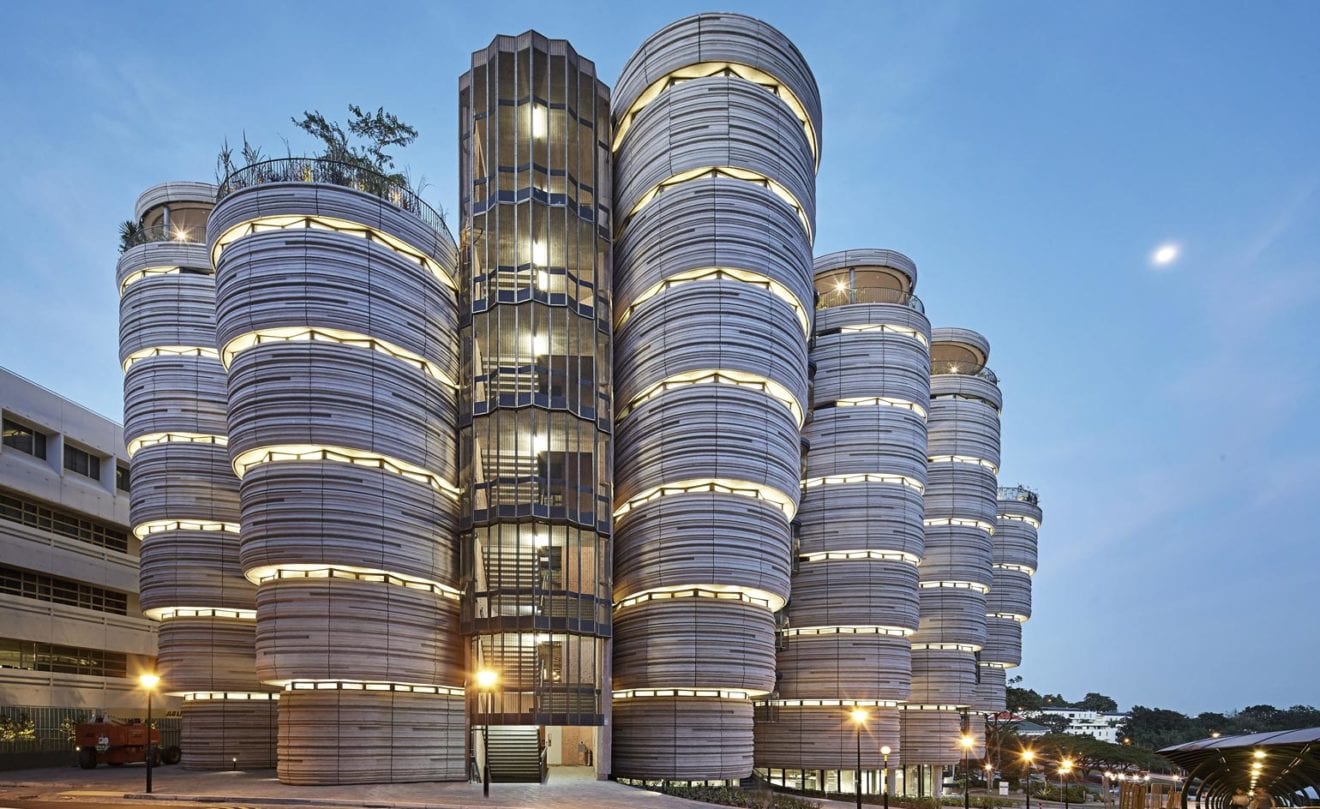
    Construction of a new lifestyle hub at the Nanyang Technological University (NTU) in Jurong West is now in its final phases.

    When ready, it will feature a supermarket, a salon, banking options, performance spaces and popular eateries, including a well-known Cantonese restaurant.

    The hub, which will span two levels at the northern end of the academic complex, will open in October, two months after the start of the academic year.

    It will occupy the area outside NTU’s Lee Wee Nam Library and is part of the university’s push to become a “mini-city”.

    Associate Professor Kwok Kian Woon, associate provost for student life, noted that more students are living on campus, with many others spending most of their day there.

    Hence, it made sense to refurbish the university’s areas of high pedestrian traffic and to offer more food and retail options.

    The northern part of the Nanyang Technological University complex, also known as the North Spine, was selected as the site for the hub as it is a focal point for most students and staff.

    The lifestyle hub, which will also be open to the public, will have more than two dozen shops, some of which will be open 24/7 and on weekends.

    On one floor, food and beverage outlets and stores line a shopping street, while interaction spaces and study areas will be available on the second level.

    The entire space will have a semi-transparent bubble roof.

    In the past, students had a modest range of food and retail options. Other services were sparsely distributed across NTU.

    Students living in the residential halls sometimes had to visit the nearest mall, Jurong Point Shopping Centre, which is a 15-minute bus ride away, for a wider range of lifestyle services.

    About 12,000 students now live on campus in 20 residential halls. This figure is expected to grow to 15,500 students over the next three years.

    Third-year physics student Tan You Sin, a Malaysian who lives on campus, is looking forward to the lifestyle hub.

    “It will be more convenient for students,” said the 23-year-old. “Hopefully, the prices will be affordable too.”

    The food and retail outlets include Peach Garden Chinese Restaurant, Starbucks and KFC Coffee, which are already open for business.

    Mr Ho Toon Chian, assistant director of sales and marketing for Peach Garden, said the NTU branch, which is one of the brand’s nine outlets, serves as a “catchment area” for the NTU community and residents in the western end of the island.

    “The university is relatively far from most areas and, being located here, we are able to reach customers within the school and vicinity,” he said.

    The Peach Garden Chinese Restaurant at NTU is run by a dozen staff. The prices are lower than at branches in the city, and NTU staff and students enjoy a small discount.

    Mr Ho added that business has been good in the seven months since the outlet’s opening, and its customers include students and staff, their families and residents of nearby estates.

    The hub will also feature a designated space with pushcarts for rental by students who would like to sell various goods or test business ideas, and an area where budding artists can display their talents.

    Third-year sociology student Andrea Tan, who has been living in the residential halls for the past three years, is happy that there will be more places for students to hang out.

    “Students spend most of their time on campus, but the university is quite far from everything else,” said the 22-year-old.

    “It is nice to have more options to choose from for a change, without venturing out of the university,” she added.