Tag: NTUC

  • StanChart Announces Details on Digital Bank Venture with NTUC

    StanChart Announces Details on Digital Bank Venture with NTUC

    A StanChart veteran has been appointed to lead its digital-only bank in Singapore. Standard Chartered Singapore’s head of consumer, private and business banking, Dwaipayan Sadhu, has been appointed CEO of the bank’s new digital venture with NTUC Enterprise, details of which were released on Monday.

    Sadhu, who has more than two decades of experience across wealth management, payments, deposits, consumer lending, and digital banking, will hold both roles concurrently while transitioning to his new position by the end of the year.

    Standard Chartered will take a 60 percent stake in the venture, worth S$144 million ($107.28 million), with the NTUC’s enterprise arm taking the remaining 40 percent stake, worth S$96 million.

    Singapore is Standard Chartered’s second-largest market after Hong Kong. The bank announced plans for the digital venture with NTUC about a year ago, soon after it obtained the Significantly Rooted Foreign Bank (SRFB) status in Singapore, which gives it significant advantages such as the ability to set up a digital-only unit, lower amounts in paid-up capital and a greater number of places of businesses.

    Four other digital banks, which obtained licenses under a different process, are set to be launched in the republic in the coming year.

    With the new digital bank, Standard Chartered will be the only entity to operate a virtual bank in the region’s two largest hubs. In Hong Kong, it runs Mox – jointly owned with telecom firms PCCW and Hong Kong Telecom, and online travel agency trip.com.

  • Grab Partners NTUC Income to Launch Micro-Insurance Plan

    Grab Partners NTUC Income to Launch Micro-Insurance Plan

    Grab’s insurance arm and NTUC Income jointly unveiled its first micro-insurance plan designed to help drivers better protect themselves against critical illnesses.GrabInsure has launched a flexible pay-per-trip micro premium and accumulative coverage proposition together with local insurer NTUC Income on Thursday. Known as Critical Illness: Pay Per Trip (CIPPT), the microinsurance plan can be subscribed via Grab’s driver-partner app and allows premiums to be deducted from their in-app cash wallet.

    We know many of them (the driver-partners) worry about falling ill, and the corresponding medical costs. They see the value of insurance protection but are hindered by a lack of affordable options that give them the flexibility in premium payment and coverage. Some of them are also discouraged by the application processes of insurance plans, said Yee Wee Tang, Country Head of Grab Singapore in a media statement.

    CIPPT is a critical illness insurance plan that provides Grab driver-partners the option to pay for premiums on a per-trip basis. Unlike typical insurance plans that call for a commitment to a fixed premium amount over a set period, CIPPT offers greater flexibility on cash flows to maintain the plan.

    For as low as S$0.10 per trip completed, Grab driver-partners can accumulate insurance coverage of a Sum Assured of up to S$200,000 for 360 days, in the event that the insured is diagnosed with a critical illness covered under the plan. There is no minimum trip requirement per day and they can work anytime.

    This micro-insurance proposition for critical illness protection is ground-breaking in the way in which it is purchased and where protection is rendered. The option to stack insurance coverage by paying premiums at micro-quantum is an innovative way to offer Grab driver-partners critical illness protection without incurring a substantial outlay from their monthly income. This approach resonates with people who prefer to have flexible cash flows to see to other financial commitments but yet at the same time, want to benefit from insurance protection,» said Peter Tay, NTUC Income’s Chief Digital Officer, who heads the company’s Digital Transformation Office.

    CIPPT is also the latest digital insurance product offered by GrabInsure, after the launch of Personal Accident Plus (PA+) and Prolonged Medical Leave Plus (PML+) insurance plans in April 2019.

    According to the Life Insurance Association Singapore’s Protection Gap Study, only 20 percent of economically active individuals in Singapore are covered for their critical Illnesses.

  • NTUC Enterprise acquires Kopitiam

    NTUC Enterprise acquires Kopitiam

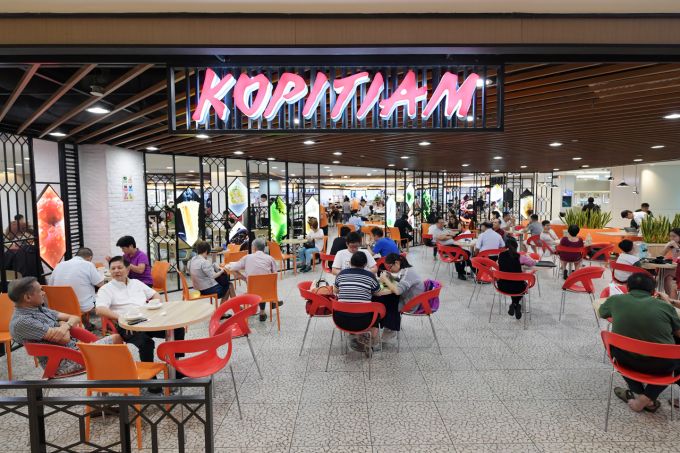
    Singapore’s renowned Kopitiam food centres have been bought by NTUC Enterprise Co-operative to protect the chain from commercial investors.

    In a press release announcing the deal, NTUC Enterprise said by investing an undisclosed sum in acquiring the business it could satisfy its social mission of ensuring cooked food remained affordable and accessible to Singaporeans.

    After the deal is settled, expected to be later this year, the Kopitiam outlets would complement NTUC Enterprises’ existing Foodfare food centres, operated independently by their own management teams.

    However the two businesses would look to sharing technology knowhow and resources and other behind-the-scenes processes.

    Kopitiam was founded 30 years ago and has now grown to 56 foodcourts, 21 coffee shops and three hawker centres across the island, serving some 350,000 meals each day and employing more than 1000 people.

    “Kopitiam and NTUC Foodfare share the common objective of making quality cooked food affordable and accessible to all,” Kee Teck Koon, executive director at NTUC Enterprise, said in a statement.

    “We will leverage our combined strengths to contribute to improving the vibrancy and resiliency of this daily essential sector in Singapore, with the ultimate goal of creating better experiences for our customers, and opportunities for our employees and other stakeholders.”

  • NTUC FairPrice saves 9 million bags

    NTUC FairPrice saves 9 million bags

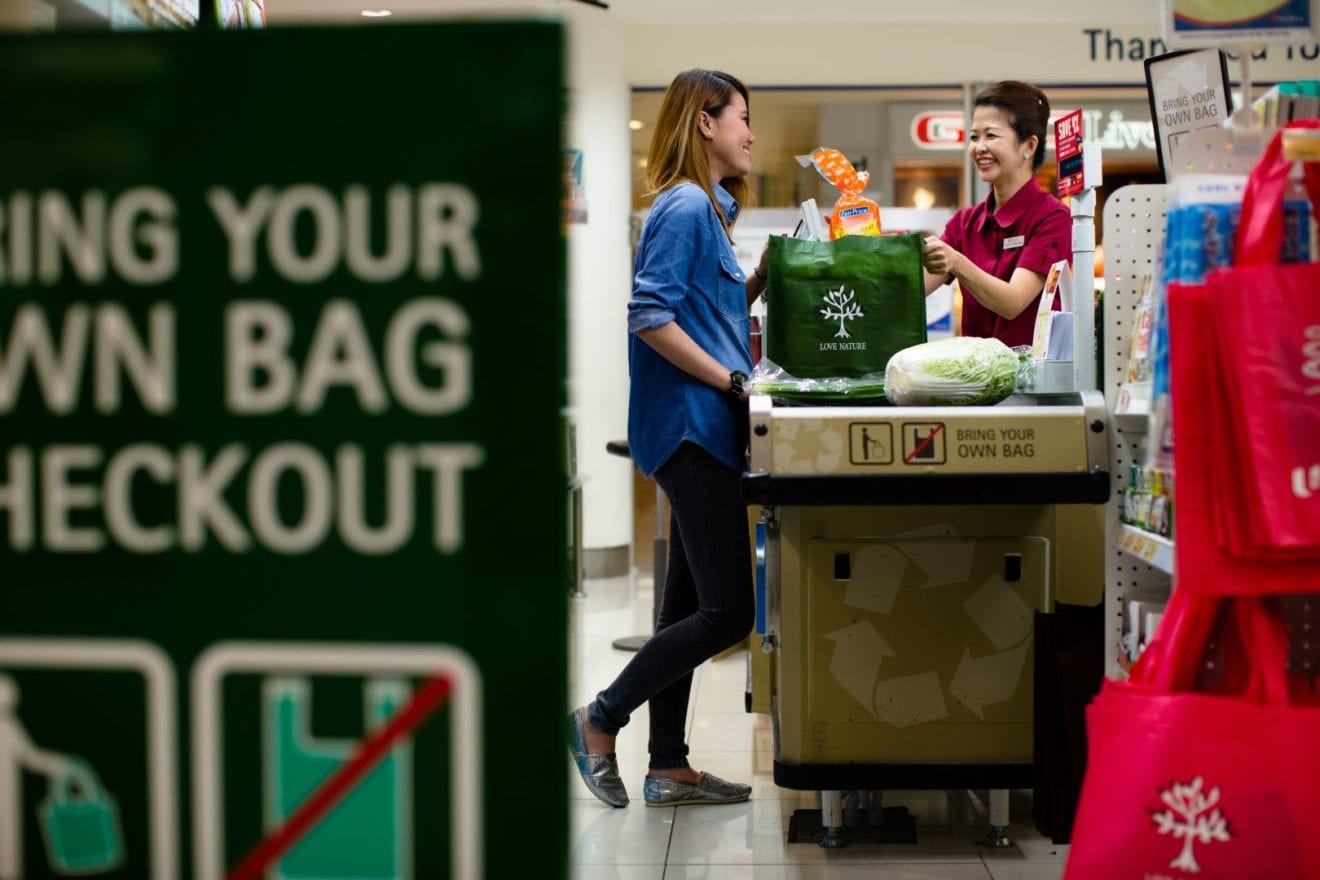
    Singapore supermarket chain NTUC FairPrice says customers saved more than 9 million plastic bags last year as the company pursued its green strategy.

    FairPrice said it gave out more than S$450,000 in rebates under its FairPrice Green Rewards Scheme last year.

    Koh Kok Sin, chairperson of the FairPrice green committee, said securing a sustainable future for Earth is the responsibility of everyone in this generation.

    “We continue to upgrade and make our stores as eco-friendly as possible, find ways to raise environmental consciousness among shoppers, and encourage them to Think Green and Shop Green. We are encouraged that our customers recognise the call to care for the Earth, and share our commitment to save plastic bags and take on other sustainable initiatives. We will continue to work together with our stakeholders to build a green and eco-friendly Singapore.”

    FairPrice first launched the FairPrice Green Rewards Scheme in 2007 to urge shoppers to use fewer plastic bags. Since then, FairPrice has given out more than $2.3 million in rebates which has resulted in an estimated 46.5 million plastic bags saved. In the same period, FairPrice has seen an increase in plastic bags saved at its stores by about 10 per cent year-on-year; and recorded the highest number of plastic bags saved last year.

    FairPrice also supported Earth Hour on March 28 by switching off all non-essential lights at its stores, offices and warehouses, in addition to donating $12,500 to WWF. This is the seventh year that FairPrice has supported WWF’s global Earth Hour initiative.

    To conserve energy and to reduce its carbon footprint, FairPrice continues to install eco-friendly features in its stores, as well as switching to energy-saving equipment and lighting in the existing stores.  Currently, 60 stores have already been installed with these green features. Several FairPrice stores have been awarded with BCA Green Mark awards, including FairPrice Finest@ZhongShan Park and FairPrice Xtra@Kallang Wave Mall that have both been awarded with the BCA Green Mark (Platinum) awards. FairPrice’s headquarters located in Benoi, FairPrice Hub, also received the BCA Green Mark (Platinum) award for incorporating extensive green architecture features which promote sustainability and conservation of resources.