Retail News CRM

Tag: ocean

  • Coke, Asahi lead joint venture to recycle 1 billion PET bottles annually

    Coke, Asahi lead joint venture to recycle 1 billion PET bottles annually

    Pact Group, Cleanaway, Asahi Beverages and Coca-Cola Europacific Partners (CCEP) have announced they have signed a Memorandum of Understanding (MOU) to form a joint venture that will build and operate a new PET recycling facility. Under the MOU, the parties intend to come together to provide an industry model for recycling solutions in Australia. This will include the new facility as well as the PET recycling facility currently being built by Pact Group, Cleanaway and Asahi Beverages through Circular Plastics Australia (PET) in Albury-Wodonga, which is expected to be completed later this year.

    The proposed facility will provide a massive boost to Australian recycling by processing raw plastic material collected via Container Deposit Schemes and kerbside recycling. It is expected to process the equivalent of around 1 billion bottles each year to produce over 20,000 tonnes of new recycled PET bottles and food packaging. The facility will use state-of-the-art sorting, washing, decontamination and extrusion technology.

    The cross-industry solution combines the complementary expertise of each participant to enhance their individual sustainability goals. Cleanaway will provide available PET through its collection and sorting network, Pact will provide technical and packaging expertise and CCEP, Asahi Beverages and Pact will buy the recycled PET from the facility to use in their respective products. The plant, when fully operational, will be run by Pact.

    A decision on the plant’s location is anticipated in the coming months and construction is expected to be complete by 2023.

    CCEP and Asahi Beverages, while competitors in the beverage market, have, for the purpose of this joint venture, joined with Pact and Cleanaway to increase the production and availability of recycled PET resin in Australia. The parties are proud to work with one another to advance the cause of sustainability and recycling. This proposed plant is an important step forward in creating a local plastics circular economy in Australia. This new self-sustaining industry is expected to create dozens of new jobs during the construction phase and operation of the plant.

    In describing the deal, Peter West, CCEP Vice President and General Manager Australia, Pacific and Indonesia said, “This new joint venture will deliver a collaborative cross-industry solution to recycle the material that we use to produce our products. Together we can work towards creating a circular economy for PET within the beverages industry, ensuring that we are using more locally processed recycled content for the production of our bottles in Australia.”

    Asahi Beverages Group CEO Robert Iervasi said, “This will be a ground-breaking project that will massively boost PET recycling capacity. It will help transform recycling in Australia by providing a new, local source of high-quality recycled PET. The building of this large rPET plant along with the facility in Albury-Wodonga is a major step towards helping us deliver a truly circular economy for our consumers.”

    Cleanaway Chief Operating Officer Brendan Gill said, “This project supports Cleanaway’s Footprint 2025 by ensuring we have the right infrastructure in place to create a domestic circular economy. This PET plastic pelletising facility is a huge win for the environment by creating a high value, recycled raw material from plastics we collect and sort through our network. At Cleanaway our mission is to make a sustainable future possible and we see waste as a resource to achieve that.”

    Group CEO and Managing Director from Pact Group, Sanjay Dayal said, “We are delighted to be able to bring a scaled cross-industry solution that solves for the local production of recycled resin. We are proud to have CCEP, Asahi Beverages and Cleanaway as partners creating a local circular economy. This partnership shows the value of a solution that works for industry and consumers. This is completely aligned to Pact’s strategy which is to lead the local circular economy through reuse, recycling, and packaging solutions”.

  • Imported seafood prices skyrocket amid transport restrictions

    Imported seafood prices skyrocket amid transport restrictions

    The prices of imported king crabs and abalones have risen by 30-50 percent in HCMC due to limited supply caused by mobility restrictions.

    King crabs are sold at VND2.5-2.9 million ($109-126) per kilogram, 50 percent higher year-on-year.

    Australian and South Korean abalones are sold at 30 percent higher at VND1.6-1.8 million.

    Salmon prices are up 18 percent at VND650,000.

    A seafood importer who owns a restaurant in the city’s Tan Binh District blamed the price rise on a supply shortage, saying the semi-lockdown has made transporting seafood difficult.

    Another reason is the limited number of flights coming to Vietnam from abroad.

    Another importer said half the crabs died on the way to Vietnam due to flight delays, causing him losses. He has stopped selling for now.

    Tran Van Truong, CEO of seafood chain Hoang Gia, said flights from Norway to HCMC are rare and in most cases have to transit in other countries.

    Many sellers are increasing the sale of domestic seafood items such as red tilapia and squid to survive.

  • Cleaning the oceans one cup at a time

    Cleaning the oceans one cup at a time

    Sam Stone and Christie Kamphuis have been close friends for a long time, and one of the pillars of their friendship has always been going to events together. “We always hated the overflowing bins, and walking over cigarette butts, chewing gum, and cups all over the ground,” Sam bemoans. “When we heard of a few niche events implementing reusable cups in Europe, we jumped at the chance to bring the idea here.” Fortunately, Sam says, she and Christie have complementary skills that have helped them make the best of being co-founders. “We take on different parts of the business without too much fighting over who does what!” Sam laughs.

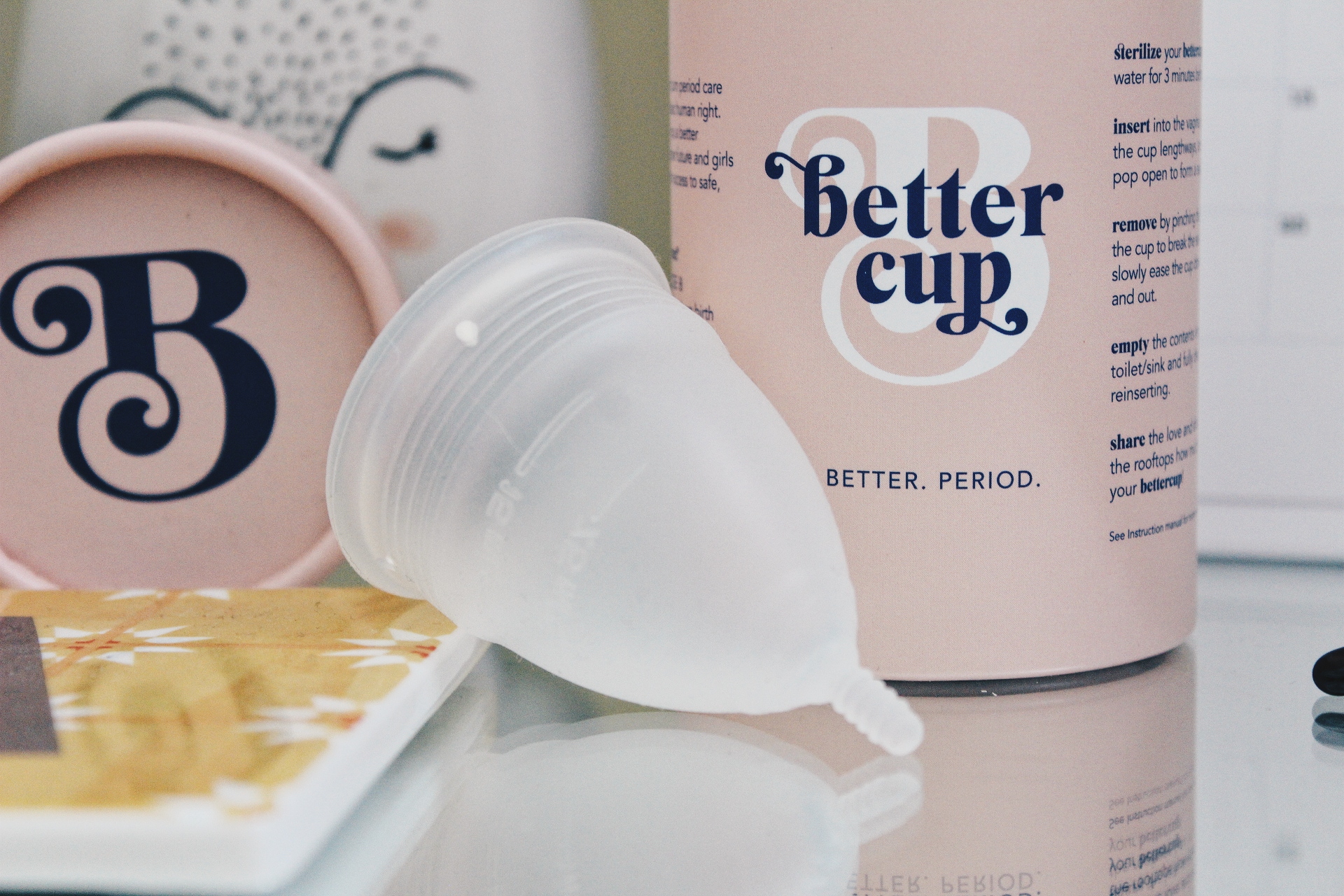
    Their business, Bettercup, provides reusable cups in various shapes for both rent and purchase to suit different budgets. “Clients can choose between our Bettercup branding or the branding can be customized to the event,” Christie explains. “We emphasize that the cups should always be designed with longevity in mind so that they can be reused many times,” she adds. So, they eschew branding that includes dates or other details that aren’t suitable for reuse, and after each event they service, they provide a report that analyses the amount of waste saved by using their cups compared to going down the single-use route. “This is a neat way for people to see how a simple change can have a huge positive environmental impact,” Christie explains.

    Sam says that the scope for reusable cups is basically endless. “Any time you’re using a single-use cup, you could be using a reusable one!” he says. Bettercup has been adopted as the provider of choice by local councils, stadia, universities, and breweries as well as many other types of events. “We offer cup washing, either on or off-site, as well as end-to-end consulting for those who want to implement their own reuse systems but aren’t sure where to start,” Sam says. “With reusable, you’ll always get that extra labor factor, so we do our best to make sure our customers are prepared to either take that on themselves or hand it all over to us.”

    In 2020, Christie was the project manager on behalf of the Sustainable Event Alliance for the Global Reusables on that organization’s Events Hygiene Project that led to the creation of a global working group made up of event industry, health and safety and sustainability stakeholders. “The guidelines detail the global best practices for implementing reusables consistently and safely at events and venues, and were released publicly in October 2020,” Christie says. “We also have an amazing partnership with Green Music Australia, a like-minded charity that harnesses the cultural power of the music scene to create a greener future. We’ve collaborated with them on a number of initiatives across various events in order to achieve the common goal – to reduce waste!”

    Despite their work, the enthusiasm for it – Bettercup has recently expanded its operations into New Zealand – and the type of global initiative they’re involved with, Sam and Christie feel that the broader business community needs to go a lot further in the fight against single-use plastics, and waste in general. “At the moment it [waste] seems to be brushed off as a non-issue,” Sam says. “If businesses address this by highlighting areas where waste is a problem – even just by removing single-use cups and stirrers in office kitchens – then workers will start to think about the waste they’re generating and how they can mitigate against it.”

    For her part, Christie believes that making informed, good environmental choices behind the scenes is just as important as what customers see up front. “Using ethical banks, suppliers with active sustainability policies in place and choosing local options wherever possible drive the necessary systemic changes we need for a sustainable future,” Christie avers.

  • La Vie en Rose Swimwear launching in China

    La Vie en Rose Swimwear launching in China

    Canadian specialty lingerie and swimwear label La Vie en Rose is expanding its business into Mainland China as part of a strategy to become twice as large and profitable within the next three years.

    The brand will launch in Guangzhou’s PO Park shopping mall later this month with further locations in Guangzhou to follow.

    “We were ready to accept the challenge of taking our first steps in China,” said La Vie en Rose president and CEO Francois Roberge. “We are looking at our first two years in the country as a real learning period. It’s very important to understand how the market works in order to build a foundation for our expansion.”

    The brand operates more than 360 stores, including 95 international locations in more than 15 countries, targeting women between 25 and 45.

    “Over the next two years, we plan on opening several physical locations in Guangzhou and continuing our expansion in China from there,” said La Vie en Rose VP of strategy and development Aurélie Daoust-Lalande.

    “We have the ambitious goal of doubling the size and profitability of the company by 2022, and our expansion outside of Canada will definitely play a major role in achieving this objective.”

    The firm’s products are also to be launched online on the Tmall online retail platform.

  • Nike planning to sell off Hurley surfwear brand

    Nike planning to sell off Hurley surfwear brand

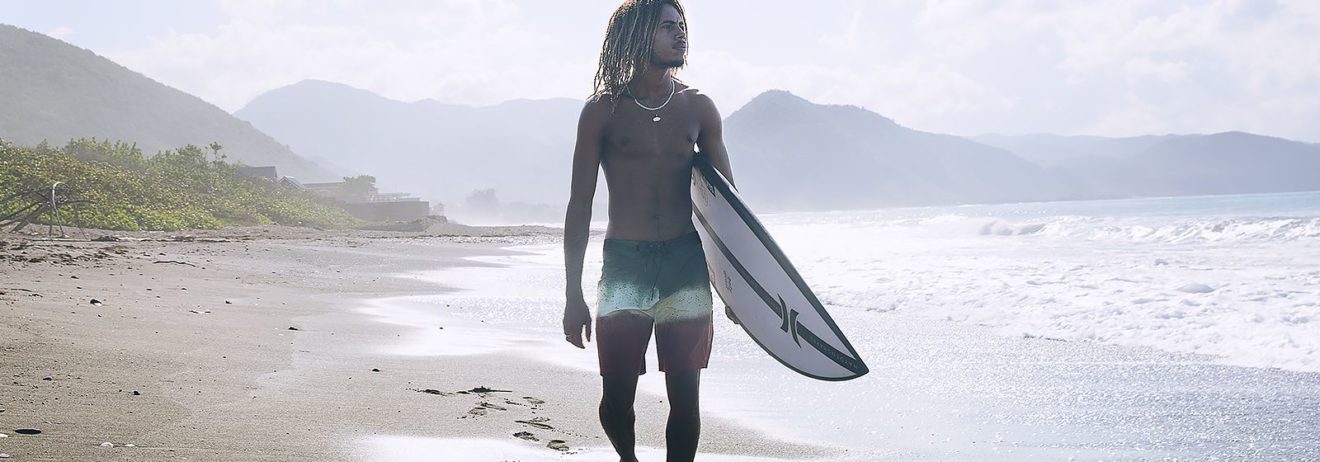
    Nike is considering the sale of its Hurley surfwear brand, according to a Reuters report.

    A general downturn in the sector has pushed other industry players within the space into significant difficulties, including rival brand Quiksilver – which filed for bankruptcy in 2015. Nike’s potential sale of its Hurley brand is reportedly likely to be a reaction to the same trends and an indication that the surfwear segment is not showing signs of recovery.

    “The surf/skate market has been soft,” said NPD Group VP and senior industry adviser of sports Matt Powell. “Hurley has not been a growth story for some time.”

    Nike’s potential sales price for the brand has not been disclosed.

  • Billabong shares dive on omni write-off

    Billabong shares dive on omni write-off

    Shares in Billabong have skidded as the struggling surfwear retailer said it will take an $11.7 million hit after terminating the service provider engaged to integrate its wholesale, retail stores, e-commerce and social media platforms on line.

    Billabong shares finished six cents, or 7.3 per cent, lower at 76 cents on Friday.

    The retailer said despite the impairment it remains committed to rolling out its “omnichannel solution” – part of a strategic turnaround implemented over the past 12 to 18 months.

    The company says it expects to do so close to its original budget estimate and anticipates the first of its new e-commerce websites, Surf Dive ‘n’ Ski, will be launched before the end of 2017.

    In February the retailer downgraded its full-year earnings guidance after its first-half loss widened to $16.1 million.

    The Gold Coast-based retailer said at the time it expected full-year earnings before interest, tax, depreciation and amortisation (EBITDA) of between $52 million and $57 million, down from the previous forecast of $60 million to $65 million.

    The company had flagged that full-year earnings would rely heavily on the second-half, when the Americas business is expected to pick up significantly.

    Billabong will release its full-year results on August 30.

    In June, the surfwear brand appointed ex-Nordstrom executive Jim Howell as its chief financial officer, replacing Peter Myers who has served in the role since January 2013.

    Billabong also recently sold off the Tigerlily brand from its portfolio, as part of trimming the business and paying down debt.

  • Facebook, Microsoft team for mid-Atlantic cable

    Facebook, Microsoft team for mid-Atlantic cable

    On what do Facebook and Microsoft agree? Apparently, on the need for a new transatlantic cable between Spain and Virginia in the US. The MAREA cable system was announced yesterday, with the software and social networking giants working with Telefonica’s Telxius subsidiary to make it happen.

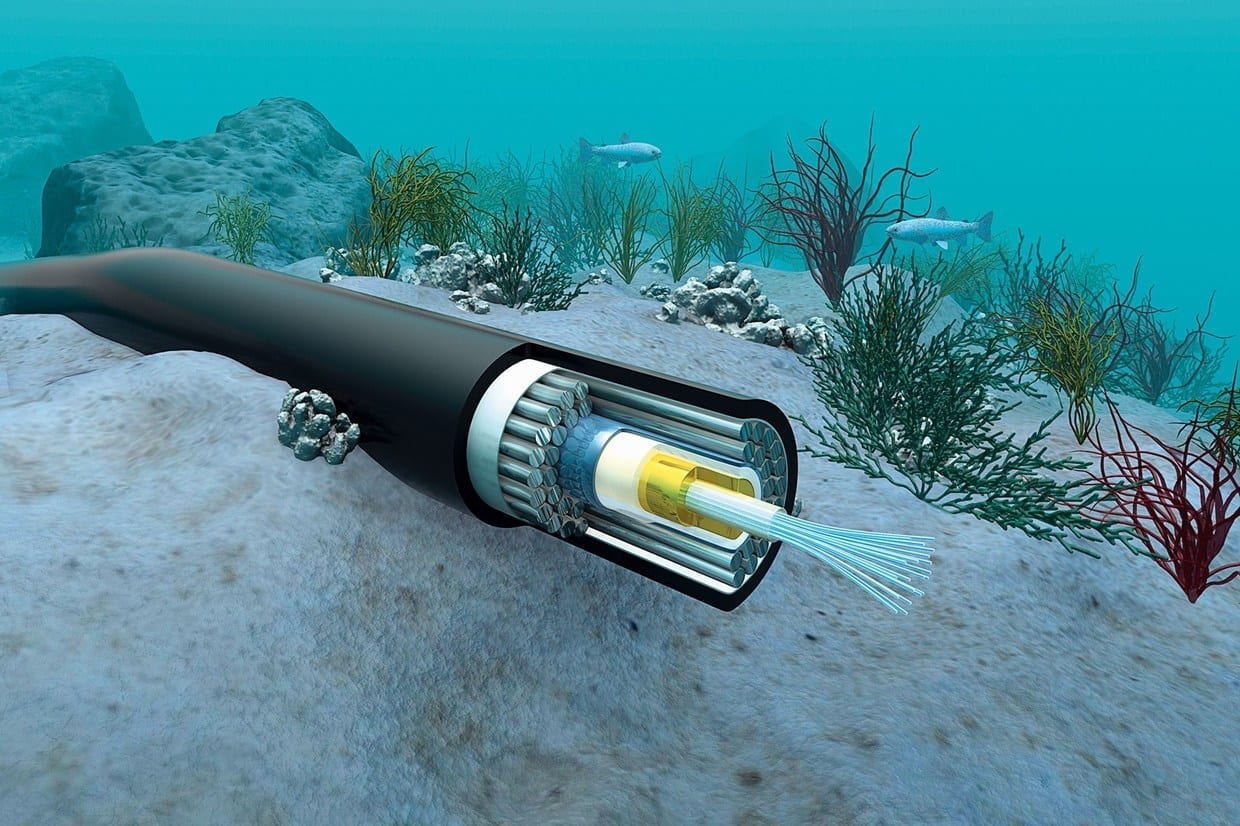
    MAREA will supposedly feature 8 fiber pairs and have an initial theoretical capacity of a whopping 160Tbps. It will stretch 6,600km and land in Bilbao in northern Spain and in Virginia Beach. That route takes a less popular southern route to Europe a bit north of the one taken by the aging Columbus system.

    The Virginia Beach landing can be better understood if one recalls that Telefonica’s BRUSA cable hooking up North and South America will also be landing there.

    Just last week we learned that Telefonica has already bought a 3.5 acre site there for a 20,000 square foot building for its cable landing station and data center there. In addition, fiber operators like SummitIG and Lumos Networks have been adding fiber infrastructure throughout southern and central Virginia that will surely help with the backhaul.

    Telxius will operate and manage the cable system itself. Telefonica launched Telxius as its infrastructure arm earlier this year, shifting ownership of towers, subsea cable systems, and other assets into it.

    They hope to monetize those assets in the wake of the blocking of the sale of O2 in the UK, and supposedly this week added several banks to prepare for a $4 billion to $5 billion IPO. That could happen as soon as July.

    This past year has seen the most submarine activity ever from the content guys, and they are increasingly taking the lead on new cable systems they feel are needed to meet their own bandwidth demand.

    Construction of the MAREA cable system is expected to begin in August and finish in October of 2017, although I’m sure they’ll have to time the actual cable laying operations around the Atlantic hurricane season.