Tag: office leasing

  • Swire Cuts Taikoo Place Office Rents 14 Percent

    Swire Cuts Taikoo Place Office Rents 14 Percent

    Swire Properties signed office leases at an average 14 percent discount to expiring rents across Taikoo Place, excluding its newest tower, in the first nine months of 2026, failing to catch Central’s rebound.

    The negative rental reversions covered 934,991 square feet of new and renewed tenancies through September, according to the developer’s quarterly operating statement released on Thursday.

    Occupancy across the established Quarry Bay portfolio edged up to 90 percent from 89 percent at the end of 2025. Two Taikoo Place, the one-million-square-foot tower opened in September 2022, remained stuck at 80 percent occupancy at the end of September. That figure was unchanged from June, though higher than the 73 percent recorded at the end of last year.

    Discounts Spread Across Island Portfolios

    Price cuts were not isolated to Hong Kong East. At Pacific Place in Admiralty, on the edge of Central, Swire recorded negative rental reversions of 12 percent through September, even as occupancy rose to 97 percent from 96 percent at year-end. In leasing terms, rental reversions track the rate difference between incoming leases and expired contracts rather than prevailing headline rates.

    Within Taikoo Place, One Island East and One Taikoo Place together logged negative reversions of 13 percent, with occupancy rising to 92 percent from 91 percent at the end of 2025. Other established towers across the Quarry Bay hub booked average reversions of negative 14 percent, with occupancy moving up a point to 89 percent.

    The landlord secured major commitments during the period, including a 200,000-square-foot renewal by BNP Paribas and a renewal and expansion to 83,000 square feet by Prudential Hong Kong. FWD also committed to 330,000 square feet for ten years. None of those deals prevented contract values from resetting lower.

    Central Pulls Divergent District Numbers

    The pricing drag highlights a sharp geographic split across Hong Kong commercial property. Across the city, Grade A office rents rose 0.7 percent in September from August, driven by a 1.6 percent increase in Central, based on JLL data. Citywide vacancy fell for a fifth straight month to 12.4 percent, the lowest level recorded since May 2023.

    Vacancy in Central fell to 7.2 percent in September from 7.8 percent in August. In Hong Kong East, vacancy widened to 14.3 percent from 14.1 percent.

    Agency figures from Knight Frank show Central net effective rents jumped 22.4 percent year on year in the third quarter. Quarry Bay rents dropped 4.4 percent over the same period, despite inching up 0.2 percent from the second quarter. The gap leaves decentralized landlords exposed to prolonged cash-flow drag while core financial district blocks take the initial tenant recovery.

    Retail Cash Flow Offsets Corporate Leases

    Swire found financial ballast in consumer spending. Across mainland China, tenant sales at Beijing’s Taikoo Li Sanlitun surged 59.8 percent year on year in the first nine months, reaching 100 percent occupancy. Sales at Shanghai’s HKRI Taikoo Hui climbed 52.6 percent, with occupancy at 97 percent.

    Taikoo Li Chengdu recorded an 11.3 percent sales gain, while Taikoo Li Qiantan in Shanghai rose 10.2 percent. Both developments stood at 98 percent occupancy at the end of September.

    Hong Kong retail assets also held firm. Pacific Place tenant sales grew 14.8 percent over the nine months, Citygate Outlets rose 14 percent, and Cityplaza gained 2.3 percent. All three shopping centres maintained 100 percent occupancy.

    Capital Recycling and Redevelopment Timeline

    Consumer gains are steering Swire toward Chinese public investment markets. The developer is actively reviewing domestic real estate investment trusts to unlock cash from mainland properties, with no specific seed assets or public listing timetable determined yet.

    Work also continues on its home turf. Swire and Chinachem Group have detailed a plan to build a 27-storey office tower by combining Swire’s Sea View Building and Hoi Wan Building sites with the adjacent Chinachem Exchange Square. The 35,000-square-foot combined site will support 500,000 square feet of gross floor area, including a retail podium, subject to planning approval.

    Swire and Chinachem scheduled construction to begin in 2027, with completion targeted for 2032. On the mainland, Swire secured an occupation permit for Phase A of CDF Taikoo Li Sanya in August and for the west parcel of Taikoo Place Beijing in September.

  • Metro Manila Office Completions to Hit 231,600 Square Metres in Q4 2026

    Metro Manila Office Completions to Hit 231,600 Square Metres in Q4 2026

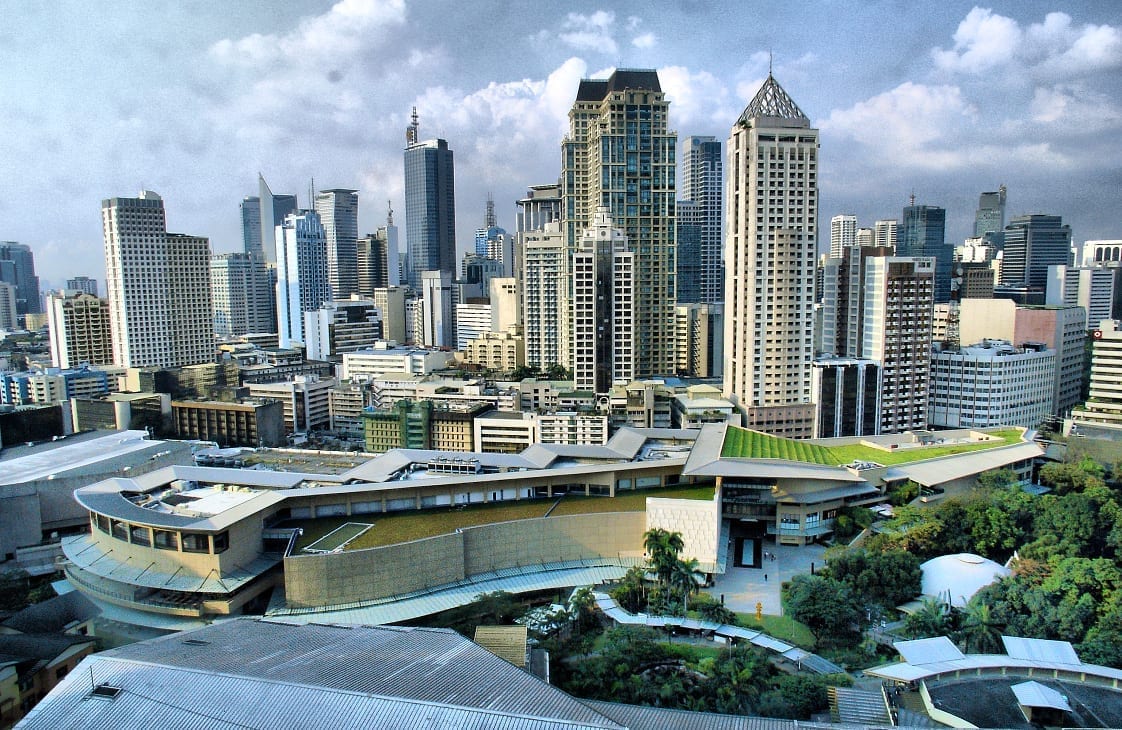
    Metro Manila faces 231,600 square metres of Grade A office space scheduled for delivery in the final quarter of 2026 after construction slippages left third-quarter handovers at just 16,900 square metres. The delivery pileup threatens to tip metropolitan vacancy past 20 percent before January.

    Property data from Savills Philippines shows the fourth-quarter concentration accounts for roughly 70 percent of the 329,800 square metres projected for completion across all of 2026. Developers completed only 9 percent of the 183,400 square metres originally slated for handover between July and September.

    Delays Funnel Handouts into Year-End

    Three developments slipped out of the third quarter: Yuchengco Centre, Offices at the Galleon, and SM North EDSA Tower 5. These join Southfield Center and Spectrum in a crowded fourth-quarter schedule that adds about 2.3 percent to the capital region’s total office stock in three months.

    The supply arrives as tenant demand weakens. Metro Manila recorded negative net absorption of 23,900 square metres in the third quarter, down from positive take-up of 144,700 square metres in the second quarter. While gross leasing took up 118,200 square metres, tenants surrendered 142,100 square metres as business operators consolidated, relocated, or trimmed their operating floors.

    Rents Resist Mounting Vacancy Across Key Hubs

    Average Grade A monthly rents across Metro Manila still rose 0.5 percent quarter on quarter to 861.10 pesos per square metre, logging a third straight quarterly advance. Bonifacio Global City stood out as the sole major commercial district to discount space, with rents sliding 0.4 percent to 1,089.60 pesos per square metre.

    Other districts pushed rates higher despite mounting vacancies. Alabang posted the steepest climb at 2.8 percent, while Ortigas Center and Quezon City recorded 1.5 percent increases. Total vacant space across the metropolis reached 1.96 million square metres at the close of September, lifting the overall vacancy rate to 19.2 percent from 18.9 percent in June.

    Makati and Quezon City Face Supply Pressure

    Makati central business district faces sharp vacancy increases once Yuchengco Centre opens its doors. Savills projects the district rate will jump to around 23 percent by December, up from 20.9 percent in the third quarter, after Makati shed 2,100 square metres of occupied space. Gross leasing in the district fell to 13,700 square metres from 24,800 square metres in the prior quarter, though monthly rents rose 0.8 percent to 999.50 pesos per square metre.

    Quezon City registered the sharpest deterioration among all submarkets, with vacancy jumping to 23.1 percent from 19.8 percent in the previous three-month period. A major corporate departure triggered negative net take-up of 30,900 square metres, and completions before December could elevate district vacancy to 26 percent.

    Bay Area Leads Vacancy as Ortigas Center Tightens

    Ortigas Center proved an outlier by logging four straight quarters of declining vacancy, ending September at 18.6 percent with positive net absorption of 7,800 square metres. That reprieve will prove short-lived, with 81,700 square metres of new offices due by the end of the first quarter of 2027, an addition equal to 6 percent of the district’s footprint that could drive vacancy back to 22 percent.

    The Bay Area remains the most oversupplied market in Metro Manila, sitting on an empty-space rate of 35.3 percent despite absorbing 11,600 square metres during the third quarter. Projections indicate Bay Area vacancies will reach 36 percent by year-end and hover near that band through 2027 as more buildings finish construction.

    The contraction in third-quarter absorption broke a streak of six straight quarters of positive net absorption that had held firm since late 2024. Corporate real estate directors now face an aggressive tenant-favoured market as 231,600 square metres of new office space is scheduled for delivery in the fourth quarter.

  • Hong Kong Prime Office Rents Outpace New York as Central Vacancy Falls to 7.8 per Cent

    Hong Kong Prime Office Rents Outpace New York as Central Vacancy Falls to 7.8 per Cent

    Morgan Stanley sees stronger upside in Hong Kong prime office towers than in New York. Central district rents rose 7.3 per cent.

    Vacancy in the core financial hub fell to 7.8 per cent in August from 11.2 per cent a year earlier. Prime office vacancy across the wider city dropped to 12.5 per cent from 13.5 per cent over the same period.

    This pattern mirrors shifts in Manhattan, where top properties tighten ahead of secondary districts. Both hubs share monetary conditions. Hong Kong pegs its currency to the US dollar, which forces local borrowing costs to track US Federal Reserve policy.

    Central leads the recovery

    Tenant demand in Hong Kong clusters in core financial quarters. Towers in Central took the bulk of new leasing. That gave landlords room to lift asking rents after years of post-pandemic stagnation.

    A split between premium and secondary districts is widening. Central posted sharp vacancy drops. Outlying hubs like Kowloon East struggle with oversupply, capping rent recovery outside the core.

    Quality and location drive uptake across the market. Financial institutions and global firms use lower baseline rents to upgrade into Grade A assets. They avoid adding space in decentralized areas.

    Manhattan parallels and rate pressures

    Manhattan data reveals a similar divide. Vacancy in Class A office towers fell 2.1 percentage points year on year to 10.6 per cent in the second quarter of 2026. Rents rose 4.3 per cent, returning leasing activity to pre-pandemic volumes.

    Prime Manhattan submarkets operate at 5 to 10 per cent vacancy, while weaker pockets sit in the mid- to high teens. Commercial capitalization rates reached roughly 8.5 per cent in the second quarter. That touches the upper band of the city’s historical range since 2003.

    Land scarcity gives Hong Kong landlords an advantage over US peers. Tight site supply in Central provides floor pricing as space absorbs. This protects prime assets against overbuilding.

    Capital values lag cash flows

    Asset pricing in Hong Kong still lags operating gains. Prime office capital values remain 50 per cent below earlier peaks. That leaves a wide gap between rental yields and transaction prices.

    Cash flows are recovering faster than capital values in both cities. The trend favors established landlords with low debt over developers reliant on quick land sales and rapid project turnarounds.

    “Higher rates transmit differently into these two cities,” said a team of authors led by Praveen Choudhary, head of Hong Kong and India property research at Morgan Stanley. “Scarcity matters more than rates. We prefer Hong Kong landlords over New York City office owners or Hong Kong developers.”

    Kowloon East oversupply risks

    Hong Kong’s primary risk sits outside the main business district. Kowloon East holds a large pipeline of vacant space. Secondary landlords must discount terms and study alternative land uses.

    Divergence between core towers and outer hubs will sharpen as new supply delivers. Landlords in Central retain pricing power, while secondary owners face sustained cash flow pressure.

    Attention turns to fourth-quarter leasing figures and debt refinancings to see if Central holds its sub-8 per cent vacancy into 2027.

  • Hanoi Grade A Towers Add Retail Floors as Office Pipeline Hits 495,000 Sq M

    Hanoi Grade A Towers Add Retail Floors as Office Pipeline Hits 495,000 Sq M

    Hanoi commercial developers are allocating ground floors and podium levels to retail tenancies to protect leasing rates ahead of 495,000 square metres of new Grade A office supply entering the market by 2028.

    Eighteen office projects, concentrated heavily in Hanoi’s western business district, are introducing dedicated retail, dining and wellness hubs to compete for multinational tenants.

    The Starlake Model and Layout Shifts

    Parc Hanoi, a Grade A office project in the Starlake township, has dedicated its entire ground floor to consumer retail and dining. The developer placed a wellness centre, meeting suites and open event spaces across Level 2, pairing physical workspace with consumer services in a bid to secure corporate leases.

    The push reflects shifts in corporate occupier demands across Southeast Asia. A CBRE occupier survey showed 92 per cent of corporate respondents ranked collaborative zones and lifestyle amenities as critical to employee retention and productivity, while 64 per cent prioritized green spaces and natural ventilation.

    Regional Blueprints in Singapore

    Hanoi landlords are replicating models tested in Singapore, where mixed-use office towers use food and beverage to generate revenue outside core business hours. The PLUS tower in Raffles Place runs two floors of retail, gyms and spas underneath prime office suites.

    Marina One in Singapore operates 14,000 square metres of commercial floor plate across its retail podium, The Heart. That space combines supermarkets, gyms and food operators that draw foot traffic through the weekend, ensuring seven-day tenant revenue rather than relying purely on weekday office workers.

    Yield Risks for Commercial Landlords

    Integrating retail into Grade A office towers shifts the commercial risk profile for developers. Office leases in Hanoi typically run on fixed three-to-five-year commercial terms, whereas food and lifestyle tenants require lower base rents, revenue-share structures and higher capital outlays for exhaust, plumbing and grease traps.

    Landlords that misjudge the mix face dead ground-floor space that damages the building’s corporate positioning. Success depends on securing anchor food and convenience brands that turn daily office footfall into steady cash flow without crowding corporate lobbies.

    Supply Pipeline Builds in Western Hanoi

    The developer push comes after five years of decentralized expansion across Hanoi, where western districts drew corporate tenants away from the central Hoan Kiem district. The western submarket now accounts for the largest share of modern floor space under construction in the city.

    Developers will deliver the bulk of the 495,000 square metres across western Hanoi over the next 24 months. Leasing teams are tracking whether podium retail commitments can hold Grade A effective rents steady as all 18 towers open for handover before the end of 2028.

  • Apollo Extends $585 Million Financing to the Executive Centre

    Apollo Extends $585 Million Financing to the Executive Centre

    US-based asset manager Apollo Global Management has extended $585 million in financing to office space provider The Executive Centre, the company announced on Tuesday.

    Proceeds from the deal will be used to refinance existing debt and support expansion plans for Hong Kong-headquartered TEC, which operates more than 260 centres across 38 cities in the Asia-Pacific region and the Middle East.

    Refinancing and expansion terms

    The facility restructures TEC’s balance sheet and provides fresh liquidity for capital expenditure. Flexible office operators need steady outlays to fit out premium corporate floors before lease income starts flowing. Long-term private credit locks in funding for Tier 1 commercial openings. Crucially, it avoids equity dilution.

    Prime financial district locations and enterprise contracts define the model, covering serviced offices, boardrooms and business lounges in Grade A towers rather than low-cost coworking hubs. This setup shields the business. It avoids the volatility that hit mass-market desk-sharing operators.

    Premium workspace economics

    Fresh capital gives the company runway to expand into secondary regional hubs where multinational corporate demand remains steady. Landlords across Tokyo, Singapore and Sydney continue allocating square footage to managed workspace partners to fill vacancies in prime towers. TEC absorbs that floor space under long-term leases or management contracts, passing fit-out costs through structured enterprise fees.

    Financial risk sits in the spread between fixed master-lease commitments and corporate tenant retention. Private credit lenders like Apollo demand strict debt service coverage. Occupancy rates in core gateway markets must therefore hold above historical averages to justify ongoing expansion costs.

    Funding pipeline

    Talks for the loan package surfaced in August, when initial reports indicated TEC sought roughly $500 million for debt refinancing and capital expenditures. Apollo expanded the final facility to $585 million. The larger package clears near-term maturities and backs additional fit-outs.

    Attention now turns to the deployment pace across key Southeast Asian and Middle Eastern growth corridors, where the company plans to commission its next batch of Grade A centres.