Retail News CRM

Tag: offline store

  • Time for South Korean cosmetics to face challenges

    Time for South Korean cosmetics to face challenges

    South Korean cosmetics stores that have been the drivers of the ‘K-Beauty’ industry for the past 15 years are facing a crisis, exposing their limitations. The cosmetics industry is undergoing a series of transformations due to decreased demand from China and a change in distribution structure resulting from stagnant domestic demand and increased competition.

    Nowadays, it is common to see health and beauty shops (H&B) such as Olive Young and LOHBs reorganise and shift their main focus online.

    According to cosmetics industry analysts, the size of the South Korean cosmetics stores’ market was 2.29 trillion won (US$2.05 billion) in 2017, which reflects a rapid decrease since the peak in 2016. It is estimated that total sales last year decreased by 15 per cent from the previous year.

    With sales decreasing, the industry is closing down branches. The number of South Korean cosmetics stores began to shrink in 2017 and is estimated to have fallen to 5200 last year.

    Popular brand Skinfood is facing an imminent crisis. The company, once a huge hit with the phrase “Don’t eat, give it to your skin” entered corporate restructuring last October, after encountering difficulty securing liquidity due to excessive debts.

    Those who suffer the most in the process are franchise owners, who are protesting that the company is trying to avoid the worsening situation without taking responsibility.

    The causes of the decline of the retail shop are numerous. The first reason is the excessive competition within the industry.

    Add to this, China’s retaliatory actions as part of the THAAD missile crisis in 2017 led to huge decrease in sales.

    Changes in distribution structure have also played a role. H&B shops are now leading the market, offering a variety of brands in one place, instead of a closed structure.

    These types of stores are a gaining competitive edge as they can sell occupy low and medium-priced brands and new venture brands as well as establish strategic products.

    Retail shops became a mainstream cosmetics market in the early 2000s. Amid the economic slump, retail shops continued to grow in number as brands gradually added fast product launch strategies and functional products aligned with trends based on affordable prices.

    Chinese tourists clearing out the shops in the wake of the Korean wave contributed to the growth of retail shops. However, in the current situation, retail shops are only beginning to restructure.

    While some chains of South Korean cosmetics stores are choosing to downsize their branches, others have chosen to invest aggressively.

    Those who chose aggressive investment plans in a bid to become global cosmetics companies hope to achieve economic success despite the difficult situation and uncertain prospects for the future.

  • Order now, deliver later by GU fashion

    Order now, deliver later by GU fashion

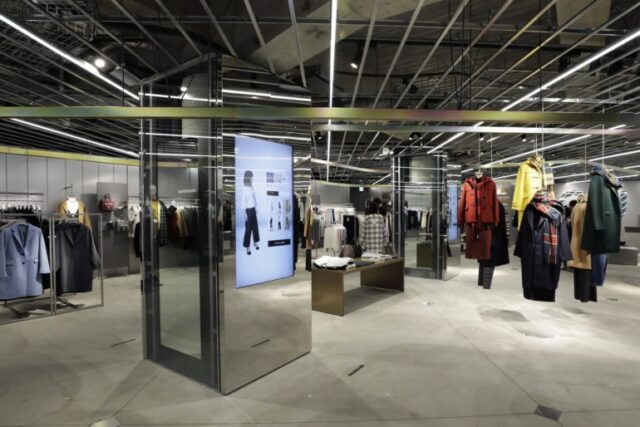
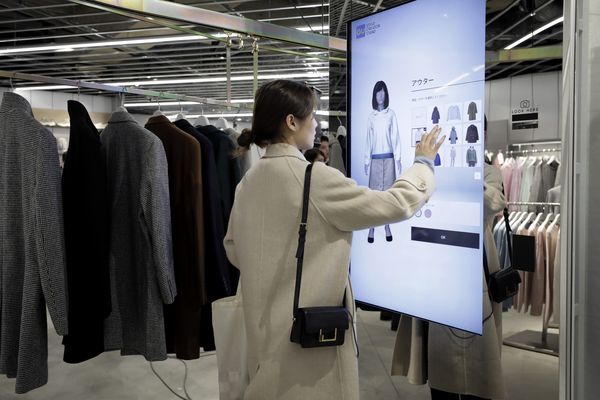
    A brand-new store opened last week in Tokyo’s Harajuku fashion district but it has a twist: shoppers are meant to walk away empty-handed. The GU Style Studio store, opened by Asia’s largest clothier and Uniqlo operator Fast Retailing Co., is for customers to try apparel and place orders online for later delivery.

    They can also try out extra services, such as playing with clothing combinations on a virtual mannequin and creating a digital avatar.

    Although the notion of showcase shopping has been around for a while, and remains somewhat popular in Europe, such stores have usually been reserved for electronics, household items and knick-knacks.

    Seldom has the idea been ported over to the clothing sector. But, as the rise of e-commercethreatens to upend the global retail industry, apparel makers are experimenting with new ways of selling clothes.

    “Among large specialty chain retailers, Fast Retailing has one of the most developed digital strategies,” said Dairo Murata, an analyst at JP Morgan Securities. “They are doing it all in-house, and it allows them to be more competitive.”

    The line separating online and offline storefronts is becoming blurrier as e-commerce moves into physical locations and brick-and-mortar retailers shift online.

    That’s resulted in new shopping experiences such as Amazon’s Prime Wardrobe, which sends boxes of clothing to customers to try on, letting them send back what they don’t like.

    GU isn’t the first to open a try-on store; Inditex SA’s Zara also temporarily opened a look-and-buy outlet in Tokyo’s Roppongi district this year.

    GU has steadily grown into a key pillar of Fast Retailing’s business, accounting for about 10 percent of revenue in the latest fiscal year. It has almost 400 stores across Asia, mainly in Japan, Taiwan and mainland China, and is known for being more affordable and more fashion forward than its bigger sibling, Uniqlo.

    The GU brand has also historically been more experimental with technology, being the first in Fast Retailing’s portfolio to introduce RFID tags and self-checkout.

    In 2017, a futuristic digital store popped up in the city of Yokohama with screens on shopping carts recommending various clothing combinations as people walked through the store.

    JP Morgan’s Murata said GU’s new Harajuku outlet could be a template for rolling out smaller shops in cities that don’t have space to store inventory. He said it could be applied to Uniqlo as well. But Osamu Yunoki, GU’s chief executive officer, said the company hasn’t decided whether to adopt the concept for Fast Retailing’s other brands, or other conventional GU stores carrying inventory.

    Shoppers at the new GU store can scan QR codes attached to clothes to bring up purchase links on their phones, and are also encouraged to test clothing combinations on a virtual mannequin on a separate app. Cameras placed in the store capture can also be used to create a virtual avatar of shoppers, although the resemblance was unconvincing.

    The store is able to collect and use data on how customers are shopping, such as what items customers are scanning into their phone, which clothing they try on and whether they purchase it or not. That could serve an important function for Fast Retailing’s efforts to automate its entire supply chain.

    “That kind of data from customers can be connected immediately to product development and manufacturing plans,” Yunoki said.

    At the same time, he said, the company is trying to offer something new for shoppers.

    “We’re fusing the in-store experience and e-commerce to offer a fun and convenient experience,” Yunoki said. “Harajuku isn’t just for shopping, it’s also a place where fashion is created. We’d like to use our customer’s creations as a stimulus for developing new types of fashion.”

  • Pomelo to have first offline store in Singapore

    Pomelo to have first offline store in Singapore

    Bangkok-based online-to-offline retailer Pomelo Fashion is to open its first physical store in Singapore.

    Pomelo Fashion, founded by former Lazada Thailand MD David Jou and which includes JD and Central Group on its shareholder register, sees the move as a logical step in its Southeast Asia expansion ambition.

    The vertically integrated business sources its own materials and contracts manufacturing partners to produce the clothes it designs and retails. It allows customers to view and choose a product online before it is shipped direct, or to a store for trying on the fit, thus merging the convenience of online shopping with offline, in-store service.

    Despite being headquartered in Bangkok, Pomelo Fashion sees itself as”a global fast-fashion brand for a digital world,” always on-trend and affordable.

    Currently, Pomelo Fashion has just two “micro-retail sites” in Bangkok – at Interchange 21 in Asok and at All Seasons Place in the CBD. But it has identified 800 potential sites for such stores in Thailand in the long term. It has also opened short-term pop-up stores in prime shopping areas to help raise the brand’s profile, including a space inside Tang’s department store on Orchard Road. With its buy-and-try business model, the company does not have to shoulder the expense of leasing the larger-footprint stores its offline rivals require to display broad ranges.

    “Discovery for fashion is going online, where you’re not constrained by having to display the entire catalogue,” Jou said in a media interview last week. “But e-commerce for fashion is plagued by the problem of returns because the clothes don’t fit or they don’t look good. Having the online-to-offline model cuts down returns because the consumer only buys what they have tried on.”

  • Hong Kong shops struggle as holiday season approaches

    Hong Kong shops struggle as holiday season approaches

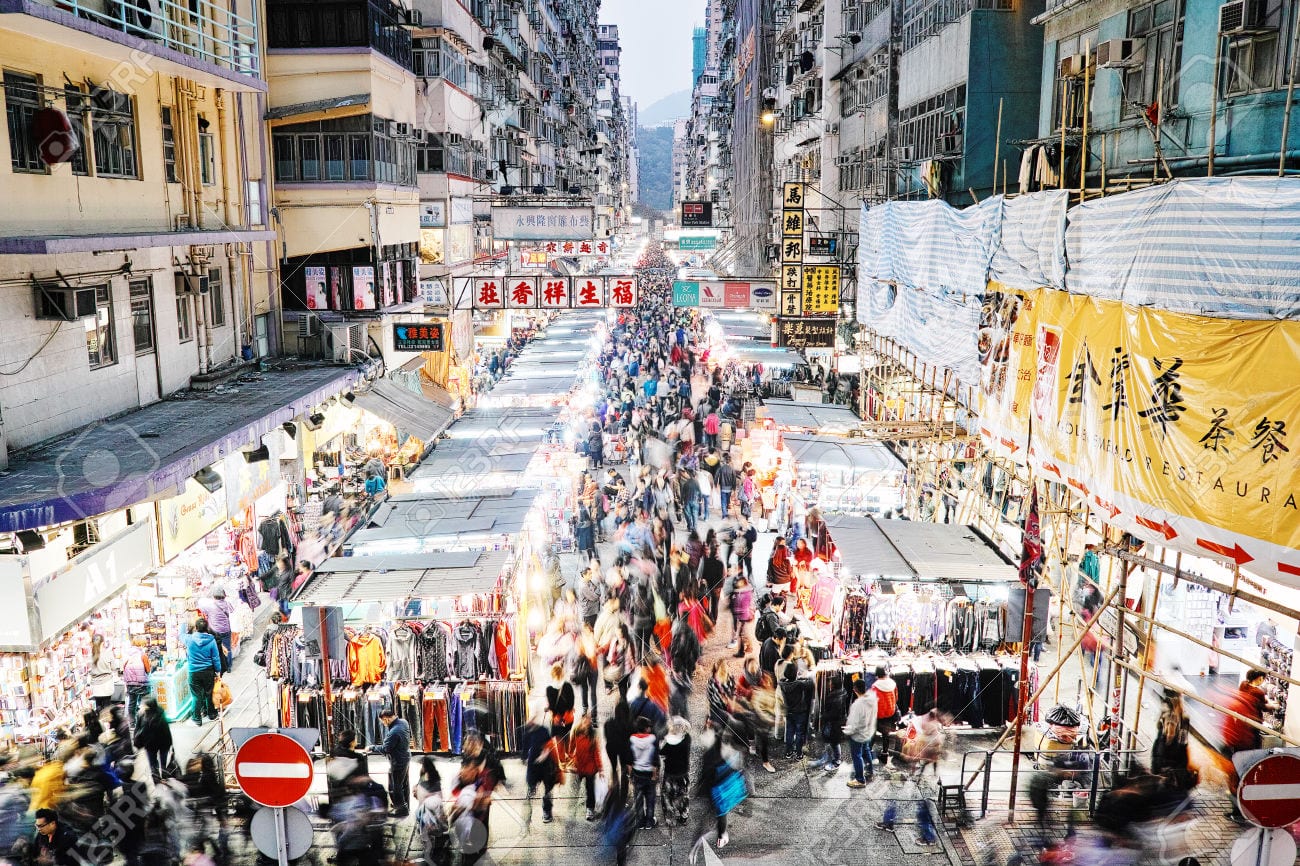
    Hong Kong’s retailers are facing an uphill battle to entice customers into their stores a week before Christmas in the final present buying rush, consumer analysts have said.

    The local retail market has been plagued by a dip in sales this year, attributed in part to a plunge in the number of visitors from the mainland, who account for about 75 per cent of tourists to the city.

    In October, retail sales fell for the 20th month by 2.9 per cent to HK$36.1 billion. But the slump had levelled slightly, from a 10.5 per cent fall in August to a 4 per cent dip in September.

    Many shops brought their Christmas promotions forward by at least two weeks this year to counter the sales decline. The city’s more westernised customer base also meant Christmas remained the annual peak retail season, with sales even higher than during Lunar New Year, the Hong Kong Retail Management Association said.

    Retailers have been increasingly trying to target visitors from Thailand and Malaysia because of the drop in the number of mainland visitors.

    The overall number of tourists to the city in October this year showed a 5.7 per cent decline compared with October 2015, from 5,073,494 to 4,953,705. Despite the dip in mainland visitors, there was an increase in those from “long haul markets”, including the United States, Britain and Germany, according to the Hong Kong Tourism Board.

    Retailers also faced strong competition from online outlets such as Amazon Japan and Taobao, which offer many products at heavily discounted prices.

    Cityplaza on Taikoo Shing Road, Quarry Bay was among the malls pulling out all the stops to attract Christmas shoppers. Its “Look Up Live Happy” campaign featured 50 giant teddy bears flying in hot air balloons, a 180-degree photo booth for customers and a symphonic light show.

    Consumer analysts said Hong Kong’s retailers needed to work harder to improve the efficiency of the customer experience, boost their overall customer service, come up with more innovative incentives and promotions, as well as develop their own online shops to remain competitive.

    Tanya Lau, director and head of consumer and retail practice at Harvey Nash Executive Search APAC, said retailers faced “tough global market conditions” and needed to “keep pace” with changing consumer behaviour.

    “For retailers to stay competitive, they need to specifically understand the customer journey and every detail of what they desire,” she said. “They need to [create] a seamless shopping experience … across all platforms. With a week to go until Christmas, making the buying process as easy as possible is essential.”

    Lau said businesses also needed to make technological improvements, such as introducing electronic payments, and providing better online buying services.

    Meanwhile, Professor Leslie Yip, programme leader of retail management at the Technological and Higher Education Institute of Hong Kong, said many locals would rather use their money for holidays than spend it in local shops. He said retailers needed to work harder to ­understand shoppers’ behaviours, and improve the variety and price range of products, and the overall efficiency.

    “The shopping experience here is kind of inefficient,” he said. “There are not enough self-checkout services; many shoppers are impatient for this. [Some retailers] lack variety due to shop space.

    “They should consider that tourists … have limited time yet want to maximise their shopping experience, while local shoppers want to maximise their experience within a given budget.”

    Yip suggested mall owners should explore ways to promote “mall hopping” across their different retail outlets, such as online treasure hunts, as many shopping centres were located within a short distance of one another.

    But Thomson Cheng, head of the Hong Kong Retail Management Association, said he expected Christmas sales to be “stable” after a “tough year for retailers”.

    He said they had made efforts to promote Christmas early this year to beat the slump, and were expecting a boost to sales next month because of an early Lunar New Year. “We are seeing light at the end of the tunnel,” he said.

    “Retailers need to look at how they can contain costs now. February and March next year will be the hardest time. Shops need to nurture local spending.”

  • Offline stores turning crisis into opportunity

    Offline stores turning crisis into opportunity


    Will offline stores disappear?

    When consumers began online shopping in 1994, most of them could hardly imagine that offline stores might disappear. Online shopping was a mere subsidiary to offline stores, selling only a few items then.

    However, the volume of e-commerce has grown explosively over the past 20 years, blurring boundaries between online and offline.

    A sense of crisis in the retail business is different from the past. Mobile platforms dominate more than 40 percent of e-commerce sales, being the key to online-to-offline (O2O) commerce.

    Amazon, the world’s top e-commerce firm, has twice as many customers than offline No. 1 Walmart which has over 6,000 stores worldwide.

    In Korea, the sales of online markets between January and August this year hit 42 trillion won ($37 billion), rising 21 percent year-on-year, according to Statistic Korea (KOSTAT).

    If the current growth rate continues, its sales this year will reach 65 trillion won, about 5 percent of Korea’s gross domestic product (GDP) for the year. This figure surpasses Korea On-Line Shopping Association’s (KOLSA) early estimate of 60 trillion won. In 2001, the same figure was 3.3 trillion won.

    On the other hand, the growth of offline retail, conducted at department stores and discount chains, has been slow since 2013.

    Although saturating offline stores and governmental regulations on retail giants are some of the causes for the slump, a more important reason is the rapid growth of the online market.

    A virtual reality Nike shop located in Hyundai Department Store, Pangyo.
    /Courtesy of Hyundai Department Store

    Retail giants stepping into online

    To survive this trend, retail giants, the main concern of which are offline stores, began to expand their online platforms, as their offline channels have been left behind by fast growing e-commerce firms, such as Gmarket and Coupang.

    Korea’s largest retailers ― Shinsegae, Hyundai and Lotte ― have been focusing on the O2O business platforms which combine online markets with their existing retail networks. They have adopted the latest technology with their O2O businesses.

    Shinsegae Department Store released a mobile application “SHOP@” in February, promoting it as a “department store to be enjoyed by the eyes.”

    This application offers a panorama of the department store and shows dressed images of models, as well as photos of products which have been commonly offered by online shopping malls, including its own “SSG.com.”

    Unlike other e-commerce applications, SHOP@ customers can feel like they are in the store, because photos of products are taken as they are displayed at the offline store.

    More than 400 brands at Shinsegae Department Store are displayed by the application, as Shinsegae employees have taken pictures of the products and directly uploaded them to the application.

    Hyundai Department Store opened a virtual reality (VR) men’s wear store at the Jungdong store, Gyeonggi Province, Oct. 9.

    Customers can look around the department store and see mannequins dressed in whole outfits by accessing Hyundai’s online shopping mall “thehyundai.com” and following the arrows on the screen.

    If customers want to visit a certain brand shop, they just need to click the door icon and check details of the products at the VR store.

    Hyundai opened VR stores of Nike and Adidas at its Pangyo store, Gyeonggi Province, on a trial basis in July.

    The stores offered a full 360-degree view of the offline stores providing simple information of products. Hyundai Department Store plans to offer a 360-degree view of each product and to open a full VR department store by 2019.

    A Hyundai Department Store official said, “Our department store will provide different experiences, shifting offline stores to online.”

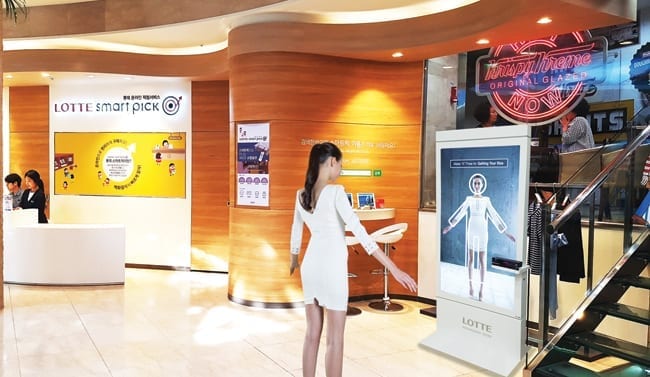
    Lotte Department Store introduced a 3D foot scanner in July. The Swedish-made scanner measures a customer’s foot size and analyzes conditions of the customer’s foot. Shoemakers can recommend and make the most suitable shoes for the customer. More than 1,800 customers had their feet scanned and over 800 ordered shoes as of September.

    Once their feet are scanned, customers can use the data at both online and offline stores.

    “Our department store has a 3D virtual fitting room and foot scanner, as examples of our new omni-channel service which connects online and offline,” a Lotte Department Store official said. “We will develop mobile applications for our customers to buy clothes and shoes with their smart phones.”

    Fighting fire with fire

    Although retail giants are expanding their online platforms, they are also finding ways to attract customers to their offline stores. Those giants are developing offline stores through experience which is hardly achieved in online markets.

    Heads of retail giants have recently stressed the importance of experience, targeting customers who seek to spend their leisure time shopping.

    “Shopping malls with experience are the future of offline stores,” said Hyundai Department Store CEO Kim Young-tae during the press conference at the opening ceremony of Hyundai City Outlet Dongdaemun in March. “Online shopping malls only display the products, but offline stores enable customers to touch and enjoy the products during their shopping.”

    Shinsegae Group Vice Chairman Chung Yong-jin said, “Customers want to gain both products and value, staying longer at a place where they have a reason to visit,” at the opening ceremony of Starfield Hanam in September.

    Lotte Mart CEO Kim Jong-in emphasized last year that discount chains should provide customers with new lifestyle experience. He said Lotte Mart will find an answer from “a space” which online malls lack.

    The latest technologies enable customers to experience offline stores without actually being there.

    Shinsegae Starfield Hanam attracts customers with “VR Fitness” at Sports Monster. Customers can enjoy scientific digitally-based exercises, such as VR fitness and bike-racing, at the recreational space.

    “Sports Monster and Aqua Field are advanced concept entertainment spaces that Starfield Hanam has been preparing for a long time,” a Shinsegae official said. “We expect those spaces to become new attractions, providing our customers with differentiated value through various exercises and experiences which they have never seen.”

    Lotte Department Store introduced the “Smart Shopper” service at its grocery stores at the Bundang store on Oct. 4.

    Customers can go shopping with barcode scanners and they do not have to push their shopping carts. If they scan items with their “Shopper” scanners, products are automatically added to their virtual cart.

    Customers can check added products on “Order Viewer” screens installed at several places in the store and can remove unnecessary items at automatic counters. Purchased items can be delivered to their home.

    Smart Shopper enables customers to check the actual products at offline stores, while resolving inconveniences of carrying them home.

    Duty free shops aim to provide experiences for customers with technology as well.

    HDC Shilla Duty Free plans to make an IT converged duty free shop, if its bid to open a new duty free shop will be successful.

    A state-of-the-art duty free shop with merged reality (MR), artificial intelligence (AI) and machine learning technologies is the company’s goal. The duty free shop plans to show hologram images, installing media walls and digital signage in the lobby.

    Examples in other countries

    Meanwhile, retail giants abroad have already gone through similar changes amid the crisis of offline stores.

    In 2014, British retailer Tesco unveiled its VR store which enables customers to look around the virtual store and purchase goods from there.

    The U.S. retailers Neiman Marcus and Nordstrom introduced smart mirrors for virtual dressing last year.

    The North Face stores in the U.S. have provided extreme VR experiences to attract customers to offline stores. If customers select clothes and wear VR devices, they can virtually wear selected clothes and experience extreme sports, such as jumping off a 128-meter cliff in the Grand Canyon.

     

  • Xiaomi eyes offline expansion

    Xiaomi eyes offline expansion

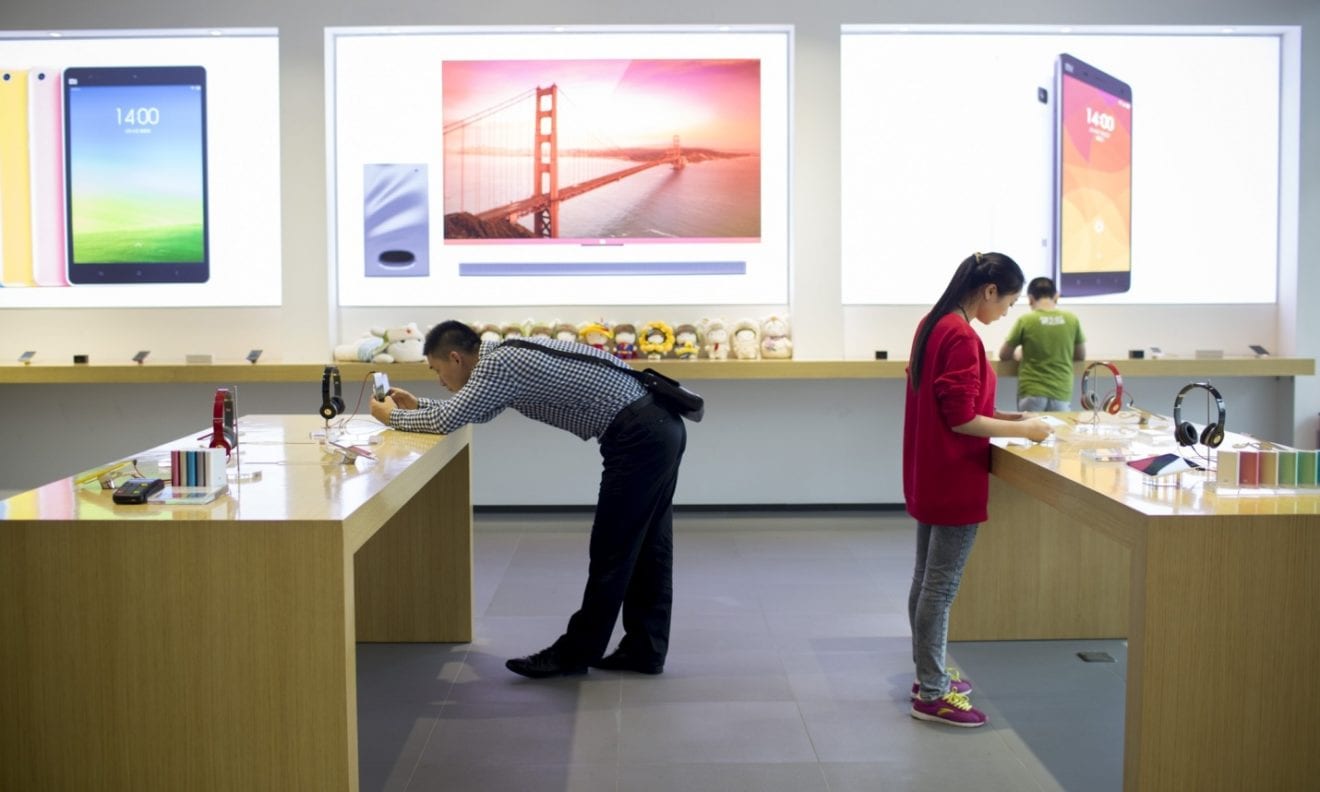
    Chinese smartphone vendor Xiaomi Corp unveiled a new smartphone with China Mobile Communications Corp on Thursday, as the company steps up efforts to expand offline retailing channels.

    China Mobile, the country’s largest telecom mobile carrier by subscribers, said it hopes to sell 30 million Xiaomi handsets this year, signaling a boost for Xiaomi, which is wrestling with declining shipments and mounting competition from rivals such as Huawei Technologies Co Ltd.

    Priced from 899 yuan ($136), the new phone, the Redmi Note 4, will be on sale at China Mobile’s 20,000 offline stores and more than 100,000 bricks-and-mortar retailing partners’ stores.

    Lei Jun, CEO of Xiaomi, said the company has sold more than 110 million smartphones under Redmi, a brand known for its cost-effectiveness. “The new phone is our latest effort to offer a quality smartphone that everyone can buy.”

    The move came as China’s online smartphone sales hit a ceiling, and market players are banking on bricks-and-mortar retail partners for growth.

    James Yan, research director at Counterpoint Technology Market Research, said it is highly possible to achieve the sales target, given China Mobile’s sprawling offline presence.

    “Telecom operators’ retail channels account for 30 percent of China’s total smartphone sales, and more than half of that are handled by China Mobile,” Yan said.

    The new phone’s good design and sophisticated body, better than most of Xiaomi’s previous phones, will also help boost sales. And the Beijing-based firm’s supply chain partner Wingtech Group is able to ensure an abundant supply of the new phone, he added.

    In 2015, China Mobile and Xiaomi jointly unveiled a smartphone called Redmi Note, whose total sales volume hit 27.5 million units, but that happened when Xiaomi was growing rapidly.

    The partnership between Xiaomi and China Mobile will also be expanded to Southeast Asia, as China’s smartphone market is reaching saturation point and local players are eyeing overseas markets for opportunities.

    Li Huidi, vice-president of China Mobile, said the company is making investments in India and Southeast Asian counties where Xiaomi has established a presence.

    “We will partner with hardware vendors such as Xiaomi to bring more domestic devices to overseas markets,” Li added.

    He did not disclose details, but analysts said it is likely for China Mobile to leverage its overseas investments or foreign partners to build retail channels for Chinese handsets.

  • Amazon chooses Oregon for latest offline store

    Amazon chooses Oregon for latest offline store

    Online retail giant Amazon has decided on Oregon as the location of its third brick and mortar store.

    The new store will open at the Washington Square mall just outside Portland, in what US media describe as a “bookish metro area” – Tigard.

    The retailer appears to be choosing sites which house Apple stores and are frequented by university students.

    Amazon’s first bookstore opened in Seattle’s University Village mall and its second in San Diego’s Westfield UTC mall.

    amazon-books-washington-squarejpg-8af21425db3e2dba

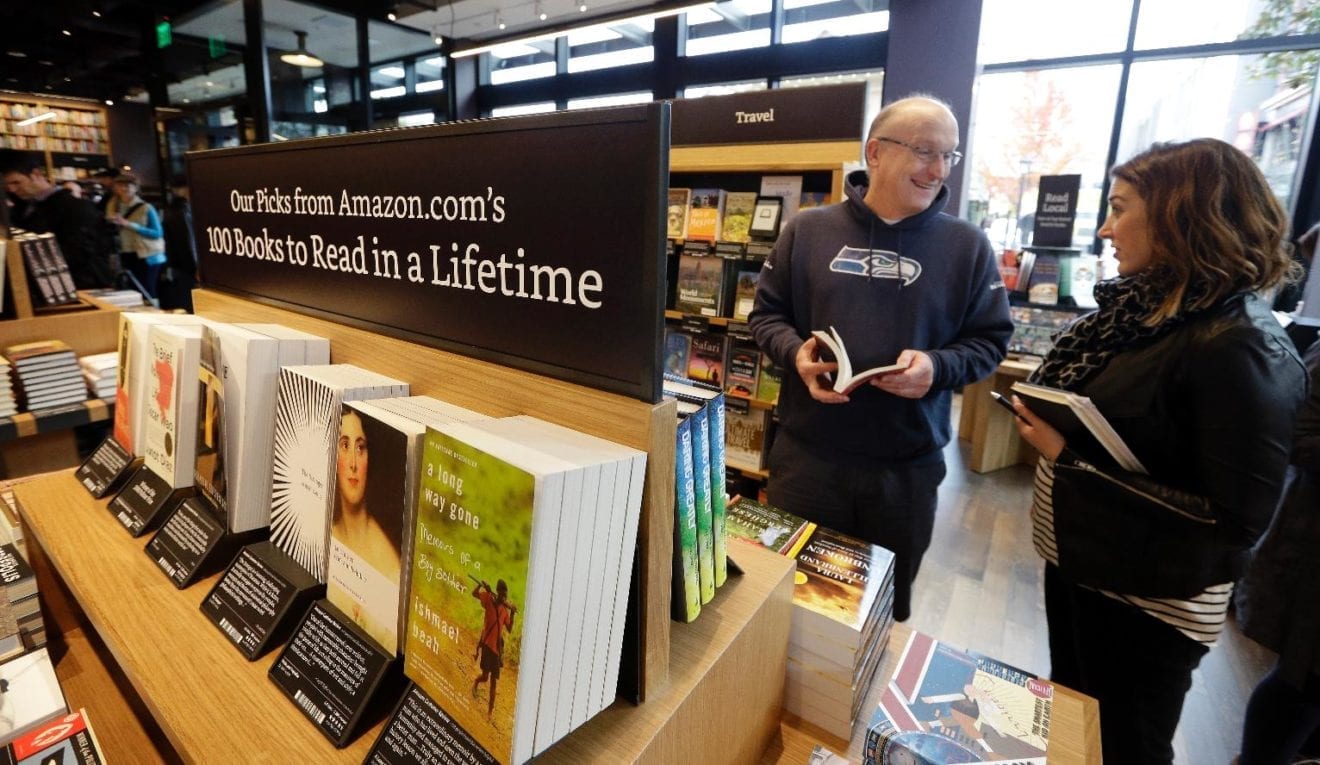
    While Amazon describes its stores as bookstores, John Mutter, editor of bookseller newsletter Shelf Awareness, prefers to call it “an electronics store that sells books”.

    “It has a very misleading name,” he said.

    One of the US’ much-loved specialist bookstores Powell’s Books is headquartered in Portland and CEO Miriam Sontz told USA Today it was no surprise Amazon should choose the city for one of its first physical locations.

    “When asked why he robbed banks, Willy Sutton reportedly replied ‘because that’s where the money is.’ I am certain that Amazon has the data to show that opening a store in the Portland area will be financially beneficial to the company,” she said.

    Mutter predicts Amazon will open 12 to 18 stores over the next two years or so.

  • Xiaomi teams up with China Unicom to boost offline sales

    Xiaomi teams up with China Unicom to boost offline sales

    Chinese smartphone vendor Xiaomi Corp has teamed up with the country’s second-largesttelecom carrier, China United Network Communications Group Co, to expand its offlineretailing channels.

    The move came as the country’s online smartphone sales has hit a ceiling and as Xiaomigrapples with declining shipments and mounting competition from rivals such as OppoElectronics Corp.

    Xiaomi launched a custom-made smartphone Redmi 3X on Wednesday. Equipped with alarge battery and a 13-megapixel rear-camera, the new phone will go on sale for 899 yuan($136) through China Unicom’s 30,000 offline stores and more than 230,000 bricks-and-mortar retailing partners.

    Lei Jun, CEO and founder of Xiaomi, said so far more than two-thirds of the company’ssmartphones have been sold through e-commerce platforms and the company’s officialwebsite.

    “The proportion of online sales is too big,” Lei said. “To maintain the rapid growth we haveseen in the past four years, expanding offline retailing channels becomes the key.”

    eca86bd9ddb418cc27c10c

    Xiaomi and China Unicom will also expand their cooperation beyond handsets to a widerange of products, such as Xiaomi TV, routers and air purifiers.

    “All of these Xiaomi electronic products will be available at our nationwide offline retail stores,”said Xiong Yu, deputy general manager at China Unicom.

    The move fits into China Unicom’s broad efforts to transform its abundant bricks-and-mortarassets into a big retailing platform of various electronic products, Xiong added.

    As China’s smartphone market is reaching saturation point, a number of vendors are bankingon bricks-and-mortar retailers to spur their growth.

    Xiaomi said earlier this year it will open 200 to 300 retail stores to bolster sales. Its major rivalLenovo Group Ltd also pledged more efforts to expand its offline retailing presence, which itssenior Vice-President Chen Xudong called the key to surviving intense competition.

    CK Lu, principal analyst at consulting firm Gartner Inc, said China Unicom’s sprawling offlineresources gave Xiaomi a ticket to enter into low-tier cities, which are dominated by its rivalsOppo Electronics Corp and vivo Mobile Communication Technology Co Ltd.

    In the first quarter of this year, Oppo and vivo made their way into the world’s top-five rankingof smartphone vendors for the first time, pushing out Xiaomi and Lenovo.

    “Xiaomi is an expert in online marketing, but lacks experience and talent to run offline stores.So it makes tons of sense to partner with China Unicom,” Lu said.

    According to Counterpoint Technology Market Research, telecom operators’ retail channelsaccount for 30 percent of China’s total smartphone sales, while e-commerce sites contributeanother 30 percent, with the rest managed by professional electronic retail stores.

    James Yan, a Beijing-based analyst at Counterpoint, said partnering with China Unicom willhelp Xiaomi quickly boost smartphone sales, but won’t necessarily deliver good profits.

  • Online shopping will never defeat brick-and-mortar shops in Singapore: report

    Online shopping will never defeat brick-and-mortar shops in Singapore: report

    Store-based retailing will continue to rule.

    The rise of e-commerce will be insufficient to dethrone brick-and-mortar shops in Singapore, according to a report by RHB Research.

    RHB noted that even if the popularity of online shopping continues to grow, traditional shops will retain the upper hand because of their wider reach.

    “We think the e-commerce business is unlikely to impact retailers to a large extent. Based on Euromonitor’s 2015 data, non-store retailing made up a mere 6.2% of the overall retail market in Singapore. Given its small scale at the moment, we think it is unlikely for the e-commerce sector to make a dent on the brick-and-mortar stores domestically,” RHB said.

    Even if the e-commerce sector grows at a much higher rate, RHB reckons that traditional stores will continue to dominate.

    “If non-store retailing growth rates were to double Euromonitor’s assumption every year, brick-and-mortar stores would still dominate at least 88% of the market share, even after five years. Hence, this suggests that the e-commerce business is unlikely to result in any big changes within the domestic retail scene,” said the report.

  • CEO stresses value of physical stores, not just e-commerce

    CEO stresses value of physical stores, not just e-commerce

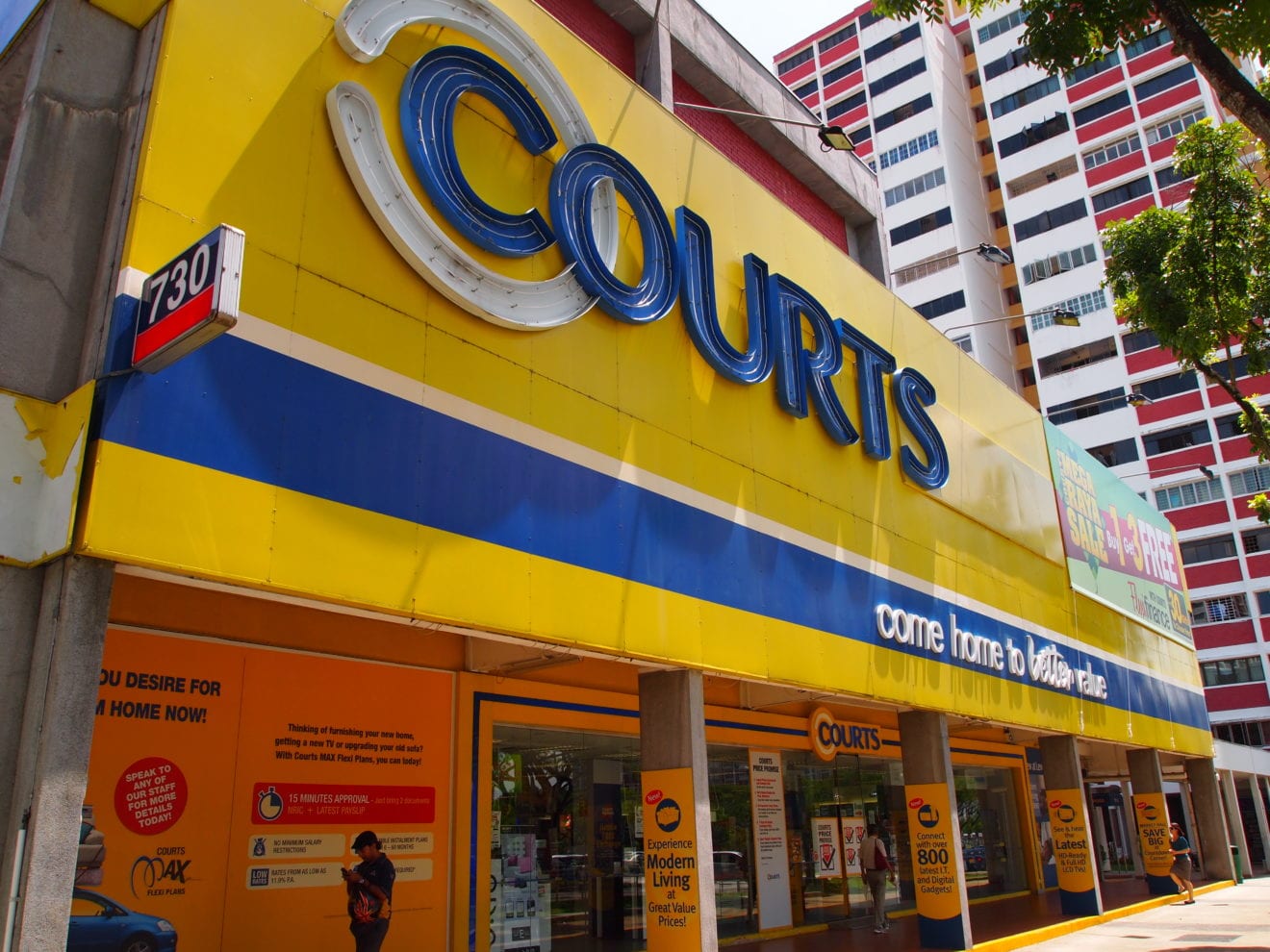
    Electrical goods, information technology and furniture retailer Courts Asia believes that while e-commerce has been gaining popularity, retailers should not neglect their brick-and-mortar operations. The Singapore-based company also sees technology and renting in suburban areas as important revenue sources.

    Terry O’Connor, Group CEO of Courts Asia (Photo by Courts Asia)

    Terry O’Connor, group CEO of the Singapore-based retailer, said that physical stores still play an important role for retailers. “Especially in the case of high-demand products like the latest smartphone, customers want to make sure they get one, rather than waiting for it to be delivered another day,” he said. O’Connor noted that online shoppers do not necessarily prefer delivery, as they may not be home to receive the goods when they arrive. “About half of our customers buy online and then collect (the goods) from the store,” he said.

    Investing in technology is also crucial for retailers to grow their business. Courts Asia recently implemented a queuing system recommended by Google for their online peak periods. “The system stops the website from crashing by having a slightly moderated waiting time of one to two minutes, so everyone effectively ends up transacting faster,” he said. “It has really helped in terms of the conversion rate and reduced some of the abandoned online shopping carts,” he observed. Courts Asia saw higher sales on 2015’s Black Friday and Cyber Monday peak shopping days compared with a year earlier.

    For retailers entering a new market, renting space in suburban areas can reduce costs and gain access to more customers. O’Connor warned that new retailers “will have to pay high rent from day one” if they instead start their business by renting space in the central business district or prime areas. He added that this in turn increases costs significantly and result in the retailer losing out on customers who live outside the city.

    He also suggested that investing in areas that complement the core business is an important step in a company’s expansion. “A lot of retailers that have gone into a completely different field have failed, as it is not their core skill set,” he said. Retailers should go to “the most adjacent category which has a synergy to what they already sell.”

    Courts Asia has grown into one of the largest retailers in Southeast Asia, with 80 stores totaling over 148,600 sq. meters of retail space. Originally named Courts, the company began as a furniture retailer in the U.K. It was established in Singapore and Malaysia in 1974 and 1987, respectively. In 2012, it was renamed Courts Asia and listed on the main board of the Singapore Exchange. In 2014, Courts Asia entered the Indonesian market.

  • Online to offline seen as a marriage of convenience

    Online to offline seen as a marriage of convenience

    The eating habits of urban Chinese have changed dramatically since the proliferation of takeaway food delivery apps brought restaurant-quality meals to almost everyone’s front door.

    Engineer Zhao Baijun, 29, now eats in more often than he eats out.

    “Before these apps, most restaurants did not offer deliveries. I had very few choices, mostly fast food chains,” he said.

    Besides the convenience for busy people like Zhang, online to offline means extra sales for traditional food suppliers and beyond. Connecting online to offline is the new Holy Grail for the biggest players in China’s Internet shopping explosion, whether they be domestic or overseas operators.

    Recently, China’s largest e-commerce company Alibaba and electronics retailer Suning agreed a multi-billion dollar deal on platforms, logistics and payments.

    Alibaba will pay about 28 billion yuan (US$4.5 billion) for 19.99 percent of Suning, becoming its second-largest shareholder, while Suning will buy no less than 28 million new shares in Alibaba for 14 billion yuan.

    Suning owns more than 1,600 stores and 3,000 aftersales service centers which will now be “seamlessly connected” with Alibaba’s online network. A Suning online sales center on Tmall.com, part of Alibaba’s retail operation, completes the new setup. The arrangement was described as a “wedding” by Alibaba chairman Jack Ma.

    “If we do not integrate with offline, we will not have a future,” he said. The deal is set to reshuffle China’s e-commerce deck and help Alibaba in its battle against archrival JD.com.

    E-commerce companies are queueing up to find stores to align themselves with.

    In its quest for existing networks of physical stores, JD.com announced it had taken a 10 percent stake in domestic supermarket chain Yonghui Superstores for 4.31 billion yuan.

    Early last year, Alibaba became the main shareholder of Hong Kong-listed department store operator Intime. In July, after the cap on the number of shares foreign firms can hold in Chinese e-commerce platforms was lifted, Walmart took a 100 percent stake in Yhd.com.

    The local advantages of Yhd.com combined with Walmart’s global procurement resources, retail stores and supply chain will be a huge fillip to Walmart’s campaign to win over China’s consumers.

    For Zhao, the most important aspect of the rapidly evolving industry is that he can have a decent meal in the comfort of his own home.