Retail News CRM

Tag: #offline

  • Amazon to test department stores in offline expansion

    Amazon to test department stores in offline expansion

    Now that it’s officially swallowed the lion’s share of online retail sales, Amazon is reportedly eyeing ways to corner our offline shopping, too. The e-commerce giant is drumming up plans to open “several” department-style stores in a handful of cities across the U.S. People familiar with the matter told the paper that these stores would help Amazon “extend its reach in sales of clothing, household items, electronics, and other areas.” It’s a smart move from Amazon, but also one that would end up being a privacy nightmare for a company that’s seen its fair share of scandals in the space.

    Per the Journal, the first states where these department stores are expected to open include Ohio and California. They’re planned to be mid-size, at around 30,000 square feet—smaller than your average Costco or Walmart, but way larger than the Amazon 4-star stores that generally clock in at around 4,000 square feet. Like those 4-star locations, sources told the Journal that Amazon’s private-label products would be featured front and center in these bigger locations, alongside wares from other “top consumer brands.”

    The alleged department store spaces are just Amazon’s latest foray into the brick-and-mortar world. In 2015, the company began experimenting with small bookstores: first on its Seattle home turf, before trickling out to a few other cities across the U.S. But for all sorts of reasons, sales in these bookstores have pretty much flatlined in the years since their debut. By 2019, the company decided to fold together these stores and the company’s then-struggling “pop-up” shops—essentially mall bodegas that sell Amazon-branded tablets and e-readers. Eighty-seven of those pop-ups closed essentially overnight. Other real-world retail efforts like Amazon Go Grocery met similar ends, either collapsing into larger big-box projects from the company or indefinitely closing for unspecified “renovations.” Even then, Amazon’s retail efforts have translated into millions of dollars taken from countless competitors that were already struggling to pitch themselves against the e-commerce juggernaut.

    But if the multiple ongoing federal probes into Amazon’s antitrust-y behavior have shown us anything, it’s that the company won’t be satisfied until it dominates every sale, not just most of them. Right now, the bulk of Amazon’s real-world retail dollars are coming from its myriad grocery chains, including Whole Foods. But the company still lags behind its brick and mortar brethren when it comes to selling high-end fashion, or basic cosmetics and health goods—think toothpaste or bottles of shampoo. In June, reports emerged that the company was mulling plans to open its own Amazon-branded physical retail pharmacies, which would help the company crater competitors like Walmart or CVS that currently rule the world of retail-ized healthcare

    Amazon’s department store push would also help the company compete with two of its tech giant pals: Facebook and Google, which together dominate more than half of the multibillion-dollar digital ad ecosystem. Amazon ranks in a distant third place by earning 10% of that spend, but that number’s skyrocketing fast—and a lot of that boom boils down to data.

    Amazon’s always collected data on its shoppers and sellers, but the past few years have seen the company make a serious push to woo advertisers away from platforms like Instagram and YouTube. And that woo worked because Amazon could offer what those platforms couldn’t: data about every purchase, every search, and every wishlist from every Amazon customer.

    But that still left the company with a pretty large blind spot: data from real-world, in-store purchases. Meanwhile, those real-world retailers—including names like Target, Walmart, and CVS—have started launching ad networks of their own, offering data from the real-world purchases happening outside of Amazon’s sight.

    An Amazon-branded department store would potentially bring those dollars back into Amazon’s pockets, and then some. Amazon’s past brick-and-mortar efforts have shown that the company isn’t afraid to collect as much data as possible from people who walk through its doors—even if that person doesn’t end up buying anything at all. Amazon knows the aisles you’re browsing, the items you’re picking up from a shelf, and whether your buys were influenced by an ad you saw on Amazon’s site. It knows how often you shop for groceries, whether you’re a vegetarian, and if you might be running low on eggs this week—which is great for Amazon and its advertiser partners, but a privacy nightmare for consumers that already have ample reason to be weirded out over Amazon’s data collecting practices.

    Right now, Amazon’s future plans in the real-world retail space are mostly confined to rumor—but they still paint a damning picture. A world where Amazon department stores and Amazon pharmacies are the norm is one where Amazon knows every prescription you take, not to mention all the purchases we might want to keep quiet from everyone—our pregnancy tests, bottles of hair dye, trashy magazines. If Amazon really wants to know how often I’m buying a box of “feminine hygiene” products or something equally classy, they’re welcome to try finding out. But I’d really rather keep those details to myself.

    We’ve reached out to Amazon about the Journal’s report and will update this post when we hear back.
  • Google Photos now lets users add media files to albums when they’re offline

    Google Photos now lets users add media files to albums when they’re offline

    To add pictures or videos to your albums in Google Photos, you’ll need to be online. But that’s about to change, as Google is now rolling out a small update that makes it possible to upload content to albums even when a user is offline.

    The new feature isn’t something that you can force on your Android smartphone, so you’ll have to wait for Google to push it out to your device. Once you add your pictures and videos to an album, they will be synchronized to Google servers immediately after your smartphone goes online.

    Although there are plenty of Google Photos alternatives out there, Google’s app probably remains the best solution when it comes to sharing and storing media content online. Although you’ll soon have to pay for Google Photos storage, occasional users will still be able to take advantage of its benefits free of charge.

    Those of you who can’t wait to try out the new feature might want to download the latest version of Google Photos, but if the option to add picture and videos to albums while offline is not available even after updating, you’ll most likely have to wait for a server-side switch to flip.

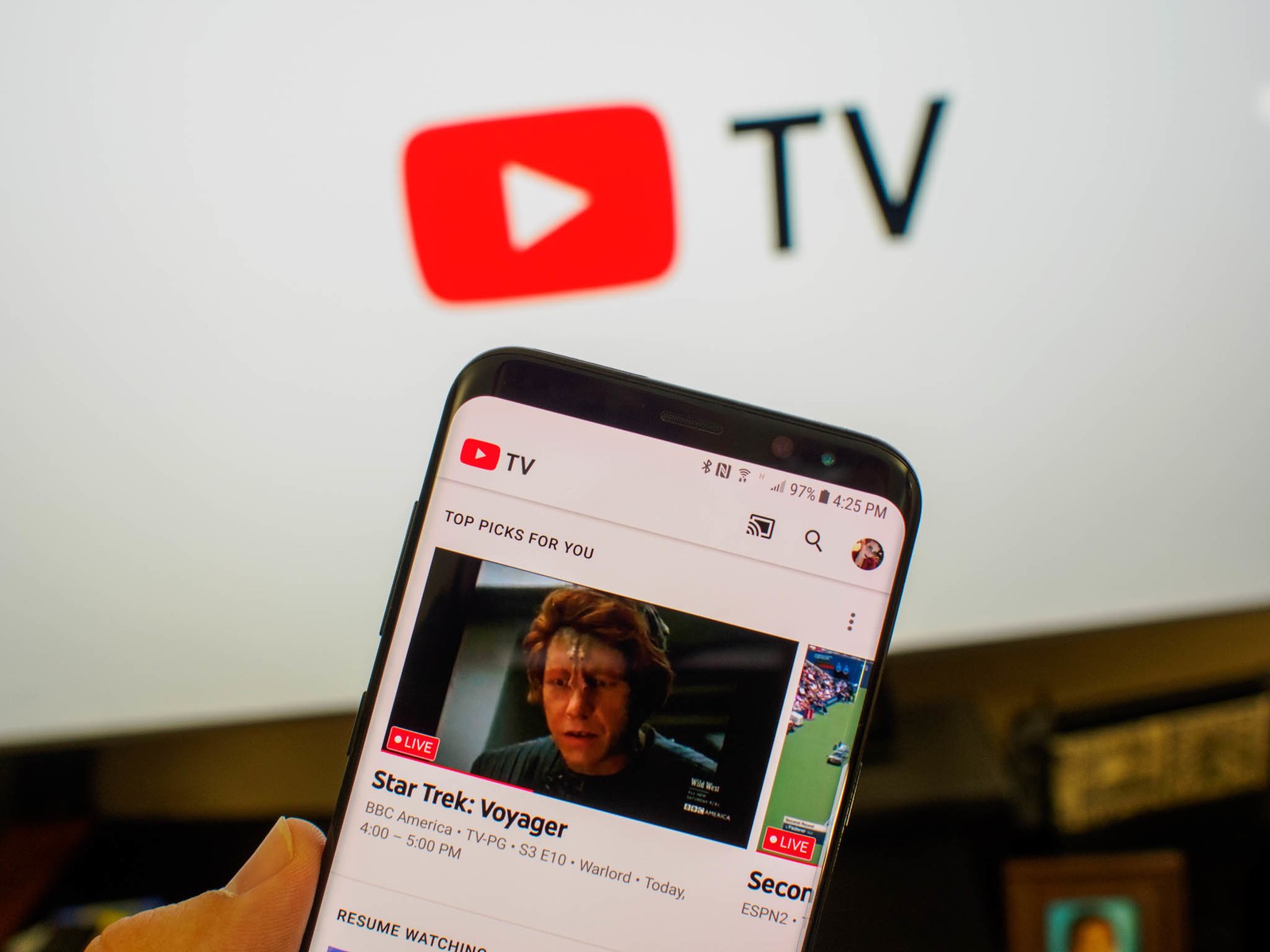
  • YouTube TV confirms 4K streaming support and offline viewing option

    YouTube TV confirms 4K streaming support and offline viewing option

    Word that YouTube TV might allow users to download shows for offline view surfaced a few days ago. Today, the company announced several premium features that will be available for all users of the streaming service.

    First and foremost, YouTube TV will introduce a new add-on package with 4K streaming, offline viewing, and unlimited concurrent streams at home. This means that a YouTube TV base plan that supports six user accounts and up to three simultaneous streams will be able to take advantage of the 4K streaming option without restrictions.

    Unfortunately, this will come as “an optional add-on for members” for which they will have to pay. The amount hasn’t been revealed yet, but we suspect it will be announced once the new features will be ready for prime time.

    What’s really strange is the fact that YouTube TV has decided to put the option to download shows for offline viewing under a paywall too. Other streaming services typically offer these features for free, but for some reason, YouTube TV feels that those 3 million paid subscribers that it now has will be willing to pay extra for something that should be free.

  • YouTube TV might soon allow users to download shows for offline watching

    YouTube TV might soon allow users to download shows for offline watching

    Most streaming services allow their users to download content for offline watching, which is especially helpful while on the go. Spotify and HBO both offer this option to their customers, but not YouTube TV, at least not for the moment.

    The good news is Google plans to add this nifty feature to the Android app. Apparently, there are strings in the app’s code that refer to this particular feature that’s not yet available. Also, the latest YouTube TV update on Android devices introduces a new alert, which notifies the users about incomplete downloads.

    The strings in the code clearly mention the ability to download shows for offline watching, which will be available in the “downloads” tab of the app. They also refer to a “Download” button that’s not yet available in the YouTube TV app.

    Although the feature was only discovered in the Android app, we expect Google to make it available to YouTube TV users on iOS as well probably at the same time. So, if you’ve been waiting for such a feature know that it will be coming, and very soon apparently.

  • JD offers a helping hand to boost bookstore sales in China

    JD offers a helping hand to boost bookstore sales in China

    E-commerce platform JD has helped boost bookstore sales in China during the coronavirus outbreak.

    Last month, sales of two children’s bookstores – Caldecott Bookstore and Zhongshang Children’s Books – increased by 221.6 percent and 282 percent respectively, year on year.

    According to JD, the increased bookstore sales in China are attributed to consumers staying home during the epidemic and turning to books for inspiration and encouragement.

    JD Logistics continued to deliver products to Chinese consumers as usual during the outbreak while implementing a series of disinfectant measures to ensure consumers received their books safely.

    The coronavirus outbreak has led to the temporary shutdown of offline bookstores, a shortage of employees due to the epidemic, a sharp drop in operating revenues, and a surge in pressure on store rents and staff spending. During the period, JD has been assisting partnering bookstores in putting out live broadcasts to drive traffic and promote brand awareness, thus boosting bookstore sales in China.

    “Supporting offline bookstores to do live broadcast is a good example of how JD.com has been using its resources to help offline bookstores to transform their businesses to better cater to the needs of Chinese consumers,” said JD’s offline book team operations manager Jiao Zhang, “especially when there is limited traffic in offline bookstores during the epidemic period”.

    According to the 2019–2020 China Offline Bookstore Industry Report, there are more than 70,000 bookstores in China. Last year, more than 4000 new bookstores opened in the territory. China currently has 135 book malls that are more than 5000sqm each, of which 35 are more than 10,000sqm in size.

  • Omnichannel key to AS Watson Group success

    Omnichannel key to AS Watson Group success

    Don’t mention the so-called ‘Retail Apocalypse’ to AS Watson Group MD Dominic Lai.

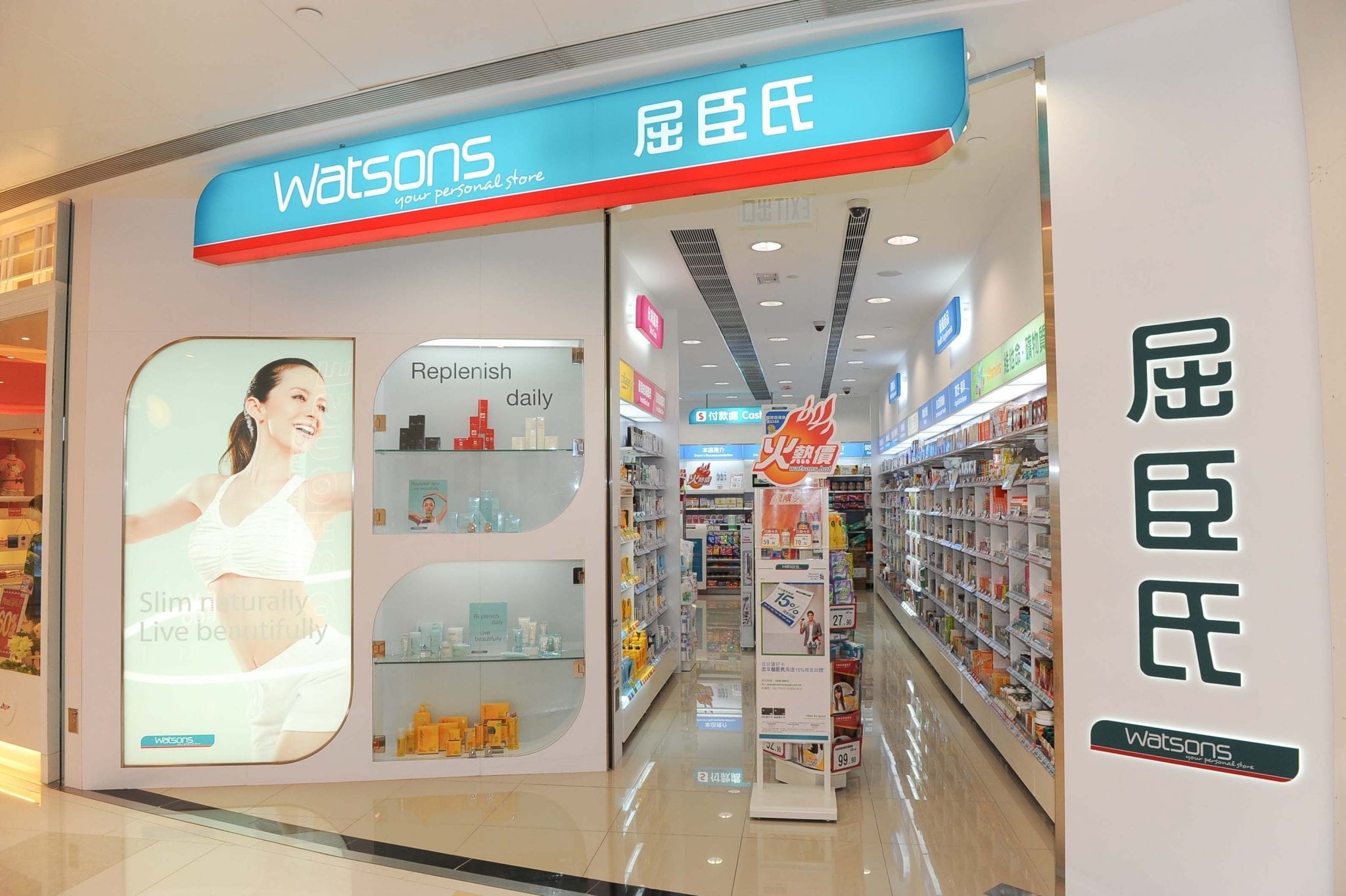
    An ardent enthusiast in new-generation retail technology, he heads a company that has just celebrated its 15,000th physical store opening. And that network expansion is showing no signs of slowing, with a new store opening on average every seven hours for the foreseeable future.

    “A few years ago, technology arrived and people said: That’s the end days for retail. But no, we never thought that,” Lai tells Inside Retail Asia during an interview outside the 15,000th milestone store, a Watsons health & beauty shop in the new Central I-City mall in suburban Kuala Lumpur.

    AS Watson Group is possibly one of the best examples worldwide of a retailer successfully merging online and offline in a way that is achieving growth in both sales and profit. Revenue was up 10 per cent last year and profit increased 9 per cent. “My shareholders expect even more,” he deadpans.

    Embracing online and developing an O2O (online-to-offline) business model is the key to the company’s success, he says. It keeps his customers happy.

    The company has invested some US$130 million in technology since 2012, to be sure to be competitive in the online era.

    “We anticipated e-commerce. We anticipated big data. But we are not just about e-commerce. We have to connect our customers through digital, social media, mobile, everything. This is what we have done and we will continue to invest in technology. We are ready. Technology-wise, we are up to speed.”

    At the heart of this O2O business model is click and collect, linking 13,000 stores to their localised e-commerce site. Most online retailers only offer click and deliver, but Watsons’ customers can browse its sites online at midnight and pick up in any of the stores the next morning.

    The best part of this model is that the company has the opportunity to sell more goods to customers collecting their online purchases.

    “The traffic comes straight to the store,” adds Malina Ngai, AS Watson Group COO. “So on average, 20 to 30 per cent of the shoppers will buy something else.” In some markets, like Taiwan, that rate grows as high as 52 per cent.

    Moreover, As Watson data shows when its loyalty program members shop online and in store, their spending is on average three to four times higher than those who shop only in stores.

    Ngai says the business model – combining physical stores with mobile, website and social media – sits well with the retailer’s core demographic. In Asia, 60 per cent of AS Watson Group’s customers are aged under 35. In China, that segment jumps to 80 per cent. “So you know you have to offer those digital options.”

    The company’s loyalty program, with 135 million members worldwide, represents one of the largest of any retailer’s anywhere in the world. That provides a treasure chest of data, helping the company recognise and understand trends, assess the performance of different promotions, and personalise offers or other marketing communication. And it is clearly working: the health & beauty store network growth is running at 6 per cent, yet sales are growing at 9 per cent.

    New store sites are chosen based on interpretation of customer spending both on and offline, using big data. They are typically staffed by people in the same age profile as its customers. “We have a lot of Gen Y and Gen Z staff,” says Lai. “Retail is detail and we look at every [way] how to connect with our customers.

    In the years ahead, Lai’s vision for AS Watson Group is succinct: “We will continue to open new stores and at the same time we would like to get more members, more formats and make more investment in technology.”

    He is unafraid of any economic downturn.

    “Look at [our] business model. We sell essential products. We are not selling watches and jewellery, we are selling essentials. That’s why I use the word resilient to describe our business: we are resilient.”

    AS Watson Group this year added Vietnam to its footprint, taking the number of countries and territories it trades in to 25. Lai says the company is always looking for new markets, but for now is more focused on expanding within the ones it is already in.

    “We are international. We plan prudently. So we went into Vietnam because we realise the customers there already know our brand and the demographics – and the market entry strategy was to open the flagship and enable the online. That’s the process by which we look at the international market.”

    Ngai points out that the 25 markets AS Watson Group already trades in represent 32 per cent of the world’s population, “and we only have 15,000 stores”.

    “That is why we can still open one store every seven hours.”

    With a new-store payback time of less than one year, that strategy is clearly working. “We open, the customers really love us and we get enough sales to get payback within one year.”

    AS Watson has 12 retail brands across the globe, of which Watsons is by far the largest, with 7200 stores in Hong Kong, Mainland China, Taiwan, Macau, Thailand, Singapore, Malaysia, the Philippines, Indonesia, Vietnam, Turkey, Russia and Ukraine. Sales last year nudged US$22 billion. Across its banners, the company has some 20 different formats.

    “Going forward we will be seeing more and more different models because it is about specialising the offer for the customer needs,” explains Ngai. “It may be [we serve] the same customer, but when the customer goes to a work area they just want to buy wellbeing products, so we have a Watsons Health; and in an area with a lot of young mothers we have a Watsons Baby store; and when they go back to the residential area and want to pick up personal-care products, we have a more regular Watsons store.”

    Lai says the reason the company has been so successful over the years is its customer connectivity. And because it has embraced technology.

    “We have even been quietly investing and developing our big data and analytical capabilities.

    We have been using technology to identify sites to control our inventory, to connect with our customers, to do the assortment planning and space planning.

    “I would like people to know that AS Watson Group is a very modern company, it is not just a retail company opening physical stores. We know how to reach young customers,” he says.

    “We are one of the longest-standing companies in the world with 178 years of history. To be able to reach yet another critical milestone, this is only possible with the love from our customers, passion and commitment from our 140,000 colleagues around the world, and the unfailing support of our business partners.”

  • Walmart China to boost offline, online integration

    Walmart China to boost offline, online integration

    Walmart China has pledged to further its online/offline integration strategy with increased focus on fresh food distribution, private brands and membership services. The firm’s president and CEO Tan Wern-Yuen said the business will focus on “consolidating its upstream resources and to further improve product quality”. The firm is set to invest more than RMB700 million (US$103.7 million) in its first perishable food distribution centre in Dongguan this March, its largest investment in its 22 years of operations in China. The centre will serve its South Chinese stores.

    Walmart plans to build or renovate around a dozen such centers within the next 20 years, with fresh food now taking up a quarter of Walmart’s overall sales. Tan added that Walmart’s e-commerce transactions have now hit a consistent 150 per cent year-on-year growth rate. Its WeChat mini program “Scan and Go” counted more than 20 million users by the end of last year.

  • Offline sales activities for Fashionally.com

    Offline sales activities for Fashionally.com

    Fashionally.com, an HKTDC-endorsed website that promotes Hong Kong fashion, is organising a retail event at PMQ in Central from next Friday.

    The 23 Senses event will be held over three weeks to introduce Hong Kong designers and new labels including SFZ Sons, a collaboration between Sonic Lam and street artist Start From Zero, and YMDH by Jason Lee, last year’s Best Footwear Design Award winner at YDC (Young Designers Contest). YLY Studio, newly launched by design duo Matt Hui and Lilian Tsang, will be offering its first collection inspired by the art of embroidery and knitwear.

    Labels such as Kenson, Kurt Ho, Necro Poon and NelsonBlackle, which are mostly sold overseas, will be available locally.

    Promotional offers for 23 Senses shoppers include a chance to win a hand-drawn t-shirt by illustrator Calvin Kwok.

  • Nike shapes announces a new era for retail

    Nike shapes announces a new era for retail

    Recently, Nike chief executive Mark Parker fired a reverberating shot across the bow of the entire retail industry.

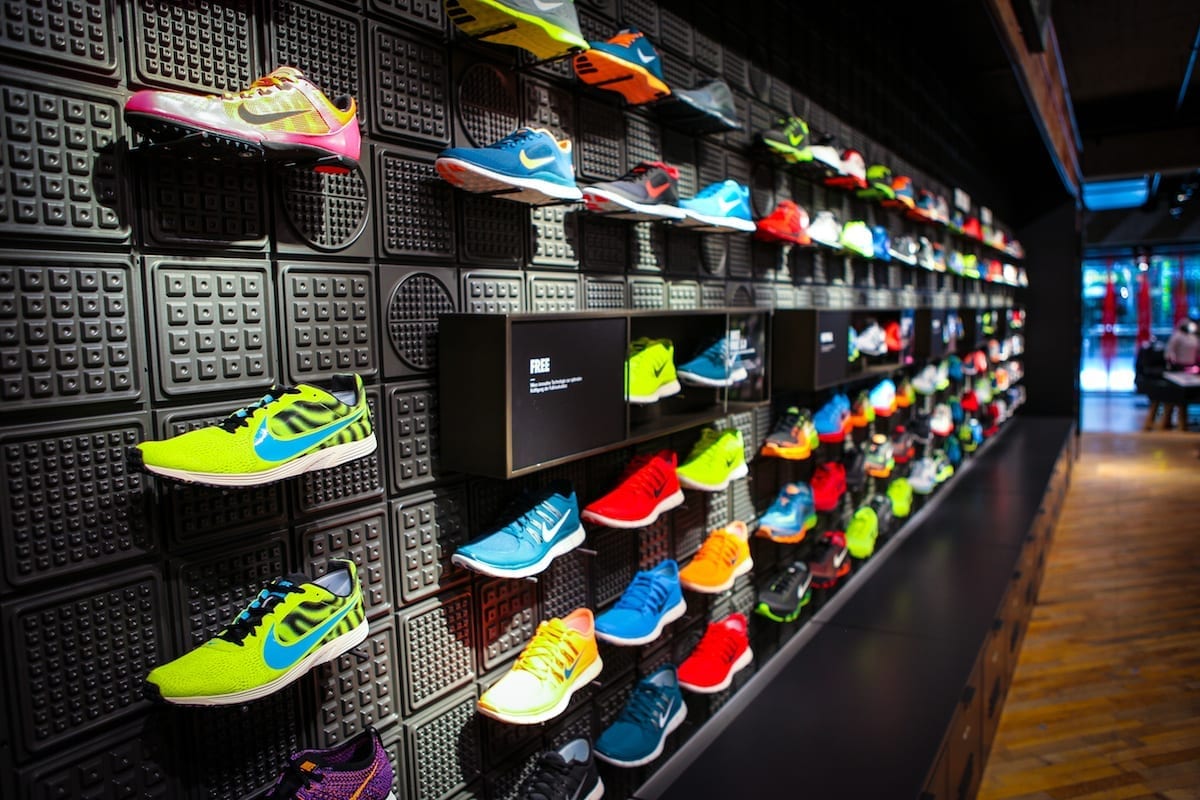
    He announced that out of Nike’s global universe of more than 30,000 retail partners the brand would, going forward, focus its time, attention and capital on forty — FORTY — retailers that Nike calls “strategic wholesale partners.” Partners, he explained, which are willing and able to build out unique and dedicated Nike spaces within their store environments.

    With this one brief announcement, Parker had not only given tens of thousands of merchants around the world a Tony Soprano-style kiss on the cheek, but he  also made the same sweaty-palmed decision that thousands of other brand CEOs secretly wrestle with on a daily basis: whether to abandon the intoxicating volume of the mass market in a sober effort to save their brands from almost certain ruin.

    The power-merchants that made these brands household names were now the very things rendering them commoditized hostages in a high-speed chase to the bottom.

    Once the salvation of many a fledgling brand, mass merchants have increasingly become like kryptonite. In a world constantly seeking what’s next, new or special, mass retail has become toxic in its overexposure. For consumers, to whom shopping experiences matter as much, or more, than products, mass merchants are bringing nothing to the table.

    Nike is merely one in a growing list of labels rethinking their distribution strategies. Earlier this year Coach announced it would leave the floors of over 250 department stores. Michael Kors also made a similar decision. And high-end outerwear brand Canada Goose, a brand that has traditionally been sold through wholesalers, now has a long-term goal of generating at least half its profits from its direct-to-consumer business. One by one, brands are fleeing the mass market and their absence will weigh heavily on all mass merchants.

    However, more important in Nike’s announcement was the bold declaration that only one tenth of one percent of their retailer network — those retailers who could deliver on the brand promise and experience — were even worthy of the brand’s time and attention. The remainder of Nike’s resources, according to Parker, would be dedicated to growing the brand’s direct-to-consumer business through its owned stores and websites, which currently represent about 30 percent of Nike’s total sales.

    This is by no means a minor shift. In fact, what it portends is a complete reformation of the retail market and a breakdown of the wholesale-retail model for revenue.

    Where today the retail market is largely divided by luxury, mid-tier, and discount, the coming decade will see the market more clearly bifurcate into two distinct retail approaches.

    The first will encompass an ever-swelling number of vertically-integrated brands that focus on serving individual consumers at scale and in a manner that best befits the brand. The second will be a new class of “experiential merchants” that use their physical stores and online assets to perfect the consumer experience across a category or categories of products.

    They will define the ideal experiential journey, employing expert “product ambassadors” and technology to deliver customer experiences that are truly unique, remarkable and memorable. So memorable that they leave a lasting, positive experiential imprint on the shopper’s psyche.

    Nike’s announcement was not merely communicating a new brand strategy but more clearly than ever before, foreshadowing an entirely new and revolutionary era of retail.

  • Qoo10 bridges the gap between online and offline retail in Singapore

    Qoo10 bridges the gap between online and offline retail in Singapore


    Asia’s e-commerce platform, Qoo10, has launched a GPS-enabled mobile game called MameGo! in Singapore. The game, which was developed by Qoo10, is available on Qoo10’s online marketplace as well as its Qoo10 and Live10 mobile apps.

    Nearly similar to Pokemon Go!, the game issues three Mameballs to Qoo10 shoppers on a daily basis to unlock and catch Mamemons, which can be exchanged for discounts, super sale coupons or Qpoints. Mameballs can also be collected through electronic direct mailers (eDMs), mobile pushes and various loyalty programmes.

    According to Qoo10, brick-and-mortar retailers can use MameGo!’s GPS feature to attract shoppers to visit their physical stores. This method thus bridges the gap between brick-and-mortar outlets and e-commerce platforms.

    “The future of retail is no longer divided between online and offline, but one converged platform offering consumers an end-to-end shopping experience. As consumers’ shopping appetites continue to become more sophisticated and as they demand more personalised experiences, it will take a concerted effort to boost Singapore retail sector,” said Jacob Yu, Brand Manager and PR, SEA, Qoo10.

    To help retailers leverage the game to increase brand awareness, MameGo! offers exclusive branded Mamemon characters, also known as Brandmons. Currently, more than 100 retail brands are exploring the adoption of MameGo!, each with their own personalised Brandmons.

    “Singapore remains a key growth market for us, and initiatives such as Mame Go! are aligned with our mission to create a marketplace that benefits everyone – not just customers, but also the retail ecosystem as a whole,” concluded Yu.

  • Xiaomi taps China Unicom to boost offline sales

    Xiaomi taps China Unicom to boost offline sales

    Chinese smartphone maker Xiaomi has teamed up with the country’s second largest mobile carrier, China Unicom, to expand its sales through offline retailing channels.

    The partnership with Unicom signals a move to a more conventional sales operation for Xiaomi, whose sales have been heavily relied on internet channels.

    Xiaomi launched a new customized 4G smartphone Redmi 3X for Unicom, as part of a strategic alliance the pair announced last Wednesday.

    The Redmi 3X smartphone, powered by 1.1GHz octa-core Qualcomm Snapdragon 430 processor and a 4100mAh non removable battery, will go on sale for 899 yuan ($136) through Unicom’s 30,000 own retail stores and more than 230,000 retailing partners.

    Xiaomi CEO and founder Lei Jun said so far more than two-thirds of the company’s smartphones have been sold through e-commerce platforms and the company’s official website.

    “The proportion of online sales is too big,” Lei said. “To maintain the rapid growth we have seen in the past four years, expanding offline retailing channels becomes the key.”

    Xiaomi said earlier this year it will open 200 to 300 of its own retail stores to bolster sales.

    Xiaomi and Unicom will also expand their cooperation beyond handsets to a wide range of products, such as Xiaomi TV, routers, wearable devices and air purifiers.

    China Unicom deputy general manager Xiong Yu said all of these Xiaomi products will be available at the operator’s offline retail stores across the country.

    The move fits into the operator’s broad efforts to transform its abundant bricks-and-mortar assets into a big retailing platform of various electronic products, Xiong added.

  • How online and offline will dominate retail in Asia in 2016

    How online and offline will dominate retail in Asia in 2016

    Innovations in technology are predicted to make progressive strides related to online and offline commerce, thus improving the retail experience significantly in 2016.

    With new developments like Google’s Physical Web and Eddystone, we’ve started to get a glimpse of what the future might look like in a perfect online to offline marketing world. But is this futuristic new line of digital marketing really so far away, or are we on the cusp of a new reality?

    Here are major trends that I anticipate will lead to progressive shifts in how online retail addressed this year in the Asia Pacific region:

    1. Full integration of online and offline

    In my last column, I talked about Google’s Physical Web and Eddystone. Technologies like these will enable users and shoppers to communicate via their mobile devices with physical objects, sending their real-time location and behavior to marketers who can now identify them, in exchange receiving more personalized and customized experiences when visiting offline shops.

    With these new innovations, the traditional challenges of user anonymity are being resolved. Therefore, we can expect to start seeing user retail experiences that truly bridge the gap between offline and online (O2O) by the mid-2016.

    2. Deep customer insights meet highly targeted displays

    How to drive traffic the most effective and efficient traffic to your website is an ongoing challenge for marketers. By “most effective traffic,” I mean traffic that comes from the cheapest source, and “efficient traffic” refers to the frequency at which your traffic will eventually convert (ideally instantaneously).

    In the past, one solution was to use a large proportion of marketing budgets to acquire new customers using Google SEM. However, this has proven to be very expensive and less efficient in driving qualitative traffic to a website over time. It is also only focused on capturing demand.

    This has driven marketers and budgets to Facebook, where interest-based targeting could be used to find new users. And what happens when everyone does the same thing? Eventually the channel becomes more expensive and less efficient.

    Publishers can now address this challenge via the use of an Audiences feature. Both Google and Facebook now have Audiences as a core function in their display offerings, allowing advertisers to target more accurately when uploading emails or finding specific audience demographics. Such technology enables advertisers to deliver the right ads, to the right people, across devices.

    Many platforms also use sophisticated look-alike modeling, which lets advertisers target similar profiles of those already targeted, specifically by email. There are also retargeting technologies that can find people that have browsed a particular website, and present them with ads or even specific products from that site.

    To complete the value proposition, marketers are provided with reporting that highlights conversions and contributions to online sales. But here’s a little secret: revenue from abandoned carts contribute significantly to these sales numbers.

    How many times have you been presented with display ads for products that you’ve already purchased? Well, here is how this happens; let’s say someone has a basket full of goodies, but bounces over to a different site momentarily, before coming back to their basket and completing their purchase. This will cause a view-through conversion, which means that revenue will be attributed to the retargeting campaign, even if the purchase occurs without clicking on the display ad. Retargeting companies focused on pricing for cost per click (CPC) or cost per action (CPA) models make a lot of money this way.

    counting money youtube screenshot

    Going back to Google and Facebook, the ability to target someone specifically is great, however it is important to know the context in which a user/shopper is being targeted. How do we link both audiences and standard retargeting to the purchase cycle as well as to the interaction a user has with your brand?

    In 2016, we will start to see the emergence of more quality identification technology that is able to work across mobile devices and computers. Marketers will be able to find users and send contextual display ads that feature the right product or coupon, on the right device, with incentives based upon insight regarding what really makes the user tick. This delivery will also be matched with the right objective based on where the customer is in the lifecycle.

    In the beginning, identification will probably range between 30 and 50 percent of the users, but I predict we’ll see these numbers increase as the technology evolves. Though these advancements are on the horizon, this level of sophistication will only occur once matching email addresses to third-party cookies becomes feasible. More importantly, this cannot happen unless multifaceted user insights are aligned with intelligent advertising platforms.

    3. AI driven marketing

    Artificial intelligence will be one of the hottest topics in the tech industry in 2016. Just recently, Google launched TensorFlow, a very powerful artificial intelligence and machine-learning open source software.

    Added to this is a recent announcement to commit $1 billion to researching artificial intelligence from a group of Silicon Valley entrepreneurs, which includes Elon Musk, chief executive officer (CEO) of Tesla.

    How does all this come into play for the marketing landscape?

    Marketers today are very operative. First, they think about an idea or a campaign, then they automate it with either display ads, email campaigns, push messaging, social releases, and so on. After that, they test against it and continue to optimize. They go through this process again and again and again, and do so because of the vast amount of variables and data sets that need to be taken into account to get the best results. With this process, solutions rooted in artificial intelligence will change the lives of the marketers and their audiences, helping each make more informed decisions.

    Think about the type of software needed to create the customer journey and then execute after uploading all the necessary data and required content; this year, marketers can expect some of the functionality affiliated with this process to be automated. Expect this progress to in ways that will cover most of the operational decisions marketers make today, and for this evolution to continue over the next three to four years.

    4. Messaging dominates media activity

    Over the past five years, messaging has become one of the fastest growing online channels, according to Activate’s Tech and Media Outlook 2016. Messaging has developed more quickly than social media, coming only in second to the time spent online by users globally. By 2018, messaging is expected to grow by an additional 1.1 billion users.

    The global messaging space continues to be dominated by Facebook Messenger and WhatsApp. In the Asia Pacific region, local players include China’s WeChat, Japan’s Line, and Korea’s KakaoTalk.

    Messaging services are now accessible by third-parties, thus resulting in an explosion in of real-time offerings for services, including booking taxis, making payments for practical necessities like utilities bills, music and television entertainment, games, stickers, e-commerce capabilities, video, and live voice calls. The messaging app has transformed into a hub of communication and consumption of services for users, creating monetization possibilities for both for media owners and third-party developers.

    So, what can digital marketers ultimately expect for 2016?

    In conclusion, the integration of online and offline real-time marketing opportunities isn’t something we can hope to see somewhere in the future, as what was once a fantasy is finally materializing into reality. Now that these technological innovations have made linking these contrasting realms much easier, wise marketers and retailers will take advantage of this progress immediately….will you?

  • Smart shopping list concept debuts

    Smart shopping list concept debuts

    Smart brands are quickly moving beyond simple eCommerce, using omni-channel retail to maximise their sales and customer relations.

    New from Australia, Booodl is a smart shopping list which helps consumers get the most out of their physical shopping trips by connecting the online and offline worlds.

    Booodl is a smartphone app that notifies consumers when they come in close proximity to products from their digital wish list. To begin, users create their list adding ‘wants’ online. Then, when they are out and about, the app notifies the customer when one of their ‘wants’ is stocked nearby: the user can then get directions to the shop, message the store or even order an Uber to the location, all within the app.

    They can then either pop in for a closer look or make the purchase and simply visit the shop to collect it.

    Booodl is currently available in Sydney where there are already over 1400 stores onboard. It plans to expand to other cities in the near future.

    Trend spotting service Springwise.com observes it has seen other products such as Amazon’s Dash button looking to create an effortless consumer experience and break down barriers between digital and physical retail environments.

    “How else could online be used to enhance real world purchasing, rather than competing with it?”