Tag: Ogilvy & Mather

  • Ogilvy rearranges creative leadership across Asia

    Ogilvy rearranges creative leadership across Asia

    Ogilvy & Mather has unveiled another raft of changes to its leadership across Asia as Ajab Samrai moves from the agency in Tokyo to take up the new position of chief creative officer for ASEAN.

    Samrai has held the same role at Ogilvy in Tokyo for the past five years. He will be replaced by Doug Schiff, who was previously the executive creative director at DigitasLBi in Boston and Detroit.

    Meanwhile, Reed Collins has been promoted from Hong Kong creative lead to CCO of North Asia.

    Reed Collins

    His markets include Hong Kong, Japan, Korea and Taiwan and China. This latest comes just days after Ogilvy China announced the departure of creative heavyweight Graham Fink and the CCO role in the country. Now,Ogilvy China’s creative leadership is formed of three ECDs who report to Cheong.

    Together with Sonal Dabral, Collins and Samrai will form a regional leadership team reporting to Eugene Cheong, Ogilvy’s chief creative officer for Asia Pacific.

    Kent Wertime, co-CEO of Ogilvy Asia, said: “Ajab and Doug are true Ogilvy giants. Ogilvy Japan saw exception growth under Ajab’s leadership and he has been one of our most awarded creative leaders in recent years.

    “I am excited to see what he will do next. For Doug, we are delighted to have him return. He’s exactly the kind of transformative thinker that will continue Ajab’s extraordinary work for that office.”

    Meanwhile, Ogilvy Singapore has been on a winning streak lately, having won major local accounts with Changi Airport and Pizza Hut.

  • Ogilvy & Mather wins Pizza Hut in Singapore

    Ogilvy & Mather wins Pizza Hut in Singapore

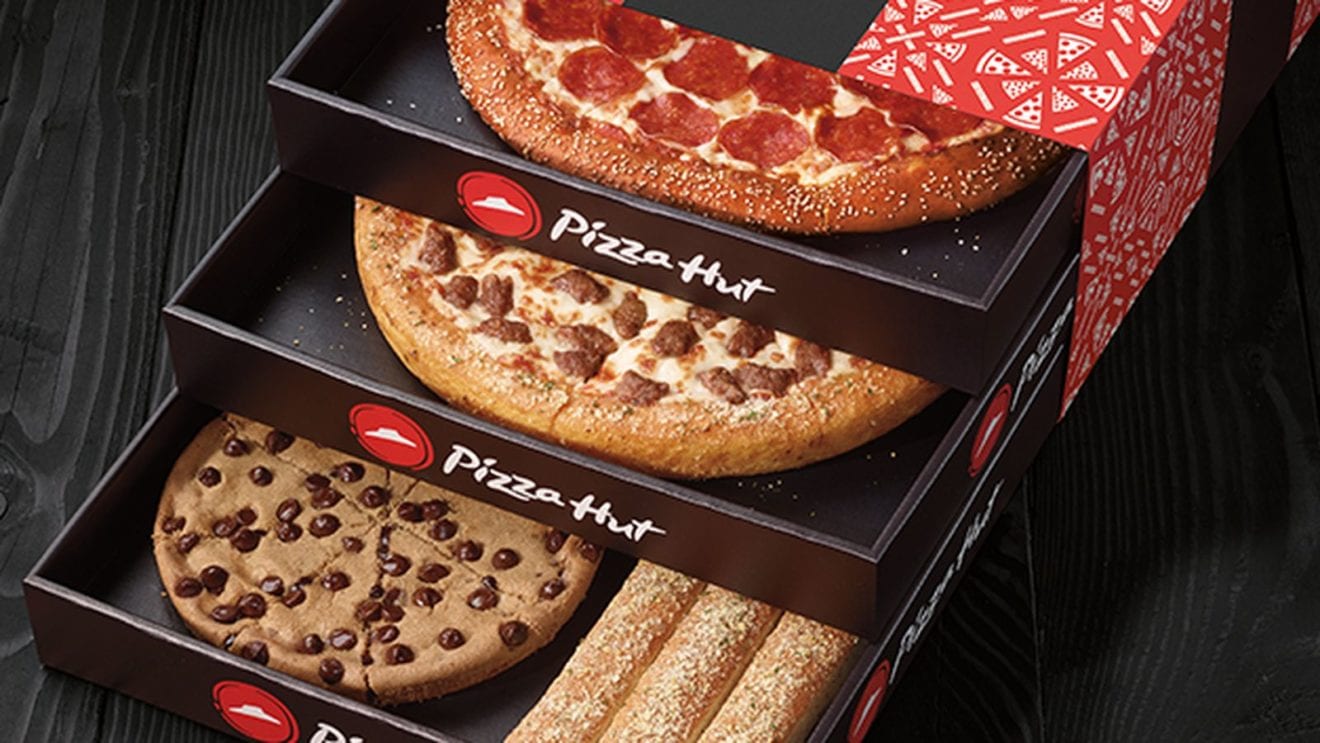
    Ogilvy & Mather Singapore has won the local creative account for Pizza Hut following a pitch.

    The agency-of-record account marks an extension of Ogilvy’s regional creative brief with the restaurant chain’s parent company Yum! Brands.

    Ogilvy did not specify a contract period and instead said the account would be with them until  “discontinued”.

    Although sister WPP agency J. Walter Thompson previously held the AOR role for Pizza Hut in Singapore from 2012, the agency has said it was not the incumbent on the account and did not pitch.

    In a press statement, Ogilvy said it will be tasked with “localising Pizza Hut’s global brand positioning and driving integrated marketing communications”.

    This includes creative strategy, campaign execution, and social media programs aimed at “rekindling brand love from Singaporeans”.

    “Ogilvy has demonstrated a strategic understanding of the nuances of the Singapore market, the Pizza Hut brand and audience, and delivered creative that embodies our new global brand positioning and how we can clearly differentiate from the competition,” said Merrill Pereyra, chief executive officer of QSR Brands (M) Holdings – the local operator of Yum!

    “Having already enjoyed working with KFC in Singapore for three years, we couldn’t be more thrilled to grow our remit with Yum! Brands and to now embark on this creative journey with Pizza Hut as a result of winning the recent pitch. Iconic brands are built across channels, touchpoints and over time – days, months, years,” said Chris Riley, group chairman, Ogilvy Singapore.

    “It is this type of multifaceted, integrated work that really excites our team and we believe will give us the opportunity to make the Pizza Hut brand matter even more with consumers.”

  • How to generate brand love on Singles Day

    How to generate brand love on Singles Day

    Singles Day is no longer just about Alibaba. It’s more like Black Monday or Christmas, a nation-wide shopping event, covering everybody looking for great deals, not just the singletons, as it was originally conceived.

    Alibaba founder Jack Ma said last year that his dream was to extend this shopping extravaganza beyond China, and establish a carnival for the world stage. Alibaba’s data shows 235 countries participated this year, while 224 used Alipay – a 60 per cent rise year-on-year, and significant step towards this dream.

    Similarly, international brands played better this year, taking better advantage of the spending power on offer. Tmall data shows us that international brand sales grew by 47 per cent (vs 2015).  The likes of Nike, Uniqlo, Adidas, New Balance and Gap headed to Tmall’s Top 20 Sales Store this year, compared to just three brands last year – testimony to the importance placed on brands and the tangible rewards being reaped for our international players.

    There is no doubt that Singles Day has become one of the most important consumption periods for a variety of categories in China, and beyond. No one wants to miss it.

    So, what was new this year?

    Technology and entertainment played crucial roles in this year’s Singles Day, with brands eager to gain public attention via the very latest technology.  A great example of this is Tmall’s partnership with the likes of KFC and Starbucks to execute the ‘Catch Crazy Cat’ VR game.

    Reaching 17 billion plays, the Pokemon-Go inspired VR game allowed consumers to catch the Tmall mascot cat via their mobiles in KFC, Starbucks and even Shanghai Disneyland.

    The number of cats caught translated into ‘Hong Bao’ (luck pocket money) to be used for discounts in a variety of stores. Overall, the game connected people online to offline, while engaging those physical stores that are usually less involved in the shopping festival.

    Tmall also launched its VR virtual shopping product Buy+ on November 1, aiming to add a fancy dress element to the shopping mania and further appeal to the Chinese consumer.

    While many critics cited this experience to be less immersive, data shows 8 million engagements, among which 76 per cent were post-millennial.

    A significant trend throughout 2016, it’s no surprise to see so many brands, celebrities and shops execute live-streaming tactics to further promote product. It’s estimated that close to 60,000 different live streams took place on Singles Day. The biggest live streaming event, the Tmall Party, saw attendees span a collection of top A-list celebrities, both international and local; including the likes of David and Victoria Beckham, and Scarlett Johansson. The move to secure former Super Bowl Director, David Hill, only helped to further propel this year’s Singles Day onto the global stage.

    China has coined this year’s model as ‘Double E’ – Entertainment meets eCommerce, unleashing consumer purchase potential via the simple act of entertainment. Brand advertising potential is now enormous, and will only continue to grow year-on-year.

    How can brands leverage Singles Day?

    Singles Day is not everything. While everyone is impressed by this year’s 120.7 billion RMB sales figure, many ignore the fact that this is less than 5 per cent of Alibaba’s annual sales.

    For brands to sell, it’s important to remember that the remaining 364 days of the year count. Ogilvy believes that annual content that can be weaved naturally into omni-channel planning will ultimately connect brand with consumer and drive sales.

    As Jack Ma said in 2013, Singles Day has reached a certain momentum – it’s not only about the sales numbers anymore. This year is testament to this thinking. Increasingly, big brands have started to dominate the top sales ranking. Given the attention and hype of the day, this is a great opportunity for brand building if done well.

    Marketers should ruminate on how their brand can cut through and develop content that drives attention, and also builds the brand for engagement longevity. Singles Day is not only a selling extravagance but also a unique platform for creative brand building.

    There are also proven successes of launching a less well-known brand or promoting a less-penetrated category during this period. We also helped clients successfully orchestrate limited edition launches. For example, this year’s partnership between Budweiser and celebrity Chen Weiting saw an exclusively designed Tmall pack, live-streaming, and an invite for the highest purchasing group to attend Chen’s upcoming concert – placing Budweiser as the best selling beer brand on the day.

    Similarly, Tmall was able to demonstrate how international players can reach more remote areas of China – where spending power is rising and physical product distribution proves difficult. Brands entering China tend to believe that consumers in larger cities have the biggest spending, however, Tmall data shows us that provinces such as Qinghai and Shanxi are not to be ignored. Here, low-price is not a factor that determines spending; it’s brand value and quality that counts.

    These were all put into the wider context of making a brand matter to consumers, so as to generate long-term and loyal customers. This year’s overall sales ranking of many categories shows us that when the promotion level went down, the stronger brands play better. So, what ensured top ranking sales for Suning, Xiaomi, Haier, Uniqlo and Nike is not only a result of promotional discounting, but the current sentiment and value of the brand to consumers.

    What main e-Commerce trends do we see in China?

    China is not only the biggest eCommerce country in the world, it’s also arguably the fastest moving one. Tmall remains one of the major eCommerce channels for many brands.

    However, it only provides limited customer data to brands. We see more and more brands start to develop their own eCommerce websites in order to provide an immersive brand experience. And, more importantly, to attain better customer data that allows them to drive loyalty via CRM.

    Personalised eCommerce shopping experiences are another mega-trend. Tmall first called this out as ‘Thousand People, Thousand Faces’, and many other platforms followed suit.

    Tmall’s enormous big data capability enables brands to profile a customer and design unique shopping experiences based on their preferences. Some brands have also started to pilot this. For example, last year saw us help Nestlé tailor a unique shopping experience on its Tmall shop based on customer profiles. The results were phenomenal – engagement rates and sales close to doubled.

    It’s no secret that mobile has become the main device for consumers to purchase products.

    This year, 82 per cent of the 120.7 billion came from mobile, a big leap vs 2015’s 68.7 per cent. The trend sees brand content link seamlessly to eCommerce on mobile, enabling consumers to purchase items while absorbing brand content. A great example of this is the Tommy Hilfiger Shanghai show on October 24. Tommy Hilfiger broadcast the event live stream in high-definition and, most importantly, drove the audience to instantly purchase items on stage via a simple click.

    It’s clear that the slow-down of economics in China has not discouraged an enthusiasm to buy. Yet Chinese consumers are now more brand conscious, more design conscious, and more quality conscious. Brands clearly play a crucial role in eCommerce, now more than ever, therefore making brands matter is essential.


  • Ikea Kicks Off $444 Million Global Media Review

    Ikea Kicks Off $444 Million Global Media Review

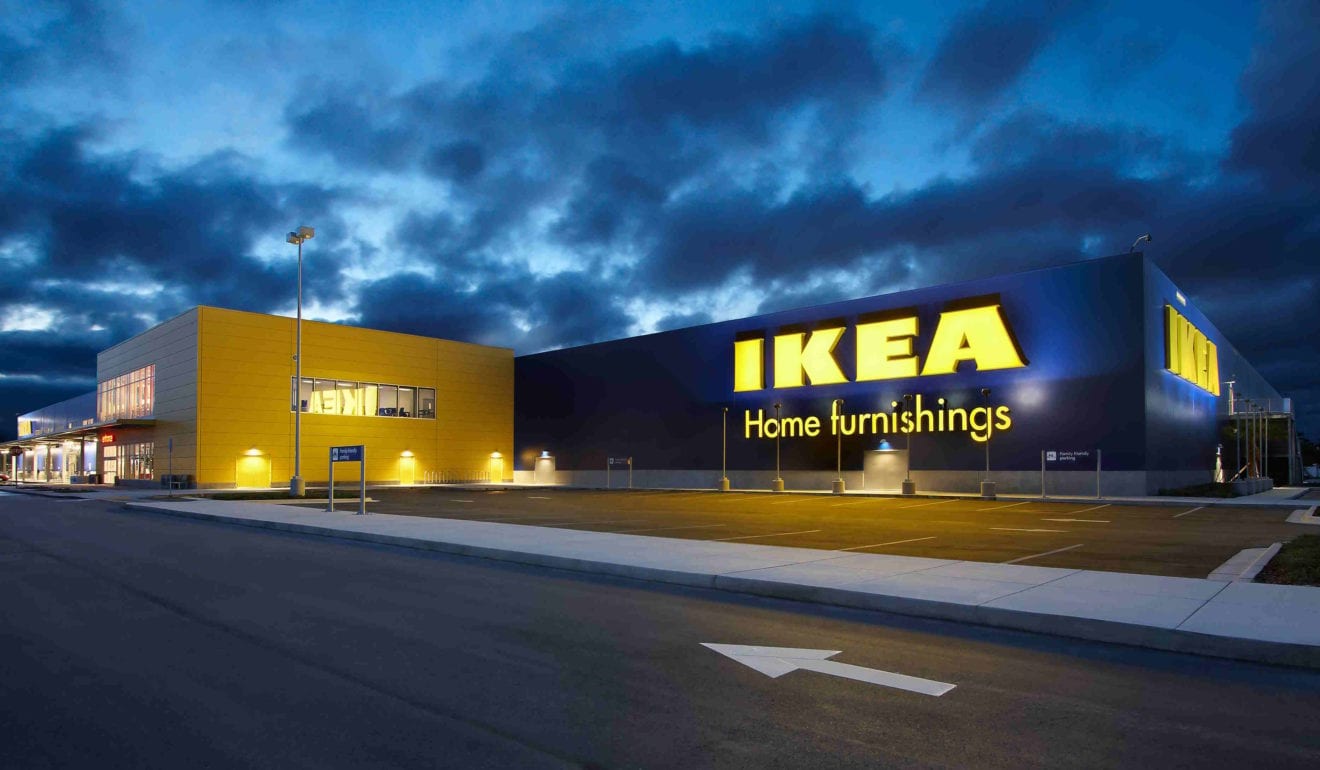
    Ikea is reviewing its entire $444 million global media account, which is currently split between a range of agencies across five different holding companies. WPP’s MEC retained Ikea’s media planning and buying duties in the U.S. following the last media review in 2009. Dentsu Aegis Network’s Vizeum won the U.K. business from WPP’s MediaCom in the same review, which took more than six months to complete. In Asia, Vizeum picked up the business in Singapore, Thailand and Malyasia in September 2015, after winning Korea a year earlier.

    The Swedish furniture retailer confirmed in a statement: “Ikea is currently in the process of reviewing its media agency suppliers globally. ID Comms, our media consultancy partners, will be helping us facilitate this process.”

    An executive familiar with plans for the review said media buying is currently split among agencies from five different agency holding companies.

    Ikea’s statement continued, “As part of our commitment to the ongoing improvement of our media and marketing governance, Ikea periodically evaluates all marketing service suppliers to ensure we maintain the best working relationships with the best agency partners.

    Creative duties on Ikea are not under review. Like the current media arrangements, creative is split between a number of different agencies around the world. New York, BBH Singapore, Buzzman Paris, Mother London, and Forsman & Bodenfors and Akestam Holst in Sweden have all created memorable campaigns for the brand.

    Ikea’s sales reached $35 billion in the year ending Aug. 31, 2015, with like-for-like sales up 5% on the previous year. Including new store openings, sales were up 11.2% last year.

    The company’s head of sustainability, Steve Howard, recently told a conference organized by The Guardian in London, “We have probably hit peak stuff.” He pointed to growing emphasis on repairing and recycling in future, while at the same time declaring a target of almost doubling sales by 2020. China and Russia are currently its fastest growing markets.

    Ikea is No. 66 in the ranking of Top 100 Global Marketers compiled by Ad Age’s Datacenter. In 2014, the vast majority of Ikea’s spending – 79% – was in Europe, with 15% in the U.S. and less than 2% in Asia.

    ID Comms also worked on the $2.6 billion global Johnson & Johnson pitch last year, and on the U.S. and European A-B InBev reviews in 2014.

  • Luxury shoppers in China spending 28 per cent more per online purchase than in 2014, study shows

    Luxury shoppers in China spending 28 per cent more per online purchase than in 2014, study shows

    Unfazed by the country’s economic slowdown, luxury shoppers on the Chinese mainland have increased their purchases online as a range of e-commerce options provide attractive deals – from cosmetics and clothes to cars and property.

    That trend was uncovered from a joint survey of 10,150 luxury consumers in China by global professional services giant KPMG, online luxury retailer Mei.com and Chinese media firm Sina’s Nasdaq-listed micro-blogging service Weibo. The survey was called China’s Connected Consumers 2015.

    “The pace of change in today’s marketplace in China is taking retailers and brands by surprise,” Egidio Zarrella, the clients and innovation partner for China at global professional services giant KPMG, said on Tuesday.

    The new KPMG-led study found that the average spending by mainland luxury shoppers has increased 28 per cent to 2,300 yuan (US$362) for each single e-commerce purchase, up from 1,800 yuan average in last year’s survey.

    It also found that 45 per cent of respondents in the latest survey said they have bought many luxury items online.

    While only 1 per cent said they have bought domestic and overseas properties and cars online, about 50 per cent of those surveyed said they have not ruled out making those purchases online in the future.

    “China’s luxury consumers are looking for something beyond the physical shopping experience,” Zarrella said.
    “They are moving from just owning a luxury product to experiencing luxury, including gourmet dining, fine wines, private flights, bespoke safaris, luxurious travel tours, spa treatments, art auctions and an ever increasing range of investment services.”
    In a report early this year, management consulting firm Bain & Company estimated that China’s luxury market reached 115 billion yuan last year, down 1 per cent from the previous year, as Beijing cracked down on lavish spending by government officials.

    The country’s luxury market was largely expected to remain under pressure because of the slowing economy. Mainland China’s gross domestic product growth was exactly 7 per cent in the first and second quarters of this year, compared with close to 8 per cent last year.

    Zarrella, however, pointed out that e-commerce spending in the world’s second-largest economy shows a completely different picture.

    The survey, which had respondents from 90 Chinese cities, found an increase in the average amount spent on luxury purchases in most product categories.

    It showed that a higher amount was being spent on average for popular categories such as bags at 109 per cent, women’s apparel at 58 per cent and cosmetics at 18 per cent. There was also a significant increase in spending on categories such as watches at 126 per cent and jewellery at 65 per cent.

    The top-selling product categories in China’s e-commerce market are cosmetics, women’s shoes, bags and leather goods, women’s apparel and accessories.

    “Price is becoming less of a driver [for online sales],” said Thibault Villet, the chief executive at Mei.com. “But value remains important as customers are well informed about global prices since most of them travel.”

    The study found that Chinese luxury online shoppers prefer to buy on so-called online-shopping platforms, such as e-commerce giant Alibaba Group’s Tmall.com.

    “Tmall controls over 50 per cent of the total business-to-consumer e-commerce market in China,” Villet said.

    That preference was attributed to the multiple online merchants in such platforms, the extensive information on products and pricing, peer ratings of sellers, regular promotional activities and payment gateways like Alipay and Tencent Holdings’ Tenpay.

    Villet said Mei.com plans to open its own e-commerce platform dedicated to luxury goods by next year to better compete on the mainland.

    He said the exponential growth of smartphone adoption on the mainland has also helped boost mobile e-commerce purchases. “We expect Mei.com to be fully mobile by the end of 2016,” he added.

    Mobile e-commerce sales will account for more than half of online retail shopping in mainland China by next year, according to New York-based research firm eMarketer.

    It forecast mobile e-commerce would make up 10.9 per cent of all retail sales in the country next year and 55.5 per cent of online retail shopping as the sector grew to a record US$505.74 billion, up from an estimated US$333.99 billion this year.

    The government-backed China Internet Network Information Centre has reported the number of users who accessed the internet through mobile devices reached 594 million in June, up from 557 million in December last year, while the overall number of internet users rose to 668 million from 649 million.

    Andrew Taylor, a co-founder of Juwai.com, which connects Chinese buyers to overseas property, said mobile browsing by consumers in China was a major driver of brand awareness for his company.

    “We see that many of the more affluent customers who look for luxury properties use [Tencent’s instant messaging service] QQ and call us,” Taylor said.

    “The younger consumers contact us through [Tencent social mobile messaging platform] WeChat and Sina Weibo.”

    So-called online-to-offline activities is a trend that will continue. Zarrella said that physical stores have a role to play in triggering e-commerce purchases of luxury goods.

    “We see a growing number of online platforms launching pop-up shops in malls, or have tie-ups with physical stores to give buyers an opportunity to inspect these products,” Zarrella said.

    Thomas Crampton, the global managing director at Social@Ogilvy, the worldwide practice of marketing group Ogilvy & Mather involved in social media, said an online-only approach in China is not sustainable for brands.

    “At some point, each brand will need a face-to-face touchpoint,” Crampton said.

    “We helped an automotive brand, analyse, interpret and optimise the shopper journey,” he said as an example. “From a traditional purchase cycle of over 200 days, the brand managed to sell over 300 cars in a matter of three minutes through WeChat.”