Tag: Ola

  • Ola Electric Announces MoveOS 4

    Ola Electric Announces MoveOS 4

    Ola Electric has announced a software upgrade for all Ola scooters. This latest software upgrade packs a lot of features and enhancements to the already existing features and functionalities. The company says the beta release for MoveOS 4 will take place on September 15th, followed by a public rollout somewhere around late October.

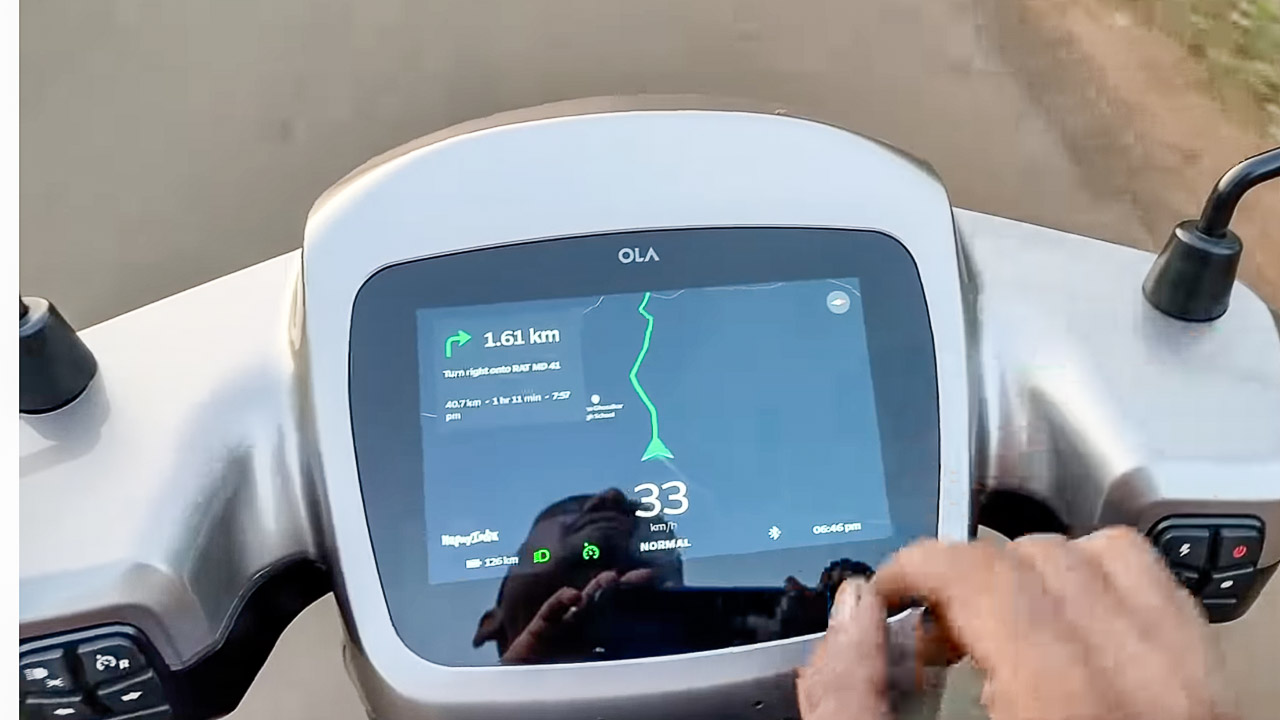
    Ola Electric has introduced their in-house developed Ola Maps, while the scooters are currently using ‘MapMyIndia’. Alongside this, some additional new features are Geofencing, Timefencing, Ride Journal, Concert mode and hill descent control system.

    To address the safety concern Ola Electric has introduced a tamper alert system that notifies both owners and bystanders in case any tampering is detected. The other features include personalised proximity settings, auto turn indicator cut-off, new trip metres, and headphone controls for music and calls. “Take-me-home” lights and favourite contacts have also been seamlessly integrated into the scooter’s functionalities.

    Ola has also introduced ‘Garage mode’ that facilitates the centralised control of multiple Ola electric scooters through a single interface. The company will also be offering application widgets and cruise control in Eco Mode. The company introduced the energy insight feature that provides users with deeper insights such as distance travelled, Fuel Saved and CO2 savings. Which will help users to track their energy consumption patterns.

    The company has made a significant change in the overall application itself, featuring a sleek dark mode for improved user experience. Over-the-air (OTA) updates can now be seamlessly implemented. The application will also be updated and will have features, including a hill hold setting, regen setting, and call settings.  The company says the application will now support biometric app lock options, which will use facial recognition or fingerprint authentication to open the app.

    A few enhancements are done to the pre-existing features such as regeneration, hill hold, charging time prediction, riding range etc. Also with MoveOS 4 document syncing, contact syncing, pairing, and touch response is now faster. Hypercharging has also been improved.

  • Ola Focusing On A Global Electric Two-Wheeler Business, Says CEO

    Ola Focusing On A Global Electric Two-Wheeler Business, Says CEO

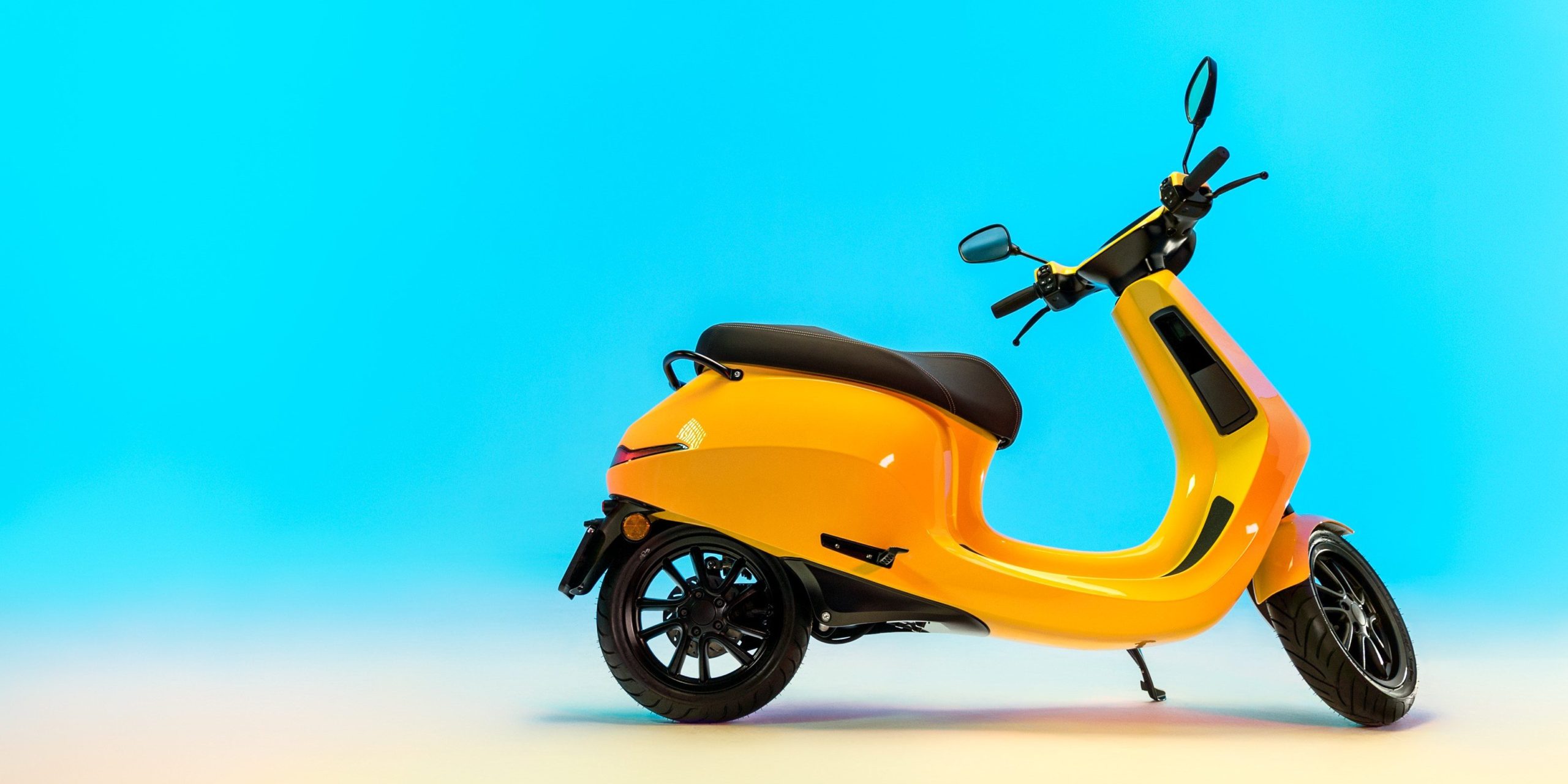
    It was earlier this year in May when Ola officially announced its foray into the local and global electric two-wheeler markets. The firm is expected to launch its first electric scooter in 2021. Now, the company is aggressively building a global electric two-wheeler business. This was confirmed by CEO Bhavish Aggarwal while addressing the CII event. It was at the event when the co-founder pointed out that two-wheelers create more pollution on a cumulative basis compared to four-wheelers in some geographies.

    Thus, the company is very much focused on building an electric two-wheeler business. This new global business will also play across different vehicle segments over the next few years. Ola chief believes that India with its unique skill sets and manpower can be a bridge for developing paradigms and technologies for not only developed but also developing countries.

    He classified four broad segments of vehicles, including two and three-wheelers, Asian-European styled four-wheelers (small city cars), western-styled four-wheelers and large commercial vehicles (buses and trucks).

    He said, “Our ambition is to be the leader in electric mobility for the small vehicles and small city four-wheelers. And unlike Tesla or many of the American companies, which are building for their own audiences, we have to build for our audiences. India is the world’s largest two-wheeler market. Asia is 80-90 per cent of the global two-wheeler market.”

    According to PTI, Ola is planning to foray into electric scooter manufacturing and plans to hit the market with its first vehicle in January next year. The electric scooter will be initially manufactured at a facility in the Netherlands and will be retailed in Indian and European markets. However, the company hasn’t specified any exact timeline for the launch of e-scooter.

    In May 2020, Ola Electric had acquired an Amsterdam-based Etergo BV company. And, the firm had confirmed that it is working on building an electric vehicle ecosystem which includes extensive charging and swapping networks across the country. He also mentioned that Ola will have an important role in the smaller four-wheeler segment. However, he didn’t provide specific details.

    He added, “As and when we have more to say, we will share, but we are looking at the whole spectrum of electric mobility from a global perspective. And over the next few years, we will build across different vehicle segments.”

    “I believe we have the unique skill sets and unique talents and the India advantage to do that, because a lot of these paradigms for tomorrow if they have to be globally relevant, they have to be built in India because India is kind of a bridge between the developed world and the developing world,” he added.

  • India To Order Taxi Aggregators Like Uber, Ola To Go Electric By 2026

    India To Order Taxi Aggregators Like Uber, Ola To Go Electric By 2026

    India plans to order taxi aggregators like Uber and Ola to convert 40% of their fleet of cars to electric by April 2026, according to a source and records of government meetings to discuss new rules for clean mobility. Uber and Ola, both backed by Softbank Group, would need to start converting their fleet as early as next year to achieve 2.5% electrification by 2021, 5% by 2022, 10% by 2023 before hiking it to 40%, according to the person and the records that have been reviewed by Reuters.

    Some taxi players, like Ola, have previously tried to operate electric cars in the country, but with little success given inadequate infrastructure and high costs.

    New Delhi, however, is looking to push the new policy to boost the adoption of electric vehicles (EVs) as it tries to bring down its oil imports and curb pollution so it can meet its commitment as part of the 2015 Paris climate change treaty.

    Indian think-tank Niti Aayog, chaired by Prime Minister Narendra Modi and which plays a crucial role in policymaking, is working with several ministries on the new policy.

    Neighbouring China, home to the world’s top auto market, is already leading the world in electrification by setting tough EV sales targets for car makers and offering incentives to taxi operators to increase their fleet of clean-fuel cars.

    EV sales in India grew three-fold to 3,600 in the year ended March but still account for about 0.1% of the 3.3 million diesel and gasoline cars sold in the country over the period, industry data showed. China’s electric car sales, meanwhile, rose 62% in 2018 to 1.3 million vehicles.

    In a meeting in New Delhi on May 28, Niti Aayog officials and the ministries of road transport, power, renewable energy and steel, as well as the departments of heavy industries and trade, were among those recommending taxi operators in India gradually convert to electric.

    Motorcycles and scooters sold for commercial purposes, like food delivery or for use by e-commerce companies, will also need to be electric from April 2023, the person added.

    India has seen a boom in food delivery apps like Zomato and Swiggy, which counts Naspers and Tencent as investors. Sales by e-commerce firms like Amazon.com and Walmart-owned Flipkart are also rising.

    The EV proposal comes weeks after the inter-ministerial committee recommended electrifying most motorbikes and scooters for private use and all three-wheeled autorickshaws within the next six to eight years.

    While there are several electric scooter manufacturers in the country including Ather Energy, Hero Electric and Okinawa, there are only two car makers that build and sell electric cars – Mahindra & Mahindra and Tata Motors.

    Some taxi operators have so far had little success operating electric cars in India. Ola launched a pilot project in the central Indian city of Nagpur in 2017 but a year later drivers, unhappy with long wait times at charging stations and high operating expenses, wanted to return to gasoline cars.

    Ola, however, is not giving up yet.

    Its Ola Electric Mobility unit in March raised 4 billion rupees ($58 million) from investors including venture capital fund Tiger Global and Matrix Partners.

    It also raised $300 million from Hyundai Motor and Kia Motors and formed a strategic partnership with the South Korean duo to help build India-specific EVs.

    Modi’s government in 2017 had set an ambitious target to electrify new cars and utility vehicles by 2030 but resistance from the industry forced it to scale back the plan.

  • Ola Aims To Deploy 10,000 Electric Two And Three-Wheelers In India

    Ola Aims To Deploy 10,000 Electric Two And Three-Wheelers In India

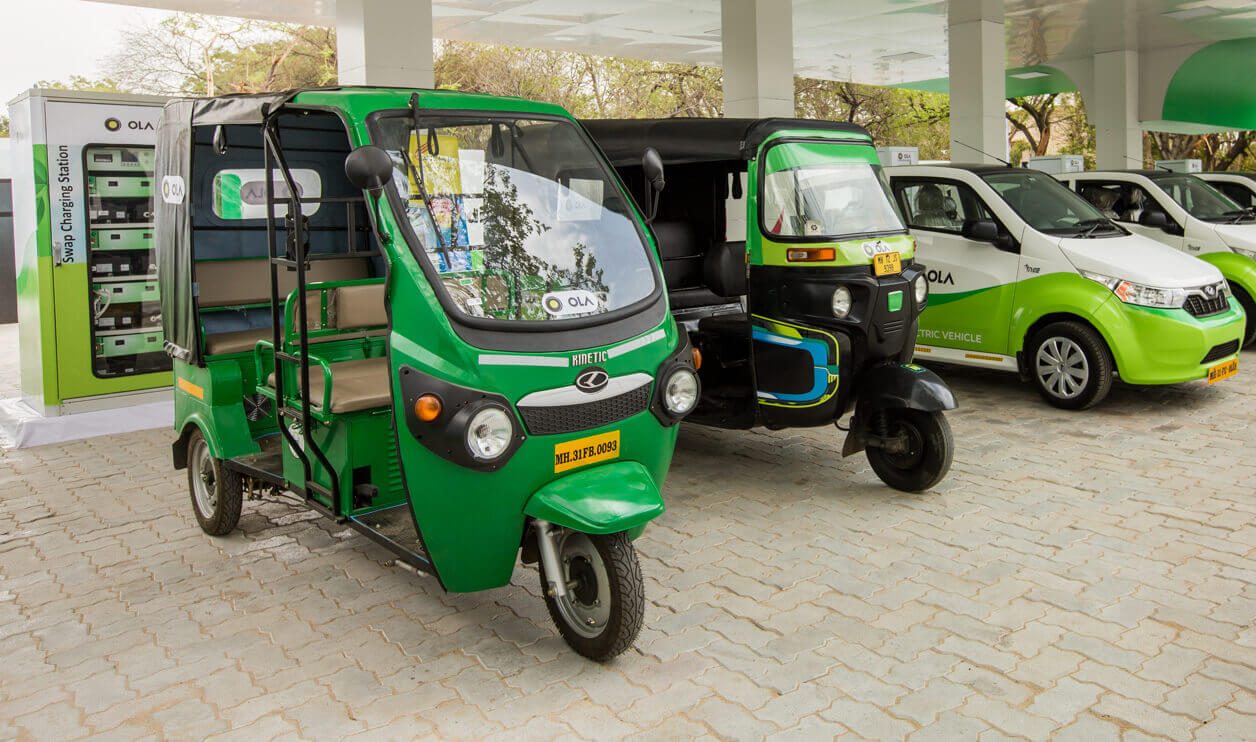
    India’s Ride-hailing service provider Ola is reportedly betting big on two and three-wheelers for its electric mobility drive. In fact, the company is expected on deploying 10,000 electric vehicles (EVs), a mix of two and three-wheelers, in India by March 2020. A PTI report claims that, according to a senior company official, the company believes that mass scale adoption of four-wheeler electric vehicles will take some more time. It was a lesson that the company learned from Ola and Mahindra’s 2017 joint pilot project in Nagpur, for which the former had partnered with the leading SUV maker for a multi-modal electric mass mobility project. It showed Ola that right now “four-wheelers are not yet ready” for such usage in India on a large scale.

    Speaking to PTI, Ola Electric Mobility (OEM) co-founder Anand Shah said, “The biggest lesson (from Nagpur) was that, (electric) four-wheelers, are not yet ready. It is going to take a couple of years for the math on four-wheelers to work.” According to Ola, right now electric three-wheelers / e-Rickshaws are the largest population of EVs by natural adoption. Further, he said, “We think two-wheelers are also emerging very quickly, partially because of policy and also because of the rising interest in the commercial use of two-wheelers, whether that is in deliveries for our own food business or any of our competitors, e-commerce companies or scooter sharing.” In fact, Ola has already started pilots with a fleet of a hundred of three-wheelers in Gurugram. Considering Mahindra has the Treo e-Rickshaw in its fleet now we wouldn’t be surprised if Ola and Mahindra come together for a new project.

    The company expects to deploy the 10,000 electric vehicles by the end of March 2020 in whichever viable cities/states of the country that are willing to work with it. The possible candidate cities include – Delhi, Maharashtra, Kerala, Karnataka, Telangana, AP, and Gujarat. All that said, Ola, hasn’t given up on it, and is confident that electrification is viable in the long run. In fact, Ola is still actively working on electric four-wheelers as well Shah said, and further told PTI “We are testing electric cars. We have tried every electric car that exists in India today, but we think it’s going to take some time for rapid four-wheeler EV adoption at scale.”

    Talking about the learnings from the Nagpur project, Shah said that they noticed a need for more four-wheeler EVs models because when they started there was only one make of electric car available in the market. He also addressed the need for appropriate battery technology for the Indian conditions and usage along with a proper understanding of infrastructure utilization to strike a balance between usage of land, power and time of the day. He also talked about electricity cost being a very significant input while mentioning that now the government is beginning to address this.

    Talking about investments for electric mobility, Shah said, “We have raised Rs 400 crore from some of our early investors — Tiger Global Management, Matrix India. That money will be spent on meeting these milestones, on getting the technology right, getting the business model right and we will keep growing from there.”

  • Ratan Tata Invests in Ola Electric Mobility

    Ratan Tata Invests in Ola Electric Mobility

    Ola Electric Mobility announced that Ratan Tata, Chairman Emeritus of Tata Sons, has invested in the company as part of its Series A round of funding. This investment is in Ratan Tata’s personal capacity in the newly formed Electric Mobility company. Tata is also an early investor in ANI Technologies Pvt Ltd, Ola’s parent company. Tata’s investment in Ola Electric is a significant endorsement of the company’s approach to developing an electric mobility ecosystem, including innovations in charging infrastructure, swapping models, and market-appropriate products. Ola Electric is currently running several pilots involving charging solutions, battery swapping stations, and deploying vehicles across two, three and four-wheeler segments. Investment details are still under wraps.

    Ratan Tata, said, “The electric vehicle ecosystem is evolving dramatically every day, and I believe Ola Electric will play a key role in its growth and development. I have always admired the vision of Bhavish Aggarwal and I’m confident that this will be part of yet another important strategic move into this new business area.”

    Ola Electric Mobility Pvt Ltd raised a sum of ₹ 400 crores led by several of Ola’s early investors, Tiger Global and Matrix India and others, as part of its first round of investment. The company was initially established to enable Ola’s electric mobility pilot program in Nagpur.

    Bhavish Aggarwal, Co-founder & CEO, Ola said, “Mr. Tata has been an inspiration and a mentor to me personally in shaping Ola’s journey over the years. I’m very excited to welcome him on board Ola Electric as an investor and a mentor in our mission of building sustainable mobility for everyone on our planet. He is a visionary who has inspired a generation of entrepreneurs and we are privileged to have his guidance and support once again, as we work towards our goal of a million electric vehicles in India by 2021.”

  • Google India delivers for food fans

    Google India delivers for food fans

    Working with local partners, Google India has made online ordering and restaurant bookings easy.

    When people use their phones to search Google for nearby restaurants, the search results offer an option to “place an order”.

    By tapping the option, users can choose a delivery service and be taken to its website to complete their order. Users can also make a one-click reservation if they prefer to visit the restaurant.

    Google has partnered with startups Swiggy and Zomato for food delivery, and Bytplus and Dineout for reservations. The services can be used on Google Search and the Google app for both Android and iOS devices.

    “These features are just rolling out and we’ll be adding more partners and evolving the look and feel over time,” Google says in an official blog.

    Earlier, Google Maps stitched in Ola and Uber services on its platform in India, showing fares and riding options from the app-based taxi aggregators.