Retail News CRM

Tag: OLED

  • LG Display will no longer supply Apple with LCD panels for certain iPhone models

    LG Display will no longer supply Apple with LCD panels for certain iPhone models

    A new report from Korea’s The Elec says that LG Display will no longer be supplying LCD panels to Apple for the low-priced iPhone SE model. The company will continue to sell a small amount of OLED to Apple for the Apple iPhone 12 series. The factories that LG Display used to manufacture LCD for Apple will now make in-vehicle displays.

    The reason for LG Display’s decision to back out of producing LCD panels for Apple might have to do with its inability to make a profit from the business. Starting with last year’s iPhone 12 series, Apple’s new high-end models use OLED only which reduces the demand for LCD from the tech giant. LG Display reportedly stopped producing LCD panels for the iPhone during the third quarter of 2020 and by the end of the following quarter, it also stopped supplying other smartphone firms with LCD displays.

    Apple CEO Tim Cook has made the long trek to the pitcher’s mound where he has signaled to the bullpen for replacements to LG Display; Sharp and JDI will take over the job of supplying LCD screens for the iPhone. The factories that LG Display used to make LCD panels for Apple will now be used to manufacture low-temperature polycrystalline silicon (LTPS) thin-film transistors (TFT). The latter is used for touchscreen displays used in vehicles.

    This year’s iPhone 13 Pro models are rumored to be equipped with ProMotion panels that update the screen 120 times per second (120Hz). At that rate, battery life takes a hit.

    But with low-temperature polycrystalline oxide (LTPO) displays, the screen can adjust the refresh rate to run at 120Hz when needed to make an animation (such as the kind you’d find on mobile games) run and look smoother. At the same time, when the content on the display is more static (like when you’re viewing an email or text), the refresh rate changes to a lower number in order to prevent the phone’s battery from draining to quickly.

    At this point, it isn’t clear whether LG will be involved in the production of the LTPO panels alongside Samsung and BOE. The latter has tried to find a place among Apple’s display suppliers but has had problems with its output passing Apple’s Quality Control.
  • LG to supply flexible OLED displays for the iPhone XII in 2020

    LG to supply flexible OLED displays for the iPhone XII in 2020

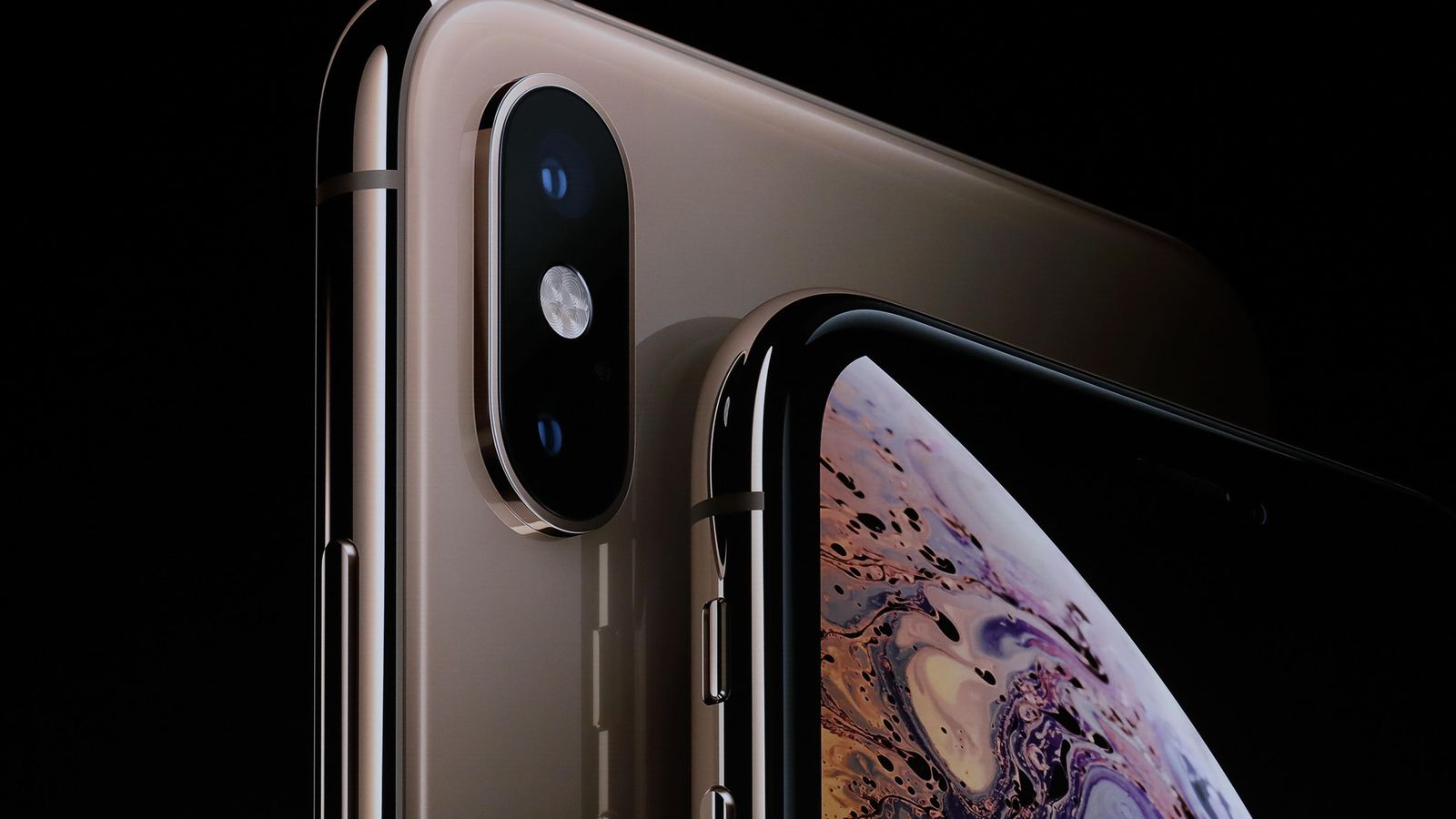
    LG is being fast-tracked to become Apple’s second OLED display supplier for the iPhone XII models in 2020, breaking Samsung’s current monopoly. The E6 line in its Korean factory has reportedly been cleared for operation, and Apple hoped to get whatever quality yield LG can muster.

    Those would increase the average selling price of LG’s displays by 10% which is not an insignificant amount as far as these things go. Unfortunately, the number of OLED panels with the needed quality that LG’s conveyor belts are currently able to churn out is not very large.
    So far, LG panels have been used for repairs of the new iPhones, and with the inauguration of the E6 plant we might see some of the top quality batches make it in the 2019 iPhones. LG apparently won’t be fully ready to supplement Samsung before the 2020 crop, however. According to Jeong Seo-hee, chief financial officer of LG Display:
    In any case, with the help of Apple’s credit lines, LG should quickly be able to ramp up production, as the team from Cupertino is in a desperate need of at least one more OLED screen supplier to avoid the monopolistic prices that Samsung is charging.
    Rumors pegged an iPhone X panel to cost about $100, or about a third of the handset’s bill of materials, and we can only guess how much Samsung charges for the 6.5″ iPhone XS Max display, given that its Apple Repair charge alone comes up to $329.
  • Samsung Galaxy Note 10 Going back to a Curvy Display

    Samsung Galaxy Note 10 Going back to a Curvy Display

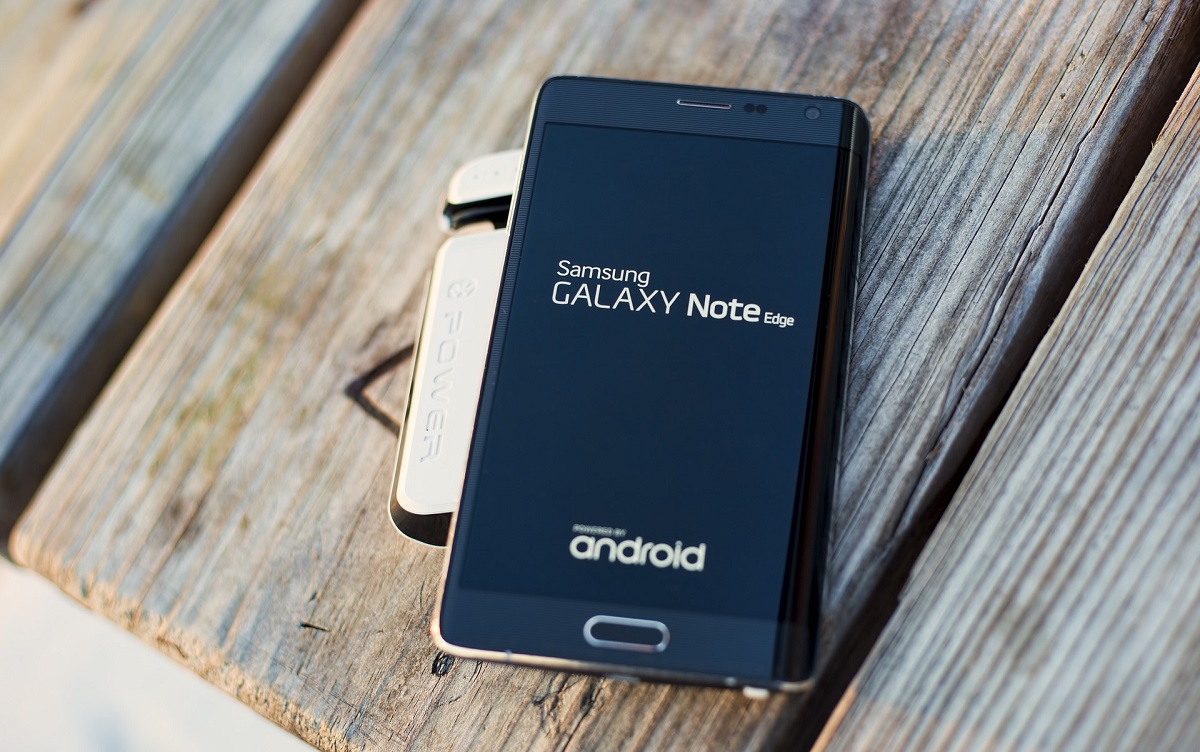
    Ever since the debut of the Galaxy Note Edge, curved displays have been a trademark of Samsung flagship phones. And although in recent years the company seemed to be moving away from the extreme slanted edges of the aforementioned model and some of its successors, the upcoming Galaxy Note 10 may actually draw inspiration from Samsung’s older designs.

    The Samsung Galaxy Note 9 and Galaxy S10 and S10+ have very subtly curved displays that serve mostly to accentuate the extremely thin side bezels and as an excuse for the Edge Screen to exist. With the initial “wow” factor of the curved design gone, it made sense for Samsung to dial back the exaggerated contours in favor of a more restrained look.

    All that said, according to resourceful leakster @UniverseIce, the Samsung Galaxy Note 10 may flaunt a “more aggressively curved display than the Note 7.” The unfortunate Galaxy Note 7 didn’t have an extremely curved screen, at least when compared to some older designs, so it would be interesting to see what the Samsung does with the Note 10. If the company is going back to displays with more pronounced curved edges, we’re hoping that it does so with a clear idea of how to enrich the user experience. When the Galaxy Note Edge launched, its slanted screen was certainly new and different from anything else on the market, but the company itself later proved that the functional aspects of the Edge display can be successfully replicated on more subtly curved designs.

    Another interesting remark that Ice Universe makes is that “more than one brand” will follow Samsung’s example and launch a device with a “more aggressively curved display.” This trend didn’t really take off in the past, but if the Note 10 does, indeed, do something very creative or convenient with this rumored design, then more companies may follow suit. We’ve been hearing rumors the OnePlus 7 may have a curved screen, though they are conflicting.

    Earlier this year, we envisioned what the Samsung Galaxy Note 10 may look like, based on rumors and preliminary information. We suggested that the Note 10 might have a hole-punch selfie camera, akin to that of the Galaxy S10+. However, Ice Universe later told us that he expects the Note 10 to have a smaller camera opening than the Galaxy S10. He didn’t specify whether that means a single front-facing camera or just a smaller opening for the two lenses.

    Last month, Ice Universe tweeted: “Da Vinci is symmetrical.” This may seem cryptic at first, but since the Galaxy Note 10 is codenamed Da Vinci, this could be a hint that the phone’s front-facing camera may be centered, rather than offset like on the Galaxy S10. Many people wanted the S10 models to have centered selfie-cameras—if only for symmetry’s sake—and this may actually happen with the Note 10.

    What do you make of all this? Do you miss the more rounded screen edges that some Samsung phones had in the past, or are you just fine with the more subtle designs of the past couple of generations? What about the screen camera punch-hole? Centered or offset to the right? Yes, we know, you’d rather it disappeared for good, but that’s not happening this year, apparently. Tell us what you think in the comments below!

  • Samsung to gather all Galaxy Fold units sent out to reporters

    Samsung to gather all Galaxy Fold units sent out to reporters

    Samsung’s first smartphone with a foldable display is writing history, no doubt about it. What will this segment of the tech industry archives say exactly, is still uncertain. It seems like every day we get a new development in the saga of the Galaxy Fold.

    First, reviewers around the world got Galaxy Fold units ahead of the launch, as is tradition, to give users insights about how the new device feels to use. The initial feedback was mostly positive. Reporters said that the hinge mechanism is durable and satisfying to use and the crease in the display is barely visible when handling the device. That raised hopes among consumers that the Galaxy Fold is more than a prototype that Samsung has decided to sell to a few customers.

    But that joy was short-lived, at least for some of the testers. Pictures of damaged displays started showing up on Twitter and while some were caused by the users which mistakenly tried to peel a layer of the display, others were of no fault of the person handling the Galaxy Fold.

    Samsung has handled the situation as best as possible. Damaged units were replaced almost immediately, but now the company is going even further. Yesterday, Samsung announced that it is postponing the release of the Galaxy Fold to give itself time to investigate the various issues the device had and hopefully come up with ways to prevent them.

    Naturally, in order to investigate, Samsung needs to get said units. The move is already underway. Sources familiar with the situation have said that Samsung is going to retrieve all units that it sent out to reviewers in order to take a thorough look at them. So far, none of the reviewers with working units has mentioned that they’ve had to part ways with their Galaxy Fold.

    As soon as the Galaxy Fold was announced and the tech behind its foldable display was explained, concerns were raised about its durability. In order for the display to be able to bend, Samsung had to ditch the battle proven Gorilla Glass and go for something softer, in this case, plastic. The Galaxy Fold’s in-folding design provides some protection for the large inner display, but there are a couple of caveats that have proven to be a weakness for the device.

    One is the small gap that’s left between the two panels when the phone is closed. While it’s not a large one, it’s enough to get random small objects that might be lurking in your pocket stuck in the fold of the display, causing scratches or potentially even damaging the OLED panel under the protective plastic.

    The other is the area between the hinge and the display, which also appears to be a lucrative spot for unwanted debris to sneak into. Then once you unfold the display whatever is stuck under it starts putting pressure on the display matrix and can easily damage it, which was the case with one of the devices sent to reporters.

    Now all that’s left to see is how long the launch of the Galaxy Fold will be delayed and what changes Samsung is going to make. With units initially expected to start shipping around April 26, it’s obvious that a large number are already manufactured and waiting in storage somewhere. Making any design changes at this point will be a costly and slow process. On the other hand, Samsung can’t afford to send devices that might break within a week to customers that are paying $2000 for them. We’ll see how this situation unfolds (pun intended) as it might be one of the most difficult things Samsung has had to deal with since the Note 7 fiasco.

  • Samsung forecasts massive Q1 profit decline

    Samsung forecasts massive Q1 profit decline

    Samsung is not only the world’s top smartphone vendor, but also the number one chipmaker and the largest television manufacturer out there. Despite all these incredible accomplishments and supremacy over several branches of the tech industry, the company seems to be going through somewhat of a rough patch.

    While we’re obviously not talking about the kind of trouble LG or Sony’s mobile divisions have been facing for a number of years now, it’s certainly worrying when quarterly profits go down 60 percent over the course of 12 months. Samsung’s full Q1 2019 financial results are not in yet, but if today’s earnings guidance pans out (which usually appears to be the case), consolidated sales for this January – March timeframe will circle 52 trillion Korean won, with operating profit sitting at around 6.2 trillion won.

    Those figures roughly equate to $45.7 billion and $5.5 billion respectively today, comparing rather unfavorably to over 60 trillion won in revenue and nearly 16 trillion won in profits reported this time last year for 2018’s first calendar quarter. The estimated Q1 2019 sales and profit scores are also down 12 and 42 percent respectively from Q4 2018, which was hardly considered a good quarter for Samsung.

    Until the tech giant releases the final, detailed numbers for 2019’s first 90 days later this month, breaking down the results by individual business, we can make several educated guesses as to what went “wrong” this past quarter. For starters, the company’s global smartphone shipments have been declining for a few quarters, and the Galaxy S10 family was probably released a little too late to reverse that trend. Or perhaps the newest flagships are not significantly more popular than their predecessors after all.

    Meanwhile, it’s important to point out that Samsung’s semiconductor business proved by far the most profitable among the company’s different branches lately, losing quite a bit of steam as demand for memory chips continues to drop. Samsung basically sells its chips to every major smartphone vendor today, so the market slowdown has impacted the company in a number of ways. Last but not least, weak iPhone sales probably took a toll on Samsung’s financials from an OLED display supply standpoint as well. Of course, at the end of the day quarter, the Korea-based tech giant still earned $5.5 billion, which is certainly nothing to sneeze at.

  • iPhone 11 running iOS 13 with Dark Mode pictured

    iPhone 11 running iOS 13 with Dark Mode pictured

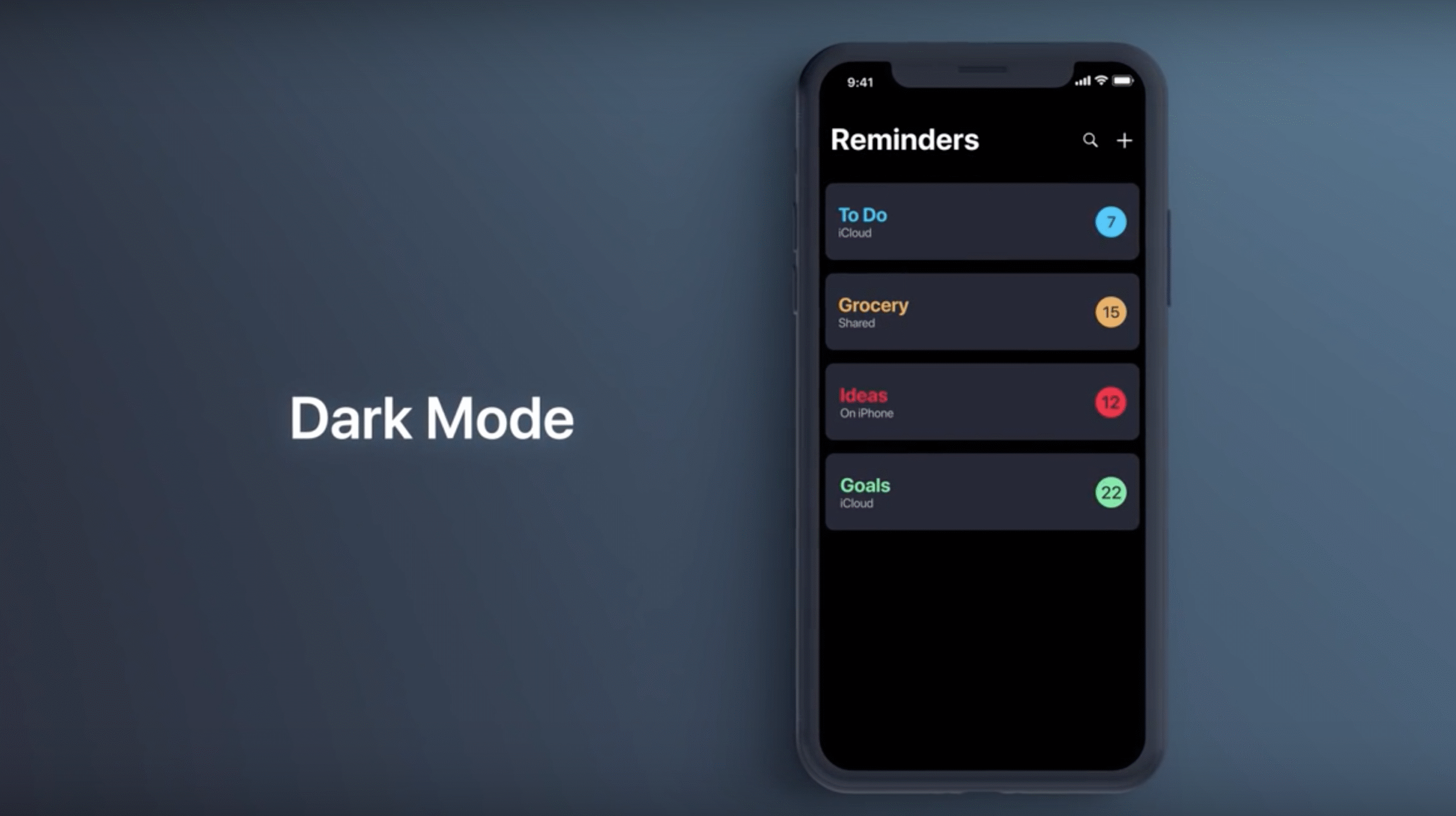
    After many years, the reign of LCD technology in the mobile world seems to be coming to an end. With the price of OLED displays steadily decreasing over the past couple of years, more and more companies are willing to implement the technology even in mid-range offerings. This hardware trend is also affecting the development of apps, games, and even the two major mobile operating systems. Thanks to the ability of OLED panels to completely turn off black pixels, more developers are realising the potential Dark Mode has when combined with the new technology. Not that there hasn’t been apps and themes in the past that have made everything on our smartphones darker, but now that OLED technology is becoming increasingly commonplace, companies are really getting into designing interfaces that are better suited for night-time use. Pretty much all major companies, including Google, Samsung, and Apple, are going to offer built-in Dark or Night modes on their devices starting this year.

    Android Pie and Samsung’s One UI have already flipped the switch, while Apple is widely rumored to be working on such a mode for iOS 13. With this in mind, and having seen the new Dark Modes on Android Pie and One UI, we thought we’d let the creative juices flow and imagine what it could look like in iOS 13, on the iPhone XI (or iPhone 11, because maybe Roman numerals were an anniversary-only thing for Apple).

    iOS 13 will have a dedicated Dark Mode

    We’ve subtly redesigned the iconography of iOS to fit in with Dark Mode. We’re sure we’ve broken some Apple design guidelines in the process.
    Looking at the standard iOS icon set, we felt like it wasn’t perfectly suited for Dark Mode. After all, it was tailored with iOS’s colorful aesthetic in mind. That’s why we decided to subtly redesign the icons to feature dark backgrounds while maintaining their color identity. For example, the Mail and Facetime icons, which otherwise feature white pictograms against a colorful background, have been imbued with color and placed against a dark background. This helps retain their color identity and makes them easier to find on the screen, all the while playing into the aesthetic of Dark Mode. Of course, we wouldn’t hold our breath for Apple to actually redesign the iconography of iOS in this way, but we think it looks good nonetheless.

    Given how often people reach for their phones before bed, right after waking up, and countless times in between, not getting your retinas obliterated by glaring white light at all times may be the way to go. Taking into account recent rumors that Apple may shift to OLED for all of its future iPhones, including “budget” offerings, building a night mode directly into iOS 13 makes a lot of sense. Users seem to agree with this sentiment, as one of our recent polls suggests. The vast majority of voters (over 91%) said that they were excited about Apple’s upcoming, system-wide Dark Mode in iOS 13, while only a tiny fraction said they didn’t care much about it.

    Apple last year introduced Dark Mode in macOS Mojave and is almost definitely going to mimic the idea in the next iteration of iOS. Speaking of that, iOS 13 is the next major update of Apple’s mobile operating system and it may debut alongside the iPhone XI in September, though there’s a chance that we may see it even earlier in beta form. The previous iteration, iOS 12, was released to the public on September 12 last year, though numerous beta versions were made available to developers and enthusiasts alike starting as early as June.
  • Samsung dreams of a future filled with 8K TVs

    Samsung dreams of a future filled with 8K TVs

    Samsung Electronics will expand its lineup of 8K televisions this year, hoping to launch the premium products in 60 countries around the world. 8K televisions have four times more pixels than 4K, which until recently was the most cutting-edge screen a high-end television could have. When compared to a 4K TV, 8K screens are brighter with more color contrast and sharper edges. Samsung released its first 8K television last year.

    Han Jong-hee, Samsung’s president in charge of the visual display business, said in a press conference Friday that he expects 2019 to mark the start of a new era where 8K becomes the new norm in the high-end television market.

    “4K grew to take up 60 percent [of all Samsung TV sales] in five years – I expect 8K to show a similar level of performance, maybe faster considering how tech develops so fast these days in all sectors including content and displays,” he said at the event held in Samsung’s Suwon complex in Gyeonggi.

    The company’s 2019 goal for 8K TVs is to reach a double-digit year-on-year growth rate for market share in the local high-end TV sector. Han says the goal is “reachable,” adding that half of the large Samsung televisions sold in the country after November were 8K. That month, Samsung started local sales of the product.

    Regarding its global business, the QLED 8K started selling in Europe, Korea, the United States and Russia last year. Tomorrow, the company will unveil new models for 2019 at the Samsung Forum, a showcase event for clients that simultaneously takes place in various regions around the world.

    This year’s plan is to launch sales in 60 countries.

    Whereas last year the QLED 8K lineup came with four size variations with the largest at 85 inches, this year there will be six variations with the largest at 98 inches. The new sizes are in line with Samsung’s strategy to continue strengthening its lineup of massive TVs to keep a competitive edge in the high-end price sector.

    It remains to be seen whether Han’s optimistic views on 8K television will come to fruition as quickly as he projects. Even if 8K TVs exist, the higher definition and the high price it comes at won’t be of much use if video content remains at the 4K level.

    “5G networks will spread this year and the demand for 8K content will go up as well,” responded Han when asked about the problem. Han particularly expressed anticipation for the 2020 Tokyo Olympics. Japan’s national broadcaster NHK plans to live stream the games worldwide in 8K.

  • Wavy waterfall by LG

    Wavy waterfall by LG

    Models showcase LG Electronics’ 260 flexible OLED signage displays put together to form a waterfall at the company’s Consumer Electronics Show 2019 exhibition entrance in Las Vegas on Monday. The annual event, which will host over 4,000 companies this year, began yesterday.

  • Sony relaunching OLED TVs

    Sony relaunching OLED TVs

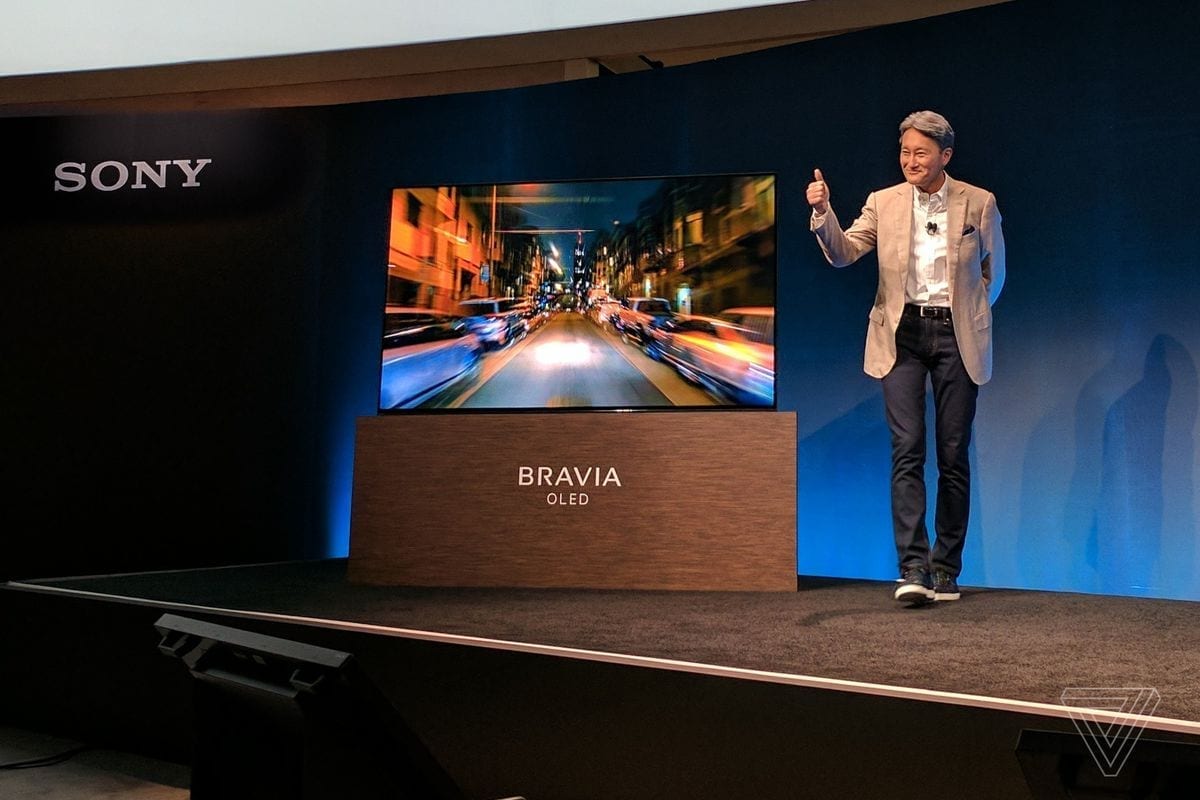
    Sony’s high-definition OLED television, which hits domestic stores next month, will mark a return after sales were halted in 2010. But instead of maintaining its fiercely independent streak, the Japanese group is enlisting the aid of South Korea’s LG Display this time around.

    Good vibrations

    The Bravia A1 series, which Sony said Monday will go on sale June 10, will carry a price tag of around 800,000 yen ($7,092) for the 65-inch model, while the 55-inch will go for about 500,000 yen. Not only does the organic light-emitting diode display generate realistic hues, it also doubles as a speaker. These sets do not come equipped with conventional speakers since the thin, bendable OLED layer is capable of emitting sound vibrations.

    LG Electronics, sister company of Sony’s panel supplier LG Display, also produces its own OLED TVs. Japan’s Toshiba and Panasonic are rivals as well. “OLEDs will really take off this year,” said a source from a major Japanese electronics retailer.

    Sony developed a prototype OLED TV in 2001 and launched the world’s first household model in 2007. But those 11-inch sets failed to attract buyers, and Sony suspended sales in 2010.

    Around that time, a glut in global LCD supplies led to a drop in prices, sending TV segments across the board into the red. Sony withdrew from a joint panel operation with South Korea’s Samsung Electronics. The Japanese company’s TV business later underwent restructuring and a spinoff.

    Sony merged its OLED panel business with Panasonic’s, and that unit is due to become a subsidiary of Japan Display later this year. Sony no longer has in-house panel technologies for consumer TVs.

    The company is making a comeback to big-screen OLEDs because “the performance of the panels we can procure have reached a convincing level,” said Ichiro Takagi, executive vice president at Sony.

    The group continued to develop professional-use TVs and advanced image processing technology even after suspending sales in 2010 in order to “be in a position to release a new model at any time,” said a Sony executive.

  • The flagship of LG will go on OLED screens

    The flagship of LG will go on OLED screens

    LG has decided to equip all its top smartphones screens based on the matrix OLED, which will provide the best color reproduction compared to IPS and a reduced level of energy consumption.

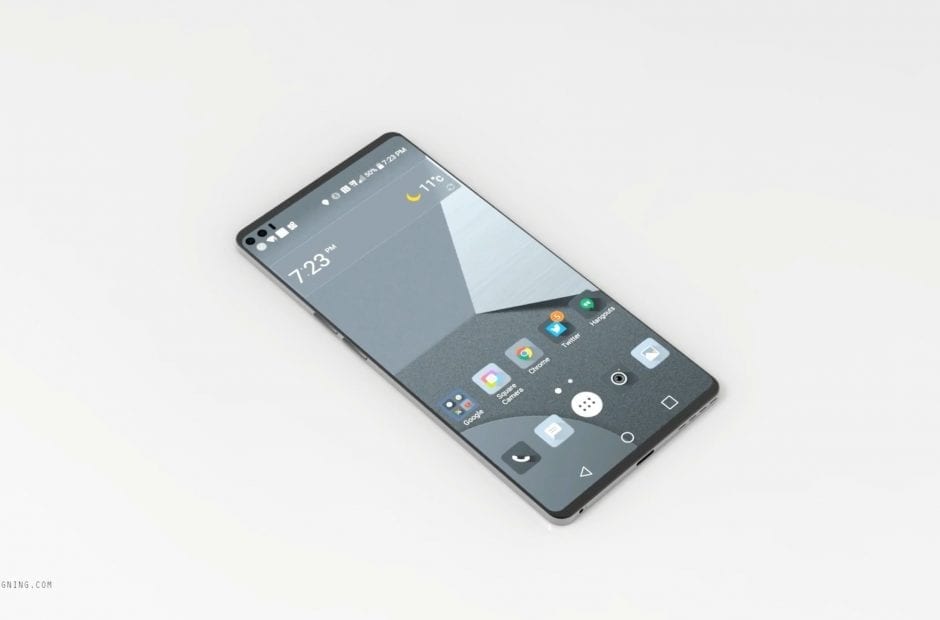
    The first devices with such displays will go on sale just in the second half of this year. Reportedly, the first smartphone from LG with OLED screen your own production will be the new V30, a descendant depicted in the rendering V20. Here it should be noted that the display on this particular unit is just two is already the specifics of the series, an open model V10 a couple years ago. The goal of LG is understandable: it is necessary not just to keep up with Apple and Samsung, not only to nip at their heels, and to keep pace with them or, better yet, to overtake them at every turn.

    It should be noted that LG already has experience in the production of smartphones with OLED screen — in 2013, when only-only began to emerge in the segment of mobile phones with curved screens, the world was shown a very stylish LG G Flex the shape of a letter “C”. Alas, the model was not accepted due to high prices and the inertia of users, but after four years, screens of irregular shape, began to interest consumers, and LG intends to be a trend.

  • Apple has ordered 70 million OLED panels from rival Samsung for upcoming iPhone 8

    Apple has ordered 70 million OLED panels from rival Samsung for upcoming iPhone 8

    Shares of Samsung Electronics got a boost on Tuesday after the report that archrival Apple had ordered 70 million display panels that the South Korean giant specializes in for the upcoming iPhone. Samsung’s stock closed at 2.1 million Korean won, posting a rise of 1.54 percent.

    Citing a supply chain source, Nikkei reported that Apple has placed orders for bendable organic light-emitting diode panels for use in 70 million handsets for the year. OLED offers brighter displays and better power efficiency over liquid crystal displays currently in use.

    Samsung’s OLED displays are used on its own flagship Galaxy devices, and the company is a market leader in the area. Apple is expected to launch three new iPhones later this year, with the anniversary edition iPhone 8 believed to have a slightly curved 5.2-inch OLED screen. This will be the most expensive model. The two other iPhones will have LCD displays. It would be the first time Apple has used OLED displays on its flagship device.

    Quoted IHS Markit analyst David Hsieh as saying that the order for 70 million units of OLED panels is in line with his expectations. He added that Samsung is expecting to produce as many as 95 million units for Apple in 2017, in case demand exceeds expectations. Hsieh also said Samsung is likely to be the sole supplier.

    “It is also possible that some of these 70 million handsets will not be shipped to customers this year and be carried over to next year depending on demand,” Hsieh told.

    The 70 million unit figure gives a sense of the kind of bullish demand Apple is expecting for the anniversary model, which some analysts are suggesting could cost $900 to $1,000.

    But some analysts have said it’s not likely Apple will sell all 70 million OLED iPhones this year looking at previous performance. In the fiscal first quarter, which ended Dec. 31, Apple sold 78.2 million iPhones — latest iPhone 7 and 7 Plus models and older versions.

    Neil Shah, research director of devices and ecosystems at Counterpoint Research, said he expects Apple to be able to sell around 70 million iPhones in total in the final quarter of this year when it releases the new device. But again, not all 70 million will be the OLED devices.

    “Seventy-million units of the OLED iPhone is too high for me at this point,” Shah told.

    The likelihood is Apple will sell some of the OLED phones next year, and at least have some ready in case it sees a pop in demand.

    Leaks and reports suggest that the iPhone 8 could be the most advanced yet with new features such as a front-facing camera with 3-D sensor. Analysts are expecting this to kick of a “supercycle” of iPhone sales.

  • Samsung Electronics unveils ‘future of shopping’

    Samsung Electronics unveils ‘future of shopping’

    The future is here. Pause to window shop and read information about the products displayed on the other side of a transparent OLED “window”.

    Try on outfits through virtual reality, and see how they look from all directions.

    Samsung Electronics will reveal new products using smart signage that will realize futuristic smart shopping at the IFA (Internationale Funkausstellung) 2015, in Berlin in a special space set up so visitors can experience ‘smart shopping’ through smart signage solutions such as transparent OLED and smart LED signage.

    Samsung’s transparent OLED will be revealed for the first time at the IFA. It boasts a penetration ratio of 45 per cent, which is the highest in the world, and full HD resolution.Through smart signage embedded with touch functions, virtual fitting solutions that can be used at apparel stores will also be exhibited. Customers can make a model in the screen try on the clothes instead, and see what they would look like through virtual reality. Information related to accessories that match the outfit can be provided for convenience.

    A mirror display that suggests beauty tips and information on makeup according to the user’s schedule, skin type and weather will also be revealed. The most unique part of the mirror display is that it reflects the user just like a mirror through the use of hi-tech reflecting panels.

    In addition, a smart LED signage solution with higher definition will be exhibited. The product has a high resolution with a pixel pitch (that’s the space between pixels) of 1.5mm and 2.5mm. It can be set up indoors, making it possible to be used in the lobbies of shopping malls or large scale displays.

    Samsung is also planning to show various LED signage products. “

    We are planning to suggest ideas of various usages of our signage products at the IFA. By introducing Europe to LED smart signage, we are determined to push into the global digital signage market,” said a spokesman.