Retail News CRM

Tag: Olive Young

  • Olive Young’s K-Beauty Brands Set to Conquer Europe with New Gabona Partnership

    Olive Young’s K-Beauty Brands Set to Conquer Europe with New Gabona Partnership

    Korean cosmetics firm, Olive Young, has recently revealed its collaboration with Poland’s Gabona, aiming to steer its product distribution across Europe. Gabona is now set to manage the distribution network of three of Olive Young’s signature brands: Bioheal Boh, Bringgreen, and Colorgram. Initially, the distribution will be centered in Poland, and then it will gradually expand its reach to other European countries.

    Olive Young has clarified that each brand will still preserve its current market position. This collaboration is a significant move in Olive Young’s overarching strategy to enhance the accessibility of its private brands to consumers beyond Korea. Moreover, it presents Gabona with an opportunity to augment its K-beauty collection in Europe via a well-planned, long-term distribution model.

    In 2025, Olive Young witnessed an unprecedented growth, with the firm’s Q3 sales skyrocketing to as high as US$1.07 billion. The company had earlier revealed that about 88% of the domestic cosmetic purchases under the Global Tax Free (GTF) program, generally done by tourists, were carried out at Olive Young stores in 2025.

    Questions & Answers

    What is the aim of Olive Young’s partnership with Gabona?
    The collaboration aims to facilitate the distribution of Olive Young’s products across Europe, starting with Poland.

    What impact will this partnership have on Olive Young and Gabona?
    This collaboration is a strategic move by Olive Young to enhance the global accessibility of its private brands, and it also allows Gabona to expand its K-beauty collection in Europe.

    What was Olive Young’s performance in the year 2025?
    The company saw record-breaking growth in 2025, with Q3 sales reaching US$1.07 billion.
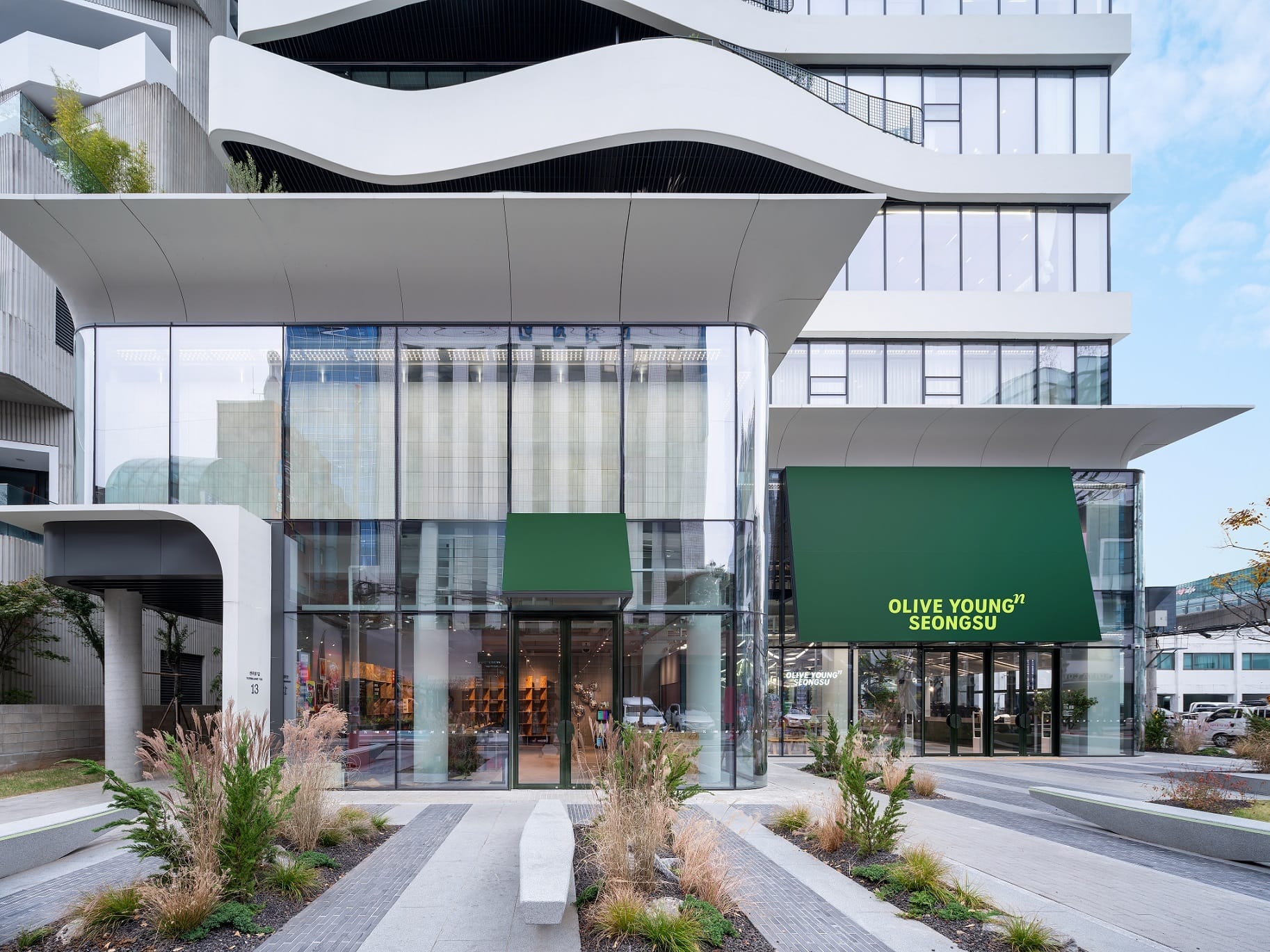
  • CJ Olive Young Launches First Korean Snacks Store in Vibrant Busan

    CJ Olive Young Launches First Korean Snacks Store in Vibrant Busan

    Despite the challenging market conditions brought on by rising inflation and supply chain issues, retail giant Walmart continues to show stellar financial performance. In its latest quarterly report, the company announced a surprising 8% increase in revenue, amounting to $152.8 billion. This impressive result showcases Walmart’s ability to adapt in a shifting economic landscape.

    Online Sales Surge Amidst Inflation

    As inflation tightens consumers’ budgets, Walmart has successfully harnessed the power of online shopping. E-commerce sales skyrocketed by 30% in the last quarter alone, indicating that shoppers are increasingly turning to digital platforms for their needs. This uptick in online sales has positioned Walmart as a formidable contender against other retailers, particularly in the realm of fast delivery options and convenience.

    International Markets Fuel Growth

    Walmart’s international division also played a pivotal role in driving growth. With a notable increase of more than 10% in international revenue, the retailer is thriving in markets like Mexico and Canada. Walmart’s strategic focus on local sourcing and personalized services has resonated well with consumers overseas.

    Future Initiatives and Innovations

    Looking ahead, Walmart is keen on continuing its investment in technology, targeting a seamless shopping experience for both physical and online consumers. The company is enhancing its app features and expanding its fulfillment centers to better meet customer demand. Additionally, Walmart aims to introduce new product lines that cater to eco-conscious shoppers.

    In a market where survival often feels like a game of chess, Walmart seems to have the winning strategy. Who knew saving on toilet paper and chips could be such an economic powerhouse?

    Questions & Answers

    What were Walmart’s revenue figures for the last quarter?
    Walmart reported revenues of $152.8 billion, reflecting an 8% increase despite economic challenges.

    How much did e-commerce sales rise in the latest quarter?
    E-commerce sales surged by 30%, demonstrating a growing trend of customers shopping online.

    Which international markets are contributing to Walmart’s growth?
    Walmart’s international division saw more than a 10% increase in revenue, with Mexico and Canada being significant contributors.

  • CJ Olive Young Boosts Brand Growth with Skin Analyser Service in 100 Stores

    CJ Olive Young Boosts Brand Growth with Skin Analyser Service in 100 Stores

    In an innovative stride toward personalized beauty services, CJ Olive Young is set to dramatically expand its self-operated skin analyser machines across South Korea. By the end of 2025, the popular health and beauty retailer plans to install approximately 100 machines in major cities, catering to the rising consumer demand for customized skincare solutions.

    Expanding Access to Advanced Skin Analysis

    CJ Olive Young’s new initiative offers customers a complimentary service that analyzes scalp and skin conditions. The technology provides insights on hydration and sensitivity, affording personalized skincare advice to meet individual needs. This expansion not only aligns with evolving consumer trends but also strengthens Olive Young’s commitment to offering tailored shopping experiences.

    Leveraging Technology for Customer Engagement

    At the core of this initiative is “SELLY,” an exclusive counseling app used by store staff that suggests products based on each customer’s unique skin type, texture preferences, and ingredient requirements. The app enhances in-store consultations, making it a vital tool in bridging the gap between customers and products.

    Strong Evidence of Consumer Interest

    The significance of this expansion is underscored by recent data from Olive Young’s flagship store in N Seongsu, where customers using the “Skin Scan Pro” service exhibited a purchase conversion rate of 78%. This figure contrasts sharply with the 43% conversion rate observed among non-users, highlighting the effectiveness of personalized engagement strategies in the retail landscape.

    The Shift Toward Discovery-Based Shopping

    This growth strategy comes at an opportune moment. With a marked shift in retail dynamics—from a search-driven approach to one grounded in discovery—CJ Olive Young is poised to lead the way in fulfilling the desires of Gen Z and Millennials for authentic and meaningful shopping experiences.

    As CJ Olive Young expands its personalized beauty services, the impact on the retail sector and consumers is substantial. Enhanced consumer engagement through technology is likely to redefine shopping habits, making personalized beauty advice more accessible and leading to increased customer loyalty across the industry.

    Questions & Answers:

    1. What is CJ Olive Young planning for 2025? CJ Olive Young aims to install approximately 100 self-operated skin analyser machines in major cities across South Korea by the end of 2025.
    2. How does the skin analyser service work? The free service provides customers with scalp and skin condition analysis, offering personalized skincare advice based on metrics like hydration and sensitivity through the use of an exclusive app called “SELLY.”
    3. What impact has this service had on purchase behavior? Customers who engaged with the “Skin Scan Pro” service experienced a 78% purchase conversion rate, compared to 43% for those who did not use it, indicating strong interest in personalized beauty experiences.
  • Olive Young eyeing Southeast Asia through Shopee

    Olive Young eyeing Southeast Asia through Shopee

    CJ Olive Young, the country’s largest health and beauty product store, opened an online shop on Southeast Asia’s biggest e-commerce platform Shopee, Tuesday, as part of its global expansion plans.

    “From now on, Olive Young will actively seize opportunities in the global market to grow and lead the globalization of Korean cosmetics,” a CJ Olive Young official said.

    Shopee is a subsidiary of Sea Group, which sells various products from daily necessities to cosmetics and electronic goods online. It is referred to as the Amazon of Southeast Asia, as it focuses on Singapore, Thailand, the Philippines, Vietnam, Indonesia and Malaysia. Last year, the number of accumulated mobile application downloads of the Shopee platform surpassed 200 million.

    In 2020, Olive Young also signed a memorandum of understanding with Dairy Farm to launch several of its products in Guardian stores, a drug store chain in the region.

    The health and beauty product store is entering foreign markets through local retailers because it wants to minimize risks and analyze the markets first.

    CJ Olive Young has started selling 300 items from its six house brands on Shopee ― Wake Make, Colorgram, Round Around, Botanic Heal Boh, Bring Green and Filli Milli ― which are good value local brands sold for reasonable prices that are popular among international customers.

    The health and beauty product stores’ items will be available in Indonesia and Malaysia first. This is because they have a high proportion of young people who are interested in K-beauty and mobile shopping. It wants to introduce Korean products as well as improve the firm’s brand awareness in the two countries.

    CJ Olive Young sold some of its shares to the domestic firm Glenwood Private Equity last month. After the stock purchase agreement, the private equity fund became the second-largest shareholder with 24 percent interest.

    During the purchase, Glenwood valued Olive Young at 1.8 trillion won. The health and beauty product store plans to go public on the Korean bourse next year and raising its corporate value is important as it will have to pay back money to strategic investors after listing.

    Olive Young is already successful with its bricks-and-mortar business here, which has a nearly 70 percent market share. However, its online business is a whole other story. Online retail giants Coupang and eBay Korea have established gigantic sales platforms that give no reason for customers to go only to Olive Young’s online mall.

    For this reason, Olive Young decided to eye the Indonesian and Malaysian markets. Although sales in the two countries may not produce good profits at first, it has to look beyond the domestic online market that is already too competitive.

  • CJ Corp unveils plans to open Olive Young up for public investment

    CJ Corp unveils plans to open Olive Young up for public investment

    South Korean health-and-beauty business Olive Young is gearing up for an IPO next year, with the aim to list on the stock market in 2022.

    The business owner CJ Corp is currently recruiting for pre-IPO funders and is looking to sell around 20 to 30 percent of the owner’s family’s stake before it goes public, although CJ Group will not sell any of the 55 percent stakes it holds.

    Olive Young CEO Koo Chang-geun said the pre-IPO sale would not impact CJ Group’s management rights, and that the move would allow the business to pursue growth opportunities into the future.

    Shinhan Investment and Credit Suisse have been listed as joint advisors to the sale, and while there is some chatter that the business could be sold off as a whole, it is more likely that the IPO will be used to secure further funding to boost enterprise value.

    The business has long been one of South Korea’s largest beauty firms, seeing operating income grow 81 percent to US$74 million after $1.65 billion in sales last year.

  • Men make-up driving K-beauty boom

    Men make-up driving K-beauty boom

    Men wearing makeup – once a practice unique to TV stars and celebrities – is becoming a part of popular culture in South Korea. As an increasing number of South Korean men are purchasing clothes, cosmetics, and other beauty products to take care of their looks, cosmetics goods for men are expanding both in terms of variety and sales. Olive Young, a major South Korean cosmetics store, said sales of cosmetics for men increased by 30 per cent last year compared to the year before.

    Cosmetics for men are going beyond BB creams and cushions to include coloured lip balms, eyebrow products, concealers and eyebrow-hair scissors.

    A coloured lip balm for men, for instance, has seen sales skyrocket 16-fold over the last two years, according to Olive Young. Sales of makeup cushions and BB creams have increased by 30 per cent as the number of men wearing make-up burgeons.

    Drawing eyebrows, once a practice unique to women, is now spreading among men, as seen by the fact that sales of eyebrow products for men have increased by 25 per cent over the last two years.

    An increasing number of eyebrow-hair scissors, nipple bands, and body hair removers are being developed for men as well.

    “Makeup is now becoming a tool to express one’s confidence, leading to increased demand for various cosmetic products for men,” said Olive Young.

  • Time for South Korean cosmetics to face challenges

    Time for South Korean cosmetics to face challenges

    South Korean cosmetics stores that have been the drivers of the ‘K-Beauty’ industry for the past 15 years are facing a crisis, exposing their limitations. The cosmetics industry is undergoing a series of transformations due to decreased demand from China and a change in distribution structure resulting from stagnant domestic demand and increased competition.

    Nowadays, it is common to see health and beauty shops (H&B) such as Olive Young and LOHBs reorganise and shift their main focus online.

    According to cosmetics industry analysts, the size of the South Korean cosmetics stores’ market was 2.29 trillion won (US$2.05 billion) in 2017, which reflects a rapid decrease since the peak in 2016. It is estimated that total sales last year decreased by 15 per cent from the previous year.

    With sales decreasing, the industry is closing down branches. The number of South Korean cosmetics stores began to shrink in 2017 and is estimated to have fallen to 5200 last year.

    Popular brand Skinfood is facing an imminent crisis. The company, once a huge hit with the phrase “Don’t eat, give it to your skin” entered corporate restructuring last October, after encountering difficulty securing liquidity due to excessive debts.

    Those who suffer the most in the process are franchise owners, who are protesting that the company is trying to avoid the worsening situation without taking responsibility.

    The causes of the decline of the retail shop are numerous. The first reason is the excessive competition within the industry.

    Add to this, China’s retaliatory actions as part of the THAAD missile crisis in 2017 led to huge decrease in sales.

    Changes in distribution structure have also played a role. H&B shops are now leading the market, offering a variety of brands in one place, instead of a closed structure.

    These types of stores are a gaining competitive edge as they can sell occupy low and medium-priced brands and new venture brands as well as establish strategic products.

    Retail shops became a mainstream cosmetics market in the early 2000s. Amid the economic slump, retail shops continued to grow in number as brands gradually added fast product launch strategies and functional products aligned with trends based on affordable prices.

    Chinese tourists clearing out the shops in the wake of the Korean wave contributed to the growth of retail shops. However, in the current situation, retail shops are only beginning to restructure.

    While some chains of South Korean cosmetics stores are choosing to downsize their branches, others have chosen to invest aggressively.

    Those who chose aggressive investment plans in a bid to become global cosmetics companies hope to achieve economic success despite the difficult situation and uncertain prospects for the future.

  • Olive Young unveiled new store experience in Korea

    Olive Young unveiled new store experience in Korea

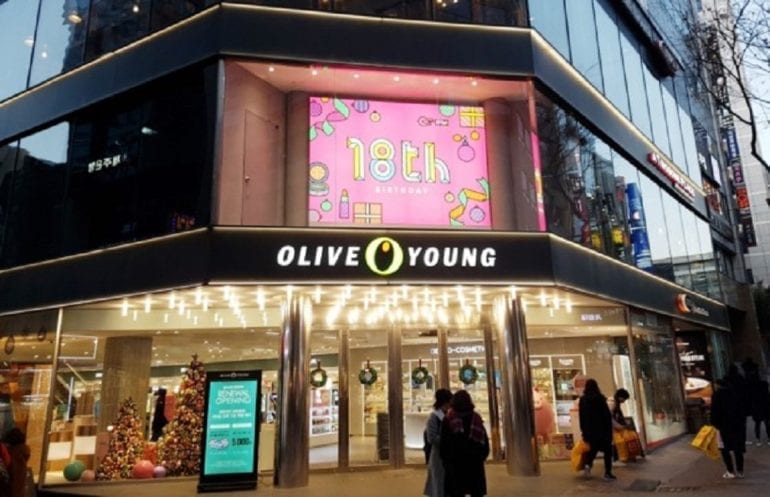
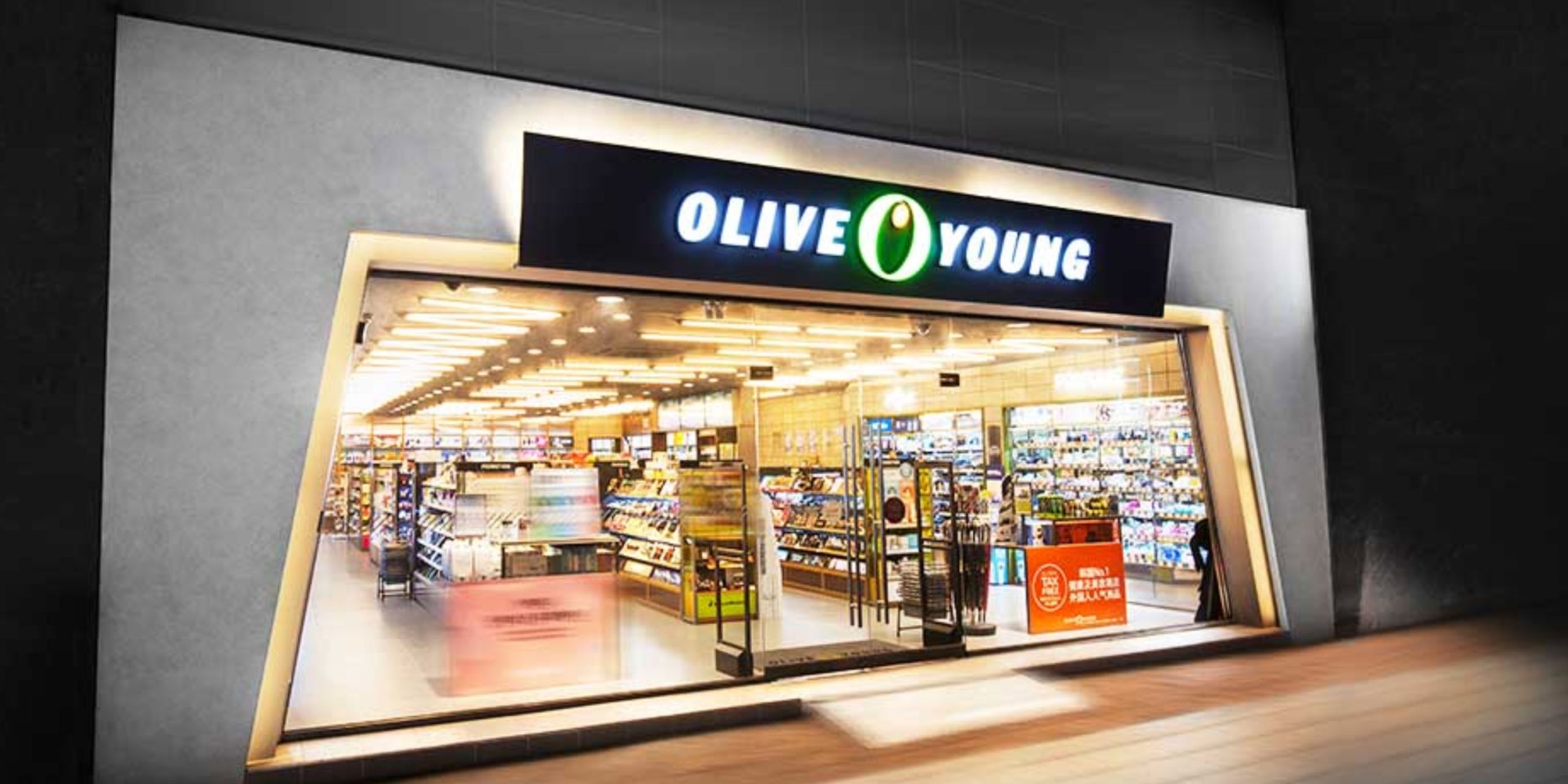
    The Olive Young Myeongdong flagship store reopened in December to celebrate the 5th anniversary of its opening, offering customers a unique and personalized shopping experience.

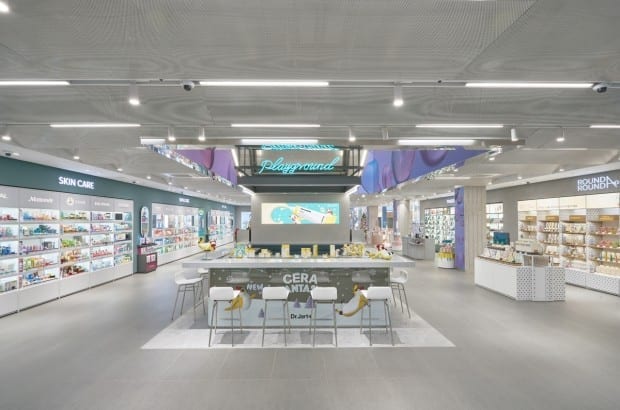
    The store presents a different experience on each floor.  The first floor is a specialized space for skin care with the Derma cosmetic specialty corner. Derma Cosmetics is one of the core products of Olive Young, along with Dr. Jart, CNP, Cell Fusion, and Eucerin.

    On the same floor also a space dedicated to fragrances.

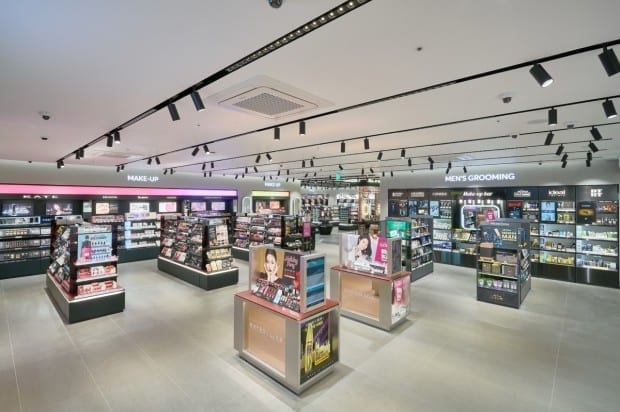
    The second floor dedicated to colours and style is dominated by a large mirror. Consumers can product freely in front of the mirror, talk to friends in the make-up bar, and compare various brands. Olive Young said that the renewal aimed to enhance customer experience and make them staying.

    Another area on the same floor is dedicated to nails with various brands, namely dashing diva, Incoco, Nail’s nail.

    Surprisingly, nail polish is not the king product, following the trend Olive Young focuses on the popular nail sticker types  easy to put on.

    In addition, a key role is played by the so-called “Beauty Advisor”, who helps consumers choosing products. Most of them are fluent in foreign languages, Chinese and Japanese, specifically, and are trained to quickly respond to customers’ requests.

    Olive Young said, “The store is designed based on the trends we found in the data collected from the 5 years of operations of the store. Our aim is to make K-Beauty the mecca for foreign customers as well as the first place to learn about lifestyle trends for domestic customers.”

  • Korean food companies move into direct retail

    Korean food companies move into direct retail

    Korean food companies are reaching out to consumers through face-to-face encounters at their own branded cafes and restaurants.

    And they are reaping the rewards: upgrading their company image, testing new products and increasing sales.

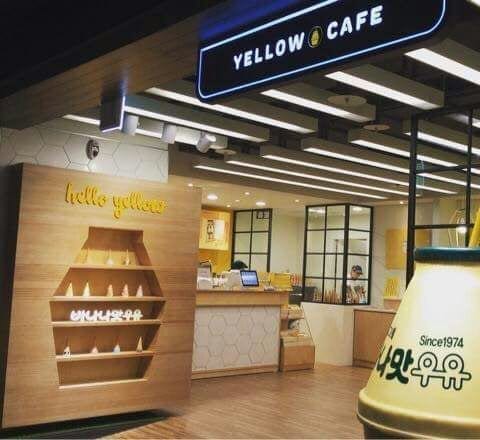
    Binggrae gave its Banana-flavored milk, a product that has survived for 40 years, a new twist in March by opening a cafe in downtown Seoul that sells beverages and ice cream based on the milk. Opened in collaboration with Hyundai Department Store that hosts the cafe at its downtown outlet, Yellow Cafe is making monthly sales of some 100 million won (US$85,178), company officials said.

    yellow-cafe

    Binggrae also worked with Olive Young, a health and beauty store chain, to sell body care products based on its milk brands. Last month, it opened a soft ice cream shop at a Lotte Department Store branch in southern Seoul.

    Company insiders say the moves are market tests for Binggrae, which is interested in starting a restaurant business.

    Orion, synonymous with its most popular snack Choco Pie, is operating a dessert cafe, Lab O, in southern Seoul. As its name suggests, the store serves as the company’s research center for dessert products, getting consumer reactions to different flavors and foods tweaked from its mainstream brands.

    Haitai Confectionery & Foods, which recently landed a smash hit with its honey-flavored potato chips, Honey Butter Chips, runs cafe Haitai Ro at two locations in Seoul. The stores sell desserts, as well as character figurines and stuffed animals that enjoy the company’s snacks. Officials at the firm say the cafes are more like “antennae shops” that catch consumers’ preferences.

    Lotte Confectionery has Guylian Cafe at the Lotte Department Store’s Lotte World branch that sells desserts made with the Belgian chocolate. Lotte took over the brand in 2008. Lotte separately operates exhibition booths for its own products in southern Seoul.

    Food companies likewise are working their way directly to consumers through restaurant-style shops.

    SPC Samlip has adopted “grocerant” as its concept store, mixing a grocery store with a restaurant. Its Glucks Schwein, which sells premium processed meats, has German sausages and beer on its menu. The company’s noodle line Hi-myon, launched in 1974, is being marketed at its noodle specialty restaurant Hi-myon Udon. Company officials say they are planning to open 20 Glucks Schwein franchises by 2018 on top of 10 noodle restaurants by the end of next year.

  • Multi-brand Korean cosmetic shops thrive

    Multi-brand Korean cosmetic shops thrive

    Korean cosmetic shops that sell various brands under one roof have steadily expanded their presence across the country, giving sophisticated customers more options, according to industry sources.

    AmorePacific, South Korea’s No. 1 cosmetic company, operates about 1350 multi-brand stores, called Aritaum nationwide, which offer a wide selection of its products, including such mass brands as Laneige and IOPE. The company also operates single brand shops such as Innisfree and Etude House in the lower-end and Sulhwasoo and Hera in the higher-end segment as part of a two-track strategy.

    Also showcasing multi-brands are beauty and health care stores, such as CJ’s Olive Young and its smaller rival Watsons, which have expanded and enjoyed growing popularity among urban youngsters.

    To catch up with the latest trend, local cosmetic companies have launched multi-brand cosmetic shops in major retail strips.

    LG Household & Health Care Ltd., the nation’s second-largest cosmetic maker, launched a multi-brand shop called Nature Collection, in February, operating 11 stores in major retail strips in Seoul. The store features brands that focus on a natural look, including The Face Shop and Beyond.

    “Nature Collection is promoted through word-of-mouth, with various products and promotional events,” a company spokesman told Yonhap news service.

    Able C&C, which created the boom for the single brand shop with Missha, has recently opened a multi-brand shop called Beauty Net on a popular street in Seoul to display a wide range of select products.

    Beauty Net Korea store

    Industry officials say multi-brand shops are effective in improving customer convenience and brand management and promotion, providing easier access to new brands.

    “Expansion of these multi-brands provide the other brands with more chances to be introduced to customers,” said an Able C&C spokesman.