Tag: Oliver’s Super Sandwiches

  • “Shine Bright” Like Cafe de Coral

    “Shine Bright” Like Cafe de Coral

    With expansion in Hong Kong and “outstanding” growth in China, restaurant/catering group Cafe de Coral Holdings says it has had six months of key achievements.

    Its first-half revenue grew by 6.2 per cent to HK$4.1 billion (US$525 million), but profits were hit as rising staff costs exceeded the group’s pace of revenue growth. The profit attributable to shareholders, $205.7 million, was down 11.3 per cent on last year’s first half, while gross profit margin fell to 11.9 per cent from 13.3 per cent.

    This decline, in Hong Kong, was largely because of the group’s investment in people for its core quick-service restaurant (QSR) business. “This was necessary for attracting and retaining talent in a highly competitive labour market,” says Cafe de Coral, which continued its network expansion by opening more outlets than in previous years.

    However, the drop was partially offset by business growth in Mainland China. “Following our previous efforts to consolidate our branch network there, our product and promotion strategies began to pay off with strong growth in same-store sales and profit.”

    QSR and institutional catering brands continued to dominate in Hong Kong, contributing to 74.6 per cent of the group’s total revenue for the period. Revenue from this division rose 5.7 per cent to $3 billion.

    At September 30, the group’s QSR and institutional catering business had 306 units, up from 295 at the end of March.

    Positive market

    The market for fast-food service in Hong Kong was positive, with customers still price sensitive and value-driven. Cafe de Coral fast food achieved same-store sales growth of 3 per cent, and 10 branches were opened for the group to finish the period with 170 outlets.

    Its other QSR brand Super Super Congee and Noodles had 51 stores at the end of September, with two new outlets since March 31. Same-store sales growth was maintained at 1 per cent.

    Overall, the performance for institutional catering was steady, with both Asia Pacific Catering and Luncheon Star gaining new contracts. The total number of business units at the end of the review period was 85, up from 79 six months earlier.

    After brand renovations and consolidation, casual-dining revenue grew 9.2 per cent to reach $422 million, and the first half ended with 72 shops, up from 64 at the end of March. Underperforming outlets of The Spaghetti House were closed, while Oliver’s Super Sandwiches had a rebranding program. The two restaurant chains had 10 and 18 shops respectively at the end of September, compared with 12 and 19 six months earlier.

    Cafe de Coral’s homegrown brands established a stronger foothold through expansion. Three Shanghai Lao Lao outlets were added during the half-year, as well as six Mixian Sense restaurants.

    China strategy

    After a period of store consolidation, the company’s focus for the mainland was on developing a local management team and menus catering to local tastes. This strategy began to pay off with same-store sales growth of 15 per cent and “substantial profit growth” in southern China.

    During the six months, the China division saw revenue rise 7.3 per cent to $548.3 million, while the total number of restaurants was consolidated at 96, down three from March 31. O2O delivery services were also launched, which the group says have been growing faster than the in-store market.

    Late last month, the group closed its final two stores in eastern China as part of a short-term strategic adjustment while it focuses on developing the southern China market where the potential for growth is higher.

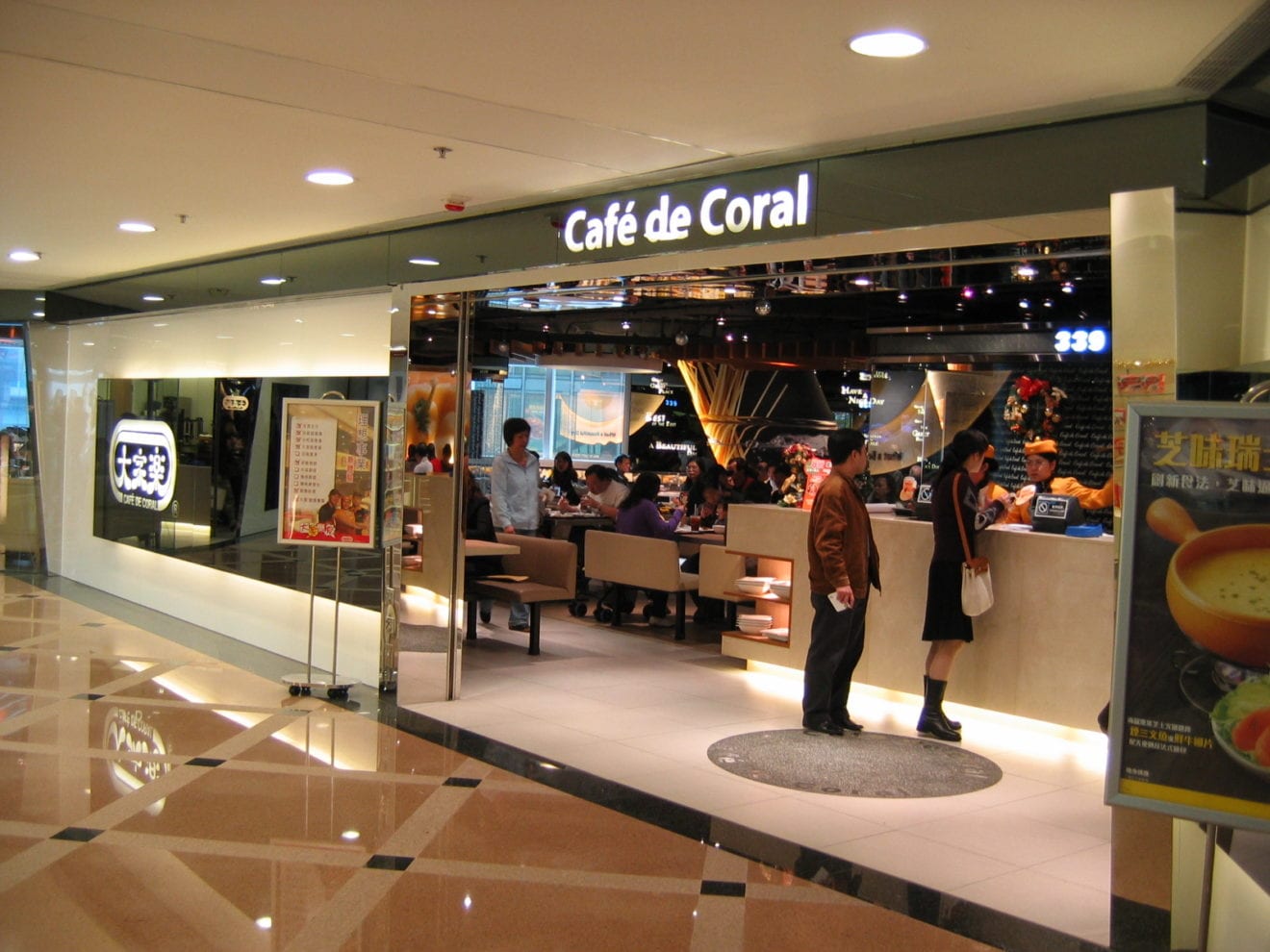
    Meanwhile, the group set up six shops at the refurbished JP Plaza in Causeway Bay to demonstrate the synergy it can achieve across all its fast-food and casual-dining brands. These were set up in one 16,000sqft (1490sqm) complex, anchored by Cafe de Coral and including Mixian Sense, Shanghai Lao Lao and The Spaghetti House.

    At the end of September, the Cafe de Coral network had 474 stores in Hong Kong and China, up from 45 six months earlier.
  • Cafe de Coral grows revenue, profit, outlets

    Cafe de Coral grows revenue, profit, outlets

    Total revenue for the half-year to the end of September rose by 4.3 per cent to HK$3.89 billion (US$501.5 million) for restaurant and catering group Cafe de Coral Holdings.

    Net profit, at HK$232 million, was up 11.8 per cent, while profit attributable to shareholders rose similarly to HK$3.89 billion, according to its interim results.

    With stronger momentum in the fast-casual and casual-dining sector, the group says its quick-service restaurant (QSR) and institutional catering business continued to achieve encouraging results and steer further expansion.
    “Mainland China business persistently improves its profit margin with a lower break-even point, which has laid a solid platform for expansion,” says the group. “The positive results demonstrate not only the capable stewardship of our new management team, but also the successful completion of the group’s succession plan.”

    “Encouraging” revenue and same-store sales growth resulted in a robust and stable performance for the group’s (QSR) and institutional catering business.

    In China, revenue stabilised for its fast-food business, thanks to updated menus.

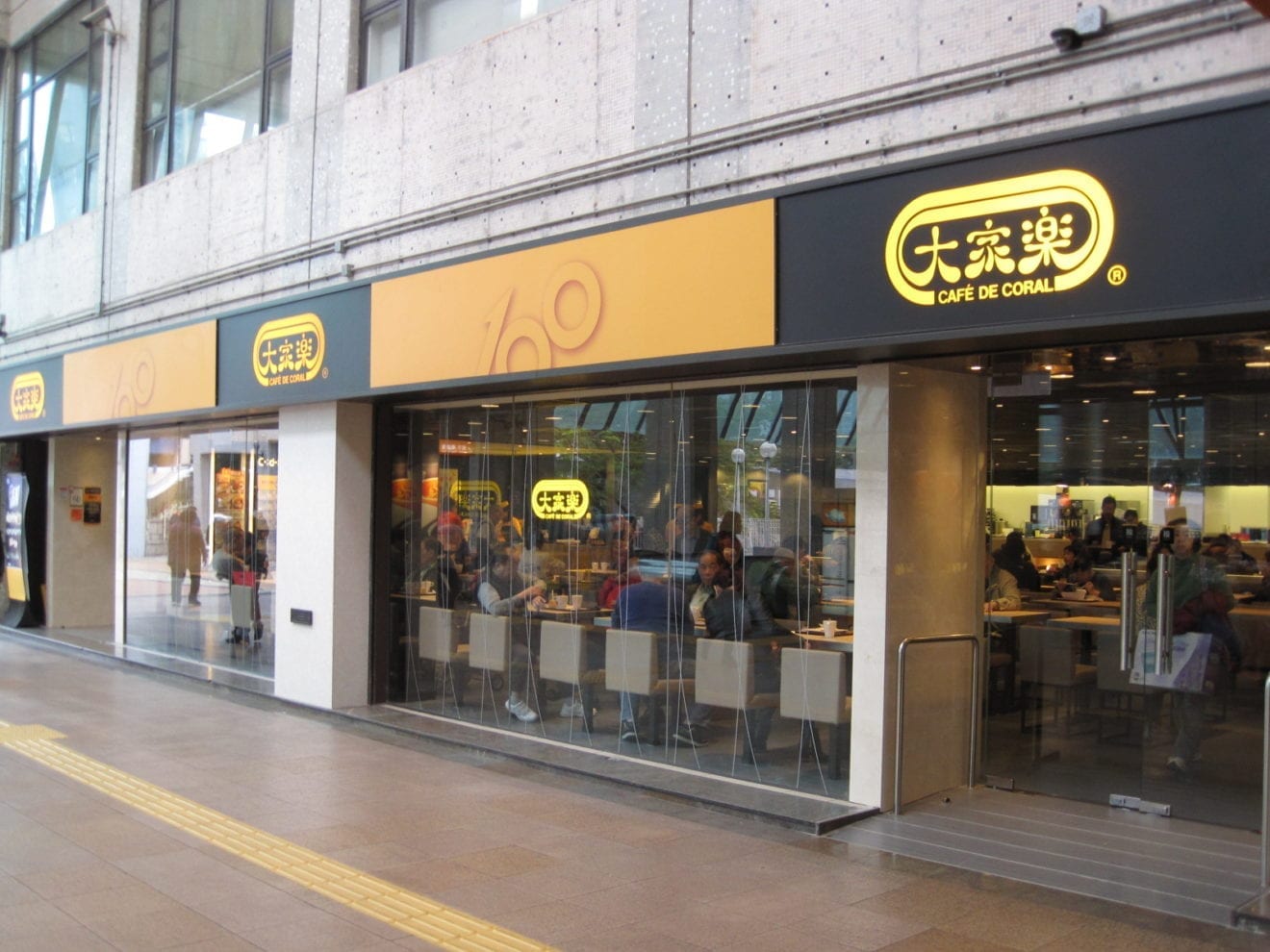
    Overall, the group’s QSR and institutional catering business in Hong Kong reported solid revenue gains, up 7.7 per cent. Same-store sales under the Cafe de Coral fast-food and Super Super Congee & Noodles grew 5 and 4 per cent respectively. As of September 30 the group had 288 QSR and institutional catering outlets, including 160 Cafe de Corals, 47 Super Super Congee & Noodles shops and 79 Asia Pacific Catering outlets.

    Strategic tenancies

    To speed up its expansion of the Cafe de Coral network, the group took advantage of the softer leasing market to take up tenancies at strategic and prime locations. Four outlets were added, with 11 more set to open. Seven more Super Super Congee & Noodles shops were added, with eight openings scheduled.

    Asia Pacific Catering renewed all major contracts while Luncheon Star continues to be the leading provider for schools.

    For its fast-casual and casual-dining sectors, the group saw 14.4 per cent revenue growth. Its catering-inspired Shanghai Lao Lao brand has evolved into a popular chain with eight outlets, says the group. Two of the outlets opened during the six months, with four more scheduled.

    Encouraged, the group says it will aim to scale up Mixian Sense to provide another lucrative revenue stream.

    Meanwhile, it is rejuvenating its Western-style brands, The Spaghetti House and Oliver’s Super Sandwiches. Decors and menus are being revamped.

    Launched last year, its Japanese and Korean-style franchise restaurants are still in the investment stage.

    Non-performing outlets in eastern and southern China have been closed, plus the management team has been localised as well as menus being revamped.

    Same-store sales from the fast-food business grew by 1.2 per cent with “remarkable profit improvement” on the mainland even after excluding the effect of new VAT rules and despite the segment revenue falling by 16.3 per cent. This was mainly a result of the strategic closure of non-performing stores.

    “While the imminent outlook is less than promising, the group remains confident its businesses will continue to fare reasonably well. Fortunately, our core QSR and institutional-catering segments, in particular, are relatively resilient to downturns.”

  • Cafe de Coral Group plans 20 new restaurants

    Cafe de Coral Group plans 20 new restaurants

    Quick Service Restaurant giant Cafe de Coral Group says it plans to open at least 20 new outlets in Hong Kong in the current financial year as it seeks to revive profit growth.

    The company this week revealed a three per cent increase in sales to HK$3.73 billion in the first half of the year, but a 14.7 per cent decline in profit to $207 million.

    “Seizing the opportunity of a softer leasing market, our Cafe de Coral and Super Super Congee & Noodles chains will be more proactive in further expanding its network,” the company said in its stock exchange filing.

    “Our team has been working on building greater network for our QSR platform with opening more than 20 shops in FY2015/16. We will also steer our current and new QSR concepts to

    further drive a bigger market share in this segment. Lifestyle cafe kiosk Just About Food and new innovative take-away concepts in key commercial hubs are tailored to target the needs of busy working crowds. These new QSR concepts have also led us to higher efficiency in the backdrop of high rental cost and persistent labour shortage.”

    Cafe de Coral Group’s QSR business in Hong Kong recorded a healthy turnover growth during the first half.

    “Performance of our fast casual and casual dining business was, however, held back by the significant investment we ploughed in to support our continual expansion in this segment. The group’s overall performance for the period has, to some extent, reflected a downturn in retail sentiments, driven by the weakening economy. Some of the group’s restaurants in the major shopping precincts saw a slow recovery in the aftermath of the community disruptions since the last quarter of 2014.”

    Despite the prevailing challenges, the group’s Hong Kong operations recorded turnover growth of four per cent to $3.12 billion. The Café de Coral chain saw its sales from comparable stores increase four per cent from the same period last year. The Super Super Congee & Noodles chain’s sales grew three per cent.

    In the fast casual and casual dining sector, Oliver’s Super Sandwiches continued to generate positive comparable store sales growth.

    “The Spaghetti House and Spaghetti 360˚, despite being affected by the temporarily weakened customer spending during the period, seized the opportunity to rejuvenate and strengthen our presence in the Italian dining sub-sector with The Spaghetti House re-launching its flagship store in Cityplaza, Hong Kong.

    “Shanghai Lao Lao and Mixian Sense, our home-grown brands that underscore the group’s diversification strategy, reported an encouraging performance. During the period of review, both chains continued their trajectories of steady growth and reinforced our solid leap into the Chinese dining sub-sector.

    Leveraging on the franchising model in our Japanese and Korean dining sub-sector, The Cup and Don Don Tei restaurants have opened in Hong Kong.

    Mainland China ‘flat’

    In Mainland China, Cafe de Coral’s fast food business growth was flat compared with last year and its casual dining business saw a steeper decline, “due to the rising tide of consumer reluctance to spend on higher priced meals”.

    “We made the deliberate move to slow down our growth in scale and pace in the country.

    “A balanced business portfolio with the right mix of our QSR, fast casual and casual dining and Mainland platforms will provide us with a greater room for expansion – a cornerstone of sustainable growth for the Cafe de Coral Group,” the company said.

    “Business in Mainland China has remained stagnant and consumption patterns are changing. Aware of the market deteriorations, the group has carefully gauged local consumption behavior, with a prudent approach towards operating its business there, primarily the Cafe de Coral and The Spaghetti House chains. We have deliberately adjusted our expansion pace and consolidated our operations, closing underperforming stores as well as strengthening our infrastructures, systems and teams in pursuit of a viable, future-oriented growth strategy.”