Retail News CRM

Tag: omni-channel

  • Vietnam national brand value gains 11%

    Vietnam national brand value gains 11%

    Vietnam saw its national brand value increase by 11% this year to $431 billion thanks to its foreign direct investment policies. Its increase of $184 billion year-on-year was the third highest of any country, U.K. consultancy Brand Finance said in a recent release.

    The country went up one place to 32nd, just behind Thailand and the Philippines.

    “The country has gained momentum as an attractive destination for foreign investment thanks to successful fiscal and monetary policies and investments in human capital, but also amid trade disruptions from China’s lockdowns and continued tensions between Beijing and Washington,” the release said.

    Among the 50 most valuable corporate brands in Vietnam, telecommunications giant Viettel led at $8.8 billion, up 44% from 2021. It was followed by another state-owned telecom firm, VNPT, at $2.9 billion. Other places in the top five were claimed by dairy giant Vinamilk, property developer Vinhomes and brewer Sabeco.

    The top sectors in terms of brand value in Vietnam are telecom, banking and food.

    Globally, the U.S. claimed top spot in the national brand list at $26.5 trillion, followed by China, Germany, Japan, and the U.K.

  • Taobao helps Brands with Omni Channel Sales

    Taobao helps Brands with Omni Channel Sales

    Taobao has teamed up with local retailers to launch a brick-and-mortar, multi-label store to host independent clothing brands that sell on the Alibaba Group-owned online marketplace.

    Piloting at the Hangzhou Kerry Center shopping mall, the “Taostyle” store currently offers about 350 items from a rotating selection of 20-plus brands. The first batch of partners features some of the most popular and fastest-growing brands on the e-commerce site, such as Lamps, Roaringwild, Ayuko, and Thessnce.

    Taostyle’s fashion buyers determine which brands and products to sell based on a mix of market knowledge and consumers insights drawn from Alibaba’s platforms, refreshing offerings and introducing new products at least twice a month.

    Frequent product reshuffling is only one of the ways that Taostyle is bringing e-commerce shopping experiences offline. Each garment has a unique QR code, which customers can scan with their phones to access its product page on Taobao, find out the price, get detailed product descriptions and customer reviews. The store even allows consumers to place orders online in addition to buying in-store, as it receives the same commission for both online and offline transactions made through Taostyle.

    “We don’t just want to open a traditional shop to sell clothes. We want to explore a new way of merging online with offline,” said Xia Yu, GM of Hangzhou Shunhong, which operates Taostyle.

    Xia said rich visual content, also a common feature when shopping on Taobao, sets Taostyle apart from traditional stores. Large LED screens showcase featured brands, while across every clothing rack, there are smaller screens for brands to display their product images and videos. Xia also built a booth inside the store, where livestreamers, merchants and Taostyle staff promote and sell their products via live streaming.

    “For us, the business doesn’t stop when the mall closes. Using live stream, we’re able to interact with consumers all day, especially between 8pm and 2am when young people are most actively shopping online,” Xia said.

    Jingjing Liu, leasing director at the Hangzhou Kerry Center, said partnering with the experimental store helps the department store engage young, trendy female shoppers, who make up the majority of its customers.

    “We have high hopes for Taostyle,” Liu said. “There has been a lot of buzz around online-to-offline and New Retail, but as a veteran in the retail business, I haven’t been fully convinced by any models before working with Taostyle. This is the closest to the concept that we’ve seen.”

    From Online to Offline

    Most of the showcased brands either got their start on Taobao or scaled up thanks to the platform. Taostyle offers them an offline channel to improve the experience for existing fans and reach new customers, as well as the chance to test the waters before committing to their own brick-and-mortar stores, said Xia.

    “Without strong interactions, it is difficult for brands to build emotional connections with consumers through a screen,” he said, adding that merchants are interested because physical stores complement the limitations of an online store, satisfying the consumer need for immediacy and to check the feel and try on products before they buy.

    Cathy Xu, the founder of indie menswear label Thessnce, said she wants to leverage Taostyle to reach the brand’s target consumers — men that like high-quality, minimalistic styles — who don’t shop on Taobao that often.

    “There are some experiences we can only give consumers through an offline channel, like saving them the wait [for shipments to arrive], so they could instantly try on and feel our designs,” she said.

    The current trend for online shops is to expand offline, Xu noted. But the right tools, such as payments and inventory technology, can be hard for small businesses to attain.

    “Alibaba provides that tech infrastructure here, which would have been very difficult to build on our own,” she said.

    Her brand launched in March last year, and by year-end had totaled RMB20 million in sales. The annual sales goal for this year is 70 million, Xu said.

  • How technology will play a big role in retail in 2019

    How technology will play a big role in retail in 2019

    Technology has penetrated in every sphere of our lives. We live, love, eat and sleep on #technology now. Each year, we see technology moving deeper and deeper into our existence. It’s good and bad – both. Good because it helps us in doing more in less time and efforts. Bad because interweaving of tech in our lives has left us dependent, vulnerable and very anxious. Let’s see what 2019 has in store for us – specifically 5 technology leaps to look out for in retail.

    Omnichannelisation – The technology approach to seamlessly tie all sales channels in a see-anywhere-buy-anywhere way in picking up steam with mainstream brands and retailers. Omni channel technology is also being used as a strategic advantage by multichannel stores and small brands/retailers to scale their operations while centralizing the inventory. The main advantage is higher brand loyalty due to “all touch point” approach – and much lower active inventory requirements. In 2019, we expect omni channel to penetrate deeper into all spheres of retail through simplification and customization of omni-tech.

    Cashier-Less Shopping – Yes, it all started with #Amazon GO, a proprietary technology that eliminates the need of checkout registers and cashiers. Customers can activate a geo-sensed resident app (Amazon GO app), walk in, pick up what they need and walk out – and all transaction happens in the backdrop through something what Amazon calls “Just Walk Out” (JWO) Technology. Ease of use, time savings and low cost operations are at the core of this technology. In 2019, you’ll see Amazon and a few other technology providers opening more of these JWO stores worldwide.

    Virtual Retail Experience – According to #emarketer report, two thirds of US customers were interested in using Virtual retail experience – where you could get near-real brand and store experiences using head mounted or holographic hardware. 2019 could see a surge in virtual-reality based retail experiences. The upside? No (or very low) rentals and really easy reconfiguration of virtual stores.

    Hyper-Local Retail – Hyperlocal retail refers to the technology where consumers can find and buy products near to them using an app that runs on geolocation. A catalog of products from local stores is uploaded on the app and the customers can discover and buy products from nearby stores. It’s a great cusp between purely online and purely offline retail experience. This is very useful for daily needs products, appliances and electronics. It’s awesome for the retailer since it allows for expansion of product-discovery while minimizing store footfall. Overall, a win-win for retailer and consumer. In 2019, watch out for companies like #nearbuy and #zopper making it big in India.

    AI-based Consumer Insight – Artificial intelligence and machine learning is growing leaps and bounds in almost every segment. Retail is no exception. In 2019, AI and ML is expected to grow manifold in terms of demand forecasting, inventory planning, customer service bots, natural language based customer engagement and customer’s next purchase (and time) prediction. Though it may sound a bit nerdy, but the more data flows through the AP engines, the more powerful they get at predicting consumer behavior; and provide more powerful strategic advantages to the brands and store. Watch out! If you have that weird feeling that your phone purchase was somehow orchestrated – but cannot put a finger on anything concrete, you may have been Artificially Driven into that purchase!

  • Omnichannel Retail is Coming to Hong Kong

    Omnichannel Retail is Coming to Hong Kong

    The future of retail is about to be delivered to Hong Kong’s commercial developers, and it’s coming via the Internet, according to a report released today by property consultancy JLL.

    The company’s report on the city’s shopping scene, “Reimagining Retail – Bricks, Mortar and the Evolution of E-Commerce in Hong Kong,” forecasts that the value of Internet retail sales in the Asian financial hub will reach US$3.7 billion by 2021, nearly double the US$1.8 billion transacted in 2016.

    However, although government statistics forecast that e-commerce in Hong Kong will have grown at an average of more than 16 percent per year from 2016 through 2021, the burgeoning online sector will become a component in retailer strategies, rather than a replacement for in-store sales, according to the company’s analysts.

    Ecommerce Growth May Not Lead to Lower Rents

    “As the US and mainland China markets have seen an increasing number of vacant shops, together with the continuous growth in online sales, some of our clients start to worry that the demand for brick and mortar stores will diminish once Hong Kong’s online retail takes off,” said Denis Ma, Head of Research at JLL in a press conference held in Hong Kong.

    According to the report, some 90 percent of the city’s landlords believe online sales will grow over the next five years. However, despite a spate of cut-rate lease deals in a number of the city’s top retail locations, that may not translate into lower rents at Hong Kong’s malls.

    “We don’t see the growth in online retail to be a significant factor in influencing rents in the short term. Factors like the number of tourists coming to Hong Kong and unemployment rate are more relevant to the rental level,” said Eric Cheng, Local Director of Retail at JLL.

    Some of Hong Kong’s busiest shopping districts have witnessed sharp rent cuts during the past few months. In March, fashion brand Twist leased a two-storey shop at 24-26 East Point Road in prime shopping district Causeway Bay for 56 percent less than the HK$1.1 million monthly rent that the previous tenant had been paying.

    On Russell Street in the same district, which formerly ranked as the most expensive retail strip in the world, Swatch Group last month secured a 33 percent cut in it’s HK$1 milliion per month rent when it renewed a lease originally signed in 2015.

    HK Retail Goes Omnichannel

    While online retail may not mean an end to traditional shopping, landlords will have to be ready to accommodate retailers that are selling to consumers who use smartphones and desktops for their shopping as much as they rely on strolls through the mall.

    “The future of the retail market of Hong Kong lies in its evolution into omni-channel retailing,” Ma said at a media briefing on the report. “From our perspective, the growing popularity of mobile payments and wider adoption of big data analytics will move us in this direction, as well as enhancing the overall shopping experience of consumers. This certainly requires retailers and landlords, such as mall operators, to invest more heavily in technology.”

    Ma predicts that online retailers will look into establishing brick and mortar stores while existing physical retailers will open up online platforms in the future. “As the rental market is expected to bottom out within this year, our advice to retailers looking to move into bricks and mortar is that they should act fast. Because in a few months’ time, there will be fewer vacant shops available,” said Ma.

    Last year, Chinese phone maker Xiaomi opened two physical showrooms in Hong Kong after the tech unicorns sales had grown 40 percent in the city as of October last year. The Chinese firm originally adopted an online-only strategy by selling its products directly to customers online before it started opening brick and mortar stores in mainland China in 2015.

    Small Living Space Drives People to Malls

    Hong Kong’s Internet retail grew at a compound annual growth rate of 15 percent from 2011 to 2016, and is expected to grow by 16.1 percent in the next five years, data from the Hong Kong Trade Development Council shows. While the growth rate seems steady, the online retail market in the city remains underdeveloped. Online shopping will account for just 6.1 percent of the city’s total retail sales in 2021, well below the 17.3 percent average in Asia.

    The relatively slow expansion of the Hong Kong’s online retail industry is attributed in part to the city’s famously tight living quarters. With 80 percent of the existing private homes below 70 square metres (753 square feet) in area, people tend to spend their leisure time outside of their homes, often in malls, according to Ma.

    A high density of retail shops, poorly designed online platforms and an ageing population also hindered the development of online retail in the city, Ma added.

  • How to action data from your business

    How to action data from your business

    E-commerce websites have the ability to collect a ridiculous amount of information.

    With access to such large data sets it’s no wonder so many e-commerce businesses are touting about how “big data” and “business intelligence” (“BI”) sets them apart from the pack.

    We certainly agree that the insights that can be generated from data represent a significant opportunity for a business of any size, but for all the focus on the systems, tools, and resources, the other side of BI needs just as much consideration – that is, what are you doing with the information?

    The ability to answer this question is what turns the data from numbers into actionable insights. While there is no shortage to the questions and solutions that data can provide, BI gets discussed in such general terms that it’s not always clear how one takes data and uses it to make actionable recommendations. So, how do you turn data into actionable insights?

    First you need to find patterns in your data.

    A year has a lot of data points, so start with peak sales period(s). Look at your data, including the age and gender shopping on your website during that key period, it can offer meaningful insights that can be actioned to improve performance over that period. We’ve found that there are patterns to indicate when certain customers tend to shop over others.

    For instance, we found that on certain key dates male customers aged 18-24 were more likely to go online and shop than other days. We also found that during other key dates in the period, woman aged above 35 years were shopping on certain dates but what they were purchasing on those dates were largely for younger males, suggesting that they were purchasing on behalf of their children.

    With this data in hand, we then determined what our key objectives were for this period to best identify how to tailor a marketing plan to achieve them; looking to grow revenue so we used the data to launch specific marketing campaigns aimed at increasing conversion rates, capturing new customers and recovering customers who had not purchased for over 360 days. With these goals in hand, we identified specific products that were likely to resonate by customer type before creating multiple creative assets with the product, tone of voice, message/visuals all geared towards each specific customer type. Using these assets to place them in emails and media where each of these customer sets were most likely to view it in order to maximise the exposure, click through rate and conversion. And finally, we launched look-a-like campaigns across social media to capture new customers.

    While this data was used to find ways to enhance key sales periods from a marketing perspective, the insights can be used to make decisions from as early on as setting the season’s buying plan. Setting a buying plan that considers what cross-sell opportunities exist to the shopper at hand – without compromising the brand proposition – would provide an even stronger opportunity to maximise sales. Simply knowing who you are buying for and what dates they are likely to buy let you both target your messaging and curate what you’re selling to meet that customers’ needs.

    The specific implementation is an important component – what, when and where you are advertising needs to be aligned with the insights you’ve found and the assortment aligned to your customer, but these serve as examples into how you can use your data to action meaningful change to your marketing and buying initiatives.

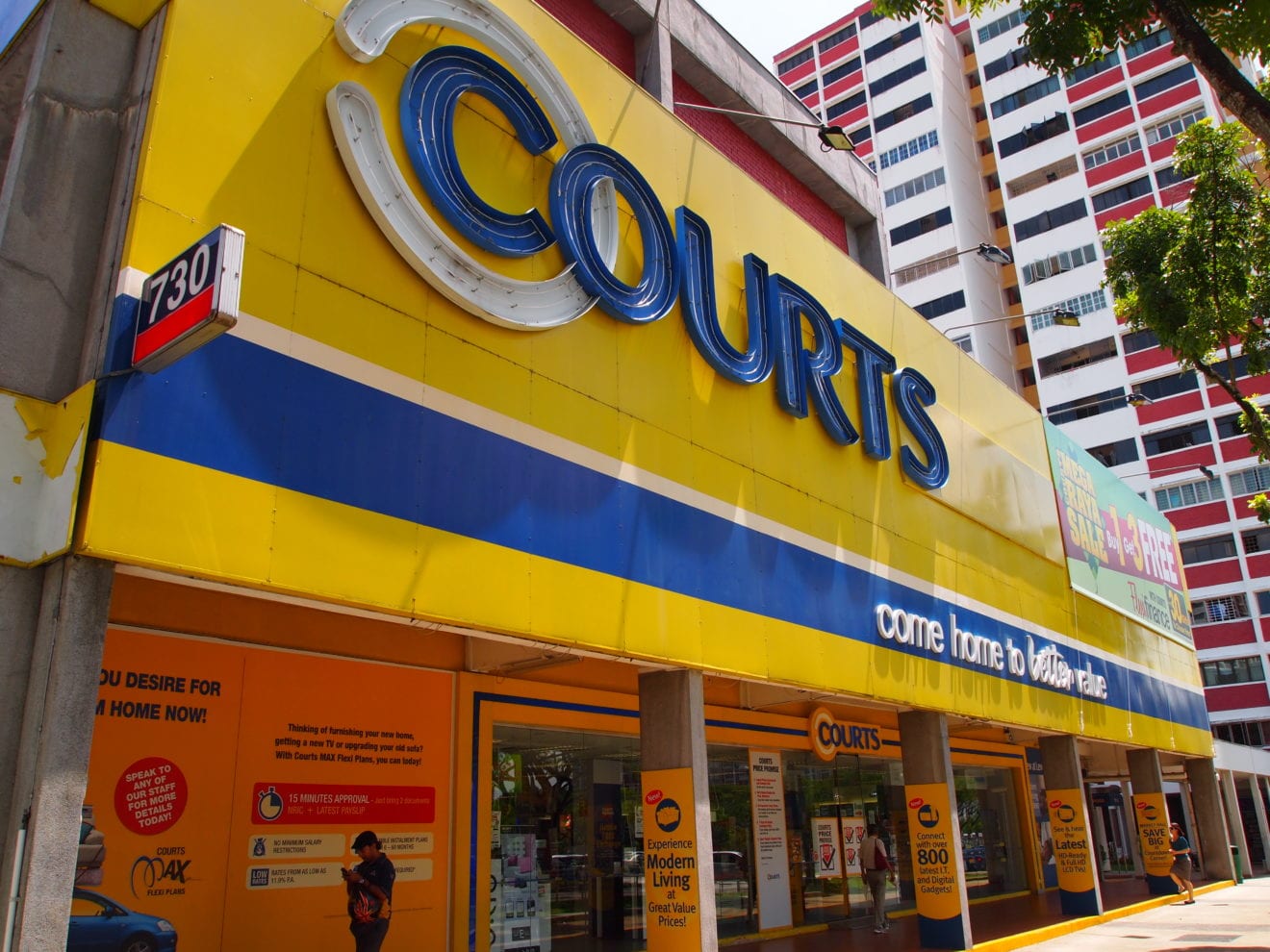
  • Courts Invests in Growth by Reimagining Its Omni-Channel Retail Experience

    Courts Invests in Growth by Reimagining Its Omni-Channel Retail Experience

    Specialising in electronics, IT and furniture, COURTS Singapore has put more than a year into researching and redesigning its in-store experiences and omni-channel customer journey. The results are two recent announcements: the relaunch of its e-commerce website, built by e-commerce agency SmartOSC, together with the opening of its newly redesigned Megastore in Tampines, transforming the store experience to serve a wider range of customers seamlessly across touchpoints.

    There has been a significant change in the way customers shop around the world, and they now take a more sophisticated path by engaging with both online and offline channels to collect information and make purchasing decisions. With the new releases, COURTS seeks to catch multi-channel customer generations who, according to recent research published in HBR, spent an average of 4% more on every shopping occasion in the store and 10% more online than single-channel customers. Even more compelling, with every additional channel they used, the shoppers spent more money in the store.

    The new COURTS Online now boasts over 17,000 SKUs, making it their largest store across COURTS’ regional network. SmartOSC, COURTS’ e-commerce partner, has helped them to establish a new mobile first and user-centric experiences with features that connect their digital and physical stores. COURTS customers can research and purchase online to later pick up in-store or ship-from-store, all while accessing their personal accounts. The system also gives COURTS customer service and retail associate teams the information they require to meet customers’ end-to-end needs by connecting all of their touchpoints.

    Built upon Magento Enterprise 2, combined with innovative solutions for omni-channel retailing, marketing automation, and content management, COURTS’ new e-commerce system offers a real-time single view of inventory and customer profiles, activated through integrations with ERP and retail management systems. The website has also been built to be easily navigable, featuring a completely refreshed intuitive navigation, search and faster check-out experience.

    Mr. Stan Kim, Chief Strategy Officer at COURTS Asia shared, “The COURTS Online relaunch was timed strategically around key retail events of the year such as Black Friday and Cyber Monday. Powered by the new platform, online sales for both events grew almost 100% year-on-year. Engaging with the right partners has proved to be pivotal to our e-commerce growth this year. COURTS will continue strengthening its back-end infrastructure to offer customers the seamless online-to-offline experience they expect from best-in-class retailers. We will continue to drive online growth, and our ambition is to grow online sales to comprise 10-15% of the business in five years’ time.”

    The relaunched COURTS e-commerce site augments the transformed retail experience in the physical stores, delivering the ultimate in ‘bricks and clicks’ shopping. The newly redesigned COURTS Megastore in Tampines stands as an aspirational hub featuring the latest in-store experiences, with dedicated experiential retail spaces that have been redesigned to be more immersive, focusing on memorable and informative experiences that will bring customers into the store to encounter the products firsthand.

    COURTS features a 30-day lowest price guarantee and 30-day hassle-free returns both online and in all stores, and tourist tax free scheme to help customers feel secure and confident with their purchase decision. The retailer operates more than 80 stores across Singapore, Malaysia and Indonesia, spanning over 1.6 million square feet of retail space.

  • Deck Commerce Supports Omni-Channel Retailing for Build-A-Bear Workshop

    Deck Commerce Supports Omni-Channel Retailing for Build-A-Bear Workshop

    Deck Commerce, a leading omni-channel commerce technology provider, today announced that Build-A-Bear Workshop, – an interactive destination for making personalized furry friends – has implemented Deck Commerce’s Distributed Order Management Solution to help streamline, optimize and integrate its omni-channel retail operations.

    Celebrating 20 years of business in 2017, Build-A-Bear is a global brand kids love and parents trust that seeks to add a little more heart to life. Build-A-Bear Workshop has approximately 400 stores worldwide where Guests can create customizable furry friends, including company-owned stores in the UnitedStates, Canada, Denmark, Ireland, Puerto Rico, the United Kingdom and China, and franchise stores in Africa, Asia, Australia, Europe, Mexico and the Middle East.
    To modernize its retail technology and support future growth, Build-A-Bear looked to Deck Commerce to deliver a distributed order management solution that connected their new eCommerce storefront with their existing back-end technology stack. The solution supports a variety of complex order workflows and, most importantly, ensures the ability to deliver outstanding customer service.

    “We selected Deck Commerce to help support our omni-channel retailing vision as we continue to strengthen our Guest engagement,” said Mike Early, Senior Managing Director of Information Technology at Build-A-Bear Workshop. “We are impressed with the solution’s out-of-the-box capabilities, the strong partnership-based approach to working with retailers, and their overall focus on continuing to develop innovative solutions.”

    “We applaud Build-A-Bear for making a solid investment in the technology necessary to deliver the experiences that today’s consumers demand.” said Chris Deck, Founder and CEO of Deck Commerce. “We’re excited to partner with Build-A-Bear to help support new levels of service, productivity and efficiency.”
    Build-A-Bear launched Deck Commerce Distributed Order Management in conjunction with its new cloud-based eCommerce platform, implemented by Lyons Consulting Group. Additional integrations included CyberSource, Avalara, and Channel Advisor.


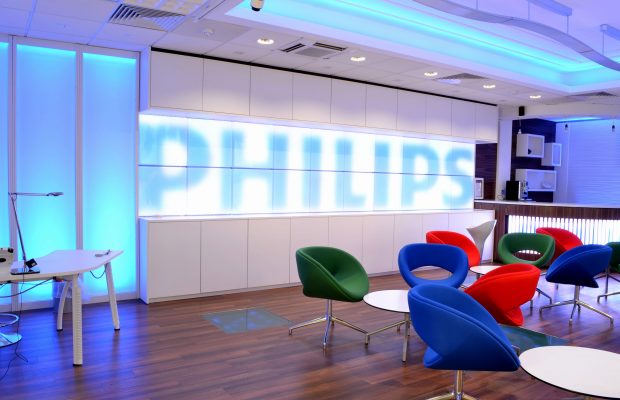
  • Philips Lighting first lighting company to “elluminate” the way forward for Omni-channel retail

    Philips Lighting first lighting company to “elluminate” the way forward for Omni-channel retail

    With the increase in operating costs and growing competition in e-commerce, Singapore’s retailers are realising the importance of leveraging omni-channel retail strategies to bring new and better experiences to today’s shoppers.

    Philips Lighting, a global leader in lighting, has become the first lighting solutions provider to announce the launch of a ‘chatbot’ on their local Facebook page, allowing users to purchase Philips Lighting’s suite of consumer products conversationally through Facebook’s messenger platform.

    Facebook’s users will now be able to get round-the-clock assistance in making their lighting purchase decisions just by interacting with the chatbot on the Facebook Messenger system. The chatbot responds with product recommendations based on the user’s inputs to the chat and allows users to make their purchase directly on the platform itself.

    Besides being the first lighting provider to officially launch a Facebook Messenger Bot, this is also one of the initiatives undertaken by the company for its LEDs Get Smart campaign, aimed at educating consumers on the benefits of installing the right lights at home. Under this campaign, Philips Lighting has also partnered with Lazada Singapore to launch its “first ever specialty e-store” on the e-commerce platform.

    These initiatives are borne from Philips Lighting’s desire to capture the local e-commerce market. A joint report by Temasek Holdings and Google has revealed that the e-commerce market in Singapore is expected to be worth US$5.4 billion (S$7.4 billion) by 2025, and is expected to make up 6.7 per cent of all retail sales in Singapore. As e-commerce gain traction and become a big contributor to the omni-channel retail trend, the firm aims to stay ahead of the game by becoming the first lighting company to tap into this growing segment. The move is also in line with the government’s plans, as revealed in the recent budget announcement, to promote digitalisation in the retail sector.

    Alok Ghose, Managing Director and Cluster Leader for Philips Lighting in Singapore, Malaysia and Exports said: “The partnership with Facebook and Lazada Singapore will serve as an excellent opportunity for Philips Lighting to tap onto the growing e-commerce market segment to unlock new business revenue. These platforms will enable us to bring  light beyond illumination to Singaporean households, connecting their home lighting systems to the Internet of Things, a viable first step in building homes in a Smart Nation.”

  • Why omni-channel payments need to be the new norm in retail

    Why omni-channel payments need to be the new norm in retail

    Electronic payments account for 69%1 of consumer transactions in Singapore – just slightly higher than the global average of 65%. The country’s e-commerce market, valued at US$1.39b in 2015, is predicted to exceed S$7b in 2025 with 60% of consumers saying they bought products online at least once a month2 – some even showing a growing preference to shop online and pick up their purchases in-store.

    Consumer buying habits aren’t rooted solely at retail locations or online. They shift between retail stores at malls, smartphones, laptops, and transient, yet trendy, pop-ups. In other words, consumers are omni-channel shoppers. So why haven’t payment systems followed in the same direction?

    In Singapore, it’s a common sight to see retail counters with multiple terminals serving different modes of payment: one for credit cards, another for debit cards, yet another for contactless payments. On the back-end, business owners spend hours liaising with various vendors, different banks, grappling with multiple platforms and numerous devices.

    Businesses could instead integrate payments across multiple platforms – increasing efficiency and profits by adopting a seamless, omni-channel payments system. In doing so, they would be able to process payments with greater speed and efficiency saving time and resources in their back-offices, leverage integrated data for actionable insights, and offer customers a seamless, integrated experience.

    1. Greater efficiency
    70% of businesses surveyed in a KPMG report agreed that there are simply too many payment methods to deal with. Many retailers have multiple banking contracts and relationships across Singapore to manage, each of which provides part of the company’s in-store payment solution. This represents an enormous investment in managing reports and financial flows.

    By adopting omni-channel payments, businesses will be able to work across a single centralised platform that enables businesses to accept and process payments across multiple markets. In doing so, retailers can drastically simplify these processes, cut down on the human resource and financial investments needed to manage their payment acceptance.

    2. Leverage data for actionable insights
    The use of technology and data allows local retailers to gain business intelligence and insights into areas such as purchasing habits. Integrating payments from the point-of-sale (POS) system with accounting software or customer relationship management (CRM) systems to capture disparate pieces of information enables retailers to better serve their customers. Leveraging insights gleaned from payment information, retailers can decide when and who to offer discounts and deals to drive sales.

    Having access to cross-channel shopper data gives merchants a treasure trove of information that can be analysed for patterns online and offline. They can then mine this information for customer retention and loyalty marketing. Many merchants are already beginning to offer their customers an omni-channel shopping experience and in doing so significantly improve the shopper experience.

    An example: a shopper makes a number of purchases from an e-commerce site. Several months later, she goes shopping whilst on vacation. At the checkout, the terminal recognises the shopper’s card, and the staff member adds a discount and a personal thank you thus delighting the customer with an even more seamless, personalised experience.

    3. Seamless customer experience
    Businesses need to recognise that the customer journey today is fluid, accessible, and continuous. Shoppers can, and want, to purchase whatever they want, without restrictions on time, location, and across social, online, and mobile channels.

    Businesses too need to provide a seamless experience and allow customers to start a purchase in the channel of their choice and complete it in a potentially different channel of their choice.

    Here’s what a customer journey might look like: a shopper goes into a store and wants a shirt in a different colour than what’s currently available in-store. If a store has adopted an omni-channel approach, the shopper can go to the in-store tablet-assisted sales terminal that carries the entire web-based inventory, choose the colour they want, make the payment on the spot, and have it delivered to the address of their choice.

    Omni-channel payments enable retailers to service customers across multiple channels (in-store, online, or mobile); retail sectors, payment types (NETS or debit and credit cards), and payment methods (contactless, chip and PIN, magnetic and online) through mobile point-of-sales devices, payment gateway, or virtual terminal. In doing so, the store has gained a purchase rather than losing an opportunity.

    With discerning consumers becoming increasingly accustomed to omni-channel payment capabilities, it will transform “the next big trend” into “the new norm” for consumers in Singapore.

    1.https://newsroom.mastercard.com/asia-pacific/press-releases/singapore-among-top-markets-in-asiapacific-advancing-towards-a-cashless-society-new-mastercard-report/
    2.https://www.pwc.com/sg/en/publications/assets/total-retail-sea-2016.pdf

  • China Daily Asia Pacific Retail Leadership Awards Winners Revealed  Retail Gurus

    China Daily Asia Pacific Retail Leadership Awards Winners Revealed Retail Gurus

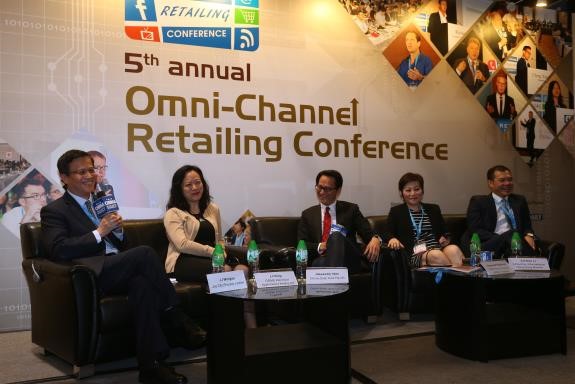
    Co-organized by the China Daily Asia Leadership Roundtable and the Omni-Channel Retailing Conference, the co-branded session, themed “Defining Next Generation Retail in Asia”, was held today at the Hong Kong Convention and Exhibition Centre. It was the fourth consecutive year China Daily has acted as the only Official Media Partner for this significant industry event. The forum drew more than 150 prominent retail industry players from across Asia.

    Defining Asia’s Next Generation Retail Industry: As Asia continues to drive and lead global economic growth, its retail industry is experiencing a phenomenal era of opportunities and challenges.

    Across Asia, online players are making waves on a huge scale, impacting the market at different levels. On the other hand, brick-and-mortar establishments are revising value propositions to stay competitive. Store design, merchandising, technology, logistics, exchanges, points of sale, and customer service offer up a cocktail that will see retailers taste success or failure in keeping with their mixing skills.

    Most importantly, retail consumers are changing not only in their demographics but also their behavior.

    Mr. ZHOU Li, Editorial Board Member of China Daily Group and Publisher & Editor-in-Chief of China Daily Asia Pacific, welcomed the distinguished session panelists from across Asia — Ms. Gunyarak PIYAKHUN, First Executive Vice-President, Department of Marketing Strategy & Business Intelligence, Siam Piwat Company Limited, Thailand; Mr. Carlson LI, General Manager, UnionPay International Hong Kong Branch; Mr. LI Wenyao, Deputy General Manager, Joy City Property Limited; and Ms. LI Hong, Head of Investor Relations, GOME Electrical Appliances Holding Limited.

    Ms. Gunyarak PIYAKHUN said the most important strategy for future retailers is to engage customers by providing customer experience, and using Omni-channel retailing as a tool to help retailers understand customers in a better way.

    Mr. LI Wenyao noted that as the Chinese mainland’s economy gains momentum, the country’s retail sector will continue to see a bright future. What matters is confidence.

    Ms. LI Hong believes that online shopping does not compete with offline shopping, rather, they complement each other.

    Mr. Carlson LI shared his insights from the online payment perspective. He said UnionPay, apart from offering a payment method to retailers, acts as a marketing platform providing retailers big data analysis to help them lower their marketing and promotion costs.

    This year’s “China Daily Asia Pacific Retail Leadership Awards” were presented at the “Hong Kong Retail Industry Trade Awards Presentation Ceremony” on June 14 in recognition of regional retailers with outstanding achievements which exceeded customers’ expectations through their strategic initiatives in creativity, technology, talent building and customer services.

    The winners of the China Daily Asia Pacific Retail Leadership Awards were:

    GOME Electrical Appliances Holding Limited
    Joy City Property Limited
    Siam Piwat Company Limited, Thailand
    UnionPay International Hong Kong Branch
  • How online and offline will dominate retail in Asia in 2016

    How online and offline will dominate retail in Asia in 2016

    Innovations in technology are predicted to make progressive strides related to online and offline commerce, thus improving the retail experience significantly in 2016.

    With new developments like Google’s Physical Web and Eddystone, we’ve started to get a glimpse of what the future might look like in a perfect online to offline marketing world. But is this futuristic new line of digital marketing really so far away, or are we on the cusp of a new reality?

    Here are major trends that I anticipate will lead to progressive shifts in how online retail addressed this year in the Asia Pacific region:

    1. Full integration of online and offline

    In my last column, I talked about Google’s Physical Web and Eddystone. Technologies like these will enable users and shoppers to communicate via their mobile devices with physical objects, sending their real-time location and behavior to marketers who can now identify them, in exchange receiving more personalized and customized experiences when visiting offline shops.

    With these new innovations, the traditional challenges of user anonymity are being resolved. Therefore, we can expect to start seeing user retail experiences that truly bridge the gap between offline and online (O2O) by the mid-2016.

    2. Deep customer insights meet highly targeted displays

    How to drive traffic the most effective and efficient traffic to your website is an ongoing challenge for marketers. By “most effective traffic,” I mean traffic that comes from the cheapest source, and “efficient traffic” refers to the frequency at which your traffic will eventually convert (ideally instantaneously).

    In the past, one solution was to use a large proportion of marketing budgets to acquire new customers using Google SEM. However, this has proven to be very expensive and less efficient in driving qualitative traffic to a website over time. It is also only focused on capturing demand.

    This has driven marketers and budgets to Facebook, where interest-based targeting could be used to find new users. And what happens when everyone does the same thing? Eventually the channel becomes more expensive and less efficient.

    Publishers can now address this challenge via the use of an Audiences feature. Both Google and Facebook now have Audiences as a core function in their display offerings, allowing advertisers to target more accurately when uploading emails or finding specific audience demographics. Such technology enables advertisers to deliver the right ads, to the right people, across devices.

    Many platforms also use sophisticated look-alike modeling, which lets advertisers target similar profiles of those already targeted, specifically by email. There are also retargeting technologies that can find people that have browsed a particular website, and present them with ads or even specific products from that site.

    To complete the value proposition, marketers are provided with reporting that highlights conversions and contributions to online sales. But here’s a little secret: revenue from abandoned carts contribute significantly to these sales numbers.

    How many times have you been presented with display ads for products that you’ve already purchased? Well, here is how this happens; let’s say someone has a basket full of goodies, but bounces over to a different site momentarily, before coming back to their basket and completing their purchase. This will cause a view-through conversion, which means that revenue will be attributed to the retargeting campaign, even if the purchase occurs without clicking on the display ad. Retargeting companies focused on pricing for cost per click (CPC) or cost per action (CPA) models make a lot of money this way.

    counting money youtube screenshot

    Going back to Google and Facebook, the ability to target someone specifically is great, however it is important to know the context in which a user/shopper is being targeted. How do we link both audiences and standard retargeting to the purchase cycle as well as to the interaction a user has with your brand?

    In 2016, we will start to see the emergence of more quality identification technology that is able to work across mobile devices and computers. Marketers will be able to find users and send contextual display ads that feature the right product or coupon, on the right device, with incentives based upon insight regarding what really makes the user tick. This delivery will also be matched with the right objective based on where the customer is in the lifecycle.

    In the beginning, identification will probably range between 30 and 50 percent of the users, but I predict we’ll see these numbers increase as the technology evolves. Though these advancements are on the horizon, this level of sophistication will only occur once matching email addresses to third-party cookies becomes feasible. More importantly, this cannot happen unless multifaceted user insights are aligned with intelligent advertising platforms.

    3. AI driven marketing

    Artificial intelligence will be one of the hottest topics in the tech industry in 2016. Just recently, Google launched TensorFlow, a very powerful artificial intelligence and machine-learning open source software.

    Added to this is a recent announcement to commit $1 billion to researching artificial intelligence from a group of Silicon Valley entrepreneurs, which includes Elon Musk, chief executive officer (CEO) of Tesla.

    How does all this come into play for the marketing landscape?

    Marketers today are very operative. First, they think about an idea or a campaign, then they automate it with either display ads, email campaigns, push messaging, social releases, and so on. After that, they test against it and continue to optimize. They go through this process again and again and again, and do so because of the vast amount of variables and data sets that need to be taken into account to get the best results. With this process, solutions rooted in artificial intelligence will change the lives of the marketers and their audiences, helping each make more informed decisions.

    Think about the type of software needed to create the customer journey and then execute after uploading all the necessary data and required content; this year, marketers can expect some of the functionality affiliated with this process to be automated. Expect this progress to in ways that will cover most of the operational decisions marketers make today, and for this evolution to continue over the next three to four years.

    4. Messaging dominates media activity

    Over the past five years, messaging has become one of the fastest growing online channels, according to Activate’s Tech and Media Outlook 2016. Messaging has developed more quickly than social media, coming only in second to the time spent online by users globally. By 2018, messaging is expected to grow by an additional 1.1 billion users.

    The global messaging space continues to be dominated by Facebook Messenger and WhatsApp. In the Asia Pacific region, local players include China’s WeChat, Japan’s Line, and Korea’s KakaoTalk.

    Messaging services are now accessible by third-parties, thus resulting in an explosion in of real-time offerings for services, including booking taxis, making payments for practical necessities like utilities bills, music and television entertainment, games, stickers, e-commerce capabilities, video, and live voice calls. The messaging app has transformed into a hub of communication and consumption of services for users, creating monetization possibilities for both for media owners and third-party developers.

    So, what can digital marketers ultimately expect for 2016?

    In conclusion, the integration of online and offline real-time marketing opportunities isn’t something we can hope to see somewhere in the future, as what was once a fantasy is finally materializing into reality. Now that these technological innovations have made linking these contrasting realms much easier, wise marketers and retailers will take advantage of this progress immediately….will you?

  • Madura experiments with first omni-channel retail

    Madura experiments with first omni-channel retail

    Apparel retailer Madura Fashion & Lifestyle, part of Aditya Birla Nuvo Ltd on Saturday launched a new digitally integrated store under its flagship formal wear brand—Van Heusen—indicating the two-decade-old retailer’s push to morph into a more tech-savvy brand at a time when shoppers are switching to shopping on the Internet.

    With sales staff equipped with tablets and virtual fitting rooms, the store is the company’s first attempt to allow shoppers to use touch-enabled screens to shop and pay for garments. The store also allows for shoppers to order unavailable inventory to their homes by linking the company’s in-house web-portal Trendin.com to the store.

    Changing customer expectations couples with technology are influencing consumer choices far more today, said Vinay Bhoptakar, chief operating officer, Van Heusen, at the retailer’s store launch in Bengaluru.

    The store—called Van Heusen Style Studio has been in the works for over a year. It will offer more expensive collections and a wider range. Built at twice the cost of a regular Van Heusen store, Bhoptakar said, five more such stores are underway in Delhi and Mumbai.

    The retailer has partnered with Fitch Retail in Singapore to draw up the concept, with virtual fitting rooms sourced from Experiential Design Lab.

    Diluted version of this store will be planted across the brand’s existing 275 stores, added Bhoptakar, indicating that existing stores will borrow technology elements of the new format in a limited way. Madura’s other ready-to-wear apparel brands including Allen Solly, Louis Philippe could too borrow from this format.

    Taking cues from a surge of sale fashion goods on the Internet, most large traditional retailers in India are making efforts to venture in to online retail even as they try to preserve footfalls at brick and mortar stores. Most have found a midway in the so called “omni-channel” retail format that allows shoppers to seamlessly shop for online and offline inventory both within and outside the store.

    Aditya Birla Group too has been stepping up efforts to catch shoppers online where more Internet focused retailers such as Flipkart and Snapdeal are biting in to consumer’s share of wallet.

    In October this year the group launched its own fashion marketplace—Abof.com—privately held by chairman Kumar Mangalam Birla in his personal capacity. In 2013, Madura Fashion & Lifestyle launched Trendin.com—an in-house online portal—retailing its brands Allen Solly, Peter England, Louis Philippe among others.

    Bopatkar, however added that such evolving retail stores are “not a reaction to e-commerce but a reaction to changing consumer behaviour.” As a result, “the physical store will always be there, but role of the physical store has to evolve,” he added.

  • Omni-channel to be the next big play in retail

    Omni-channel to be the next big play in retail

    “I haven’t seen such a behaviour in other South East Asian markets. While businesses in countries like Taiwan, Thailand and Philippineshave adopted e-commerce in a big way, there is a clear focus on bottomline. Money is being made on every transaction and majority of the companies there are gross margin positive,” said Iyer at the inaugural session of the two-day IRF summit in Mumbai on Tuesday.The fast emerging e-commerce sector in India has been talked about in the business world as the next big thing to be in. However, according to Krish Iyer, president and CEO, Walmart India and chairman of India Retail Forum (IRF) 2015, one thing that has hit him in the last year and half isthe whole craze about building valuations while not really looking at the bottomline.

    “I haven’t seen such a behaviour in other South East Asian markets. While businesses in countries like Taiwan, Thailand and Philippines have adopted e-commerce in a big way, there is a clear focus on bottomline. Money is being made on every transaction and majority of the companies there are gross margin positive,” said Iyer at the inaugural session of the two-day IRF summit in Mumbai on Tuesday.

    Defending the valuations game being played in the e-commerce sector in India, Alok Goel, managing director, SAIF Partners, said that India is the only country that offers an opportunity for growth investment in the global scheme of things. “Lot of money is flowing into India looking for opportunities and return on investment. And when lot of money is chasing fewer products out therein the market, the price of that product increases. This roughly explains the rapid price-valuation situation that’s come up in the market,” said Goel, adding that from a valuations point of view, businesses need to be looked at in terms of growth they will register over the next five to 10-year horizon.

    Stressing on the need for Indian retail (online / offline) players to seek profitable growth, Anurag Mathur, retail and consumer goods practice leader, PricewaterhouseCoopers India, said, currently mom-n-pop stores are enjoying operating margins of between 6% and 8%over gross margins of 16% and 18%, while the organised retailers had high gross margins of 20% and 22% though operating margins were as low as 2% and 4%. “The online / e-commerce players are still ages away from getting into the positive space with gross margins anywhere between -3% and -8% and operating margins between -15% and -22%,” he said.

    While the recent past has seen the Indian retail fraternity debate aggressively about retail and omni-channel, Iyer pointed out that a few years ago, it was about retail and e-commerce. “And from what I see on the ground, I can tell you that omni-channel will be the key focus of discussion next year. The brick-n-mortar players will continue to learn from the pure-play e-commerce players and then will be able to drive profitable growth while providing omni-channel experience to the customers. And that to my mind, is the only way to go,” he said adding that retail players, particularly those in the brick-n-mortar space, are clearly focused on profitable growth.

    Iyer stressed that ongoing economic adjustments around the world offered businesses in India a brilliant opportunity to lead global growth. And the fact that India has been a domestic consumption-driven economy has come handy. “We are not an export-driven economy and that’s one of the primary reasons why the economic turmoil and global events haven’t had as much impact on India as we have seen in other BRIC countries viz. Brazil, Russia and China,” he said.

    The next phase of retail revolution, retailers and experts said, will be driven by India and China unlike the past phases that were driven by the West. However, Indian retailers lagged in retaining a black bottomline when compared with their foreign counterparts.

    “Operating margins (ebitda) of Indian retailers have dropped to 2% in 2014 from8% in 2011. During the same period, ebitda of select international retail chains like Walmart, Target, Tesco and Home Depot have maintained 7-11% during the same period,” said Mathur.

    In fact, according to a survey conducted by PricewaterhouseCoopers India, over 65% of Indian retailers are focusing on improving profitability through improvement in revenue throughput as fast-changing consumer behaviour is driving many retailers to rethink their business model. As per the survey, 53% retailers are considering a change in their operating model driven by changing consumer behaviour.

    With the emergence of new formats, distinct paths to sustainable profitability will need to be crafted as retailers in India face a herculean task of reaching out to the customer through a combination of mobile, social and human connect, experts said.

    According to Abheek Singhi, senior partner and director, Asia Pacific leader –consumer and retail practice, The Boston Consulting Group, online and e-commerce with varying digital density along with omni-channel are straining traditional business models in retailing. “Moreover, with consumer companies selling directly via offline and online tools, value chains are also getting disrupted,” he said.

  • Store’s e-receipts pay off with cash-saving extras

    Store’s e-receipts pay off with cash-saving extras

    Shinsegae Department Store is set to launch a new smartphone app that offers online and offline shoppers e-receipts with extras.

    While the electronic receipt app avoids the hassle of scraps of paper receipts, it can also provide discount coupons and make it easier for customers to park cars.

    Scheduled to launch on Friday, the retailer said the app will help it engage with customers and potentially learn consumer shopping habits from the digital records, and make exchanges or returns easier.

    Retailers outside of Korea have already adopted e-receipts, but local shops have been slow to utilize the system.

    Global marketing company Epsilon International said the e-receipt is “an innovative communications vehicle for retailers that offer limitless marketing possibilities, providing deeper insight into consumer shopping habits, which can lead to more targeted advertising mailers, promotions and emails.”

    On top of offering e-receipts, the platform will provide information about different sales events and discount coupons, the department store chain said.

    The Shinsegae app will also help the store’s parking service. If a customer registers a car number, they can check the length of time they have spent in the parking lot.

    In the Gangnam and Incheon branch, customers can confirm their parking locations on the app and also get their parking ticket validated for free parking.

    The company said that users are allowed to log in with cell phone numbers instead of having to create IDs and passwords.

    Starting in September, users of the app can also receive a list of bestselling products. In addition to the new features – an upgrade to the old app which gave basic store information – Shinsegae said it will add other services to the platform.

    The retailer also unveiled a pickup service that allows online users to pick up their orders at Shinsegae Department Store.

    The new service is part of “omni-channel retailing” which is used by retail giant Amazon, which is a marketing strategy aimed at bridging the gap between online and offline stores.

    “The boundary between online and offline shopping is getting blurry,” said Hong Jeong-pyo, director at the marketing strategy division at Shinsegae. “Shinsegae launched the services that combine the advantages of online and offline shopping.”

    The release is the latest digital service offered by Shinsegae. The group introduced a new mobile payment system called SSG Pay, where consumers can pay with the app at Shinsegae affiliates, including Shinsegae Department Store and E-Mart, WithMe convenience stores, Starbucks, Premium Outlet and SSG.com.