
Tag: once

  • Singapore’s Sentosa Cove: Once a Luxury Haven, Now a Hotspot for Residential Resale Losses

    Singapore’s Sentosa Cove: Once a Luxury Haven, Now a Hotspot for Residential Resale Losses

    Over the past three years, approximately 64.5% of residential resale transactions in Singapore’s exclusive Sentosa Cove district have resulted in losses, according to data from local real estate platform, Mogul.sg. This figure marks a rise from the 62.8% recorded between March 2020 and April 2023. The lackluster performance of this affluent enclave, once hailed as a haven for the wealthy, has been attributed to diminished demand from both foreign and local buyers.

    Performance of Property Types and Loss Analysis

    The study found that landed properties fared marginally better than condominiums, with around half of the resales since 2023 yielding a profit. The average loss on unprofitable resales decreased by 18% to S$1.28 million (US$1 million), however, the gross gains on profitable sales also dipped significantly, approximately 62%, to S$655,590. These figures do not account for additional costs such as stamp duties, property taxes, legal fees or agent commissions.

    Property consulting firms Cushman & Wakefield and Newmark similarly noted a trend towards loss-making resales in the area.

    Located on the eastern end of the 5-square-kilometer Sentosa Island, Sentosa Cove was transformed from a military outpost into a leisure and tourism hub in the 1970s. The enclave, which was developed primarily on reclaimed land and consists of five man-made islands (namely Coral, Paradise, Treasure, Sandy, and Pearl), was initially conceived as a high-end residential hotspot for affluent foreigners.

    Once marketed as Singapore’s answer to Monte Carlo or Dubai’s Palm Jumeirah, the enclave used to enjoy robust sales, driving up property prices. This was partly due to exemptions from mainland property restrictions and the unique provision allowing foreigners to purchase landed homes, albeit with government approval.

    Declining Demand and Current Challenges

    Since the 2008 global financial crisis and subsequent increases in Singapore’s additional buyer’s stamp duty, demand for properties in the enclave has dwindled. The tax, imposed on top of the standard buyer’s stamp duty, was raised to 60% in April 2023 for most foreign buyers, contributing to the decline in demand.

    Nicholas Mak, chief research officer of Mogul.sg, attributed the waning interest in Sentosa Cove to several factors. These include a halt in new residential developments, limited accessibility, and harsh coastal conditions. Moreover, no residential land parcels in Sentosa Cove have been sold since 2008.

    Further compounding the issue is a stipulation preventing foreign owners from leasing out their standalone homes. Consequently, several properties have been left vacant for extended periods, as their owners reside abroad or occupy other residences on the mainland.

    The lack of amenities such as shopping malls, wet markets, and hawker centers has also been identified as a reason for the enclave’s lack of appeal among Singaporeans.

    Questions & Answers

    What is the current state of residential resale transactions in Sentosa Cove?
    Approximately 64.5% of residential resale transactions in Sentosa Cove have resulted in losses over the past three years.

    What factors are contributing to the declining demand for properties in Sentosa Cove?
    The declining demand can be attributed to several factors including increased buyer’s stamp duty for foreign buyers, lack of new developments, limited accessibility, and harsh coastal conditions.

    How has the rule that prevents foreign owners from renting out their standalone homes impacted the Sentosa Cove property market?
    This rule has resulted in numerous properties being left vacant for extended periods, thereby reducing the attractiveness and vibrancy of the enclave.
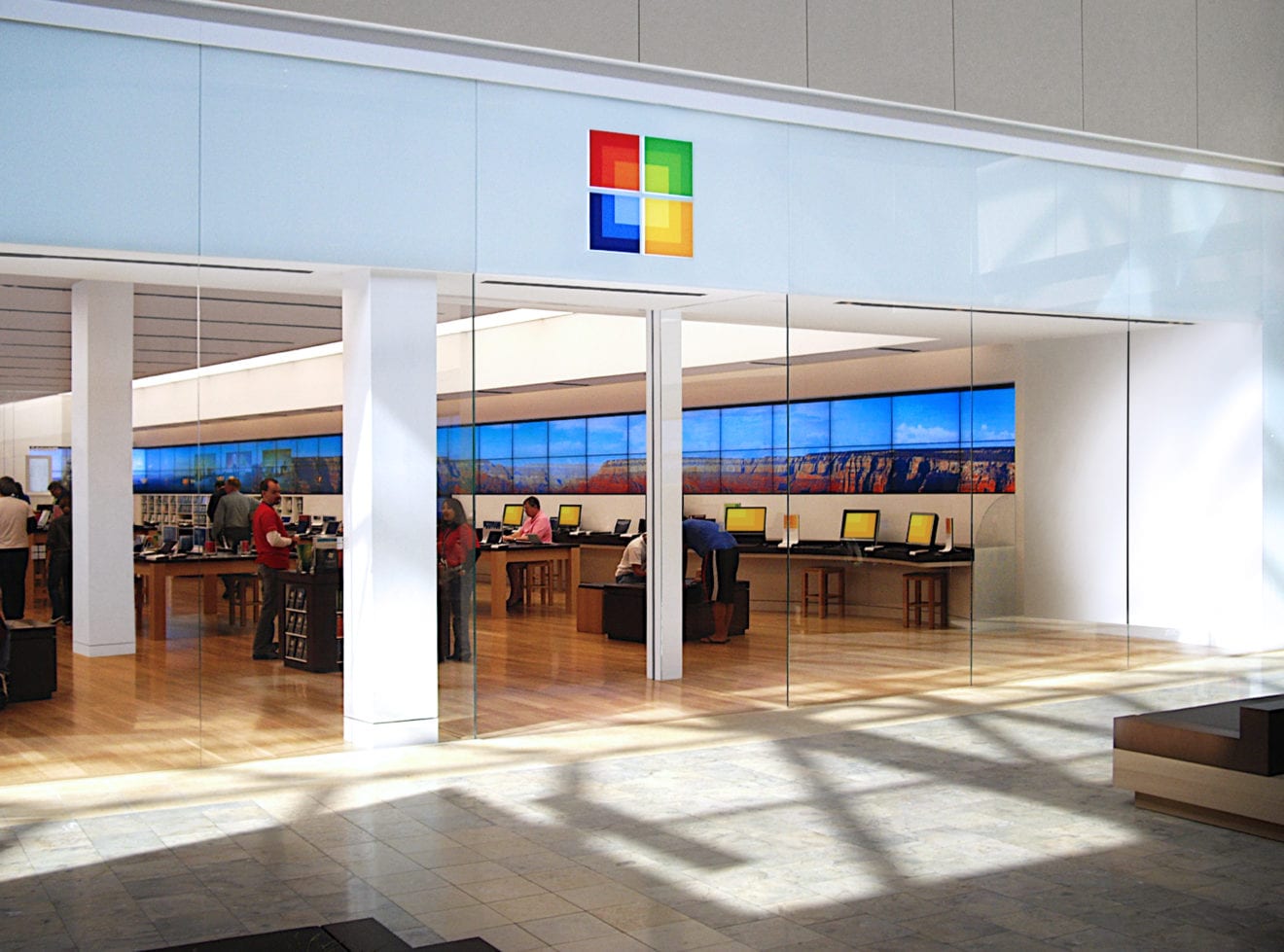
  • Apple And Microsoft Challenge Chrome’s Dominance: Unveiling The Privacy Controversy

    Apple And Microsoft Challenge Chrome’s Dominance: Unveiling The Privacy Controversy

    Apple has recently cautioned iPhone users against employing the Chrome browser, citing security risks. This situation may remind one of a previous advertising scenario in 2024 where the tech giant, through creative visuals, illustrated Android users exploring the Chrome Browser in public and being surveilled by transforming cameras. These cameras symbolized internet user trackers, which failed when attempting to spy on users of Apple’s own Safari browser. The underlying message being that Safari provides superior protection of users’ personal information than its counterparts, specifically pointing out the Chrome browser.

    Google’s Privacy Sandbox: A Failed Attempt at Privacy

    In a parallel move, Microsoft attempted to dissuade Windows users from using Chrome. They promoted their own browser, Microsoft Edge, as a trustworthy alternative that operates on the same technology as Chrome. Despite these concerted efforts by Microsoft and Apple to dethrone Chrome, the browser boasts a massive user base of over 3 billion worldwide. However, Google recently dropped a bombshell by announcing the end of its Privacy Sandbox project, its proposed alternative to third-party cookies for the web and Android applications.

    Back in January 2024, Google initiated the process of phasing out third-party cookies from Chrome. The agenda was to replace them with the Privacy Sandbox, aiming to gauge a consumer’s interests without resorting to widespread internet tracking to push personalized advertisements. Such targeted ads typically command higher prices from the advertisers due to their increased effectiveness, thereby contributing to Google’s revenue.

    The Privacy Sandbox was intended to shift ad selection and data processing tasks directly to the user’s browser and device, eliminating the need for third-party trackers to transmit individual user data across the web. Despite initial plans, Google resolved not to discontinue the use of third-party cookies last year, culminating in the current halt to the six-year-old Privacy Sandbox initiative.

    The Future of Chrome Amidst Privacy Concerns

    Although Chrome users may once again be subjected to tracking and personalized advertising, Chrome’s substantial market share is anticipated to remain unaffected. Currently, the browser dominates over 70% of the market, both in mobile and desktop segments. However, emerging competition from AI browsers like Perplexity’s Comet and an upcoming AI browser from Open AI’s parent ChatGPT could potentially pose a threat to Chrome.

    The Privacy Sandbox tools that Google has decided to withdraw include a host of features such as Attribution Reporting API for both Chrome and Android, IP Protection, On-Device Personalization, Private Aggregation, and more.

    An API, or Application Programming Interface, serves as an intermediary enabling two distinct software interfaces to communicate and exchange data. This process can be likened to the functioning of a restaurant, where an app seeking data is the customer, the API is the waiter relaying the order to the kitchen (the server), and then serving the prepared food (data) back to the customer.

    Google’s cancellation of the Privacy Sandbox was attributed to its “low levels of adoption”, indicating that it failed to provide sufficient value to its users.

    Questions & Answers

    Why did Apple caution its users against using Chrome?
    Apple cited security risks as the primary reason for advising its users against using the Chrome browser. The company highlighted through a past advertisement that its own Safari browser offers better protection of personal data.

    What was the purpose of Google’s Privacy Sandbox?
    Google’s Privacy Sandbox was intended to replace third-party cookies in Chrome. It sought to understand consumer interests without having to track user behavior across the internet, facilitating the delivery of personalized ads.

    Why did Google decide to cancel the Privacy Sandbox?
    Google stated that the Privacy Sandbox had not been adopted widely and that it wasn’t providing enough value to its users, which led to its decision to discontinue the project.