Retail News CRM

Tag: online shop

  • Amazon reports US$ 56.6 bn revenue in Q3

    Amazon reports US$ 56.6 bn revenue in Q3

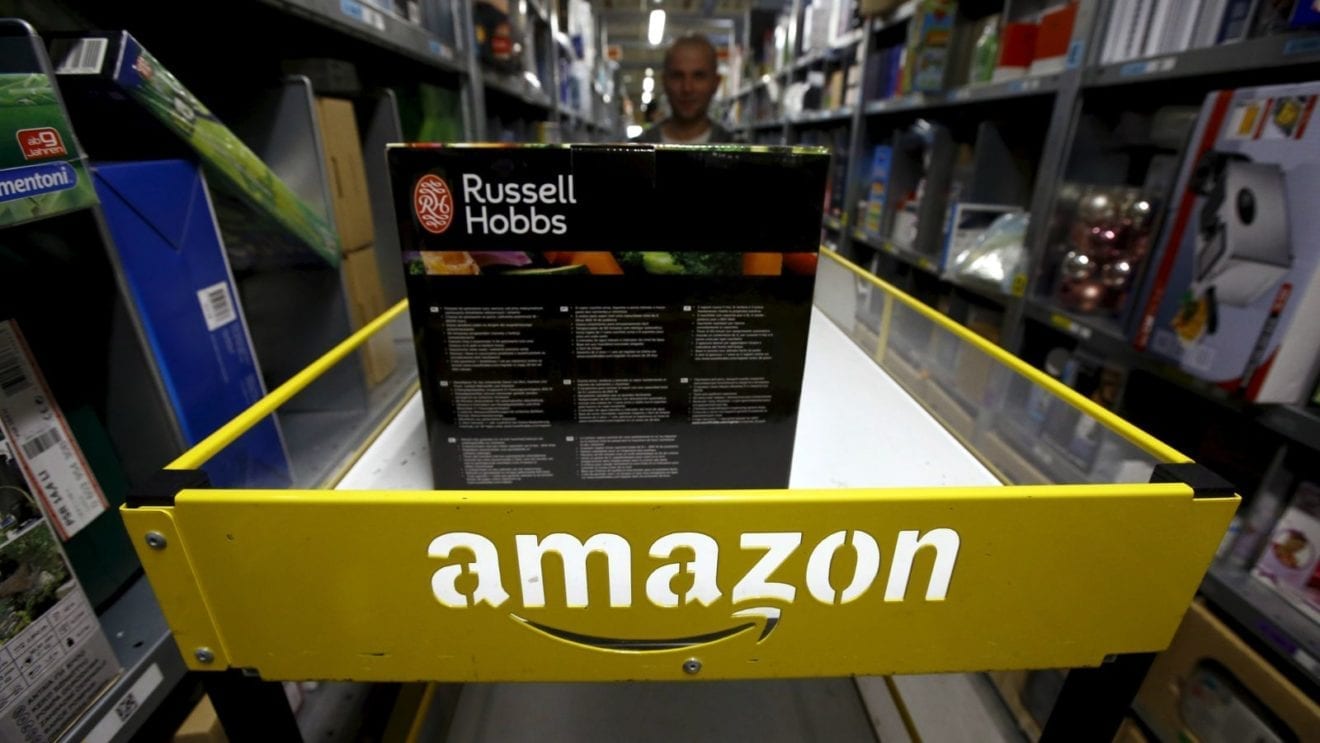
    Riding on its Cloud business, retail giant Amazon.com saw its net sales increasing 29 percent to US$ 56.6 billion in the third quarter this year, compared with US$ 43.7 billion in third quarter of 2017. Operating income increased to US$ 3.7 billion in the third quarter, compared with operating income of US$ 347 million in the third quarter of 2017.

    Net income increased to US$ 2.9 billion in the third quarter, or US$ 5.75 per diluted share, compared with net income of US$ 256 million, or US$ 0.52 per diluted share, in the third quarter of 2017.

    “Amazon Business has now reached a US$ 10 billion annual sales run rate and is serving millions of private and public-sector organisations in eight countries,” said Jeff Bezos, Founder and CEO, Amazon.

    “We’re not slowing down — Amazon Business is adding customers rapidly, including large educational institutions, local governments, and more than half of the Fortune 100,” Bezos said in a statement.

    Amazon gave fourth-quarter revenue guidance in the range of US$ 66.5 billion and US$ 72.5 billion.

    Amazon Web Services (AWS) announced several new customer commitments and major migrations during the quarter.

    In the third quarter, Amazon introduced a new family of Echo smart home speaker devices.

    Amazon also introduced the all-new Fire HD 8 tablet, featuring an 8-inch HD display, a quad-core processor, 16 GB of internal storage with support for up to 400 GB more via microSD, up to 10 hours of mixed use battery life, and hands-free access to Alexa.

    The number of Alexa-compatible smart home devices has quintupled year to date to more than 20,000 devices from over 3,500 brands.

    Through new tools, including updated Alexa Smart Home Skill APIs and the Alexa Connect Kit, developers and device makers can enable voice control of any device and feature with Alexa.

    Amazon India also announced the launch of Amazon.in in Hindi.

    Amazon Business is generating US$ 10 billion in annual sales, serving hundreds of thousands of business sellers and millions of customers across eight countries.

  • Alipay to support China’s micro and small businesses to embrace digitization

    Alipay to support China’s micro and small businesses to embrace digitization

    Alipay has announced that it will launch new initiatives to provide more digital tools, safeguards, loan services and training to further improve efficiencies and support the growth and digitization of small and micro businesses (SMBs) in China.

    SMBs form the cornerstone of Chinese society and create millions of job opportunities. However, shifts in industry models mean that online and offline operations are increasingly merging together and this group has lacked the services and tools needed to improve efficiencies and seize the opportunities from digitization. Aiming to tackle this on-going issue, Alipay, will provide the following support to bolster the development of SMBs in China.

    Ÿ   Provide tools and services to support digital operations, including business analysis, customer engagement, and supply chain services aiming to help 100 million SMBs across China.

    Ÿ   Provide an additional safeguard to SMB owners. SMBs using Alipay services will be offered a maximum of RMB1000 (USD $144) rebate every half year on out-patient services. Alipay expects to extend coverage to 50 million SMBs by the end of 2018 and rebate more than RMB500 million (‪USD $71.8 million) in total.

    Ÿ   Provide MYbank’s loan services to 30 million SMB owners and self-employed people over the next three years.

    Ÿ   In collaboration with 100 start-up entrepreneurs, Ant Financial, the parent company of Alipay, will tailor 100 lessons in corporate development and operations with the aim of training 10 million SMBs and facilitate their digital transformation.

    A great number of SMBs have benefited from Ant Financial’s range of services, including those provided to QR code merchants, who are typically SMBs that use Alipay’s QR code to collect payment from customers. These services include business analysis, financial management, loan and insurance services. Powered by Artificial Intelligence, Ant Financial enables SMB owners to apply for business loans in less than three minutes by smartphone, receive near-instant approval without human intervention. One QR code merchant from Wuhan, for instance, applied for a RMB20,000 (USD $2,874) business loan during Chinese New Year and received approval within one second. In the year ending October 2018, over three million QR code merchants have applied for loans through this service with an average loan size of less than RMB8,000 (USD $1,150).

    AI facilitates the entire process of out-patient benefits offered to QR code merchants, from guiding users to upload their invoices correctly, to identifying key data points on the invoice (such as hospital name and fee amount), to reviewing the information and materials submitted. Ant Financial’s blockchain technology secures the authenticity of the invoices. Tens of millions of QR code merchants have begun to take advantage of this offer with 20,000 merchants on average signing up for the service each day.

  • How China’s online retail appetite is eating our lunch

    How China’s online retail appetite is eating our lunch

    Commerce Minister Gao Hucheng (pictured) boasts online sales will reach four trillion yuan (US$16 billion) this year.

    China has attained the key targets (outlined in the 12th Five-Year Plan) by the end of 2015 to become a genuine giant trader, Gao said at a national meeting on commerce. As a result it has outpaced its global competitors.

    chinese commerce minister

    China is now home to over 80,000 trade markets and total retail sales of consumer goods would each 30 trillion yuan this year with consumption contributing to about 60 percent of total GDP growth, he added.

    In the past five years, China’s exports of goods grew at an annual average of 6.5%, with its share in the global market rising from 10.4% in 2010 to about 13.2% in 2015, faring much better than major global economies. Service trade grew over 13.6% each year,marking the world’s second largest service trader.

    China’s actual use of foreign capital during the 20102015 period is expected to reach $620billion with the tertiary sector taking over 60% of total foreign capital. Outbound direct investment grew at 14.2 % annually.

    China is expected to receive foreign direct investment worth $135 billion both in financial and non-financial sectors in 2015, according to Gao.

  • Zara’s online store opens in Hong Kong and Taiwan

    Zara’s online store opens in Hong Kong and Taiwan

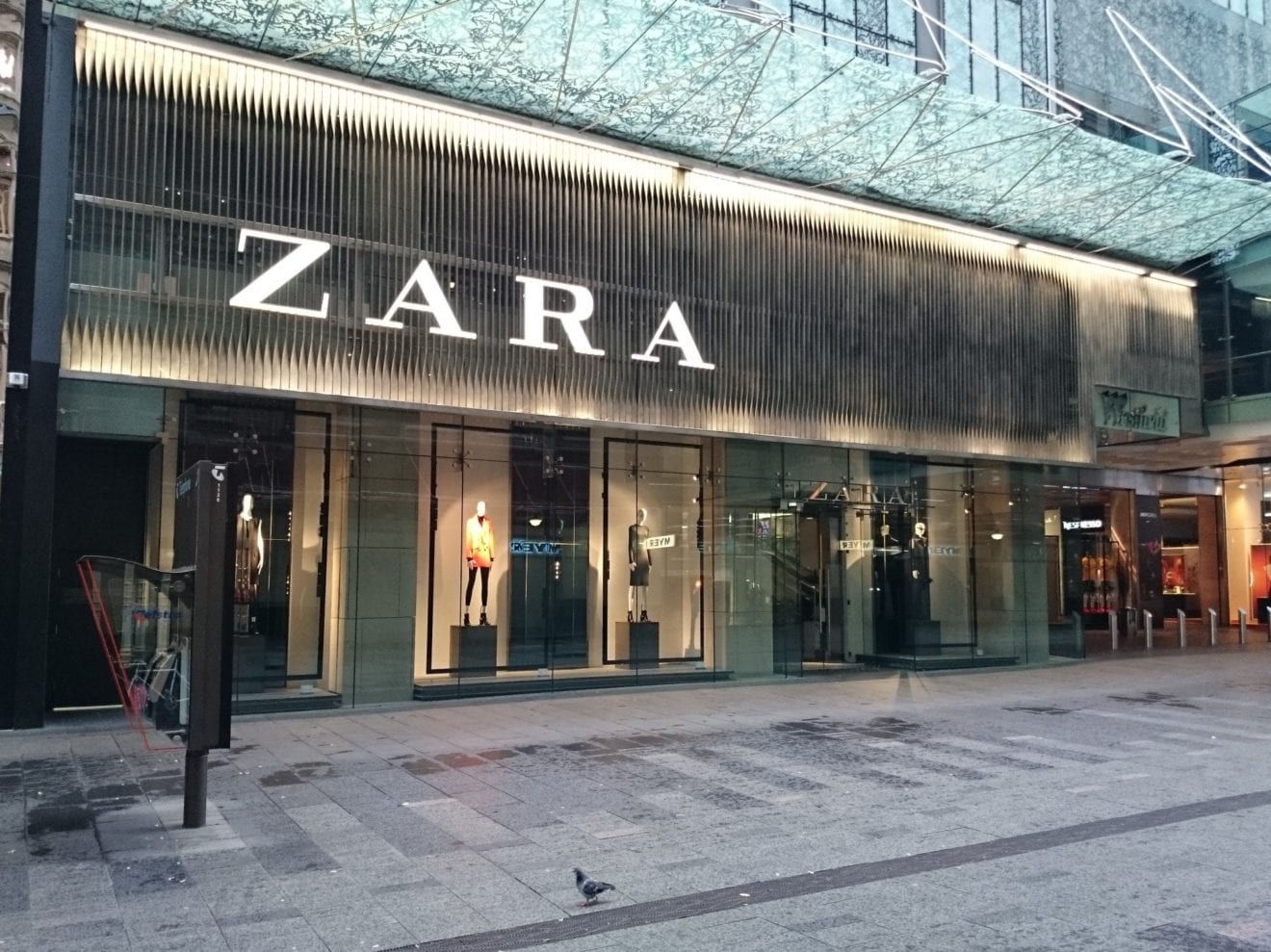
    Zara’s online store opens today, September 9, in Hong Kong. The brand also offers online shopping in Taiwan since last week.

    Zara’s online store opens today, September 9, in Hong Kong. The brand also offers online shopping in Taiwan since last week. Both websites, www.zara.com/hk and www.zara.com/tw offer online shoppers the same full range of ladies, men and kids wear as the brick and mortar stores, supplied twice a week with new merchandise.

    In both markets, items sold online display the same price as they do in Zara’s brick and mortar stores. Customers of the online platform can choose between home delivery and the pick up at the ZARA store.

    Zara launched its ecommerce service in 2010 in several European markets, following the footsteps of Zara Home, which began its online platform in 2007. Other major markets followed, such as the US, Japan, China or South Korea. Zara’s customers can currently shop online in 27 markets.

  • How Chinese language store on-line

    How Chinese language store on-line

    Spend a while with Chinese language shoppers and also you shortly realise how totally different their purchasing habits are in contrast with these of Westerners.

    As an American who has been dwelling in China for greater than 10 years, I’ve come to understand simply how important eCommerce has turn into to my fellow Shanghainese. I ask my buddies the place they discovered these cute footwear, or that imported ingredient, and the reply is all the time the identical: “I discovered it on-line”.

    Whereas in America and different nations eCommerce is primarily a way to an finish, for a rising variety of Chinese language individuals, on-line purchasing has develop into a part of a life-style that defines how they see themselves. And for me, browsing Taobao, China’s largest C2C market, has grow to be a routine exercise that permits me to refill on necessities, in addition to hard-to-find reminders of house for my rising household. Listed here are 4 of my private observations on why individuals have adopted Taobao as a part of their day by day lives:

    Personalisation.

    It’s not simply the altering graphics on Taobao’s entrance web page, harking back to Google Doodles. Frequent Taobao customers discover that their buying experiences appear to be tailor-made to their wants. That’s no coincidence. Ding Xi, director of Taobao Market’s consumer expertise division, says that cultivating a “character” is a vital function of Taobao’s platform.

    With so many extra customers on Taobao than on websites like Amazon, Ding says his division “can analyse shopper conduct and perceive its clients in a way more in depth method,” which permits the location to configure itself to go well with particular person buyers. From login, the location makes use of in depth knowledge to pick advertisements, merchandise and Taobao outlets in accordance with profiles developed for customers so that every finds what they’re in search of quicker.

    Cellular Commerce.  

    Some 300 million cellular purchasing customers (that’s virtually your complete inhabitants of the US) spent greater than US$1.6 trillion on on-line purchases in China final yr, in line with China eCommerce market analyst Enfodesk.

    At present almost one out of each two on-line purchasing transactions are finished on cellular units in China and that quantity is rising quick because it turns into more and more handy to browse and pay for items utilizing smartphones.

    Jessie Chen, a younger Shanghai skilled, says she makes use of Taobao on each pc and cellular, however provides that the cellular platform is properly suited to her wants when she’s away from her desk.

    “Once I verify my package deal supply standing, or once I’m out, I often verify on cellular,” Chen says.

    Partnerships between offline retailers like Walmart and e-payments supplier Alipay is even making it attainable to make use of telephones to pay for purchases in bodily shops.

    Individual to Individual.

    Chinese language tradition locations a excessive worth on guanxi, or private connections, and you may expertise that firsthand on Taobao.

    The location’s Aliwangwang prompt messenger is a closely used function that permits consumers and sellers to speak by way of actual time chats earlier than and after purchases. Due to cellular integration, response time is quick and conversations can transcend the constraints of 9-5 enterprise hours. Current college graduate Yashan Zhao says Aliwangwang is as a lot a social software as it’s a enterprise software.

    “Chatting or flirting with the sellers and clients service is nice enjoyable,” she says. Interactions may be unusually intimate. Many sellers tackle their potential clients as “pricey” which contributes to a extra private environment. And to ensure each buyer and vendor are glad, cost is made by means of Alipay, which ensures that no cash modifications palms until each events are completely satisfied.

    Taobao consumers take it a step additional, crowdsourcing info by way of purchaser critiques. Evaluations often function detailed feedback that embrace a number of pictures and details about how the package deal arrived, how properly the product matched the photographs within the product description, and whether or not sizes match nicely.

    “I’ll often verify the consumers’ feedback first earlier than I purchase something on Taobao,” says 20-something on-line shopper Pan Hu. “My pal’s opinion will probably be a key cause for me to purchase it or not.” 

    Window Purchasing.

    Browsing round on Taobao can reveal gadgets on the market that you simply’d by no means see on websites like Amazon or eBay. With services obtainable from automobiles and airplanes to canine walkers to farm recent produce, buying on Taobao might be pure leisure.

    “In addition to the issues I want, there are a number of issues in Taobao which are artistic,” says Pan. “It’s all the time enjoyable to dig round. There is perhaps surprises.”

    Many Chinese language internet buyers wish to browse to see what’s fashionable as an alternative of simply looking for the merchandise they need. Due to the depth of product choices, consumers additionally use Taobao and sister buying website Tmall.com to match costs with retail outlets. The websites’ vertical integration features like an enormous on-line mall, with consumers capable of effectively select between discount items and brand-name merchandise.

  • SingPost POPStation: a worldwide eCommerce mannequin

    SingPost POPStation: a worldwide eCommerce mannequin

    SingPost’s intelligent embracement of the web buying revolution is a case research different nationwide postal providers all over the world ought to take discover of.

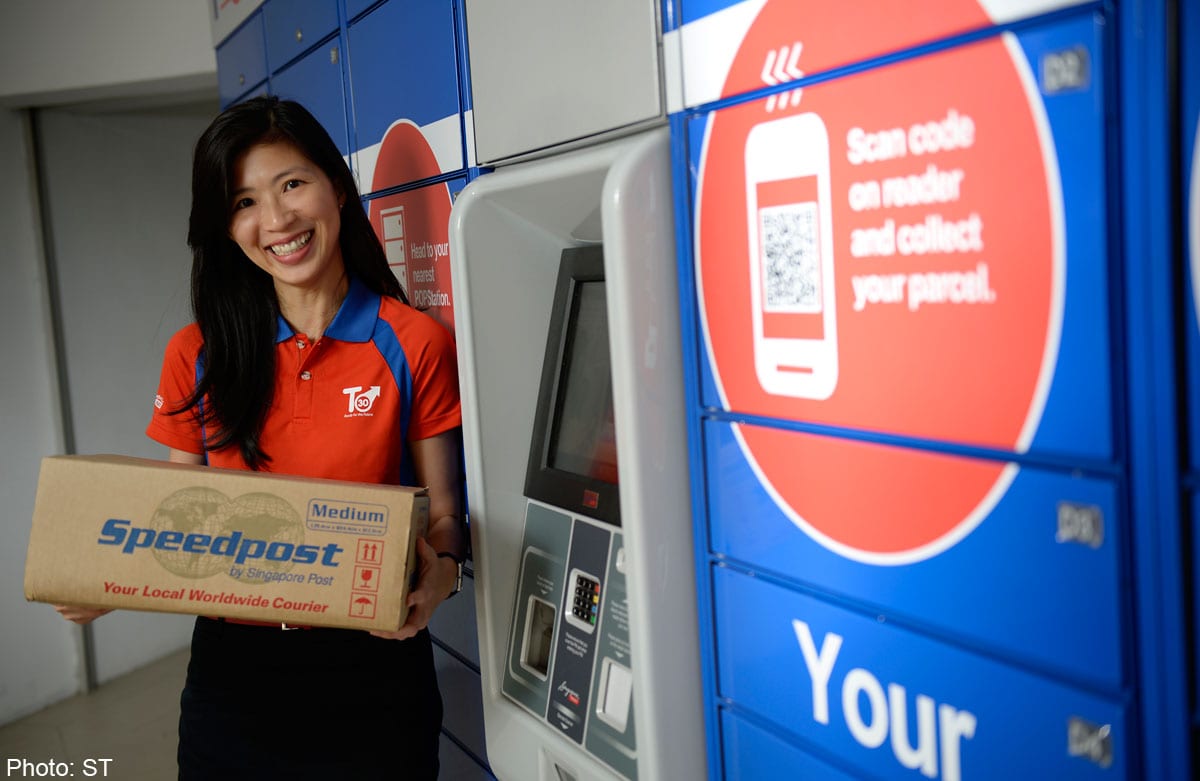
    Final week, SingPost opened its 100th POPStation – a parcel supply and assortment service which has minimize the supply time of on-line purchases by as a lot as a day, boosted comfort for patrons and distributors alike – and decreased its personal operational overheads and logistical challenges on the similar time.

    The SingPost POPStation is a supply and assortment community system which now offers a receiving level for patrons with a mean distance of not more than 2.5 km from any resident within the metropolis state.

    Primarily, POPStation is a locker supply service which does away with the necessity for patrons to should be obtainable at one place to obtain their deliveries, and for postal employees to traverse the town making private deliveries. It’s tailor made to the web retailing business, as a result of it standardises supply techniques and provides each distributors and SingPost the economies of scale of creating a lot of deliveries to a single level.

    Buyers can have their gadgets delivered to automated sensible lockers in any one of many 100 POPStations, all of that are accessible 24-seven. In addition to receiving gadgets, shoppers could make returns simply onsite as properly. Clients obtain their supply notifications and a PIN for his or her safe locker by way of smartphone.

    “POPStation is nicely fitted to city cities like Singapore because it lets the parcels do the ready, catering to busy way of life of Singaporeans on this digital age,” explains SingPost senior VP of Singapore Parcel, Lim Ann Nee, in a press release.

  • Jumei gross sales soar

    Jumei gross sales soar

    Jumei Worldwide, the Chinese language on-line retailer of magnificence merchandise, has revealed a 61.eight per cent improve in first quarter gross sales to US$250.6 million.

    Gross merchandise quantity lept 20.three per cent because of a 14.three per cent improve within the variety of lively clients to five.6 million, and an 18.four per cent improve in complete orders.

    Gross revenue was US$78.7 million, a rise of 15.2 per cent from the primary quarter of 2014. However expressed as a proportion of gross sales it decreased from 44.1 per cent to 31.four per cent, largely because of the firm’s shift in technique from pure play magnificence market to a broader merchandise supply.

    Founder and CEO Leo Chen stated the expansion price was stronger than anticipated for the primary quarter.

    “We efficiently accomplished our transition for magnificence merchandise from market gross sales to merchandise gross sales on the finish of 2014, and our new enterprise initiative – Jumei International, took off early this yr and skilled excessive progress when it comes to gross sales quantity. Jumei is at present one of many main gamers in cross-border eCommerce in China.

    “We expanded into cross-border child and maternity class in mid-April, 2015 and shortly achieved market main place on this new class in China. Our goal for 2015 is concentrated on prime line progress and enlargement into different cross-border classes as we glance to broaden our buyer base and considerably develop our order numbers. We’re assured that we will obtain our quarterly and yearly gross sales goal for 2015,” he concluded.

    For the second quarter of 2015, the corporate tasks complete internet revenues to be between US$270.1 million and US$277.eight million, representing a year-over-year progress fee of between 75 per cent and 80 per cent.