
Tag: onshore

  • HSBC Private Bank Bolsters Taiwan Onshore Market with Appointment of New Head

    HSBC Private Bank Bolsters Taiwan Onshore Market with Appointment of New Head

    HSBC Private Bank recently revealed the induction of Edward Chiu as the Market Head for Onshore Taiwan, effective from June 1, 2026. This is part of their strategy to fortify their onshore operations in Taiwan.

    Edward Chiu brings over two decades of exemplary leadership experience in wealth management and affluent banking within Taiwan to his new role. His tenure at HSBC Taiwan as the Head of Premier Elite since 2024 has been marked by significant growth. Before joining HSBC, Chiu held senior leadership positions at DBS and Citibank, where he established a strong track record in revenue growth, talent development, and client acquisition.

    Edward Chiu’s New Role

    In his new position, Chiu will spearhead the onshore private banking business in Taiwan. He will work in close association with other business lines to offer comprehensive solutions tailored to the needs of Taiwanese clients. Chiu is set to report to Kanas Chan, the Head of Private Bank for North Asia and Hong Kong, and Kevin Hu, who is the Head of International Wealth and Premier Banking in Taiwan.

    Upon the announcement of Chiu’s appointment, Kanas Chan expressed that Taiwan is a strategically crucial growth market for their business operations in North Asia. He further stated that Edward’s appointment will bolster the leadership team in Taiwan, and it underlines their dedication to augmenting their onshore presence and enhancing the client experience.

    Chan also mentioned that with Chiu’s extensive expertise and proven track record in serving High Net Worth and Ultra High Net Worth clients, he is confident that Chiu’s leadership will expedite HSBC’s growth trajectory in Taiwan and set the stage for the next phase of business success.

    Questions & Answers

    Who has HSBC appointed as the Market Head for Onshore Taiwan?
    Edward Chiu has been appointed as the Market Head for Onshore Taiwan by HSBC.

    What will be Edward Chiu’s role at HSBC?
    Edward Chiu will lead the onshore private banking business in Taiwan and collaborate with other lines of business to offer comprehensive solutions for Taiwanese clients.

    Who will Edward Chiu report to in his new role?
    Edward Chiu will report to Kanas Chan, Head of Private Bank for North Asia and Hong Kong, and Kevin Hu, Head of International Wealth and Premier Banking in Taiwan.

  • Goldman Forms Onshore Wealth Presence in Saudi Arabia

    Goldman Forms Onshore Wealth Presence in Saudi Arabia

    Goldman Sachs, headquartered in New York, is extending its international presence with the establishment of an onshore wealth management operation in Saudi Arabia.

    The banking giant is initiating an onshore private wealth management presence in Riyadh, Saudi Arabia, as per a recent announcement. To bolster this expansion, Goldman Sachs has appointed Yousef Alhozaimy and Khalid Soufi as private wealth advisors. The advisors will be based in Riyadh, and there is an active search to recruit more advisors and fill other roles.

    The One Bank Approach

    The American bank plans to utilize its “One Goldman Sachs” approach to serve its clients in Saudi Arabia holistically. This method capitalizes on the broad capabilities of the group, in cooperation with asset management, global banking, and markets colleagues.

    Rob Mullane, the co-head of private wealth management for EMEA at Goldman Sachs, expressed his delight over the expansion. He noted the dynamic nature of the Saudi Arabian economy and the sophistication of its investor base.

    He elaborated, “Our goal is to offer regional clients access to Goldman Sachs’ premier Private Wealth Management business. This will open up local and global investment opportunities and contribute to the local financial industry.”

    Questions & Answers

    What is Goldman Sachs’ latest expansion move?

    Goldman Sachs is establishing an onshore private wealth management business in Riyadh, Saudi Arabia.

    Who are the appointed advisors for the new Saudi Arabian operation?

    Yousef Alhozaimy and Khalid Soufi have been appointed as private wealth advisors for the Riyadh-based operation.

    What is the aim of this expansion according to the EMEA co-head of private wealth management at Goldman Sachs?

    Rob Mullane stated that the aim is to provide regional clients with access to Goldman Sachs’ leading Private Wealth Management business, thereby creating local and global investment opportunities and contributing to the local financial industry.

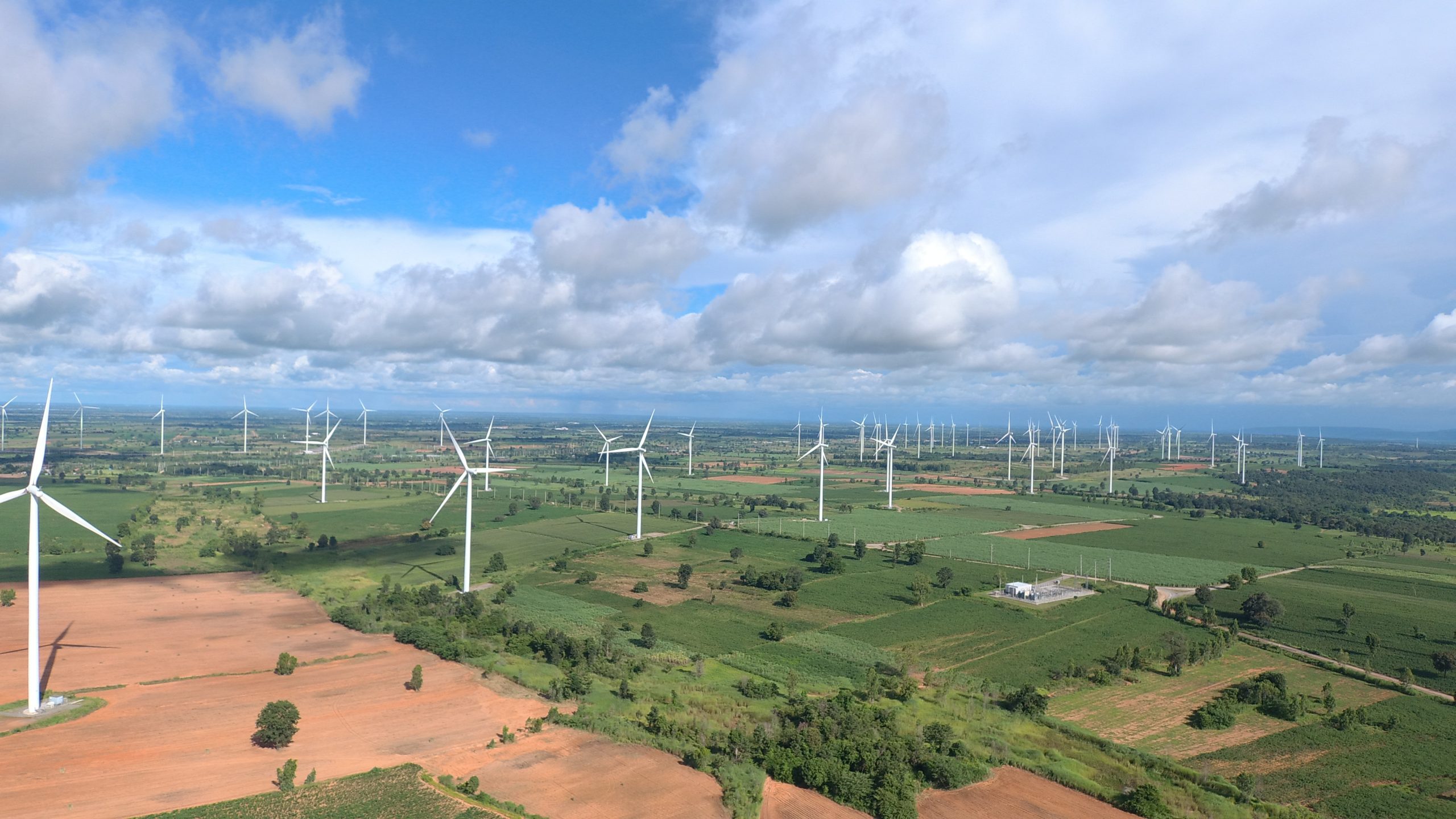
  • Onshore Wind Continues to Lead as 2024’s Most Affordable Energy Source

    Onshore Wind Continues to Lead as 2024’s Most Affordable Energy Source

    The remarkable growth of renewable energy in 2024 has a staggering backdrop: an impressive 582 gigawatts of new capacity has been added, significantly staving off fossil fuel consumption worth approximately $57 billion. According to the International Renewable Energy Agency (IRENA), onshore wind is leading the charge as the most economical option, priced at just $0.034 per kilowatt-hour (kWh), making it 53% cheaper than its most affordable fossil fuel counterparts.

    A Solar Surge in Affordability

    In the realm of solar energy, prices hit $0.043/kWh, which reflects an attractive 41% lower cost than fossil fuel alternatives, showcasing the competitive landscape of renewables. IRENA’s report, “Renewable Power Generation Costs in 2024,” emphasizes that a staggering 91% of the newly commissioned renewable projects last year outperformed any newly required fossil fuel options in terms of cost efficiency.

    Imminent Cost Trends Amid Challenges

    While the trend appears promising, the report also points out that technological advancements will likely continue to drive down costs. Yet, external challenges such as trade tariffs, raw material shortages, and shifts in manufacturing, particularly within China, could dampen progress and temporarily inflate prices.

    In Europe and North America, structural hurdles like permitting holdups and constrained grid capabilities are likely to perpetuate higher costs. In contrast, regions like Asia, Africa, and South America stand to benefit from enhanced learning curves and substantial renewable potential, paving the way for more pronounced cost reductions.

    Investment Stability as a Key Factor

    IRENA emphasizes the critical role of stable and predictable revenue frameworks to mitigate investment risks and attract the necessary capital. Despite the declining costs, new challenges have arisen—mainly concerning integration costs for renewable energy systems. Increasingly, wind and solar projects face delays due to bottlenecks in grid connections, sluggish permitting processes, and costly local supply chains.

    Financing remains a pivotal factor influencing project feasibility. In many developing Global South countries, high capital costs, exacerbated by macroeconomic conditions and perceived investment risk, significantly inflate the levelized cost of electricity (LCOE) for renewables.

    Technological Advances Fueling Future Growth

    However, the future looks promising as technological innovations beyond just energy generation continue to enhance the viability of renewables. Battery energy storage systems (BESS) have plummeted in cost by 93% since 2010, now sitting at $192/kWh for utility-scale applications, thanks to improved materials and streamlined manufacturing processes. Who knew that battery prices would fall faster than your last ability to remember your online passwords?

    Moreover, the advent of artificial intelligence (AI) is revolutionizing asset performance and grid responsiveness. Despite these advancements, the digital infrastructure and flexibility required for expansion and modernization present ongoing challenges, particularly in emerging markets where further investment is critical to unlock the full potential of renewable energy.

    Questions & Answers

    What is the significance of the 582 gigawatts of new renewable capacity added in 2024?
    The addition of 582 gigawatts of renewable capacity in 2024 not only avoided fossil fuel consumption valued at approximately $57 billion, but it also marks a significant shift towards more sustainable energy sources that are outperforming traditional fossil fuels economically.

    Which renewable energy source is currently the most affordable?
    Onshore wind is recognized as the most affordable renewable energy source, priced at $0.034 per kilowatt-hour, making it considerably cheaper than its fossil fuel counterparts.

    What challenges could potentially disrupt the decreasing costs of renewables?
    External challenges such as trade tariffs, raw material shortages, and changes in manufacturing practices pose risks that might temporarily elevate costs, particularly in established markets like Europe and North America.