
Tag: Opportunity

  • Social Media Fuels Australias Product Discovery: A $12 Billion Opportunity by 2030

    Social Media Fuels Australias Product Discovery: A $12 Billion Opportunity by 2030

    Research shows that social media is increasingly shaping consumer behavior in Australia, with 60% of consumers taking some form of action after viewing a product on these platforms. These findings come from the 2026 Marketplace Consumer Report by Pattern.

    The Rise of Social Commerce

    According to Pattern Australia’s Managing Director, Merline McGregor, the country’s social commerce market is slated to grow by an estimated 20 percent annually. It’s projected to reach a staggering 12 billion dollars by 2030. McGregor emphasizes the opportunities this growth presents, urging brands to adjust their strategies accordingly in order to maintain relevance and market share.

    Interestingly, consumers don’t rush to purchase a product immediately after discovering it on social media. Instead, the majority (60 percent) opt to search for additional information on Google. Half of them visit the brand or retailer’s official website, while 41 percent check out the product on Amazon. This behavior indicates that while social media often initiates product discovery, the actual purchasing process unfolds across various channels.

    Over a third of consumers finalize their purchases on the brand or retailer’s own website, 28 percent opt for Amazon, and 19 percent prefer to buy in-store. This suggests that while social media is instrumental in generating demand, transactions are typically completed through other retail channels.

    Influence of Content Creators and Trust

    The impact of content creators on consumer behavior is also evident, although it wanes with age. Overall, 38 percent of consumers are more likely to purchase a product endorsed by an influencer they follow. This percentage soars to 60 among consumers aged 18 to 34 but dips to a mere 8 percent for those 65 years and older.

    McGregor advises brands to transition from sporadic influencer campaigns to sustained, creator-led content strategies. Trust continues to be a significant factor in determining where consumers decide to complete a transaction. Twenty-six percent of Australians save products for further research, and a quarter seek recommendations from friends or family before making a purchase. Additionally, 42 percent choose to shop with retailers they have previously patronized due to their trusted customer service and returns policies.

    McGregor concludes that the findings confirm consumers’ tendency to cross-verify what they see on social media before making a purchase. This is done by conducting further research, seeking recommendations, or purchasing from retailers they are already familiar with.

    Questions & Answers

    What role does social media play in consumer behavior?
    It plays a significant role in product discovery. Around 60% of consumers take some form of action after seeing a product on social media.

    What is the projected growth of Australia’s social commerce market?
    The social commerce market in Australia is expected to grow by approximately 20% annually, reaching around $12 billion by 2030.

    How do consumers respond after finding a product on social media?
    Most consumers don’t buy the product immediately. Instead, they search for more information online, visit the brand’s website, or check the product on Amazon.

  • Awakening giant: E-commerce in China

    Awakening giant: E-commerce in China

    With the largest population and the most Internet users of any country in the world and the rise of its middle class, it is not surprising that China is also the world’s largest and fastest-growing e-commerce market. However, capitalizing on this huge market is becoming increasingly difficult for a variety of reasons.

    Recently, McKinsey, the consulting giant, released a new report on this burgeoning market that holds “enormous potential”.

    A growing market

    Two years ago, China’s online retail market overtook the United States’ online retail market. In 2015, China’s online retail market was approximately USD $630 billion of sales, the world’s largest and nearly 80 percent bigger than the US’.

    E-commerce in China accounts for 13.5 percent of all of its retail spending.  Although in the near term Chinese e-commerce is forecast to increase significantly, McKinsey’s survey shows that companies need to prepare for major changes in the Chinese market.

    Major changes coming

    From new customer segments to new product categories and sales channels, China’s online market is set for huge future growth. Representing 30 percent of total retail sales, the categories of consumer electronics and small appliances are well-established online categories, as is apparel.

    On the other hand, Food (including packaged and fresh food), is a category that faces more challenges and opportunities. Though 50 percent of respondents have purchased some food online, online spending represents only five percent of the total food spending.

    The category of food holds promise for companies that can attract consumers to do their regular grocery shopping online stand to capture a lot of business.

    Online-to-Offline (O2O)

    Consumers in China are accustomed to buying through O2O services companies—they are attracted to the website or app, then buy offline. The top sectors for O2O seem to be travel, dining, and mobility, where respondents who use O2O vendors report spending much more than they did before.

    Huge Opportunities

    McKinsey’s survey of China’s digital consumers tells us that growth in e-commerce and O2O is shifting to new areas. “Succeeding in this market is a matter of keeping pace with changes that are playing out across geographies, product categories, and channels.”

    The opportunities are huge for companies willing to look closely into these aspects of the market to find them, then move quickly to take advantage of them before their competitors can.

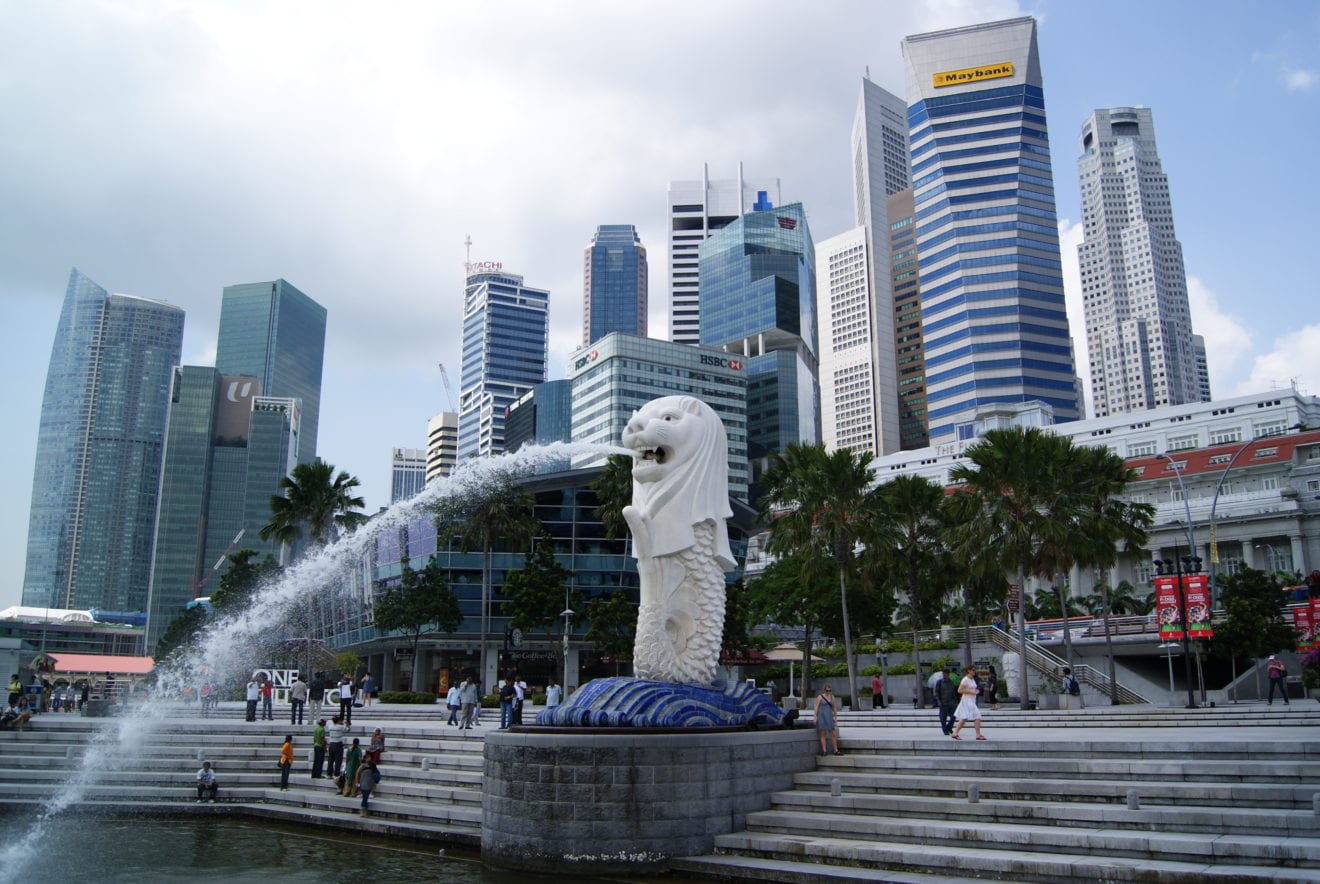
  • Singapore firms capitalise on opportunity in China market

    Singapore firms capitalise on opportunity in China market

    China’s economic growth may have been at its weakest rate in a quarter of a century last year, but some Singaporean firms with operations there are finding pockets of opportunity as the world’s No 2 economy matures from one based on industry to one fuelled by consumption.

    Among them, warehouse operator Global Logistic Properties (GLP) yesterday reported a 64 per cent rise in third-quarter net profit to US$184 million (S$257.4 million), helped by a strong performance from its China operations, while CapitaLand Retail China Trust (CRCT) — the first China shopping mall real estate investment trust in Singapore — said its distributable income for the quarter ended December rose 6.5 per cent to S$21.8 million, highlighting China’s growing urban population and rising retail sales.

    Singapore-headquartered GLP, which operates warehouses in China, Japan, Brazil and the United States, said its China earnings were up 50 per cent on higher asset values, growth in rent, new leases and renewed lease contracts.

    Analysts expect the company to continue to benefit from demand for logistics facilities due to booming e-commerce, as well as the Chinese government’s attempts to guide its economy to a more sustainable path led by domestic consumption.

    “Within China, the domestic economy is being stoked by increasing urbanisation. There are geographies within the country that are growing well above the national average, particularly in Tier 2 and Tier 3 cities,” said Barclays senior regional economist Leong Wai Ho. “Logistics is one area of growth there. Logistics hubs have moved westwards. There’s been continuous investment in the sector itself,” he added.

    China’s growth has been steadily falling for the past half-decade as Beijing attempts to wean the economy away from exports and infrastructure investment and towards domestic consumption and services. The economy grew 6.9 per cent last year, its slowest expansion in 25 years.

    Chinese equities are slumping, too — the Shanghai Composite Index is down about 21.5 per cent this year. The yuan has weakened steadily since Beijing devalued the currency in August.

    The country on Wednesday announced an economic growth target of 6.5 per cent to 7 per cent this year.

    But the Chinese stock-market swings and capital outflows do not reflect trends in the economy, which is still expanding well amid efforts to rebalance growth, according to the head of the European Bank for Reconstruction and Development (EBRD).

    “The stock market issue, the currency issue in China, is a bit divorced actually from economic issues,” the EBRD’s president, Suma Chakrabarti, told Bloomberg in an interview on Monday. While the advance in China’s gross domestic product has slowed, 6.5 per cent “growth in the world’s second-biggest economy is pretty good actually for the rest of us”.

  • Coca-Cola to cut 1,600-1,800 jobs globally

    Coca-Cola to cut 1,600-1,800 jobs globally

    Coca-Cola Co. is axing at least 1,600 white-collar jobs globally as part of a cost-cutting push in response to sluggish soda sales.

    To view the full article (note: you must be a Wall Street Journal Online subscriber), visitThe Wall Street Journal Online.

  • Urban Ladder to hire 1,400 more this year

    Urban Ladder to hire 1,400 more this year

    Online furniture vendor Urban Ladder will add 1,400 employees to its workforce this year to beef up its rapid expansion plan. The Bengaluru-based company’s current headcount is 600 across seven cities. The company is also planning to expand its presence to 25 more cities, including Coimbatore, Mysore, Kolkata and Vizag, by 2015-end and to add more product lines and categories to its existing portfolio.