Tag: optical

  • EssilorLuxottica Expands Southeast Asia Presence with Strategic Stake in Thai Optical Powerhouse Top Charoen

    EssilorLuxottica Expands Southeast Asia Presence with Strategic Stake in Thai Optical Powerhouse Top Charoen

    Global eyewear conglomerate EssilorLuxottica has recently acquired a piece of the pie in Thailand’s optical market, Top Charoen. This move is part of EssilorLuxottica’s expansion plan in Southeast Asia, reinforcing its presence in one of the fastest-growing regions for the eyewear industry.

    Partnership At Its Best

    The financial particulars of the deal were kept under wraps. However, the fusion of the world’s leading eyewear group, EssilorLuxottica, with Top Charoen, one of the largest optical chains in Thailand boasting over 2000 stores nationwide, is noteworthy. This partnership is a result of a long-standing commercial relationship between the two companies. The acquisition strengthens this bond and provides EssilorLuxottica with a deep penetration into Thailand’s retail distribution, a strategic move as global eyewear companies increasingly focus on expanding in the rapidly growing Asian markets.

    Aiming High

    Francesco Milleri, the Chairman and CEO, and Paul du Saillant, Deputy CEO at EssilorLuxottica, commented on the partnership. They expressed that their collaboration with Top Charoen is set to bolster their existing dominance in one of Asia’s most significant countries. The partnership aims to elevate vision care standards and foster growth in the emerging wearable category across the region, they added.

    Moreover, the company leadership is committed to prioritizing their customers’ needs, providing high-quality, innovative vision care products and services. With their combined strengths, they plan to drive awareness and take measures to address the increasing visual health needs of Asia.

    A Brief About Top Charoen

    Established in 1947 in Saraburi, Top Charoen has flourished into a nationwide network operating under various banners. The company has an array of brands like Top Charoen, Luxoptic, Eye Class, Eye Bright, Eye Sport, Big C Optical, Robinson Optical, and Beautiful Optic. In addition to its physical stores, Top Charoen also has a strong e-commerce presence through its own platform and local marketplaces.

    Questions & Answers

    What is the significance of EssilorLuxottica’s stake in Top Charoen?
    This acquisition provides EssilorLuxottica a deep penetration into Thailand’s retail distribution, a strategic move as global eyewear companies increasingly focus on expanding in the rapidly growing Asian markets.

    How will this partnership benefit the eyewear industry in Asia?
    The collaboration aims to elevate vision care standards and foster growth in the emerging wearable category across the region.

    What are some of the brands under Top Charoen?
    Top Charoen operates under various banners such as Top Charoen, Luxoptic, Eye Class, Eye Bright, Eye Sport, Big C Optical, Robinson Optical, and Beautiful Optic.

  • Revolutionizing Telecom Growth: NEC’s Vision for AI-Extended Society through Optical Networks

    Revolutionizing Telecom Growth: NEC’s Vision for AI-Extended Society through Optical Networks

    At the 19th edition of the Telecom Review Leaders’ Summit, the topic of discussion was ‘Tech Intelligence Beyond Mobility’. This event convened in Dubai, UAE, from December 10-11, 2025. One of the key speakers was Kageshima Hideo, Director of NEC’s Open Optical Transport Network Solution. In his presentation titled ‘Redefining Optical Networks as Catalysts for Telecom Growth’, Hideo shed light on the pivotal role optical innovation will play in propelling an AI-extended society by 2030.

    NEC’s Vision for the Future

    Hideo initiated his address by outlining NEC’s long-term vision, which revolves around its corporate purpose and five societal aspirations for the year 2030. These aspirations encompass the environment, society, and human life. At the core of this vision lies the integration of AI and robotics as true human partners. NEC envisions a future where AI collaborates seamlessly with humans and robotics offer tangible real-world solutions. These technologies are anticipated to substantially extend human potential, bringing about increases in productivity, intelligence, and the quality of life.

    Progression Towards an AI-Extended Society

    Hideo traced the progression towards this future through three distinct stages. The initial stage, 2025, saw the rise of agentic AI, which began diminishing the barriers between humans and machines and launched standalone AI data centers that largely operate independently.

    By 2027, AI is expected to permeate everyday work and life, backed by multi-AI data center networking and site-to-site optical interconnections, thereby dramatically increasing connection points.

    By the year 2030, it is predicted that AI will fully amplify human potential through accelerated innovation. This will be facilitated by edge-AI networking, thing-to-thing optical connections, and a surge in network endpoints, leading to a profound evolution in AI networks.

    Optical Networks by 2030: Convergence and Intelligence

    Hideo painted a picture of a future characterized by a blend of computing and network convergence through the concept of ‘optical everywhere.’ Advancements like wavelength optimization, dynamic path provisioning, and on-demand optical networking are expected to maximize resource utilization while offering unparalleled flexibility.

    This view aligns with the Innovative Optical and Wireless Network (IOWN) concept, which rests on three pillars: the all-photonics network, a cognitive foundation, and digital twin technologies. Collectively, these will offer ultra-low latency, high-capacity, and intelligent network operations to cater to the demands of AI.

    Open Optical Networks for the AI Era

    NEC’s answer to these forthcoming challenges is its Open Optical Network Solution. This new-generation data center interconnect model is built for openness and sustainability in the AI era. The strategy lays emphasis on disaggregation and modularity, enabling operators to scale as per their requirements, thereby boosting cost efficiency and agility.

    Key components include multi-vendor whitebox transponders to alleviate supply chain risks, comprehensive multi-vendor system integration, and world-first Linux-based network operating systems that provide server-like operability. Features such as zero-touch provisioning, programmability via TIP MUST controllers, and integrated server-network management aim to streamline operations while optimizing performance.

    Sustainability by Design

    Sustainability was another cornerstone of Hideo’s presentation. NEC’s disaggregated solutions are engineered to support eco-friendly AI data centers, especially in scenarios constrained by power and space. Hardware longevity through modular upgrades and network and power optimization services were underscored as key to minimizing environmental impact while attending to growing AI workloads.

    Hideo concluded his keynote by reinforcing NEC’s strategy through real-world deployments. With global centers of excellence and extensive expertise in multi-vendor, multi-layer integration, NEC is dedicated to continuing the advancement of optical networks to amplify human potential in the forthcoming AI-driven decade.

    Questions & Answers

    What is NEC’s Open Optical Network Solution?
    NEC’s Open Optical Network Solution is a new-generation data center interconnect model designed for openness and sustainability in the AI era. It emphasizes disaggregation and modularity, allowing operators to scale as they grow, therefore improving cost efficiency and agility.

    What are the three stages of progression towards an AI-extended society as proposed by NEC?
    NEC proposes three stages towards an AI-extended society: the rise of agentic AI in 2025, AI becoming pervasive in everyday life by 2027, and AI fully enhancing human potential by 2030 through accelerated innovation.

    How does NEC’s vision for optical networks align with the IOWN concept?
    NEC’s vision aligns with the IOWN concept, which is built on three pillars: the all-photonics network, a cognitive foundation, and digital twin technologies. These elements together aim to provide ultra-low latency, high-capacity, and intelligent network operations to meet AI-driven demands.

  • PTCL engages Nokia to deploy 100G OTN

    PTCL engages Nokia to deploy 100G OTN

    Pakistan’s PTCL has deployed a new 100G optical transport network in partnership with Nokia.

    The Nokia DWDM network utilizes PTCL’s extensive fiber footprint to provide multipath redundancy.

    It will be instantly upgradeable to 200G and 400G per wavelength as demand dictates, and the software-defined network (SDN) capabilities of the solution will allow the operator to increase network capacity and efficiency.

    The network also uses set-partition quadrature phase shift keying (SP QPSK) modulation technology to allow PTCL to cover very long distance links with improved signal-to-noise tolerance and latency.

    Finally, the solution has been designed to allow for the easier launch of services based on ROADM (reconfigurable optical add-drop multiplexer) technology.

    “We are committed to providing a world class network experience to our subscribers and this deployment is a significant step in that direction,” PTCL CTIO Saad M Waraich said.

    “Nokia’s state of the art optical network technology and their expertise will help us to differentiate our portfolio as we provide our business and consumer subscribers with faster and more reliable broadband and carrier services.”

    Nokia this week also announced it has secured a five-year contract to expand the 4G network capacity and coverage of another Pakistani operator, Jazz.

  • HKTDC Optical Fair Opens with Record Exhibitors

    HKTDC Optical Fair Opens with Record Exhibitors

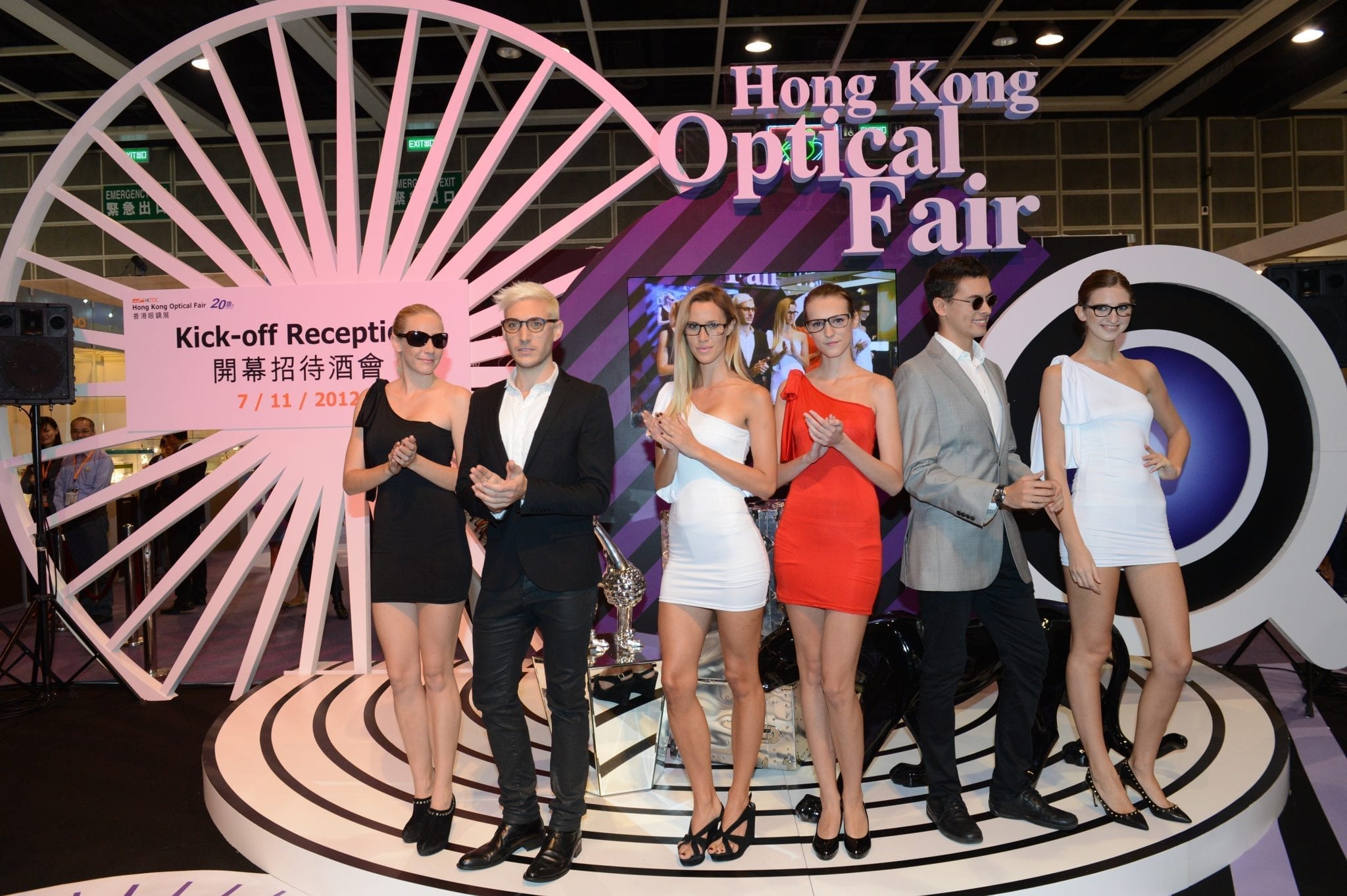
    The HKTDC Hong Kong Optical Fair 2016 started its three-day run (9-11 November) today at the Hong Kong Convention and Exhibition Centre. A record of more than 780 exhibitors from 29 countries and regions are taking part in the fair, including new exhibitors from Indonesia, Poland and South Africa, providing a comprehensive trading platform for the industry. The show, which is in its 24th edition, is organised by the Hong Kong Trade Development Council (HKTDC) and co-organised by the Hong Kong Optical Manufacturers Association (HKOMA).

    To create more business opportunities for the exhibitors, the HKTDC has organised 72 buying missions from 47 countries and regions, comprising more than 3,000 companies. Participants hail from both mature and emerging markets, including The Eyecare Company and George & Matilda Eyecare from Australia, V.P.I. Canada Ltd from Canada, EXTEL CZ s.r.o. from the Czech Republic, Oriental Vision and 5lux.com from the Chinese mainland, Inter House Co. Ltd. from Japan, Eyespec2U Optical Centre from Malaysia, Empreus International from the Philippines, and INDO Optical, S.L.U. from Spain.

    Eye care and high-tech eyewear

    In today’s digital era, people are frequently using digital devices and the blue light emitted from these screens can be harmful to eyes, especially for youngsters. Responding to consumer demand, the Optical Fair is featuring protective lenses, including SWISSCOAT’s lens with blue-light filter, which can minimise eye fatigue while enhancing visual clarity.

    High-tech solutions continue to be a highlight at this year’s fair. With 3D printing technology maturing, a number of eyewear brands are leveraging the technology to design and manufacture spectacle frames. These include renowned German brands ic! berlin and Morgenrot, which are creating sophisticated, refined designs using 3D printing technology.

    Augmented reality (AR) is also seen in the application of eyewear-related products. A Hong Kong company is presenting its Faceme AR Glasses that enable users to “try on” virtual glasses by simply looking at the screen. Meanwhile, Austrian brand Swarovski Optik has designed lightweight binoculars for outdoor enthusiasts. Users can connect a smartphone to the product to easily see and record images.

    Famous names galore at Brand Name Gallery

    This year’s Optical Fair has nine product zones featuring a medley of eyewear products. The Brand Name Gallery returns with more than 220 top brands, including CONVERSE, EVISU, JAEGER, Markus-t, Miga, MINIMA, MUZIK, MYKITA, QUIKSILVER, Roxy, Superdry and Tonysame. Local artiste Luisa Leitao is displaying her eponymous brand’s eyewear products while Korean brand Sodamon is featuring its sunglasses collection that won the Grand Prize of the Good Design Award in both Korea and Australia.

    Other highlights include:

    – BIG HORN (Booth: GH-F12) is showcasing its large, circular-rimmed frames that were inspired by the angels and owls of Greek mythology. The Chinese traditional graphic pattern on the lens and bridge is a mix of eastern and western cultures. The design won the International Design Award (IDA) 2015 in the United States.

    – Korean brand MUZIK (Booth: GH-E06) is releasing its latest IMAGINE collection, paying homage to the legendary musician John Lennon. The collection features circular rims and bold cuts on the upper part of the frame.

    – Well-known German brand KUBORAUM (Booth: GH-M04) is featuring its latest collection, The Ceremony Capsule. Designer Livio Graziottin has hand-painted different exotic floral patterns for these classy sunglasses. Only a few dozen pairs of each model are available.

    – Italian brand MODO (Booth: GH-K04) is famed for producing eco eyewear with recycled and bio-based material, innovatively combining green elements with fashionable eyewear designs. The brand has even developed a patented “dual hinge” design for lightweight frames. The brand also advocates donating unwanted eyewear and runs an environmental programme to plant a tree for every frame sold.

    A number of eyewear parades are being staged during the fair, with models showcasing the latest collections of trendy eyewear brands. The winning and finalist works of the 18th Hong Kong Eyewear Design Competition are also exhibited at Hall 1D, displaying Hong Kong’s design prowess to international buyers. Buyers can also cast their votes to select the winner of the Latest Look Award.

    Other product zones at the fair display the latest eyewear and equipment in different categories, including sporting & professional eyewear, kids’ eyewear, reading glasses, eyewear accessories and optometric instruments & machinery.

    Conference and seminars examine industry trends

    A number of seminars will be held during the Optical Fair to help industry professionals gather and exchange global market intelligence. GfK, the renowned German market research institute, returns to the fair to speak on topic “How the Global Optics Industry Reacts to the Economic Development and Its Latest Trend”. Buyer forum on business opportunities in emerging markets will also be held.

    Tomorrow (10 November), the 14th Hong Kong Optometric Conference features experts from Hong Kong, Australia, Canada and the US to discuss the Advancement in Ophthalmic Treatments. Speakers include Professor Larry Abel, Associate Professor, Department of Optometry & Vision Sciences, The University of Melbourne and Dr Geunyoung Yoon, Professor, Department of Ophthalmology, University of Rochester in the US. A variety of topics will be examined, including “Effect of Myopia Control Lenses”, “Recent Development in Refractive Surgeries” and “Impact of 3D Printing in Spectacle Frame Design”.

    Hong Kong is a key trading platform for the eyewear industry, and local manufacturers continually strive to improve the quality and design of products for export. In the first nine months of 2016, Hong Kong’s total exports of spectacles, lenses and frames exceeded HK$15 billion, up 37 per cent year-on-year. Hong Kong’s top export markets are the US, Italy and the Chinese mainland. Exports to ASEAN have shown strong growth this year. These figures indicate the vibrant momentum of the local eyewear industry.

  • Korean bank deploys optical encryption from Ciena

    Korean bank deploys optical encryption from Ciena

    KB Kookmin Bank, Korea’s largest financial institution, is deploying Ciena’s encryption capabilities for secure, high-capacity data centre interconnect (DCI), in a bid to better protect customer data.

    The encryption solution protects KB Kookmin Bank’s data transmissions from its offices and enables secure data centre interconnect (DCI) between its data centers.

    Several security solutions exist to protect data at-rest that secure servers, databases, routers, and switches by managing user access and credentialing. However, large amounts of critical data are in-flight and transported beyond the walls of the data center, traversing a larger, wide area network. Ciena’s optical-layer encryption solution gives KB Kookmin Bank an additional level of protection and protects data in flight as it leaves the private cloud and is transported between locations and data centers. Ciena’s solution adheres to local and international regulations and legislations, including the Federal Information Processing Standard (FIPS) 140-2 encryption certification.

    Additionally, Ciena’s software-based MyCryptoTool gives KB Kookmin Bank a dedicated management user portal that allows end-users to remotely control all of the security parameters associated with their encrypted services.

    “We are committed to providing the best possible service to our customers, which includes data protection and security. Ciena’s optical encryption solution provides an extra layer of protection and gives our customers the confidence to know their personal information is safe,” said Kim Ki-Hyun, CIO of KB Kookmin Bank.