Retail News CRM

Tag: oracle

  • SES expands multi-cloud offerings with Oracle Cloud Infrastructure FastConnect

    SES expands multi-cloud offerings with Oracle Cloud Infrastructure FastConnect

    SES will be offering private, dedicated connectivity to Oracle Cloud through Oracle Cloud Infrastructure (OCI) FastConnect. Customers can harness the power of Oracle Cloud locally, including Oracle Autonomous Database, to unlock innovation and drive business growth.

    The direct access to Oracle Cloud as a FastConnect partner is part of SES’s strategy of offering customers high-performance, low-latency and secure connections to the leading public cloud providers.

    SES will be using its Cloud Direct service to connect customers to Oracle Cloud applications and services over its network of medium earth orbit (MEO) and geostationary (GEO) satellites – a key advantage for enterprises, the government and other customers who require low-latency and secure connections in remote, rural or other locations with limited network options. The Cloud Direct service will also be available on SES’s next-generation MEO constellation, O3b mPOWER, launching this year. O3b mPOWER will provide SES customers with satellite-enabled cloud connection, supporting multi-gigabit services that adapt dynamically to network demand.

    With OCI, customers benefit from best-in-class security, consistent high performance, simple predictable pricing, and the tools and expertise needed to bring enterprise workloads to the cloud quickly and efficiently.

    “As the only multi-orbit satellite provider with direct cloud connections to four of the top five public cloud providers, SES empowers our customers with the flexibility and options to optimize their cloud services for reach, latency, performance or other business requirements,” said Sergy Mummert, senior vice president, sales global cloud & strategic partnerships at SES. “The launch of O3b mPOWER this year will massively scale the intelligent service automation and flexibility of our Cloud Direct service and help with new cloud capabilities for customers around the world.”

    OCI’s extensive network of more than 70 FastConnect global and regional partners offer customers dedicated connectivity to Oracle Cloud regions and OCI services – providing customers with the best options anywhere in the world.

    Specifically architected to meet the needs of the enterprise, Oracle Cloud is a next-generation cloud that delivers powerful compute and networking performance and a comprehensive portfolio of infrastructure and platform cloud services from application development and business analytics to data management, integration, security, artificial intelligence (AI), and blockchain. With unique architecture and capabilities, Oracle Cloud delivers unmatched security, performance, and cost savings. Oracle Cloud is the only cloud built to run Oracle Autonomous Database, the industry’s first and only self-driving database.


  • Trump claims to have a deal in concept with Oracle, Walmart, and TikTok

    Trump claims to have a deal in concept with Oracle, Walmart, and TikTok

    U.S. President Donald Trump told reporters gathering to see him off to a campaign rally, that he has approved “in concept” Oracle’s bid for the U.S. operations of TikTok. The short-form video app, owned by China’s ByteDance, has been accused by the Trump administration of being a national security threat because it could pass along personal data from U.S. customers to the Communist Chinese government in Beijing. Trump signed an executive order that forced ByteDance to divest itself of TikTok’s U.S. operations this coming Monday, September 21st

    Last week, after several U.S. companies had expressed interest in TikTok such as Microsoft, Oracle, and Walmart, Oracle’s plan was given the nod by ByteDance. However, the administration felt that the plan didn’t go far enough to protect them better than 50 million active U.S. TikTok users. As a result, the U.S. said that it would ban downloads of TikTok in the states starting on Monday morning. Those who have already downloaded the app before Monday would be allowed to continue using it until November 12th unless a deal was approved by the U.S. But everything might have changed following this afternoon’s announcement. What isn’t clear at this point is what the president means when he says that a deal has been approved “in concept.”

    While things are still up in the air at this hour, Trump says that the deal will also include Walmart and hinted that TikTok would be “totally controlled” by Oracle and Walmart, something that he repeated several times this afternoon. “I have given the deal my blessing,” the president said. “If they get it done, that’s great. If they don’t, that’s okay, too.” Previously, the president wanted the companies involved in acquiring TikTok’s U.S. operations to make a payment to the U.S. Treasury. But such a deal would be illegal, something that Trump was not aware of. Still, the president spoke with Oracle Chairman Larry Ellison and Walmart Inc. Chief Executive Officer Doug McMillon on Friday, telling both executives that he still wanted a cash payout for the U.S. government.

    A new company called TikTok Global will be created, according to those in the know, and it will help create a $5 billion fund for U.S. education. Discussing this contribution, Trump stated that “They’re going to be setting up a very large fund. That’s their contribution that I’ve been asking for.” The new TikTok Global will probably be headquartered in Texas and 25,000 people will be hired according to the president. But that figure could not be independently verified. Facebook had 45,000 employees last year while Twitter had 4,900 employees. There is speculation that TikTok Global will hold an IPO and go public within the next year. The president said about TikTok Global, “It will have nothing to do with China, it’ll be totally secure, that’ll be part of the deal. All of the control is WalMart and Oracle, two great American companies.”

    ByteDance will retain TikTok’s algorithm which is used to decide which videos are available to certain TikTok users. China recently announced a regulation that prevents other countries from using any algorithm created in the country. Oracle will get full access to review TikTok’s source code and any updates to make sure that there are no backdoors involved that could be used to steal U.S. subscribers’ personal data.

    TikTok has been a popular destination for teens and others looking to pass time during the pandemic. Users can create 15 or 60-second videos showing lip-synching, dancing, pranks, protests, and more. The app has been installed over two billion times from the App Store and the Google Play Store.

  • TikTok picks Oracle over Microsoft as possible candidate

    TikTok picks Oracle over Microsoft as possible candidate

    With Tuesday’s deadline forcing TikTok parent company ByteDance to divest itself of the short-form app’s U.S. operations or get banned in the states, Reuters reports that a group led by U.S. tech firm Oracle has been chosen by TikTok to buy the U.S. version of the very popular app for an undisclosed amount. Just before Oracle was announced as the winner of the contest, Microsoft said that it had been informed by ByteDance that TikTok would not be sold to the software giant. The company was originally the front runner in a deal that was estimated to be valued at $20 billion dollars and up.

    Walmart was also expected to be part of the Microsoft bid and it is unclear whether the retailer still has an interest in TikTok. In a statement announcing that it is bowing out of the battle for the U.S. operations of TikTok, Microsoft said, “We are confident our proposal would have been good for TikTok’s users while protecting national security interests. To do this, we would have made significant changes to ensure the service met the highest standards for security, privacy, online safety, and combatting disinformation, and we made these principles clear in our August statement. We look forward to seeing how the service evolves in these important areas.”

    TikTok, with over 2 billion installs worldwide, has 100 million monthly users in the states, up from 11 million in early 2018. The app, which has a large community of teenage users, shows community created videos of 15 or 60 seconds in length. Content includes lip-syncing, pranks, dancing, and more. During the pandemic, when teens and others were locked up in their homes, TikTok becomes even more popular than ever. And that popularity got the Trump administration worries that the Communist Chinese government could obtain personal information from TikTok users and send it to Beijing. ByteDance says that the U.S.operations of TikTok have only two servers in operation with one in the states and the other in Singapore. The next step requires the Committee on Foreign Investment in the U.S. (CFIUS) and the White House to get approval for the deal. People familiar with the transaction say that it should satisfy fears that some participants had about the security of data obtained by TikTok in the U.S.

    China almost threw a last-second issue into the deal when the Chinese government added new export restrictions that banned the U.S. from receiving certain information created by artificial intelligence. These algorithms are used to determine which videos TikTok users get to see and are considered the app’s “secret sauce’” they were believed to be part of the negotiations of the deal. President Trump announced an executive order back on August 6th, giving ByteDance 45 days to divest TikTok before demanding that its U.S. operations be banned. The White House considers the app to be a national security threat.

    Microsoft, as we mentioned earlier, was originally the front runner and had decided to take on Walmart as a partner. The original plan called for both to acquire TikTok’s operations in the U.S. along with those in Australia, Canada, and New Zealand. For the deal to close, ByteDance will need to get approval from both the U.S. and Chinese governments.

    This isn’t the first time that the U.S. government has gotten itself involved in a messy takeover battle involving China. In March 2018, the president blocked Singapore chipmaker Broadcom from purchasing Snapdragon chip designer Qualcomm for $117 billion. The U.S. was reportedly concerned that the deal would weaken Qualcomm thus giving power to the Chinese. A few months later, Qualcomm’s bid to acquire Dutch company NXP Semiconductors NV was blocked by Chinese antitrust regulators.

  • Oracle Cloud Accelerates Expansion to Bring Infrastructure to Customers

    Oracle Cloud Accelerates Expansion to Bring Infrastructure to Customers

    To support its customers around the world, Oracle today announced, at the annual Oracle OpenWorld, that it plans to launch 20 new Oracle Cloud regions by the end of 2020, for a total of 36 Oracle Cloud Infrastructure regions. This expansion includes regions in new countries and dual, geographically separated regions in the U.S., Canada, Brazil, U.K., EU, Japan, South Korea, Australia, India, UAE, Saudi Arabia, Israel, and new government regions in the U.K. and Israel. In addition, Oracle is announcing updates to its roadmap for its interconnect with Microsoft Azure.
    More customers and partners can harness the power of Oracle Cloud to unlock innovation and drive business growth. With these dual regions, customers can deploy both production and disaster recovery capacity within their country or jurisdiction to meet business continuity and compliance requirements. Customers will now have access to all Oracle Cloud Infrastructure services including Oracle Autonomous Database; as well as Oracle Fusion Applications, in these regions.

    “Enterprise customers worldwide require geographically distributed regions for true business continuity, disaster protection and regional compliance requirements. Multiple availability domains within a region will not address this issue,” said Don Johnson, EVP, Oracle Cloud Infrastructure. “Unlike other cloud providers, Oracle is committed to offer a second region for disaster recovery in every country where we launch Oracle Cloud Infrastructure services, a strategy that’s aligned with our customers’ needs.”

    Oracle Cloud has opened 12 regions in the past year and currently operates 16 regions globally—11 commercial and five government—the fastest expansion by any major cloud provider.
    Available regions include:

    • Americas: Phoenix, Ashburn, Toronto, Sao Paolo
    • Europe: Frankfurt, London, Zurich
    • Asia: Tokyo, Seoul, Mumbai, Sydney
    • Government: two U.S. Government regions, three U.S. DoD regions

    Rapid expansion in commercial and government regions
    Oracle expects to open an average of one region every 23 days over the next 15 months for a total of 20 additional regions (17 commercial and three government). As planned, 11 of the countries or jurisdictions served by local cloud regions will have two or more regions to facilitate in-country or in-jurisdiction disaster recovery capabilities. Oracle’s Gen 2 Cloud Infrastructure makes this possible through highly-optimized region deployment technologies, which can implement an entire software defined data center and customer-facing cloud services in days.
    Oracle Cloud is scheduled to build new cloud regions in the U.S. (Bay Area, CA), Canada (Montreal), Brazil (Belo Horizonte), U.K. (Newport, Wales), European Union (Amsterdam), Japan (Osaka), Australia (Melbourne), India (Hyderabad), South Korea (Chuncheon), Singapore, Israel, South Africa, Chile, two in Saudi Arabia and two in the United Arab Emirates. Oracle also intends to open two regions for usage by the U.K. Government and one for the Government of Israel.
    Microsoft Interconnect expansion in new locations, including government regions
    Oracle is expanding its regions interconnected with Microsoft Azure. Since June 2019, Oracle has announced two commercial regions that are interconnected with Microsoft Azure—Ashburn and London. In the next few quarters, it is globally expanding the interconnect to U.S. West, Asia and Europe. Similar to commercial regions, Oracle Cloud and Microsoft Azure will extend their interoperability into government regions. This will now enable joint Oracle and Microsoft government customers to more easily move applications to the cloud, preserving their existing technology investments while taking advantage of next generation cloud native technologies.

    Oracle Cloud meets needs of the enterprise

    “As the cloud is now being used by enterprises globally for more mission-critical workloads, Oracle is demonstrating that its enterprise-grade credentials are resonating with customers, leading to a combination of customer retention and growth. According to Oracle it is seeing more and more existing customers committing to the Oracle Cloud, as well as growth in new customers moving to the Oracle Cloud,” said Roy Illsley, distinguished analyst, infrastructure solutions, Ovum. “Oracle’s aggressive global data center expansion plan is helping in its growth. With its reputation for reliability, high performance and security, we believe Oracle is increasingly becoming an influential enterprise-class cloud provider.”

    Today, Oracle is the only company delivering a complete and integrated set of cloud services and building intelligence into every layer of the cloud: from cloud infrastructure, to tools for application development and integration, to cloud applications for finance, enterprise resource planning, customer experience, and analytics. Oracle Autonomous Database and Oracle Analytics, and platform services for application development and integration will be available in these regions. Oracle Fusion Applications now run on Oracle Cloud Infrastructure in five data center regions, and will be available in all global regions within a few months after each region’s launch. This will be the most distributed cloud application platform in the market, able to satisfy in-country and in-jurisdiction data sovereignty requirements. Customers requiring integration between Oracle Cloud Applications and on-premise applications will also benefit from the global availability of cloud-based integration services.

    Specifically architected to meet the needs of the enterprise, Oracle’s Generation 2 Cloud offers customers a compelling array of advanced Cloud Services. With Oracle Cloud Infrastructure, customers benefit from best-in-class security, consistent high performance, simple predictable pricing, and the tools and expertise needed to bring enterprise workloads to cloud quickly and efficiently.

  • Stock mostly higher but Facebook sinks again; Oracle plunges

    Stock mostly higher but Facebook sinks again; Oracle plunges

    Stock indexes finished mostly higher after a day of bouncing around Tuesday as retailers, energy companies and banks recovered some of their losses from the day before, but technology companies struggled as Facebook dropped again.

    Amazon led a rally among retailers, and it passed Alphabet, Google’s parent, as the second most-valuable U.S.-listed company, while energy companies rose with oil prices. Banks rose along with interest rates as the leaders of the Federal Reserve met. They are expected to raise interest rates on Wednesday.

    Facebook sank following reports that the Federal Trade Commission will investigate its handling of user data while authorities in the U.S. and U.K. demanded answers from the company. That came after reports that Cambridge Analytica, a data mining firm working for President Donald Trump’s campaign, improperly obtained data on 50 million Facebook users without their permission.

    While Facebook stock regained a portion of its losses at the end of the day, it has fallen more than 9 percent this week. Social media companies Twitter and Snap also fell as investors considered the possibility that the government will pass new laws affecting their businesses.

    “We don’t know what’s in store for an industry that isn’t really regulated,” said Samantha Azzarello, global market strategist at JPMorgan Exchange Traded Funds.

    The gainers Tuesday were mostly larger companies, which suffered the biggest losses Monday. Smaller companies struggled and more stocks fell than rose on the New York Stock Exchange.

    After a drop of 1.4 percent Monday, the S&P 500 index rose 4.02 points, or 0.1 percent, to 2,716.94. The Dow Jones industrial average gained 116.36 points, or 0.5 percent, to 24,727.27. The Nasdaq composite rose 20.06 points, or 0.3 percent, to 7,364.30. The Russell 2000 index of smaller-company stocks dipped 0.16 points to 1,570.41.

    Amazon jumped $41.58, or 2.7 percent, to $1,586.51 and Best Buy picked up $1.51, or 2.2 percent, to $70.04. Industrial companies including Caterpillar recovered much of their losses as well. Some major technology companies including Apple, Microsoft and Nvidia moved higher after significant drops a day ago.

    Facebook lost $4.41, or 2.6 percent, to $168.15. The drop in the last two days is the worst for Facebook in two years, and it knocked Facebook from its perch as the fifth most valuable publicly traded company in the U.S. Warren Buffett’s Berkshire Hathaway conglomerate, which owns insurance companies and railroads among many others, moved ahead of Facebook.

    Other social media companies also sank: after sharp losses Monday, Twitter plunged $3.63, or 10.4 percent, to $31.35 and Snap lost 42 cents, or 2.6 percent, to $16. Alphabet, which fell 3 percent Monday, lost another $427 to $1,095.80.

    Investors were disappointed with Oracle’s third-quarter report. While the company announced a bigger profit than analysts expected, they were less impressed once items like lower tax rates and stock repurchases were excluded, and its sales were lower than Wall Street had forecast. The company’s forecast for the fourth quarter also came up short of estimates. The stock dropped $4.90, or 9.4 percent, to $47.05.

    The Federal Reserve’s leaders began a two-day policy meeting that is expected to result in another interest rate increase on Wednesday. The Fed has said it expects to raise interest rates a total of three times this year, and one of the key debates on Wall Street is whether it will wind up increasing rates three times or four. The current meeting is the Fed’s first since Jerome Powell became chairman, and investors will be watching his comments at a press conference Wednesday afternoon.

    “Markets right now are hypersensitive to the Fed,” said Azzarello of JPMorgan. She said the Fed is trying to communicate clearly with investors and it won’t rush to raise interest rates.

    Bond prices fell. The yield on the 10-year Treasury note rose to 2.89 percent from 2.85 percent. When yields rise, it allows banks to charge higher interest rates on loans including mortgages.

    Banks and other financial companies rose, while companies that pay large dividends, including phone and utility companies, moved lower. Those stocks tend to fall out of favor with income-seeking investors when bond yields rise.

    Benchmark U.S. crude rose $1.34, or 2.2 percent, to $63.40 a barrel in New York. Brent crude, used to price international oils, gained $1.37, or 2.1 percent, to $67.42 per barrel in London.

    Wholesale gasoline gained 4 cents to $1.97 a gallon. Heating oil added 4 cents to $1.95 a gallon. Natural gas picked up 2 cents to $2.68 per 1,000 cubic feet.

    Gold fell $5.90 to $1,311.90 an ounce. Silver fell 14 cents to $16.19 an ounce. Copper lost 4 cents to $3.04 a pound.

    The dollar rose to 106.46 yen from 105.97 yen. The euro fell to $1.2253 from $1.2357.

    Germany’s DAX added 0.7 percent and the CAC 40 in France gained 0.6 percent. Britain’s FTSE 100 closed 0.3 percent higher. Japan’s benchmark Nikkei 225 lost 0.5 percent while South Korea’s Kospi edged up 0.4 percent. Hong Kong’s Hang Seng inched up 0.1 percent.

  • Hana Financial Group To Drive Its Global Loyalty Network With Oracle

    Hana Financial Group To Drive Its Global Loyalty Network With Oracle

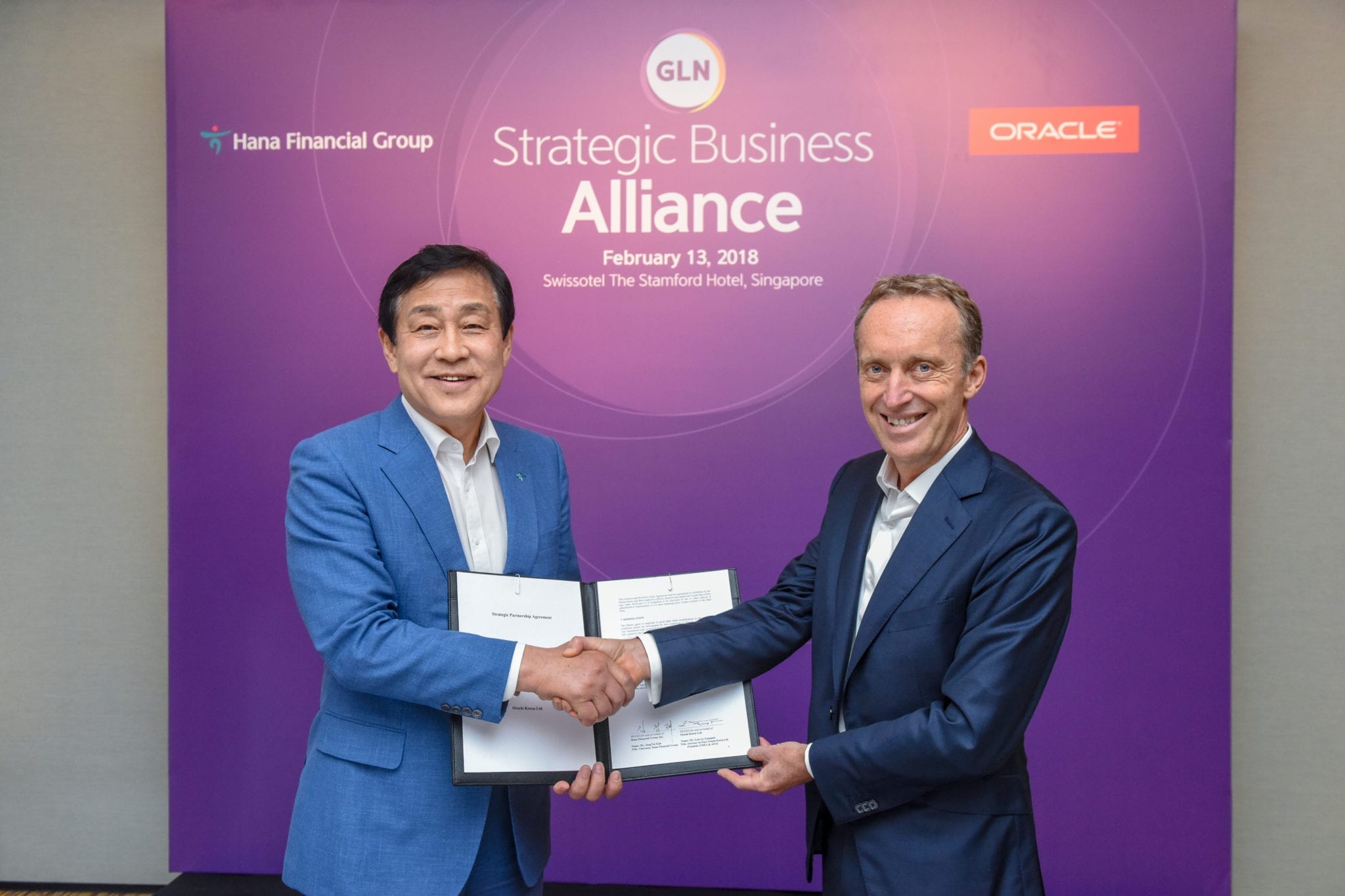
    Hana Financial Group (HFG) (Chairman Kim Jung-Tai, www.hanafn.com) announced it signed a memorandum of understanding (MOU) with Oracle in Singapore yesterday under which Oracle will work with HFG in the building and joint marketing of HFG’s Global Loyalty Network (GLN).

    Kim Jung-Tai, chairman of the Hana Financial Group, and Loïc Le Guisquet, president, International, Oracle Corporation, were in attendance at the signing ceremony. Both companies confirmed their mutual cooperation for GLN’s successful launch of services and global expansion, and agreed to collaborate on new technologies such as blockchain, membership, e-money and AI through HFG’s business know-how and Oracle’s technology capabilities. HFG will also modularize the results of the project, including digital asset exchange, and conduct consulting and sales.

    Kim Jung-Tai said, “Through this collaboration, we expect it will be easier for GLN to expand worldwide using Oracle’s leading and innovative cloud technologies that enable digital transformation. Building a global digital asset transfer network is a level of innovation that is rarely seen around the world and when the global integration platform is built, GLN’s customers will be able to enjoy locally offered deals and discounts around the world.”

    GLN is an innovative integrated platform network that enables digital institutions and retailers around the world to connect their digital platforms in one network to freely exchange digital assets and electronic money such as points and mileage. The GLN consortium was established in November 2017 with 36 companies in 11 countries. It is currently under contract with 24 companies and detailed discussions are underway with 15 banks and 20 retailers.

    Meanwhile, on Feb 2, it said that a ‘Coupon Mall Pyeongchang Edition’ in connection with GLN was opened to keep pace with the hosting of the PyeongChang Winter Olympics. This coupon mall is based on the global platform and is being provided in seven languages including English, Korean, Chinese and Japanese. This service will be also expanded globally through GLN’s consortium banks including SuMi TRUST Bank in Japan and Taiwan Taishin Bank, and it is currently offering over 1,000 free coupons. Han JunSeong, vice president of KEB Hana Bank said, “We provide foreign tourists visiting Korea during the PyeongChang Winter Olympics with information on sightseeing, restaurants and various free coupons for major domestic cities such as Pyeongchang, Seoul, Jeju and Busan.”

  • A.S. Watson announces slew of new tech vendors to support its digital transformation

    A.S. Watson announces slew of new tech vendors to support its digital transformation

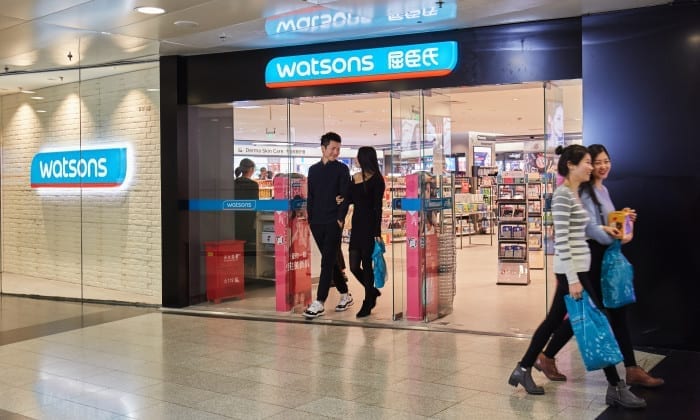
    Health and beauty retailer AS Watson (ASW) has launched a Technology Partnership Programme as part of a move to speed up its digital transformation globally.

    The program brings together a wide range of international technology providers and recognises them as strategic partners rather than suppliers, explained Malina Ngai, group COO of ASW.

    “We believe every technology partner whom we have chosen to work with is more than just a vendor. Traditional client-vendor relationship is short-term. There is lack of transparency and continuity in the way we work with each other. Besides, project base contract makes it difficult for their resource planning.

    “The partnership program is designed to transform the short term contractual relationship to a longer term strategic relationship to create a win-win for both parties. Our tech partners will have access to senior management, visibility on our growth strategy and technology roadmap, as well as a longer term financial commitment from us. We can benefit from their commitment in providing consistent resources, expert advice and services, as well as first hand access to innovation they develop,” said Ngai.

    ASW, which has more than 15,000 stores globally, embarked on its digital transformation journey in 2011 when it introduces its Customer Strategy initiative. The company invested US$70 million initially, dedicated to CRM, eCommerce and mobile experience.

    It subsequently established eLab in 2015, an in-house digital agency focusing on supporting all operating businesses to develop e-commerce and digital marketing.  This year, ASW kicked off a further $70 million investment in big data to build new capabilities in analytics and machine learning.

    “The goal of our digital transformation is to enable AS Watson Group to build on our solid retail foundation to fuel further growth through a smarter and more efficient organisation,” said Ngai.

    “Our purpose of putting customer first and putting a smile on their faces continues. We recognise that our customers are changing rapidly and technology has become an ever more critical ingredient to deliver our purpose.”

    The first batch of tech partners comprises expertise in the areas of e-commerce, store systems, data science, AI, data visualisation, technology ecosystem and services.

    The partners include Microsoft, Epam, Ovolab, Rubikloud, Mtel, Infosys, NCR, Zebra Technologies, SAP and Oracle.

  • Oracle to accelerate Singapore cloud startups

    Oracle to accelerate Singapore cloud startups

    Oracle has launched a new six-month Oracle Startup Cloud Accelerator program in Singapore, announcing the class of six startup participants selected from hundreds of applicants.

    They are Arya.ai, FlexM, FOMO Pay, Hacker Trail, RL Club, and Unscrambl. These startups leverage new technology solutions across industries such as retail, recruitment, and finance.

    Arya.ai is an enterprise deep learning platform designed to automate complex data science tasks involved while building neural network based application or predictive models and in production.

    FlexM is a fast-growing Singapore-based fintech company working toward the financial inclusion of migrant and foreign domestic workers.

    FOMO Pay is a one-stop QR code payment solution platform that enables merchants to accept a full suite of new payment methods including WeChat Pay, NETSPay, mVISA, and more.

    Hacker Trail is a curated, cloud-based marketplace for the technology industry, designed to source, engage, curate and connect the right candidates with the right job opportunities across Southeast Asia.

    RL Club is a rewards and loyalty club mobile app that rewards consumers for brand engagement and advertisement consumption.

    Unscrambl is an Atlanta-based startup that has developed a disruptive, next generation real-time cognitive analytics platform.

    The startups will be granted technical and business mentoring by Oracle and industry experts, state-of-the-art technology with free Oracle Cloud credits, full access to a co-working space within Oracle’s premises, as well as access to Oracle’s global ecosystem of startup peers, customers, investors and partners.

    “Singapore has a vibrant entrepreneurial ecosystem and we received a brilliant response from the community,” Oracle group VP of R&D Sanket Atal said.

    “These startups are an exciting mix with expertise in artificial intelligence, machine learning, deep technology, payment gateways and other disruptive technologies.”

    Launched in April 2016, the Oracle Startup Cloud Accelerator Program is a next-generation acceleration initiative driven by Oracle R&D. The program focuses on reimagining enterprise innovation through collaborations with startups that foster co-development and co-innovation.

  • Equinix links to Oracle Cloud in Sydney

    Equinix links to Oracle Cloud in Sydney

    Equinix has announced the launched dedicated, private access to Oracle Cloud in its Sydney, Australia International Business Exchange (IBX) data center.

    Available via Oracle Cloud Network Service – FastConnect and the Equinix Cloud Exchange, access will be available for Oracle Infrastructure as a Service (IaaS) as well as Platform as a Service (PaaS).

    This direct access enables enterprise customers in this growing region to migrate compute, applications and data to Oracle Cloud in a high-performance, low-latency manner for an optimal user experience.

    This builds on previous announcements between Equinix and Oracle to offer direct connection to several Oracle PaaS and IaaS services, including database, Java, integration, analytics, compute and storage – in multiple regions around the globe. The addition of Sydney brings the total number of markets that Equinix is offering private access to Oracle Cloud to five globally.

    Cloud deployments in Asia Pacific, and specifically Australia, are on the rise. According to a recent report by IDC, 67% of all Australian organizations surveyed are embracing cloud, using public or private cloud for more than one or two applications or workloads. Yet, factors such as security and privacy concerns still inhibit public cloud adoption.

    Through the Equinix Cloud Exchange integration with Oracle FastConnect, customers in Australia can establish direct connectivity between their private IT infrastructure and Oracle Cloud. This enables them to fully realize the benefits of hybrid cloud – moving application, middleware and database workloads seamlessly between private IT infrastructure and Oracle Cloud on a private, dedicated connection.

    The Equinix data centers in Sydney are the most interconnected in Australia. Enterprise customers in Sydney are able to establish direct links to both of the continent’s largest peering points, as well as key submarine cable systems, and gain direct access to multiple network and cloud providers such as Oracle via the Equinix Cloud Exchange.

    Oracle Cloud delivers nearly 1,000 SaaS applications and 50 enterprise-class PaaS and IaaS services to customers in more than 195 countries around the world, and supports 55 billion transactions each day. Oracle Cloud Infrastructure is also part of the fast growing sector of cloud computing. According to a recent Gartner report the highest cloud growth is expected to come from IaaS, with a growth of 38.4% in 2016.

    The Equinix Cloud Exchange is currently available in 21 markets globally – Amsterdam, Atlanta, Chicago, Dallas, Frankfurt, Hong Kong, London, Los Angeles, Melbourne, New York, Osaka, Paris, Sao Paulo, Seattle, Silicon Valley, Singapore, Sydney, Tokyo, Toronto, Washington DC and Zurich.

  • Oracle, Fujitsu launch public cloud services in Japan

    Oracle, Fujitsu launch public cloud services in Japan

    Fujitsu and Oracle Japan have launched Oracle Cloud Platform services, including Oracle Database Cloud Service, via a Fujitsu data center, a first for Japan.

    Oracle and Fujitsu have a long history of collaboration when it comes to processors, servers, and software. This synergy now extends to the data center, where Oracle’s cloud services will be available locally to Japanese customers backed by Fujitsu.

    Fujitsu has the largest number of Oracle-certified Oracle Cloud engineers in Japan, and offers a coordinated portfolio of services to assist in the deployment and operations of Oracle Public Cloud, to help organizations build new modern cloud-based solutions and transition their enterprise systems, including mission-critical operations, to the cloud.

    Fujitsu and Oracle formed a strategic alliance in July last year, based on a strategic collaboration to deliver enterprise-grade, world-class cloud services to customers in Japan and their subsidiaries around the world.

    Together with making Oracle Public Cloud services available from Fujitsu’s robust and reliable data center in Japan, can now be used as part of Fujitsu Cloud Service K5, Fujitsu’s public cloud service.

    “The Oracle Cloud Platform running in Fujitsu’s Japan datacenter alongside Fujitsu Cloud Service K5 DB powered by Oracle Cloud is a natural continuation of the three decade history Oracle and Fujitsu have working together to help customers achieve competitive advantage,” said Edward Screven, Chief Corporate Architect, Oracle.

    “By combining Fujitsu’s system integration expertise with Oracle’s cloud services, Fujitsu and Oracle will accelerate the transition of our joint customers’ enterprise systems to cloud.”

    Oracle Cloud offers a complete range of public cloud services across SaaS, PaaS, and IaaS. Oracle Cloud Platform, which includes Oracle’s analytics, application development, data management, and integration services, has experienced steady growth, adding thousands of customers in fiscal 2017.

  • Oracle to help drive Maharashtra’s digital transformation

    Oracle to help drive Maharashtra’s digital transformation

    Oracle and the government of Maharashtra have teamed up to advance the state’s digital transformation initiatives.

    According to the MoU signed between the two, Oracle Cloud solutions will be leveraged in order to develop Maharashtra’s smart city program, with the goal of making the urban landscape more livable and inclusive, while driving economic growth at the same time.

    A Center of Excellence (CoE) will be set up to help accelerate the state’s smart city program and modernize the government’s technology solutions. The CoE, housed in Mumbai, will serve as a research platform to design, develop and test new capabilities that will deliver better government-to-citizen (G2C) and government-to-business (G2B) services.

    Using the cloud, the CoE will enable rapid innovation with minimal capital expenditures. In addition, the CoE will offer a flexible and scalable common framework, as well as a team of experts, allowing individual cities to scale and replicate its solutions.

    Both Oracle and the government of Maharashtra will invest in IT infrastructure, training and skillset resources as well as management of the CoE. The Maharashtra government launched a programme earlier in April to develop 10 smart cities, adding to the 33 announced by the central government in the 100 smart cities initiative

    “Cloud computing has changed the landscape of governance. It has the power to enable inclusive growth and to transform the state into a digitally empowered society,” said Devendra Fadnavis, chief minister, Government of Maharashtra. “The CoE is a step in that direction and will make more government services available with the click of a button.”

    “We are thrilled to further our commitment in India by working with the government of Maharashtra and the Prime Minister of India, Shri Narendra Modi, to help position India as a world-class design and manufacturing epicenter. The Cloud Center of Excellence powered by Oracle will play a key role in improving the lives of the people of this state,” Oracle CEO Safra Catz added.

    “By moving to the Cloud, the government has the opportunity to create a digitally empowered society and a growing knowledge economy. We look forward to making this partnership a success.”

    This initiative follows Oracle’s recent commitment to support the country’s global digital leadership. Oracle unveiled a massive, state-of-the-art campus centered in Bengaluru, nine incubation centres throughout India, and an initiative to train more than half a million students each year to develop computer science skills.

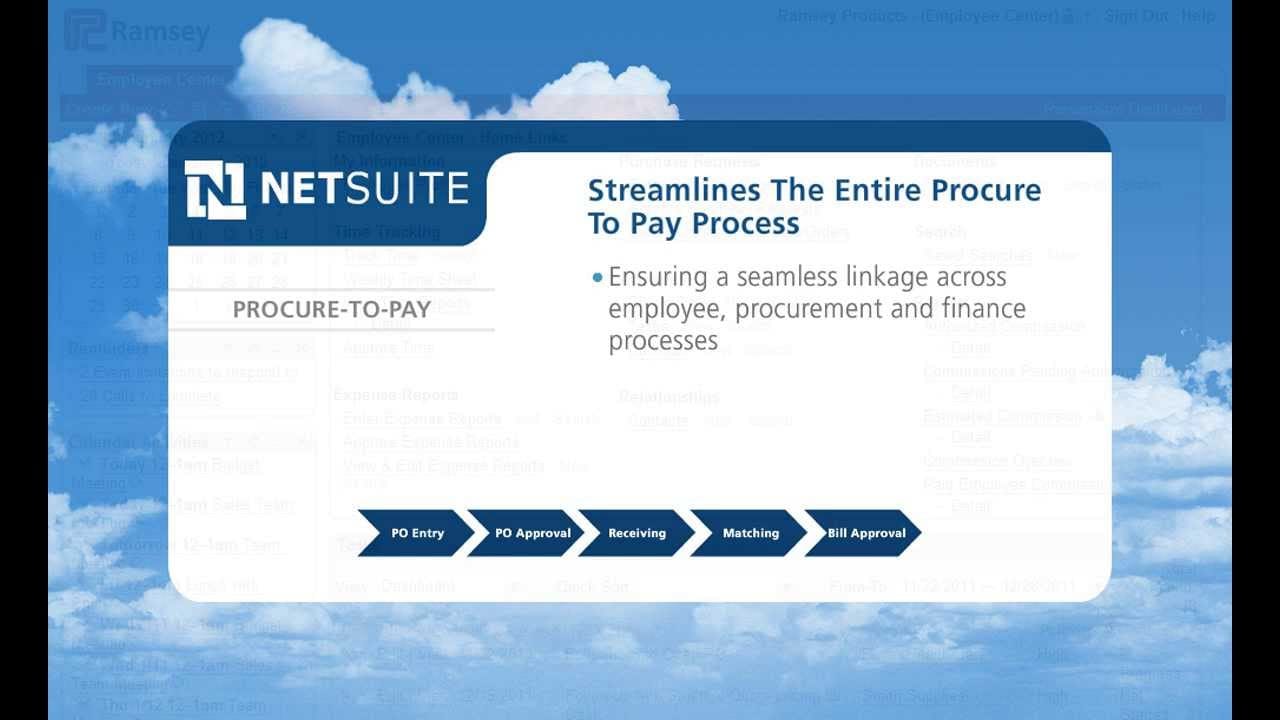
  • Oracle will buy NetSuite for $9.3b

    Oracle will buy NetSuite for $9.3b

    Oracle has arranged to acquire pioneering cloud company NetSuite for $9.3 billion.

    The addition of NetSuite will enable Oracle to expand its ability to support customers of any size in more industries and more countries.

    Oracle co-CEO Safra Catz said the company expects this acquisition to be immediately accretive to Oracle’s earnings on a non-GAAP basis in the first full fiscal year after closing.

    The proposed transaction is expected to close in 2016. Until the transaction closes, Oracle and NetSuite will continue to operate independently.

    “Oracle and NetSuite cloud applications are complementary, and will coexist in the marketplace forever,” Oracle CEO Mark Hurd, said. “We intend to invest heavily in both products—engineering and distribution.”

    “NetSuite has been working for 18 years to develop a single system for running a business in the cloud,” said Evan Goldberg, CRO and chairman of NetSuite. “This combination is a winner for NetSuite’s customers, employees and partners.”

    Zach Nelson, CEO of NetSuite, said the company will benefit from Oracle’s global scale and reach to accelerate the availability of our cloud solutions in more industries and more countries.

    NetSuite was established in 1998 as the world’s first company dedicated to delivering business applications over the internet.

    Today NetSuite provides a suite of cloud-based financials/Enterprise Resource Planning (ERP) and omnichannel commerce software that runs the business of more than 30,000 companies, organizations, and subsidiaries in more than 100 countries.

  • Fujitsu, Oracle form cloud alliance in Japan

    Fujitsu, Oracle form cloud alliance in Japan

    Fujitsu and Oracle are forming a new alliance to deliver cloud services to customers in Japan and their international subsidiaries.

    Under the alliance, Oracle’s Cloud Application and Platform services – such as Oracle Database Cloud Service and Oracle Human Capital Management (HCM) Cloud – will be powered by Fujitsu’s datacenters in Japan. Under the new strategic alliance, Fujitsu will work to drive sales of robust cloud offerings to companies in Japan and their subsidiaries around the world.

    Fujitsu will install the Oracle Cloud services in its data centers in Japan and connect them to its K5 cloud service in order to deliver enterprise-grade cloud services.

    The first Oracle application that will be offered to Fujitsu customers under the joint offering is Oracle HCM Cloud. As part of the agreement, Fujitsu will implement Oracle HCM Cloud to gain insight into its workforce throughout the company’s worldwide network of offices.

    The combination of these solutions including Oracle Database Cloud Service, Oracle HCM Cloud, and K5, will enable Fujitsu and Oracle to deliver mission critical systems over a cloud environment within Fujitsu’s data centers while maintaining the high levels of performance and reliability that had previously been achieved in on-premise environments.

    “We at Fujitsu support the digital transformation of our customers, and aim to contribute to optimized customer systems and business growth with the roll out of our Digital Business Platform MetaArc,” said Shingo Kagawa, SEVP, head of digital services business & CTO, Fujitsu Limited.

    “In particular, we offer the core cloud service on MetaArc, K5, which addresses systems of engagement (SoE) and systems of record (SoR). Oracle is a leader in Japan’s database market segment and possesses strong capabilities in the SoR domain. Now, as we look to strengthen MetaArc and K5, taking part in this strategic alliance with Oracle will work to meet the cloud needs of our customers.”

    “In order to realize the full business potential of cloud computing, organizations need secure, reliable and high-performing cloud solutions,” said Edward Screven, Chief Corporate Architect, Oracle.

    “Oracle’s new strategic alliance with Fujitsu will allow companies in Japan to take advantage of an integrated cloud offering to support their transition to the cloud.

  • ZALORA Ties the Knot with Customers through Oracle Marketing Cloud

    ZALORA Ties the Knot with Customers through Oracle Marketing Cloud

    ZALORA, the largest e-commerce fashion company in Southeast Asia, has extended its partnership with Oracle Marketing Cloud. ZALORA has relied on Oracle Marketing Cloud technology since 2013 to send its customers targeted and personalized marketing communications at scale.

    ZALORA is the fastest growing online fashion retailer in Asia, operating across eight countries (Singapore, Indonesia, Malaysia & Brunei, the Philippines, Thailand, Vietnam, Hong Kong and Taiwan). The e-commerce platform works with a good mix of over 500 international and local labels, providing consumers with a diverse range of apparel, footwear and accessories, tech products, beauty essentials, sporting equipment and more.

    “We are happy to have achieved the success we have today, and want to continue offering the best-in-class customer experience across our digital channels. For us it is not just about understanding our customers preferences, but making sure we listen and respond to their digital body language to develop a personalised dialogue with each and every customer,” said Joshua Tan, Head, Regional CRM, ZALORA.

    ZALORA communicates with more than 10 million app users, 7 million Facebook fans, 500,000 Instagram followers, 120,000 Twitter followers, and over 2.2 million email, call and online chat requests. Today, the platforms cater to the varying customer profiles where ZALORA provides individualized experiences for each of their customers’ interests.

    “Our earlier marketing efforts were batch and blast, but as the business evolved, we saw the need to respond to increased expectations from our customers for a personalized dialogue. Being able to orchestrate individualized communications and make informed, data-driven decisions is key. Having the right tools makes our job much easier, that’s why we chose to extend our investment in Oracle’s Marketing Cloud technology,” said Mr. Tan.

    With Oracle Marketing Cloud, ZALORA is able to speak to customers in a relevant and personalized way. Automated programmes equip ZALORA with the ability to analyse customer behaviour and better understand how to incentivise customers.

    ZALORA has since managed to half the time needed for lead conversion to capture a larger customer base, which has resulted in a multifold increase in revenue. Oracle’s marketing cloud technology allows ZALORA to create automated programmes that have helped reduce the resources previously required.

    “ZALORA is an innovative company that appeals to a young, constantly engaged audience. We are happy that Oracle Marketing Cloud is able to support their marketing organisation with a platform that allows them to intelligently and creatively communicate a cohesive brand message across channels, and deliver a world-class customer experience,” said Paul Cross, Group Vice President, Customer Success, Oracle Marketing Cloud Asia Pacific.

    ZALORA currently has 10 automated programmes in place and has plans to expand the number of triggered touchpoints with customers, to further enhance cross-channel marketing and grow their customers into strong brand advocates.

  • Use Data To Show Customers They’re More Than Just A Number

    Use Data To Show Customers They’re More Than Just A Number

    Companies claim that customers aren’t “just a number to us,” but that’s more than a catchphrase for number-crunching analytics firm 84.51°.

    The company is the recent spinoff of former Kroger-Tesco analytics joint venture dunnhumby, now wholly owned by US supermarket giant The Kroger Co. Renamed for the longitude of its Cincinnati headquarters and rebuilt from the ground up in 2015, 84.51° now focuses much of its activities on Kroger customers and partners, such as global consumer packaged goods companies. It believes that its core competitive differentiator is not technology, but rather its focus on helping customers build long-term relationships with their consumers and other customers.  (The company says its new name also represents the “longitudinal view” it takes on understanding customer behavior.)

    Most retailers rely on segmentation analysis to determine which promotions to send consumers, creating blocks of homogenous groups of people (such as single-parent households in middle-class neighborhoods). But 84.51° uses analytics differently, eschewing what CIO Yael Cosset calls an “archaic” approach in favor of a much more relevant, personalized one.

    “We think of it as a snowflake, because we believe no two individuals are the same, and hence we should not engage them the same way, send them the same promotions,” he says.

    So, for example, you might send a promotion for a particular kind of bottled water to consumers who have already demonstrated an affinity for that kind of product, but you wouldn’t send them a promotion for a cola drink just because the supplier is offering one. This is the kind of commitment necessary to develop long-term relationships with consumers, Cosset says.

    The company goes beyond knowing which consumers like to buy bottled water or condiments; it tries to identify which ones prefer sparkling water to flat, or Dijon mustard to steak sauce. “You can’t do that with segmentation,” Cosset says.

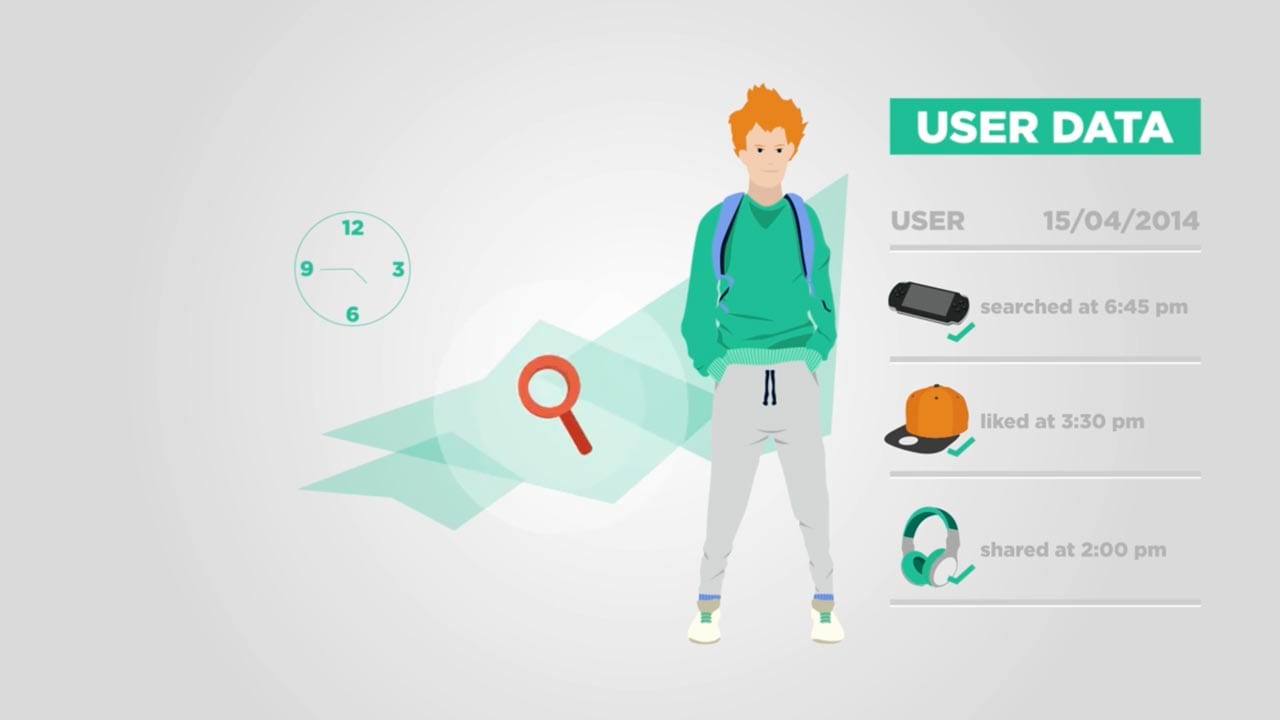
    That approach requires investing in the development of sophisticated algorithms that enables 84.51° to analyze millions of data points about each individual consumer, including their reactions to previous promotions.

    Using Oracle Exadata and Oracle Big Data Appliance, teams of analysts and data scientists at 84.51° leverage a combination of conventional statistical packages and more advanced machine learning algorithms to generate the analytics foundation required to deliver personalization at scale.

    A single campaign uses dozens of targeting models in combination with complex optimization algorithms to send the right offers to the right people. Often, offers are based on contextual cues gathered in real time and are specifically targeted for each customer.

    “We spend a huge amount of time, money, and resources to really get solid sustainable data assets,” Cosset says. “Our data asset is a competitive advantage.”

    Retailers cannot expect to build long-term, sustainable relationships with customers if they base the terms of those relationships on financial incentives alone, Cosset says. “They’re transactional, not relationship-based,” he says. “The real differentiator is what you do with the data—how do you provide real and relevant value to every single customer, how do you engage them the way that matters most to them, how do you create this personal relationship.”