Retail News CRM

Tag: Orchard Road

  • Orchard Road landlords reeling as key retailers exit

    Orchard Road landlords reeling as key retailers exit

    More shops are moving to the suburbs.

    More retailers are opting to vacate their prime spaces in Orchard Road and move to the heartlands instead, according to a report by CBRE.

    This trend exacerbates the problems ailing Singapore’s retail leasing scene, which has been hard-hit by a decline in both tourist and local spending.

    “As part of cost saving measures, more established retailers have opted to relocate out of prime corridors to secondary corridors, especially in the Orchard Road sub-market,” CBRE said in a report.

    Although exits have weighed on rents, CBRE noted that freeing up prime space has allowed landlords to pursue retailers seeking flagship space.

    “Demand is likely to stay patchy with retailers expected to be even more discerning about store location and openings as their operations evolve to include more retail channels. This does not bode well for overall occupancy with more supply dude to complete from now till 2019,” CBRE said.

  • Orchard Road malls seek new ways to draw the crowds

    Orchard Road malls seek new ways to draw the crowds

    As Singapore retailers face pressure from the slowing economy, Orchard Road malls are looking for new ways to draw the crowds.

    Besides renovating the mall and changing the tenant mix, landlords are also throwing in free performances in a bid to attract the crowds.

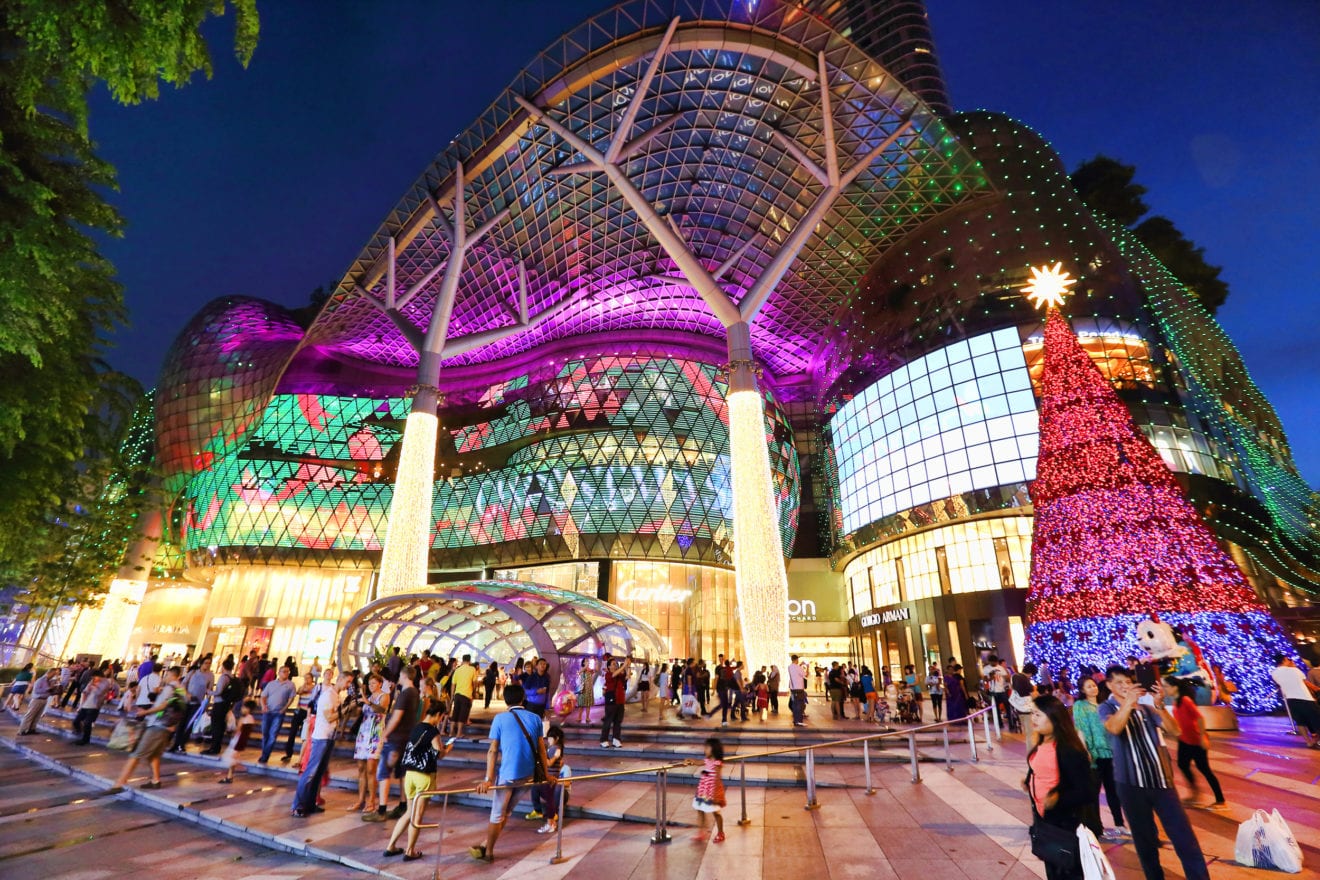
    For example, over the weekend, shoppers at ION Orchard witnessed a series of aerial circus acts. The performances marked the completion of ION Orchard’s recent revamp, which saw a refreshed facade and new tenants such as Tiffany & Co and French-Italian luxury lifestyle brand Moncler.

    Orchard Turn Developments, which manages ION Orchard, said it is important to enhance the shopping experience.

    Said Mr Chris Chong, chief executive of Orchard Turn Developments: “Increasingly, retail is not just about shopping but also about entertainment, bringing new novel experiences. Last year, we did a butterfly dome featuring live butterflies from the Crysalis. This year, we will bring an exciting new experience with the aerial sphere. We hope shoppers will enjoy this new experience and as a result also enjoy shopping with us.”

    Orchard Road retailers have been hit by a slowing local economy and weak visitor arrivals in the past two years. Analysts estimate that Orchard Road rents fell last year and could drop by another 3-5 per cent this year.

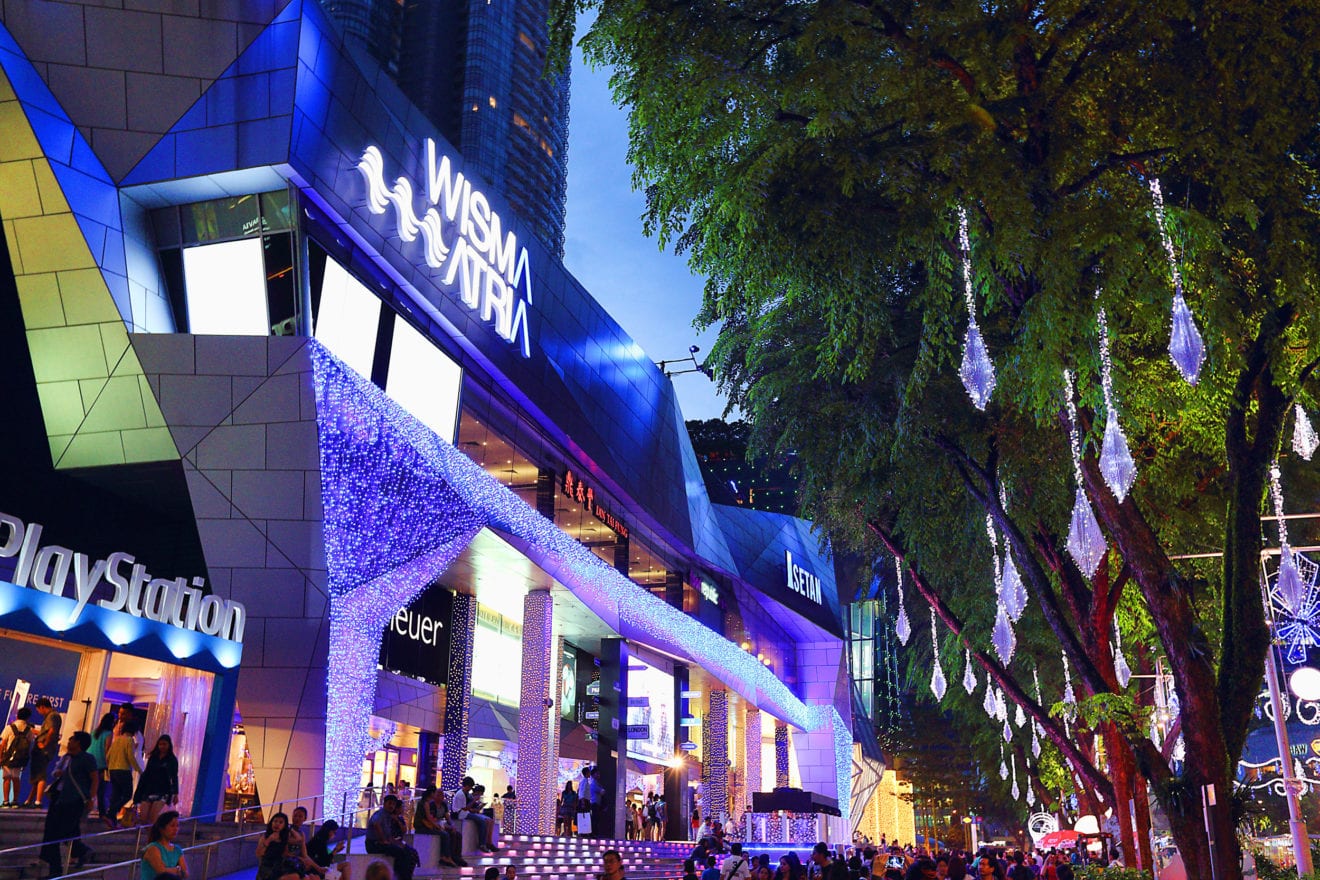
    Besides ION Orchard, other malls being refurbished include Centrepoint and Wisma Atria.

    IMPROVE OVERALL EXPERIENCE: JLL

    Property consultancy JLL said that not all Orchard Road malls require a complete physical overhaul. But landlords and retailers must work together to improve the overall retail experience, amid competition from online retailers and suburban malls.

    Ms Regina Lim, national director of advisory and research at JLL, commented: “I don’t think it has to be a total refreshment or refurbishment; it’s about being more aware of giving shopping a reason to come to your shop or to your mall.

    “So even if the mall isn’t getting a facelift, I think retailers and landlords need to think about giving some reason for families to come down and visit rather than just buy it online.

    “In this day and age where there is quite a bit of supply along Orchard Road, you really need to proactively think about how you want to make your mall a little bit different from the rest and engage the public to come down to the mall to shop. Because people really want to integrate shopping online and offline and going to the mall has to come with some kind of experiential performance and events,” Ms Lim added.

  • Trendsetter who fought shy of limelight

    Trendsetter who fought shy of limelight

    He stayed out of the limelight and shied away from the media, so few might know that Mr Jopie Ong Hie Koa was one of Singapore’s true trendsetters.

    The late managing director of Metro Group, who died suddenly on Tuesday night at age 75, was the first to introduce luxury brands such as Mont Blanc, Cartier and Gucci here, long before Singapore was considered a shopping destination.

    He was even the first to introduce a splash of colour to men’s fashion, recalled long-time business partner and friend Nash Benjamin, the chief executive of fashion and lifestyle group FJ Benjamin.

    “In the early 70s, Metro imported a line of shirts from Whitmont, an Australian brand. At the time, men’s shirts in Singapore were all white. But these Whitmont shirts were purple, mustard, red,” he said.

    “He brought me over and made me pick out one in each colour. So he started the trend of coloured shirts here. He was always on trend.”

    FASHION FORWARD

    In the early 70s, Metro imported a line of shirts from Whitmont, an Australian brand. At the time, men’s shirts in Singapore were all white. But these Whitmont shirts were purple, mustard, red… He started the trend of coloured shirts here. He was always on trend.

    MR NASH BENJAMIN, chief executive of fashion and lifestyle group FJ Benjamin, on Mr Ong spotting the latest fashion.

    Indeed, Mr Ong had a great talent for spotting the next big thing, not only in fashion but in the wider world of business.

    It was under his leadership that Metro grew from a two-storey shophouse at 72, High Street – a textile store founded by his father, Mr Ong Tjoe Kim, who hailed from Indonesia – into a retail behemoth and later, into a substantial property player with interests in China, Japan and Britain.

    Mr Ong joined Metro in 1964 and was appointed to the board in 1973, the same year he guided the firm to a listing on the Singapore Exchange, where, for many years, it was considered a blue chip.

    Metro had its heyday in the early and mid-1980s, when it became known as a purveyor of posh European brands such as Cartier, Burberry, Givenchy and Yves Saint Laurent, making it a haunt not only of wealthy tourists but also Singapore’s increasingly affluent, English-educated middle class.

    It had moved aggressively into Orchard Road, with four or five stores along the stretch. But by that time Mr Ong, always ahead of the curve, was looking at expanding his business interests further. In the early 1980s, thanks to an idea by Dr Jannie Chan, he entered into a joint venture with her and Mr Henry Tay to set up The Hour Glass, which specialises in quality Swiss brands such as Rolex and Patek Philippe.

    Then in 1985, he entered the auto industry, starting Komoco Auto, now Komoco Motors, with two partners. It started by distributing Hyundai cars.

    The move complemented Mr Ong’s own love of cars: His was apparently the first Lamborghini to be driven on Singapore’s streets and his collection of rare, luxury cars included several Ferraris and a gold Porsche sports utility vehicle.

    But it was also a shrewd decision that capitalised on Singapore’s then booming demand for affordable family vehicles.

    “He had the foresight to see ahead and was always searching, wherever it may be, for new business opportunities,” recalls Komoco managing director and co-founder Teo Hock Seng.

    “Singapore was in a recession when he came up with the idea to get into the auto trade.

    “We were supposed to be recession-proof and so we had to have prudence in our approach. And for the last 30 years we have been profitable. People accepted the product, which was value for money.”

    It was not long before Mr Ong was involved in yet another business project. By the early 1990s, even as Singapore was fast gaining a reputation for being a top-notch shoppers’ destination, Mr Ong could see that retail was not going to be as lucrative a business as it once was due to increasing rents and wages, so he started repositioning Metro as a property firm.

    He entered a joint venture with Ngee Ann Kongsi to build Ngee Ann City, from which Metro would earn a handsome rental income.

    Today, property is a core business for Metro alongside retail. The firm has interests in prime retail and office investment properties in first- tier cities in China, as well as residential and mixed-use development properties, held mainly for sale.

    It also has stakes in a mixed-use development in Manchester and a residential project, The Crest in Prince Charles Crescent, in Singapore.

    On the retail side, there are now only three Metro department stores in Singapore – at Paragon, The Centrepoint and Woodlands. The website lists nine in Indonesia. Metro also operates speciality shops for the Monsoon, Accessorize and M.2 brands here.

    Throughout the years, Mr Ong shied away from the media spotlight, so much so that when Metro held a press conference on its financial results in May 2008, it was the first time the company had done so in at least a decade. The fact that Mr Ong himself fronted the conference was as much news as the numbers he was there to announce.

    But away from the limelight Mr Ong lived large and generously. Friends recall not only his flashy cars and ceaseless smoking, but also the dinners held at his District 10 bungalow in Bishopsgate – monthly affairs that would include about 300 guests at a time and at which the host himself would often cook.

    A big fan of local hawker fare, he was known to whip up a mean nasi lemak, yong tau foo and leg of lamb.

    The twice-divorced Mr Ong leaves four children and four grandchildren.

    He also leaves a business in good shape – Metro’s net profit climbed 33 per cent to $142.4 million last year. His sister, Mrs Wong Sioe Hong, oversees the retail operations and the acting group chief executive is his right-hand man of many years, Mr Lawrence Chiang.

    Still, along with the rest of the retail and property industry, it faces a challenging business environment, especially as China, its key real estate market, is experiencing slowing growth.

    Without Mr Ong’s guiding hand to lead the ship, investors will likely be keen to see how the company steers through the choppy waters ahead.
  • Starhill Global Reit’s Q2 distribution per unit rises 2.3%

    Starhill Global Reit’s Q2 distribution per unit rises 2.3%

    YTL Starhill Global REIT (SGReit) said its second quarter distribution per unit rose by 2.3 per cent to 1.32 cents.

    Revenue for the three months ended Dec 31 grew by 13.8 per cent to S$55.6 million while net property income (NPI) rose by 10.4 per cent to S$43.7 million.

    The growth in revenue and NPI was mainly driven by the contribution from Myer Centre Adelaide which was acquired in May 2015 and the resilience of the Singapore portfolio performance.

    This was partially offset by lower contributions from China and net foreign currency movements. Income distributable to unitholders was S$28.8 million, up 3.7 per cent. On an annualised basis, the second quarter distribution represents a yield of 6.94 per cent, based on the unit closing price of 75.5 cents as at Dec 31. Unitholders can expect to receive their distribution on Feb 29.

    YTL Starhill Global chairman Francis Yeoh said the Reit delivered another strong earnings growth in the second quarter, underpinned by the resilience of the Singapore portfolio and contribution from its latest acquisition.

    “While Asia’s economic growth is expected to ease, we are confident our prime assets in key Asia-Pacific cities will remain resilient in an evolving retail landscape,” he noted.

    SGReit’s Singapore portfolio, comprising interests in Wisma Atria and Ngee Ann City on Orchard Road, contributed 60.8 per cent of total revenue or S$33.8 million.

    Its NPI increased by 2.7 per cent to S$27.3 million, led by positive rental reversions achieved in previous quarters. Singapore retail portfolio recorded flat rental reversions for leases committed during the quarter.

    Wisma Atria retail revenue increased 1.7 per cent and its NPI grew 3 per cent over the previous corresponding period on the back of higher revenue and lower operating expenses.

    On the flip side, tenant sales at Wisma Atria declined 1 per cent, mainly due to lower committed occupancies at the mall and tenant transitions during the quarter. Shopper traffic was down 2.5 per cent as the majority of Isetan’s strata-owned space remained closed for renovations since April 2015.

    Wisma Atria retail recorded lower committed occupancy of 94.9 per cent as at Dec 31, largely due to tenant mix reconfiguration at level 1. Ngee Ann City retail revenue gained 1 per cent while NPI increased 2 per cent. The next rent review for the Toshin master lease is due in June 2016.

    Meanwhile, the Singapore office portfolio continues to be supported by leasing demand as office supply pipeline in Orchard Road remains limited. The Singapore office portfolio revenue and NPI increased 3.9 per cent and 3.4 per cent respectively, on the back of 1.7 per cent positive rental reversions for leases committed in the second quarter.

    As at Dec 31, full occupancies were achieved for both Wisma Atria and Ngee Ann City offices. Some 40 per cent of the office leases due for expiry this financial year by gross rent have been either renewed or newly leased out as at Dec 31. SGReit units today ended half a cent higher at 73 cents.

  • Is Orchard Road the Champs-Élysées of Asia?

    Is Orchard Road the Champs-Élysées of Asia?

    An aunt from my husband’s side, he’s not Singaporean, came to visit Singapore recently. She took her cohort of grandchildren to Universal Studios last week.

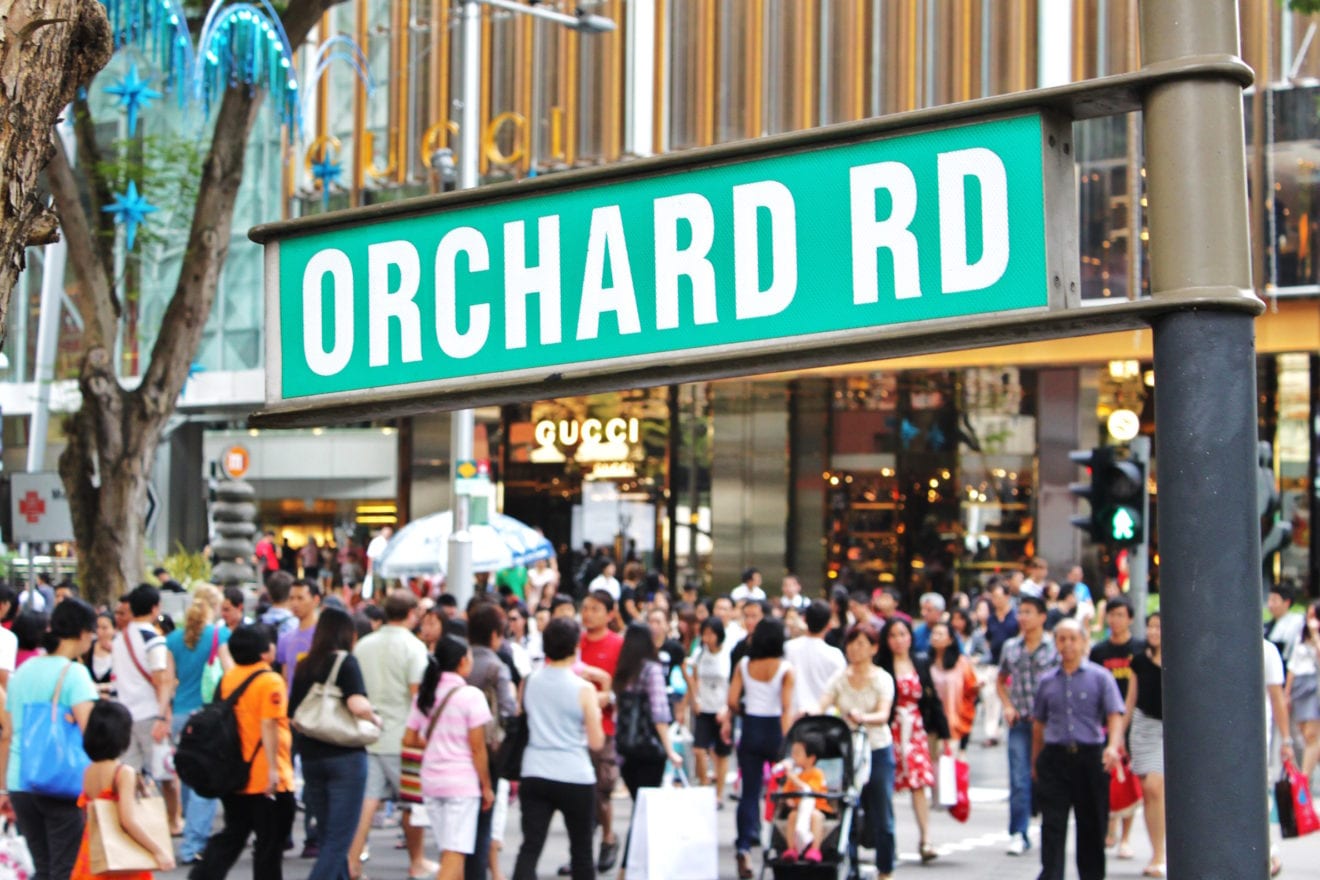
    They spent a weekend sightseeing, eating and — of course — shopping which included a stroll down Orchard Road.

    Unfortunately her takeaway was less than favourable; all the Christmas lights gave her a headache and it was all just too much.

    Crowded, she said and tacky, she added… and ostentatious for good measure.

    Maybe I’m revealing myself to be tasteless but I have to say, I disagree with her humble assessment.

    I like it! I have always loved Orchard Road. When I was much younger — wandering to the concourse of Far East Plaza was a source of endless excitement.

    Perhaps youngsters these days will scoff at my naiveté but at 14 venturing beyond my housing estate mall to catch a movie at Lido or browse the stores at The Heeren were exceptionally exciting.

    Dozens of new malls, the addition of connectors in almost every direction makes the stroll seem that much more endless — shops in every direction bursting with people shopping, eating, laughing — living the big crowded city life.

    These days, our modest shopping street has grown up and is ready to rival any other contender on a global stage.

    I spent a few months in Paris — on exchange during university — some years ago and like a good starry-eyed South-east Asian I made frequent pilgrimages to the Champs Elyses for my dose of window shopping and it was always beautiful.

    But I yearned for the hustle and bustle of food-courts and fruit stalls in basement malls. Fifth Avenue at Christmas is magical but otherwise a little staid and Tokyo’s Chuo street is very elegant but I never saw anyone there selling potong ice cream and it doesn’t seem to house anything as frayed as my favourite Far East Shopping centre or the infamous Orchard Towers.

    And that’s the point: Orchard Road is actually rather diverse, from swanky Paragon and the Grand Hyatt down to Lucky Plaza and everything in between. It’s a living museum of Singapore’s retail history, which for a trading post is analogous with the nation’s history.

    Far Eat Plaza is the 80s, Ngee Ann City the 90s, ION the decade after and Orchard Gateway — the present.

    Despite refurbishment efforts, these retail meccas still carry the stamp of the era in which they were constructed.  Of course Orchard’s history stretches back beyond that – named for the plantations that lined it in 1800s and hosting a series of graveyards during the early 20th century, the road has been part of life (and death) on this island for over a century.

    Whether it’s the presence of the Istana on one end or the Botanic Gardens on the other, the fact that the very first hawker centre opened here, or maybe just the fact that this is where generations of Singaporeans have come to celebrate and shop, this is a place of national significance.

    It’s a strip of living history and personally I think that the road itself is more deserving of world heritage status than the now UNESCO listed Botanic Gardens.

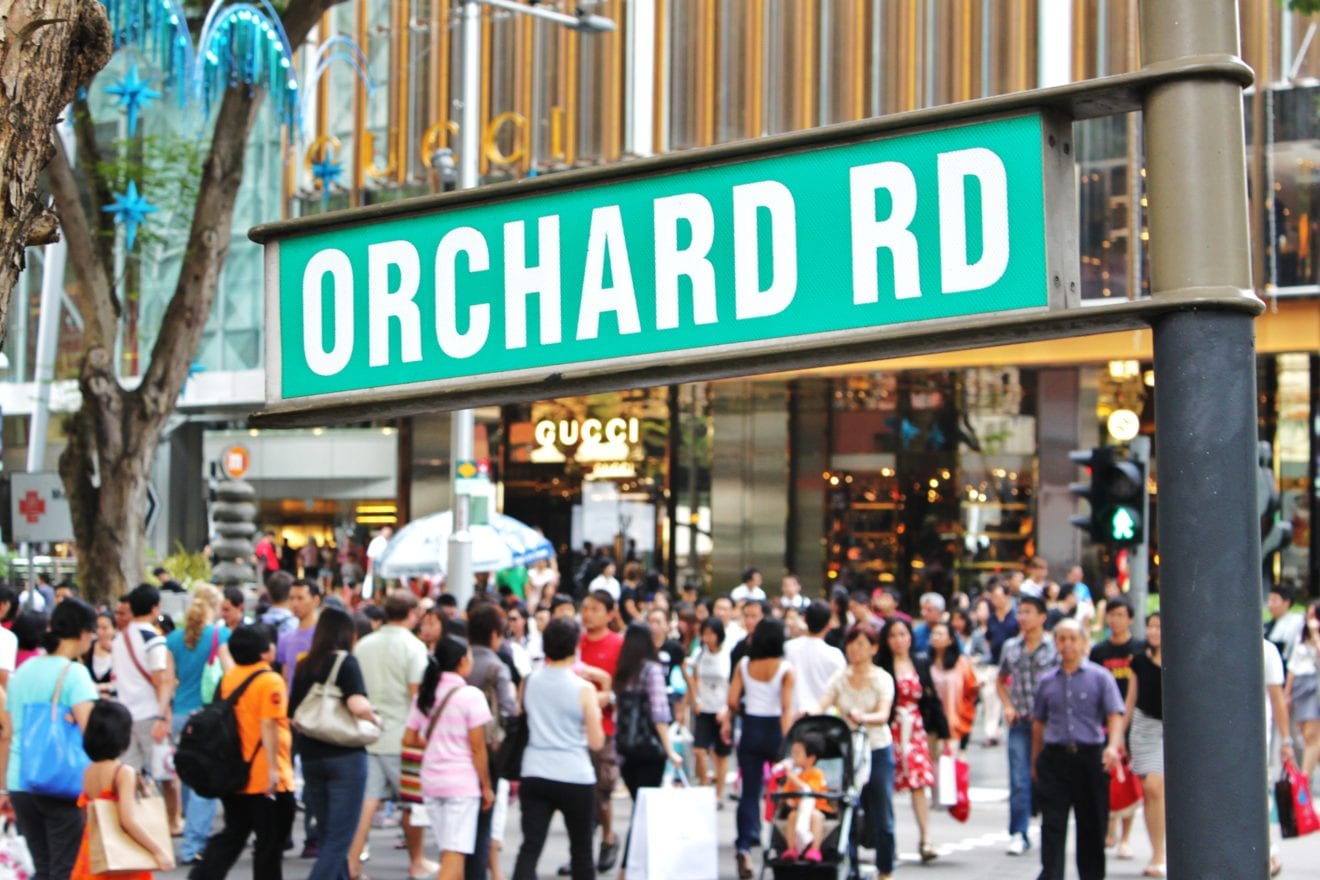
    The Singapore Tourism Board seems to completely understand this. They’ve been busily branding and marketing the 2.2 kilometre strip for decades making it clear this is one of the nation’s principle attractions.

    Their efforts at marketing what, just a century ago was a stretch of canal and making it a draw for travellers from around the region and even the world have been relentless and successful.

    Tacky?  I wouldn’t say so – that’s just Singapore. Crowded, colourful, a little brash and full of business.