Retail News CRM

Tag: ot

  • Revolutionizing Auto-Updates: Kia Introduces Industry-First Plant Remote OTA for Seamless Driving Experience

    Revolutionizing Auto-Updates: Kia Introduces Industry-First Plant Remote OTA for Seamless Driving Experience

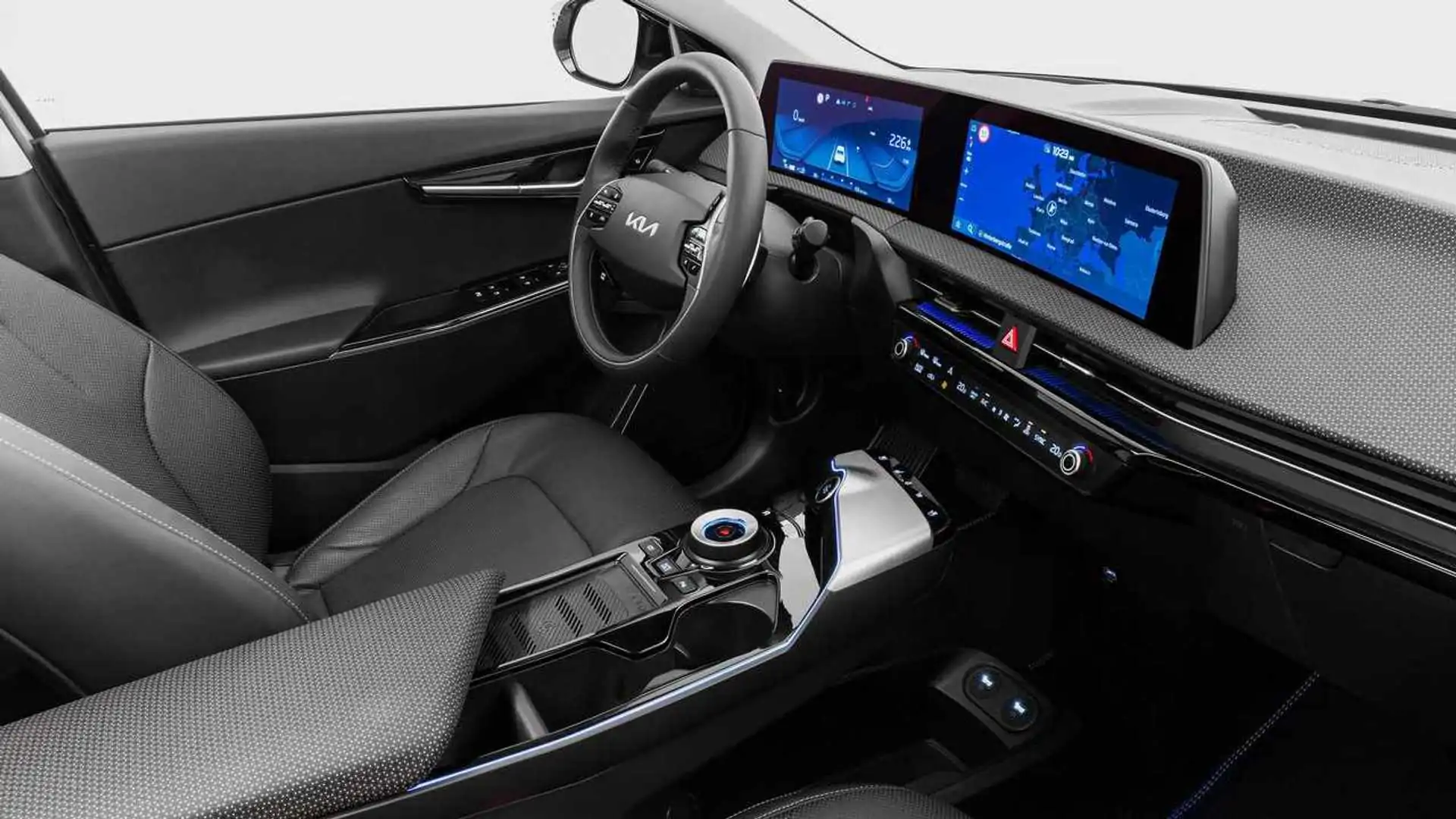
    Kia India has recently unveiled an innovative feature in its line of vehicles, the Plant Remote Over-The-Air (OTA) feature, as part of its ongoing commitment to provide seamless and smart mobility options geared toward improving the overall customer ownership experience.

    The Plant Remote OTA Feature

    The Plant Remote OTA feature will be available in Kia India’s latest models with integrated Connected Car Navigation Cockpit (CCNC) technology. This revolutionary feature guarantees that every connected Kia vehicle will receive the latest software updates remotely before departing the factory. This ensures that customers can enjoy an enhanced driving experience, with their new cars already upgraded and ready for use immediately upon delivery.

    Atul Sood, the Senior Vice President for Sales & Marketing at Kia India, expressed his excitement about the rollout of this feature. He emphasized how it embodies Kia’s commitment to spearheading innovation that genuinely heightens the customer journey. According to him, through this initiative, every vehicle will leave the factory equipped with the latest software, significantly enhancing the customer ownership experience by making it more convenient, intelligent, and future-ready. He added that this achievement further cements Kia’s vision for connected mobility, displaying the brand’s dedication to inspiring movement through advanced technology and significant innovation.

    Benefits for Customers

    One of the key benefits of this initiative is that it substantially reduces the need for manual intervention or visits to the dealership. As soon as customers take delivery of their new vehicle, they can instantly access a comprehensive suite of connected services and features.

    Additional Implementations

    The Plant Remote OTA feature, which is compliant with the Connected Car System 2.0 (CCS 2.0) through leveraging Controller OTA functionality, further solidifies Kia India’s position as a leader in tech-driven mobility solutions. The Plant OTA will also be incorporated across all future connected models, thus bridging the gap between production and delivery via timely features and security updates. This will significantly boost customer satisfaction levels and enhance the overall ownership experience.

    Questions & Answers

    What is the Plant Remote OTA feature introduced by Kia India?
    The Plant Remote OTA feature ensures that every connected Kia vehicle is updated with the latest software remotely before it leaves the factory, providing customers with an upgraded and ready-to-drive experience right from the point of delivery.

    How does the Plant Remote OTA feature benefit customers?
    This feature eliminates the need for manual intervention or visits to the dealership, enabling customers to access a full suite of connected services and features immediately upon receiving their vehicle.

    Will the Plant Remote OTA feature be included in future Kia models?
    Yes, the Plant OTA feature will be incorporated into all future connected models, facilitating timely feature and security updates between the production and delivery stages, thereby enhancing customer satisfaction and the overall ownership experience.


  • OTT services like Telegram, WhatsApp must be managed locally

    OTT services like Telegram, WhatsApp must be managed locally

    Over-the-top media services, including popular messaging apps like Telegram, need to be managed under the Law on Telecommunications, according to amendments to it proposed by the government.

    The Ministry of Information and Communications said OTT services could be considered direct substitutes for traditional communications like calling and texting, and popular apps like Zalo, Viber, Telegram, and WhatsApp come under this category.

    “There are currently no provisions in the law for managing them, and so there is no way to protect users and information safety and security.”

    The ministry also called for a level playing field for domestic and foreign businesses. Specifically, for OTT telecom services that collect fees, domestic providers need to be approved to do so, while international providers need to have commercial agreements with an approved domestic provider to do so, it proposed.

    Even for OTT telecom services that do not have fees, the ministry proposed that their providers still need to register with the information ministry. International, large-scale providers with service in Vietnam meanwhile must either have commercial agreements or place their representative offices in Vietnam to make sure they abide by local law.

    At a conference held Thursday to discuss the amendments, Vu Tu Thanh of the U.S.-ASEAN Business Council said OTT service providers have no connection with telecom providers.

    “For instance requiring Viber to sign an agreement with VNPT … We don’t know exactly what terms such an agreement would have,” Thanh said.

    Officials proposing the amendments yet said managing OTT services will ensure users’ protection and information security.

  • Accenture acquires Australia Electro 80 to expand digital OT footprint

    Accenture acquires Australia Electro 80 to expand digital OT footprint

    Accenture has acquired Electro 80, a leading provider of operational technology (OT) for resource clients in Australia, including mining, energy, engineering, construction, and utility companies. The acquisition expands Accenture’s local digital OT capabilities, which help asset-intensive companies make manufacturing and production operations safer and more efficient. The acquisition also strengthens Accenture’s local capabilities for Industry X, which helps clients digitize their manufacturing, operations, and engineering.

    The acquisition comes at a time when Australia’s resources industries are looking to undertake significant transformation following the operational disruption caused by the pandemic.

    Founded in 1987, and headquartered in Perth, with offices in Brisbane and Melbourne, Electro 80 provides automation, electrical, instrumentation, safety, networking, and industrial IT services, as well as turnkey solutions encompassing the design and support of equipment, installation, and commissioning, through to operations support and client training. Electro 80 brings more than 100 employees with longstanding OT experience to Accenture.

    “Resources and asset-intensive companies are increasingly looking for ways to deliver more with less and, at the same time, in a more sustainable way,” said Tara Brady, market unit lead for Accenture in Australia and New Zealand. “Digital and automation technologies will be fundamental in delivering these outcomes and we are delighted to have Electro 80 on board.”

    Sergej Divkovi, Electro 80’s managing director said, “Combining our team’s deep digital and OT expertise with Accenture’s end-to-end capabilities presents immense opportunities for our employees and clients. As part of Accenture, we will bring integrated solutions at scale that transform the way capital projects are planned, managed and executed. These can help new and existing clients drive new revenue and growth.”

    “We are thrilled to welcome the Electro 80 team into our resources practice, which helps clients digitize and optimize their operations at scale,” said Glenn Heppell, Accenture’s resources lead for Australia and New Zealand. “Electro 80 brings to Accenture a strong industry footprint with clients in priority industries. By working together with Electro 80, we can ensure our resource clients can better detect and address quality issues, more accurately prevent machine failure in their operations, and most importantly, innovate for the future.”

    Accenture’s acquisition of Electro 80 follows other investments across Australia and New Zealand in the past 18 months, including supply chain and logistics consulting firm GRA, cloud-native solutions provider Olikka, SAP and cloud solutions technology firm Zag, data analytics and supply chain management company Icon Integration, business strategy and econometrics firm AlphaBeta and specialist government consultancy Apis Group.