Tag: ott

  • Telecom operators want OTT players to pay for use of networks

    Telecom operators want OTT players to pay for use of networks

    Vietnamese telecom operators want OTT communications service providers to pay for using their networks, which they use to deliver their services but end up competing with them.

    Paying for the use would ensure a more fair and sustainable business model for themselves since they invest in setting up and maintaining the networks, telecom companies said at a meeting with the Ministry of Information and Communications on April 6.

    The CEO of Viettel Telecom, Cao Anh Son, said while telecom operators are witnessing a sharp decline in such services as calling and SMS, foreign OTT service providers operating in Vietnam are growing strongly, some in double digits.

    “The operators provide infrastructure for OTT players, but the OTT players do not contribute to the infrastructure development. The investment burden on the operators is big.”

    Data from Viettel shows 80% of Internet traffic between Vietnam and the world is for Facebook, Google and Netflix.

    A minor change in user behavior or content delivery, such as upgrading videos from HD to 4K resolution, can put a lot of pressure on network transmission. Bui Son Nam, deputy general director of MobiFone, hoped the amendments to the Telecommunications Law being drafted by the ministry would require cross-border OTT players to share infrastructure development costs with telecom operators.

    Nam and Son also pointed out that if cross-border OTT players and social networks cooperate with telecoms operators, it would help the ministry manage platforms and their contents better.

    In the amendments being made to the law, the ministry’s Vietnam Telecommunications Authority has called for regulating OTT services such as Zalo and Telegram.

    These OTT services are similar to calling and texting, and so should be regarded as basic telecom services on the Internet and need to be brought under the Telecommunications Law.

    In March European telecom operators they asked big tech firms in the U.S. to pay for the use of their networks.

    But the latter argued that they should not be asked to pay for the use of networks because they are already paying for the data they use as consumers.

    It would stifle innovation and competition in the internet and OTT space, and could lead to higher costs for end-users, they claimed.

    At a seminar held to discuss the proposed amendments on March 23 Vu Tu Thanh of the US-ASEAN Business Council said 10 years ago U.S. telecom company AT&T asked OTT players to pay, resulting in a major controversy.

    Eventually, OTT players did not pay after the principle of net neutrality was invoked to prevent discrimination between various services on the Internet, he said.

    “For example, high-priced services will be prioritized for bandwidth, while bandwidth for free services will be squeezed. This will make it difficult for essential social services, and services for small and medium-sized businesses.”

  • M1 and Blacknut to deliver 5G-powered cloud gaming services in Singapore

    M1 and Blacknut to deliver 5G-powered cloud gaming services in Singapore

    M1 Limited (M1) has announced an exclusive partnership with market-leading cloud gaming specialist Blacknut, to bring an all-you-can-play 5G-powered cloud gaming service to Singapore.

    Boasting the world’s largest catalog for cloud gaming, Blacknut has a unified gaming platform that is fully integrated within the M1 ecosystem, enabling users to have unlimited access to more than 450 high-quality PC and console titles, including renowned hits like Overcooked, Lord of Fallen, Modern Combat 5, Asphalt9 and more. Serious and casual gamers will soon be able to discover a seamless “click & play” experience, anytime and anywhere, regardless of their device – television, PC, tablet, or mobile.

    Leveraging the high speed and ultra-low latency of M1’s True 5G network, this upcoming cloud gaming service ensures seamless and uninterrupted gaming experiences for subscribers.

    “True 5G not only transforms businesses but also consumer experiences. We are excited to show the game-changing prowess of 5G through our partnership with Blacknut, to level up gaming experiences for Singaporean gamers. Powered by 5G connectivity, M1 is on track to create an inclusive gaming ecosystem by enabling affordable and accessible gaming options,” said Manjot Singh Mann, chief executive officer, M1.

    “We are very proud to support M1 in their 5G deployments with Blacknut Cloud Gaming. We are pleased that our platform is a great fit and fully aligned with M1’s 5G ambitions. Pairing Blacknut with M1’s 5G connectivity delivers ultra-responsive cloud gaming backed by a fast, reliable network and the best market solution to fulfil M1’s vision for Singapore,” said Olivier Avaro, chief executive officer, Blacknut.

    Since its launch in July, M1’s True 5G network coverage has expanded to about 65% of Singapore, and with the continual growth of the infrastructure, customers can expect to soon enjoy more innovative and diversified digital experiences and even more OTT offerings.

    M1 has been a frontrunner in Singapore’s 5G development and was the first telco in the nation to embark on 5G trials as early as 2018. To date, M1 has a record of more than 15 5G use cases and trials across consumer, enterprise and government sectors. To further the 5G ambition and fully unleash the power of True 5G for all, M1 is also working with Workforce Singapore (WSG) to upskill and train close to 10% of the entire workforce to build a pool of talent with up-to-date skills in 5G and emerging technologies.

    Details of the cloud gaming subscription plan will be announced during the official launch in Q2 2022.

  • The future of direct carrier billing and carrier-OTT partnerships

    The future of direct carrier billing and carrier-OTT partnerships

    Increased smartphone penetration and a rise in demand for over-the-top (OTT) content have driven the growth of the global direct carrier billing (DCB) market. Valued at US$29.8 billion in 2019, the global DCB market is estimated to reach US$70 billion by 2025, fuelled by a surge in video and audio streaming, as well as consumers’ preference for seamless, secure, and accessible payment modes.

    Linked directly to consumers’ mobile phone bills, consumers can enjoy fuss-free transactions in the absence of a bank account or credit card with DCB. This is in contrast with credit card payments that require consumers to input their credit card number and name. In comparison, a simpler checkout process results in lower abandonment rates and higher conversion rates for merchants. This payment method is also more secure as personal information is not being shared.On top of offering convenience, DCB presents unprecedented opportunities for carriers to tap into Asia-Pacific’s (APAC) unbanked population – totaling more than 1 billion. In Southeast Asia, where financial inclusion is particularly low, about 75% of the population does not have access to formal banking services.

    A flurry of lockdowns and stay-at-home measures have resulted in the rise in video and audio streaming in the past year. According to The Trade Desk, 180 million consumers stream 8 billion hours of over-the-top (OTT) content per month in Southeast Asia, making its OTT market one of the fastest-growing in APAC.

    By 2025, Media Partners Asia predicts that video-on-demand subscriptions will reach 417 million in the APAC region, up from 269 million in 2019. Of which, China will account for 65% of the total subscriptions.

    This trend in increased streaming is expected to persist in a post-pandemic environment driven by more affordable subscriptions, quicker download speeds and a growing DCB market, which in turn spurs more partnerships between carriers and OTT providers.

    Carriers have an advantage in delivering content with a billing mechanism already in place. This gives consumers an added incentive to subscribe to services by OTT providers such as Netflix, Disney+ and Spotify, bundled into carrier subscriptions so that consumers can have all their content needs met by a single source in a single bill. According to Ovum, carrier billing is also the most popular method of revenue sharing in such partnerships.

    For carriers, it means providing added value and better brand positioning in a competitive landscape. For OTT media providers, it means higher conversion rates. The result is win-win as both parties achieve the benefits of increased user acquisition, retention and essentially, revenue.

    Apart from OTT giants like Netflix, Disney+ and Amazon Prime, APAC has a diverse market that includes regional and even local OTT providers. In South Korea, for instance, home-grown Wavve is the leading OTT media provider. This is followed by Netflix. When LG UPlus entered into an exclusive deal with Netflix in 2018, its subscriptions for its IPTV grew by 20%. More recently, it was reported that LG UPlus is now exploring a partnership with Disney+, which has amassed more than 100 million global subscribers just 16 months after its launch. SK Telecom, on the other hand, is reportedly signing a partnership with Apple TV+.

    In India, one of the fastest-growing markets for OTT content in the world estimated to reach US$5 billion by 2023, partnerships are highly coveted to court a burgeoning smartphone population. Worldwide Mobile Data Pricing also noted that India has the cheapest average cost of mobile data in the world, at Rs 6.7 (US$0.09) per gigabyte. According to Ovum, about 56% of Indian consumers are already paying for more than one online video service, with the pay-per-use model being more well-received as compared to monthly subscriptions. To attract more consumers, OTT providers are turning to subscription video on demand or advertising video on demand. Amazon’s miniTV is one such provider that offers its content free.

    Moving forward, the onus is on carriers and OTT providers to better curate content suited for the respective markets and attract consumers consumption. This is on top of overcoming challenges such as integrating seamless back-end systems and ensuring that streamed content is high quality without comprising on profit margins.

  • Google launches Android 11 on Android TV

    Google launches Android 11 on Android TV

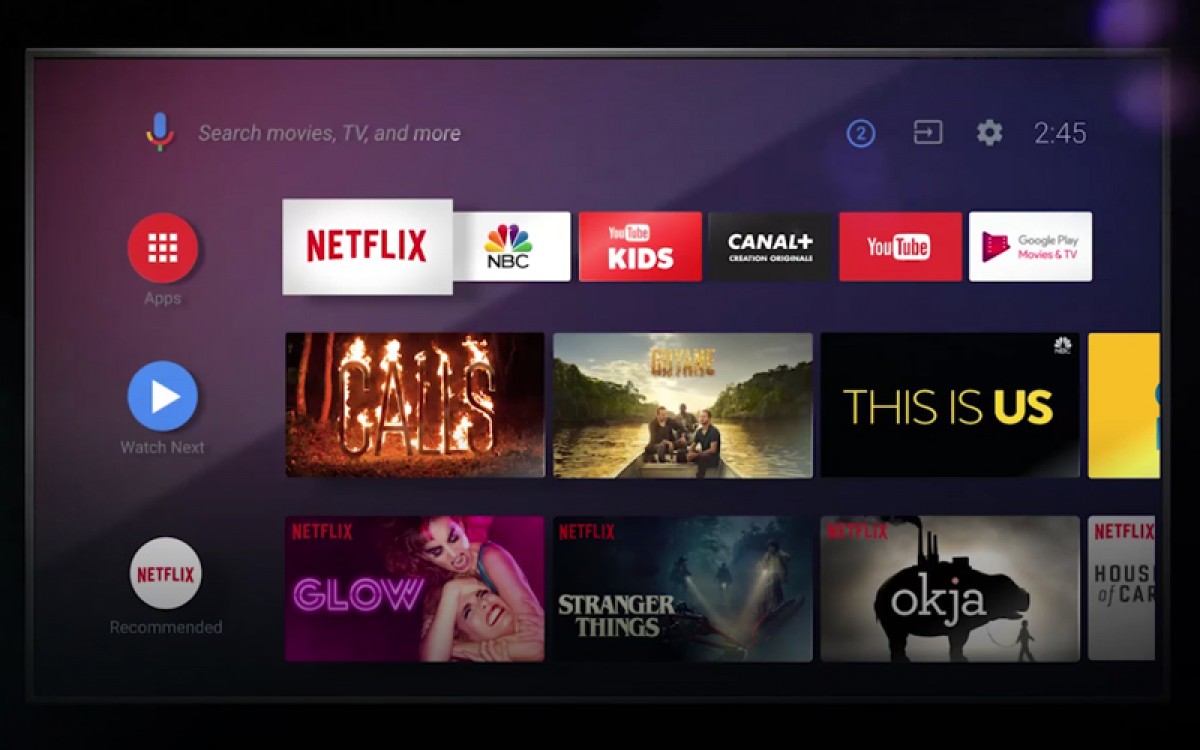
    Google is bringing Android 11 to Android TV devices, the search giant revealed today. Several performance enhancements and privacy improvements will be part of the new Android update, as well as a plethora of new features specifically designed for the TV.

    Among these improvements, Google mentioned enhanced memory management, one-time permissions, and support for Auto Low Latency Mode and low latency media decoding. Since gaming has become such a major part of the entertainment industry, Google is introducing extended gamepad support for Android TV.

    Also, silent boot mode for system updates, inactivity prompts, and OEM configurable wake keys are included in the upcoming Android 11 update for Android TV. All these and more should give users greater control over TV functions.

    And for those interested, testing on Android TV will be much easier with Android 11 thanks to the addition of the so-called “test harness mode,” a feature for third-party app developers that want to automate a device for a fleet of devices.

    According to Google, Android TV OEM partners should release and upgrade to Android 11 over the coming months, so the rollout hasn’t begun yet.

  • Juwai IQI, Southeast Asia’s Largest Proptech Group, Expands into Singapore

    Juwai IQI, Southeast Asia’s Largest Proptech Group, Expands into Singapore

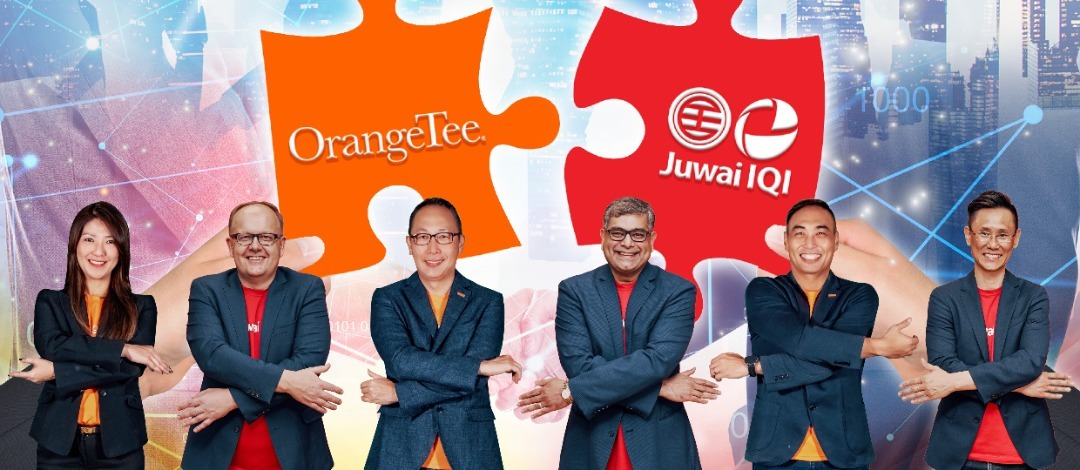
    Singapore’s third-largest real estate company, with more than 4,300 agents, OrangeTee & Tie Pte Ltd (“OTT”), has entered into a strategic partnership with Juwai IQI, Southeast Asia’s largest proptech group and operator of real estate super-brands, Juwai and IQI Global. By joining forces, Juwai IQI and OTT will open up new opportunities for their combined force of more than 15,000 property agents across Asia, Australia, Canada, and the Middle East to better serve buyers, sellers and developers.

    Juwai IQI’s operations currently comprise Juwai.com, China’s largest online marketplace for overseas properties; Juwai.asia, the sole global property portal for Asia-based buyers and IQI Global, owner of Southeast Asia’s largest real estate network even prior to the partnership.

    OTT is currently marketing more than 70 developer projects in Singapore. The tie-up with Juwai IQI will provide Singapore developers with a single, end-to-end solution for marketing and selling their new homes to buyers locally and around the world. The combined network will also ensure that Singaporean buyers of overseas properties have access to more than 2.8 million property listings in 91 countries, as well as dedicated after-sales service by local agents in the countries of investment.

    With the COVID-19 pandemic having accelerated the industry’s rate of technological change, another key benefit of the partnership is the opportunity to combine both companies’ technological infrastructure to better support the combined network of agents and clients.

    Steven Tan, Managing Director of OTT, said, “At the heart of our culture is collaboration and innovation and we are delighted that Juwai IQI shares the same values and prioritizes the use of technology to leverage growth and improve client service. Both are technology companies as much as real estate companies. Integrating our platforms and working jointly to build new capabilities will increase delivery speed and allow new features to be rolled out at a faster pace. The fact that Juwai IQI is the leading player in real estate technology is the icing on the cake for us.

    “OTT’s position as a strategic partner of Juwai IQI will serve to connect overseas-based property buyers with Singapore’s real estate offerings and vice versa.”

    Daniel Ho, Group Managing Director of IQI Global, said, “We are tremendously pleased to welcome the OrangeTee & Tie team to Juwai IQI. Steven Tan is one of the stars of Singapore’s real estate industry.

    “This tie-up will allow our agents to help Singapore-based buyers purchase real estate in any of the 91 countries from which we market the property. On the other hand, the expansion also makes it easier for us to help investors from other countries who want to own real estate in Singapore, which is one of the most popular destination markets in the region.

    “Now with our combined force of more than 15,000 agents, we can look forward to many joint-collaborations to empower agents to better assist their buyers in landing their dream property, locally and globally.”

    Kashif Ansari, IQI Global Group CEO, said, “We are pleased to announce that IQI is now in Singapore. Buyers from China, Malaysia, India, and South East Asia are leading investors in Singapore, and we have a very strong presence and network in each of these locations. Together, we will be able to cater to buyers investing in Singapore as well as take Singapore to the world.”

    Juwai IQI Executive Chairman Georg Chmiel said, “With Steven Tan and everyone at OrangeTee & Tie, our IQI agent network has the benefit of one of Singapore’s very best teams.

    “One key to success during the pandemic has been the rapid adoption of new technology. We have deployed technologies that improve agent productivity, enable remote property marketing and relationship building and give developers an end-to-end solution in advertising and selling their listings. We are now well-positioned to help both buyers and developers in Singapore to discover new markets, just like we already do across Asia.”

  • SKT to provide first 5G live TV sports broadcast

    SKT to provide first 5G live TV sports broadcast

    SK Telecom has revealed plans to offer the world’s first live TV sports broadcast using a 5G network for the SK Telecom Open 2019 golf tournament.

    The tournament, which will be held as part of the KPGA Korean Tour, will be live broadcast on JTBC’s dedicated Golf TV channel and OTT video service oksuku using SK Telecom’s 5G network.

    The tournament, which commences today, will be broadcast live for selected areas using 5G coverage deployed for the third, fourth and ninth holes of the course.

    The company will also temporarily create a special section on the oksuku OTT platform to offer 5G-based live streaming and related video clips of the golf tournament.

    “As 5G-based live broadcasting is subject to no physical constraints, it can be widely utilized in areas including sporting events and on-site news reports,” SK Telecom VP and head of 5GX media business group Kim Hyuk said.

    “SK Telecom will continue to work closely with broadcasting networks to contribute to the advancement of the broadcasting system through 5G technologies.”

    The agreement follows soon after SK Telecom signed agreements with South Korea’s top three terrestrial television broadcasters to jointly develop a live broadcasting system based on the operator’s 5G network.

  • Going into 5G, don’t forget security

    Going into 5G, don’t forget security

    For years telco revenues as measured in Average Revenue Per User (ARPU) have been on a decline. As consumers and business acquire a taste for broadband and mobile broadband connectivity, operators are pressured to offer bigger and faster pipes and to do so more cheaply lest competition from OTTs and mobile virtual network operators (MVNO) take home the bacon. We have reached a point where telcos are finding themselves becoming almost exclusively connectivity vendors– what some call “the pipe business”.

    As Gunter Reiss, vice president of strategy at A10 Networks, tells it, that a lot of operators want to get out of being labeled a telco – a connectivity provider.

    He cites the comment made by Johan Johan Wibergh, chief technology officer at Vodafone: “We want to become a technology provider. We want to become a service provider to the enterprise community.”

    Based on what we understand about 5G technology, this may just be what the industry is praying for. Some believe that 5G features like network splicing, enhanced mobile broadband, ultra reliable low latency communications and massive machine type communications, are all geared towards the performance requirements of enterprises.

    To date, a number of telcos in Asia and around the world are making significant investments in 5G with the intent to target enterprise opportunities. One area that has always lagged when it comes to understanding and planning for is around security.

    At the 2019 Total Security Conference, a chief security officer speaking at a panel noted that “if you want to stay secure from cyber threat, then stay out of the internet.” However, the reality is that the internet has become so embedded into everyday living and business that it would be a business suicide if any business stays out of it.

    So for telcos, the challenge is building infrastructure, including 5G-based connectivity solutions, that appeal to the risk appetite of their enterprise customers.

    In an exclusive with Telecom Asia, Reiss opens up to the threats and opportunities operators must face as they rise to the 5G challenge.

    Given that operators will need to invest more around security as part of their 5G rollout. How do they monetize in these investments?

    Gunter Reiss: There are two ways:

    First, every operator has to protect their own infrastructure because the system is their bread and butter.

    Secondly, we see a lot of operators today starting to offer managed security services to enterprises. Cloud providers are doing the same thing.

    Instead of buying a DDoS appliance directly for your premises, you want a DDoS service – literally just buying it as part of your connectivity, or part of any of the other specific IoT services you would buy from a mobile operator. You would add the security services on top of it.

    This is why service providers and mobile operators in the 5G world will finally become a true service provider and partner to the enterprise community.

    This is how they will monetize their investments, including security.

    As operators near 5G rollout, what remains their biggest concern?

    Gunter Reiss: That would be – “How can we protect our mobile infrastructure?”

    It’s the same as what they have now with 4G – just with 5G, they realize that they have more points to protect. If you think about it in 4G it was the GI-LAN infrastructure they just needed to protect – and it doesn’t scale. Scale requirements just weren’t there.

    But what we see now, they have to protect the peer points. They have to protect the mobile edge – this is what they are building the architecture for. That’s the conversations we have with them.

    There is another aspect – our latest DDoS weapons report revealed more than 23.5 million DDoS weapons all around the world. The largest number is more than 6 million in China, followed by 3 million in the US. And as you go into each country, we can actually highlight how many DDoS weapons there are. This is important for operators because this is a proactive defense of your infrastructure.

    So that’s basically how we help these operators to protect the infrastructure. And again, it doesn’t really matter if they’re on 4G right now. They are realizing that they have to protect the infrastructure. They have to start planning, investing and allocating budgets for the protection of the mobile infrastructure along the journey to 5G.

    You don’t want to wait and suddenly say, “Now that I’m launching 5G, it’s time for me to adjust my security architecture or infrastructure, and how I deal with connectivity suppliers.”

    As operators look to harness the non-traditional business opportunities presented by 5G, including areas like Smart Cities, what should I be looking at as an operator?

    Gunter Reiss: What you should look at is in order to support – ultimately as an operator – you need to increase your ARPU, you want to sell more services.

    Now, particularly then with 5G, you need to build relationships with the various industries from smart cities, to governments, to hospitals, to whatever industry it is. And, of course, in that way, industry explosion of the IoT endpoints – depending on what data you trust – up to 35 billion over the next years.

    When you take all that into consideration, you have to protect your infrastructure all the way, obviously, to where the IoT endpoints get connected, and as a consequence you need a comprehensive security architecture.

    And the only way to really be able to manage the scale requirements is with Intelligent Automation.

    And this is where you leverage machine learning algorithms, any AI type of capabilities and analytics to get more visibility about your network and your application environment in order to really be able to secure your infrastructure. The complexity is just getting that much larger than what these operators are dealing with today.

    This is basically the straightforward message I try to explain to them.

    It’s not about how cyberattacks will come through the internet anymore. They come through those peering partners, and they come directly from the IoT devices which get weaponized from the phones. So, you have to have protection right away at the mobile edge.

    And for this, you need to leverage automation capabilities.

    As activities around 5G accelerate in 2019, what’s your expectation?

    Gunter Reiss: 5G is still in its early stage. I think we will see over the next 12 months a lot more operators commercially launching 5G services with various used-cases.

    And I would say that at least within this year, we’ll see between 20 and 30 mobile operators launching new commercial services around the world.

    But 2020 is going to be, I think, that big push where more operators will come with 5G commercial services. And this, from an A10 perspective, is the opportunity. We are working with a lot of them already right now under 4G virtualization developments and securing the 4G virtualized and NFV type of environment.

    Now that they are future proof and ready, from a scale perspective, to take that all the way into this full 5G architecture.

    As I mentioned before, for some time, we will see a hybrid type of 4G / 5G network architecture. Then some of those early adopters will go out with the 5G standalone, network architecture.

    Even if the operator is not launching 5G yet in 2019, they’re already working and starting to work with us on their plans towards 5G and how to protect that infrastructure. This is why we are super thrilled and excited about it.

  • BSNL to offer carrier billing for Amazon Prime

    BSNL to offer carrier billing for Amazon Prime

    Mobile technology company Fortumo is providing its Trident Bundling Platform for India’s BSNL to help the state-owned operator distribute Amazon consumer services in the market.

    With the integration, BSNL is offering subscribers one years’ subscription to the Amazon Prime shopping and entertainment platform on certain of its plans.

    The Trident Bundling Platform is designed to allow operators to establish and expand partnerships with OTT service providers by allowing the delivery of digital products packaged with mobile services to support carrier billing.

    OTT companies need only integrate with the platform once, and can then establish multiple bundle partnerships across a variety of potential commercial scenarios.

    Fortumo VP of global business development Andrea Boetti said such operator partnerships are ideal for markets such as India, where smartphone penetration in the country is above 35% but only 3% of the adult population owns a credit card.

    “Interest towards VOD services is today growing the fastest in South-East Asia, Europe and the Middle East. Local telecommunication companies and their marketing capabilities offer the best way for VOD providers to engage this audience,” he said.

    “Fortumo’s Trident supports VOD providers in getting these new users on board as quickly as possible.”

  • RCS and OTT to fuel A2P business messages to 3.5tr by 2023

    RCS and OTT to fuel A2P business messages to 3.5tr by 2023

    A new study from Juniper Research found that 3.5 trillion business A2P (Application-to-Person) messages will be delivered by 2023, up from an estimated 2.5 trillion in 2019, a 40% growth.

    The new Juniper Research paper, A2P Messaging: SMS, RCS & OTT Business Messaging 2019-2023, forecast that the rich media interactivity of RCS (Rich Communications Suite) would make the emerging messaging technology popular for retail and marketing business use cases.

    It claimed that this enhanced functionality will drive RCS traffic to an average annual growth of 290% over the next 4 years, to help the growth of operators’ total messaging revenues.

    Not enough

    However, despite strong growth, RCS will account for only 2% of all A2P traffic by 2023, reaching 56 billion A2P messages. The research suggested that A2P messaging users will continue to use SMS owing to the familiarity of the protocol. As a result, it claimed that the growth of RCS will be mostly driven by new traffic, rather than the migration of existing traffic from SMS.

    Research author Sam Barker remarked, “Future growth of RCS traffic will be driven by users migrating away from dedicated mobile apps. The technology will develop to become the first point of contact for RCS users to engage with brands over mobile devices within 5 years”.

    OTT business messages future slowed by fragmentation

    The research also found that OTT business messaging platforms, such as WhatsApp for Business, will deliver 236 billion messages by 2023. However, they will continue to suffer from a fragmented user base across multiple messaging applications.

    The research cited the use of CPaaS (Communications-Platform-as-a-Service) solutions as essential to enable fallback onto the ubiquitous SMS protocol to ensure message termination. Additionally, it found these platforms will allow the collection of insightful data, including contact preferences, to enable A2P business users to optimize messaging campaigns.

  • 4 in 5 APAC operators plan to deliver 5G for sport events

    4 in 5 APAC operators plan to deliver 5G for sport events

    More than four in five (81%) operators in Asia-Pacific plan to deliver 5G services to major live sports and esports event organizers, according to research conducted by Ovum for Amdocs.

    The research found that operators in the region view sports events such as the Tokyo 2020 Olympic Games as an opportunity to create new enterprise services grounded in 5G communications.

    As well as 5G, 81% of APAC operators plan on offering IoT-related technology and services to stadium owners and tournament organizers to create efficiencies in stadium management, and 56% plan to offer services that will improve fan experiences, such as introducing the ability to order food and beverages over mobile devices.

    Operators anticipate new commercial opportunities from supporting major sporting events with 5G. Around 44% of operators in the region believe 5G will drive growth in terms of ARPU and 32% believe it will boost their enterprise business.

    Meanwhile 50% of Asia-Pacific operators believe that 5G will drive growth in sports TV subscribers, and 43% believe it will drive mainstream adoption of virtual reality services.

    To capitalize on these opportunities, 81% of operators plan on creating new partnerships with broadcasters and OTT service providers.

    The same proportion are planning to create new partnerships with device manufacturers, 64% are seeking direct partnerships with sports venues, and 56% want partnerships with social media and video game companies.

    But operators are also anticipating network related challenges regarding new 5G services for sports and esports. When asked about the biggest expected challenges, 69% cited issues with delivering the required levels of capacity and connectivity to support live HD video, and 56% cited indoor coverage to stadiums.

    “Operators see both short-term benefits in supporting sports with 5G, including growth in ARPU and their media business line, as well as longer-term benefits, such as enhanced brand appeal among younger demographics,” Amdocs CMO Gary Miles said.

    “Furthermore, working with new types of partners on 5G and sports will give operators a vital role in a new digital business ecosystem. Out of a multitude of potential 5G use cases, our research shows that sports and esports is certainly among the most compelling.”

  • Internet streaming one up on traditional TV in Vietnam

    Internet streaming one up on traditional TV in Vietnam

    Industry insiders say local Over-The-Top service providers should act together instead of against each other. Vietnam is seeing a trend of people switching from traditional TV to over-the-top (OTT) media services which allow them to watch movies and other shows on the internet.

    In a recent survey done by Kantar Media Vietnam, an information and consultancy group, 84 percent of the respondents aged 15-54 said they use the internet every day. In Hanoi, people spend 229 minutes each day on the internet, almost an hour and a half higher than the time for TV, which is only 145 minutes, the survey found.

    A significant 45 percent of respondents in Hanoi, Ho Chi Minh City, the central city of Da Nang and southern Can Tho said they watched video on demand (VOD).

    Vietnam is one the leading countries in the online video trend, with 90 percent of the respondents saying they watch online videos every week, said market research firm Nielsen.

    “People nowadays want to watch what they want, whenever and wherever they want,” said Bui Huy Nam, CEO of state-owned cable TV provider VTVCab, adding that this trend makes the transition from traditional TV to OTT inevitable.

    YouTube remains the largest OTT service in the country, with 87.3 percent of respondents in the Kantar Media survey saying they use this website frequently to watch videos online.

    Local sites such as PhimMoi.net [New Movie] and ZingTV rank second and third with 28.9 percent and 26.4 percent respectively, the report said.

    With such a large market demand, local OTT providers are adopting different strategies to eke out an advantage in this tight race.

    National broadcaster VTVCab is looking to work with internet service providers to provide free content to users, earning revenue from advertisements. The company’s ambition is to create a platform where users can share their own video content.

    FPT Play, a cross-platform application which allows users to watch TV shows and movies online, is focusing on improving its content by working with strong media production companies in the country.

    While there is strong competition between legal OTT providers, they also need to fight the battle with illegal ones. Illegal content makes up about 95 percent of OTT services in Vietnam, said Ngo Thi Bich Hanh, vice chairwoman of media firm BHD.

    “There is an intense competition between OTT firms in the country. It’s a competition between local firms and between them and foreign providers,” Hanh said.

    To ensure the success of OTT services in Vietnam, local businesses need to cooperate on a shared platform, said Nguyen Thanh Lam, director of the Department of Radio and Television Communication and Electronic Information. “They should not go alone in this market,” he added.

    Echoing Lam, Le Quang Minh, director of the VTV24 News Center, said that working together will keep OTT businesses from “hitting the bottom.”

    “We want local OTT providers to sit down together to create a sustainable market which is strong enough to compete with the leading video streaming services in the region and in the world instead of racing against each other,” Minh said.

    A study by OTT provider Muvi estimates Southeast Asia market revenues reaching $650 million a year in the next three years. On the global scale, Netflix, Hulu, Amazon and Youtube have a total of 2 billion subscriptions, taking 40 percent of the world’s OTT market share, the study said.

  • Singtel adds HOOQ to OTT video portal app

    Singtel adds HOOQ to OTT video portal app

    Singtel has expanded its OTT video portal app CAST to incorporate the video on demand streaming service HOOQ.

    HOOQ, a joint venture between Singtel, Sony Pictures Entertainment and Warner Bros, has a library of over 20,000 movies and TV series. It has launched across SEA and in India.

    Movies are available on the platform up to 90 days after cinema release, and TV series are telecast on the same day as the US.

    With its incorporation into CAST, the HOOQ content library can now be viewed on mobile devices, tablets or TV screens through Android TV or Chromecast.

    CAST users will be offered a three-month trial of HOOQ, after which they can subscribe on a 12-month contract for S$4.90 per month.  Access can also be purchased contract-free for S$7.90 per month.

    “Hollywood, Asian and kids’ content are extremely popular with our customers. We are pleased to offer HOOQ’s vast selection in the palm of their hands or comfort of their own homes,” Singtel managing director home consumer Goh Seow Eng said.

    “We will continue to expand CAST’s content library for our customers’ enjoyment.”

  • Viu OTT service users hit over 6m in 14 markets

    Viu OTT service users hit over 6m in 14 markets

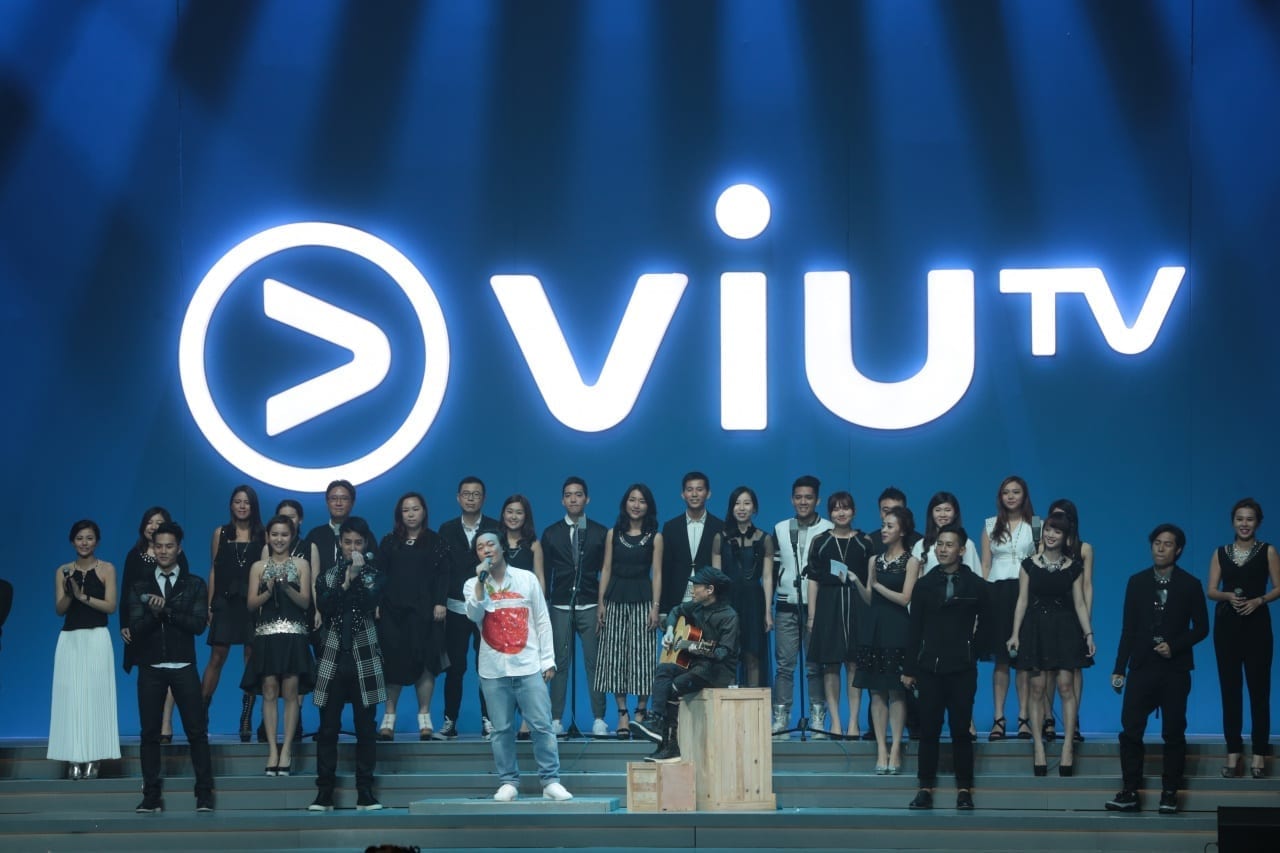
    PCCW Media said its Viu OTT video service has reached over 6 million active users in one and half year after launch and is driving 3G/4G acquisition and mobile data consumption for its telco partners in the region.

    Speaking at Broadband Forum Asia in Hong Kong Tuesday, Helen Sou, senior vice president and digital media head of OTT at PCCW Media, said Viu is now available in 14 markets in Southeast Asia, Middle East and India and the company is expected to continue to see strong growth in its user base.

    As of February, Viu had 6 million monthly active users, 80% of which were Generation-X with high disposal income and millennials who were receptive to digital ads. These users, Sou said, are highly engaging and valuable viewers, consuming an average of 1.8 hours of content per day or 12 videos per week.

    “These 6 million users are very sticky and consistent. They are not just coming in and leave in two months, they view video quite often and consume quite a long while,” she said.

    “They are valuable users for us, our advertisers and telco partners, because they are willing to spend money, consume data, pay for content and be responsive to digital advertisements.”

    Sou said Viu service has also created quantifiable value for its telcos partners in the region, driving up mobile data usage and 3G/4G customer acquisition in the markets where the service is available.

    “We’ve heard a lot of good things from partners, especial telco partners…In some markets, there are users afraid of buying data plans or either buy low-end data plan, but because of Viu they upgrade their data plans or their smartphones, and in some cases, some extend their Wi-Fi plans from hourly to weekly or migrate to the mobile network,” the executive said.

    Citing statistics from telco partners from one unidentified country, she said the Viu service has helped telcos achieve 3.5GB average monthly mobile data consumption per user and 25% incremental data revenue and APRU growth in three months.

    Launched in October 2015, Viu targets emerging markets with strong potential growth for 4G, where there are expected to have 600 million 4G users in 2020, according to the GSMA.

    The company is currently working with 20 telco partners in the region, including U Mobile, Maxis, TM, Indosat, AIS, Vodafone, Airtel, Digi, Idea Cellular and Singtel.

    According to Sou, OTT video revenue, including subscription revenue and advertising revenue, is expected to grow tremendously in these emerging markets next four years, with Middle East growing at CAGR 33%, India CAGR 62.8% and South East Asia CAGR 27.3%.

    There is also strong potential for OTT video, which is expected to account for around 75% of mobile data traffic, generating 69 exabytes in 2020, compared to 8.5 exabytes of mobile data traffic in 2016, she added.

    Sou said Viu is now a dominant OTT player in the region, attributing its success to good product, localization and good content for the success.

    Instead of Hollywood content, the company started with premium Asian video content – Korean, Bollywood, Japanese and Chinese dramas – and variety shows from over 200 content partners. The company also differentiates with fast local subtitling by promising viewers to deliver popular content as fast as 8 hours after local telecast.

  • OTT substitution to cost operators $104b this year

    OTT substitution to cost operators $104b this year

    Operator voice and text revenues will continue to be eroded by competition from OTT messaging services and social media, with the consumer migration to these services costing network operators nearly $104 billion this year, according to Juniper Research.

    The impact of OTT substitution will be the equivalent to 12% of operators’ service revenues, the research firm said.

    In a new report, Juniper Research said the major success of several platforms have substantially impacted operator margins, noting that WhatsApp alone now generates nearly three times as much daily traffic as SMS.

    While the threat to operator revenues posed by OTT substitution is nothing new, the report also notes that OTT messaging platforms are now trialing or incorporating multiple new communications options, such as group voice and video chat. This is likely to ensure continued erosion of traditional telecoms traffic levels in the future.

    But Juniper Research said there are a number of measures operators can introduce to stem the decline in core revenues and develop new sources of income.

    These include implementing big data and analytics packages for consumer and IoT devices, introducing carrier billing payment options or mobile money services, and developing mobile identity services for consumers.

    With operators increasingly deploying mobile as part of a quad-play offering for subscribers, report author Dr Windsor Holden added that it is essential for operators to provide consumers with attractive, original content to differentiate themselves from the competition.

    With mobile devices now regularly used for primary consumption of video content as well as snacking, operators providing popular film, drama and exclusive sports events over multiple channels are at a distinct advantage,” he said.

  • TiVo, Netflix ink product, IP deals

    TiVo, Netflix ink product, IP deals

    TiVo and Netflix have signed licensing agreements that allow both companies to deliver a better entertainment experience to consumers.

    A product agreement calls for TiVo to continue integrating Netflix into TiVo set-top boxes available to consumers through a select, but growing number of pay-TV providers and retail stores.

    Customers will benefit from the integrated offering, which includes unified search across the content catalog and a Netflix button on remote controls.

    “The partnership between Netflix and TiVo dates back to our early days of streaming video,” said Bill Holmes, Netflix global head of business development. “Building on this history, the agreements provide consumers freedom to watch their favorite TV shows and movies whenever and wherever, with an integrated experience across more devices.”

    A separate intellectual property agreement provides Netflix a license to the TiVo patent portfolios and a license to the Intellectual Ventures patent portfolio for over-the-top offerings.

    This agreement represents one of the first licenses granted under the exclusive partnership with Intellectual Ventures announced earlier this year.

    “Our agreements with Netflix represent a major milestone for TiVo as we expand our offerings for the fast-growing OTT space, and further demonstrates our commitment to delivering innovative technologies to new and emerging markets,” said Tom Carson, CEO, TiVo.

    “From products to patented technologies, TiVo is helping companies quickly adapt to a rapidly changing media industry and create beautiful user experiences that keep consumers connected to their favorite entertainment,” said Carson.