Tag: outlet mall

  • Auckland Airport to build outlet mall with 100+ stores

    Auckland Airport to build outlet mall with 100+ stores

    Auckland International Airport has posted an after-tax profit of $464.2m for the year to June 30, while also announcing plans to build a retail precinct with 100 stores that is expected to create 500 new jobs.

    Although its after-tax profit was up 139 percent on the previous year’s $194m profit, the airport made an underlying loss of $41.8m, its first full year underlying loss in history. The underlying loss was in line with the guidance the airport gave at the start of the year.

    The airport says underlying profit is how it measures its financial performance because it removes revaluation changes that can distort financial results or where one-off transactions, both positive and negative, can make it difficult to compare profits between years.

    The airport also recorded its lowest number of international arrivals and departures since 1972, with just 600,000 passengers, including transits, down 93 percent on the previous year.

    Total passenger numbers were 6.4 million, down 59 percent on the previous financial year.

    Shares in Auckland Airport closed at $7.10 on Wednesday. During New Zealand’s alert level 4 lockdown at the start of the Covid-19 pandemic, they dropped to about $5 per share.

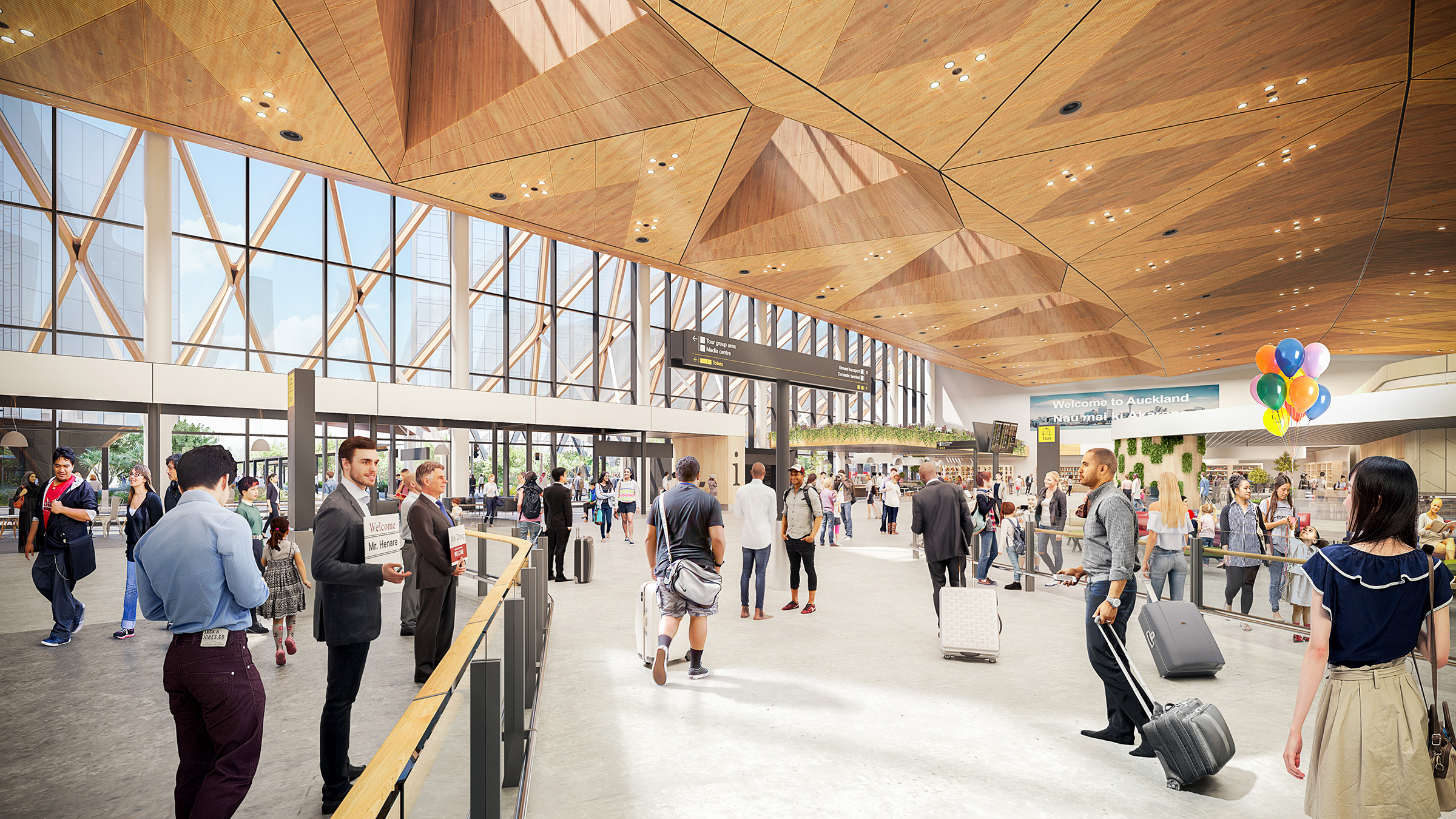
    The new retail precinct would involve the development of a 23,000 square metre-plus outlet centre on undeveloped land at the north-eastern edge of the airport.

    “Premium and lifestyle brands” will be sold “at often heavily discounted prices”, the company said.

    The airport’s general manager of property and commercial Mark Thomson said there was a gap in the market for a purpose-built fashion outlet centre and the airport had been exploring the concept for several years.

    “It will be the first of its kind in New Zealand, offering an exciting new shopping experience for Kiwis and travellers arriving at and departing from the airport,” Thomson said.

    “Many New Zealanders will be familiar with visiting this type of bespoke fashion outlet shopping centre on trips overseas.”

    A start date for construction was not given.

    Thomson said development would be influenced by the strength of the retail market and the recovery of aviation.

    Auckland Airport chief executive Adrian Littlewood said the 2021 financial year had been a year like no other for the company, and it was giving permanent staff $1500 in airport shares to thank them for their efforts over the past year.

    “Covid-19 changed our business overnight bringing constant upheaval to almost every part of our operation,” Littlewood said.

    “But throughout all the uncertainty of the past 18 months, our team’s determination to get the job done and go the extra mile for New Zealand has never faltered.”

    The airport had taken steps to strengthen its financial position including reducing operating expenses, repaying $425m in US private placement borrowings, and getting bank approval to renew a $700m loan, he said.

    The airport last week said it would start work on a $1 billion-plus project to merge its domestic jet operations with its international terminal early next year as one of four anchor projects being advanced.

    Four major projects are still on hold including its expanded international airfield and taxiway capacity, new cargo precinct, new international arrivals area and a second runway.

    Auckland Airport held more conservative assumptions than those of the International Air Travel Association, which was forecasting global travel to fully recover and exceed pre-pandemic levels in 2023.

    Littlewood said a full recovery may take longer.

    “Our financial performance is strongly linked to passenger volumes, so our recovery will be greatly influenced by the return of domestic and international travel and changes in border settings.”

    There were encouraging signs with vaccination programs ramping up in New Zealand and around the world, he said.

    “But we expect to see further volatility in domestic and international travel in the short term, with the global aviation market gradually rebuilding in 2022.”

    Due to uncertainty in the market, Auckland Airport would not provide underlying earnings guidance for the 2022 financial year, Littlewood said.

    Investment in transport infrastructure projects and upgrades would continue and was expected to cost between $250m and $300m in the 2022 financial year.

  • PH’s 1st Outlet mall opens August

    PH’s 1st Outlet mall opens August

    Cathay Land, Inc. and London-based Freeport Retail are set to open the first Outlet mall in the Philippines on August 2.

    Some PHP2.5 billion was invested for the construction of Outlet mall in Tagaytay City which sits along Km.48 Aguinaldo Highway, Silang, Cavite.

    Cathay Land President Jeffrey Ng said the Cavite-Laguna Expressway would make the Acienda Designer Outlet mall accessible from Metro Manila as it would be only 30 minutes away from the Ninoy Aquino International Airport and the Entertainment City.

    Outlet mall’s target market is Tagaytay’s 16.5 million locals and tourists with above-average income level and high level of fashion consciousness.

    “With Tagaytay City being a popular tourist destination among locals and tourists, we are confident that they will all enjoy our promise of high quality Outlet shopping at par with what they experience abroad,” said Ng.

    He added that the company is bullish in its first Outlet mall here with the country’s strong retail industry driven by rising income, remittances, and tourist arrivals.

    With this, Cathay Land and Freeport Retail are out to find strategic locations for their second Outlet mall in the Philippines set for launching within three years.

    “In 2012 we started our focus on Asia, which is a major Outlet opportunity. Our Outlet village in Malaysia opened at the end of 2015,” Freeport Retail Co-Founder and Commercial Director Chris Milliken said, adding that Kuala Lumpur now has three Outlet malls.

    An Outlet mall in Australia also opens on the same date with the launching of Acienda Designer Outlet mall in Tagaytay.


  • Outlet malls booming in China as department stores feel the pinch

    Outlet malls booming in China as department stores feel the pinch

    Designer outlet malls are sprouting up all over mainland China, even as department stores find themselves struggling amid a slump in retail sales.

    At least 17 new outlet malls are scheduled to open in China in the second half of 2016, according to a report by Outlet Sight, which tracks the industry. Some developers are betting on outlet malls because they typically offer off-season or factory excess goods priced at a discount to the in-season products sold by the same brands in department stores.

    “We think designer outlets are more defensive than high-street retail,” said Chris Reilly, Asia-Pacific managing director at TH Real Estate, a property fund that manages nearly US$100 billion of real estate in Asia, Europe and the US. “Their fundamentals are better in terms of supply and demand.”

    China’s department store sector has been battered in recent years by sluggish sales growth and declining profits, with store closures intensifying since 2015. Offline sales at the mainland’s top 50 retailers declined 3.1 per cent year on year in the first half of 2016, according to figures from the National Commercial Information Centre of China.

    However, the discount mall sector appears ripe for strong growth; for a country with China’s population and spending power, there are relatively few factory outlet malls – just 40 at present – compared with as many as 300 in the US, said Zhong Beichen, chief executive of outlet developer Beijing Capital Juda, which has already opened four such outlets, in Beijing, Hainan, Zhejiang and Jiangsu.

    “We aim to open outlets in more than 20 cities by 2020 and become the largest outlet operator in China,” Zhong told the South China Morning Post. “Discount malls can perform well despite economic ups and downs” because they offer customers cheaper price points, he said. “When the economy expands, people shop to dress nice, but outlets will still be the first choice for those seeking affordable luxury in an economic slowdown.”

    Juda was spun off from state-owned property developer Beijing Capital Land Ltd and listed in Hong Kong in 2015.

    The boom is attracting developers and investors to the fray.

    London-based TH Real Estate launched an US$850 million fund in China, with two Italian village-themed outlet malls in Wuqing in Tianjin city and Shanghai.

    “Our target shopper is the Chinese household earning more than US$20,000 a year,” said TH Real Estate’s Reilly. “This demographic group is already the largest in the world, and we expect the number to more than double over 10 years with the rise of the Chinese middle class.”

    With TH Real Estate’s Florentia Village in Shanghai 90 per cent occupied, and its Florentia Village Wuqing full to capacity, Reilly said he is confident the China Outlet Mall Fund can grow to US$2 billion by 2020. Four more Florentia Village malls are slated to open in Chengdu, Wuhan, Chongqing and Qingdao by 2017.

    Factory outlets face stiff competition from online retailers, but have the advantage of providing a complete experience, Juda’s Zhong said.

    “Our strategy is to build outlets in places with beautiful scenery to attract families for the shopping experience,” he said, citing their 110,000 square meter outlet in Beijing’s Fangshan District, which is located near a forest park.

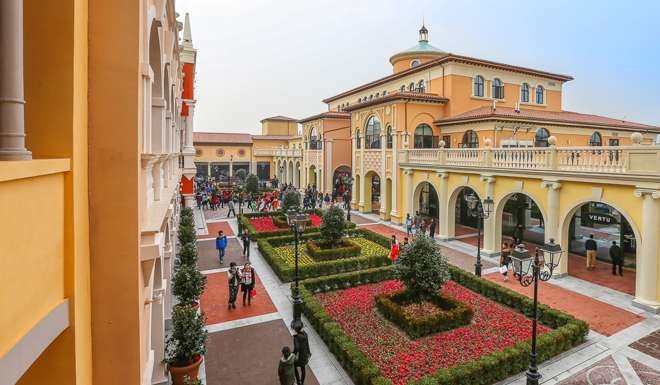
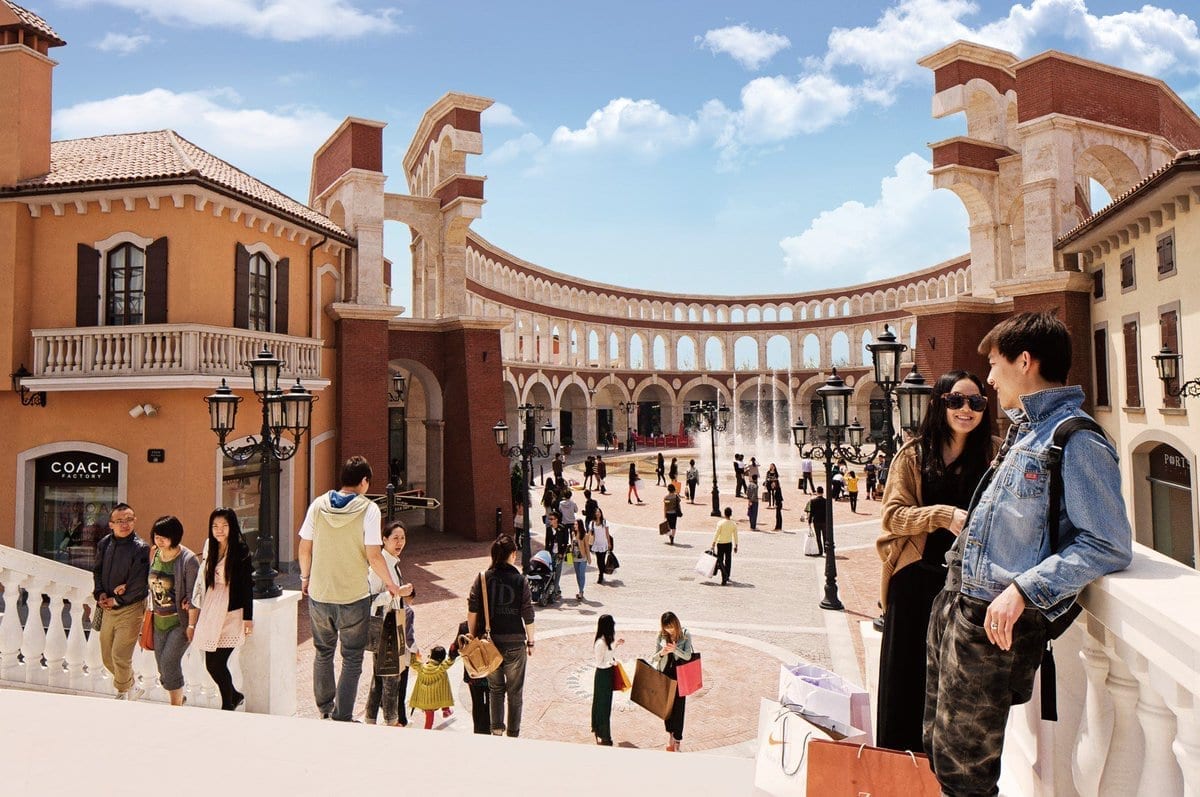
    Themed malls, such as the Florentia Village brands, are also becoming popular. Covering 90,000 square meters and with 3,000 car parking spaces, Florentia Shanghai reconstructs scenes of Florence including an Italian-styled city plaza, paved streets, porches, fountains and luxury brands such as Versace, Ferragamo and Zegna.

    “Shoppers like to visit outlets for the discounts, they want to try on designer brands, but what’s more important, it’s like a day out,” Reilly said.

    -Originally written by Summer Zhen, SCMP