Tag: outlook

  • Apple’s iPhone Sales Skyrocket, Setting Record Revenues for Q4 2025 and Optimistic Outlook for 2026

    Apple’s iPhone Sales Skyrocket, Setting Record Revenues for Q4 2025 and Optimistic Outlook for 2026

    Apple has unveiled its fiscal results for the fourth quarter of 2025, alongside its complete annual figures for the same year. The primary focus of interest is the iPhone’s performance during this period. From July to September, iPhone sales raked in a revenue of $49.03 billion, marking a 6.1% increase from the $46.22 billion generated in the fiscal fourth quarter of the preceding year. Although this figure fell short of Wall Street’s projections for the quarter, it established a new record for iPhone revenue in the company’s fiscal Q4.

    Expectations for Record iPhone Revenue

    Apple CEO, Tim Cook, announced that the company anticipates the iPhone to generate record revenue for the current quarter (fiscal Q1 2026) as well. In the fiscal year of 2025, iPhone sales reached $209.59 billion, a 4.2% jump from the $201.18 billion generated in 2024.

    The iPhone 17 range has been off to a positive start. Despite a reduction in production of the iPhone Air, the remaining three models—iPhone 17, iPhone 17 Pro, and iPhone 17 Pro Max—are reportedly outperforming their iPhone 16 counterparts in terms of sales.

    Performance of Other Products and Services

    The iPad demonstrated a stable fiscal Q4, generating $6.95 billion in revenue. Throughout the fiscal year 2025, the iPad’s revenue amounted to $28.02 billion, reflecting a modest year-on-year growth of 5%. Apple’s second-largest business segment after the iPhone is its Services division, which saw a robust fiscal Q4 with revenue amounting to $28.75 billion, an impressive annual growth of 15.1%. The Services unit generated revenue of $109.16 billion for Apple during the fiscal year 2025, marking a 13.5% increase year-over-year.

    The Services unit holds significant value for Apple as its success is not solely dependent on new iPhone sales. With 1.56 billion active iPhone units globally, the Services unit remains a critical component of the company’s operations.

    The company’s Wearables, Home, and Accessories division, which includes products like the Apple Watch, AirPods, and HomePods, reported Q4 sales of $9.01 billion. Despite a slight dip from last year’s Q4 revenue of $9.04 billion, the division generated $35.69 billion in revenue during fiscal 2025, down 3.6% from the previous year’s figures.

    Regional Performance and Earnings Per Share

    Apple saw increased revenue in nearly every region during the fiscal year 2025, with growth in the Americas, Europe, Japan, and the rest of Asia Pacific. However, sales in Greater China were slightly lower during the fiscal Q4.

    In the fiscal Q4, Apple reported a record $102.47 billion in revenue, a 7.9% increase from the previous year’s Q4 revenue of $94.93 billion. Throughout fiscal 2025, revenue reached a record $416.16 billion, a 6.4% increase compared to the $391.04 billion accumulated in fiscal 2024. The net earnings for fiscal Q4 were $27.47 billion, or $1.85 per share, a significant 90.7% increase from the previous year’s $14.74 billion or 97 cents per share.

    For the entire fiscal year 2025, net earnings amounted to $112.01 billion, or $7.49 per diluted share, compared to fiscal 2024’s $93.74 billion, or $6.08 per diluted share. This indicates a year-over-year net profit increase of 23.2% for Apple in fiscal 2025.

    Questions & Answers

    How did the iPhone perform in terms of revenue during the fiscal fourth quarter of 2025?
    The iPhone generated a revenue of $49.03 billion in the fiscal fourth quarter of 2025, a 6.1% increase from the $46.22 billion generated during the same quarter of the previous year.

    What are the expectations for iPhone revenue in the fiscal Q1 of 2026?
    Apple CEO, Tim Cook, expects the iPhone to generate record-breaking revenue in the fiscal first quarter of 2026.

    How did Apple’s other products and services perform in the fiscal year 2025?
    Apple’s iPad generated a stable fiscal fourth quarter revenue of $6.95 billion and $28.02 billion for the entire fiscal year, marking a 5% year-on-year increase. The Services unit showed a robust fiscal Q4 with revenue of $28.75 billion, a 15.1% year-on-year increase, and $109.16 billion for the entire fiscal year, a 13.5% increase year-over-year. The Wearables, Home, and Accessories division reported Q4 sales of $9.01 billion, and $35.69 billion for the fiscal year 2025, down 3.6% from the previous year.

  • Adidas Announces Record-breaking Third Quarter Revenue And Upgraded Full-year Profit Projection

    Adidas Announces Record-breaking Third Quarter Revenue And Upgraded Full-year Profit Projection

    Adidas, the renowned sportswear brand, recently announced a significant increase in their revenue for the third quarter. This surge was widespread, affecting all markets, categories, and channels.

    For the third quarter, the company’s total revenue skyrocketed to approximately €6.63 billion (US$7.7 billion), marking the highest third-quarter revenue ever for the company. This was primarily due to a 12% growth in the Adidas brand.

    The company pointed out that the impressive third-quarter results did not include revenue from Yeezy. This is because Adidas had successfully sold off the remainder of their Yeezy inventory at the end of the previous year.

    The gross margin for Adidas saw a slight but notable increase, improving by 0.5 percentage points to 51.8%. Additionally, the operating profit rose to €736 million, marking an increase from the €598 million recorded during the same period the previous year.

    Adidas’ CEO, Bjørn Gulden, expressed his pride in the company’s accomplishments during the third quarter. He mentioned, “Our teams delivered record revenues during a period of global volatility marked by tariff hikes in the US and widespread uncertainty among retailers and consumers. Despite these challenges, our brand and products continue to resonate well with consumers.”

    In light of these positive developments in the third quarter, Adidas has revised its full-year operating profit forecast. The company now expects its operating profit to increase to approximately €2 billion. This is a significant upgrade from their previous projection, which ranged between €1.7 billion and €1.8 billion.

    The improved forecast is a testament to the continuing momentum of the Adidas brand. It also acknowledges the company’s better-than-anticipated business performance and its successful efforts to partially offset the additional costs incurred due to increased US tariffs.

    As far as revenue is concerned, Adidas maintains its expectation of achieving double-digit currency-neutral growth for the year.

    Questions & Answers

    What was Adidas’ total revenue for the third quarter?
    Adidas reported a total third-quarter revenue of approximately €6.63 billion (US$7.7 billion), marking its highest ever for the quarter.

    What are the factors attributed to Adidas’ improved full-year operating profit outlook?
    The revised outlook reflects the continuous momentum of the Adidas brand, better-than-expected business performance, and the company’s successful efforts to partially offset additional costs due to increased US tariffs.

    What is Adidas’ expectation for revenue growth for the year?
    Adidas continues to expect double-digit currency-neutral growth for the year’s revenue.

  • Abercrombie & Fitch Q2 Earnings Soar, But Tariffs Threaten Future Profits

    Abercrombie & Fitch Q2 Earnings Soar, But Tariffs Threaten Future Profits

    Abercrombie & Fitch reported a record-breaking performance for Q2, driven in large part by a 19% sales increase from its subsidiary, Hollister. This performance prompted the company to revise its full-year sales forecast upward. However, not all was rosy, as the Abercrombie brand itself recorded a 5% fall in sales, following a 26% increase in the previous year.

    Detailed Business Performance

    Net sales for the quarter that ended on August 2nd soared by 7% year on year to reach US$1.2 billion, with comparable sales increasing by 3%. Operating income rose to $207 million, a significant jump from the $176 million recorded during the same period the previous year.

    The performance varied by region, with the Americas posting an 8% growth, and the Asia-Pacific region registering a 12% increase. However, the Europe, Middle East, and Africa (EMEA) region saw a slight decrease of 1%.

    During the announcement of the results, CEO Fran Horowitz lauded the resilience demonstrated by the company. She stated that the company outpaced its expectations by achieving a growth of 7% from the previous year and exceeding profitability expectations. The company also returned a considerable portion of its profits, $50 million, to its shareholders.

    Horowitz expressed optimism about the future, stating the company is entering the second half of the year with a proactive approach, backed by an upbeat sales outlook that builds on the previous year’s record results.

    Challenges and Opportunities

    Despite the positive outlook, the company issued a warning about potential challenges. It stated that tariffs on imports from Vietnam, Indonesia, Cambodia, and India are projected to add $90 million in costs this year. This is a significant increase from the company’s May forecast of $50 million in tariff expenses, despite mitigation efforts.

    However, industry experts have recognized Abercrombie & Fitch’s momentum. Neil Saunders, MD at GlobalData, pointed out that the company’s consistent execution has been pivotal to its growth. He praised the company’s strategies, citing the successful store and merchandising efforts, the rate of product refresh, strong seasonal marketing, and responsiveness to trends.

    Saunders also commended Abercrombie Kids’ strategic move into the wholesale market as a smart growth strategy. He highlighted that the US kids’ wear market was valued at $82.1 billion in the previous year, and Abercrombie & Fitch only has a small share of this market. Therefore, expanding through wholesale could provide fast access to new customers and require less capital than opening additional stores.

    Questions & Answers

    What drove Abercrombie & Fitch’s record Q2 performance?
    The main driver was a 19% sales increase from Hollister, a subsidiary of Abercrombie & Fitch.

    How did Abercrombie & Fitch’s performance vary by region?
    Sales in the Americas and Asia-Pacific regions grew by 8% and 12% respectively, while the Europe, Middle East, and Africa region recorded a 1% decrease.

    What challenges does Abercrombie & Fitch anticipate for the future?
    The company expects tariffs on imports from Vietnam, Indonesia, Cambodia, and India to add $90 million to its costs this year.

  • Asics Raises Annual Forecast Following Impressive Half-year Performance Across All Product Lines

    Asics Raises Annual Forecast Following Impressive Half-year Performance Across All Product Lines

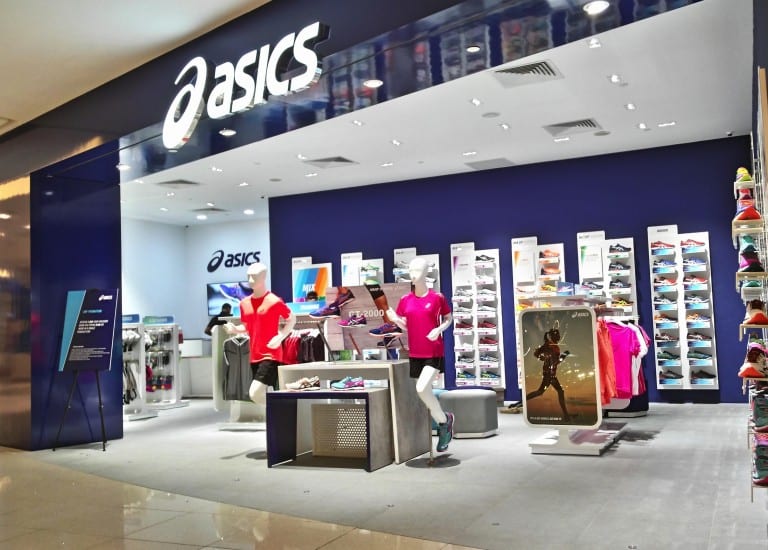
    Leading sportswear brand Asics has adjusted its annual forecast upwards, following an impressive performance in the first half of the year. The company’s exceptional sales growth was seen across all product categories and global regions.

    Asics witnessed a robust 17.7% year-over-year increase in net sales, amounting to $2.74 billion. The operating profit also experienced a significant rise, reaching $551.48 million, with the profit ascribed to owners standing at $364.48 million.

    Segment-Wise Growth

    The company’s performance running segment reported an 8.2% rise in sales, equal to $1.26 billion, with profit experiencing a 13.3% boost. Core performance sports also showed a positive trend, increasing 4.8% to reach $300.02 million, while its profit rose 16.5%.

    Asics’ apparel and equipment segment experienced a 6.9% sales increase, hitting the $136 million mark, while recording a remarkable 45.1% profit surge.

    In terms of lifestyle-oriented segments, SportStyle demonstrated significant growth, with sales skyrocketing by 46.4% to reach $457.71 million, and profit rising by 60.9%. Similarly, the Onitsuka Tiger brand experienced a 50.1% sales increase, reaching $447.98 million, with profit rising by 54.5%.

    Regional Sales Growth

    Asics experienced growth in all its regional markets. Japan’s sales increased by 24.3%, reaching $674.97 million, while North America saw a 9.1% rise, amounting to $502.59 million. Europe’s sales growth stood at 24.2%, reaching $773.64 million, while Greater China reported a 16.9% increase, amounting to $421.76 million.

    In addition to these, substantial gains were reported from Southeast and South Asia, with a growth rate of 33.4%, and Oceania, which increased by 3.8%.

    Leadership Commentary

    Koichiro Kodama, who serves as the President and CEO of Asics North America, expressed confidence in the company’s global performance. He underlined the steady demand for Asics products across various regions as an indicator of the brand’s strong market presence.

    Kodama emphasized the company’s unceasing efforts to develop technologically advanced performance running products. At the same time, he stressed the importance of staying informed about broader cultural and lifestyle trends to support the sportstyle category.

    Questions & Answers

    What were the net sales of Asics for the first half of the year?
    Asics reported net sales of $2.74 billion for the first half of the year.

    Which product segment reported the highest sales growth?
    The SportStyle segment reported the highest sales growth, with a surge of 46.4%.

    Which regions experienced the most significant sales growth?
    Europe and Japan were the regions with the most significant sales growth, reporting increases of 24.2% and 24.3% respectively.

  • UOB Boosts Vietnam’s GDP Growth Outlook to an Impressive 6.9%

    UOB Boosts Vietnam’s GDP Growth Outlook to an Impressive 6.9%

    Vietnam’s economy is doing a celebratory dance. A report from UOB’s Global Economics & Market Research Unit reveals that in the second quarter of 2025, Vietnam’s real GDP soared by an impressive 7.96% year-on-year, well surpassing Bloomberg’s forecast of 6.85% and UOB’s own prediction of 6.1%. This uptick follows a revised growth figure of 7.05% from the first quarter, highlighting a vibrant and resilient economy.

    Throughout the first half of this year, Vietnam’s GDP achieved an astonishing growth of 7.52% year-on-year, marking the highest rate recorded since data collection began in 2011. This remarkable performance can largely be attributed to businesses ramping up export orders during a 90-day window when the U.S. temporarily suspended reciprocal tariffs, replacing them with a standard 10% tariff rate.

    In the first six months of 2025, Vietnam’s export turnover surged by 14.4% compared to the same period last year, reaching $219 billion, while imports rose by 17.9% to $212 billion. These figures are nearly equivalent to the full-year growth rate witnessed in 2024, creating a picture of a robust trading environment.

    However, it’s not all sunshine and rainbows. Vietnam’s Purchasing Managers’ Index (PMI) suggests that the manufacturing sector still faces hurdles, having recorded six readings below the crucial 50-point threshold over the last seven months. This indicates ongoing challenges, particularly stemming from a dip in new orders. Alarmingly, the most recent data from S&P Global shows that export orders in June dropped at the steepest rate since September 2021, mirroring the declines observed in May 2023.

    With recent positive shifts in trade talks with the U.S., experts at UOB are cautiously optimistic, suggesting that the worst may be behind Vietnam, although tariffs continue to pose a significant challenge. In response to the adjusted U.S. tariffs on Vietnamese goods, UOB has revised its export forecast. Rather than the previously anticipated 20% decline, they now expect exports to the U.S. to grow modestly by 5%. Meanwhile, exports to other markets are projected to rise by 10%, closely aligning with the 11.3% increase recorded last year.

    Overall, Vietnam’s exports are anticipated to climb by 8.5% in 2025 — a notable deceleration from the 14% growth recorded in 2024. Taking all of this into account, UOB’s Global Economics & Market Research Unit has adjusted its GDP growth forecast for 2025, now predicting a rise of 0.9 percentage points, projecting a growth of 6.9% compared to the earlier estimate of 6.0%.

    On the monetary policy front, UOB indicates that the strong economic performance may reduce the urgency for further policy easing. As such, the bank expects the State Bank of Vietnam to keep its current policy rates steady, maintaining the refinancing rate at 4.5%.

    Questions & Answers

    How does Vietnam’s GDP growth in the second quarter compare to past performance?
    Vietnam’s GDP growth of 7.96% in Q2 2025 is the highest growth since data collection began in 2011, significantly exceeding forecasts by both UOB and Bloomberg.

    What are the main factors driving Vietnam’s economic growth in 2025?
    The acceleration in export orders during a temporary suspension of reciprocal tariffs by the U.S. plays a critical role, alongside a robust increase in both exports and imports.

    What challenges does Vietnam’s manufacturing sector currently face?
    The manufacturing sector struggles with a declining Purchasing Managers’ Index (PMI) and a significant drop in new export orders, reflecting ongoing vulnerabilities in the industry.

  • Bank Negara Indonesia Faces Ongoing NIM Challenges in Second Quarter: What Lies Ahead?

    Bank Negara Indonesia Faces Ongoing NIM Challenges in Second Quarter: What Lies Ahead?

    Over the past few years, the retail industry has endured a whirlwind of transformation, especially in Asia, where adaptation and resilience have been put to the test. Amid the ongoing evolution shaped by technological advancements and shifting consumer behaviors, companies are redefining their strategies to stay ahead in this dynamic sector.

    Embracing Technology: The Retail Revolution

    From mobile payments to virtual fitting rooms, technology is not just an addition to retail; it’s reshaping its very foundation. Asian consumers, known for their swift adoption of new digital tools, are now more empowered than ever. Retailers are responding with innovative solutions that enhance in-store and online experiences, appealing to an increasingly tech-savvy audience. Even traditional markets have found ways to digitize their operations, proving that innovation knows no bounds.

    Interestingly, amidst all this digital transformation, a few retailers are choosing to go old school—think cash transactions and handwritten receipts. It’s a reminder that sometimes, simplicity holds its own charm.

    The Luxury Segment’s New Frontier

    The luxury retail sector is experiencing rejuvenation as well, particularly in markets like China and Japan. High-end brands are tapping into the growing affluent middle class, curating exclusive experiences that blend both tradition and modernity. Events are no longer just about showcasing products; they’re immersive experiences that engage customers on an emotional level. Whether it’s a pop-up shop in a trendy Shanghai district or an exclusive virtual tasting in Tokyo, luxury retail is all about creating memorable moments.

    Sustainability Takes the Spotlight

    As environmentally conscious consumers on the rise, retailers are scrambling to adopt sustainable practices. Many are integrating eco-friendly materials into their products and adopting more transparent supply chains. In a climate where shoppers want to know the story behind their purchases, brands that prioritize sustainability aren’t just making a “greener” choice—they’re also amplifying their appeal. Embracing sustainability could spell the difference between staying relevant or fading into oblivion.

    The Future of Shopping: Omnichannel Strategies

    As the lines blur between online and offline shopping, retailers are leaning into omnichannel strategies more than ever. The seamless integration of physical and digital platforms is no longer a luxury but a necessity. Consumers expect a consistent experience whether they shop via mobile apps, websites, or brick-and-mortar stores. Retailers that fail to meet these expectations face the risk of losing their customer base to more agile competitors.

    While it’s easy to get caught up in forecasts and projections, the heart of retail is still about fostering connections. Whether it’s a brief chat with a store associate or classic customer service, businesses that understand this human element will stand the test of time.

    Questions & Answers

    What role does technology play in the transformation of retail in Asia?
    Technology is fundamentally reshaping retail by enhancing customer experiences through innovations such as mobile payments and virtual fitting rooms, reflecting the swift digital adoption among Asian consumers.

    How is the luxury retail sector adapting to modern consumer demands?
    Luxury retail is focusing on creating exclusive and immersive experiences that engage customers emotionally, appealing to a growing affluent middle class in markets like China and Japan.

    Why is sustainability becoming increasingly important for retailers?
    With the rise of environmentally conscious consumers, retailers are prioritizing sustainable practices and transparent supply chains, as these factors significantly enhance brand appeal and relevance in today’s market.

  • Trade Vulnerabilities: South Korea, Taiwan, and Thailand Banks Brace for Deteriorating Economic Outlook

    Trade Vulnerabilities: South Korea, Taiwan, and Thailand Banks Brace for Deteriorating Economic Outlook

    The banking sectors across South Korea, Taiwan, Thailand, Hong Kong, and China are bracing for challenging times ahead, with a deteriorating outlook for 2025 driven by increased trade tensions and tariff impacts that are expected to hamper loan growth and profits. This mounting concern reflects the shared vulnerabilities linked to their high export exposure and significant sales to the United States, according to Fitch Ratings.

    Changing Fortunes for South Korea, Taiwan, and Thailand

    In a recent analysis, Fitch Ratings downgraded the outlook for South Korea, Taiwan, and Thailand from neutral to deteriorating. The implications are clear: banks in these regions may grapple with weakened loan growth, deteriorating asset quality, and diminishing profitability as tariffs escalate. With their economies closely tied to exports, the ripple effects are anticipated to be significant.

    Vietnam: A Unique Scenario

    Contrastingly, Vietnam’s banking sector outlook transitioned from improving to neutral, yet it holds the distinction of having the highest level of export exposure to the U.S. within the Asia-Pacific region. Factors such as a potential reduction in lending rates and prospects for loan relief could provide a cushion against the adverse impacts on lending yields and provisioning. “Vietnam’s softer economic outlook may lead to higher credit costs, but it is expected to still experience solid profit growth this year,” Fitch noted.

    Looking ahead, a projected loan growth quota of 16% for 2025 suggests that, even in a tight environment, non-performing loan rates may only rise moderately. Furthermore, Vietnamese authorities may encourage banks to lower lending rates to stimulate economic activity amid the rising tariff scenario, which could affect their net interest margins.

    Challenges in China and Hong Kong

    For both China and Hong Kong, the outlook remains grim as they retain a “deteriorating” status heading into 2025. Fitch highlights that Hong Kong is expected to experience the steepest rise in non-performing loans across the region, primarily due to ongoing struggles in the property sector. “Both systems are facing subdued loan demand compared to historical levels,” Fitch commented, underscoring the strain on their financial landscapes.

    The situation in China reflects a similar pattern, with government policies likely to constrain profitability as banks confront asset quality challenges stemming from a faltering economy and property sector difficulties.

    Not only are these banks navigating a complex landscape, but they must also do so with a sense of urgency as conditions evolve. After all, a financial ripple effect rarely stays localized; it often sets off waves that can reach far and wide.

    Questions & Answers

    What has led to the deterioration of the banking outlook in certain Asian countries? The outlook for South Korea, Taiwan, and Thailand has shifted to deteriorating due to the impact of rising tariffs and trade tensions with the U.S., which are expected to weaken loan growth and profitability.

    Is Vietnam’s banking sector in distress like others in the region? While Vietnam has a high level of export exposure to the U.S., its outlook has only shifted to neutral, with potential measures like reduced lending rates and loan relief helping to buffer against economic pressures.

    What challenges do banks in China and Hong Kong face? Both regions are experiencing a deteriorating outlook characterized by rising non-performing loans and subdued loan demand, exacerbated by issues in the property sector and overarching economic weakness.

  • Microsoft launches new contact editor for Outlook on iOS and Android

    Microsoft launches new contact editor for Outlook on iOS and Android

    Microsoft is bringing Outlook Mobile users a brand-new contact editor, which includes a slew of features developed based on users’ feedback. The new contact editor was specifically designed to enhance the contact experience on both mobile platforms, iOS and Android.

    The contact editor allows users to easily add and edit contacts. It’s important to mention that the new contact editor will replace the use of the devices’ native editors in Outlook Mobile.

    After receiving feedback about compliance concerns in the previous native Android and iOS editors related to managing and enforcing Intune policies for contact editing in Outlook Mobile, Microsoft found a solution that brings multiple benefits to make the contact editing experience better.

    • Compliance: Users can now efficiently manage their contacts in Outlook Mobile using the editor, while ensuring compliance with their chosen Microsoft Intune policies.
    • Coherence: Enjoy a consistent contact-editing experience across iOS and Android, as well as with the editors on Outlook.com and the new Outlook app for Windows.
    • Easy to organize: Categories offer an easy, flexible way to sort your contacts. Think of categories as tags that you can apply to group your contacts into meaningful clusters.

    According to Microsoft, all contacts that were created through the earlier native editors will remain accessible for viewing and editing within the Outlook mobile and web platforms.

    In order to access the new contact editor, users must first update their Outlook Mobile app, click on Apps in the bottom panel to navigate to the Contact tab, and then click on “New Contacts.”

    Another way to access the new contact editor is to navigate to the Feeds tab from the bottom panel and then click on “Create+.” Finally, Outlook Mobile users can click on “Add to Contacts” or “Edit Contact” from a People Card to access the new contact editor.

    Besides that, Android users can also navigate to the Feeds tab from the bottom panel, click on “Create+” and choose “Scan Business Card.” The card details should automatically appear pre-filled in the editor. Once again, this feature is not available on iOS.

  • Nissan Triples Profit Forecast On Strong Quarterly Results

    Nissan Triples Profit Forecast On Strong Quarterly Results

    Nissan tripled its full-year net profit forecast on Tuesday as it rebounded from the impact of the pandemic with a strong quarterly performance, saying it expected to withstand challenges including the global chip crunch and rising raw material prices. The firm now projects 180 billion yen ($1.6 billion) in net profit for the fiscal year to March 2022, up from an earlier estimate of 60 billion yen. Nissan’s last yearly net profit in the black was in 2018-19.

    For the three months to September, Nissan logged a 54.1 billion yen net profit, reversing a 44.4 billion yen net loss for the same period last year. “Our strong results are the outcome of diligent financial management, improved quality of sales and continuing product offensive. This has helped us withstand several headwinds,” Nissan CEO Makoto Uchida said in a statement.

    The firm has faced a series of trials in recent years, including weak demand during Covid-19 lockdowns and the fallout from the arrest of former boss Carlos Ghosn, now a fugitive in Lebanon.

    On Tuesday, the company revised down its full-year sales forecast to 8.8 trillion yen from 9.75 trillion yen, partially because of the impact of a semiconductor shortage plaguing auto firms worldwide. Supply disruptions have compounded the mismatch between demand for and availability of chips, a key component in modern cars.

    Nissan plans to slash its production by around 30 percent from its original plan in October and November because of the chip shortage, public broadcaster NHK reported.

  • Microsoft optimizes all Office mobile apps for Samsung’s new foldable phones

    Microsoft optimizes all Office mobile apps for Samsung’s new foldable phones

    The announcement of the new Galaxy Z Fold 3 and Galaxy Z Flip 3 marked a few premiers for Samsung’s flagships. For example, there are the first smartphones that allow users to seamlessly transfer all their WhatsApp chat history when they switch from an Apple iPhone to an Android phone.

    This WhatsApp feature only works on the Galaxy Z Fold 3 and Galaxy Z Flip 3, but its availability will soon be expanded to most Android and iOS devices. Another interesting premiere revealed this week focuses on Microsoft’s Office mobile apps, which have been fully optimized to work on Samsung’s new foldable phones.

    The Redmond-based giant announced a new partnership with Samsung to perfect the way its Office mobile apps work on the Galaxy Z Fold 3 and Galaxy Z Flip 3. Also, the partnership between the two companies has expanded to further integrate Teams and Outlook into the foldable smartphone experience.

    Starting with these two foldable phones, you’ll be able to run multiple apps at the same time via the Multi-Active window. For example, running Microsoft Excel and PowerPoint dragging and dropping a table right into your presentation will be a breeze now. Even running two instances of the same app will be possible.

    Samsung Galaxy Z Fold 3 and Galaxy Z Flip 3 are now available for pre-order for $1,800 and $1,000, respectively, with availability expected August 27 starting from the United States and Europe. You can pre-order either of the two flagships via the widgets below.

  • Microsoft’s Outlook for Android and iOS will no longer sync with Facebook calendar

    Microsoft’s Outlook for Android and iOS will no longer sync with Facebook calendar

    Microsoft has decided to remove one functionality from its Outlook for Android and iOS app: the ability to sync calendars. The good news is the change will only affect three services: Facebook, Meetup and Evernote.

    The Redmond giant put up a post to inform Outlook users on Android and iOS that beginning September 13, the app will no longer sync calendars from the three services mentioned above. No explanation has been given, but Microsoft promised to give users a 2-week reminder within the app, if they are currently syncing any of these calendars in Outlook.

    Apart from the fact that syncing with Facebook, Meetup and Evernote calendars will no longer be possible after September 13, the change will not affect Outlook mobile users in any other way.

    Microsoft hasn’t said whether or not the calendar sync functionality for these three services will ever return and didn’t offer any alternative solution. If you’re currently syncing Outlook calendar with any of these three services, you’ll be getting a reminder soon if you keep using the feature.

  • Nissan Raises Earnings Outlook, Optimistic Chip Crunch Will Ease

    Nissan Raises Earnings Outlook, Optimistic Chip Crunch Will Ease

    Japanese automaker Nissan Motor Co on Wednesday raised its earnings outlook for the year, helped by a weaker yen and favorable demand in the United States and China, after reporting a surprise first-quarter operating profit. The company also warned that a global shortage of semiconductor chips will significantly hurt sales volume in the July-September quarter, but added that demand for its newly launched, pricier models will mitigate the impact on profits.

    Nissan hopes to make up for production and sales losses during the latter half of the fiscal year ending March 2022 and expects semiconductor shortages to ease during that period, Chief Operating Officer Ashwani Gupta told reporters.

    “Nobody has got a crystal ball. Nobody. But there are some assumptions,” he said, referring to an expected easing of the crisis, partly because a fire-hit Renesas Electronics chip plant in Japan is functioning again.

    Nissan, Japan’s No. 3 carmakers, maintained its global sales target of 4.4 million vehicles that it had set for the year in May.

    Nissan sold 1.048 million vehicles in April-June, up 63% from a year earlier, when global demand was hit by the COVID-19 pandemic. It sold 378,000 vehicles in North America (U.S., Canada and Mexico), up 70% from a year earlier, while sales in China totaled 352,000 vehicles, a 71% increase.

    Sales in the United States totaled 298,000 vehicles, up 68% from a year earlier.

    Chief Executive Makoto Uchida said Nissan will have to live with business uncertainties, including higher raw materials costs, for the remainder of the year.

    The auto industry has been grappling with a months-long shortage of semiconductor chips, which has forced them to cut production and delay car deliveries.

    Some companies such as Stellantis, owner of brands including Peugeot and Jeep, have said they expect the shortage to easily drag into next year.

    Some, though, like Taiwan chipmaker TSMC and Volkswagen said they are seeing some signs that the crunch is easing.

    Despite that, Nissan had a good start to the year, Gupta said, attributing the surprise first-quarter profit partly to the company efficiently managing supply chains and strategically using its chip stockpile, minimizing the impact of the shortage.

    Nissan reported an operating profit of 75.68 billion yen ($688.6 million) for the first quarter ended June 30. Analysts had expected a loss of 42.72 billion yen, according to Refinitive SmartEstimates.

    For the year ending March 2022, Nissan now expects an operating profit of 150 billion yen. In May, the company had forecast that it would break even in the period.

  • Tech Roles Dominate Singapore Job Outlook in Finance

    Tech Roles Dominate Singapore Job Outlook in Finance

    Technology continues to play a dominant role in the development of financial services in Singapore with related functions accounting for more than a quarter of job opportunities in the sector. Technology will continue to lead hiring demand in 2021, according to the Monetary Authority of Singapore (MAS), with 1,700 hiring opportunities such opportunities within the financial sector.

    This accounts for more than a quarter of the total 6,500 newly created positions for the year by financial institutions.

    Technology has become central to how financial services are produced, distributed, and consumed, said MAS managing director Ravi Menon in a published statement. The Singapore financial sector has harnessed technology across a wide range of functions – from risk management, business analytics to customer service.

    Within the fintech job market, software engineers were the highly demanded role by employers. Net job growth for software engineers in 2019 was 200, 10 times more than UI or UX designers. These jobs require strong programming skills and in-depth business domain and system knowledge, Menon said, noting that local citizens landed less than one-fifth of such jobs. There are not enough Singaporeans applying for these jobs in the first place, let alone qualifying for them.

    Despite the tech focus, non-tech roles remained in demand especially in areas like relationship management, product sales, compliance, and risk management.

    Relationship managers are will account for 1,300 jobs or 28 percent of hiring

    Menon noted that demand will be underpinned by wealth management growth, highlighting expansion plans by major banks like Citi and DBS.

    Overall, the financial sector posted net job growth of 2,200 in 2020 compared to a 180,000 net loss in the broader economy.

    MAS expects momentum to continue with the sector expected to add 2,500 to 3,500 tech jobs each year over the medium term.

    The size of the tech workforce within the sector is estimated to be 25,000, a 30 percent increase compared to 2014.

  • These changes being added to Microsoft’s Outlook greatly improve the app

    These changes being added to Microsoft’s Outlook greatly improve the app

    Microsoft’s attempt to take on Siri, Google Assistant, and Alexa was not what you might call a rousing success for the software giant. In most head to head testing, Cortana finished behind all of its rivals including Siri, which is about as bad as things can get. Earlier this year, Cortana was removed from the Microsoft App Launcher. And Microsoft itself has said that at the beginning of next year it will pull Cortana out of the App Store and the Google Play Store.

    But this might not be the end of Microsoft’s digital assistant after all.  In an effort to revitalize its mobile apps, Microsoft announced some changes it is making to Outlook at the request of IT administrators who want to encourage their end-users to start using the iOS or Android version of the app. In a blog post, Microsoft explains that Outlook users will be notified from their desktop or browser that they can have the Outlook experience on their mobile device.

    The users then send a text to themselves containing a link that allows them to download Outlook mobile from the app stores. When they open the app, scanning a QR code will securely transfer their Microsoft credentials from the desktop version of Outlook to the app on their phone. This way they won’t need to enter their username and password when adding a work or school account.” As Microsoft says, “This experience provides a shortcut for both users and IT administrators. Users can easily get started and IT administrators can quickly and confidently know they can scale their deployments in a secure way using the services they already have.

    “Microsoft says that over the next several weeks, it will be adding shortcuts into Outlook for iOS and Android. For example, if suggested replies is enabled by the user and allowed by his or her organization when receiving a message for a get-together, Send Availability will allow the user to work out a time that works out the best for him or her. Tapping on Schedule Meeting will allow the user to create a new event on his Outlook Calendar.

    In the Android version of Outlook, users will be able to respond to email notifications in the app by choosing Archive, Reply, and Delete. Two out of the three can also be selected as responses along with Mark Read, Flag, Read & archive, or none. With Drag and drop, files, text and images can be added to Outlook emails. And those using the iOS 14 version of Outlook now have a widget shortcut to the Outlook Calendar.

    Those with the iOS or Android version of Outlook will be able to schedule a meeting, call contacts from Outlook with their phone, and quickly compose short emails using their voice. This is in addition to searching for people, emails, events, and files, or monitoring new posts in their inbox with help from Cortana.

    The weather is coming to the Outlook app as a way for users to see what the forecast is for later on the same day, the forecast over the next three days, or over the upcoming week. Lastly, AI-based text predictions are coming to the mobile version of Outlook. This makes it quicker to complete composing emails in the app. Swipe on the screen to accept the suggested text or keep typing to ignore it.

    Coming around the beginning of the New Year is Reactions. This feature will allow the Outlook user to add an Emoji quickly in reaction to a message that he or she has received. It helps the user express his view about an email without having to write another long-winded response.

  • Microsoft announces new features coming to Outlook mobile

    Microsoft announces new features coming to Outlook mobile

    Microsoft revealed a bucketload of new features that will be coming to Outlook mobile. Many of these improvements have already been released, while others will be added very soon. It’s also important to mention that most of them focus on two aspects: online meetings and video calls.

    First off, we have a brand new feature called Meeting Insights, which offers Outlook for Android users a first glance at email messages and files that could be relevant for their meetings. All the information is shown in the event details on the calendar, which makes it easier and faster to find what you need.

    Another nifty improvement added is the option to join a meeting online by default, so you won’t forget to add the Teams link. You’ll find the new option in the Settings menu in Outlook mobile; just make sure to select all your meetings to be created online by default.

    Furthermore, Microsoft confirmed that Outlook mobile users will start getting suggestions to Send Availability or Schedule Meeting when someone wants to meet them. They don’t show up at the moment, but these suggested replies should pop up in Outlook mobile very soon.

    Next, we’ll be talking about the option to snooze an email message for later. In Outlook mobile, you can now swipe on a message to snooze it, which means that it will show up at the top of your inbox until you reply to it.

    The latest Outlook for iOS update adds the ability to create a task from an email message received on a phone. All new tasks are synced across Microsoft 365 and will use the same email subject. Also, they will include the original email and ling to the conversation in Outlook.

    Last but not least, Microsoft has added another Cortana-related feature called Play My Emails. As the name suggests, the new functionality lets Cortana read out new email messages.