Retail News CRM

Tag: Pacific Place

  • Versace Hong Kong opens flagship store

    Versace Hong Kong opens flagship store

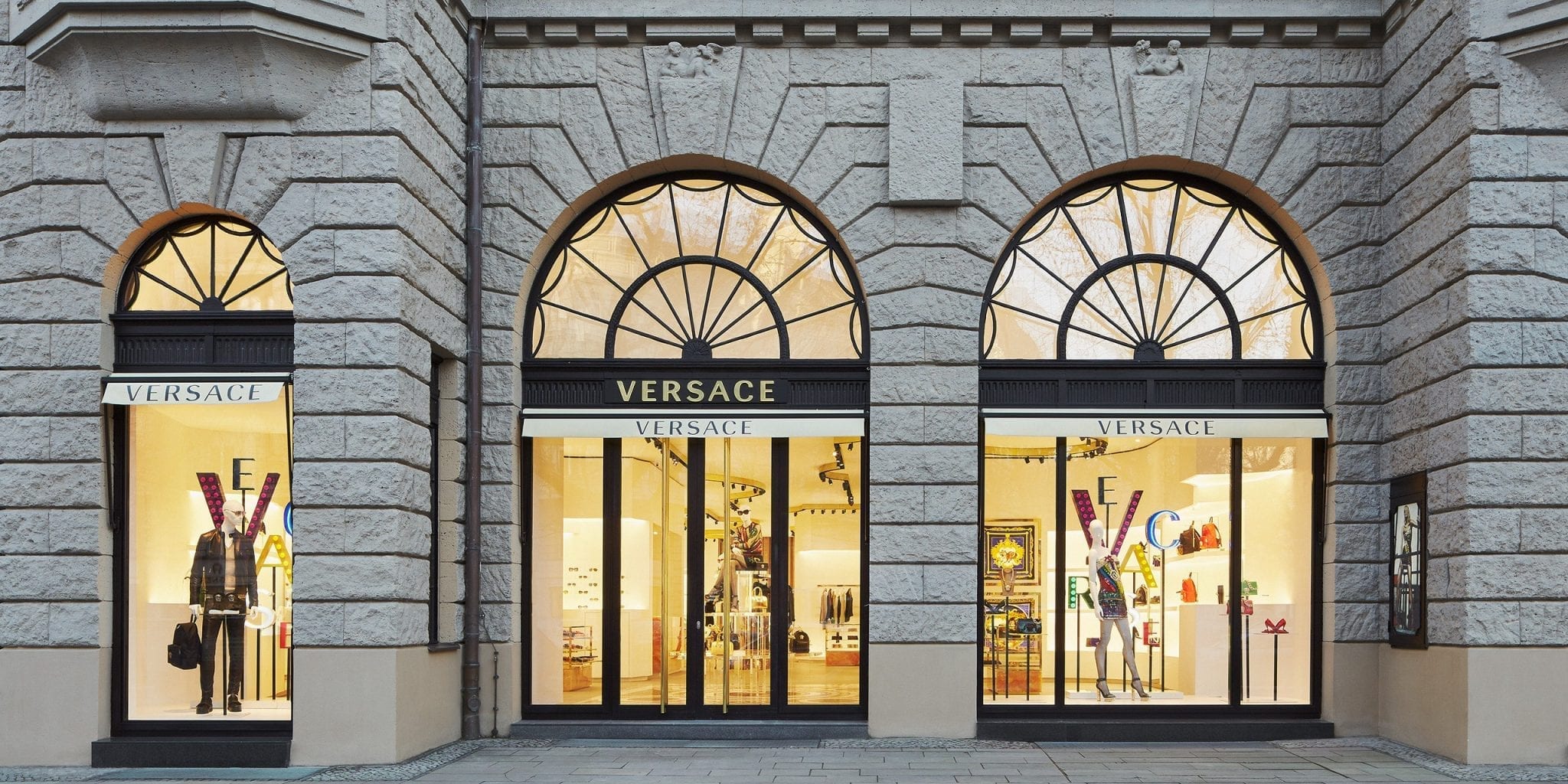
    Versace Hong Kong has opened a flagship store in the Shanghai Commercial Bank Tower in Central.

    Covering about 743 sqm, it features men’s and women’s ready-to-wear and accessories. It joins standalone stores for the Italian fashion house at Gateway Arcade, MixC Mall, Pacific Place and Sogo Causeway Bay.

    versace-hong-kong-shanghai-commercial-bank-central-2

    The flagship incorporates traditional Italian architectural values with modern touches. Architectural elements include Fior di Bosco marble flooring and brass features, while the facade features backlit onyx.

    versace-hong-kong-shanghai-commercial-bank-central-1

    “For me, the boutique suggests an uninterrupted dialogue between our past and our future, between Versace and our clients,” says Versace Group VP and chief designer Donatella Versace.

    To celebrate, Versace has designed a limited-edition mini Palazzo Empire handbag especially for the store. It is embellished with silver Swarovski crystals and includes a detachable leather shoulder strap and a palladium Medusa head, the symbol of Versace. There is also a metallic tag inscribed “The Palazzo Empire celebrating Hong Kong”.

    versace

    Also at the boutique is a limited number of medium and large Palazzo Empire handbags in exotic skins in various colours. These handbags include a removable interior metallic tag reading “Versace for Shanghai Commercial Bank Tower, Hong Kong”.

  • Art work in Hong Kong malls

    Art work in Hong Kong malls

    The trend of hosting art shows in privately owned spaces with public access is catching on in HK. Is exhibiting in malls the future in a city where galleries are struggling to cope with depleting footfalls?

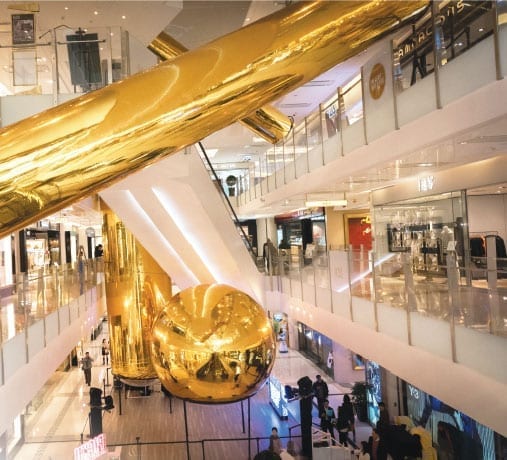
    Last April it was the giant balloons. This month it is mirrors and glass. Last time it was a 17.5-meter high installation by the architect James Shen, shooting up skyward from the base of K11 Atrium at Tsim Sha Tsui, reflecting and transmogrifying the never-ending stream of shoppers riding the escalators on its golden PVC coating. This time it is all about interiority.

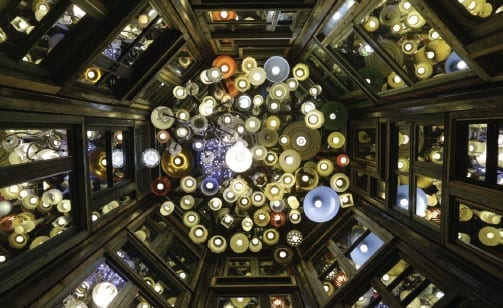
    Shen’s gleaming cylinders and spheres have given way to an octagonal tower made of recycled window panes and mirrors, created by Song Dong. The interiors of the glass capsule are awash with lights streaming down from a complicated chandelier overhead. Placed strategically, the mirrors throw infinite reflections of the light bulbs, near-obliterating the viewer standing inside, even as they accentuate and multiply the “glamorous emptiness” within.

    These two works of art, mounted in K11 Atrium within a few months of each other, explore how our perceptions of in and out might change without warning. In a way they also serve as a metaphor for privately owned public spaces, such as K11 is. Hong Kong’s only “art mall” was founded with a view to making art and commerce a simultaneous experience. Visitors to K11 are expected “to appreciate art while shopping”.

    When a primarily profit-driven, corporate-managed property gives up part of its space to exhibit art for free, the gesture is both radical and beautifully imaginative, much the same way as Shen’s giant balloon and Song’s bottomless glass “well” are in the way they resist the idea of the outside-inside binary as being absolute and irrefutable.

    Happily, K11 is not the only commercial enterprise in Hong Kong to put art under the same roof as retail trade. Hongkong Land hosts art shows periodically in its Rotunda at the Exchange Square and Landmark Atrium, where museum-worthy pieces by classic Western master painters, Peter Paul Rubens and Pierre-Auguste Renoir were on show alongside works by heavyweights of Chinese contemporary art, Luis Chan and Chu Teh-chun, in March. In July Pacific Place held an exhibition of Hong Kong landscapes by city artists to raise funds for a charity.

    The great leveler

    The day when a Zhang Xiaogang or a Liu Wei competes with Gucci bags and Louboutin heels for audience attention from the same store window may not be that far away. The sculptor Richard X. Zawitz, whose show Civilization and the Monkey concluded last month at the Rotunda in Exchange Square at Central, probably won’t mind such an eventuality. In March, Zawitz’s shiny, idiosyncratic metallic loops which playfully imitate the human form were part of a display showcasing pouch bags by JW Anderson at Colette in Paris. The Zen-inspired “tangles”, which is Zawitz’s trademark style, were replicated in the design of the bag handles.

    Zawitz seems unfazed by the fact that many in the audience came to check out the fashion accessory and got to see his sculptures by default.

    “What I like about exhibiting in malls is that there’re a lot of accidental discoveries by people perhaps less inclined to art,” says Zawitz. “Here you are reaching people who never go to museums, reaching a broader audience, bringing creativity to them.”

    He fondly recalls school children trooping down to his last show at the Exchange Square and how they made sketches of his sculptures, some of them scribbling “I love you, Richard” notes on the drawings. There was also a gentleman who walked up to the centerpiece, Zawitz’s abstract rendition of a tree. “He started praying to the tree, to the invisible energy it seemed to disseminate,” says Zawitz, still quite overwhelmed by the power of his own creation.

    It also felt like a vindication of his artistic goals. “I want my audience to engage with my art, look at it, feel it smell it. I very much create art hoping they would evoke passion in people and inspire.”

    The Rotunda seemed like a perfect fit, not only because “its 30-meter diameter and the amazing dome which reflects the positive energy from around the environment” matched Zawitz’s Zen-inspired sculptures in spirit, but also because of the amazing cross section of people it drew. There were bus drivers, Filipino maids, bank executives in business suits and high-profile art collectors.
    Piggybacking on luxury goods

    By hosting art shows in its various open-access private properties all the year round Hongkong Land continues to play a significant role in democratizing high culture. However, says Stefan Al, who teaches urban design at the University of Pennsylvania and edited Mall City: Hong Kong’s Dreamworlds of Consumption (HKU Press), the trend of “making elite art more accessible” is also “a sign of art being increasing commercialized”. “It’s a reflection of shrinking public budget for art and also of people’s growing taste for high-end products,” he adds.

    The existence of K11, founded with a view to marrying shopping with art appreciation, says Al, is “especially symptomatic in Hong Kong where culture has been so much underfunded and developing platforms to showcase art is so much more expensive”.

    It’s almost as if K11 materialized because of a gap created in the realm of conventional exhibition spaces. Tired of waiting for museums closed for long-term renovation work to reopen even as others take longer than anticipated to build, audiences are open to exploring alternative venues to see art. Malls seem like a natural choice in Hong Kong where people like the idea of getting more value for the money spent. Art resonates better with the affluent city-dweller when presented as part of a composite consumer experience, with dining, shopping and an afternoon at the spa thrown into the package.

    Expectedly, not everybody is happy to see art piggybacking on Luis Vuitton bags, especially when the two are thrown together arbitrarily. Critics of the consumerist impulse to appropriate art, says Al, “call it co-op art, referring to art placed in sites – malls, corporate office spaces and public plazas – with which they do not have a relationship.” Al’s personal view, however, is that “if it’s done well there is nothing wrong with having art in a mall. It provides opportunity for the artist to display and finance his work. It also is an opportunity for the public to see art.”

    At a time when gallery owners complain about spiraling rents and depleting footfalls, “shopping malls can make for a great, at least interim, solution to bring art to as many people as possible”, says Lee Ho-yin, director of architectural conservation programs at the University of Hong Kong. Even architecturally speaking, malls make for sensible, user-friendly choices, he says.

    “Modern high-end shopping malls have a huge atrium space with the flexibility of displaying art of different sizes, hung from the ceiling, free-standing on the ground or displayed on the wall,” explains Lee. “Also these are air-conditioned, comfortable for the visitor, have good security. Climate control guarantees a degree of protection against wear and tear and humidity.”

    But is there a chance the juxtaposition of art and merchandize might deflect attention towards the flashier one of the two? Could malls be the right space for a serious connoisseur of art?

    Lee doesn’t quite see a conflict of interest as “ultimately it is about drawing people to the shop fronts”. And neither does he anticipate malls turning into a gallery for mediocre art by pandering to popular tastes. “Commercial enterprises are profit-oriented. And to be able to make money out of a project, commercial players would want to bring in the very best,” says Lee. “Shopping and accessing art could be very compatible.

    Ground realities

    Interestingly, quite a few art projects mounted in K11 were a tongue-in-cheek comment on the idea of consumerism and its trappings. One of the most striking examples of using elements from pop art and kitsch to subversive effect was a series of photographs by the South Korean-born artist, Lee Jee-young, shown at K11 in 2014. Matchboxes, dices, Lego blocks and other tokens of a consumerist culture were magnified and photographed against closeted, distorted psychedelic backgrounds, showing the lone woman figure as cowering in their menacing presence. In one of the 18 images she is seen drowning in a vortex of hand-painted Chinese fans.

    The series was a dig at the way the goods of desire often take up more space in people’s lives than they had bargained for. Like Shen’s balloon sculpture and Song’s monument of mirrors, Lee tweaked elements borrowed from a consumerist culture and had the show in a space where consumerism thrives to underscore the irony.

    “Having pop art exhibited in a mall is sort of art coming full circle,” says Al.

    Zawitz and Lee won’t rule out malls devoting more spaces to art in the future, taking a share of the market that has conventionally belonged to art galleries and museums. Zawitz says such a trend would be particularly welcome in a city like Hong Kong since “there are hardly any galleries at the street level here because it’s so expensive”. Malls have a distinct advantage over galleries tucked away in the higher floors of industrial buildings, usually visited only by the invited aficionados on opening nights, he says, with less chances of attracting a potentially interested passer-by.

    Al, however, wouldn’t want to see the galleries in Central and Sheung Wan go, or, at any rate, lose their influence in the city’s art ecosystem if indeed malls ate into a chunk of their business. “Walking from gallery to gallery is an outdoor experience, whereas malls are introverted, insulated from the city.”

    He, for one, would miss the vibe an art gallery inspires in the street on which it is located if more of them shut shop and the art they dealt in ended up on a shopping mall display window.
     

  • Stella Artois opens pop-up Toasting Lounge

    Stella Artois opens pop-up Toasting Lounge

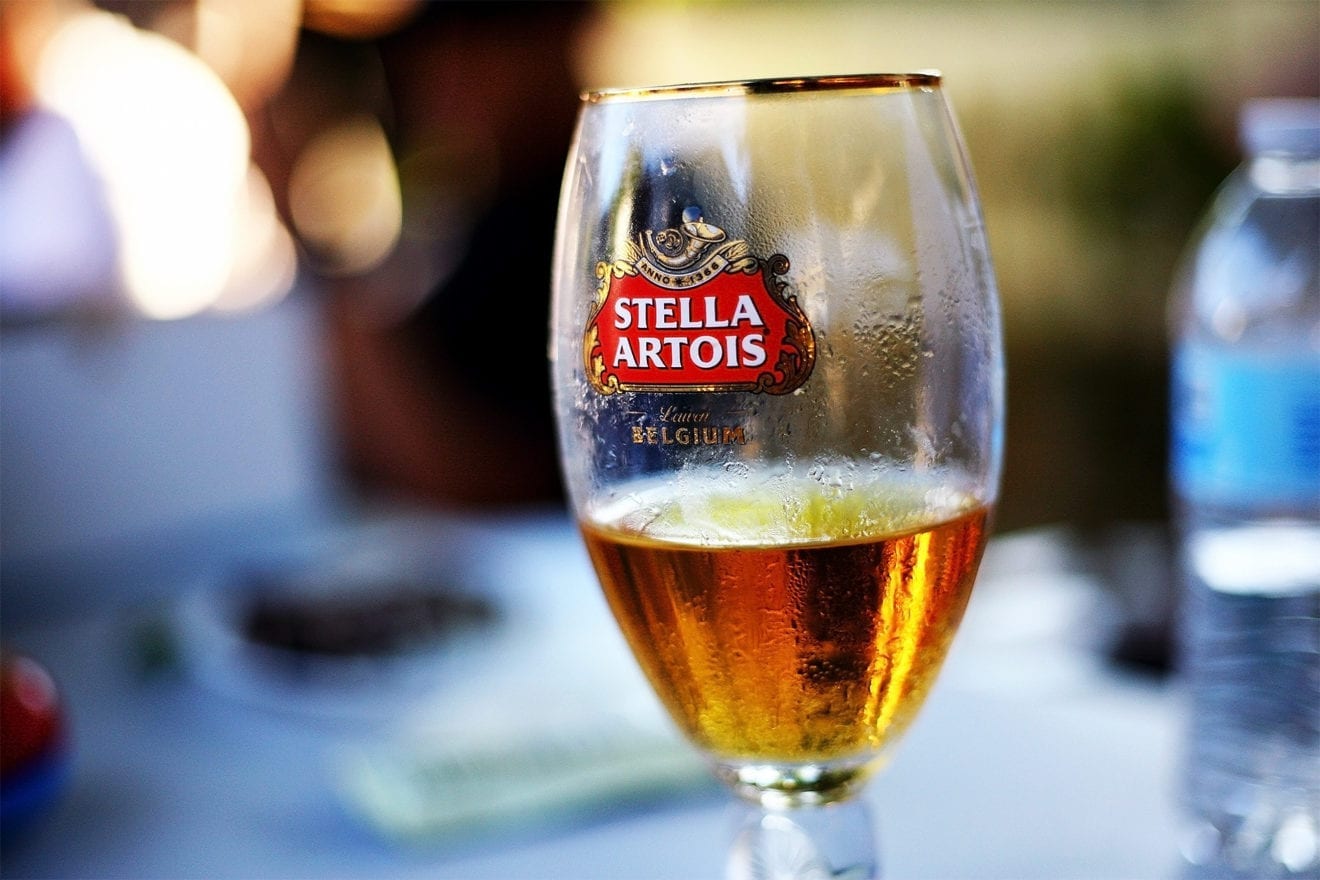
    A pop-up Stella Artois Toasting Lounge has been opened by the Belgian brewer in Pacific Place, Hong Kong.

    chalice-installation_from-the-top

    Until the end of the month, beer lovers and Christmas shoppers can sample a Stella Artois brew and buy the brand’s special Christmas set, exclusive to the lounge. The Christmas set features a limited-edition Stella Artois holiday chalice, which can be engraved on-site with the recipient’s name or a short Christmas greeting. There is also a limited-edition 750ml holiday bottle, which can also be engraved.

    stella-artois-toasting-lounge-in-pacific-place-1

    Both the chalice and bottle incorporate a star in their design, which pays homage to the brand’s origins. The Stella Artois brew was originally created by The Artois Brewery as a Christmas gift for the people of Leuven in Belgium, with “stella” being added to its title as it is Latin for “star”.

    chalice-installation_inside

    stella-artois-bar

    Fun and social social activities are also being offered at the lounge, plus a “happy hour” every day. There will also be surprise happy hours, signalled by the ringing of a bell.

    stella-artois-toasting-lounge-chalice-installation

    Free half-pints are offered for certain social-media activity by guests, plus there are competitions with the limited-edition Christmas Set as a prize.

    There is a special chalice installation where visitors can take selfies including a 360deg. “Moment with the Stars” photo to share on Facebook.

    Open from 11.30am daily until 8.30pm but with specific hours for bar service, the lounge is on Level 1 at Pacific Place.

    stella-artois-toasting-lounge-in-pacific-place-2

  • Pokemon fever too good to resist for struggling HK retailers

    Pokemon fever too good to resist for struggling HK retailers

    Major Hong Kong tourism and shopping hotspots have been rushing to cash in on the citywide Pokemon Go craze with numerous events being organised, centred entirely around the smash-hit mobile game, to reinvigorate the city’s lacklustre retail sector.

    Three park and shopping mall operators — Ocean Park, Sun Hung Kai and Swire Properties — told the Post they were in talks with Pokemon Go’s developer Niantic over potential cooperation on future campaigns themed with the augmented reality game.

    Niantic is part-owned by Japanese videogame giant Nintendo.

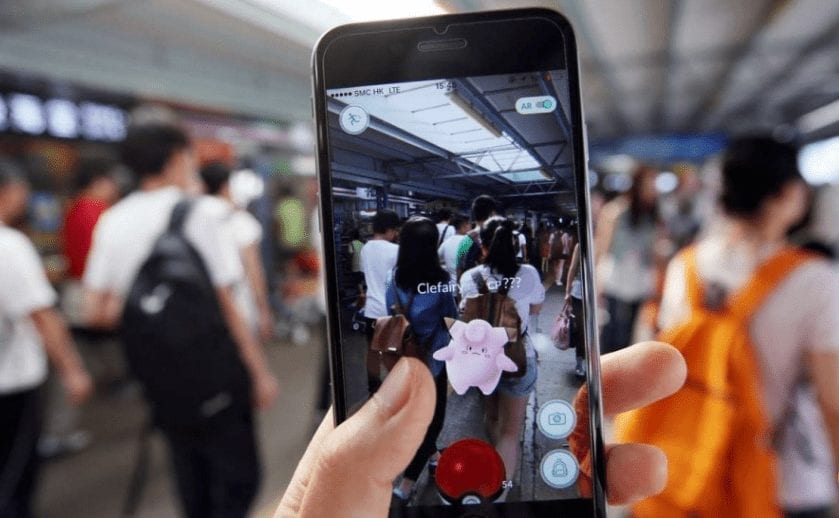
    Since its launch in the city on Monday, Pokemon Go, which allows players to use their phones’ GPS and camera to capture virtual Pokemon in the real world, has been all the rage across the city’s most bustling districts.

    “We are seeking collaboration opportunities with the game’s creator, with more details to be announced soon,” said Maureen Fung, director with Sun Hung Kai Development (China).

    “We expect to see a double digit growth in our traffic and an 8-10 per cent leap in retail sales during the Pokemon Go event period,” Fung said.

    A spokesman for SHKP’s APM mall in Kwun Tong said it had implemented more “Lure Modules” — a function that makes it easier for players to find and catch the Pokemon — around the shopping centre, and updated the whereabouts of the virtual monsters on its social media pages “on a frequent basis.”

    Fung said the developer now plans to roll out Pokemon-related events at 12 of its shopping complexes.

    The Pokemon Go mania comes as traditional retailers continue to struggle against their online counterparts, both in Hong Kong and around the world.

    Terence Chan, head of retail, Hong Kong, at real estate consultant JLL, said the sudden rush in interest offered a great opportunity for outlets to cash in.

    “It is a nice marketing tool for stores and restaurants, particularly those looking to attract youngsters,” he added.

    Another leading property developer, Swire Properties, is utilised its Facebook and Instagram accounts to help customers spot Pokemon at its three flagships Cityplaza, Pacific Place and Taikoo Place.

    “We have a large number of Pokestops and a few Pokegyms,” said a Swire Properties spokesperson.

    “Additionally, we have approached Niantic Labs for further potential collaborations.”

    Pokestops and Pokegyms are where players can train and battle their Pokemon.

    Elsewhere, six shopping arcades operated by Sino Group, including Olympian City in Kowloon and Citywalk in New Territories, are running promotions.

    While a spokeswoman for Ocean Park revealed that the 39-year-old theme park had already become involved in discussions with US-based Niantic before the game even landed in Hong Kong.

    “The talks are currently underway and may take into account issues like copyright,” she added.

    But at least one leading retail site owner said he would not be relying on luring and accommodating gamers to turnaround its fortunes.

    Chiu Kwok-hung, chairman of Fortune Real Estate Investment Trust told local media on Tuesday that his malls did not intend to join hands with Pokemon Go as “an influx of people who don’t actually shop in the malls will in turn hinder your business”.

  • Burberry Hong Kong downsizes flagship

    Burberry Hong Kong downsizes flagship

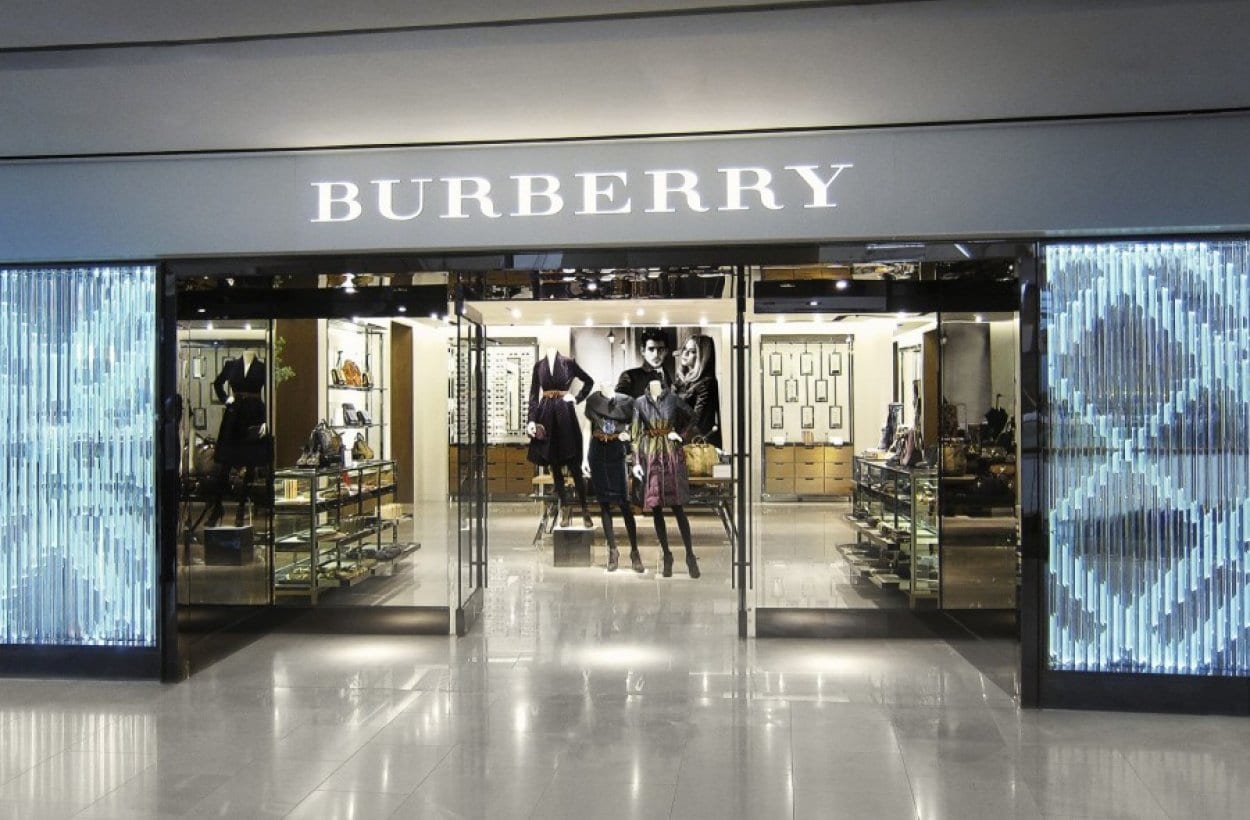
    Burberry Hong Kong is giving up a whole floor of its Pacific Place flagship as part of a range of initiatives to respond to the declining luxury market in the territory.

    Burberry CFO Carol Fairweather said in a conference call the company had reached an agreement with landlord Swire to give up the second floor part of the flagship, saying it “will enable us to drive increased sales per square foot and profitability in that store”.

    The luxury brand has 17 stores in Hong Kong, all impacted by the declining number of big spending Mainland China tourists shopping in the territory this year. Fairweather said rents had been renegotiated in a number of those stores but stressed all of them were profitable.

    “We are committed to being in Hong Kong,” Fairweather said, adding that sales have improved in recent months.

    The news coincides with the company’s release of its profit for the first half year, which beat analysts forecasts.

    Adjusted combined retail/wholesale profit was up five per cent on a same stores basis, with a planned decrease in licensing profit from Japan resulting in adjusted profit before tax of £153 million, up three per cent underlying from last year.

    “In the context of flat revenues, this result is better than expected,” commented Anusha Couttigane, senior consultant at Conlumino.

    She says Burberry is fully aware of its heavy reliance on interest from the Chinese consumer. The economic slowdown and the impact on Chinese demand is now cited as Burberry’s biggest risk.

    “In the light of these challenges, it is clear that, while Burberry continues to invest in elements that are essential for growth, it also has to make significant savings and it will take a combination of drastic measures to do so. On the one hand, this means aligning its brands under one label and its manufacturing staff under one roof. On the other, it means stripping back the privileges of a generous travel and expenses account.”

    Those cost savings are expected to deliver some £20 million to the business’ bottom line over the next 12 months.

  • Cosmoparis opens first Hong Kong store

    Cosmoparis opens first Hong Kong store

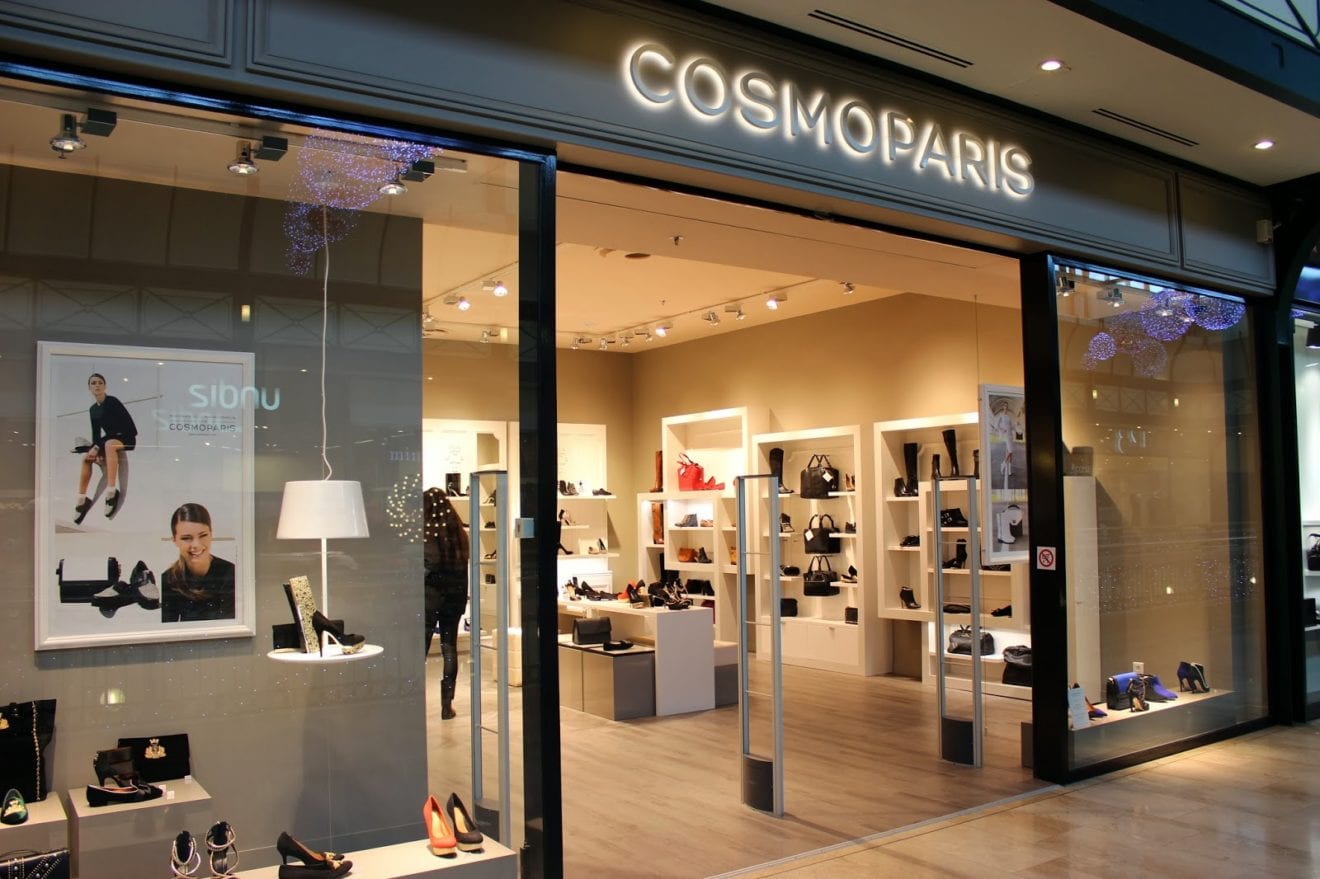
    French luxury footwear brand Cosmoparis has opened its first Hong Kong store at Pacific Place.

    Cosmoparis was founded in 2008 by Axelle Mathery and Hong Kong fashion blogButterboomdescribes the brand as making “stylish footwear designs that are always contemporary, glamorous and feminine for sophisticated ladies”.

    Cosmoparis Hong Kong Pacific Place

    The boutique, located on the first floor of Pacific Place, is a “bright cheerful place with gold table finishing with velvet-like beige coloured stools,” says Butterboom.

    “There are quite a few quirky designs including chic heels with fur, winter boots in different lengths and our favourite – the Angrycat heels that we would like to add to our shoe collection this winter.”