Tag: package

  • FedEx To Test Package Deliveries With Self-Driving Startup Nuro

    FedEx To Test Package Deliveries With Self-Driving Startup Nuro

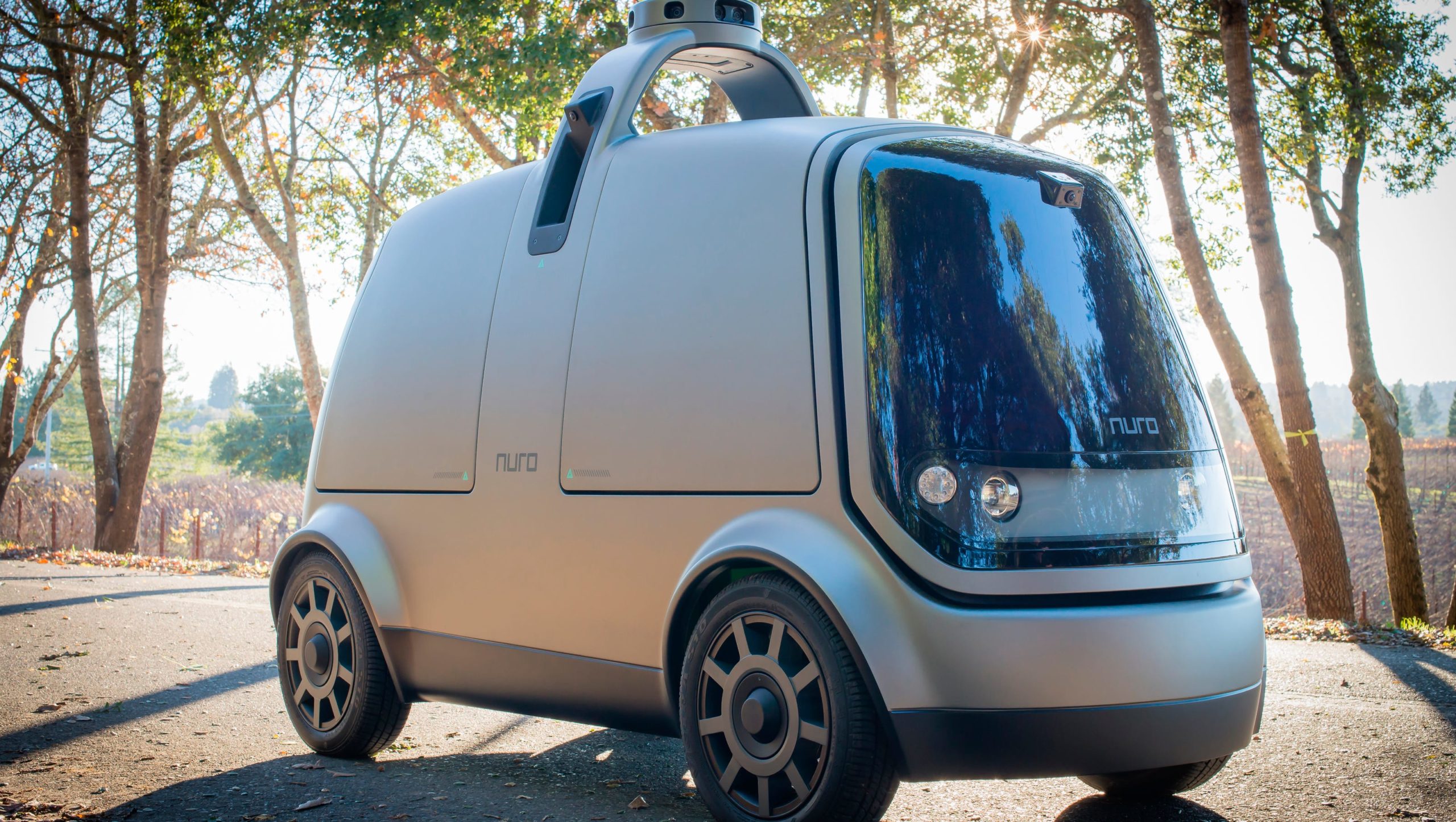
    FedEx Corp and robotics company Nuro on Tuesday announced a multi-year agreement to test self-driving vehicles in the package delivery company’s network, starting with a pilot program in Houston. The partnership comes as parcel companies race to reduce the cost of last-mile delivery, which surged during the pandemic. The companies will target delivery scenarios where Nuro’s low-speed, unmanned vehicle can provide “the biggest bang for your buck,” Cosimo Leipold, Nuro’s head of partnerships, told Reuters in an interview.

    That will likely include inefficient tasks like late-night pickups in out-of-the-way places, said Rebecca Yeung, FedEx vice president for advanced technology and innovation. “Instead of dispatching a driver to get those packages, a device like Nuro could be super helpful,” said Yeung, who called the FedEx/Nuro tie-up a “very serious, long-term commitment” that aims to reduce headaches, not human drivers.

    Nuro vehicles are already making deliveries for U.S. supermarket operator Kroger Co and Domino’s Pizza Inc in the Houston area. Nuro continues to test its technology in Arizona. Nuro, whose R2 unit has space for delivery cargo but not a human driver, said last year it has raised $500 million. In a separate project, FedEx is using DEKA Research & Development Corp’s smaller robot, dubbed “Roxo,” for on-demand, same-day deliveries in Plano, Texas.

    Nuro vehicles are already making deliveries for U.S. supermarket operator Kroger Co and Domino’s Pizza Inc in the Houston area.

    Rival United Parcel Service Inc is centering its unmanned delivery efforts on drones. UPS has ordered electric delivery vans from British startup Arrival. Those vehicles are fitted with sensors and cameras that should gradually enable autonomous features, but will still require a human driver.

    Transporting people via self-driving taxis is proving more difficult and expensive than delivering packages and food. As a result, freight and logistics companies are exploring ways to roll out the technology on predictable and simple routes, including on highways.


  • Porsche 911 Heritage Design Packages Coming

    Porsche 911 Heritage Design Packages Coming

    Porsche has a glorious history of making dazzling and gorgeous performance cars. It has given the world some iconic models in the past and the Stuttgart based carmaker is now planning to revisit its heritage. Porsche Exclusive Manufaktur and Style Porsche design departments are working on a new Heritage Design Package which will be introduced in the next year, i.e. 2020. The 911 is one of the most iconic Porsches of all times and has led the charge several times for new developments. Once again, Porsche will start introducing the Heritage Design Package in the 911 range and is likely to follow with other models.

    The Porsche 911 Speedster concept which was showcased at the New York Auto Show was adorned with the Heritage Design Package and gave us an initial outlook of the design. The Heritage design models will get special colours and materials along with special paintwork and liveries to characterize the classic appearance of special models. Porsche designers have taken inspiration from old models and have used old colours, equipment cards and retro design elements. A hint of the same was the circular, chrome finished wing mirror on the 911 Speedster. The same treatment and finish will also accentuate inside the cabin of the car. Retro elements such as corduroy, the Pepita pattern, the Pasha pattern or tartans will be redesigned and comprehensively tested and will have sumptuous material characteristics for the special models.

    Porsche design is also developing matching timepieces, exclusively for the owners of Heritage Design vehicles. The company is trying to bring back the spirit of Professor Ferdinand Alexander Porsche, the designer of the 911 and founder of Porsche Design.

  • Vietnamese supermarkets go back to leave packaging

    Vietnamese supermarkets go back to leave packaging

    Shoppers at Lotte Mart in Ho Chi Minh City’s District 7 were recently surprised to see scallions, okra and other vegetables produce wrapped in banana leaves.

    A representative of the supermarket chain said that the company is experimenting with using leaves to wrap veggies in one outlet, and plans to expand this later to the entire chain in the country.

    This is part of a plan to increase the use of environment-friendly products, not just for vegetables but also for fresh meat, the representative added.

    Local shoppers expressed support for the move. “When I see vegetables wrapped in these beautiful banana leaves I’m more willing to buy in larger quantities. I think this initiative will help locals be more aware of protecting the environment,” said Hoa, a District 7 resident.

    The Big C supermarket chain in Hanoi has also started using banana leaves to wrap veggies since Monday, and plans to do so in its central and southern supermarkets in the next few days. The trial is set to last a month.Saigon Co.op is also using banana leaves to wrap vegetables to replace their biodegradable wraps in some of its outlets in HCMC and other southern localities of Phan Thiet, Tay Ninh, Quy Nhon and Tam Ky.

    The supermarket chains are also providing customers with other environmental-friendly products. Lotte Mart said it is selling paper straws and food boxes made with sugarcane waste. Eggs are wrapped in paper packages instead of plastic boxes.

    Big C is offering shoppers bags made with corn powder which is completely biodegradable.

    These moves come after report highlights the large amount of plastic waste generated by Vietnamese people. The country disposes about 2,500 tons of plastic waste a day, according to official figures.

    Vietnam ranks fourth globally in the amount of plastic waste dumped into the ocean, according to the United Nations Environment Programme (UNEP).

    Some local cafes and restaurants have also been encouraging the reduction of plastic use by offering straws made with recyclable or biodegradable materials.

  • Dole Appoints Pier Luigi Sigismondi as GlobalPresident for Packaged Foods

    Dole Appoints Pier Luigi Sigismondi as GlobalPresident for Packaged Foods

    Dole Asia Holdings Pte. Ltd., a subsidiary of ITOCHU Corporation, today announced the appointment of Pier Luigi Sigismondi as President of its Worldwide Packaged Foods business.

    Sigismondi joins Dole with over 20 years of industry experience in consumer goods. Before joining the company, he was President of Unilever Southeast Asia and Australasia, where he led the business of this fast-growing region. Prior to that, Sigismondi held multiple global senior executive, operations and board roles with Unilever and Nestlé, in addition to NED positions in Europe and the USA.

    Based at its headquarters in Singapore, Sigismondi is responsible for the global operations of Dole Packaged Foods and for driving the company’s continued innovation, growth and transformation across all markets. “We are very pleased to welcome Pier Luigi to the Dole family,” said Takeshi Kumekawa, President and CEO of Dole Asia Holdings. “With his diverse experience in leading growth for consumer goods across an extensive range of markets, we are confident that Pier Luigi will successfully combine the best from Dole’s 168 year expertise, the strengths of ITOCHU and lead us towards a healthy and sustainable future.”

    “I am thrilled to join Dole, an iconic brand that has long been committed to bring a healthy lifestyle to people around the world for generations,” said Sigismondi. “I look forward to building further this purpose and fulfilling Dole’s true global long-term profitable growth potential.”

    An Italian citizen born in Venezuela, Sigismondi holds a Master’s Degree from the Georgia Institute of Technology in the United States.

  • Indonesians pressure the country’s largest telco to lower data costs

    Indonesians pressure the country’s largest telco to lower data costs

    Indonesians are pissed off about Telkomsel’s data package pricing policy. While they’re considered expensive for Jakartans, Telkomsel – Indonesia’s state-owned and largest mobile carrier – charges up to twice as much for the same amount of data if you happen to live in a bad “zone.”

    To protest this, activist Djali Gafur started a petition called “Internet for the people“. It has already accumulated over 10,000 signatures.

    Telkomsel divides the archipelago into 12 districts. Jakarta, as well as most parts of Java and the surrounding islands are in Zone 1, and tariffs actually go up as the areas get more remote. West Papua’s Raja Ampat district, for example, is in Zone 12.

    “We in Zone 12 don’t have a choice,” says Gafur in the petition on Change.org. It’s true because Telkomsel is often the sole carrier in remote areas. The others don’t even bother because the infrastructure costs outweigh the opportunities.

    Gafur demands that people in his area get access to the internet for an equal price, so that they too can participate in things like education, tourism, government, and creative industries online. “If [the connection] is a little slow, that doesn’t even matter so much,” he adds.

    Indonesia’s ICT Minister Rudiantara has since responded to the petition, and met with Telkomsel’s president director to discuss the matter, according to local media.

    Rudiantara said that the government is looking into subsidizing Telkomsel in areas where it is the only operator on the ground, supported by the Universal Service Obligation (USO) fund.

    The USO in its current form has been in place since 2005. Mobile phone carriers operating in Indonesia have to contribute 1.25 percent of their gross revenue into a shared pool, which non-profit government agencyBP3TI deploys toward connectivity programs in remote areas.

    Apparently, BP3TI is not quick enough to keep up with the demand for affordable mobile internet connectivity in the remote parts of Indonesia.

    Indonesia currently has no regulation on data tariffs, but according to Rudiantara, discussions on this will take place in 2016. In order to allocate funds from the USO to support Telkomsel in said remote zones, USO’s structure has to be changed. That will take time. For now, it’s up to Telkomsel to respond to the increasing frustration from people in zone 12.