Retail News CRM

Tag: panasonic

  • Panasonic Makes $5 Billion Investment For EV Batteries & Management Software

    Panasonic Makes $5 Billion Investment For EV Batteries & Management Software

    After flailing through the 2000s as a consumer electronics giant and missing out on the mobile boom, Panasonic found itself a new life with electric cars taking off when Elon Musk and Tesla made the bold and audacious bet on the industry in the mid-2000s. Now, to complete its reinvention it has announced an investment of $4.9 billion which is for batteries and supply chain software as this industry becomes central to Panasonic.

    Panasonic is not betting the farm on electric cars as a big chunk of this investment is also on hydrogen fuel cell-based solutions. Panasonic is targeting an overall operating revenue of $12.2 billion in the next three years.

    Panasonic is a 104-year-old company that used to be one of the top consumer electronics players alongside the likes of Sony but in the 2000s its star started to fade. Its new CEO Yuki Kusuma has pivoted Panasonic towards electric car batteries. In fact, he backed the project behind Tesla’s tab-less battery cells that are now being deployed by the world’s most valuable automaker.

    It is in talks for a site for manufacturing these batteries in the US and chances are the multi-billion dollar plant. While doing this, it is also doubling down on supply chain software and battery management tools. It acquired Blue Yonder in 2021 for $7.1 billion which will now be deeply embedded in Panasonic’s hardware.
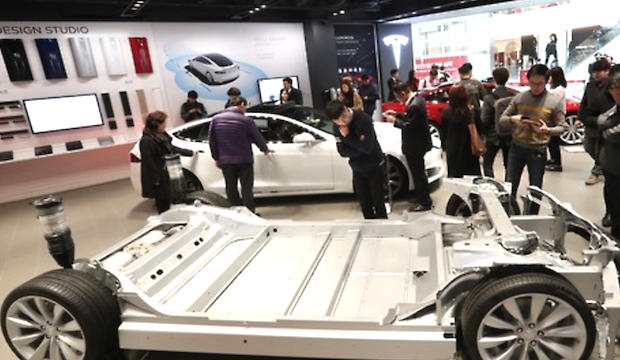
  • Panasonic Plans New Massive Battery Plant In U.S. To Supply Tesla – NHK

    Panasonic Plans New Massive Battery Plant In U.S. To Supply Tesla – NHK

    Japan’s Panasonic Corp is looking to purchase land in the United States for a mega-factory to make a new type of electric vehicle (EV) battery for Tesla Inc, public broadcaster NHK reported on Friday. Panasonic is looking at building the factory, to cost several billion dollars, in either Oklahoma or Kansas close to Texas, where Tesla is preparing a new EV plant, NHK reported. NHK gave no timeline for Panasonic’s U.S. project. NHK did not cite the source of its information. Panasonic said the reported plan was not something it announced.

    A long-time supplier for Tesla, Panasonic has said it plans to begin mass-producing the new type of lithium-ion battery for Tesla before the end of March 2024 with two new production lines at its western Japanese plant in Wakayama.

    The 4680 format (46 millimetres wide and 80 millimetres tall) battery is about five times bigger than those currently supplied to Tesla, meaning the U.S. car maker will be able to lower production costs and improve vehicle range.

    Panasonic’s relationship with Tesla stretches back more than a decade when Tesla signed an agreement that made the Japanese company its key battery supplier.

    Since then, Tesla has ramped up production and diversified its supply chain to other firms, including Chinese manufacturers of cheaper lithium iron phosphate (LFP) powerpacks such as Contemporary Amperex Technology Co (CATL).

    South Korea LG Energy Solution Ltd also plans to make 4680 batteries, sources told Reuters last year.

    Shares of Panasonic were down 3% in morning trade in Tokyo compared with a 2.5% decline for the broader Nikkei 225 index.

  • Panasonic To Invest $700 Million To Produce Tesla EV Battery

    Panasonic To Invest $700 Million To Produce Tesla EV Battery

    Japan’s Panasonic will begin producing its new lithium-ion battery for Tesla from as early as 2023, with plans to invest about 80 billion yen ($705 million) in production facilities in Japan, the Nikkei reported on Monday. The powerpack could help make electric vehicles (EVs) more attractive to motorists by extending cruising range by about a fifth, the Nikkei reported, without saying where it obtained the information.

    “We are studying various options for mass production, including a test production line we are establishing this business year. We don’t, however, have anything to announce at this time,” Panasonic said in a statement sent to Reuters.

    Panasonic unveiled the 4680 format (46 millimetres wide and 80 millimetres tall) battery in October. At around five times as big as batteries it currently supplies to Tesla, it is also expected to help the U.S. electric vehicle maker lower production costs.

    Panasonic will make the 4680 batteries at a plant in Wakayama prefecture in Western Japan, with output of less than 10 gigawatt hours a year, equivalent to around 150,000 vehicles, the Nikkei said.

    Panasonic is the sole maker of the more advanced Tesla battery, ensuring it remains a key supplier to the U.S. company, at least for its pricier models, even as the EV maker seeks out battery suppliers in China and elsewhere.

  • Panasonic stops producing TVs in Vietnam

    Panasonic stops producing TVs in Vietnam

    Japanese electronics giant Panasonic will end TV production in Vietnam and India by the end of fiscal 2021.

    Panasonic decided to negotiate with Chinese rival TCL, the world’s third-largest TV maker, to handle its outsource production, after considering many major manufacturers.

    It said the development of low-end TVs, which have low margins, will be outsourced to cut costs.

    The company has followed other leading Japanese brands in scaling down TV production – an area formerly a major competitive advantage for the country’s electronics industry. Panasonic will continue to produce its own high-end TVs, mainly for sale in Japan. However, the company will also consider consolidating or shrinking production locations at home and abroad.

    “Panasonic’s TV business has been struggling due to fierce competition from Chinese and South Korean rivals.”

    Panasonic used to hold 10 percent of the global TV market share but gradually lost its appeal when low-cost competitors from China appeared. Previously, Panasonic withdrew from the plasma TV segment and discontinued production in the U.S. and China.

    According to British research firm Omdia, by 2020, Panasonic ranked 12th worldwide in TV shipments with a 1.8 percent market share.

    Sales and production of TVs account for less than 10 percent of Panasonic’s total revenue. This segment was profitable in the fiscal year ending March 2021 thanks to strong development of the domestic market.

    However, the company soon found the opportunity to earn long-term profits from TVs is no longer stable. They were forced to restructure their businesses, similar to many other Japanese brands.

    Previously, in 2012, Japanese electronics firm Hitachi terminated its domestic TV production and sold its entire brand in 2018. That same year, Japan’s electronics maker Toshiba also sold all of its TV assets to China’s electronics maker Hisense Group. Meanwhile, Sony has restructured its business model by reducing sales channels and some inefficient product lines.

    Panasonic annually sells about six million TVs worldwide.

    In Vietnam, Panasonic has eight companies, including Panasonic System Networks Vietnam in Hanoi which specializes in products for the export market like phones, projectors, and others, and refrigerator and washing machine factories, an R&D center scattered across different locations, from Hanoi to central Da Nang and southern Ho Chi Minh, Can Tho cities.

  • Panasonic To Exit Solar Production At Tesla’s New York Plant As Partnership Frays

    Panasonic To Exit Solar Production At Tesla’s New York Plant As Partnership Frays

    Panasonic said it would exit solar cell production at Tesla Inc’s New York plant, the latest sign of strain in a partnership where Panasonic’s status as the U.S. electric vehicle (EV) maker’s exclusive battery supplier is ending. The move increases uncertainty over Tesla’s solar business which is already under scrutiny, having been drastically scaled back since the U.S. firm bought it for $2.6 billion in 2016. Tesla has informed New York that Panasonic’s withdrawal “has no bearing on Tesla’s current operations”, the state said in a statement. The company employs over 1,500 jobs in the city of Buffalo, clearing its 1,460 commitment before April – and thereby avoiding a $41 million penalty – the state said.

    Panasonic said in a statement on Wednesday that it would cease production by the end of May and exit the factory by the end of September.

    The withdrawal comes as Panasonic scrambles to divest of unprofitable businesses as its strategic shift to components from consumer electronics struggles to drive profit growth.

    It is also another sign of a fraying partnership with the U.S. EV maker, which is set to diversify its battery supplies to include South Korea’s LG Chem Ltd and China’s Contemporary Amperex Technology Ltd (CATL).

    Panasonic said it would continue its automotive battery joint venture with Tesla in the U.S. state of Nevada, which just reported its first quarterly profit after years of production problems and delays.

    In the solar business, low demand from Tesla has left Panasonic sending most of the cells it makes in Buffalo to overseas clients, instead of selling them to Tesla for its trademark Solar Roof – cells designed to resemble regular roof tiles – as initially intended.

    When announcing the solar partnership in 2016, Panasonic said it would invest over 30 billion yen ($271.96 million) in the Buffalo plant. Tesla’s long-term purchase commitment was part of the deal.

    Panasonic, which employs about 380 workers at the plant, said that the U.S. partner “hopes to hire as many qualified Panasonic applicants as possible to help fill job openings for its growing operations in Buffalo.”

    The latest decision will have no significant impact on Panasonic’s annual profit forecasts, according to a company spokeswoman.

    Panasonic has already shrunk its own solar business elsewhere as it contends with competition from cheaper Asian rivals, selling its solar panel plant in Malaysia and research arm to China’s GS-Solar for an undisclosed amount last year.

  • Panasonic Develops Battery Management Technology

    Panasonic Develops Battery Management Technology

    Panasonic has developed a new battery management technology that measures a battery’s electrochemical impedance, which is an effective method of evaluating the residual value of lithium-ion batteries in devices. This technology is expected to be applied to various devices that use lithium-ion battery modules with many battery cells stacked in series and to future vehicles. Panasonic has developed this technology in collaboration with Professor Masahiro Fukui of Ritsumeikan University. Panasonic developed a new battery monitoring IC test chip, measurement algorithm, and software, while Ritsumeikan University evaluated the performance using actual batteries.

    The newly developed battery management technology makes it possible to measure electrochemical impedance using the AC current excitation method for lithium-ion stacked battery modules that are installed in operating devices. Furthermore, this technology aims to enable the evaluation of residual value by way of a deterioration diagnosis and failure estimation based on an analysis of acquired measurement data. This will contribute to the realization of a sustainable society where future lithium-ion batteries can be reused and recycled.

    Conventional electrochemical impedance spectroscopy is widely used as a non-destructive method for evaluating lithium-ion batteries. This measurement method requires an application specific measuring instrument and a large thermostatic chamber that keeps the temperature of the battery constant, and it was necessary to measure each cell in the laboratory.

    Conventional BMIC measures the individual battery voltage of 6 to 14 lithium-ion battery cells stacked in series. By using multiple BMICs, BMS acquires battery cell voltage data from several up to 200 cells connected in series, monitors the battery, and ensures its safe use. In addition, BMS calculates the remaining driving range and usable time by estimating the state of charge and the state of health.

    The newly developed BMIC test chip has a built-in electrochemical impedance measurement function using the AC current excitation method in addition to these conventional functions. The electrochemical impedance measurement is achieved by 15 fully parallel analog / digital converters and an AC current excitation circuit with pulse modulation from 0.1 Hz to 5 KHz and a complex voltage / complex current conversion circuit built in the BMIC. Therefore, the BMIC chip can measure the electrochemical impedance of a battery in operation without significantly changing the configuration of the current BMS installed in the battery.

  • Toyota, Panasonic To Set Up Firm To Connect Cars

    Toyota, Panasonic To Set Up Firm To Connect Cars

    Japan’s Toyota Motor and Panasonic Corp said they plan to establish a joint company to develop “connected” services to be used in homes and urban development. The tie-up deepens the partnership between the companies, which in January announced a joint venture to build electric-vehicle (EV) batteries, pooling the R&D and manufacturing strengths of one of the world’s largest automakers and battery makers to compete in the fast-growing EV market.

    In their latest venture, Toyota and Panasonic said they will set up a new company early next year to focus on technology that could be used to offer personalized services in the home. The pair plan to be 50-50 partners in the new firm and will increase cooperation at their respective housing operations in Japan.

    “We will put our respective strengths together to offer new value in everyday life,” Panasonic President Kazuhiro Tsuga said in a joint statement on Thursday.

    The move comes at a time when lower-emissions vehicles and ride-sharing services have opened up the auto industry to new competitors, leaving traditional car makers and their suppliers scrambling to find alternate revenue streams.

    Toyota has been developing connected cars that can share information on usage – data that could be leveraged for on-demand ride-sharing, insurance, and maintenance.

    The automaker has said it will tap into its partner network and its operations which range from building and selling cars, homes and companion robots to expand into new transportation and home energy services.

    “If we are able to use this network going forward not only to manufacture and sell vehicles but to also provide new services, our future possibilities will greatly expand,” President Akio Toyota told reporters on Wednesday.

    “In addition to cars, I think that having our own housing business and connected business will be a big advantage for us.”

  • Panasonic Flags First Profit Drop In 8 years

    Panasonic Flags First Profit Drop In 8 years

    Panasonic Corp warned profit this financial year would fall for the first time in eight years as costs to boost battery output rise and it moves to overhaul some businesses amid investor pressure to find new avenues of growth. The Japanese conglomerate expects operating profit for the year through March 2020 to slump 27 percent to 300 billion yen ($2.7 billion) from a year earlier. That is well below analyst expectations of a 12 percent decline, according to Refinitiv.

    The company is looking at a 15 billion yen loss at its automotive unit this year, it said on Thursday. Panasonic expects costs to ramp up battery production in Japan and China for a planned electric-vehicle (EV) battery joint venture with Toyota Motor Corp to weigh heavily.

    Toyota and Panasonic said they will set up a new company early next year to focus on technology that could be used to offer personalised services in the home.

    Panasonic switched its focus to corporate clients such as automakers a few years ago to escape price wars in lower-margin consumer electronics. The shift, which involved a vast migration of TV engineers to the automotive unit, helped the company restore profit growth, but its non-consumer businesses did not grow as fast as the company had hoped.

    “Over the last three years, we aimed for stable revenue and profit growth focusing mainly on the automotive business … but development costs and insufficient abilities to adjust to rapid battery production expansion limited our profits,” Panasonic President Kazuhiro Tsuga said. The business was also squeezed last year due to production delays for Tesla Inc’s mass-market Model 3 sedan.

    Panasonic is Tesla’s exclusive supplier of battery cells and industry watchers have said the Japanese company needs to cut its reliance on the U.S. electric carmaker.

    Elon Musk, Tesla’s mercurial CEO, last month blamed Panasonic for the production delays. He previously said Tesla was looking for other battery suppliers for its new Shanghai car factory.

    Tsuga, however, told a post-earnings press conference on Thursday that Panasonic’s relationship with Tesla remained good.

    “We are not just a supplier but a partner,” he said.

    Panasonic is set to deepen its partnership with Toyota, announcing earlier on Thursday they would establish a joint company to develop “connected” services to be used in homes and urban development. Panasonic also said it would sell its solar battery research arm and a solar battery plant in Malaysia to China’s GS-Solar for an undisclosed amount.

  • Panasonic India eyes Rs 12,300 crore revenue in FY2018-19

    Panasonic India eyes Rs 12,300 crore revenue in FY2018-19

    Japanese consumer electronics major Panasonic is aiming for revenues of Rs 12,300 crore in India this fiscal, driven by its refrigerator and TV businesses. Panasonic India reported revenues of about Rs 10,500 crore in the previous financial year.The company also expects its B2B business to contribute almost half of its revenues by FY 2020-21 as it is expanding its presence in the segment. Panasonic also introduced new models of OLED and 4K TVs here to strengthen its presence in the segment.

    “This financial year, we are looking at Rs 12,300 crore revenue overall. Last year we had closed around Rs 10,500 crore,” Panasonic India and South Asia President and CEO, Manish Sharma told news agency PTI.

    This includes Panasonic’s revenue from its step-down firm Anchor Electricals.

    “Our intention is to grow for three years with a CAGR of 20 per cent and this year, we are looking for 30 per cent growth in TV,” he further told PTI.

    “By FY 2020-21, we expect our B2B business to contribute half of our revenue,” Sharma said.

    Panasonic also expects its consumer business to be double in the next three years.

    “Last year, we had Rs 7,800 crore from the consumer business (including Anchor) and we are looking it at Rs 9,100 crore this financial year,” said Sharma who is also Vice President, Appliances Company, Panasonic Corporation.

    “Last year, B2B was Rs 2,300 crore and this year it is expected to be Rs 3,200 crore,” he told PTI.

    In the mobile phone market, where Panasonic is struggling, the company has decided to focus only on the niche segment.“We are looking at Rs 800 crore this year and the strategy in mobile is to focus on niche segment of Rs 9,000 and above,” he told PTI.

    In the TV segment, the company expects its 4K range of televisions to account for around 25 per cent share of sales this fiscal.

    “This year we are looking at 1.2 million units of sales which is 11 to 12 per cent of value share. Market share is currently 9 per cent and next year, we are looking at 11 to 12 per cent,” he he told PTI.

    “From less than one million units last year, we are looking up to 1.5 to 1.6 million unit in next three years” he added.

    The TV market in India is estimated to be around 12.5 million units. It is growing at around 10 per cent every year and is expected to touch 14 million units in 2018.

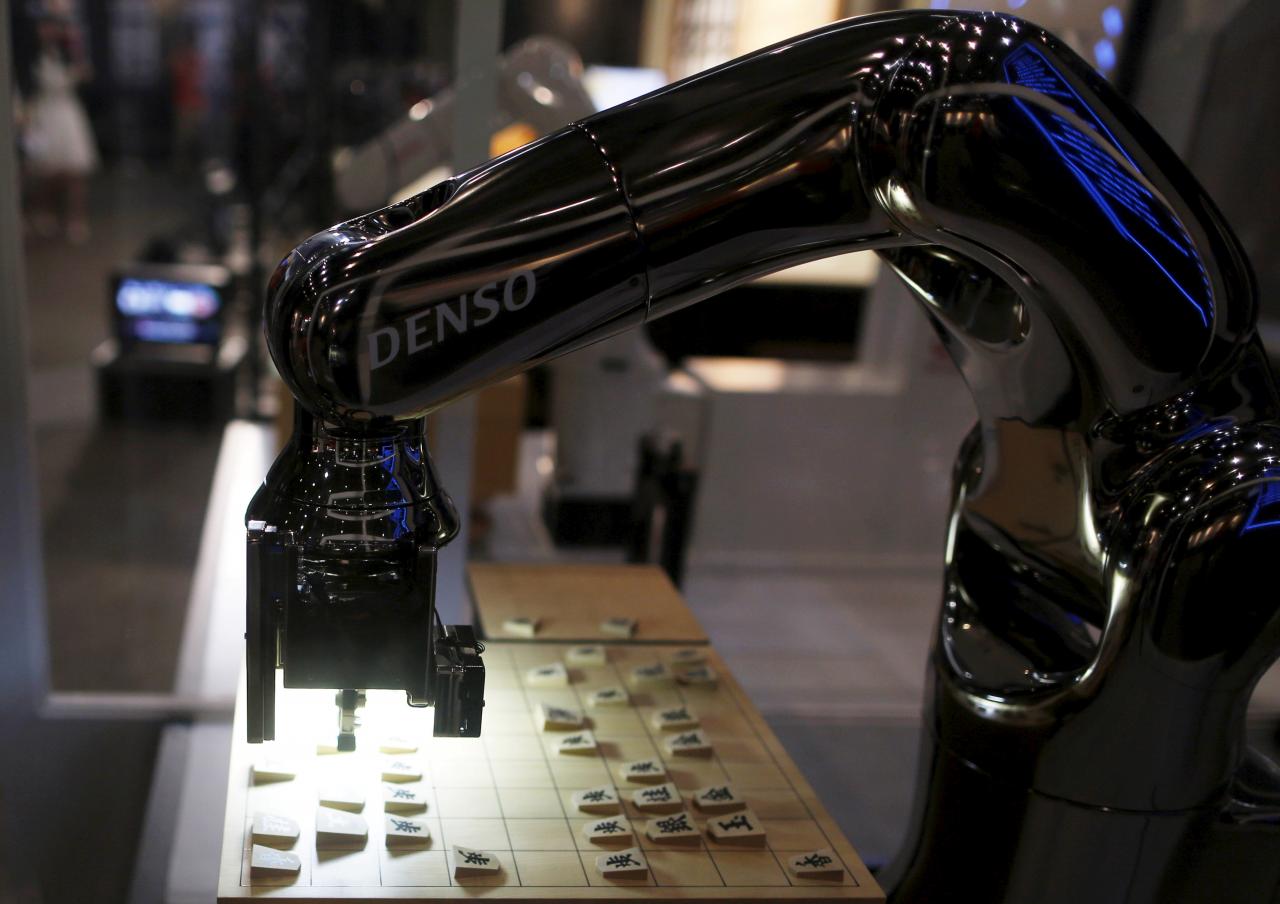
  • Japan’s Denso considering $440 million investment in JOLED

    Japan’s Denso considering $440 million investment in JOLED

    Japanese auto parts maker Denso Corp is considering a 50 billion yen ($440 million) investment in organic light-emitting diode (OLED) panel maker JOLED, Kyodo news reported, citing sources close to the matter.

    JOLED, majority owned by a state-backed technology investment fund, sold its inaugural batch of OLED screens this month, and has said it wants to raise 100 billion yen by the end of March to expand its currently limited capacity.

    The move comes amid the growing popularity for OLED screens, which are generally thinner and can show more vivid colors than liquid crystal display (LCD) panels. Smartphone makers have been shifting to OLED, including Apple Inc which has adopted them for its iPhone X.

    Cash-strapped domestic display makers such as Japan Display Inc, which has a 15 percent stake in JOLED, and rival Sharp Corp are struggling to respond to the shift, letting Korean rivals Samsung Electronics Co Ltd and LG Display Co Ltd take the lead.

    The Nikkei reported earlier this month that Japan Display had considered investing in JOLED but decided it did not have the funds. Japan Display has said it wants to start mass-producing OLED screens to better compete with Samsung and that it needs capital to do so but has so far declined to disclose details of any negotiations.

    Kyodo’s report said that Sony Corp and Panasonic Corp, which both own 5 percent in JOLED, are also expected to invest 5 billion to 10 billion yen each.

    Sumitomo Chemical Co and Screen Holdings Co are considering chipping in, and the four companies are together seen investing 20 billion to 40 billion yen in JOLED, Kyodo said.

    A JOLED representative said the company was in talks with various materials and equipment makers about the investment, but that nothing specific had been decided.

    A Denso spokesman said the reported plan wasn’t something the company announced, while a Screen Holdings spokeswoman denied the company was considering the investment. Sony said nothing had been decided, while Panasonic and Sumitomo Chemical declined to comment.

    JOLED was created in 2015 by merging the OLED divisions of Sony and Panasonic.

    Analysts have said it lacks the scale and expertise of display makers which have smartphone-size panels. JOLED is 75 percent owned by state-backed fund, the Innovation Network Corporation of Japan.

  • Panasonic to launch new auto battery line at ex-TV screen plant in Japan

    Panasonic to launch new auto battery line at ex-TV screen plant in Japan

    Japan’s Panasonic said on Friday it will start producing automotive batteries at its former television screen plant in Japan, accelerating its battery drive to meet anticipated demand for electric vehicles.

    Panasonic, the exclusive battery cell supplier for Tesla’s mass-market Model 3, is reinventing itself as a provider of advanced auto parts to escape the price competition of smartphones and other lower-margin consumer products.

    The new battery production will start at its LCD plant in Himeji, western Japan, in the financial year from April 2019, using space left vacant after it closed its unprofitable TV screen manufacturing business last year.

    The company declined to comment on the size of new investment or the production capacity of the new line.

    The Himeji plant currently produces screens for vehicle dashboards and medical equipment, but output has dropped significantly after it exited TV screen production.

    Panasonic sees batteries as a key driver for its plan to nearly double its automotive business revenue to 2.5 trillion yen ($22 billion) in the year through March 2022.

    Already one of the leading suppliers of automotive lithium ion batteries, it currently has five production sites in Japan.

    It started mass production of battery cells at Tesla’s Gigafactory in Nevada earlier this year and plans to follow suit at a new plant in Dalian, China.

  • Panasonic to double wiring device production in Vietnam plant

    Panasonic to double wiring device production in Vietnam plant

    A new factory in Binh Duong Province is slated to begin operation in October this year. Panasonic Corporation will double its production capacity of wiring devices and circuit breaker in Vietnam by 2020 in an attempt to fulfill robust demand in the country and for export to neighboring markets.

    The Japanese electronics manufacturer will build a new factory next to the existing facility now operated by Panasonic Eco Solutions Vietnam Co in the southern province of Binh Duong, about 40 km (25 miles) north of Ho Chi Minh City, the newspaper said.

    The expansion is estimated to cost one billion yen, or $9 million.

    Company officials could not immediately be reached for comment.

    The new 6,000 square-meter plant is scheduled to come into operation by late October, doubling Panasonic Vietnam’s capacity by 2020, citing a company directive on the expansion.

    The electronic giant has also planned to acquire an area covering about 18,000 square meters adjacent to its existing factory premises in preparation for future expansion, said the newspaper.

    Output from the new factory would go to the domestic market as well as other Southeast Asian countries.

    The Binh Duong plant began production in late 2014. Besides, Panasonic has four other factories and one research and development center in Vietnam.

    The Japan External Trade Organization’s 2016 business confidence survey showed that nearly 70 percent of Japanese companies plan to expand their Vietnam operations, up from 64 percent in the previous year.

    As of February 2017, Japan is Vietnam’s second largest foreign investor, with projects totaling $42.49 billion, based on data by Vietnam’s government.

  • Panasonic targets 50% sales jump for TVs in Indonesia

    Panasonic targets 50% sales jump for TVs in Indonesia

    Electronics giant Panasonic Corp. is seeking to sell up to 50 percent more TVs in Indonesia this year by offering online shopping and a greater variety of models. The company’s TV sales have been stagnant for three years.

    “We hope this year we can sell around 250,000 to 300,000 units,” said Erwin Lim, a Panasonic Gobel Indonesia product manager. The figures represent increases of 25 to 50 percent from 200,000 TVs sold last year.

    As part of its goal, Panasonic launched a website designed to help consumers select TV models according to their needs and budgets.

    “We want to strengthen our relationship with our customers and make it easy for consumers to choose products effectively and efficiently according to their needs and budgets,” Panasonic Gobel President Hiroyoshi Suga said.

    Lim said one challenge is that TVs are not a primary need for consumers in Indonesia.

    “Therefore, we will also innovate (our marketing) in order to increase sales,” Lim said. “We will begin to focus marketing on digital means, seeing a trend in today’s society.”

    Referring to Panasonic’s medium-term target over the next three years, Lim said the company wants to move to the No. 2 or No. 3 position by boosting its market share to 14 percent or 15 percent from the current 11 percent.

    Panasonic, currently No. 4 in the market, is seeking to catch up with third-ranked Sharp, a Japanese firm owned by Taiwan’s Hon Hai Precision Industry.

  • Panasonic Healthcare Indonesia Upbeat Over Export Opportunities

    Panasonic Healthcare Indonesia Upbeat Over Export Opportunities

    Panasonic Healthcare Indonesia, a local producer of equipment used in the health care industry, has set a target to increase sales by 70 percent over the next four years on the back of growing exports.

    The company, which is a subsidiary of the Japanese business group, eyes $88 million in sales by 2020, up from $51 million last year, it said in a statement on Thursday (19/05).

    Panasonic Healthcare also seeks to increase its workforce to 799 from 611 currently during the same period to raise production on blood glucose monitors, medical imaging monitors, dental intraoral cameras, heated incubators, and ultra-low temperature freezers.

    Parent company Panasonic Healthcare Holdings has acquired Bayer Diabetes Care, a leading global producer of blood glucose monitoring systems, earlier this year. The acquisition has opened more opportunities for the local unit to tap offshore markets.

    “Panasonic Healthcare Indonesia has great potential to increase exports,” the company said in a statement.

    Exports currently account for 88 percent of the company’s sales.

    Gobel International, which is controlled by former trade minister Rahmat Gobel, has a 5 percent stake in Panasonic Healthcare.

  • Panasonic Broadcasts Total Eclipse Live Using Solar Energy

    Panasonic Broadcasts Total Eclipse Live Using Solar Energy

    As Sumatra, Borneo and Sulawesi plunge into darkness during a rare total solar eclipse on the morning of March 9, 2016, Panasonic will deliver a live broadcast of the approximately 4-minute-long phenomenon from Ternate, an island in eastern Indonesia, using its Power Supply Container, a stand-alone photovoltaic power package.

    https://www.youtube.com/watch?v=ahltwzTATjA

    To enable live filming and broadcast from the island, the Power Supply Container will be transported from Jakarta to Dodoku Ali of Ternate. 12 Panasonic HIT® solar modules with high conversion efficiency will generate approximately 3kW of electricity by tapping renewable energy from the top of the container, and store the power in 24 built-in lead-acid storage batteries. The stored energy will be supplied to a Panasonic LUMIX GH4 camera attached to a telescope to capture the spectacular moment. Mobile computers, production and editing equipment, internet connection and other supporting technology will also be powered by solar energy.

    The live broadcast of the solar eclipse will begin at 05:00 AM, March 9 in Ternate (08:00 PM, March 8 UTC) and can be viewed on platforms including Ustream, YouTube Live and Periscope (refer to Annex).

    This will be the third time Panasonic is broadcasting a solar eclipse live. Unlike previous occasions where time and effort had to be spent setting up HIT® solar modules on the ground, the process is significantly more convenient this time round due to the portability of the Power Supply Container and its capability to be assembled quickly and easily with minimal construction work.

    Prior to this live broadcast project in Ternate, Panasonic has developed and introduced the Power Supply Container to other parts of Indonesia. The first container was installed in July 2014 at the National Elementary School Karimunjawa 01 located on a remote island of Indonesia to improve the educational environment for students and teachers. Following its success, a second container was introduced in July 2015 at another elementary school in the mountainous region of West Java Province to enhance both study and water supply conditions.

    Panasonic strives to extend this technology to other areas without electricity to provide stable power supply and mitigate social challenges towards a better life and a better world.