Retail News CRM

Tag: Papua

  • Starlink Halts Operations in Papua New Guinea Amid Licensing Legal Battle

    Starlink Halts Operations in Papua New Guinea Amid Licensing Legal Battle

    Starlink, a satellite internet service, has ceased its operations in Papua New Guinea following a directive from the country’s telecommunications regulator. This halt in services comes amidst an ongoing dispute over licensing.

    The Regulatory Standoff

    The National Information and Communications Technology Authority (NICTA), has confirmed that they had instructed SpaceX, the parent company of Starlink, to stop all satellite services in Papua New Guinea due to a lack of a valid operating license.

    Starlink is currently not licensed to operate in Papua New Guinea. Despite this, NICTA reported witnessing continued importation, supply, installation, and use of Starlink terminals in the country over recent months.

    According to a statement by the regulator, anyone involved in these activities is violating the law and may face enforcement action, including prosecution. The regulator’s actions are limited due to an ongoing legal disagreement involving the Ombudsman Commission, which blocked the licensing of Starlink in March 2024 over worries related to regulatory oversight and governance.

    The matter has now been escalated to the National Court, with the regulator seeking judicial clarity that would allow it to proceed with licensing if approval is given.

    Starlink’s Commitment

    Despite the withdrawal of services, Starlink has expressed its continued commitment to Papua New Guinea. The company issued a service notification to its customers, encouraging them to voice their support for its approval.

    Starlink expressed its belief that high-speed, reliable internet would support homes, businesses, schools, and remote communities across the country.

    NICTA has confirmed that about 200 individuals have signed a petition advocating for Starlink to be permitted to operate in the country. However, for the time being, Starlink remains offline in Papua New Guinea as legal proceedings continue to influence the future of satellite broadband access in the country.

    Questions & Answers

    Why has Starlink ceased operations in Papua New Guinea?

    Starlink has stopped its services following a directive from the country’s telecommunications regulator, the National Information and Communications Technology Authority (NICTA), which stated that the company lacked a valid operating license.

    What has been the reaction of Starlink to this situation?

    Starlink has issued a service notification to its customers, urging them to express their support for its approval. The company has reiterated its commitment to Papua New Guinea and believes that high-speed, reliable internet will support various sectors across the country.

    What is the current state of this situation?

    Legal proceedings are ongoing, and the future of satellite broadband access in Papua New Guinea continues to be determined. In the meantime, Starlink remains offline in the country.

  • Google Teams Up with Australia to Boost Papua New Guinea’s Digital Infrastructure with $120M Subsea Cables Project

    Google Teams Up with Australia to Boost Papua New Guinea’s Digital Infrastructure with $120M Subsea Cables Project

    Google is set to construct three subsea cables in Papua New Guinea, in a project funded by Australia as part of a mutual defense treaty. The initiative aims to boost the digital infrastructure of Papua New Guinea, which is the largest Pacific Island nation, and holds strategic significance for Australian and US military strategists due to its location north of Australia. This becomes particularly important in the context of China’s increasing influence in the region.

    Enhancing Connectivity

    The project, valued at USD 120 million, is set to link the northern and southern parts of Papua New Guinea, as well as the Bougainville autonomous region, with high-capacity cables. The plans were unveiled by Peter Tsiamalili, the country’s Acting Minister for Information and Communications Technology.

    According to Tsiamalili, the entire investment is being funded through Australia’s commitments under the Pukpuk Treaty, a mutual defense pact signed just last October. Australia and Papua New Guinea are demonstrating their joint commitment to enhancing digital security, regional stability, and national development through this project.

    Google is assigned to build the subsea cables, and discussions about the project have taken place between Tsiamalili, Australian diplomats, and US diplomats at Google’s Australian office.

    Boosting Economic and Educational Opportunities

    Australia’s foreign affairs department has indicated that the new cables will help to reduce internet costs for consumers, while also supporting economic growth and improving educational opportunities. Tsiamalili, who also serves as the Police Minister, highlighted the fact that these cables will place Papua New Guinea in an appealing position for investment from hyperscalers and global digital enterprises.

    The Pukpuk Treaty permits Australian defense personnel to access Papua New Guinea’s communication systems, including satellite stations and cables. Meanwhile, the United States is also strengthening its military ties with Papua New Guinea, having signed a defense cooperation pact in 2023.

    Australia and the United States have been funding various subsea cables across the Pacific Islands in recent years, in order to counteract China’s efforts to construct crucial communication links, which they perceive as a security risk.

    Australia’s Commitment

    Australia has pledged over AUD 450 million (USD 300 million) to support undersea cable connectivity throughout the Pacific and Timor-Leste. This includes the Coral Sea Cable, which connects Papua New Guinea, Solomon Islands and Australia.

    In a separate development, Google announced plans last November to build a data hub on Australia’s Indian Ocean outpost of Christmas Island, which is another strategic defense location. New cables are set to link the island with Australian cities that host key defense bases also used by the U.S. military. Two more cable systems are planned to extend westwards to Africa and Asia, thus reinforcing the resilience of Indian Ocean internet infrastructure.

    Questions & Answers

    What is the purpose of the new subsea cables in Papua New Guinea?
    These cables aim to enhance the country’s digital infrastructure, support economic growth, and improve educational opportunities.

    Who is funding the construction of the new subsea cables?
    The project is being funded by Australia as part of their commitments under the Pukpuk Treaty, a mutual defense pact.

    Why is Papua New Guinea’s digital infrastructure important to the US and Australia?
    Papua New Guinea is strategically significant due to its location north of Australia. Enhancing its digital infrastructure can also help to counteract China’s increasing influence in the region.

  • Papua releases export containers to China

    Papua releases export containers to China

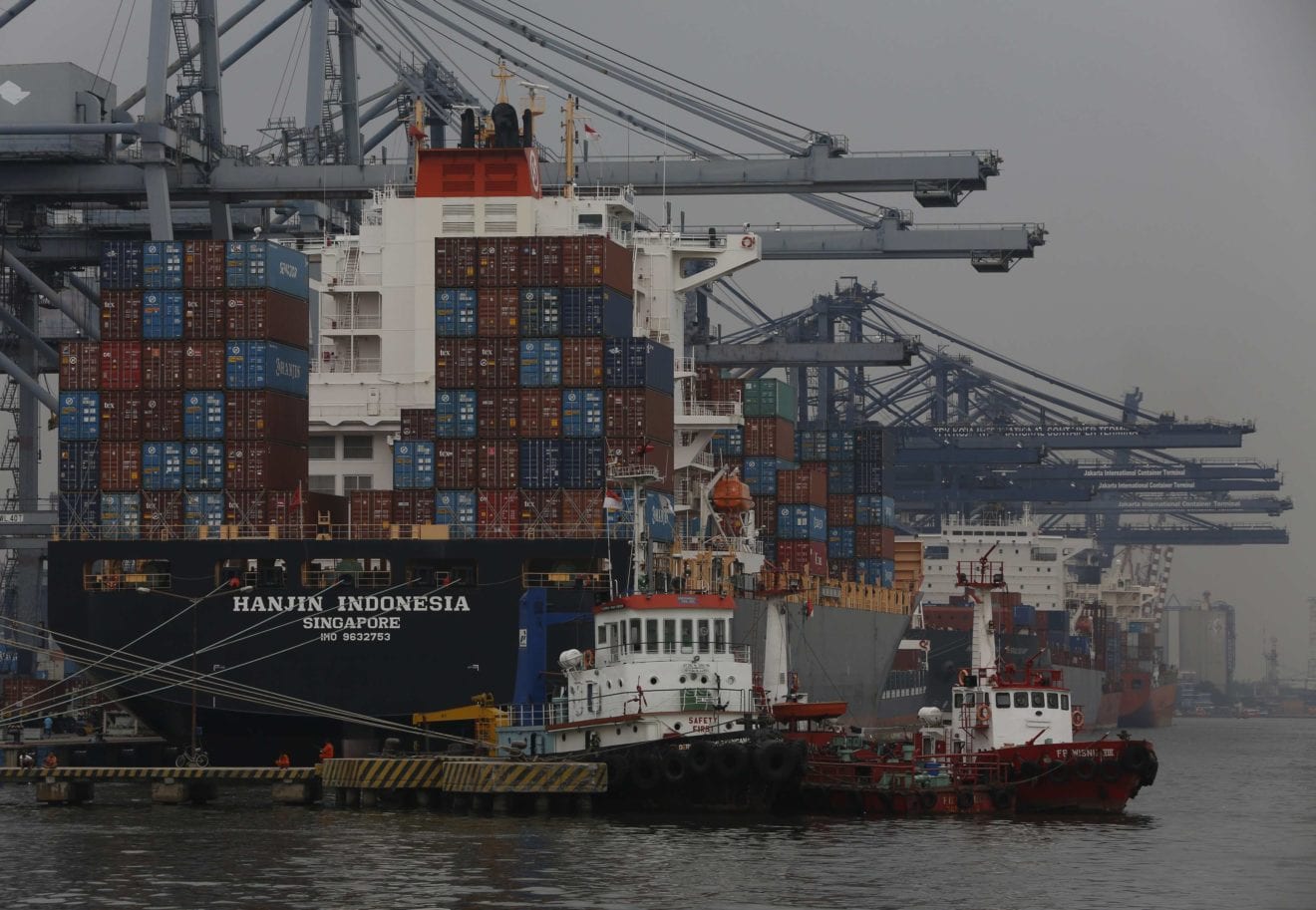
    The Papua provincial government, facilitated by the Indonesian ship management PT. Pelindo IV, has released 100 containers of forest products to China.

    President Director of PT Pelindo IV, Doso Agung, said in a statement received by ANTARA here on Tuesday that the exported containers released by the Governor of Papua, Lukas Enembe, along with the Board of Directors of Pelindo IV, is expected to bring in a revenue to Rp20 billion (or about US$1.5 million).

    Doso stated that Pelindo IV will continue to carry direct export to transport Papua’s commodity crops to a number of countries.

    “Direct export is expected to stimulate the economy in regions where the Pelindo IV operates. We will boost the direct exports, particularly in the ports managed by Pelindo IV,” he noted, adding that the Papua provincial administration will provide ships from Australia to open seaweed markets.

    The release event was followed by a groundbreaking of the Jayapura seaport extension development in order to increase the capacity of the port.

    Enembe appreciated Pelindo IV for engaging in direct overseas export.

    Lukas hoped the direct export will immediately open up overseas market for Papuas commodities, and the area can attract investors.

    He also hoped that the direct export would not only include forest products but also other commodities in Papua such as coffee, cocoa, and fisheries.

  • Papua focuses on developing tourism in Biak and Supiori

    Papua focuses on developing tourism in Biak and Supiori

    The Papua administration has focused on developing tourism in the districts of Biak Numfor and Supiori.

    “So far, two regions have become a priority for tourism development, notably the districts of Biak Numfor and Supiori,” Ysh Is Matutina, head of the tourism office of Papua, stated here, Thursday.

    Tourism development has been carried out since 2016.

    Several tourist attractions and destinations in Supiori have been identified by the local tourism offices of Papua and Supiori.

    The development is aimed at attracting more domestic and foreign tourists.

    In Biak Numfor, the priority is to develop the Sausapor Beach. Several other tourist attractions and destinations are also being developed.

    Meanwhile, the number of foreign tourists visiting Biak Numfor District, Papua Province, increased to 3,399 people in 2016, as compared to 1,779 in the previous year.

    The increase was the result of intensified tourism promotion activities carried out by the Biak District administration, Enias Rumbewas, spokesman of the Biak Numfor district government, noted recently.

    Foreign tourists from Japan, the Netherlands, Australia, China, and several European countries, among others, visit Biak.

    The number of domestic tourist arrivals also surged from some 28 thousand in 2015 to 30 thousand in 2016.

    Among the existing tourist attractions in Biak are the World War II wreckage, maritime scenery, and its unique cultural diversity regularly showcased at the Biak Munara Wampasi festival.

    This year, the festival will be organized in July and will feature activities, such as traditional snap mor fishing, Mansusui boat race, and a visit to the Padaido/Aimando islands.

    The Biak Numfor district government has allocated funds worth Rp1 billion through the local Tourism Office to ensure the success of the cultural festival.

    Last year, the festival was held on Jul 1-4 to showcase traditional Japanese “katana” vintage samurai swords from World War II.

  • PNG plans to open flight route to Papua

    PNG plans to open flight route to Papua

    Papua New Guinea has reiterated its plan to open a flight route from Mount Hagen to Jayapura during a meeting of the Border Liaison Officers held in Port Moresby, an Indonesian official said.

    Papua New Guinea will soon realize its plan but has not set a specific date for it, Director for East Asia and the Pacific at the Indonesian Foreign Ministry, Edy Yusuf, said on Tuesday.

    Yusuf said the Indonesian government is prepared to help realize the plan soon.

    “Indonesia is ready to help Papua New Guinea realize the plan since there is no flight from Papua to Papua New Guinea,” he added.

    The head of the Indonesian delegation to the meeting, Klemen Tinal, who is also the deputy governor of Papua, shared Yusufs view and expressed the hope that the plan would come to fruition soon.

    Most citizens of Papua New Guinea who live in Vanimo visit Indonesia by land through borders between Wutung in Papua New Guinea and Skouw in Indonesia, as well as by sea, he informed.

    If the plan to open the flight route is realized, they will no longer need to travel to Papua by land or sea, he stressed.

  • Huawei Marine to build backbone network for PNG

    Huawei Marine to build backbone network for PNG

    Huawei Marine has secured a contract to build a national subsea cable backbone network for the Papua New Guinea government.

    The company will work with PNG DataCo, an operator established by the Papua New Guinea government, to construct a national backbone network linking major coastal centers and islands in the nation.

    The 5,457km cable network will provide domestic connectivity across the nation’s 14 largest cities, as well as international connectivity via a link to Jayapura in Indonesia.

    With a design capacity of 8Tbps, the cable will be designed provide more than 70% of Papua New Guinea’s domestic bandwidth requirements. Currently domestic telecoms capacity largely relies on satellite and microwave communications due to the country’s unique geography.

    “This new system is very important to Papua New Guinea as it not only includes a new submarine cable network but also provides internet gateways and data centers,” DataCo managing director Paul Komboi said.

    “This will improve the whole ICT infrastructure in the country and greatly increase network coverage, capacity and the availability of Internet and broadband services to end users.”

    He said Huawei Marine was selected for the project through a competitive tender process.

  • President Hooks Up Papua to Fiber-Optic Spine

    President Hooks Up Papua to Fiber-Optic Spine

    President Joko Widodo on Sunday inaugurated the Rp three.6 trillion ($275 million) Sulawesi, Maluku and Papua Cable System (SMPCS), a fiber-optic community meant to enhance Japanese Indonesia’s telecommunications connectivity.

    The cable system is part of the state-owned telecommunication agency Telekomunikasi Indonesia (Telkom)’s plans to attach the whole archipelago with fiber-optic know-how by the top of this yr.The SMPCS stretches for eight,772 kilometers throughout 34 districts in North Sulawesi, Southeast Sulawesi, South Sulawesi, North Maluku, Maluku, East Nusa Tenggara, West Papua and Papua. Thus far, Telkom has put in 6,193 kilometers of fiber-optic cable and it plans to complete the rest by September.

    The japanese community is a part of the 76,727-kilometer fiber-optic cable infrastructure that stretches from Sabang within the northwest of Indonesia to Merauke within the southeast.

    “The SMPCS will broaden the connectivity and increase knowledge service capability in areas which have by no means been served nicely earlier than,” Telkom president director Alex J. Sinaga stated.Nonetheless, the cable system is “solely a spine community and Indonesia nonetheless wants the entry [at the consumer level],” Communications and IT Minister Rudiantara advised these current on the inauguration of the community by video-call from Jakarta.

    “To raise the entry high quality, we should migrate and rearrange the frequency at 1,800 megahertz for 4G know-how,” the minister stated. “This has been accomplished in Maluku and North Maluku. We’ll begin doing this in Papua from Tuesday, in Kalimantan and Sumatra on the finish of June and will probably be completed in Jakarta in November.”

    4G Lengthy Time period Evolution (LTE), or the fourth-generation know-how product that gives tremendous quick knowledge switch for cellular units, gives improved obtain speeds in comparison with present 3G know-how provided by many cellular operators.