Tag: parking

  • Revolutionizing Navigation: Google Maps iOS Update Autonomously Saves Your Parking Spot

    Revolutionizing Navigation: Google Maps iOS Update Autonomously Saves Your Parking Spot

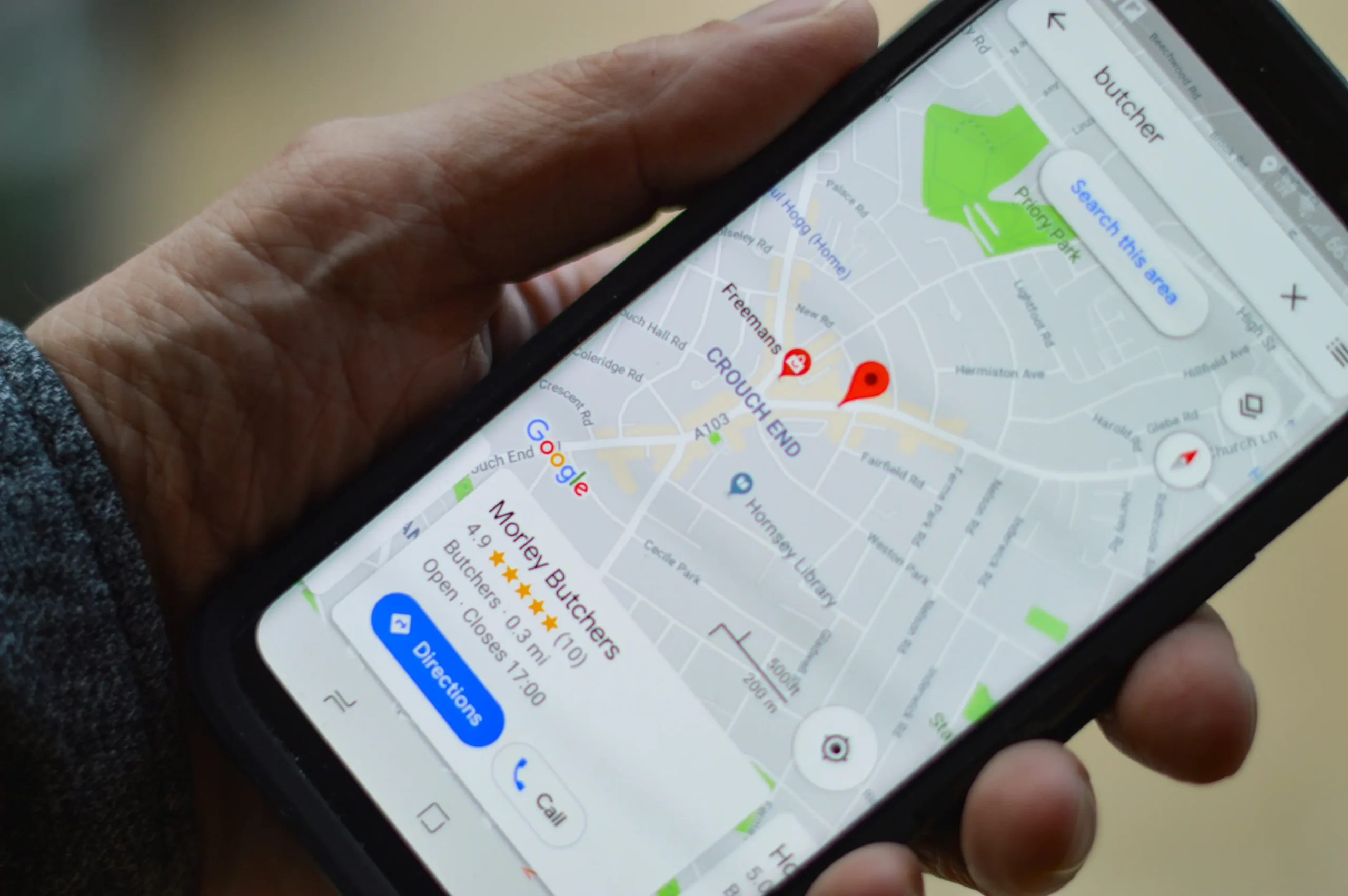
    Google Maps has introduced a new feature for iOS users: the ability to automatically detect and save a user’s parking location. This function eliminates the need for manual input, which was previously required on both mobile devices and Android Auto. The updated system now allows the app to identify when your car has been parked and saves the location accordingly. When you return to your vehicle and begin driving, the app will erase the saved location.

    Feature Availability

    As of now, this feature is exclusively available for iOS users and operates when your phone is connected to your vehicle and Google Maps. The connection can be established via Bluetooth, USB, or CarPlay. The saved parking location will remain on the app for 48 hours unless manually removed or if the car is driven.

    Personalized Parking Icons

    Google Maps’ Senior Product Manager Rio Akasaka disclosed the news on LinkedIn, though Google has not officially announced the feature. Additionally, Akasaka revealed an add-on to the feature: Google Maps will use your customized car icon to mark your parking location in the app. If you do not use a custom car icon, the default “P” icon will be used.

    As of yet, there has been no information released regarding when or if the feature will be available on the Android platform. The delay in introducing this function to Google Maps is surprising, given that similar features have long been available on other navigation apps like Waze and Apple Maps.

    A Timely Update

    Even though I’ve never experienced parking confusion quite as catastrophic as in the movie ‘Dude, Where’s My Car?’, I’ve had my fair share of difficulty locating my vehicle. This straightforward feature is a simple solution that could have been incorporated into the app sooner. However, its overdue arrival is still appreciated.

    Questions & Answers

    What is the new Google Maps feature for iOS users?
    Google Maps can now automatically detect and save a user’s parking location without requiring manual input.

    How does Google Maps connect with the car to use this feature?
    The connection between the vehicle and Google Maps can be established via Bluetooth, USB, or CarPlay.

    How is the parking location marked in the app?
    Google Maps will either use a user’s customized car icon or, in the absence of a personalized icon, the default “P” icon to mark the parking location.

  • Parking an expensive headache for Hanoi apartment owners

    Parking an expensive headache for Hanoi apartment owners

    Hanoi apartment owners are spending up to hundreds of million dong (VND100 million = $4,200) on parking spots in their building due to insufficient space to accommodate increasing car ownership.

    For the first time in two years, Phuong Linh in Hanoi’s Ha Dong District was able to park her car in the basement of her own apartment building after paying VND20 million to a neighbor who just moved away.

    Due to the limited space in the basement, Linh has been parking her car in other parking lots around her neighborhood ever since she moved to the building.

    Only car owners who registered early can park their vehicles in the basement, and once they move, other residents like Linh rush to purchase the right to park in the spaces they leave vacant.

    This means that on top of the VND20 million, she still has to pay monthly parking fees.

    “I have to pay a lot, but I consider myself lucky. There are 30 other residents like me waiting for the next empty parking slot.”

    Stories like Linh’s have become increasingly popular in Hanoi, a city of 8.4 million where the number of both condominiums and cars has been surging in recent years.

    Manh Dung in Nam Tu Liem District last month bought an SUV, but he only found out after the purchase that there were no car parking spots left in his building.

    Nearly 100 residents have queued for the next empty slot, he said.

    Using connections, Dung managed to contact one of the building managers and secured a parking slot for VND40 million. The deal was unofficial.

    The manager said that if he moves away in the future, he can sell the slot for almost the same price, as there will always be demand for parking slots in the building.

    “I paid right away. A basement parking space is valuable, especially when it rains.”

    Many developers have set aside auto parking areas in the basement of their buildings, but the increasing number of cars in the city has made the limited number of parking slots a treasured real estate.

    By February this year Hanoi had over one million cars, up 36% from around the same period in 2019. This means that one in every eight Hanoi residents owns a car.

    Some developers, therefore, charge big bucks for parking slots.

    A developer of a 40-floor condominium in Ha Dong District earlier this year charged VND220 million for a 20-year parking space rental contract.

    It also offered to sell a parking slot permanently at VND400 million for a sedan, and nearly VND500 million for an SUV.

    Due to the high price tag, some residents at the building have no choice but to find outdoor neighborhood parking lots and pay around VND1.2 million a month per vehicle.

    In July, a developer of a 30-floor building in Thanh Xuan District charged VND60 million upfront for a five-year car parking slot. Residents protested the policy, saying that they did not want to pay such a hefty sum all at once.

    The developer also offered to lease a parking slot for VND200 million over 40 years. This means that a resident of a 70-square-meter apartment in the building would have to pay 10% of their apartment price for parking.

    Nguyen Viet Huy, a lecturer at Hanoi University of Construction, said that the competition for car parking space at condominiums has become more popular in Hanoi in recent years.

    There are legal requirements on how much parking space is needed at every condo project, but the figures are not backed by any scientific study, he added.

    Dao Ngoc Nghiem, deputy chairman of Hanoi Urban Development Planning Association, said that many developers who built their projects 10 years ago did not expect the number of immigrants in Hanoi would rise as fast at around 1.4% annually.

    “Parking space therefore have become one of the top criteria in apartment purchasing these days.”

    The lack of public parking spaces also contributes to the issue, as only 10% of parking demand in Hanoi has been met, he said, adding that more elevated and underground parking lots should be built.

  • Apple adds a new useful parking feature to the Maps app

    Apple adds a new useful parking feature to the Maps app

    Apple Maps has come a long way since the app was first released in September 2012. At first, Maps was an unmitigated disaster with some roadways and even countries unlabeled or missing their names. A few places were incorrectly identified and Apple uncharacteristically released an apology with Tim Cook telling iPhone users to use Google Maps or other mapping and navigation apps until Apple Maps was fixed. A company-wide shakeup ensued resulting in the dismissal of longtime software chief Scott Forstall.
    Apple went back to the drawing board and started collecting its own data so that it could build a new mapping and navigation platform from the ground up. And today, Apple Maps is a solid mapping and navigation platform that Apple continues to work on. Apple has teamed up with digital parking marketplace SpotHero to deliver information to Apple Maps users on 8,000 parking locations across the U.S. and Canada.
    For example, let’s say that you’ve got tickets to see the New York Knicks or the Rangers play at Madison Square Garden and you want to reserve a parking spot; go to Apple Maps and look up Madison Square Garden in New York City. On the listing, tap the three-dot “More” button on the right side. A pop-up menu will appear with Parking as the first option at the top of the list. Tap it and you’ll be taken to the appropriate SpotHero page without ever having to leave Apple Maps.

    Besides appearing on the iOS Apple Maps app, the partnership with SpotHero will also allow Mac users to reserve parking spots. This added feature is another step in the right direction for Apple Maps which still has to battle Google Maps on the iPhone for iOS for navigation app supremacy.

  • EESL Partners With Apollo Hospitals To Install Public Charging Stations

    EESL Partners With Apollo Hospitals To Install Public Charging Stations

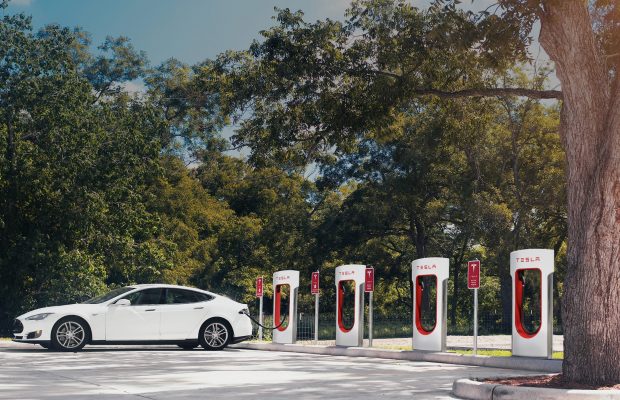
    Energy Efficiency Services Limited (EESL), a joint venture of PSUs under the Ministry of Power has announced its first partnership with the private sector. The world’s largest public energy services company (ESCO) has signed a 10-year Memorandum of Understanding (MoU) with Apollo Hospitals to install public charging stations across its hospitals in India. The aim is to boost e-mobility across the country and the tie-up will help set-up the charging infrastructure for electric vehicles. Under the MoU, EESL will make the entire upfront investment on specified services and deploy the manpower required for the operation and maintenance of the public charging infrastructure. Meanwhile, Apollo Hospitals will provide the requisite space and power connections for the charging network to EESL.

    Commenting on the announcement, Venkatesh Dwivedi, Director – Projects, EESL said, “Developing a strong supporting infrastructure is vital to build consumer confidence in electric vehicles. Our MoU with Apollo Hospitals reinforces the role of the private sector in achieving the goal of National Electric Mobility Programme. Electric mobility is vital to reducing airborne emissions and enhancing air quality, a cause the healthcare sector can resonate with. We look forward to more such multi-sectoral partnerships to accelerate the adoption of EVs across the country.”

    The move is part of the government’s National Electric Mobility Programme. EESL has commissioned 300 AC and 170 DC chargers across India and has established 55 public operational charging points in Delhi-NCR. The company has also partnered with Urban Local bodies in Hyderabad, Noida, Ahmedabad, Jaipur, Chennai, among other locations, to further penetrate the charging infrastructure.

    EESL procures the electric vehicles and chargers in bulk, which allows the company to source them at significantly discounted rates, lower than the actual market value. This allows the company to carry out operations at competitive project costs, which it says has helped the firm establish a sustainable business model that is affordable for the end consumer.

    With the government aggressive towards the adoption of electric vehicles in India, the charging infrastructure that remains nascent at present has always been a concern. Initiatives like these though will certainly help create enough charging locations to support electric mobility that is just gaining traction in the country.

  • Google Assistant brings back handy parking location functionality

    Google Assistant brings back handy parking location functionality

    Google’s industry-leading virtual assistant can be of great help not only when you’re actually behind the wheel, but also to remind you where you’ve parked your car at the end of a nice day walking around town. There are in fact a number of ways in which Google Assistant can lend a hand with locating your parked vehicle, and one feature, in particular, has caught our attention after first being spotted.

    That’s because this was apparently a thing back in the Google Nowadays of 2014, going away for some reason several years ago only to recently return in modernized fashion. You don’t have to actually do anything to get your digital assistant to estimate where you probably stopped driving and started walking.

    Based on your location history, your Android phone will let you know where you may have parked, and although the feature is unlikely to wow you with its accuracy, the fact it can loosely determine the whereabouts of your car with absolutely no effort on the user’s part is pretty cool… and a little scary. Of course, if you happen to often forget where you’ve parked or need perfect precision from this Google Assistant skill, you can always manually save your exact location by saying “Ok Google” and one of several magic phrases before leaving your vehicle behind.

    That’s especially useful if you want to keep a record of your precise parking spot in a crowded lot, but otherwise, the automatic feature is likely to prove fairly convenient as well. Particularly if you forget both where you parked and to manually command your voice assistant to save the location of your car, in which case this could prove an outright life-saver.

    As always, not everyone appears to have gained access to the newly added revived functionality straight off the bat, so for the time being, it might be wise to continue using the manual parking location reminder.

  • Successful development by Cale in Indonesia

    Successful development by Cale in Indonesia

    September 26, 2014 marked the first launch of Cale parking terminals in Jakarta, the capital city of Indonesia, a country with a population of 250 million people.

    An initial number of around 10 terminals were installed in Sabang Street, one of the busiest streets in the City. The Swedish Ambassador to Indonesia, Johanna Brismar Skoog, as well as government officials of the City of Jakarta attended the launch ceremony.

    With around 37 million vehicles operating on the streets of the city and the prevalence of illegal parking on street sides that contributes to Jakarta’s severe

    traffic congestion, the city government deemed the on-street parking solutions offered by Cale as important in reducing the traffic problems as well as preventing the misappropriation of the city’s parking revenue.

    The reason Cale is well placed to provide the solution to parking management in Indonesia is largely due to its 60 years of expertise and technology-driven innovations. Its latest parking terminal is designed to meet any possible needs of the user while supported by a sophisticated back office web system and reliable personnel. The company’s business spirit lies in the sustained product development with end-to-end solution in sight and knowledgeable support team, which is something that the end users in Indonesia have greatly benefited from.

    BANDUNG

    By partnering with PT Vertikal Akses Asia as Indonesia’s sole distributor, Cale is cementing its presence in the country by being the Jakarta government’s product of choice due to its technology and reliability. The parking terminals in Jakarta are operated and managed by PT Mata Biru, which has also been tasked in 2015 to install and operate the terminals in Bandung, a city of 2.5 million people, a 2-hour drive away from Jakarta.

    Meanwhile, the second installation of close to 100 CWT Compact terminals in Kelapa Gading Boulevard of North Jakarta in March 2015 was the first of many to come for the city this year, where the government has estimated that more than 1000 terminals are required to cover the entire on-street parking locations in Jakarta.

    So far, the implementation of on-street parking terminals in Jakarta has been met with positive response by the general public as well as the city government who has seen its revenues from on-street parking increase by 12-fold, as paying the fee at the machine plugs leaking revenues and promotes transparency and accountability.

    As Cale reaches its 60th anniversary this year, and with plans of expansion in other cities of Indonesia, 2015 will be the year that the company further solidifies its presence in Asia.

    Cale offers innovative and efficient parking solutions. From the start in 1955, Cale has developed into a world leading brand within the parking business, with a turnover close to half a billion SEK. Cale has subsidiaries, distributors and customers all around the world.