Retail News CRM

Tag: parts

  • Samsung to introduce recycled parts for smartphone repairs

    Samsung to introduce recycled parts for smartphone repairs

    Samsung is reportedly planning to start a new program that could significantly reduce repair costs for your Galaxy phones.

    Samsung is considering introducing certified recycled parts for mobile repairs. These are parts made of recycled materials such as discarded plastics, metals, and more. The initiative could launch in the next few months, specifically by the first half of this year.

    The report suggests that by using recycled spare parts, Samsung could pass on a smaller repair bill to users. The publication notes that things like display replacement could cost half of what it does today.

    As far as the quality of the recycled repair parts is concerned, Samsung is aiming for a level that can match that of new products. There’s no word on which smartphone parts will be available under the program and how much they would cost exactly.

    Samsung has been promoting sustainable manufacturing for a while now. The Galaxy S22 series is one of the latest examples of its efforts. The phones use a new material made up of discarded fishing nets.

    Over the years, Samsung has also significantly reduced the amount of plastic and paper in its packaging. Recycled repair parts seem to be a logical extension of Samsung’s sustainability efforts.

  • Volvo Car India Announces Lifetime Parts Warranty Scheme

    Volvo Car India Announces Lifetime Parts Warranty Scheme

    Volvo Car India announced a new “customer lifetime parts warranty” scheme across its model range. Under the new scheme, parts bought after the standard period of warranty and installed at an authorized workshop will carry a lifetime warranty and will be applicable on genuine parts bought from October 1, 2021. The coverage period begins on the date of purchase of the part and remains till the time the ownership of the car does not change. However, the scheme will lapse when the ownership changes. Under this scheme, both parts and the labor costs are covered. The initiative has been taken to provide customers reassurance on aftersales services given the high spare parts and replacement cost in luxury cars.

    Jyoti Malhotra, Managing Director, Volvo Car India said, “It is for the first time in India that such an initiative has been offered to the luxury customers. This is a unique offer in the automotive industry that gives the customer carefree and secure car ownership. In the unlikely event of customers requiring a part changed for their car, the company will give a lifetime warranty on the part. The warranty commences on the date of purchase of the part and will follow the combination of car and car owner. If the car has a new registered owner, the warranty will end.”

    Moreover, the company also reaffirmed that any genuine Volvo part which will require repair or replacement because of material or manufacturing defect will be repaired or replaced free of charge by an authorized dealer. However, the scheme is not applicable of normal wear and tear of parts, consumables, batteries, accessories, and Software which is not associated with a hardware replacement. Also, parts replaced under new car warranty or extended warranty or goodwill warranty would not be covered under this scheme.

  • 95 pct made-in-Vietnam auto parts for foreign brands

    95 pct made-in-Vietnam auto parts for foreign brands

    Nearly 95 percent of auto parts produced in Vietnam are for foreign brands, showing a lack of localization in the industry.

    Of the 287 items that have been approved by the Ministry of Science and Technology as of Aug. 17, 15 were registered for VinFast cars.

    The rest were all for foreign brands. A total 226 were for Toyota, 15 for Ford and 10 for Honda.

    This means Toyota accounts for nearly 79 percent of the registered items.

    None of these items include parts for Hyundai and Mazda vehicles, although TC Motor (which assembles Hyundai cars) and Thaco (which assembles Mazda cars) have both previously affirmed they had “high” localization rates.

    TC Motor claims the rate at around 20 percent.

    Most parts are frames, chairs, and wires that are considered basic. There are no complicated parts like engines and gearboxes.

    Vietnamese officials have been calling for a higher localization rate of cars produced in the country for over two decades but the target has not been achieved.

  • Indian Consumers Prefer 3D Catalogues As Digital First Trend Takes Off Because Of COVID19

    Indian Consumers Prefer 3D Catalogues As Digital First Trend Takes Off Because Of COVID19

    Eccentric Engine’s One 3D platform has been powering the virtual showroom and 3D catalogs for various automobile OEMs has released a survey which reveals 7.6 million Indians chose to experience cars virtually in 3D on platforms enabled by its technology in 2020.

    It reports a 300 percent increase from 2019 for its visualization platform One 3D. The data is based on 100 million interactions and over 500 respondents spanning tier 1, tier 2 and tier 3 cities. Its platform enabled research for cars in a virtual 3D format.

    Eccentric Engine’s 3D configurator has been in the market since 2018. Most recently, it enabled the 3D experiences for MG Motors, Citroen and Tata Motors.

    “In India, we work with Maruti Suzuki, Tata Motors, MG, Citroen, Toyota, and Nissan. And also with the newly formed Stellantis (which is the whole PSA group plus FCA),” revealed Varun Shah, the co-founder of Eccentric Engine.

    Shah reveals his platform enables users to explore granular details about vehicles, including details that can’t be explored in review videos or online activations.

    The survey revealed that 51 percent of the sessions were from the 6 top-tier cities including New Delhi, Mumbai, Pune, Hyderabad, Bangalore and Chennai. Even Lucknow broke into 3 percent of the digital sessions making its way into the top 10 cities in India. Interestingly, tier 3 cities accounted for 9 percent of the queries which is an impressive number.

    The survey also revealed that 91 percent of the users who experienced the car online ended up buying the same car offline.

    “By intuitively integrating the real and digital world with One 3D we are excited to create an unprecedented level of customer engagement for our OEM partners to understand evolving consumer needs and help them serve their customers better by offering world-class product visualization that can create surprise and delight and personalize their buying experience,” said Varun Shah.

    The survey also revealed that non-resident Indians were making buying decisions for their families in India digitally. 4.6 percent sessions were from NRIs out of which 31 percent were from North America, 32 percent were from the Middle East, 10 percent were from Europe, 5 percent from the UK, 4 percent from Australia, 2 percent Africa and 1 percent from Latin America.

    The survey also showed blue and white were the most popular shades by more than 40 percent. 35 percent people preferred the colour grey, brown and silver. Red, black and orange were preferred by 15 percent.

    Indian automakers have seen a sharp rise in digital interaction over the past couple of years and yes, it’s been largely driven by the pandemic. Audi India, Volkswagen India saw an uptick of 70% in online interface compared to pre-covid times and with new tech, enhancing that experience for customers is going to be paramount. More manufacturers are now getting into the game and innovation is at the top of everyone’s agenda.

  • Bentley Hires Jets To Fly Car Parts To Britain During Brexit

    Bentley Hires Jets To Fly Car Parts To Britain During Brexit

    Bentley, the luxury carmaker owned by Volkswagen has booked five Antonov cargo jets to help overcome potential supply bottlenecks in the event of a disorderly exit of Britain from the European Union, the carmaker said on Wednesday. Car manufacturers are securing additional supply routes as policymakers in Brussels and Westminster seek to strike a deal to determine the future trading relationship with continental Europe after Britain exits the European Union.

    Bentley, which makes high-end sports cars, buys 90% of its components from continental Europe, and sells around 24% of its cars into Europe, Chief Executive Adrian Hallmark told the Financial Times’ Future of the Car summit.

    “We have spent two years planning. We have five Antonovs that we have on reserve to fly bodies to Manchester,” Hallmark said, adding that in addition to shifting car bodies by air, Bentley has hiked the level of spare parts stored for production.

    Bentley has booked additional warehouses and planned new logistics routes in case traditional supply methods are hampered by bottlenecks

    “We used to run just-in-time with two days stock. Now we have 14 days of stock. That’s 14 working days, so that’s three weeks of stock,” he said.

    The company has booked additional warehouses and planned new logistics routes in case traditional supply methods are hampered by bottlenecks.

    If Britain fails to secure a negotiated trade agreement with European policymakers, Bentley would be able to absorb 10% import tariffs by raising prices and cutting costs. This would be less damaging than supply disruptions.

    “It is not existential as long as everything flows. Stopping flows is far more dangerous than Brexit tariffs,” Hallmark said, referring to supply bottlenecks.

    This year Bentley expects to sell more than 10,000 luxury cars and to reach breakeven, mainly thanks to a rebound in demand in China, Hallmark said.

    China sales are up 35% when compared with before the COVID-19 crisis. Sales in Europe and the United States up 15% Hallmark said.

    “Overall we are in a position where we will do well over 10,000 sales this year,” he said via Webcast. “We are on the cusp of going beyond breakeven.”

  • Ford exploring 3D printing of one-piece auto parts

    Ford exploring 3D printing of one-piece auto parts

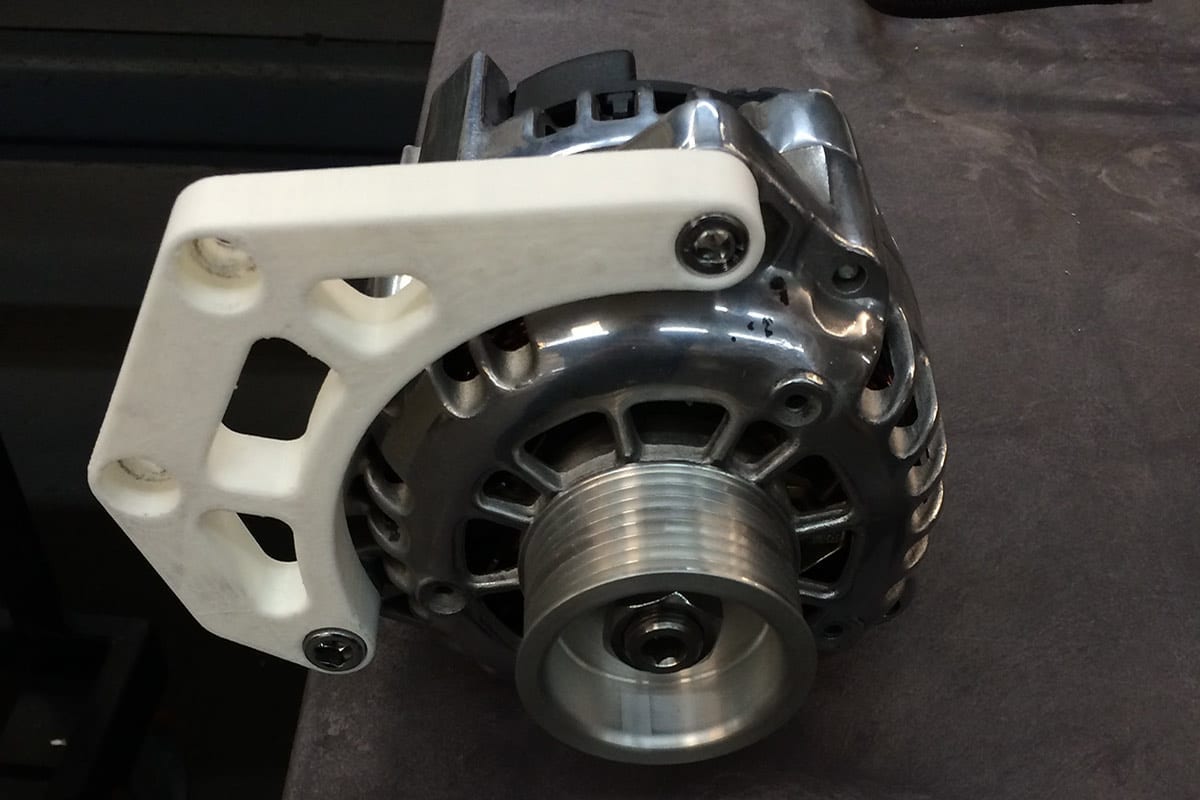
    US based car manufacturer Ford Motor Company is exploring how large-scale one-piece auto parts, like spoilers, could be printed for prototyping and future production vehicles, as the first automaker to pilot the Stratasys Infinite Build 3D printer.

    Capable of printing automotive parts of practically any shape or length, the Stratasys Infinite Build system could be a breakthrough for vehicle manufacturing claims the company. It will provide more efficient and affordable way to create tooling, prototype parts and components for low-volume vehicles such as Ford Performance products, as well as personalized car parts.

    The new 3D printer system is housed at Ford Research and Innovation Center in Dearborn.

    “With Infinite Build technology, we can print large tools, fixtures and components, making us more nimble in design iterations,” said Ellen Lee, Ford technical leader, additive manufacturing research. “We’re excited to have early access to Stratasys’ new technology to help steer development of large-scale printing for automotive applications and requirements.”

    Wider adoption of 3D printing has been driven by recent technology advances, new areas of application and government support, according to Global Industry Analysts.

    By 2020, the global market for this emerging technology is expected to reach $9.6 billion, the organization reports. As 3D printing becomes increasingly efficient and affordable, companies are employing it for manufacturing applications in everything from aerospace to education to medicine.

    3D printing could bring immense benefits for automotive production, including the ability to produce lighter-weight parts that could lead to greater fuel efficiency. A 3D-printed spoiler, for instance, may weigh less than half its cast metal counterpart.

    The technology is more cost efficient for production of low-volume parts for prototypes and specialized race car components. Additionally, Ford could use 3D printing to make larger tooling and fixtures, along with personalized components.

    How it works
    With 3D printing, specifications for a part are transferred from the computer-aided design program to the printer’s computer, which analyzes the design. The device then goes to work, printing one layer of material at a time, then gradually stacking layers into a finished 3D object.

    When the system detects the raw material or supply material canister is empty, a robotic arm automatically replaces it with a full canister. This allows the printer to operate unattended for hours – days, even.

    Using traditional methods to develop, say, a new intake manifold, an engineer would create a computer model of the part, then have to wait months for prototype tooling to be produced. With 3D printing technology, Ford can print the intake manifold in a couple of days, at a significant cost reduction.

    3D printing is not yet fast enough for high-volume manufacturing, but it is more cost efficient for low-volume production. Additionally, minus the constraints of mass-production processes, 3D-printed parts can be designed to function more efficiently.

  • Japan auto parts firm Usui settles U.S. price-fixing allegations

    Japan auto parts firm Usui settles U.S. price-fixing allegations

    Japanese auto parts maker Usui Kokusai Sangyo Kaisha Ltd will plead guilty and pay a $7.2 million fine for fixing the prices of steel tubes sold to car makers, the U.S. Justice Department said on Tuesday.

    Usui worked with other manufacturers to set prices and allocate customers for their steel tubes, which are used in fuel distribution, braking and other automotive systems, the Justice Department said.

    The department said a total of 47 companies and 65 people have pleaded guilty or been charged with price fixing of auto parts during its long-running probe of the industry.

    Attempts to reach Usui Kokusai Sangyo Kaisha were unsuccessful.