Tag: passenger

  • Q2 2026 Sees 17.2 Million Passengers at Changi Airport Despite Slight Decline in Passenger Traffic

    Q2 2026 Sees 17.2 Million Passengers at Changi Airport Despite Slight Decline in Passenger Traffic

    In the second quarter of 2026, Singapore’s Changi Airport recorded 17.2 million passenger movements, representing a slight 1.5% decline compared to the same period in the previous year. Despite this, the airport saw a 0.4% increase in passenger traffic in the first half of the year.

    Quarterly Performance Indicators

    Within the quarter, there were 92,400 aircraft movements, including both landings and takeoffs, which marks a 1.3% decrease from the same period last year. The total aircraft movements for the first half of the year equaled 188,000, on par with the numbers from the previous year.

    Traffic to and from Europe and the Southwest Pacific went up by 8.7% and 3.0% respectively due to airlines increasing their capacity on these routes to streamline their operations. However, the challenging business environment, characterized by high jet fuel costs and fuel supply constraints, led to reduced services, particularly on Southeast Asian routes, which saw a 5.0% decrease in traffic.

    The top five passenger markets for Changi Airport in this quarter were China, Indonesia, Australia, Malaysia, and India. Despite the overall decline, Vietnam and China experienced robust growth, with year-on-year increases of 18.5% and 8.3% respectively. Japan also saw a steady growth of 7.0%.

    In the second quarter, Changi Airport handled 567,000 tonnes of airfreight throughput, a 9.8% increase from the same period in the previous year. This strong performance was driven by growth in all cargo flows, particularly in AI-related semiconductor and electronics shipments. The top five air cargo markets were China, the United States, Australia, Hong Kong, and India.

    Looking Forward

    Mr. Lim Ching Kiat, Executive Vice President for Air Hub and Cargo Development at Changi Airport Group, noted that although airlines continue to adjust their services due to changing operating conditions, the sustained demand for travel is encouraging, particularly to and from Europe and Northeast Asia.

    Changi Airport expanded its connectivity in the second quarter, with the introduction of new passenger and cargo services. China Eastern started services to Dalian in April, while Scoot added services to Belitung and Pontianak in Indonesia in May and June respectively. The airport also welcomed two new passenger airlines, Shanghai Airlines and Oman Air.

    On the cargo front, Tianjin Air Cargo began operations between Singapore and Haikou in June, becoming Changi Airport’s newest cargo operator.

    Questions & Answers

    What was the total number of passenger movements recorded at Changi Airport in the second quarter of 2026?
    Changi Airport recorded 17.2 million passenger movements in the second quarter of 2026.

    How did aircraft movements in the first half of 2026 compare to the same period in the previous year?
    The total number of aircraft movements in the first half of 2026 was 188,000, similar to the same period in the previous year.

    Which were the top five passenger markets for Changi Airport in the second quarter of 2026?
    The top five passenger markets were China, Indonesia, Australia, Malaysia, and India.

  • Record-Breaking 2025: Changi Airport Soars with Highest Passenger Traffic and Unprecedented Cargo Performance

    Record-Breaking 2025: Changi Airport Soars with Highest Passenger Traffic and Unprecedented Cargo Performance

    In the year 2025, Singapore’s Changi Airport experienced record-breaking passenger traffic, with 69.98 million passenger movements noted, indicating a rise of 3.4% in comparison to the previous year. Aircraft activities, such as landings and take-offs, also witnessed a growth of 2.2%, reaching 374,000 movements in total. Furthermore, airfreight throughput amounted to an impressive 2.08 million tonnes, surpassing the prior year’s records by 4.5% and solidifying its position as one of Changi Airport’s most successful cargo performances.

    Busiest Periods of 2025

    The most crowded month of the year was December 2025, which saw 6.3 million passenger movements. A significant day during this period was the 20th of December, the Saturday preceding Christmas, when more than 223,000 passengers traversed the Changi terminals.

    The growth in traffic for 2025 was diversified, underpinned by steady travel demand and the air hub’s improved connectivity. Notably, the top five passenger markets for Changi Airport were China, Indonesia, Malaysia, Australia and India. China, in particular, remained the largest traffic market with the most significant growth of 12.2% compared to 2024. Vietnam and Japan also experienced substantial growth of 9.8% and 7.0% respectively. The most frequented routes for the year included Kuala Lumpur, Bangkok, Jakarta, Denpasar (Bali), and Hong Kong.

    Cargo Performance and Expansion

    In terms of cargo, growth was observed in all areas – exports, imports and transshipments. This can be attributed to the first three quarters’ front-loading activities and the robust global demand for semiconductors, driven by advancements in AI, electric vehicles and clean technology. The top five air cargo markets for Changi were China, the United States, Australia, Hong Kong and India, with China, the United States and Taiwan posting the highest growth.

    Enhancing Global Connectivity

    Changi Airport achieved a milestone in network growth in 2025 by adding 13 city links to its global network. These new destinations included locations in China, Indonesia, Austria, India, Malaysia, Mongolia and Vietnam. This expansion included two new passenger airlines, MIAT Mongolian Airlines and Pelita Air.

    A significant addition was the introduction of a direct connection to Ulaanbaatar, Mongolia, strengthening Changi’s position as a regional gateway. The introduction of new routes in China and Southeast Asia underscores Changi Airport’s commitment to diversifying its Asian network and enhancing its competitive edge as a hub.

    A Word from the CEO

    Mr Yam Kum Weng, Chief Executive Officer of Changi Airport Group (CAG), expressed satisfaction with the year’s performance, attributing the success to strong collaboration with airline partners. As travel demand in Asia continues to grow, Changi is actively seeking to expand its regional network, including to emerging secondary cities with promising economic and tourism potential. He also stated that CAG would continue to innovate to deliver more efficient and seamless operations to ensure Changi remains a leading aviation hub.

    As of January 2026, approximately 100 airlines operate more than 7,300 weekly scheduled flights at Changi Airport, connecting Singapore to over 170 cities in 50 countries and territories worldwide.

    Questions & Answers

    What was the total passenger traffic at Changi Airport in 2025?
    The total passenger traffic at Changi Airport in 2025 was 69.98 million.

    Which were the top five passenger markets for Changi Airport in 2025?
    The top five passenger markets for Changi Airport in 2025 were China, Indonesia, Malaysia, Australia, and India.

    Which new routes were added to Changi Airport’s network in 2025?
    New routes added to Changi Airport’s network in 2025 included destinations in China, Indonesia, Austria, India, Malaysia, Mongolia, and Vietnam.

  • Tata Motors Restructures Into Two Entities, Aiming For Enhanced Business Focus

    Tata Motors Restructures Into Two Entities, Aiming For Enhanced Business Focus

    In a major strategic move, Tata Motors has announced a significant restructuring of its company. As of October 14th, the company was divided into two separate entities – Tata Motors Passenger Vehicles and TML Commercial Vehicles. Despite the split, the passenger vehicles division remained listed on the stock exchange under the name “Tata Motors.” However, this will change as of October 24th when the name will officially become “Tata Motors Passenger Vehicles,” complete with a new logo.

    Consolidation of Commercial Vehicle Division

    Tata Motors has also unveiled plans to consolidate its Commercial Vehicle (CV) division and all associated investments under one dedicated entity. Concurrently, the Passenger Vehicle (PV) business and its related assets will be placed in a separate company. This move is intended to streamline operations and create a sharper focus on the different business segments.

    The restructuring has had a notable impact on the company’s share price, which has seen a significant drop since the division was announced. This change, however, reflects the separation of the commercial vehicle business rather than a reduction in investor value.

    Specialized Entities for Robust Operations

    The restructuring has led to the formation of two specialized entities. Tata Motors Passenger Vehicles Limited will be responsible for cars, SUVs, EVs, and the Jaguar Land Rover business. In contrast, the newly formed Tata Motors Limited will concentrate exclusively on commercial vehicles like trucks, buses, and pickups. This strategic split is intended to enhance business focus and unlock greater value in India’s vibrant automotive sector.

    The newly formed Tata Motors Commercial Vehicles Limited (TMLCV) is set to be renamed Tata Motors Limited once the necessary regulatory approvals have been secured. Until then, TMLCV shares will remain unlisted, a process that typically takes between 45 to 60 days. Meanwhile, the previous derivative contracts expired on Monday, and fresh F&O contracts for Tata Motors Passenger Vehicles Limited (TMPVL) started trading on Tuesday. However, TMLCV won’t be available for F&O trading immediately.

  • Passenger, goods transport volume sees strong surge in H1

    Passenger, goods transport volume sees strong surge in H1

    The transport sector carried over 2.17 billion passengers in the first half of 2023, up 15.9% year-on-year, heard a conference hosted by the Ministry of Transport in Hanoi.

    In the review period, about 1.10 billion tonnes of goods were transported, up 15.9% compared to the same period last year.

    The volume of railway passengers has experienced a strong increase in the period, recording a revenue growth of 138.92% compared to the same period last year.

    The aviation sector has basically met the demand. Some international routes have gradually recovered to the pre-pandemic level. The Ministry of Transport has also implemented various solutions to reduce flight delays and cancellations, and better the quality of air transportation services.

    The maritime sector has paid attention to implementing a project to develop Vietnam’s shipping fleet; simplifying administrative procedures, strongly applying information technology and the national one-stop-shop mechanism for 11 administrative procedures at 22 maritime port authorities nationwide.

  • Suzuki mulls assembling passenger cars in Vietnam

    Suzuki mulls assembling passenger cars in Vietnam

    Japanese automaker Suzuki is possible to assemble passenger cars in Vietnam in the coming time, a leader of the company says.

    Toshiyuki Takahara, general director of Suzuki Vietnam, told local media that the country is a key market for the company and it is considering assembling certain models there.

    When selecting a country for establishing a car assembly plant, Suzuki needs to take into consideration the possible sales volume, he said, but did not mention a specific target, saying it was a trade secret.

    With its current market share, it is more reason for it to import completely built unit (CBU) cars for local distribution, he added.

    Suzuki now assembles light trucks and vans in Vietnam. But all passenger cars, including four- and seven-seater, are imported from Indonesia and Thailand.

    Takahara said assembling passenger cars in the country requires huge capital investments in the production line. If the assembling depends on imported components, it would be ineffective because of increasing costs, resulting in higher car prices.

    Suzuki’s market share in Vietnam has been increasing over the past three years. It sold more than 6,800 vehicles in 2018, accounting for 2.5 percent of the market share. Last year, these numbers increased to 11,780 and 3.9 percent, correspondingly.

    The market share of Suzuki brand cars increased to 5.1 percent in the first 9 months of this year.

  • China’s April Passenger Car Retail Sales Down 5.6%

    China’s April Passenger Car Retail Sales Down 5.6%

    China’s passenger car retail sales in April fell 5.6% from a year earlier to 1.43 million, the China Passenger Car Association said on Monday, as the country gradually recovers from the coronavirus.

    China on Wednesday reported 52 new coronavirus deaths, the lowest figure in more than three weeks. The number of fresh coronavirus cases has declined in China, with multiple provinces reporting zero new infections in recent days.

    The association said during an online briefing that the overall passenger car sales trend is showing a quick recovery from the virus-induced low.

  • AirAsia celebrates 9% passenger growth in 4Q

    AirAsia celebrates 9% passenger growth in 4Q

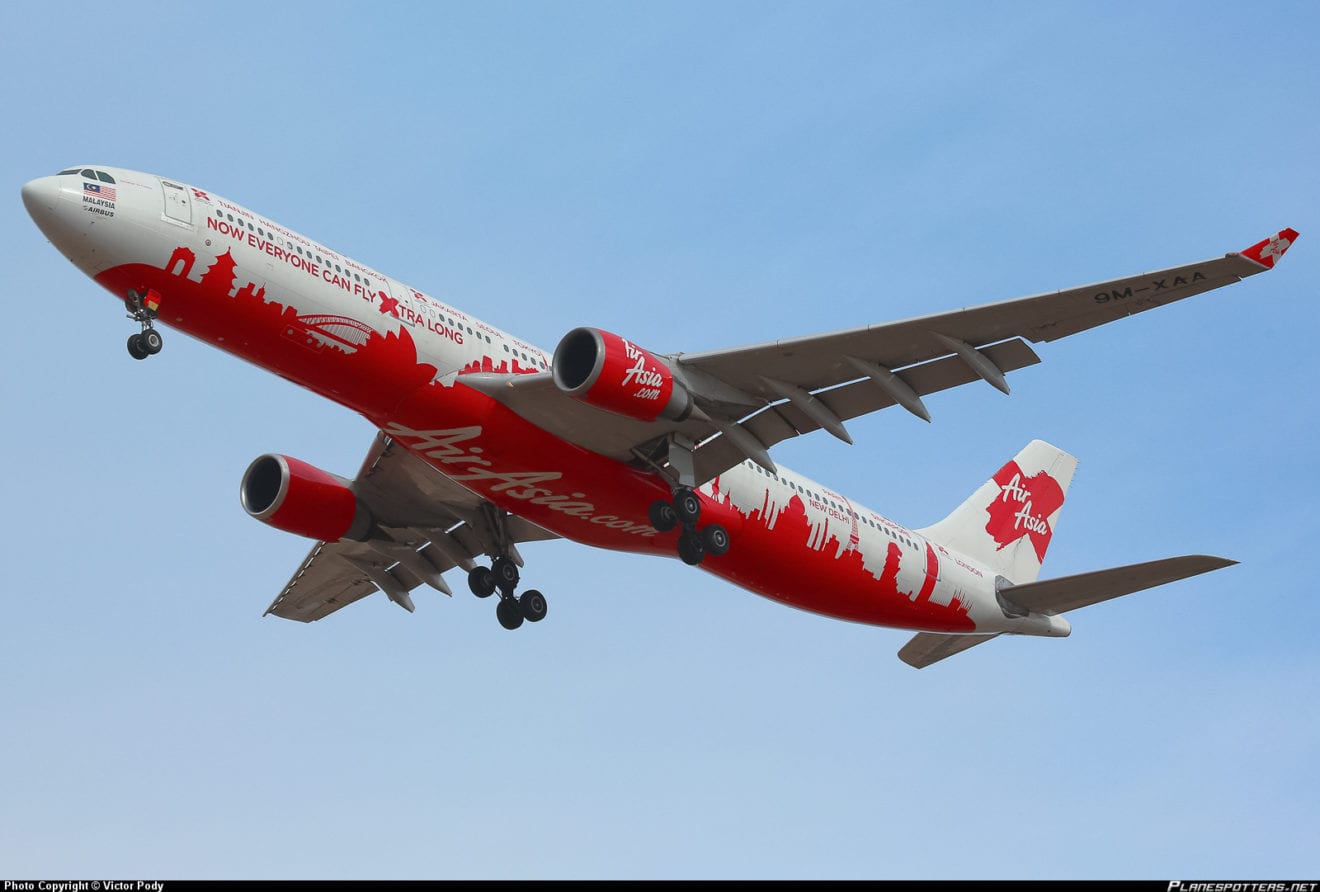
    AirAsia Group has recorded a 9% increase year-on-year (y-o-y) in the number of passengers carried to 13.17 million for the fourth quarter ended December 2019 from 12.11 million passengers previously.

    In the same period, the carrier’s capacity expanded by 11% y-o-y to 16.02 million passengers from 14.38 million, driven by large increases in Indonesia and the Philippines.

    However, load factor, which is the number of passengers carried as a percentage of capacity, dipped slightly to 82% from 84% due to the increased capacity.

    This was particularly significant for AirAsia Indonesia whose capacity increase was 32% higher than in 4QFY18, while the total number of passengers carried by the carrier grew 30% y-o-y.

    “During the period, AirAsia Indonesia launched six new routes, which are Jakarta-Belitung, Jakarta-Sorong, Kuala Lumpur-Belitung, Kuala Lumpur-Pontianak, Jakarta-Johor Bahru and Surabaya-Lombok,” AirAsia said in a statement today.

    AirAsia Philippines also posted significant capacity growth during the quarter, up 27% y-o-y following the introduction of a new route, Manila-Bacolod, in addition to frequency increases across domestic and international routes such as Cagayan de Oro-Manila, Manila-Caticlan and Bangkok-Manila.

    The number of passengers carried by AirAsia Philippines grew by 21% y-o-y.

    AirAsia Malaysia also launched two new international routes, including a new route to Da-Lat in Vietnam from Kuala Lumpur.

    For the full financial year 2019 (FY19), AirAsia carried 12% more passengers y-o-y or a total of 83.5 million passengers.

    “Capacity expansion was significant during the year at 11% y-o-y on the back of taking 19 more aircraft, ending the year with a fleet size of 243 aircraft. AirAsia Group successfully achieved its target load factor of 85% for six AOCs (air operator’s certificate) in 2019,” AirAsia added.

    Shares of AirAsia closed down 2 sen or 1.33% at RM1.48, which translates to a market capitalisation of RM4.95 billion.

  • Improving retail sales and operations with customer traffic data

    Improving retail sales and operations with customer traffic data

    “Highly detailed and accurate traffic information is an absolute necessity in the modern retail environment and the solution provided by ShopperTrak has allowed Kathmandu to leverage this data with great success.”

    ShopperTrak gives retailers and shopping centres the data they need to optimise labour, store and marketing performance.

    By leveraging a combination of traffic data information and analytics, shopping centres that have morphed into ‘destinations’ for consumers can react better to events that impact the popularity and profitability of their venue.

    Today’s shopping centres can fully assist retailers who are on a mission to attract and retain customers and drive conversions in an exciting transitional marketplace for a new generation of shoppers. More importantly than ever, knowledge and accurate data is power!

    Additionally, the ShopperTrak Analytics Suite provides comprehensive, customised reports of high traffic times and traffic patterns across the operation.

    Implementation of the ShopperTrak traffic counting solution in Kathmandu stores has been very successful in driving the business forward and increasing its ability to make data-driven decisions in everything from marketing campaigns to roster management.

    Data produced by these counters now forms a core part of the KPI set for Kathmandu retail and is a daily topic of discussion at every level of the business.

    “While it is impossible to place a solid number on the additional sales/profit to this one project, there can be little doubt that it has enabled us to drive additional sales through a focus on conversion and improved rostering at a store level through the development of a labour demand model.”

  • AirAsia X’s 1Q passenger traffic up 13%

    AirAsia X’s 1Q passenger traffic up 13%

    AirAsia X Bhd (AAX) carried 13% more passengers to 1.59 million in the first quarter of 2018 (1Q18) from 1.4 million a year ago on the back of increased capacity as the airline catered to increased travel demand arising from the festive seasons and school holidays during the period.

    In a statement today, AAX said its capacity for 1Q18 increased 14% year-on-year (y-o-y), while passenger load factor remained static at 84%. Its available seat per kilometer and revenue passenger kilometres grew 10% and 9% respectively.

    “In the month of February, AAX Malaysia rotated some capacity from Australia to the Asian market, while we continue to build our brand in Australia.

    “The airline also increased its flight frequencies to Hangzhou and Taipei, further strengthening the North Asia market. AAX Malaysia began flying to Maldives and Jaipur in February,” it added.

    The fleet size of AAX Malaysia stood at 22 Airbus A330s as at end-March 2018.

    On the associates, AAX said its Thai unit carried 19% more passengers to 503,259 in 1Q18 from 423,404 passengers in 1Q17. Passenger load factor was unchanged at 94%.

    “No additional aircraft was added into AAX Thailand during the quarter under review. Hence, its fleet size at the end of March 2018 remained at six aircraft,” it added.

    AAX Indonesia, meanwhile, carried 124,874 passengers in 1Q18, up more than 100% y-o-y, and posted a load factor of 72%.

    AAX Indonesia’s fleet size stood at two aircraft, bringing AAX Group’s total fleet to 30 A330s.

    AAX shares closed 0.5 sen or 1.33% higher at 38 sen today, with 7.62 million shares done, bringing it a market capitalisation of RM1.57 billion.

  • Bali Airport Sees Passengers Traffic Increase

    Bali Airport Sees Passengers Traffic Increase

    Bali’s Ngurah Rai International Airport recorded an increase in the number of passengers coming and going through the airport. In September, the airport has seen 14.8 million passengers flying from and to the airport, an increase of 16 percent from the same month last year.

    The airport’s General Manager Yanus Suprayogi said on Thursday that both domestic and international passengers’ traffics are relatively the same with 7.4 million passengers each.

    “In the last four years, the traffic growth in 2016 is the highest. In addition to the number of passengers, we also see an increase in the number of inbound or outbound cargos, as well as aircraft movement,” he said in a press release, October 6.

    Meanwhile, the airport’s cargo volume reached more than 30,000 tons, or up by 39 percent compared to September 2015’s volume. The number of aircraft movements also increased by 10 percent on a year-on-year basis.

    “We are optimistic that the number of passengers, aircraft, and cargo will continue to increase until the end of this year,” Yanus said.

    Meanwhile, the Central Statistics Agency (BPS) of Bali recorded 438,135 foreign tourists’ visits to Bali in August 2016, of which 437,929 came in through the airport.