Retail News CRM

Tag: patek philippe

  • Patek Philippe Unveils Grand Store In Hong Kong With Unique Themed Zones And Local Art

    Patek Philippe Unveils Grand Store In Hong Kong With Unique Themed Zones And Local Art

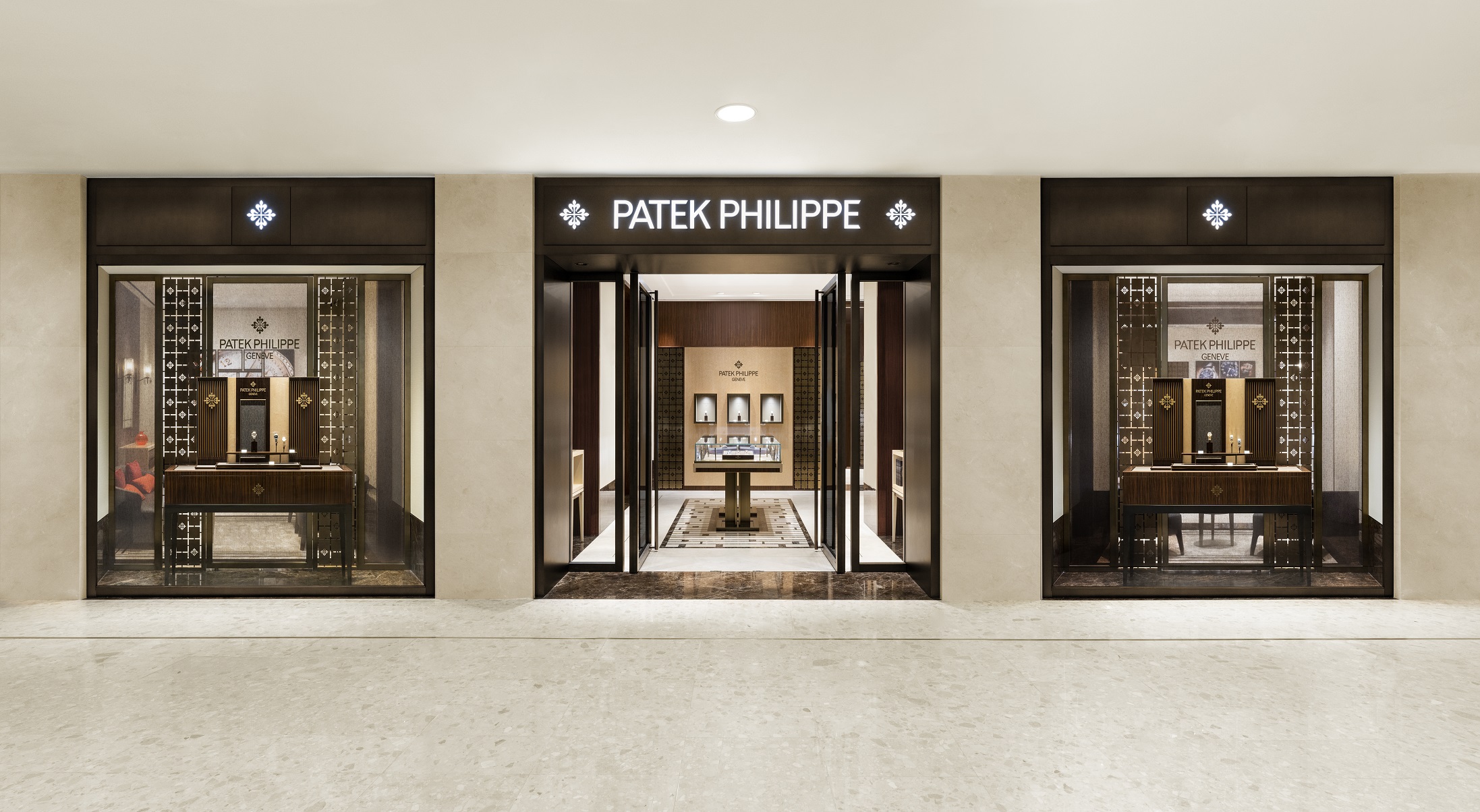
    Patek Philippe, the notable luxury watchmaker, has recently launched its grand store in the heart of Hong Kong, specifically at Queen’s Road.

    The Store’s Design and Features

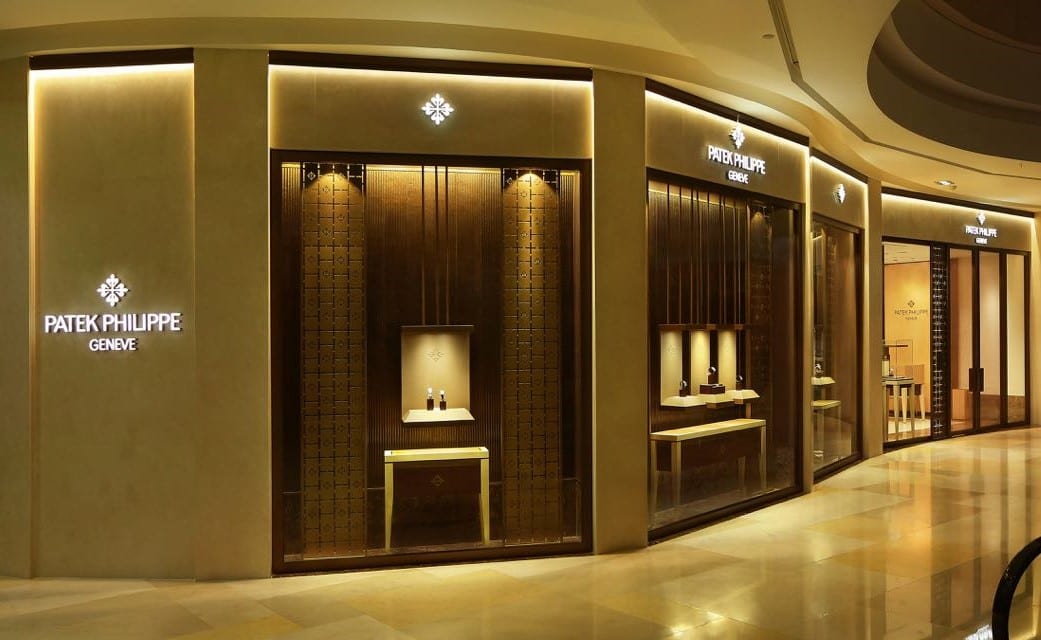
    Stretched over an area of more than 3000 square feet, this new store is designed with meticulous attention to details. The shop features seven uniquely themed zones to provide a distinctive experience for its visitors. Among these zones, there is a museum dedicated to collectors, an elegant bar lounge, a private dining room, and a special ‘gold-leaf room’, a feature meant exclusively for the Hong Kong store.

    To incorporate a local flavor into its global brand, Patek Philippe has included a tailor-made art piece in the store design that is inspired by the scenic Victoria Harbour. This addition demonstrates the brand’s acknowledgement and appreciation of local aesthetics.

    Customer Experience

    This new store of Patek Philippe in Hong Kong is more than just a regular retail outlet. Rather, it is designed to provide an immersive experience for its customers and collectors. The aim is to transform the shopping experience into a memorable event, where customers can interact with the brand’s prestigious history, innovative design process, and superior craftsmanship.

    About Patek Philippe

    Patek Philippe, originally located in Geneva, is a family-owned, independent watch manufacturer. The brand is renowned for its innovative approach to watchmaking, which is evident from its ownership of more than 80 patents. The company takes pride in its commitment to the creation of timeless pieces that push the bounds of traditional watchmaking.

    Questions & Answers

    Where is Patek Philippe’s new store located?
    The new store is located at 12 Queen’s Road, Central Hong Kong.

    What unique features does the new Patek Philippe store offer?
    The store has seven themed zones including a collectors’ museum, a bar lounge, a private dining room, and a ‘gold-leaf room’ exclusive to the Hong Kong store.

    What sets the Patek Philippe brand apart from other luxury watchmakers?
    Patek Philippe, a family-owned company, is recognized for its focus on innovation. The brand has more than 80 patents and is dedicated to crafting timepieces that defy the limits of traditional watchmaking.

  • Malaysia’s Industronics to launch online pre-owned watch platform

    Malaysia’s Industronics to launch online pre-owned watch platform

    Industronics Bhd is tapping on the US$17 billion pre-owned luxury watch market through Ecgo International Ltd, its wholly-owned subsidiary in Hong Kong.

    This follows the launch of Industronics’ luxury watch e-commerce platform, watch-exchanges.com.

    Executive director Datuk Chu Boon Tiong said based on data and overall market performance, the pre-owned luxury watch market showed promising growth prospects.

    “We are excited to capitalize on the growing trend with the launch of WatchExchange and aim to pave the way for a streamlined trading platform that will not only revolutionise the transactions of pre-owned luxury watches but drive further growth in this industry,” he said in a statement today.

    WatchExchange aims to be the first luxury watch e-commerce platform that issues authenticity certificates for pre-owned luxury watches in Malaysia and Asia Pacific.

    Some of the leading brands profiled are Audemars Piguet, Hublot, Patek Philippe, Tag Heuer, IWC, Omega, Jaeger LeCoultre, Panerai, Rolex and Breitling.

    Chu said pricing and demand for pre-owned luxury watches had been so strong over the last few years that even high-end watch brands were moving into the pre-owned market themselves.

    “However, the biggest challenge for the pre-owned luxury watch market lies in authenticating the watches.

    “Our role here is to ensure that the shoppers can safely purchase luxury watches on WatchExchange without having to worry about the security and authenticity of the pre-owned luxury watches,” he said.

    Industronics, with its team of professional and experienced watch appraisers, said it wanted to create a professional, safe trading environment that would elevate customers’ experience of purchasing pre-owned luxury watches to a new level.

    The company will set up offices in China, Hong Kong, Japan, Singapore, Malaysia, the United States, Canada and Europe, where sellers worldwide could visit for physical appraisals of their watch collections.

    The success of WatchExchange will depend on excellence in several key areas namely stability, sustainability, search engine optimization (SEO) and new media marketing.

    This will also require extensive funding to carry out both online advertising and offline promotional activities.

    Chu believes the competitive advantage for WatchExchange lies in the company’s ability to build a “unicorn” ecosystem around the region.

    “We do not think that the strength of the platform lies solely in the certification and authentication guarantees.

    “We intend to replicate the business models globally via partnerships with a locally listed company in the respective countries.

    “Among the markets that we are looking into are Malaysia, Singapore, Indonesia, Hong Kong, China and several emerging markets in Europe. Once our ecosystem matures, we will have so much more to offer to our customers, in terms of the variety of brands, models, and other services,” Chu said.

    According to a management consultancy firm Bain & Company, the global pre-owned luxury watch market was valued at US$17 billion in 2018.

    However, less than 20 per cent of that market is in the Asia Pacific region, while only 25 per cent of the total pre-owned luxury watch sales were online transactions.

    Euromonitor International, an independent strategic market research provider, estimates the value of retail sales of timepieces in Malaysia to grow by five per cent per annum between 2019 and 2022, to reach up to RM2.5 billion.

    Industronic is looking to set up a fund in Hong Kong to raise RM250 million from potential investors.

    Proceeds raised will be utilised to purchase different brands of luxury watches for resale on the company’s platform.

    Industronics aims to invest around RM25 million or 10 per cent of the total funding required, together with the Hong Kong Cyberport Fund, which will invest an equivalent amount or at a 1:1 ratio.

  • Patek Philippe may come up for sale

    Patek Philippe may come up for sale

    Patek Philippe, the closely held maker of $10,000-plus Calatrava watches, may be coming up for sale, according to analysts at Berenberg who cited industry talk. The 180-year-old Swiss watchmaker could fetch 7 billion to 9 billion euros ($8 billion to $10 billion), analysts led by Zuzanna Pusz wrote in a note. Patek Philippe has been owned by the Stern family for almost a century, and Thierry Stern became the company’s chairman in 2009.

    A Patek spokeswoman declined to comment except to say deal speculation tends to occur during the annual watch fairs in Switzerland, including last week’s Geneva show. A sale of Patek Philippe would upend the watch industry and could lead to a bidding war, as it is one of the last prize assets that hasn’t fallen into the hands of a luxury conglomerate. Swatch Group AG, which has bought up brands including Omega, and Richemont, which owns Cartier, make more than half of Swiss watches.

    Patek Philippe has sales of 1.5 billion francs, according to Berenberg estimates. On its website, the company says its “intention is to independently pursue the path that led to its success.”

    “We understand that one of the largest conglomerates in the sector would likely be interested in the asset given its currently relatively low exposure to the watch category,” the analysts wrote. Pusz was not immediately available to comment further.

    Two years ago, family-owned Breitling was sold to private-equity owners CVC Capital Partners for more than 800 million euros.

    In 2014, Stern told Swiss newspaper Le Temps that the company may eventually need to leave Geneva or put itself up for sale if its tax burden was not reduced. Months later, the company announced a 450 million-franc ($451 million) investment plan in the canton.

    Stern’s wife, Sandrine, works in design at Patek Philippe. Their children are in their teens, and Patek’s chairman has said he wouldn’t push them into the business if they did not want to join.

  • Hong Kong retail start recovering

    Hong Kong retail start recovering

    A “steady if cautious” Hong Kong retail recovery is clearly underway, according to a report from Savills released today.

    “The retail sector is slowly coming to life after four years of painful adjustment which has seen the emergence of a ‘tenant’s market’, a rare occurrence in Hong Kong’s landlord-dominated retail scene,” observed Simon Smith, head of research and consultancy with Savills.

    Over recent months, he said, retailers have been taking the opportunity to upgrade for little or no extra cost and examples include Pandora which moved within IFC Mall and Hourglass, which runs Patek Philippe, relocating within Tsim Sha Tsui from the Imperial Hotel to a better site in the Holiday Inn.

    In further evidence of upgrade demand, Harry Winston has taken the space previously occupied by Ferragamo in the Mandarin Hotel and will open in early 2018. Alternatively, retailers are cutting overheads as they find that renewal negotiations are yielding significant savings as landlords discover a new pragmatism.As reported, Topshop has renewed the lease on its Queen’s Road Central store at a discount of about 50 per cent.

    While landlords of high street shops remain on the back foot, larger shopping centres, such as  Harbour City, IFC Mall and New Town Plaza, are proving relatively immune to the downtown, says Smith.

    In IFC Mall, Italian menswear brand Boggi opened recently while Brunello Cucinelli has launched a new flagship in the same mall.

    “As street-shop rents have fallen heavily while centre rents have only seen a minor adjustment, the gap between the two has narrowed considerably and tenants are now finding that a prime street front pitch can be a viable alternative to taking space in a nearby mall. This is the narrowest the gap has been since 2009 and represents a return to the norm after seven years of major gains in street shop rents.”

    Strength in regions

    Savills also notes that regional and district malls such as Popcorn in Tseung Kwan O and Tuen Mun Town Plaza are doing relatively well.

    “Hong Kong’s tight geography, excellent transport infrastructure and dense retail environment has helped this type of mall defend against the threat from online. The appeal of air conditioned spaces in the summer months and the lure of enhanced F&B offerings have also helped boost the appeal of local malls. We have also seen landlords putting more effort into marketing campaigns with better events, more pop-up stores and creative TV and online advertising,” said Smith.

    “Most malls now have a very well-established cyber-presence via websites and apps. Click-and-collect is making some limited headway locally, with brands such as Zara, Burberry, L’Occitane, Watson’s Wine, Chow Sang Sang and Starbucks all offering the service.

    “In a mixed market some trade categories are performing well and pharmacies in particular are expanding aggressively at the moment. Not every landlord wants them but they are often prepared to pay above-market rents. F&B is also out-performing, driven in part by a richly valued stock market and rising wages.”

    Nick Bradstreet, head of retail with Savills, said luxury fashion is turning around in Hong Kong even though brands have been closing stores in Macau and Mainland China over the past year or so. Luxury sales in China have actually surged over the past six to nine months.

    “Cosmetics retailers are reporting fairly stable business, but after a period of rapid expansion, many brands are still culling store numbers. Electrical goods retailers are consolidating in what is a very competitive marketplace,” he said.

    Savills prime street shop rental indices remained flat over the third quarter while rents in prime malls continued to drift off marginally. The latest September retail sales figures from government recorded a seventh consecutive month of rises attributable in part to a strong inbound tourist numbers. Jewellery, watches, clocks and valuable gift sales outperformed, rising by 14.7 per cent year-on-year, with strong growth also noted for medicines, cosmetics and Chinese drugs.

  • Cortina opens South East Asia’s biggest Patek Philippe boutique

    Cortina opens South East Asia’s biggest Patek Philippe boutique

    The current downturn in the luxury watch business is not stopping Cortina Watch from pressing on with its expansion plans.

    Last week, Singapore’s second-biggest watch retail chain officially opened South-east Asia’s biggest Patek Philippe boutique in ION Orchard, Singapore’s premier shopping mall. Later this year, Singapore’s biggest Rolex shop run by Cortina will also open its doors at Marina Square.

    cortina_05

    “It’s all about location, opportunity and timing,” Cortina’s chief operating officer Jeremy Lim explains. “If we (had) worried that business is bad, then we wouldn’t have gotten this location,” he says of the Patek Philippe boutique in ION. “This kind of location doesn’t come all the time.”

    The Patek Philippe boutique in ION came just over a year after Cortina pumped S$4 million to unveil the world’s biggest Patek Philippe boutique in Taipei 101, a landmark building at the heart of Taiwan’s capital. It was conceived three years ago with the blessing of Patek Philippe’s president Thierry Stern.

    cortina_02

    Cortina, which both its sales and net profits fell in the first nine months of its financial year ending March this year, operated a smaller Patek Philippe boutique in ION then. After looking around the shopping mall and found it to be a good location, Mr Stern agreed that Patek Philippe should have a bigger presence there.

    The new 265.48 square metre boutique, over four times bigger than Cortina’s first Patek Philippe boutique at ION, is an extension of the earlier boutique first opened in 2009. The bigger space offers customers more personal service and a better showcase of the Swiss watch brand’s coveted timepieces.

    cortina_06

    Cortina, which also operates a Patek Philippe boutique in Marina Bay Sands, spent an estimated S$2.5-3.0 million renovating and remodelling the boutique, which has the novelty of having a “private” door for discreet and busy customers.

    The work on expanding the boutique took four months to finish, but the boutique only opened recently because Cortina had to wait for the leases of the adjoining space, occupied by other tenants, to expire before it could move in.

    The new Patek Philippe boutique in ION came when the dip in global sales of Swiss luxury timepieces last year, the first yearly drop since the 2009 recession, might have finally caught up with Singapore.

    While the export of Swiss watches worldwide slipped 3.3 per cent in 2015 to 21.5 billion Swiss francs (S$30.7 billion), shipments to Singapore still rose one per cent to 1.13 billion Swiss francs. But the latest numbers show retail orders of Swiss watches in Singapore, one of the 10 biggest markets for luxury timepieces, plunged 22.6 per cent in January this year – the second-biggest fall in the top 10 markets.

    “It would be a lie if I tell you we’re not affected,” Patek Philippe’s commercial and marketing director Jerome Pernici says.

    While 2015 was “the best year ever” for Patek Philippe, arguably the top Swiss luxury watchmaker, Mr Pernici discloses that this was largely in the first three quarters of the year. “The last quarter was more difficult and definitely 2016 will be challenging. We know it,” he says.

    Yet Patek Philippe, which celebrated its 175th anniversary last year, has weathered many crises in the past and came out of them stronger, Mr Pernici says.

    “We keep looking at the long term. I don’t know how long (this downturn) will be but once the market recovers, we will be ready.”

    The Rolex shop Cortina is working on will be the listed company’s single biggest project ahead, involving 5,500 square feet of space for watch displays and events. Renovation costs alone could work out to around S$4 million.

    Cortina, which also carries other brands such as Vacheron Constantin, Omega, Longines and Jaeger LeCoultre, is also likely to refurbish its multi-brand outlet at Raffles City this year.

    Last year, the watch retailer opened a S$2 million multi-brand boutique at The Capitol, a luxury hotel and shopping development. At the same time, its Paragon outlet grew from 2,000 to nearly 3,000 square feet.

  • Trendsetter who fought shy of limelight

    Trendsetter who fought shy of limelight

    He stayed out of the limelight and shied away from the media, so few might know that Mr Jopie Ong Hie Koa was one of Singapore’s true trendsetters.

    The late managing director of Metro Group, who died suddenly on Tuesday night at age 75, was the first to introduce luxury brands such as Mont Blanc, Cartier and Gucci here, long before Singapore was considered a shopping destination.

    He was even the first to introduce a splash of colour to men’s fashion, recalled long-time business partner and friend Nash Benjamin, the chief executive of fashion and lifestyle group FJ Benjamin.

    “In the early 70s, Metro imported a line of shirts from Whitmont, an Australian brand. At the time, men’s shirts in Singapore were all white. But these Whitmont shirts were purple, mustard, red,” he said.

    “He brought me over and made me pick out one in each colour. So he started the trend of coloured shirts here. He was always on trend.”

    FASHION FORWARD

    In the early 70s, Metro imported a line of shirts from Whitmont, an Australian brand. At the time, men’s shirts in Singapore were all white. But these Whitmont shirts were purple, mustard, red… He started the trend of coloured shirts here. He was always on trend.

    MR NASH BENJAMIN, chief executive of fashion and lifestyle group FJ Benjamin, on Mr Ong spotting the latest fashion.

    Indeed, Mr Ong had a great talent for spotting the next big thing, not only in fashion but in the wider world of business.

    It was under his leadership that Metro grew from a two-storey shophouse at 72, High Street – a textile store founded by his father, Mr Ong Tjoe Kim, who hailed from Indonesia – into a retail behemoth and later, into a substantial property player with interests in China, Japan and Britain.

    Mr Ong joined Metro in 1964 and was appointed to the board in 1973, the same year he guided the firm to a listing on the Singapore Exchange, where, for many years, it was considered a blue chip.

    Metro had its heyday in the early and mid-1980s, when it became known as a purveyor of posh European brands such as Cartier, Burberry, Givenchy and Yves Saint Laurent, making it a haunt not only of wealthy tourists but also Singapore’s increasingly affluent, English-educated middle class.

    It had moved aggressively into Orchard Road, with four or five stores along the stretch. But by that time Mr Ong, always ahead of the curve, was looking at expanding his business interests further. In the early 1980s, thanks to an idea by Dr Jannie Chan, he entered into a joint venture with her and Mr Henry Tay to set up The Hour Glass, which specialises in quality Swiss brands such as Rolex and Patek Philippe.

    Then in 1985, he entered the auto industry, starting Komoco Auto, now Komoco Motors, with two partners. It started by distributing Hyundai cars.

    The move complemented Mr Ong’s own love of cars: His was apparently the first Lamborghini to be driven on Singapore’s streets and his collection of rare, luxury cars included several Ferraris and a gold Porsche sports utility vehicle.

    But it was also a shrewd decision that capitalised on Singapore’s then booming demand for affordable family vehicles.

    “He had the foresight to see ahead and was always searching, wherever it may be, for new business opportunities,” recalls Komoco managing director and co-founder Teo Hock Seng.

    “Singapore was in a recession when he came up with the idea to get into the auto trade.

    “We were supposed to be recession-proof and so we had to have prudence in our approach. And for the last 30 years we have been profitable. People accepted the product, which was value for money.”

    It was not long before Mr Ong was involved in yet another business project. By the early 1990s, even as Singapore was fast gaining a reputation for being a top-notch shoppers’ destination, Mr Ong could see that retail was not going to be as lucrative a business as it once was due to increasing rents and wages, so he started repositioning Metro as a property firm.

    He entered a joint venture with Ngee Ann Kongsi to build Ngee Ann City, from which Metro would earn a handsome rental income.

    Today, property is a core business for Metro alongside retail. The firm has interests in prime retail and office investment properties in first- tier cities in China, as well as residential and mixed-use development properties, held mainly for sale.

    It also has stakes in a mixed-use development in Manchester and a residential project, The Crest in Prince Charles Crescent, in Singapore.

    On the retail side, there are now only three Metro department stores in Singapore – at Paragon, The Centrepoint and Woodlands. The website lists nine in Indonesia. Metro also operates speciality shops for the Monsoon, Accessorize and M.2 brands here.

    Throughout the years, Mr Ong shied away from the media spotlight, so much so that when Metro held a press conference on its financial results in May 2008, it was the first time the company had done so in at least a decade. The fact that Mr Ong himself fronted the conference was as much news as the numbers he was there to announce.

    But away from the limelight Mr Ong lived large and generously. Friends recall not only his flashy cars and ceaseless smoking, but also the dinners held at his District 10 bungalow in Bishopsgate – monthly affairs that would include about 300 guests at a time and at which the host himself would often cook.

    A big fan of local hawker fare, he was known to whip up a mean nasi lemak, yong tau foo and leg of lamb.

    The twice-divorced Mr Ong leaves four children and four grandchildren.

    He also leaves a business in good shape – Metro’s net profit climbed 33 per cent to $142.4 million last year. His sister, Mrs Wong Sioe Hong, oversees the retail operations and the acting group chief executive is his right-hand man of many years, Mr Lawrence Chiang.

    Still, along with the rest of the retail and property industry, it faces a challenging business environment, especially as China, its key real estate market, is experiencing slowing growth.

    Without Mr Ong’s guiding hand to lead the ship, investors will likely be keen to see how the company steers through the choppy waters ahead.
  • Patek Philippe slashes prices by over 20pc in HK

    Patek Philippe slashes prices by over 20pc in HK

    Swiss luxury watch brand Patek Philippe announced a significant markdown in prices by up to 22 percent in the Hong Kong market, a move analysts believe is aimed at taking on an influx of European watches through parallel imports, Shanghai’s the Paper reports.