Tag: patent

  • This Google patent may extend the battery life of your next smartwatch

    This Google patent may extend the battery life of your next smartwatch

    The tech world is never sleeping. Google’s latest patent has to do with a new antenna design for wearable devices like smartwatches.

    The just-filled patent for the new design makes the antenna more compact and optimized for communications.

    According to Google, the refreshed antenna design uses a microwave dielectric substrate with a high relative permittivity. That makes this particular antenna design special – it can store electrical energy (meaning better battery life) and transmit (send and receive) signals a lot better.

    Google also says that the antenna design is extremely compact – with dimensions of less or equal to 8 mm in width and length. Impressive!

    The search engine giant said some of the possible applications of this new design could be in the likes of a smart ring

    Antennas are important in many ways in wearable tech. They are crucial for gathering data from tracking sensors (like blood pressure trackers or GPS functionality on fitness watches), and then transmitting them to the part of the device that does analysis or storage.

  • New Apple patents hint at a better pressure sensor technology

    New Apple patents hint at a better pressure sensor technology

    Force Touch, also called 3D Touch, was a technology that Apple used for some years but then suddenly replaced with Haptic Touch. With 3D Touch, iPhone users had the ability to access more menus by simply applying different pressures to their iPhone display.

    Although it’s a tiny possibility, it appears that Apple might again introduce a newer and improved version of its previous 3D Touch technology. The US Patent & Trademark Office published a few new patents from Apple for various future Apple devices, and all of them are for new force-pressure sensors.

    One of these patents is for force-pressure sensors built into the Apple Watch and small form factor devices such as the AirPods. According to the patent,  Apple’s new pressure-sensitive surface would utilize microelectromechanical fluid pressure sensors. These sensors would be smaller, have better force sensitivity, and be more durable than conventional pressure sensors.

    To get a better idea of how the new pressure sensor technology could be implemented into the Apple Watch, Apple has shown in its patent a picture of an Apple Watch with a pressure-sensitive side instead of a physical button.

    Another Apple patent shows how Apple’s new pressure sensor technology could be utilized in Apple Watch bands, creating so-called smart bands. Thanks to the new technology, these smart bands would be able to detect blood pressure, heart rate, and pulse wave velocity.

    Apple’s patents show that Apple’s new sensor tech could be utilized in the iPhone. The image below, for example, shows how Apple could put multiple small pressure sensor modules in the iPhone instead of a single component.

    Now, it should be noted that companies often patent technologies that they never implement into real consumer products. But if Apple decides to use this new pressure sensor technology, it could mean that we may just receive 3D Touch 2.0 in some future iPhone generation.

  • Nokia suing Oppo over patent infringement in several countries

    Nokia suing Oppo over patent infringement in several countries

    Nokia, just like other big companies in the telecom industry, is very protective when it comes to its own patents. The Finnish company signed licensing agreements with many companies that use its patents and sued those that used them without permission.

    The most recent on the list of companies that have just got sued by Nokia is Oppo. Nokia has decided to file lawsuits against Oppo for patent infringement in four countries: England, France, Germany, and India.

    The reason behind Nokia’s action is that Oppo refused to renew the licensing agreement that allows the use of certain patents, which the Chinese company signed back in 2018. FOSS Patents reports that Nokia is using the same legal teams that won the previous company’s patent enforcement campaign against Lenovo and Daimler, so this might be a quick battle.

    According to a statement offered by Nokia, there have been negotiations between the two companies, but Oppo decided to go on its own and rejected all offers.

    We have been negotiating the renewal of our patent licensing agreement with Oppo but unfortunately, they have rejected our fair and reasonable offers. Litigation is always our last resort and we have offered to enter into independent and neutral arbitration to amicably resolve the matter. We still believe this would be the most constructive way forward.

    This can probably end only two ways: either Nokia wins and Oppo pays, or Oppo agrees to sign another multi-year licensing agreement. Without dismissing Oppo’s chances to win the case, Nokia’s expertise in defending its patent portfolio recommends it as the sure winner, but surprises can happen.

  • Vivo files a patent application for a detachable flying smartphone camera

    Vivo files a patent application for a detachable flying smartphone camera

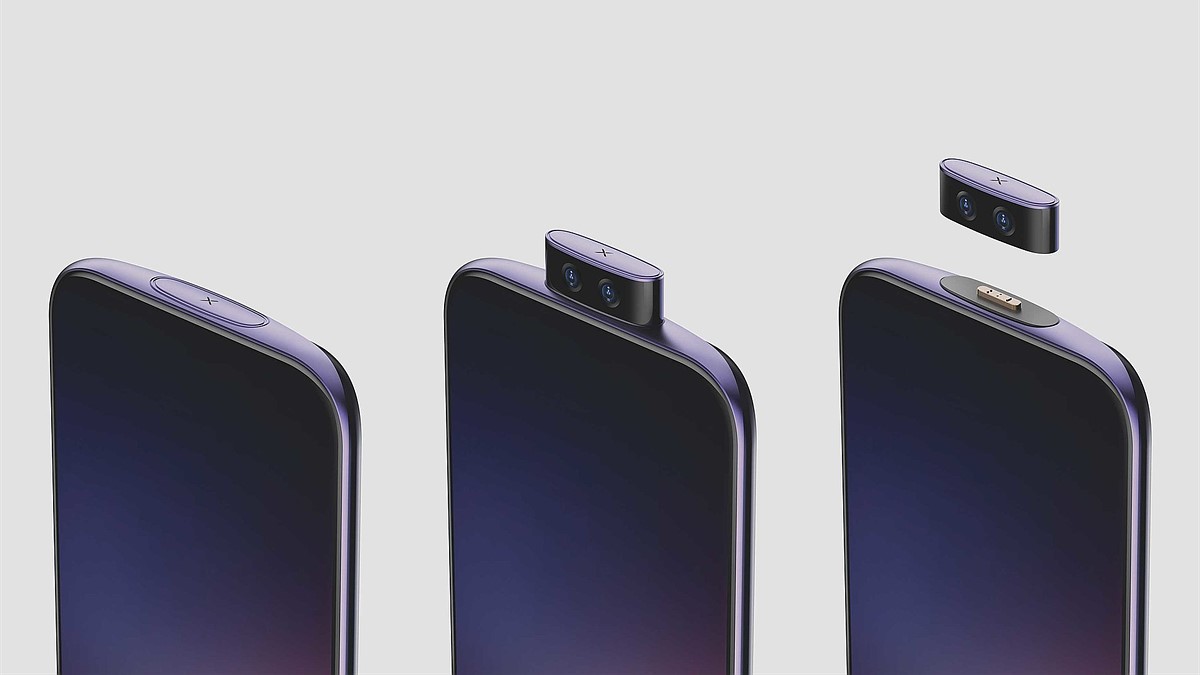
    Vivo has filed a patent for a flying smartphone camera. You read that right, the camera disconnects from the phone and takes to the air to provide the user with unusual photo opportunities to take snapshots and video from. The camera module features four propellers, two dual cameras, three infrared proximity sensors and an extra battery.
    While in flight, the proximity sensors are used to prevent the flying camera module from crashing into other items that have escaped gravity by calculating the distance from a possible hazard to prevent mid-air collisions. Once in the air, the “flight camera” will be able to change positions and we expect to see one camera at the front of the module with another at the top.
    The patent application was filed with the World Intellectual Property Organization (WIPO) and while camera drones are not new, Vivo is the first manufacturer to have a flying camera drone fit into the body of a smartphone. But there is a caveat. To make the camera module fit inside a phone, it has to be made smaller and lighter which means that it can be blown off track because of the wind which can also make images appear shaky.
    The vast majority of smartphone innovations have been coming from Chinese-based smartphone brands. But keep in mind that just because Vivo seeks to patent a flying camera for a smartphone, that doesn’t mean that such a product is coming soon.
  • Apple receives a patent for a major new Apple Pencil feature

    Apple receives a patent for a major new Apple Pencil feature

    Apple has received a patent that could change the way the Apple Pencil is used. Titled “Multipurpose stylus with exchangeable modules,” the patent covers the tips (or nibs) used on the Apple Pencil. There are various reasons why an Apple Pencil user might want to change the nib on the (with all due respect to the late Steve Jobs) stylus. One, the current nib on the digital pencil could be wearing down and a replacement needed. But another reason to change the Apple Pencil tips would be to change the functionality of the accessory.

    Or as Apple explains it in the patent, “The stylus can provide interchangeability of various removable components, such as removable functional end modules that cover a connector for charging and communicating with the stylus. The various removable components each provide distinct features, thereby allowing the user to select various capabilities by employing each of the various functional end modules.”

    Some of the changes that Apple discusses in the patent includes “a color, a shape, a thickness, a size, a brightness, or an opacity.” The nib (called the “end connector” in the patent) would be removable from the main body and would have a number of sensors. A tactile sensor would detect when the nib touches a surface. Other sensors listed in the patent include a “contact sensor, a capacitive sensor, a touch sensor, a camera, a piezoelectric sensor, a pressure sensor, or a photodiode.” Other possible features found in the accessory could be a an orientation detector, a gyroscope, an accelerometer, a biometric reader, a display, a switch, a button, a speaker, a compass, a microphone, a camera, or a voice coil.

    Currently, Apple offers two different generations of the Apple Pencil which are compatible with certain iPad models. Offering interchangeable tips might not only be a revenue-generator for Apple, it obviously could be an easy way for users to expand the functionality of the accessory. The million-dollar question (which might actually be a millions dollar question as far as Apple is concerned) is whether Apple will finally add Pencil support to the iPhone. Consider that Samsung’s multi-functional S Pen now works with the 6.8-inch screen on the Galaxy S21 Ultra 5G. However, unlock the Galaxy Note line throughout the years, the accessory has to be purchased separately and there is no place to house the S Pen on the phone.

    While there have been rumors for years about the Apple Pencil coming to the iPhone, this has not taken place yet. Is Apple trying to honor the memory of its late co-founder and CEO Steve Jobs? The executive famously put down the use of a stylus when he introduced the iPhone in January 2007. At that time, before the touchscreen was widely used, many smartphones came with a stylus to help the user navigate through the UI. It needs to be pointed out that these styluses were not as multi-functional as the digital pens are today. Most were merely made of plastic with a sharp tip.

    There are some manufacturers who build phones today that come with a stylus. One popular mid-range model is the LG Stylo which early this year is expected to launch a 5G version of the phone which will be the seventh-generation of the model. Last year, Motorola released the mid-range Moto G Stylus.

    Just because Apple has received a patent for this technology, it doesn’t mean that it definitely will be used. Still, it seems like offering exchangeable tips for the Apple Pencil could be a win-win for users and for Apple. The patent number is 10,921,907 and the technology was originally filed for protection by Apple back in April, 2017.
  • Apple patents technology for AR audio headphones

    Apple patents technology for AR audio headphones

    Imagine listening to a conference call on a headset and knowing the position of everyone in the room just by listening to the sound. Apple apparently is planning on developing AR audio headphones and has just received a patent covering related technology from the U.S. Patent and Trademark Office. Called Intelligent augmented audio conference calling using headphones, the patent mentions how augmented reality headsets take metadata generated from audio signals and “associates each of the audio signals with a spatial position in a virtual representation of the conference call.”

    As Apple explained in the patent documentation “Multiparty conference calls often have callers participating from different locations which may be all over the world. In situations without video feedback, it is especially difficult to identify a speaker. Often, when callers can’t be identified or heard, interaction during such conference calls may be awkward. Embodiments discussed herein aim to provide a more intuitive, clear teleconference experience.” If a conference call is made up of callers from different locations, a virtual room is created and a position in the room is assigned to each person as they join the call. If the listener on a conference call turns his head toward someone in the virtual conference room, the audio will adjust to match how it would have sounded had the listener really been in the room.

    In the patent, Apple mentions something it calls “the ‘Cocktail Party’ mechanism in the listener’s brain.” The company explains that this is “a key psychoacoustic process enabling an improved sound source segregation.” Apple continues by mentioning the advantages to the listener and says, “It is therefore advantageously possible to more easily identify individual talkers and to increase speech intelligibility, without the need for visual cues or the need for a caller to state a name before talking during the conference call. Furthermore, it is advantageously possible to provide a virtual audio environment that is more natural sounding as compared to conventional technologies.” The company believes that knowing who is speaking and where that person is in a room makes it easier to participate in such a call. It will also help the listener understand what is being said during an audio-only conference call. And even if a listener cannot recognize the voice of the person talking, he still can tell who it is based on the speaker’s position in the room.

    In one scenario mentioned in the patent documentation, Apple envisions that a caller being assigned to a position in a virtual conference room is placed in a group that could be made up of family members or based on the geographic location of the caller or even the strength of the caller’s signal. In a situation where there are two different and separate groups, one might be “placed” to the left of the listener while callers from the other group are “placed” to the right of the listener.

    It’s an intriguing technology that if commercialized, could help Apple sell a ton of AR headphones to corporations. And there might even be some use for the technology by consumers listening to podcasts, streaming radio (including audio-based news apps) and more. This technology could eventually be used with video games. Or, as Apple points out on all of its patents, the patented technology might never see the light of day. Not that Apple isn’t high on AR; it is. Earlier this month we told you that the company reportedly plans on offering a mixed reality headset in 2022 with the long-awaited AR glasses to appear the following year.

    The patent was originally filed back in June 2017 and was previously published last December before being awarded to Apple.

  • BMW Motorrad Files Patent For Electric Front Wheel Drive

    BMW Motorrad Files Patent For Electric Front Wheel Drive

    BMW Motorrad has filed patents for an electrically-driven front wheel that is likely to be featured in future generation adventure bikes. The patent drawings are ostensibly of an electric front wheel drive system, which will be able to supply drive force in combination with the conventional rear-wheel drive on motorcycles. The drawings show what is an all-in-one unit mounted around a front wheel hub, which will offer drive to the front wheel when needed in particularly steep inclines or slippery surfaces. The system isn’t a full-time two-wheel drive, but can be engaged only when the rider wishes to use it.

    The accompanying patent description does not say much about how it works, or what goes behind the front wheel drive concept, but BMW Motorrad states that it can be applied to motorcycles, as well as other vehicles, including three-wheelers and four-wheel vehicles. A patent application doesn’t always mean that such technologies will be introduced, or neither are these a sure-shot guarantee that BMW Motorrad will in fact introduce an electric two-wheel drive system.

    In fact, more than two years ago, there were reports of BMW Motorrad’s all-wheel drive system as well, on what was to be the world’s first series-production all-wheel drive travel enduro motorcycle with hybrid drive. Called the xDrive Hybrid, that system is similar to the one filed in the new patent application, but two years hence, it is yet to see something of a production form.

    If BMW Motorrad is indeed working on such an all-wheel drive system for motorcycles, with an electric front-wheel drive system, two years is a long time to be working on it, and about time we saw something, at least in concept form. Our guess is, something may be shown at the EICMA show in Milan, in November this year. But then again, who knows? Either ways, it will be interesting to see what the next generation motorcycle technology will be showcased at the world’s most popular motorcycle show in November 2019.

  • Xiaomi just patented a weird-looking inverted Notch

    Xiaomi just patented a weird-looking inverted Notch

    Since notches first arrive back in 2017, smartphone brands have attempted a range of implementations ranging from wide ones to much subtler water drop alternatives. One thing that hasn’t been attempted, however, is an outward facing one. But Xiaomi’s latest patent suggests it could be working on one.

    In what is presumably an attempt at creating a low-cost smartphone that also presents a notchless display, Xiaomi’s latest patent envisions a smartphone that features minimal bezels and a rather large hump on the very top of the device. This looks exactly like an inverted notch and is home to the in-ear speaker and two selfie cameras.

    On more expensive devices such as the Xiaomi Mi Mix 3, the Chinese brand has chosen to implement a slider design that hides the front-facing cameras and allows for an all-screen design. However, this comes at an added cost that most likely wouldn’t be financially viable in the low-end segment. The company is also rumored to be working on two flagships with pop-up cameras but, once again, this is a costly feature.

    More often than not, patents are a good indication of what’s to come from smartphone brands in the future. But considering the very unusual design that is shown in the included sketches, it seems likely that this particular  patent will never result in a production device.

  • Apple patent application “confirms” a new feature for iPhone

    Apple patent application “confirms” a new feature for iPhone

    Earlier this month, we passed along a rumor stating that the 2019 Apple iPhone XI line will feature a new Underwater Mode that would allow users to snap pictures and navigate the screen even with the phone submerged in water. The original rumor mentioned that the Underwater Mode would be patented, and today the actual patent application was released by the U.S. Patent and Trademark Office.

    The application is titled Submersible Electronic Devices With Imaging Capabilities, and mentions a device, like an iPhone, that has the capability to capture images. This device includes an ambient light sensor to determine the lighting underwater. The device also features an image sensor to capture pictures, and sports circuitry designed to measure the depth of the image sensor. Information about the depth of the image sensor and the ambient underwater lighting would be used to adjust the color balance of an underwater photograph. Photos taken underwater by a camera that doesn’t include the patented features could result end up with a “undesired greenish color cast,” Apple says in the patent application.

    According to reliable Apple analyst Ming-Chi Kuo, both the Apple iPhone XI Max and iPhone XI will feature a triple-camera setup on back, The third camera will be a Time-of-Flight (ToF) sensor that measures how long it takes for an infrared light emitted from the camera to bounce off a subject and return to the camera. This will result in more accurate depth information that could be used for a rear-facing Face ID feature, improved bokeh effects and more AR functionality.

    Underwater Mode wouldn’t be possible without the iPhone’s Ingress Protection rating

    Of course, we wouldn’t even be writing about an Underwater Mode if the iPhone didn’t include an Ingress Protection (IP) rating. Both the iPhone XI and iPhone XI Max will most likely continue to sport an IP68 rating. This means that both models are protected from dust, and can be submerged to a depth of nearly five feet for as long as 30 minutes. At this point, with the original rumor singling out the iPhone XI and iPhone XI Max, it is not certain whether Underwater Mode will be found on the iPhone XR (2019). If all things stay the same, the latter would keep its predecessor’s IP67 rating that allows a phone to be submerged to a distance of a bit over three feet for up to 30 minutes. The 2019 iPhones most likely won’t be unveiled until this coming September.

    “A submersible electronic device such as a waterproof cellular telephone may be provided with an image sensor. The image sensor may capture images of underwater objects. Control circuitry in the submersible electronic device may adjust image contrast and color balance based on information from sensors and other information. The electronic device may have an ambient light sensor. The ambient light sensor may be a color ambient light sensor and may be used in measuring ambient lighting conditions above water and underwater. A depth sensor may be used in measuring the depth of the image sensor and other components of the electronic device underwater. Information on the depth of the image sensor, information on the distance of an underwater object to the image sensor, and angular orientation information for the electronic device and image sensor may be used in color balancing an image.”-Apple’s patent application

    Apple first filed the application for its patent in September 2017. The patent application number is 20190098179. If the Underwater Mode doesn’t make it to the upcoming 2019 iPhone models, it would seem a sure bet for 2020.

  • Samsung ranks second in 2018 U.S. patent grants

    Samsung ranks second in 2018 U.S. patent grants

    Samsung Electronics grabbed the No. 2 spot in U.S. patent grants among global corporate giants in 2018, industry data showed Thursday. Samsung Electronics, the world’s top smartphone and memory chip maker, received 5,850 U.S. patent grants last year, up 13 from the previous year, according to the data from IFI Claims Patent Services, provider of a top global patent data platform.

    IBM topped the list with 9,100 grants, up 1 percent from a year earlier, maintaining the U.S. company’s position as top patent leader for a 26th consecutive year.

    Canon followed Samsung with 3,056. Intel came next with 2,735 then LG Electronics with 2,474. All registered declines from a year earlier.

    Other Korean firms included Samsung Display, which ranked 14th with 1,948 grants. Hyundai Motor placed 19th with 1,369.

    Last year, U.S. patent grants totaled 308,853, down 3.5 percent from the previous year.

    By country, the United States took up the largest share, at 46 percent, followed by Japan with 16 percent, Korea with 6.5 percent, Germany with 5 percent and China 4 percent.

    China was the only major patenting country to report an on-year increase in the 2018 patent grants.

  • Amazon gains patent for drone ‘Mothership’

    Amazon gains patent for drone ‘Mothership’

    Amazon continues to push the envelope as a supply chain and logistics disrupter with the granting of a patent in late December for what has been dubbed a giant ‘flying warehouse’.

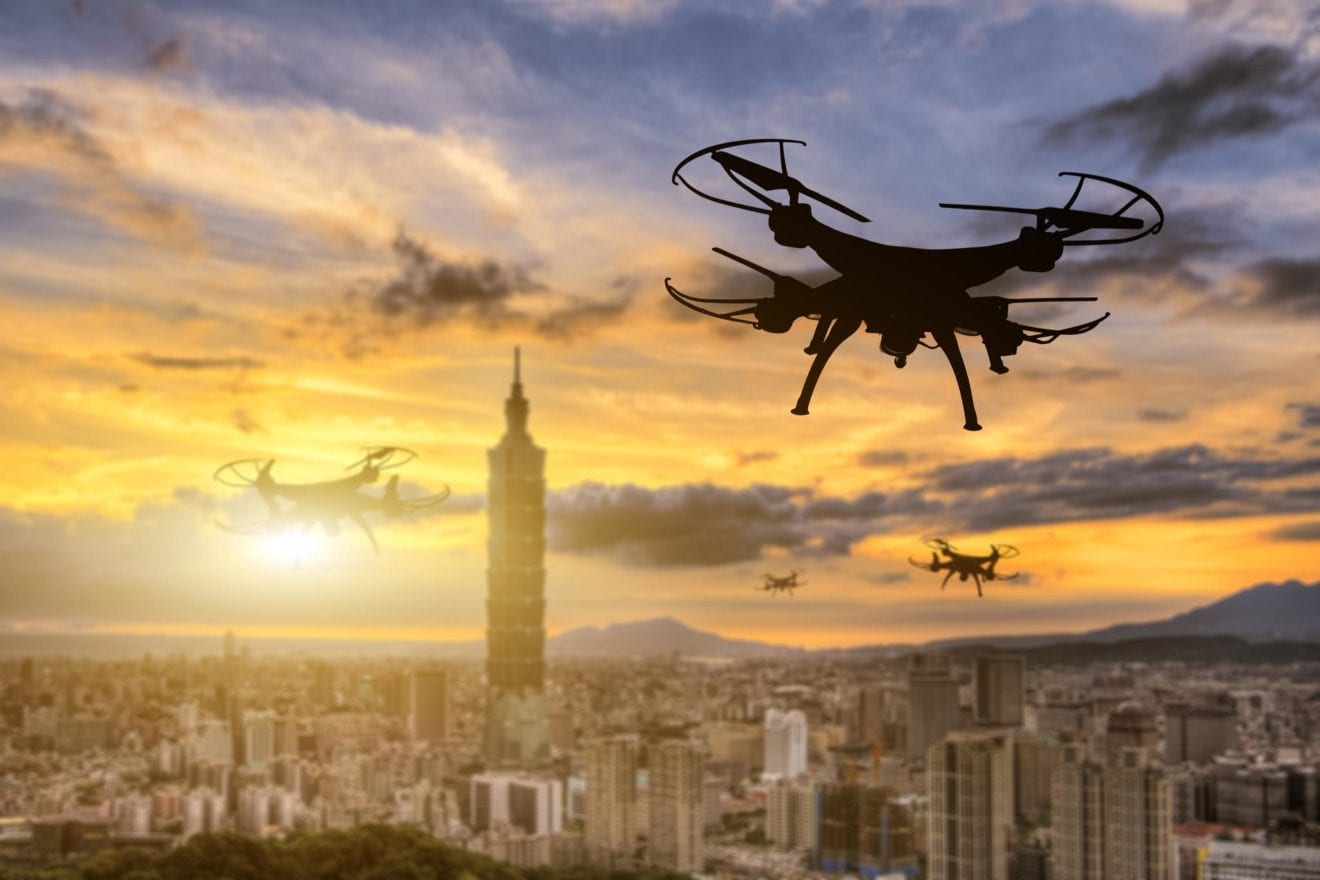
    The Amazon Technologies Inc. filing describes ‘airborne fulfillment centers’ (AFCs) comprised of large and robust flying drone made up of numerous smaller drones, designed to make long-distance flights or to carry heavy packages. By comparison, the average quadcopter drone — a design that incorporates four propellers — can typically fly continuously for up to 30 minutes and transport up to 4.5 kg.

    It also describes the use of unmanned aerial vehicles (UAV) to deliver items from the AFCs to users.

    According to the patent, filed 19 February 2015 and granted 29 December 2016, individual modules could detach from the collective drone body once they were no longer required, and operate independently to deliver smaller burdens.

    The filing stated: “For example, the AFC may be an airship that remains at a high altitude (for example, 45,000 feet) and UAVs with ordered items may be deployed from the AFC to deliver ordered items to user designated delivery locations.

    “As the UAVs descend, they can navigate horizontally toward a user specified delivery location using little to no power, other than to stabilize the UAV and/or guide the direction of descent. Shuttles (smaller airships) may be used to replenish the AFC with inventory, UAVs, supplies, fuel, etc. Likewise, the shuttles may be utilized to transport workers to and from the AFC.”

    The filing continued: “An AFC may navigate to an area based on various positioning factors. For example, a temporal event (e.g., a football game) may be expected to produce a demand for certain types of items (for example, sporting paraphernalia, food products, etc.).

    “In advance of the event, the items may be delivered to the AFC in a quantity sufficient to satisfy the expected demand and the AFC may navigate to a position such that UAVs deployed from the AFC can safely navigate to the location of the event and deliver the items, thereby satisfying the demand.

    “In some implementations, the AFC may navigate to a lower altitude and provide advertising for the temporal event or for other occasions (e.g., product announcements, product releases, sales).”

    In a separate patent filing, Amazon was granted a new patent at the end of last month to protect its drones from possible threats and attackers with drawings detailing the possibility of a drone being fired upon by a bow and arrow.

  • Apple Granted 4 Design Patents in Hong Kong

    Apple Granted 4 Design Patents in Hong Kong

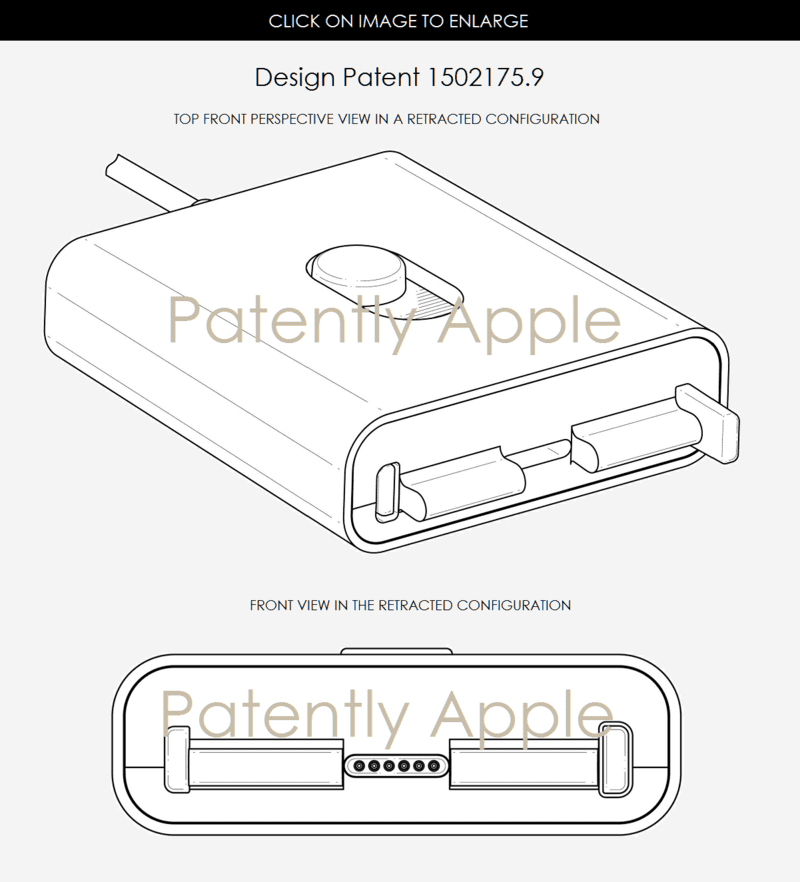
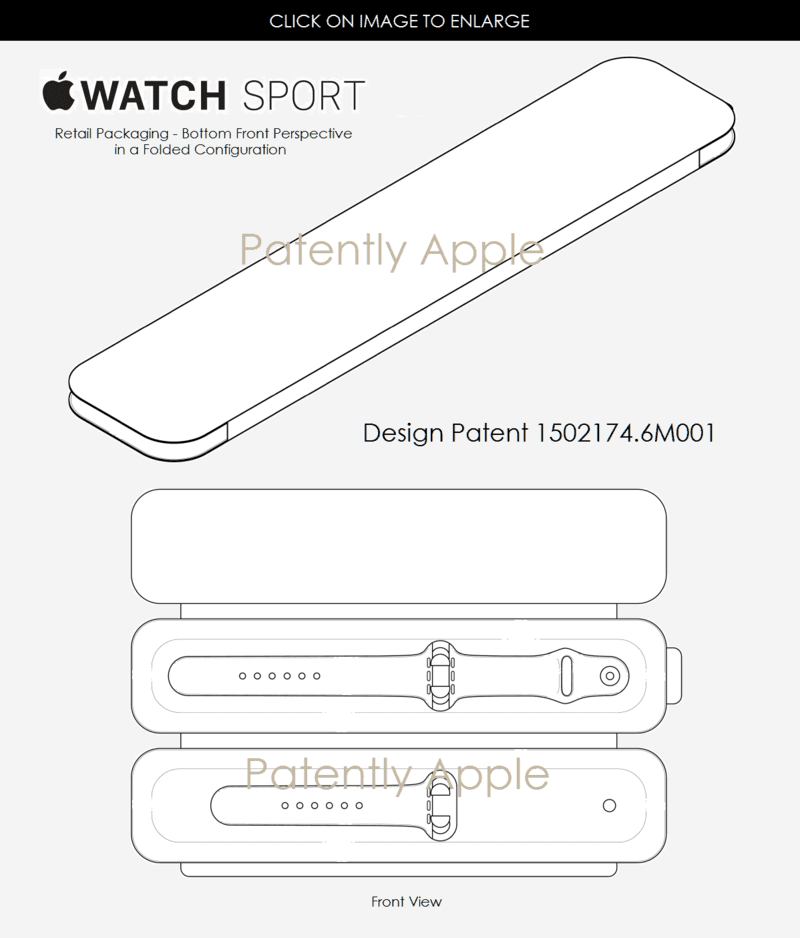
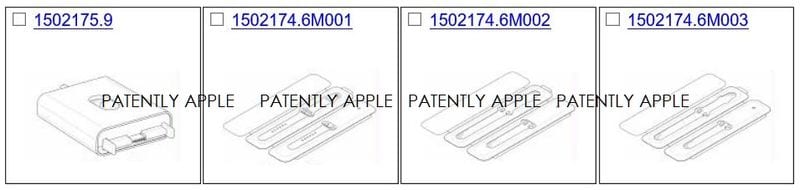
    Apple was granted four design patents yesterday in Hong Kong China covering the Apple Watch Sport’s retail packaging & a connector with an on-off switch at the top as noted in our cover graphic.

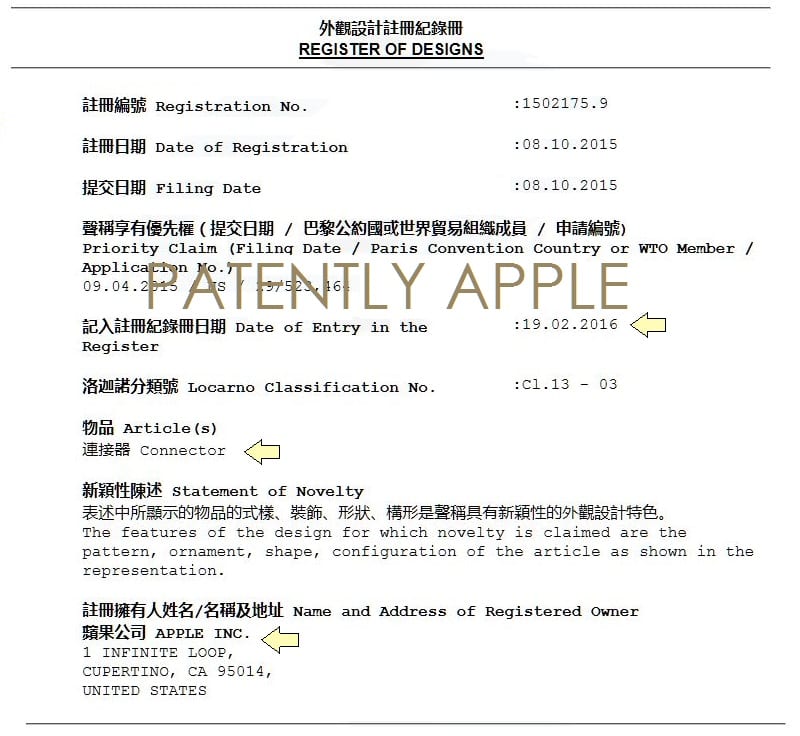
    Unlike “patent applications,” design patents published by the U.S. Patent and Trademark Office and/or any other Patent Office, don’t reveal pertinent information about a particular design. All we are given is a series of simple photos and/or line-art graphics of what was actually registered. The first design patent is a case in point. It’s a design patent for a ‘connector’ – but it’s not one that’s familiar. Without patent details, there’s no way to verify with certainty what the connector is for. .

    Design Patent: Connector

    Apple was granted a design patent in Hong Kong yesterday for a connector that is unidentified. If any reader is able to identify this connector, then please make note of it in our comment section below and we’ll update this report accordingly.

    2AF 55 CONNECTOR DESIGN PATENT

    Update 5:40 a.m.: Several comments suggested that the connector design was associated with the hidden data port. After going back to the design patent and conducting a more focused search online for this, I came a across a design for a charging strap as noted in the graphic below. It’s an accessory not made by Apple.

    Going back to the design patent there was a second part of the design, the male connector as presented below that’s to mate with the female connector as noted noted above. If this design is associated with the Apple Watch, then will Apple introduce this with the Apple Watch 2 design or are they licensing this design to accessory makers? Time will tell, but for now, it appears that our fan base may have had it right in suggesting the connector was for the hidden data port. Thanks to all who sent in comments on this in a timely manner. Cheers.

    2.88 AF 55 CONNECTOR

    3AF 55 CONNECTOR GRANTED DESIGN

    Design Patent: Apple Watch Sport Retail Packaging

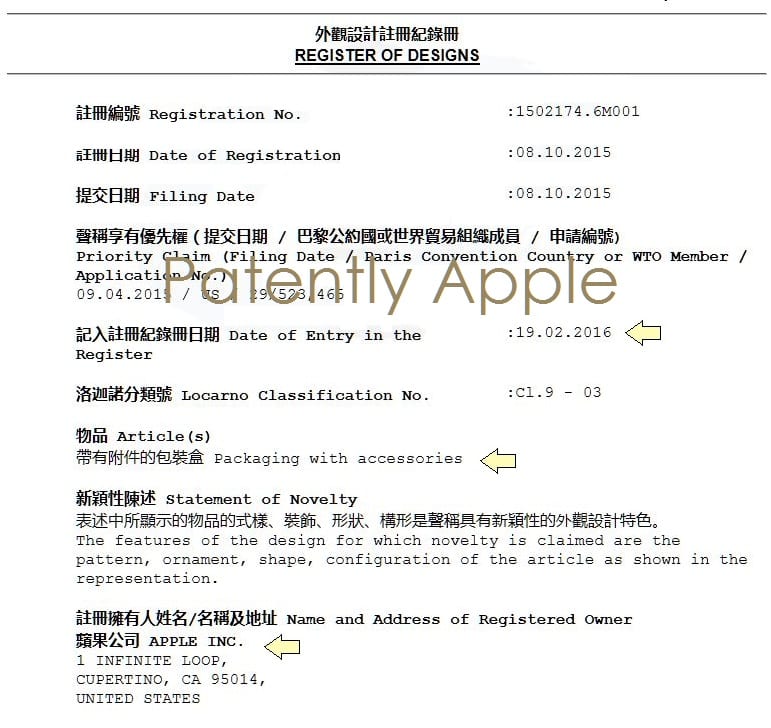
    Apple was granted three design patents yesterday in Hong Kong numbered 1502174.6M001 to .6M003 covering the retail packaging for the Apple Watch Sport as noted below.

    4af 55 apple watch sport retail packaging

    5af 55 apple watch sport granted patent

    6AF 55