Retail News CRM

Tag: pattaya

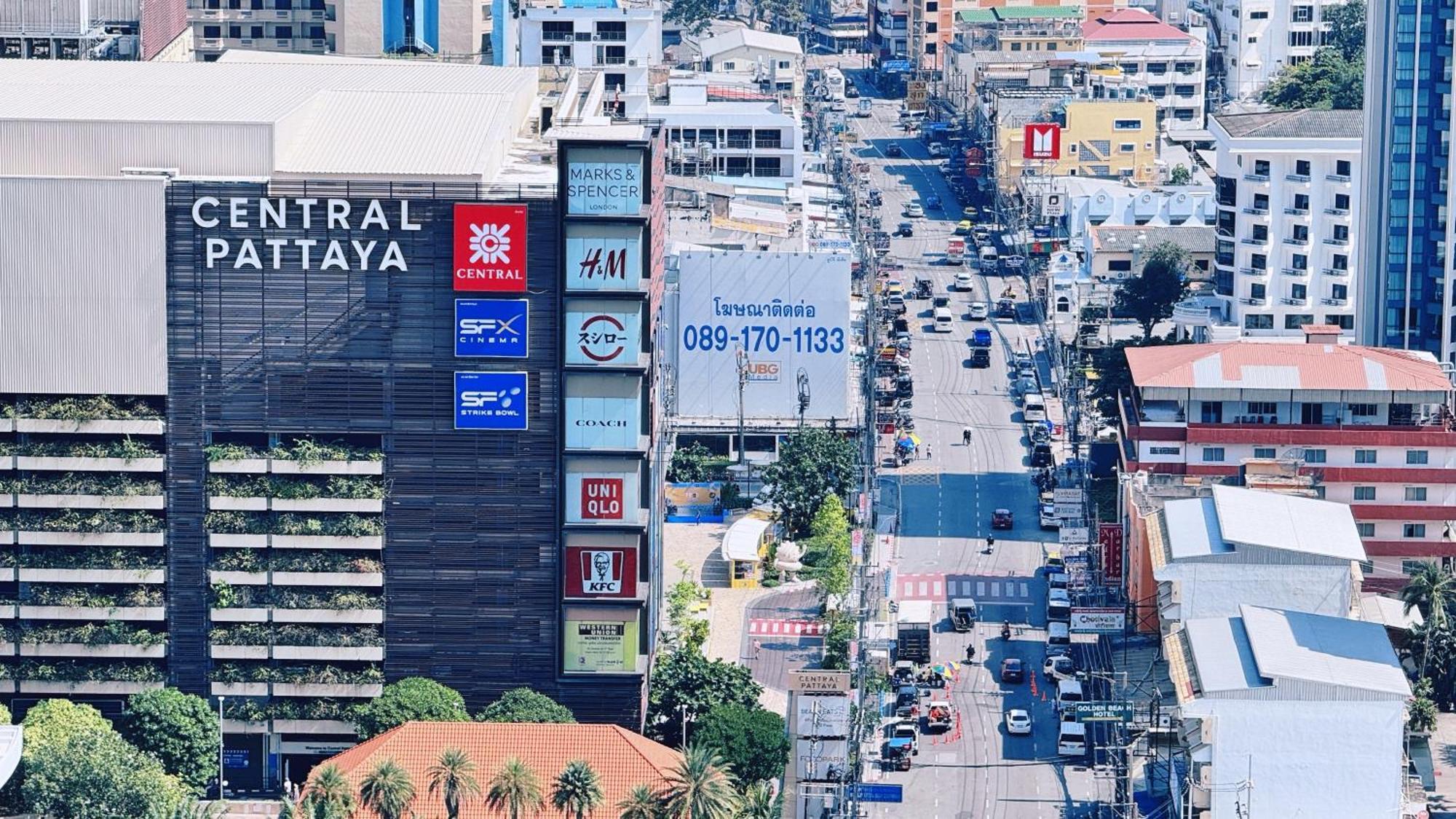
  • Central Pattana Propels $3 Billion Mixed-Use Expansion: Heralding a New Era of Urban Growth in Thailand

    Central Pattana Propels $3 Billion Mixed-Use Expansion: Heralding a New Era of Urban Growth in Thailand

    Central Pattana, a leading retail and property development company, has unveiled ambitious plans to invest approximately $3 billion to broaden its mixed-use portfolio over the next five years.

    Central Pattana’s proposed projects are poised to offer an innovative blend of retail, residential, office, and public spaces. These projects are strategically designed to cater to both urban and regional growth corridors, maximising their reach and potential impact.

    Expansion Across Bangkok

    The expansion will focus on both established and emerging business districts within Bangkok. Prominent regions such as the ‘Super Core CBD’ near CentralWorld and Silom-Rama IV will be targeted, alongside burgeoning zones in Rama 9 and Ladprao-Phahonyothin.

    One of the cornerstone ventures of this ambitious expansion is a project aptly named the ‘City of the Future’. This project, planned to sprawl over approximately 120ha in northern Bangkok, aims to seamlessly integrate elements of sustainability, green spaces, and walkable urban design.

    CEO Wallaya Chirathivat states, “Our model continues to generate sustainable traffic, tenant sales and long-term asset value, while contributing to broader economic ecosystems.”

    Currently, Central Pattana manages a portfolio of 142 projects nationwide, drawing in more than 510 million visitors every year. By 2030, the company aspires to increase its mixed-use projects to 33, supporting over 1.5 million jobs and ensuring a consistent stream of rental income.

    In addition to its Bangkok projects, the company has also declared plans to expand Central Phuket. The emphasis will be on the development of the luxury zone and the addition of roughly 10,000sqm of leasable space. The first phase is slated for completion in the fourth quarter of this year.

    Questions & Answers

    What is the scope of Central Pattana’s investment plans over the next five years?
    Central Pattana intends to invest around $3 billion in the expansion of its mixed-use portfolio over the next five years.

    What does the ‘City of the Future’ project aim to achieve?
    The ‘City of the Future’ project aspires to integrate sustainability, green space, and walkable urban design into a large development in northern Bangkok.

    What are the expansion plans for Central Phuket?
    Central Pattana plans to expand Central Phuket by focusing on the luxury zone and adding approximately 10,000sqm of leasable space. The first phase of this expansion is set to open in the fourth quarter of this year.

  • Pattaya Airways Bolsters Southeast Asia Air Freight Access via WebCargo by Freightos Partnership

    Pattaya Airways Bolsters Southeast Asia Air Freight Access via WebCargo by Freightos Partnership

    Freightos, a global frontrunner in online reservation and payment systems for the international freight industry, has recently confirmed the addition of Thai carrier, Pattaya Airways, to the WebCargo by Freightos’ platform. This collaboration enables freight forwarders to digitally reserve and pay for cargo space throughout Pattaya’s robust Southeast Asia network.

    Platform Integration and Expansion Plans

    The integration provides freight forwarders on the platform with digital access to Pattaya Airways’ regional routes. This facilitates connections between several major economic centres of the Association of Southeast Asian Nations (ASEAN). The initial phase of this integration will allow bookings between Bangkok and Ho Chi Minh City. Future plans include expansion to other countries such as Thailand, Myanmar, Cambodia, Vietnam, and Laos.

    Freightos CEO, Zvi Schreiber, expressed great enthusiasm about the integration, stating that welcoming Pattaya Airways to their platform is a significant step towards streamlining global trade and enhancing responsiveness. As Thailand continues to bolster its position in global trade networks, having immediate digital access to regional carriers like Pattaya Airways enables freight forwarders to build more adaptable supply chains for their clients.

    Digital Transition and Enhanced Accessibility

    Nat Boonyavichkanont, CEO of Pattaya Airways Company Ltd., emphasised that the transition to digital is not just about modernisation, but also about staying attuned to the realities of contemporary freight movement. He expressed pride in the company’s collaboration with WebCargo by Freightos, stating that it will significantly improve digital air-cargo accessibility across Southeast Asia.

    Boonyavichkanont also highlighted that this partnership reinforces their commitment to providing quicker booking capabilities, increased transparency, and seamless regional connectivity for their customers. In the current scenario, forwarders want to compare routes, make bookings swiftly, handle cargo payments, and ensure customer satisfaction. The expansion of Pattaya Airways’ services on the WebCargo by Freightos platform allows them to cater to these evolving needs, benefiting everyone involved in the process, from local shippers to large regional players.

    Questions & Answers

    What is the significance of Pattaya Airways joining the WebCargo by Freightos’ platform?
    The integration of Pattaya Airways into the platform allows freight forwarders to digitally reserve and pay for cargo space across Pattaya’s Southeast Asia network. This enhances transparency, efficiency, and connectivity in the region’s freight industry.

    What are the future expansion plans for this integration?
    Initially, bookings will be available between Bangkok and Ho Chi Minh City. There are plans to expand this service to other Southeast Asian countries such as Thailand, Myanmar, Cambodia, Vietnam, and Laos.

    What are the benefits of this digital transition for freight forwarders?
    This digital transition facilitates quicker booking capabilities, increased transparency, and seamless regional connectivity. It allows forwarders to compare routes, make bookings swiftly, and handle cargo payments, thereby ensuring higher customer satisfaction.

  • King Power To Close Key Branches In Cost-cutting Strategy Amid Pandemic Downturn

    King Power To Close Key Branches In Cost-cutting Strategy Amid Pandemic Downturn

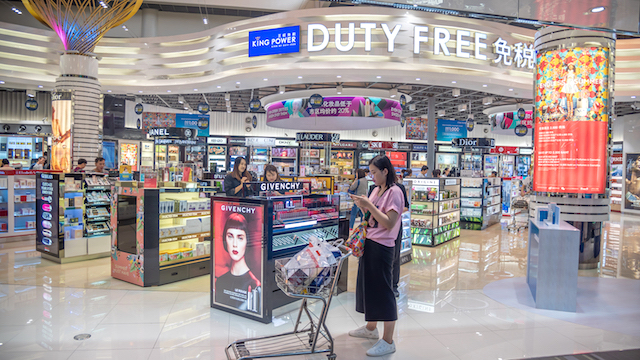
    King Power, a leading duty-free company in Thailand, has made the announcement that it will be closing its branches in Srivaree, Pattaya, and Mahanakhon by September. This move forms part of a broader cost-cutting strategy that involves a voluntary redundancy program for employees across all branches.

    The Reason for the Closure

    Initially, the three stores slated for closure played a significant role in the company’s earnings, catering largely to tour groups. However, the business model has since been deemed unsustainable, according to CEO Nitinai Sirismatthakarn. He highlights the unfavorable business structure of these branches and the need to streamline the company’s workforce to maintain a competitive edge in a shifting market.

    The COVID-19 pandemic has also had a notable impact on sales. While airport duty-free stores have been less severely affected, sales at the downtown outlets have dipped considerably.

    Employee Compensation and Store Operations

    King Power’s staff, who choose to take part in the redundancy program, will receive compensation in line with labor law. Additional payments will be made based on the length of service. Employees will also have the option to transfer to other branches.

    After the closure of the three branches, the company will continue its operations at three other downtown locations – Rangnam, One Bangkok, and Phuket.

    Renegotiations and Downturns

    Simultaneously, King Power is renegotiating its concession contracts with Airports of Thailand (AOT) for five airports. Despite earlier intentions to terminate these contracts, revised payment terms have now been agreed upon. This is happening against the backdrop of a wider downturn in Thailand’s tourism sector, with a significant decrease in visitor numbers this year.

    Investor concerns have been raised due to a 35.6% fall in AOT shares since the beginning of the year, which could indicate potential revenue losses for King Power. To review the concession agreements, two state universities have been commissioned by the airports. Sirismatthakarn supports this as a “check and balance” mechanism.

    Questions & Answers

    What is the reason for King Power’s closure of three branches?
    King Power will be closing three of its branches as part of a cost-cutting initiative. The business model of these branches is no longer sustainable due to their unviable business structure and the need to streamline operations in response to a changing market landscape.

    What will happen to the employees affected by the closures?
    Employees who opt for the voluntary redundancy program will receive compensation as per labor law, with additional payments based on their length of service. They also have the option to transfer to other branches.

    What is the current state of King Power’s concession contracts with Airports of Thailand (AOT)?
    King Power is presently renegotiating its concession contracts with AOT for five airports. While initial plans were to terminate these contracts, revised payment terms have now been reached.

  • Thai 7-Eleven operator CP All appoints new CEO

    Thai 7-Eleven operator CP All appoints new CEO

    Thai retailer CP All has appointed Yuthasak Phoomsurakul as its new CEO of operations, overseeing the company’s network of more than 11,000 7-Eleven stores.

    Phoomsurakul started his career with the company as the deputy MD of marketing and product management in 2007.

    He has also held several key leadership roles in companies such as Big C Supercenter, B2S Company, Amarin Printing Company and Publishing Public Company over the years.

    “I am extremely grateful and honoured to have been trusted by the board of directors to be appointed as CEO,” said Phoomsurakul. “In continuation of our corporate philosophy, customers and employees are the heart of our business operations.”

    In his new role, he says he will work to grow the company sustainably bringing innovation and integrating the business both offline and online.

  • Carl’s Jr to exit Thailand

    Carl’s Jr to exit Thailand

    Carl’s Jr. plans to close all six locations in Thailand by the end of the month.

    R&R Restaurant Group, which holds the rights to operate the burger chain, announced it could no longer bear the costs of operating the fast-food chain.

    “We tried to get through it during the second half of 2021. But we were forced to import our ingredients solely from the U.S. due to the restrictions imposed by CKE Restaurants Holdings,” it said of its parent company.

    The burger chain opened its first branch in Thailand in 2012 at Central Festival Pattaya Beach.

    Update: After this story was published, the group announced its last day of operation will be March. 24.

  • Thailand’s top coffee chain to expand in Vietnam

    Thailand’s top coffee chain to expand in Vietnam

    Thailand’s leading coffee chain Café Amazon plans to expand in Vietnam after five months of establishment in the country.

    A spokesperson said recently the chain sees long-term potential in Vietnam and will expand in Ho Chi Minh City and neighboring provinces this year, but did not reveal specific figures.

    The chain opened its first outlet in southern Ben Tre Province last October, and later two in Tien Giang Province and Tra Vinh Province in December, all in Go! Supermarkets operated by Thai giant Central Retail.

    It also opened in December an outlet in HCMC.

    Thailand’s Central Group owns 40 percent of Café Amazon Vietnam, while the remainder belongs to another Thai fuel distributor PTT Oil and Retail Business.

    Café Amazon has over 3,000 stores in 10 countries.

    In Vietnam, it will have to compete with long-established domestic players like Highlands, Phuc Long, The Coffee House and Trung Nguyen.

    The market in the past has seen the withdrawal of foreign brands like NYDC – New York Dessert Café and Gloria Jean’s Coffees.

  • Thai Airways Launches Scenic Fly By and Over Buddhist Attractions

    Thai Airways Launches Scenic Fly By and Over Buddhist Attractions

    Proving the ‘flights to nowhere’ trend is taking off, Thai Airways has given religious tourists a bird’s-eye view of 99 holy places across Thailand. Olivia Palamountain reports.

    Led by “celebrity fortune-teller and religion history expert” Dr Khata Chinbunchon at the end of November, the “Thai Magical Flying Experience Campaign” from Thai Airways gave Buddhists the chance to see 99 sacred sights from the air, complete with chanting.

    Passengers on the Thai Airways flight from Bangkok received Buddhist prayer books and a special in-flight meal while flying over temples in 31 provinces before returning home. Tickets ranged in price from 5,999 baht (£149) to 9,999 baht (£248).

    The sacred sights included Bangkok’s Wat Arun and Wat Phra Kaew (commonly known as the Temple of the Emerald Buddha), Phra Samut Chedi in Samut Prakarn, Wat Phra Boromma That Chaiya in Surat Thani and UNESCO-listed heritage sites in Sukhothai and Ayutthaya, in the kingdom’s central plains.

    Part of a plan to boost domestic tourism, the initiative comes hot on the heels of similar offerings from the likes of Qantas, China Airlines and Eva Air, all of which have launched their own series of scenic and themed flights over the past few months. Globetrotter has also reported on Covid-secure luxury cruises to nowhere, recently launched in Singapore.

    Tourism accounts for up to 20 percent of GDP in Thailand, and in a blow to the national carrier, the kingdom has remained shut to foreign travellers throughout the pandemic. However, the airline had been struggling even before coronavirus turned travel upside down. Estimates suggest it is now buried under £6 billion worth of debt.

    Still, Thai Airways has been a pioneer of creative initiatives that boost revenue. The airline has put bags made from life vests and slide rafts on sale, opened an airline-themed café selling in-flight meals in Bangkok, and a food stall selling dough fritters. It has also opened its Airbus and Boeing flight simulators to the public.

    In the autumn, Thailand reopened its borders to international travelers with the launch of a new 90-day Special Tourist Visa (STV).

  • Thai shoppers put trust in card payments when paying online during

    Thai shoppers put trust in card payments when paying online during

    As we pass the halfway point of 2020, the world today looks very different from when we started the year. The impact of the COVID-19 pandemic has affected more than our health, as our daily habits have changed, and how we use goods and services has transformed. We do more online than ever before, buying things we’d never imagined buying remotely: from shopping for groceries to ordering break-time bubble tea from our favorite shop. And not being present in the store means we have changed the way we pay too.

    In reality these changes were already in progress, but the pandemic has accelerated new customer habits. According to a recent study conducted by Visa, the global leader in digital payments, many Thai consumers turned to eCommerce for this first time, with two-thirds saying they were most likely to increase their online shopping.  Similarly, two-thirds said they intended to stick with digital payment methods, including contactless card and ecommerce, instead of reverting back to cash when the situation returns to normal. For digital payments, the new normal is here to stay.

    As more Thai consumers shop and pay with digital payments, KASIKORNBANK and Visa have been working closely to pioneer new ways and solutions to secure digital payments and eCommerce experiences during and after your payment is made.  These are some of the behind the scenes security measures we carry out that will allow you to have more peace of mind when transacting digitally, and will shine a light onto why you should never look at digital payments the same way again.

    One-time password, or OTP, may be familiar. This is most commonly used when you receive a unique password sent by SMS to your phone that you use to authorize your payment.

    EMV CHIP is the small chip you see on your plastic card, and every time you pay this chip generates a dynamic one-time use code for each transaction. Using EMV CHIP cards means we are able to provide an additional layer of security known as dynamic authentication in addition to the real-time fraud scans conducted when the transaction is authorized by the issuing financial institution.

    Visa Advanced Authorisation is a service that uses predictive analytics combined with machine learning and artificial intelligence (AI) to analyse more than 500 unique risk attributes and allocates a risk score for each transaction.  This score is then shared with KBank Credit Card so we can make an informed decision on whether to approve or decline a transaction.  On average, Visa analyses more than six billion pieces of data every day.  When data analytics is used with authentication methods like biometrics to verify the cardholder, payment security is enhanced.

    Visa Tokenization will help ensure no sensitive data is transmitted during an online transaction. It replaces sensitive account information, such as the 16-digit account number, with a unique digital identifier called a token.  This token then allows payments to be processed without exposing actual account details that could potentially be compromised.  This means your card number and expiry date is not shared and your account is kept secure.

    Although most sales transactions are processed, posted and paid for with few problems, you may see a charge on your card that is unfamiliar or incorrect. To settle any disputes, KBank Credit Card has a chargeback policy.  The purpose is to protect cardholders from fraud and unfair billing practices.  This allows cardholders to feel more confident using cards freely, knowing that they will not be held responsible for the actions of identity thieves, deceptive merchants and other fraudsters.

    You can also imagine if your wallet gets stolen with cash in it, it can be virtually impossible to replace that money, unless the wallet is retrieved.  On the other hand, with cards, the process to replace lost or stolen cards is relatively seamless.  All you have to do is contact your card-issuing bank and they will work with you to disable the card and prevent your funds from being exploited by fraudsters.


  • Strict Thai curfew forces stores to close cross nation

    Strict Thai curfew forces stores to close cross nation

    Thailand’s government has imposed an overnight curfew effective tonight that will force the closure of tens of thousands of convenience stores and street vendors.

    The curfew will run from 10pm to 4am. During that time all Thais and visitors to the country must remain indoors, with exceptions only for emergency services, medical workers and patients.

    Further exemptions include the transportation of goods, farm produce, medical supplies, fuel, parcels, goods destined for export or import, vehicles transporting people to quarantine sites, shift workers, and people traveling to or from airports.

    People who breach the curfew face up to two years in jail and/or a fine of up to Bt40,000 (US$1200).

    A majority of Thailand’s 7-Eleven stores, and rival chains, in urban areas traditionally trade 24 hours a day serving shift workers and tourists, but as of tonight, they will be forced to close.

    The move follows a ban on restaurants and bars serving customers on-site and a total, indefinite liquor retailing ban in one northern province.

    Thailand’s usually vibrant tourist industry has been decimated by the coronavirus epidemic with foreigners now all but banned from entering the nation and lockdowns and social-distancing measures being enforced nationwide.

    In addition to the curfew, public transport will be suspended across Thailand from 9.30pm to 4am, from tonight onwards.

    As of Thursday, Thailand had reported 1875 cases or coronavirus and 15 fatalities.

  • Four in five Thais tries going cashless as confidence in digital payments grows

    Four in five Thais tries going cashless as confidence in digital payments grows

     Four in five Thai consumers (78 percent) have tried going cashless in 2018, compared to only fifty percent in previous year as confidence in digital payments grew, according to the 2018 Visa Consumer Payment Attitudes study (the “Study”). The study tracks payment habits and attitudes as well as exploring emerging topics related to payments among 4,000 consumers across eight Southeast Asian countries, including 500 respondents from Thailand.

    For Thai consumers, digital payment methods, such as cards, in-app mobile payments and QR payments combined together have a larger preference (57 percent) over cash (43 per cent).

    Suripong Tantiyanon, Country Manager for Visa Thailand said: “The higher preference towards using digital payments and the rise of confidence in going cashless are credited to industry players and the government, who have been relentlessly driving the national e-payments agenda.

    “In addition, we believe that the higher preference towards digital payments can be attributed to the proliferation of payment form factors and acceptance points.  More than ever before, Thai consumers can make payments with a wider range of connected devices and payment applications on smartphones, such as wearables and mobile payments.  At the same time, QR code offers merchants in traditionally cash-based segments with a fast, cost-effective and secure digital payments solution.”

    According to the study, two in five Thais (42 percent) said they carried less cash than they did two years ago, compared to 26 percent in 2017.  Top reasons for the decrease in cash in wallet are cash is unsafe (65 percent), higher adoption of digital payments (65 percent) and the hassle of using cash (39 percent).

    The study also showed  that of those who tried going cashless, more than half (60 percent) could manage a day without cash and forty-five percent could last without cash for more than three days.

    Overall, in terms of future expectation, more Thais are confident about the country becoming a cashless society.  Nearly one in three (29 percent) are confident that Thailand can become a cashless society in less than three years, compared to 11 percent in 2017.  Thirty-nine percent believed it will take between four to seven years while only six percent believed it will take longer than 15 years.

    “The findings are encouraging.  We believe that we are on the right track and it is important to help more consumers and merchants understand and embrace the benefits of digital payments.  At the same time, we are committed to innovate and collaborate with all stakeholders in the payment industry and beyond as we continue our journey towards transforming Thailand into a cashless society,” Suripong concluded.

  • Ashley furniture now available in Thailand

    Ashley furniture now available in Thailand

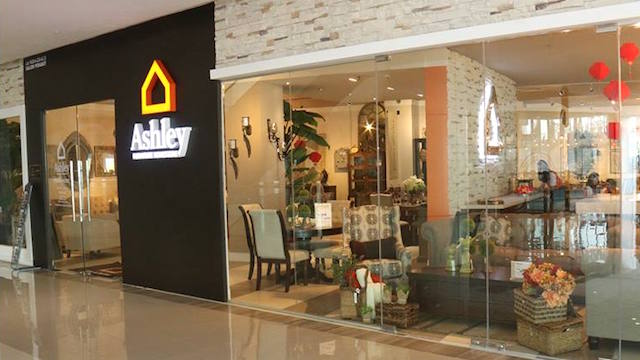
    US furniture retailer Ashley has launched in Thailand, partnering with local home furnishing and decor chain Chic Republic. The move is expected to help the brand capitalise on growing market demand and consumer purchasing power in the territory. Ashley president and CEO Todd Wanek said Thailand is a critical and potentially huge market for Ashley, due to its fast-growing middle-class affluence and population of 70 million.

    “There is huge demand for American contemporary and transitional looks in Thailand. This is why Ashley took the time to find the right partner, test the market thoroughly and made this decision after more than three years of finding the right fit.”

    Chic Republic’s strategy for expansion aims to target mid- to high-income consumers.

    It aims to sell Ashley’s products online via www.chicrepublicthai.com, and at four retail stores in Bang Na, Pradit Manutham, Ratchaphruek and Pattaya.

    Chic Republic CEO Kijja Pattamasattayasonthi said the outlook for furniture and home decor sales for the remainder of this year and into next is positive, due to demand from middle- to high-income customers, whose spending confidence has increased, as well as support from the increasing numbers of low-rise and high-rise high-end property projects.”

    Ashley has operated globally for more than 70 years, and has worked in the Asia-Pacific region for five years. It has more than 850 branches in 150 countries and brought in global sales of more than US$6 billion last year, accounting for 5 per cent of the brand’s total sales.

  • U-Tapao Rayong-Pattaya International Airport joins with AIS to develop Smart Terminal Pioneering

    U-Tapao Rayong-Pattaya International Airport joins with AIS to develop Smart Terminal Pioneering

    U-Tapao Rayong-Pattaya International Airport has entered into a partnership with AIS to support and develop its air transport system through the introduction of new innovations. AIS will take part in the pre-construction period and the opening of the Passenger Terminal 3, upgrading the airport to become the Bangkok’s third major commercial airport in the future. It will serve passengers connecting to Don Muang International Airport and Suvarnabhumi Airport in line with the Eastern Economic Corridor (EEC) Plan, which is one of key strategies of the Thailand 4.0 initiative.
    U-Tapao Rayong-Pattaya International Airport has entrusted AIS to provide integrated digital solutions for the development of the second passenger terminal into a Smart Terminal. The initial phase is centered on 2 key goals: 1) improve passenger services through the U-Tapao Application that provides all aviation information including flight status, airport transfers from/to the airport, and car parking. In addition, the app will provide a map notifying service spots that complementthe navigation systems within the airport via Augmented Reality (AR) technology. This new service is designed to allow passengers to enjoy maximum convenience for the first time in Thailand; 2) enhance the terminal management system with Video Analytics technology, which is comprised ofa digital closed-circuit camera network and complemented by an AI-based image processing program and Big Data for application in the development of a Face Recognition system to verify persons in the airport. The Face Recognition system will raise the standard of security and allow for the identification of both suspicious persons and objects, as well as VIPs. Moreover, Heat Map Analytics will be adopted to identify the volume of passengers in the airport areas in order to enhance the efficiency of the security system and the airport’s management and services.Rear Admiral Luechai Sri-eamgool, U-Tapao AirportAuthority Director, says: “We are delighted with the public-private partnership to deploy digital technology in upgrading services and management of Passenger Terminal 2 into a Smart Terminal. This is in accordance with the government’s Digital Economy policy to develop U-Tapao Airport as Bangkok’s third commercial airport. In addition, the development project is a part of the EEC framework that serves passengers connecting with Don Muang International Airport and Suvarnabhumi Airport. Finally, U-Tapao Airport aims to be the major aviation hub of the region.”

    U-Tapao Rayong-Pattaya International Airport is thus partnering with Advanced Wireless Network Company Limited (AWN), a subsidiary of AIS – Thailand’s No. 1 mobile network and digital technology provider- to develop a Mobile Application and Video Analytics as well as computerized and IT systems for airport communication services in the second passenger terminal. The goal is to increase the service capability of the airport through the effective deployment of digital technologies. The airport needs to provide convenience and deliver the ideal experiences for users with its integrated services. Moreover, the airport will increase its efficiency in safety and security as well as building management systems.

    Mr. Yongsit Rojsrikul, Chief Enterprise Business Officer, adds: “As a leading digital life service provider, AIS is providing thevery best communications service to Thais. Another key goal of the company is to apply digital technology in its utmost capacity to strengthen all aspects of the country. Through the partnership with U-Tapao Airport, AIS has invested in the development of 2 systems which will be ready for service in the last quarter of this year. AIS expects it will be a model for the development of airport passenger terminals into full-range Smart Terminals in the future. We believe that the EEC is crucial to revolutionizing the country’s economy, and that a partnership between the public and private sectors is required to make concrete developments and drive Thailand’s sustainable economy.

    “Today, AIS is very glad and proud of being entrusted by U-Tapao International Airportand be its partner in adopting digital technology for upgrading the services and management system of the Passenger Terminal 2,” concludes Mr. Yongsit.

  • Thailand still a hot destination for package bookings

    Thailand still a hot destination for package bookings

    During the 12 months ending in the first quarter of this year, on average, the booking window of international travellers to Thailand stretched over a month (36 days), |with an average length of stay per booking at three days, according to a survey by |online travel company Expedia group.

    Year-on-year growth shows top destinations in Thailand are Pattaya (up 70 per cent), Bangkok and Chiang Mai (up 60 per cent), Phuket (up 55 per cent) and Koh Samui (up 50 per cent).

    Smaller regions on the rise with eye-catching triple-digit growth include Koh Lipe, Northeastern Thailand, Rayong, Trat and Hat Yai.

    Data from the same period showed that package bookings generated a booking window more than 1.5 times as long as stand lone hotel bookings. In addition, cancellation rates of packages are also much lower compared with standalone bookings.

    Top package-generating markets include Malaysia, Hong Kong, Australia, Singapore and Japan.

    “Delivering global demand for Thai hoteliers is a mission for us,” said Pimpawee Nopakitgumjorn, director of market management at Expedia group. “In particular, Expedia package bookings are attractive because they are a great way for hotels to build a strong base of customers without eroding their retail rates. Last year alone, we sold [more than] 7.1 million packages globally.”

  • Siam Retail building two more malls

    Siam Retail building two more malls

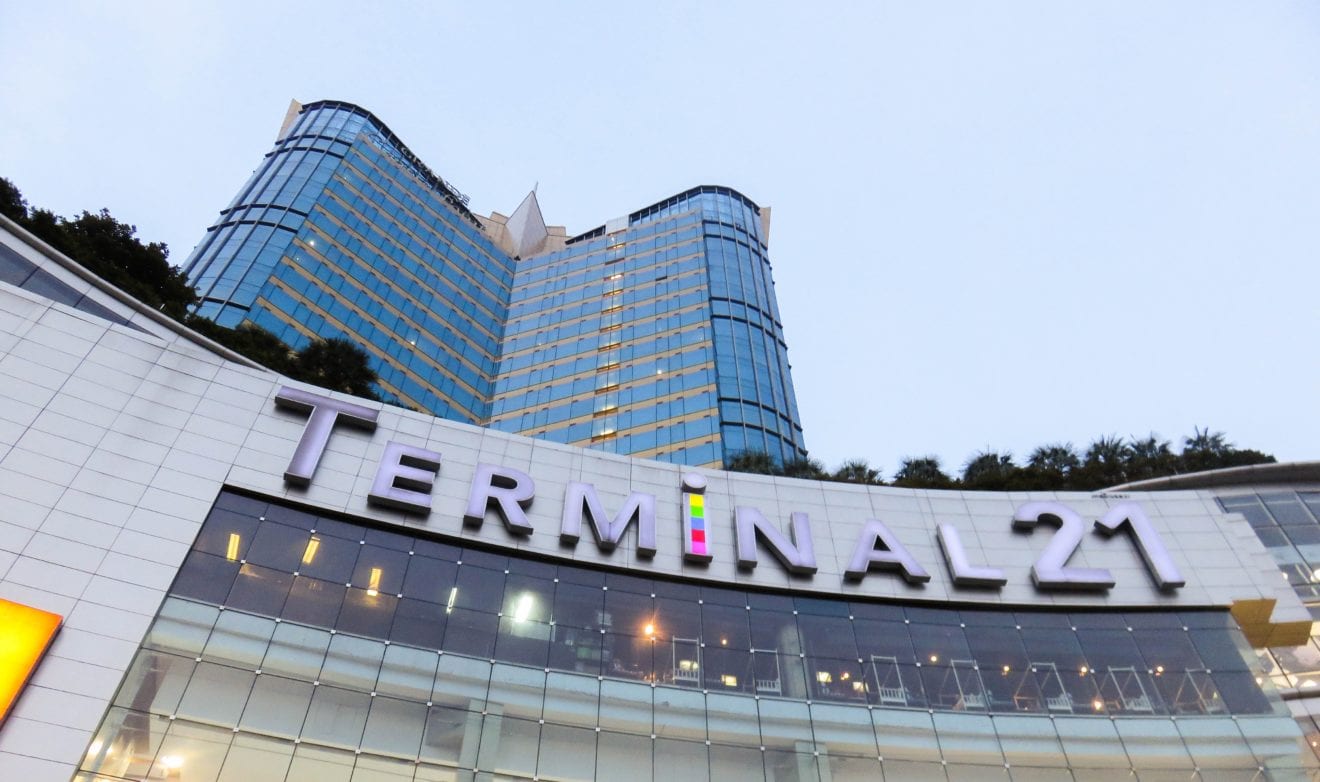
    Thai property developer Siam Retail is building two more Terminal 21 shopping malls – in Pattaya and Nakhon Ratchasima province.

    President Prasert Sriuranpong says the company is investing 6 billion baht (US$170.5 million) in the Pattaya development because it is one of three main tourist destinations outside Bangkok, along with Phuket and Chiang Mai.

    “Pattaya is full of foreign tourists, and the number of arrivals will continue to increase in the coming years,” he says. “Our lifestyle shopping mall will take about two years to complete.”

    Meanwhile, the Nakhon Ratchasima project will be ready before the end of the year. Terminal 21 Korat is near the Mitrapap Highway and is being developed under the “Market Street” concept – themed shopping based on seven world cities, with a sightseeing tower as high as 30 storeys.

    Also costing 6 billion baht, the mall will offer 200,000 sqm of retail space, almost triple the size of Terminal 21 Asoke in Bangkok, which has 70,000 sqm. Anchor tenants include SF Cinema City, The Rink Ice Arena, Fanpekka theme park and Foodland Supermarket. Shops will offer 200 local and international brands.

    Siam Retail plans to spend 100 million baht to promote the mall. Nakhon Ratchasima is considered a gateway to the northeast, with a population of 2.6 million, including more than 50,000 university students. It is also a tourist destination, with more than 5 million visitors each year.

    Siam Retail had revenue of 3.5 billion baht last year, up by 9 per cent from 2014 despite the economic slowdown. More than half the revenue came from Fashion Island, 25 per cent from Terminal 21 Asoke and the rest from The Promenade and Life Center.

    The new malls are part of the company’s 20-billion-baht expansion plan over the next six years. Apart from shopping malls, the company will turn its attention to hotels and property investments in Britain.

  • Belgian jewellery firm looks to Thai hub for Asian expansion

    Belgian jewellery firm looks to Thai hub for Asian expansion

    Thailand would be a hub to support and facilitate the growth of Roos’s business in Asia.

    “We’re originally from Holland. My great-great-grandfather founded the company in 1835, or about 181 years ago. I’m the sixth generation of the family. We [currently operate] more than 200 jewellery shops in Belgium and Holland,” said Rien Rozendaal, founder of and designer for Roos & Nijs.

    “We started selling our Roos jewellery ornaments last week in China through Derier’s retail network with 80 stores in major cities, including Shenzhen, Guangzhou, Chengdu and Ningbo. [By] coincidence, we also started last week in Thailand as well with the appointment of Market Access Co Ltd as our master distributor covering Thailand and all [of the] Asia region,” he said. “We’re from the original Dutch company and we didn’t find any necessity to expand further in my home market as well as in Europe as we’re at the high level already. I believe in Asia as a promising region to grow our jewellery business.”

    Rozendaal said starting to do business in China and Thailand arose from coincidences. In China for example, he was introduced by a Chinese friend in New York to the owner of Derier.

    “It is not that I’m looking for distributors. Finding the right people who will be my partners is not easy. We have to share the same way of thinking, the same vision and passion, and common interests,” he said.

    “They [distributors] should understand the European way of distributing the brand. In my way, doing business is not the first thing. My first thing is to get the same vision of how to market the brand.”

    Rozendaal said his business approach was quite different from setting up business targets and growth.

    “I like to design nice and beautiful jewellery. I have my target group in designing, that is my wife, not for the market. I design jewellery for the one I love, and appreciate that many women love this design too,” he said.

    Chanokphol Chaisuparakul, co-founder and director of Market Access, said Roos was not something people saw every day, because of its unique designs and long heritage of 181 years. The brand is also high-end jewellery that people can wear every day.

    “In five years, we think Roos could be a brand for sophisticated people who seek perfection in luxury jewellery. We aim to expand in Southeast Asia starting from Thailand, especially in Bangkok and big cities such as Chiang Mai, Pattaya and Phuket,” he said.

    He added that in the first year, the company would open one flagship store for Roos jewellery as well as one dealership in Bangkok.

    “We will start expanding Roos jewellery to some parts of CLMV next year,” said Chanokphol, referring to Cambodia, Laos, Myanmar and Vietnam.

    He added that the CLMV markets had a lot of potential, with people who are highly into networking, are well educated and have high spending power, and are fashion-oriented.

    Somkiat Chaisuparakul, chief executive officer of Market Access, said Thailand’s gem and jewellery market had high growth potential. The market value in 2015, especially diamonds, was about Bt78 billion, with imports accounting for Bt19 billion and domestic production the remaining Bt59 billion. With the economic situation getting better, entrepreneurs are more confident that the market will rebound.

    “This is a great opportunity for us to join forces with Roos in expanding their market from Europe to Asia,” he said.

    “Using Thailand as a hub to support the liberalisation of the AEC [Asean Economic Community] market, we will market Roos diamond jewellery to customers in Thailand and [elsewhere in] Asia. We aim to become the top jewellery brand in Thailand by 2017 with annual sales of Bt200 million.

    “We will expand Roos diamond jewellery to cover all potential markets in Asia, starting from CLMV, in the future,” he said.