Retail News CRM

Tag: PayNow

  • Singapore and Malaysia to Link Real-Time Payment Systems

    Singapore and Malaysia to Link Real-Time Payment Systems

    The link will enable more seamless payments for the high volume of remittances between the two neighbors, which reached S$1.3 billion ($960 million) in 2020.

    Singapore and Malaysia’s central banks will be embarking on a phased linkage of PayNow and DuitNow, their national real-time payment systems, the Monetary Authority of Singapore (MAS) said in an announcement.

    In the first phase, to be launched in the fourth quarter of 2022, customers of participating financial institutions will be able to make real-time transfers using a mobile phone number and make retail payments by scanning a PayNow/DuitNow QR code.

    The linkage will subsequently incorporate a wider range of features and participants. Both regulators will also explore the feasibility of integrating innovative features such as distributed ledger technology-based solutions to catalyse greater efficiencies in payments clearing and settlement between participating banks, the announcement said.

    Singapore’s remittance corridor with Malaysia is the city-state’s largest remittance corridor. The two countries also saw 12 million travelers crossing the border pre-pandemic.

    The PayNow-DuitNow linkage will be an important infrastructure to support cross-border payment needs of individuals and businesses, as well as the growing digital economic activity between both countries, Sponendu Mohanty, MAS chief fintech officer, said.

    The linkage also allows MAS and counterpart Bank Negara Malaysia (BNM) to incorporate the use of distributed ledger and smart contract technologies in the wholesale cross-border payments space, he added.

    Earlier this month, MAS also announced that it is working to connect PayNow to India’s Unified Payments Interface (UPI) by mid-2022.

    Singapore and Thailand have also connected their payments infrastructures to enable cross-border peer-to-peer transactions.
  • UOB Pilots Digital Signature Authorization

    UOB Pilots Digital Signature Authorization

    The initiative will remove one of the roadblocks – the need for physical signatures – in fully digitalizing the documentation process.

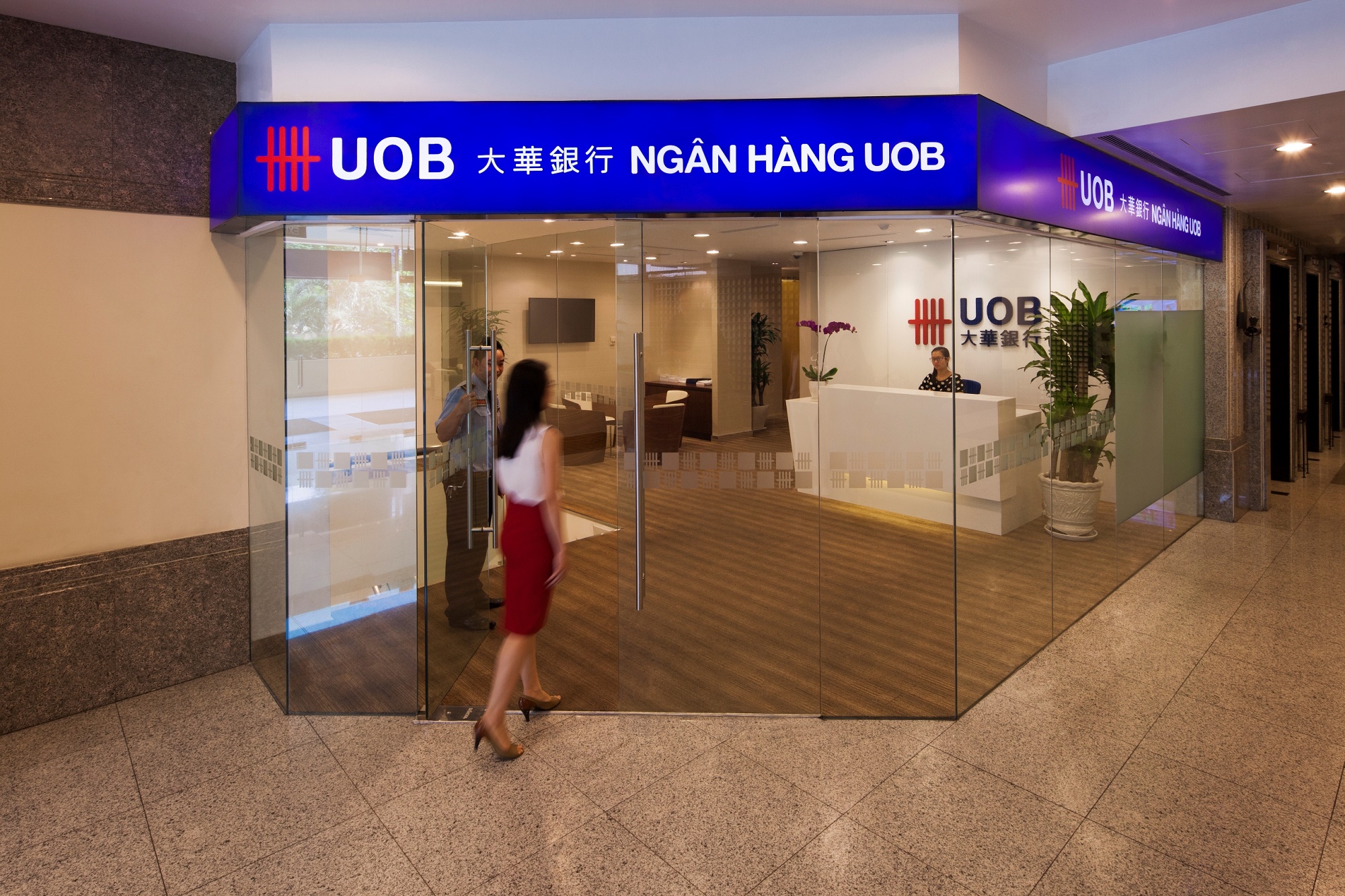
    UOB is starting a 12-month trial to test the use of Government Technology Agency’s (GovTech) Sign with Singpass among its retail and corporate customers, which will be used to confirm transactions such as individual wealth planning services and the PayNow Corporate application using a customer’s digital signature, the bank announced on Thursday.

    The features feature enables customers to use Singpass – the digital identity for Singapore residents that is identifiable and uniquely linked to the user – to sign electronic documents digitally via the Singpass app.

    The bank said it is pushing this innovation as research shows that COVID-19 has accelerated the move to online services, with more than 65 percent of customers expecting banking services to be digital by default.

    The change in customer expectations and experience during COVID-19 has made it imperative that we explore and extend our digital capabilities across more of our financial services and products, Susan Hwee, UOB head of group technology and operations, said in the announcement.

    UOB plans to expand the service to include more of its products and services for both the retail and wholesale segments in Singapore, and to expand its electronic signature capability to the region from 2022.

    One benefit from the move to e-signatures is its reduction of paper usage – more than 2 million multi-page hardcopy documents each year, which in turn will save more than 700 trees per year, once rolled out across its markets.

  • PayNow Simplifies Payments for Consumers and Businesses

    PayNow Simplifies Payments for Consumers and Businesses

    The move by PayNow to adopt SGQR makes it easier for businesses and consumers to use the mobile e-payment service.

    PayNow is adopting Singapore Quick Response (SGQR) specifications, which allows businesses and billing organizations to collect PayNow payments through SGQR, the Association of Banks in Singapore (ABS) announced in a statement on Monday.

    To pay via PayNow, consumers only need to scan the QR code with their preferred bank app.

    With PayNow being part of the SGQR ecosystem, we believe the registrations and transactions will continue to ramp up. Our objective is to push PayNow as the ubiquitous payment mode in Singapore, Ong-Ang Ai Boon, ABS director, said in the statement.

    SGQR is Singapore’s national unified payment QR code that combines multiple payment QR codes into a single SGQR label.

    Launched in September 2018, it is part of efforts by the Monetary Authority of Singapore to transform the country’s e-payment landscape.

    According to ABS, there are now 3 million registered individual PayNow users and 129,000 business PayNow users. Over S$12 billion in transfers have been made since PayNow was introduced in June 2017.

  • M1 taps UOB for QR code payment

    M1 taps UOB for QR code payment

    Singapore operator M1 has partnered with the nation’s United Overseas Bank (UOB) to offer PayNow as a payment mode for M1 customers.

    Under the agreement, M1 customers can now make mobile payments for purchases via PayNow at all M1 Shop outlets, as well as make monthly bill payments via PayNow by scanning the QR Code on the bill.

    M1 is the first communications provider in Singapore to enable retail customers to make e-payments via PayNow, providing customers with an additional payment option, in addition to existing payment modes. UOB is the key provider of PayNow Corporate services to M1, and will help enable the safe and hassle-free scan-and-pay experience for M1’s customers.

    To pay for in-store purchases, customers need to scan a dynamic QR Code that is generated at the counter using the mobile banking application of any PayNow participating banks with QR scanning functionality. Customers can also use PayNow to pay for their monthly bills by scanning the dynamic QR code on their bill statement. Customers can complete the payment by confirming the transaction details that have been automatically filled in, such as the payment amount and recipient.

    “Today, about eight in 10 consumers in Singapore have adopted e-payments and PayNow is a very convenient e-payment platform which will enhance our customers’ payment experience. This new initiative is one of many, as part of our digitalization journey to deliver a seamless digital experience for our customers,” M1 CMO  P. Subramaniam said.

  • Going cashless no small change

    Going cashless no small change

    After years of creeping at a snail’s pace, the e-payment scene has roared to life, setting 2018 up to be the year that cashless payments could finally become ubiquitous. Once Prime Minister Lee Hsien Loong made a call for a unified e-payment system at the National Day Rally in August, there were many developments, culminating in two significant moves in November.

    The first was an announcement from Education Minister (Higher Education and Skills) Ong Ye Kung, who is a board member of the Monetary Authority of Singapore, to expand the use of PayNow, an instant fund-transfer service, to businesses mid-next year.

    Launched on July 10, PayNow lets individuals transfer money by entering the recipient’s mobile phone or identity card number in any bank’s app. As at last month, more than 600,000 Singaporeans have linked either their mobile numbers or identity card numbers to their bank accounts via PayNow.

    By mid-next year when companies are allowed to link their business registration numbers to their bank accounts, PayNow’s use will be more pervasive, going beyond transfers between friends.

    With PayNow, merchants need not worry about complex system installation and related fees. As PayNow rides on Fast (Fast and Secure Transfers) – the country’s instant interbank funds transfer system – merchants also need not worry about cash-flow issues. Comparatively, credit card and ATM card direct debit transactions take up to two days to settle.

    While PayNow may be useful for owners of pop-up stores, its use at hawker centres may be limited. It is unthinkable that anyone would want to enter a business registration number and the amount owed into a bank app just to pay for a plate of chicken rice.

    Enter a national quick response code payment standard, dubbed SGQR. The release of its specification last month marks the second major breakthrough this year. Its aim is to allow merchants to display just one QR code for scanning by any e-wallet for fuss-free transfers.

    Singtel’s Dash is the first to embrace SGQR, with its QR code sticker displayed at a handful of merchants here.

    E-payment stalwart Nets also said it will change its QR code – rolled out to about 30,000 acceptance points in malls and taxis, and 600 hawker stalls – to one that incorporates the SGQR specification.

    • Since Prime Minister Lee Hsien Loong made a call for a unified e-payment system during his National Day Rally in August, there have been many developments – including two significant moves in November:

      1 Expanding the use of PayNow, an instant fund-transfer service, to businesses mid-next year . Launched on July 10, PayNow lets individuals transfer money by entering the recipient’s mobile phone or identity card number in any bank’s app.

      2 Release of a national quick response code payment standard – dubbed SGQR – specification, whose aim is to allow merchants to display just one QR code for scanning by any e-wallet for fuss-free fund transfers.

    Nets’ QR code system now works with the e-wallets of DBS Bank, OCBC Bank and United Overseas Bank. Next year, customers of Citibank, HSBC, Maybank and Standard Chartered Bank will also be able to scan the Nets QR code to make payments.

    Together, these seven major banks cover about 90 per cent of all retail transactions in Singapore.

    The nation’s effort to unify its e-payment systems may take more than a standardised QR code or enlisting businesses in the peer-to-peer PayNow scheme.

    Payment providers may also need to standardise the way they itemise and describe bills, and how fast they settle payments, to help merchants and hawkers with account reconciliation at the end of the business day.