
Tag: pcga

  • Pakistan Cotton Arrivals Rise 7.5 Percent to 4.08 Million Bales

    Pakistan Cotton Arrivals Rise 7.5 Percent to 4.08 Million Bales

    Cotton arrivals at Pakistani ginning factories reached 4.08 million bales by October 15, rising 7.53 percent year-on-year despite widespread textile plant shutdowns.

    Data from the Pakistan Cotton Ginners Association shows total intake climbed to 4,081,265 bales, up 285,628 bales from the 3,795,637 recorded in the same period last season.

    Domestic mills bought 3.45 million bales and exporters booked 97,000 bales, leaving 531,530 bales unsold across active yards. Total arrivals during the preceding fortnight stood at 872,863 bales, processed by 471 operational ginning facilities nationwide.

    Regional Yields and Mill Disruption

    Sindh drove the bulk of volume with 2.44 million bales, up 7.35 percent from last year, led by Sanghar district at 1.14 million bales. Sukkur followed with 264,500 bales, Naushehro Feroze with 223,200 and Khairpur with 213,900.

    Punjab recorded arrivals of 1.64 million bales, representing a 7.79 percent increase. Bahawalnagar posted 418,750 bales, Bahawalpur delivered 294,606, Dera Ghazi Khan produced 236,514, Rahim Yar Khan reached 169,949 and Layyah logged 122,327.

    The higher volume arrives against severe industrial curtailment. Trade bodies report approximately 500 ginning factories and more than 150 spinning and weaving mills have shut operations, while roughly half of Pakistan’s power looms remain idle.

    Synthetic Influx Distorts Local Pricing

    Local processors blame soaring energy tariffs and leakages under the Export Facilitation Scheme for depressing domestic fiber demand. Under the programme, duty-free imported yarn and fabric intended for export finishing are instead diverted into the local market, bypassing the standard 18 percent sales tax paid by domestic suppliers.

    Import figures from the All Pakistan Textile Mills Association reveal man-made yarn shipments jumped to 12,773 tonnes in the first quarter of the 2026-27 fiscal year, up from 3,056 tonnes a year earlier. Man-made fabric imports surged from 660 tonnes to 8,628 tonnes over the identical timeframe.

    Cotton Ginners Forum Chairman Ihsanul Haq noted that traders brought an estimated 40 million to 50 million metres of fabric from China alone under the concessionary system without generating matching finished garment export growth.

    Crop Estimates and Farmer Margins

    Discrepancies in official output tracking complicate procurement planning for regional apparel makers. The Punjab Crop Reporting Service estimated provincial crop output at 2.983 million bales, creating a sharp divergence against the ginners association tally of 1.638 million bales received by mid-October.

    Central Cotton Research Institute transfer of technology head Sajid Mahmood warned that higher raw output will not stabilize the supply chain if farmgate returns fall below cultivation costs. Farmers facing compressed margins are expected to shift acreage toward competing crops next spring if lint prices fail to cover inputs.

    Karachi Cotton Brokers Forum leader Naseem Usman urged authorities to establish a direct floor price and an official buying mechanism to prevent distressed sales if open-market rates slide further.

    Harvest Run Out

    Picking operations enter their final 15 to 20 days across core farming belts in southern Punjab and upper Sindh. The Central Cotton Research Institute has instructed growers with plants bearing eight to 10 green bolls to apply a foliar spray of two kilograms of urea per 100 litres of water to accelerate boll opening before seasonal temperatures drop.

    Customs authorities have initiated targeted inspections against trading firms suspected of misusing import exemptions, while mills push Islamabad for formal quota caps on incoming synthetic yarn before second-quarter contracts settle.
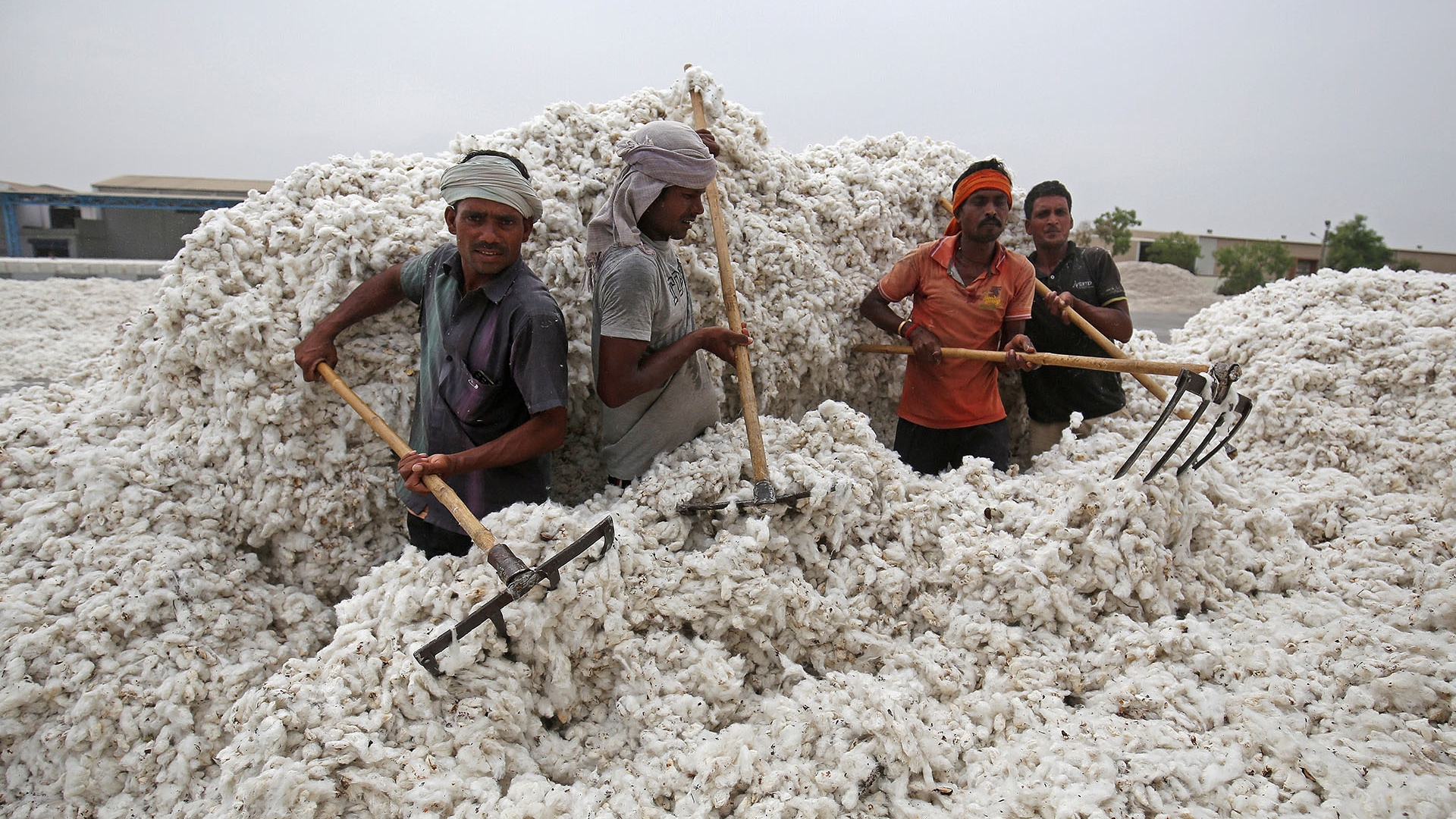
  • Pakistan Cotton Arrivals Rise 19 Percent to 2.39 Million Bales

    Pakistan Cotton Arrivals Rise 19 Percent to 2.39 Million Bales

    Cotton arrivals at Pakistani ginning factories reached 2.389 million bales by September 15. That volume is up 19 percent from 2.004 million bales during the same period last year.

    The early surge lifts industry projections for full-year national output above six million bales. Last season yielded roughly 5.5 million bales.

    Provincial receipts showed uneven growth across primary growing regions. Punjab deliveries jumped 24.73 percent to 860,942 bales, while Sindh processed 1.528 million bales, a rise of 16.25 percent. Active facilities totaled 205 ginning factories in Punjab and 207 in Sindh.

    Regional Splits and Factory Volumes

    Sindh led early harvesting through intensive picking in key southern districts. Sanghar district alone delivered 888,607 bales to local ginners by mid-September. That single district outpaced the combined intake of all ginning units in Punjab.

    Steady field conditions across Matiari, Tando Allahyar, Hyderabad, Mirpurkhas, Nawabshah and Naushahro Feroze supported the southern haul. In Punjab, picking concentrated across Bahawalpur, Bahawalnagar, Dera Ghazi Khan, Multan, Vehari, Rahim Yar Khan, Muzaffargarh and Rajanpur.

    Mill Demand and Price Competition

    Domestic spinning and textile mills secured the bulk of intake, buying 2.035 million bales by the reporting deadline. Raw cotton exporters booked 93,000 bales. Ginners were left holding an unsold inventory of approximately 261,000 bales.

    Spot prices dropped sharply across trading hubs despite steady buying by domestic spinners. Over seven days, lint prices fell by about Rs1,000 per maund. Rates settled near Rs18,600 in Punjab and Rs18,400 in Sindh.

    Lower import parity prices for Brazilian raw cotton prompted several Pakistani mills to place overseas orders, dampening local price support. Cheaper imported fiber caps production costs for downstream yarn and fabric makers. Domestic growers, however, face tighter margins at the farm gate.

    This price squeeze creates supply chain risks for regional fashion retailers who rely on Pakistani mills for yarn and finished garments. Falling domestic lint prices could erode farm profits. That risk threatens to reverse acreage recovery in future planting cycles and drive higher import dependency across the South Asian textile corridor.

    Data Gaps and Acreage Shifts

    Cotton acreage in Punjab faces land competition from sugarcane, which has expanded into traditional cotton tracts. That shift explains part of the volume gap between the two provinces.

    Official production figures also show large reporting discrepancies between agencies. The Pakistan Cotton Ginners Association recorded 860,942 bales in Punjab through September 15. The Punjab Crop Reporting Service estimated 1.483 million bales by September 17. That represents a 72 percent gap between factory receipts and provincial field estimates.

    Pest Control and Final Crop Risks

    Early arrivals do not guarantee an unbroken harvest, field specialists warn. Agronomists have identified pink bollworm infestations in both provinces. Whitefly, jassid and thrips also apply localized pressure.

    Pest management over the coming weeks will determine whether crop yields hold.

    “The next few weeks will be critical,” Mahmood said, stressing continuous monitoring of bolls, timely pest-control measures and picking to protect both yield and lint quality.

    Growers and ginners are tracking pest counts and late-season rainfall across southern Punjab and Sindh. The next fortnightly arrival report will confirm whether picking maintains the six-million-bale trajectory.