Retail News CRM

Tag: Performance

  • Android users should now have a better performing Snapchat

    Android users should now have a better performing Snapchat

    Snapchat disseminated a tweet today announcing that it has released its new Android app. The app was rebuilt from the ground up so that it could be faster for Android users. In rebuilding its Android app, Snapchat had to take into consideration the many different cameras and chipsets used on various Android handsets. The decision made to revamp Snapchat’s Android app came in 2017 when it became clear that the messaging app’s iOS version was superior.

    In early 2018, Snapchat staff realized that the Android app was always trying to run code in the background, leading it to act laggy. Thus, the decision was made to rebuild the Android app from scratch. The challenge facing Snap’s director of engineering, Gustavo Moura, was how to make the messaging app run the same on flagship Android devices and lower-end models alike. Eventually, the Snapchat development team was able to get it done and the app’s Android subscribers should see Snapchat run faster once the new version is installed. In addition, better performance should be seen on lower-end phones. To make sure that updates are running bug-free now and in the future, Snapchat is testing them on a larger number of Android-powered devices.

    “Android devices don’t all behave the exact same way, right? It’s very easy for us to build an Android app that will work well on flagship devices like the Pixel 3. It’s more challenging when you have to capture the whole ecosystem, especially when the camera works very differently from manufacturer to manufacturer.”- Gustavo Moura, Director of Engineering, Snapchat.

    Those installing the updated Snapchat app on their Android device won’t notice any changes to the UI. Instead, Snapchat concentrated on improving things under the hood so that the Android app could run as fast as its iOS app. And while the new version of Snapchat for Android has begun rolling out to some now, it won’t be fully available until the end of this year.

    Originally known for its self-destructing messages that would automatically delete after ten seconds, Snapchat developed the Stories feature in 2013. Users can post a series of images that remain on Snapchat for 24 hours to help them convey a story. In addition, the popular Snapchat Lenses feature uses AR to help add cartoonish features to a member’s selfie.


  • Pomelo secures RedMart’s Jim Boland

    Pomelo secures RedMart’s Jim Boland

    Bangkok-headquartered omnichannel fashion company Pomelo has appointed Jim Boland, former RedMart CFO, as its new CFO.

    Boland has successfully led finance organisations in fast-growing e-commerce businesses for more than 19 years in leadership roles at Amazon, Dell and Alibaba-owned RedMart. His appointment will see him aiming to build up Pomelo’s financial infrastructure to drive profitability while enabling rapid growth across the region.

    “I am delighted to join this innovative company, which has designed a business model strategically suited to grow fast and profitably,” said Boland. “As a digitally native, vertically integrated omnichannel brand, Pomelo presents an exciting opportunity to leverage my past experience with vertical integration, retail, and e-commerce, especially during the critical scaling up phase.”

    With Boland’s new role as CFO, Pomelo’s co-founder and former CFO Casey Liang is transitioning to Pomelo’s growth team, which encompasses the performance-marketing and business-intelligence teams, a cross-functional unit that will work closely with other teams to accelerate customer acquisition and retention.

    “As we continue in this period of rapid expansion, I am excited to foster more coordination between our creative and technical teams to further accelerate our growth rate and help more customers to experience Pomelo’s unique value proposition,” said Liang.

    Pomelo’s CEO David Jou expressed excitement at the hire as the firm pursues building the “first global fast fashion brand out of Asia”.

  • Malaysian businesses less optimistic on prospects for next six months

    Malaysian businesses less optimistic on prospects for next six months

    Malaysian businesses are displaying less optimistic sentiment on prospects for the next six months as the RAM Business Confidence Index (RAM BCI) fell to its lowest level since its inception two year ago. RAM said in a statement today that the corporate and the SME indices of the RAM BCI declined to 55.1 and 51.0 respectively, although the reading above 50.0 still denotes positive sentiment.

    The RAM BCI is a comprehensive survey jointly conducted by RAM Holdings Bhd and RAM Credit Information Sdn Bhd, on business sentiment in Malaysia. Released quarterly, the index is based on data from a survey of close to 3,500 SMEs and corporates across five main industry segments respectively.

    The cooler sentiment is attributable predominantly to the weak economic prospects in the next six months, with a number of firms citing this as the main challenge, rising to 41.2% and 41% both corporate and SME segments.

    Decelerating domestic growth, uncertain global demand and investment activities and a lack of positive catalysts, including the relatively neutral Budget 2019, all play a part in the generally weaker business sentiment on the next six months.

    On a sectoral basic, the construction sector appeared the least bullish with the SME sector recording a reading at 49.7 while the corporate sector declined for the third time in a row to 53.0.

    Without any new growth catalyst amid the property overhang, plus the shelving of new big-ticket infrastructure projects, it is not surprising that the construction sub-indices have hit record lows, RAM said.

    Another sector that showed pessimism in the Q1-Q2 2019 survey is SME retail as its performance outlook slipped back into negative territory after a brief expansionary momentum that had been aided by the tax-free window from June to August 2018.

    “Faced with uncertain global and domestic economic prospects, consumers are once again more prudent with their spending, leading to weaker sentiment on retail consumption in 2019,” it added.

    On the back of weaker prospects, the firms are also holding back from capacity building with the sub-indices tracking corporate business expansion, capital investment and hiring recording a fall in three consecutive surveys.

    Likewise, the capacity-building sub-indices for SMEs pulled back from the last survey and remain below those of corporates.

    RAM noted that firms’ expressed reticence on capacity building remains the most prominent downside risk, as it could weigh on the momentum of economic growth in 2019 and potential economic output over the longer run. This is particularly true in respect of SMEs, which are more vulnerable and sensitive to immediate economic challenges.

    “That said, more guidance on future economic policies that will shape the overall business environment will be crucial to building business confidence among firms, potentially being the game changer for a more resilient growth trajectory this year,” it added.

  • Culture complexes blooms in Asia

    Culture complexes blooms in Asia

    In recent years, the term “culture complex” has often been seen on social media. Postings showing people spending time at these spaces are shared often, attached with hashtags that read “culture life,” “leisure time” and “relaxation.” Culture complexes have risen as popular city destinations for young Seoulites. Buildings housing exhibition halls, cafes, restaurants and design shops bill themselves as culture complexes.

    According to last year’s “Where to Live,” a book by Yoo Hyun-joon, an architect and professor, the younger generation has been exhibiting their identities on social media by sharing the kind of clothes that they wear and the kind of food that they eat. Now, it is about the space — the kind of spaces where you spend your time.

    To satisfy such desires, culture complexes compete to house the trendiest tenants. What also matters is how well such culture complexes go with the neighborhoods they inhabit.

    The Wooran Foundation building in Seongsu-dong, eastern Seoul, is a case in point. The neighborhood is often referred to as the Brooklyn of Seoul, as young artists and hipsters have flocked to the old abandoned factories in the area.

    The new 12-story building stands out in the generally low-rise neighborhood. But the architectural design shares the Brooklyn mood with layers of gray concrete and an industrial mood.

    Cafe Dorrell, a Jeju Island import, on the first floor is one of the trendiest coffee franchises of 2018. The interior is decorated with skateboards, matching the young and hip atmosphere of the area.

    The culture complex has five halls for exhibitions and performances, ready to host all genres of artistic activities.

    Founded in 2014, the Wooran Foundation, is a cultural foundation that aims to create sustainable arts and culture ecosystem. President Chey Ki-Won is the younger sister of SK Group Chairman Chey Tae-Won.

    Some culture complexes serve as showrooms for companies. For example, Simmons Terrace showcases Simmons mattresses while the Monami Concept Store displays the brand’s stationery products.

    Flask Namsan in central Seoul is operated by Market m, a lifestyle design select shop. Located near Myeongdong, the first floor space features design products from interior decorations to furniture. Upstairs, visitors can relax with a cup of Moonshine Coffee from Australia.

    The cafe lounge on the third floor is a culture space for lectures, seminars and mentoring sessions. The yet-to-open upper part of the building, from the fourth to sixth floor rooftop, will house more showrooms and restaurants.

    “In Korea, we usually meet people at cafes and restaurants. While meeting friends, we can visit these shops and share our lifestyles. I get to know more about what others like and what I like, too,” Kim Ji-hye, an office worker her mid-20s in Seoul, said.

    “On the other hand, I sometimes wonder why these places call themselves culture complexes, when they are just spaces for businesses,” Kim said. “I feel like they should have something more than just sales.”

    Originally a pharmaceutical company building from the 1970s, Piknic, a culture complex in Hoehyeon-dong, central Seoul, houses Kafe Piknic, a cafe by day and tapas bar by night. Michelin-starred french restaurant Zero Complex is on the third floor.
    However, what has made Piknic a popularly recognized name is the exhibition space. Designer brand SJYP held a runway show here during the last Seoul Fashion Week. The space also hosted “Ryuichi Sakamoto: Life Life,” a media art exhibition of the life of the Japanese composer and musician.

    The culture space is currently holding “Jasper Morrison: Thingness,” an exhibition of work by the famed British industrial designer. After enjoying the exhibition, visitors can dine at the Kafe Piknic, sitting on a chair designed by Morrison.

  • Nokia launches Fixed Access Health Index

    Nokia launches Fixed Access Health Index

    Nokia has announced it has developed a new metric for measuring the quality and performance of fixed access networks in a standardized way.

    The Nokia Fixed Access Health Index for service providers uses Nokia’s automation and analytics capabilities to benchmark the performance and health of fixed line networks against those of industry peers.

    It is designed to act as the foundation for network optimization programs, and measure their performance and progress over time through regular performance measurements.

    The index is already in use by multiple operators, including a major Asian service provider that used the tool to optimize the network health and quality of its recently introduced IPTV service.

    “The initial results we saw with our pioneering customers in this domain were so impressive that we decided to go for a ‘standardized’ approach, which can be replicated with other service providers,” Nokia president of fixed networks Federico Guillén said.

    “Based on a series of playbooks, each operator gets a personalized evaluation and improvement plan. To offer this kind of service, we build on our expertise in all 20 of the largest access networks globally, and with more than 300 fixed broadband customers worldwide, which gives us an endless source of knowledge to tap.”

  • Malaysia 4G service performance below global average

    Malaysia 4G service performance below global average

    The race for LTE dominance in Malaysia is still in its infancy as operators scramble to deliver consistent quality of service nationwide.

    Statista data points to smartphone penetration in Malaysia of 62.8% in 2017 with a forecast of 68.46% by 2022. Adoption is fueled by nationwide mobile connectivity with usage in areas such as mobile shopping, social media and general internet surfing according to market research firm GfK.

    “Shopping apps, especially, are also gaining popularity, paving the path for mobile payments. More consumers today are contributing to the growth of mobile commerce (m-commerce) in Malaysia, making payments through their mobile devices for retail items, airline tickets, and services such as Grab and Uber,” observed Stanley Kee, Managing Director for Southeast Asia, GfK.

    According to the EY report “Decoding the Malaysian digital DNA: from smart to savvy” 78% of surveyed Malaysians use of the technology has improved their communication with friends and family, albeit at the expense of sleep (25%).

    As more consumers turn to their smartphones to research new products or services (83%) or make purchases online rather than in person (38%), experience and speed will trump convenience as a metric for selecting the best service provider. That said, price remains an important factor in Malaysian buying psyche.

    With more operators defaulting to LTE or 4G as the solution to consumer’s appetite for connectivity, OpenSignal published a comparative study of the performance of the mobile operators in the country.

    Four years since Maxis launched the first LTE service in Klang Valley (January 2013), five operators now claim to offer 4G service although OpenSignal reported only two operators as having LTE availability scores higher than 75%. 4G services aren’t yet ubiquitous, but they’re getting there.

    “Yes held onto our 4G availability award with a score of 92.5%, but Unifi Mobile (the new brand name for Telekom Malaysia’s Webe) and Celcom demonstrated the biggest growth spurts in our availability results. Unifi’s 4G availability increased by 10 percentage points in six months, while Celcom’s score increased by more than 7 percentage points,” said Kevin Fitchard, Open Signal lead analyst.

    Maxis has extended its lead in 4G speed metric, averaging LTE downloads to 24.4Mbps. Celcom came in second with a 16.3Mbps LTE download average. But Malaysia’s other operators fell short of the global 4G average of 16.9Mbps. U Mobile and Unifi in particular are struggling to boost LTE speeds. Both scored below 10Mbps in OpenSignal test.

    Asked about the growing interest among operators for 5G service Fitchard took a pragmatic view saying: “Countries that are still building out their 4G networks and services like Malaysia will likely be occupied with that task for the next several years. But today 5G isn’t really an option for any operator globally, so everyone has to wait,” he concluded.

  • New Mobile Solution Boosts Millennial Performance at Work

    New Mobile Solution Boosts Millennial Performance at Work

    Manhattan Associates today announced the release of Performance at Work, a new solution for enhancing employee engagement, which results in productivity gains, lower attrition rates, and therefore greater customer satisfaction. The solution drives improved employee satisfaction by aligning individual employee activities with established organisational goals and metrics, providing employees and managers frequent feedback on their performance via their mobile devices.

    According to several Gallop Research polls, the majority of workers across the globe are simply not engaged at work. Gallop’s 2017 survey of American workers reveals that 70 percent of US employees are not engaged, whilst its global report from a few years prior indicates that 87 percent of workers in Southeast Asia are not engaged. And the challenge is even more acute with the rapidly growing millennial workforce. The research firm reports that millennials change jobs at three times the rate of other generations.

    Gallup’s most recent report reveals potential solutions to the millennial engagement challenge. Millennial workers require more frequent and consistent performance feedback. They also prefer to connect and interact with the world through their own mobile devices.

    The new Performance at Work solution enhances communications with a modern and connected workforce. It leverages the latest mobile technologies to provide millennial workers with the frequent performance feedback they require. The solution combines a challenge-based approach to learning with continual performance data on mobile devices. Performance at Work is designed to boost employee engagement and encourage the development of highly positive relationships between warehouse employees and their supervisors.

    “Productivity improvements often focus on high-performing execution applications, like warehouse and labour management, yet support for the human element of the equation has largely been overlooked,” said Peter Schnorbach, senior director, Product Strategy, Manhattan Associates. “Companies will have to shift this focus as more millennials, and their need for frequent feedback, enter the workforce. Performance at Work is designed to engage this modern, more connected worker through their preferred medium – the smartphone.”

    Manhattan today introduced the following Performance at Work solutions:

    • The new Employee Engagement mobile application delivers a weekly performance scorecard directly to employees’ smartphones. The software leverages gamification concepts to engage, motivate and incentivise success. It provides regular feedback on how each employee impacts company success and how their work ranks against that of their colleagues.
    • Manhattan recently embedded Labour Management (LM) functionality within the traditional Warehouse Management System (WMS) to deliver immediate labour reporting and improved visibility into employee productivity. By integrating the typically separate components of LM and WMS, Manhattan’s Performance at Work also reduces deployment time and drives immediate ROI.
  • Banks post higher performance for 2016

    Banks post higher performance for 2016

    Several commercial banks have in the early days of 2017 posted positive business performance for 2016, with profits much higher than the previous year.

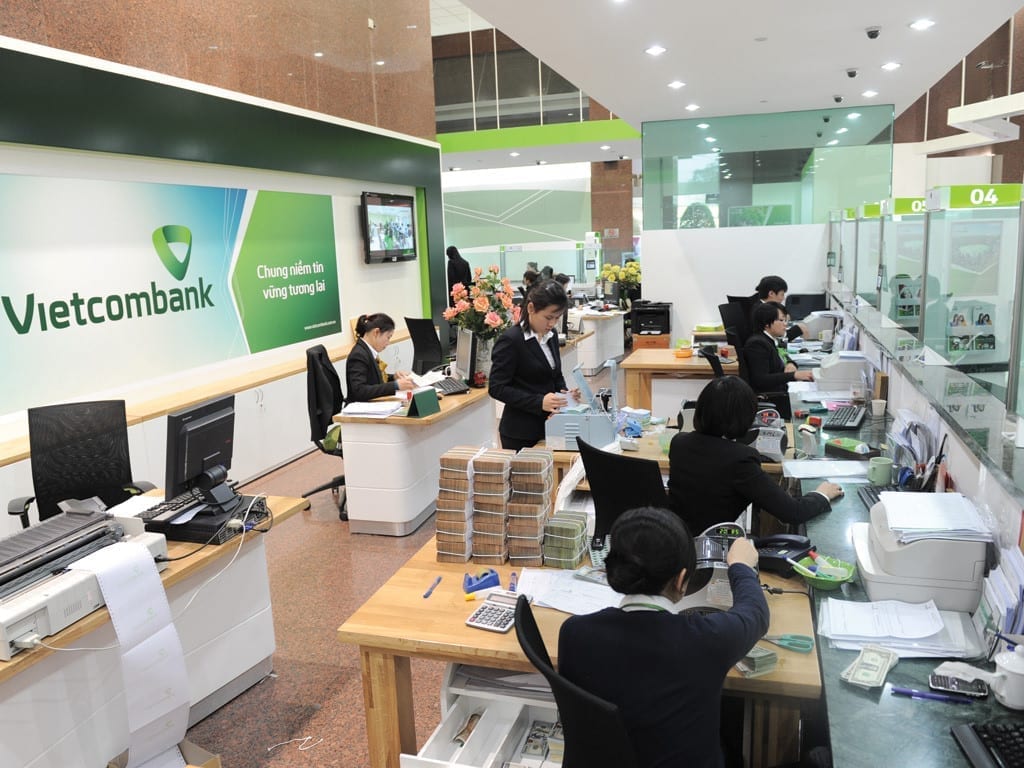
    The Bank for Foreign Trade of Vietnam (Vietcombank) was the first bank to report pre-tax profit in 2016, which hit a record high of 8.2 trillion VND (362 million USD). Its profit surged by 23.4 percent against 2015 and also exceeded the bank’s target for the year by 2.7 percent.

    In 2016, Vietcombank mobilised nearly 600 trillion VND from its depositors, up 19.4 percent from the previous year, while lending an estimated 470 trillion VND, up 18.9 percent.

    Vietcombank Chairman Nghiem Xuan Thanh said in 2016 the bank brought its rate of non-performing loans (NPLs) to 1.44 percent, down four basis points compared with the end of 2015.

    The bank’s capital adequacy ratio, which measures its capital to its risk, was 10.29 percent, higher than the minimum of 9 percent set by the State Bank of Vietnam.

    On solid ground in 2016, Vietcombank has targeted a pre-profit figure of 9.2 trillion VND in 2017, 12 percent higher than last year.

    The bank also expects its total assets to rise by 11 percent in 2017, while it has forecast that its credit growth and capital mobilisation will be 18 percent and 15 percent, respectively. The bank aims to keep its NPLs under 1.5 percent.

    The Vietnam Joint Stock Commercial Bank for Industry and Trade (Vietinbank) also reported a high profit of 8.25 trillion VND in 2016, 4 percent higher than the plan set by the bank’s general meeting of shareholders.

    Nguyen Van Thang, Vietinbank Chairman, said that as of December 31, 2016, the bank’s total merged assets were estimated at 947 trillion VND, up 22 percent from the previous year; while total mobilised capital reached 862 trillion VND, up 21 percent.

    Also in 2016, the bank’s total outstanding loans posted 720 trillion VND, a year-on-year rise of 18 percent, fulfilling the set target. Credit structure witnessed positive transfer with credit for prioritised industries growing 22.4 percent, higher than the common credit growth of the whole system.

    By the end of 2016, the bank continued to effectively manage the quality of assets with bad debt ratio of less than 1 percent.

    Le Duc Tho, General Director of Vietinbank, said in 2017, the bank set a target of a 15-17 percent rise in total assets and an 18 percent increase in outstanding credit.

    In addition, it strives to control the quality of debts, manage the bad debt ratio and ensure profit growth to achieve or exceed the year’s plan set by the general meeting of shareholders.

    The Bank for Investment and Development of Vietnam (BIDV) also estimated a pre-tax profit of 7.5 trillion VND in 2016, a rise of 7 percent against the previous year despite its deduction for the risk provision fund being quite high. In the first nine months of 2016, BIDV spared nearly 7 trillion VND for the fund, jumping 80 percent year-on-year.

    Positive results of BIDV in 2016 came from optimistic credit growth. Its total loans reached over 935 trillion VND, in which 758 trillion VND was offered to economic institutions and individuals, up 17.85 percent compared with 2015, while its deposits totalled 939 trillion VND, up 20.45 percent. The bank could control its bad debt ratio to 1.47 percent of total outstanding loans over the past year.

    Meanwhile, many other banks also surpassed their 2016 pre-tax profit targets, such as ACB, VPBank, Techcombank and VIB.

  • Performance remains key metric in Thailand

    Performance remains key metric in Thailand

    Performance ratings continue to determine pay decisions in the majority of Thai organisations, a recent Aon Hewitt survey found.

    With high turnover rates highest among junior managers and supervisors in the Land of Smiles, there is growing pressure on these staff to maintain their performance levels and prove their worth.

    According to the Total Compensation Measurement Study and Benefit Survey 2016 by Aon Hewitt, performance continues to determine pay-related decisions for 95.1% of organisations in Thailand.

    With junior management and supervisor levels recording voluntary turnover rates of 14%, and involuntary turnover rates of 5.3%, one tactic being utilised is to offer wage increases, with salary increments ranging from 4.7% to 6% in 2016 across industries polled.

    Across the Thai economy, the retail and life sciences sectors offered the most generous wage increase in 2016, with an average increment of 6%.

    On the other hand, the travel industry witnessed the lowest average salary increase, at 4.7%.

    The study also showed that other strategies were used to keep hold of employees.

    For example, 72.2% of employers offered individual performance awards, while 38.9% offered special recognition as short-term incentives to retain staff.

    “The high turnover rate among junior managers should warn employers in Thailand to think about their compensation policies in the context of their overall talent retention strategy,” said Panuwat Benrohman, Country Leader, Aon Hewitt, Thailand.

    Panuwat cautioned that companies have a responsibility to arm junior managers with the skillsets necessary to make the step up from individual contributor roles.

    “With ‘better external opportunities’ and ‘limited growth opportunity’ among the top three reasons for attrition, a focus on learning and development will help employers in Thailand build a strong leadership pipeline from within, while still compensating high performers attractively,” he added.

    A total of 174 organisations across all key industries in Thailand participated in the survey.

  • Tesla settles Norway lawsuit over car’s performance

    Tesla settles Norway lawsuit over car’s performance

    Electric carmaker Tesla Motors Inc has reached an out-of-court settlement with 126 Norwegian customers who claimed their cars’ performance did not match promises made in the firm’s marketing.

    Lawyers for the owners and the company told the Oslo District Court in a joint letter they wanted to withdraw the case which had been due to start on Monday, a court spokeswoman said.

    Kaspar Nygaard Thommessen of Oslo-based law firm Wikborg Rein, who represented the car owners, told Reuters a settlement had been reached in recent days and the case had been resolved.

    He declined to provide details of the settlement.

    Norwegian business newspaper Dagens Naeringsliv (DN) said on Sunday Tesla had agreed to pay 65,000 Norwegian crowns ($7,700) to each car owner, about half of what they demanded, or allow them to choose from alternative options, including car upgrades.

    The case involved Tesla’s Model S P85D, which the car owners said had a lower horsepower than stated by Tesla. The company has denied misleading the buyers.

    While the Model S PD85 is no longer offered in Norway, similar Tesla Model S cars range from $95,000 for the 90D version to $135,000 for the P100D, according to the company’s Norwegian price website. Most buyers will also pay for add-ons that raise the price further.

    Norway is among the world’s top markets for electric cars thanks to generous government subsidies aimed at increasing the electrification of transport.

    The registration of new Tesla cars in Norway fell by 24 percent in the first 11 months of 2016 compared with 2015, according to data from lobby group Road Traffic Information Council (OFV).

  • Singapore REITs’ performance falls flat in 2Q

    Singapore REITs’ performance falls flat in 2Q

    Overall DPU growth sits at -0.1%.

    While its retail sector remained resilient, other sectors such as hospitality and industrial have continued to impede Singapore real estate investment trust (REITs)’s growth, registering a flat -0.1% improvement in 2Q16.

    Even with the dismal performance, OCBC Investment Research said the REITs’ performance in 2Q is in line with the expectations.

    OCBC noted that the strong performances of OUE Commercial Trust, Lippo Malls Indonesia Retail trust and Mapletree Greater China Commercial Trust have offset the underwhelming performance of their peers in the hospitality and industrial sector.

    The three registered DPU growths of 34.7%, 16.4%, and 9.1%, respectively.

    Overall, the flat REIT DPU growth was amid the decent uptick in net property income at 8.2% and distributable income 5.2%.

    “This can be attributed to the regular issuance of new units as partial/full payment of management fees, coupled with REITs which have recently carried out equity fund raising exercises,” OCBC explained.

    Meanwhile, it explained how hospitality sector have remained the main drag during 2Q, pointing out to the weakness in revenue per available room for Singapore hotels and revenue for available unite in serviced residences.

    “Most industry players highlighted that June was a particularly poor month. We believe this could be attributed largely to the absence of the SEA Games which took place in June last year. Another key factor for the muted performance was due to weaker demand from the corporate sector,” OCBC said.

    For the industrial sector, its poor performance came from small-mid cap REITs.

    Looking forward, OCBC said the operational performance of the REITs would continue to be be pressured by the macroeconomic uncertainties and supply concerns.

    More so, it explained that some REIT managers are making use of the soft environment to carry out asset enhancement initiatives to reposition their assets in the future.

    These projects, the report warned, would result in a fall or loss of income contribution in the near future and will eventually mute DPU growth.

  • Dyn Secures $50 Million in Funding to Expand Global Internet Performance

    Dyn Secures $50 Million in Funding to Expand Global Internet Performance

    Dyn, the worldwide leader in Internet Performance Management (IPM), announced today that it has secured $50 million in Series B equity funding from Pamplona Capital Management, a leading global private equity firm. This investment will strengthen Dyn’s global go-to-market growth strategy and enable accelerated product development. Additionally, Dyn also announced the public launch of its new platform that will help solve the significant challenges associated with operating critical business applications and infrastructure in the cloud.  

    “Internet Performance Management is a requirement for global Enterprises as companies leverage the Internet for mission-critical delivery of their business,” said Dyn CEO and co-founder Jeremy Hitchcock. “We have developed the capabilities to provide unique insights and ability to optimize Internet performance through managing the digital supply chain of information flows. Pamplona’s investment demonstrates a strong commitment to executing on the multi-billion-dollar opportunity and driving an aggressive, industry-leading go-to-market strategy and set of platform capabilities.”

    Dyn’s Platform for IPM offers IT professionals unparalleled transparency across the Internet, as well as traffic management tools that allow them to reroute their Internet-based assets as necessary, optimizing costs and improving response time and availability.

    Dyn helps leading global businesses, like Pfizer, Visa, Netflix, Twitter and many more, address their Internet Performance needs. Samir Jafferali, Edge Performance Site Reliability Engineer, LinkedIn, said, “Dyn’s IPM solutions are the first network service every single one of our members use when visiting our site. These solutions have made them a trusted partner as we continue to improve and optimize performance across our global networks.”

    Dyn also continues to add new Enterprise customers each quarter. In fact, eight of the top 10 Internet Services / Retail companies and six of the top 10 Entertainment companies in the Fortune 500 use Dyn. These customers recognize the economic benefits that come with embracing the cloud and the need for mitigating the myriad of risks that come with it. Dyn’s Platform delivers the one-stop visibility, analytics and control enterprises need to reliably make the Internet a competitive asset for their business.

    Supporting enterprise migration to the cloud has allowed Dyn to grow its revenue by more than 70 percent in the last two years and the Internet Performance Management company expects to surpass $100 million in Annual Recurring Revenue later this year. Yet, there is still much room to grow. IDC identifies Dyn’s market opportunity within the System Infrastructure Software as a Service market, which they estimate will reach more than $10B next year growing at a CAGR of 28 percent through 2019.

    Robert Mahowald, Group VP, Applications and Cloud Business Models at IDC, recently stated that, “The dynamics leading to Enterprise multi-cloud adoption and diversification present challenges for edge performance and governance, and strong opportunities for companies with Internet Performance Management solutions. The platform approach Dyn is taking gives its customers a plug-and-play solution to make the most of their cloud configurations. It has tremendous potential for any Enterprise CIO, which is why I think Internet Performance Management is an exciting evolution in how Enterprises will secure and mobilize their important cloud applications and data.”

    Pamplona’s investment in Dyn represents its inaugural investment for a new $1 billion U.S.-based Growth Equity fund focused on technology, media and telecommunications investments. As part of Pamplona’s investment, Justin Perreault, a partner, has joined Dyn’s Board of Directors.

    “Dyn has built a strong franchise based on running the fundamental and critical Internet infrastructure needs for its brand name customers,” said Perreault. “With a track record of substantial growth, a burgeoning IPM market opportunity and a strong results-orientated management team, Dyn provides a unique and exciting investment opportunity for Pamplona as we grow our U.S. investment presence.”

  • Akamai addresses mobile performance challenges

    Akamai addresses mobile performance challenges

    Akamai Technologies has upgraded its flagship web performance solution Akamai Ion to improve the platform’s mobile capabilities.

    Ion is designed to accelerate the delivery of websites, web applications and mobile apps over fixed and cellular connections. The new Ion release focuses on overcoming key problem areas, which can result in much faster experiences for all users.

    Ion offers optimizations that are designed to address the challenges imposed by the realities of today’s modern web. For example, the prevalent use of CSS in web design can result in poor mobile experiences because rendering web pages is dependent on when CSS files are delivered to browsers. Further, increasing amounts of third-party content, including links to social networks, advertising and sponsored content, can also create performance bottlenecks.

    The introduction of new web protocols and standards, such as HTTP/2, also means site owners will need to deliver content to all users and ensure the best possible experience independent of whether users’ browsers support these protocols or not.

    Ion also  features a number of new capabilities designed to deliver better and more consistent mobile experiences by addressing the unique challenges associated with mobile devices such as cellular connections and underpowered devices.

    Ion offers improved browsing experiences by focusing on the ability to re-sequence CSS files, so that mobile audiences can view and interact with mobile web pages sooner, even over cellular connections.

    Ion also introduces Preconnect to help prevent embedded third party URLs from becoming bottlenecks in web page performance by establishing connections with embedded third-party hosts even before the browser asks for those connections.

    Akamai is now making HTTP/2 support broadly available to all customers – the first CDN to offer such broad availability of the new standard.

    To help all users realize the best possible experience, the new version of Ion offers HTTP/2 aware Front End Optimizations (FEO). This means Ion can apply the most appropriate client-side performance optimizations whether the browser supports HTTP/2 or not – without the need for custom setup.

  • Eu Yan Sang reports 75% plunge in Q2 net profit

    Eu Yan Sang reports 75% plunge in Q2 net profit

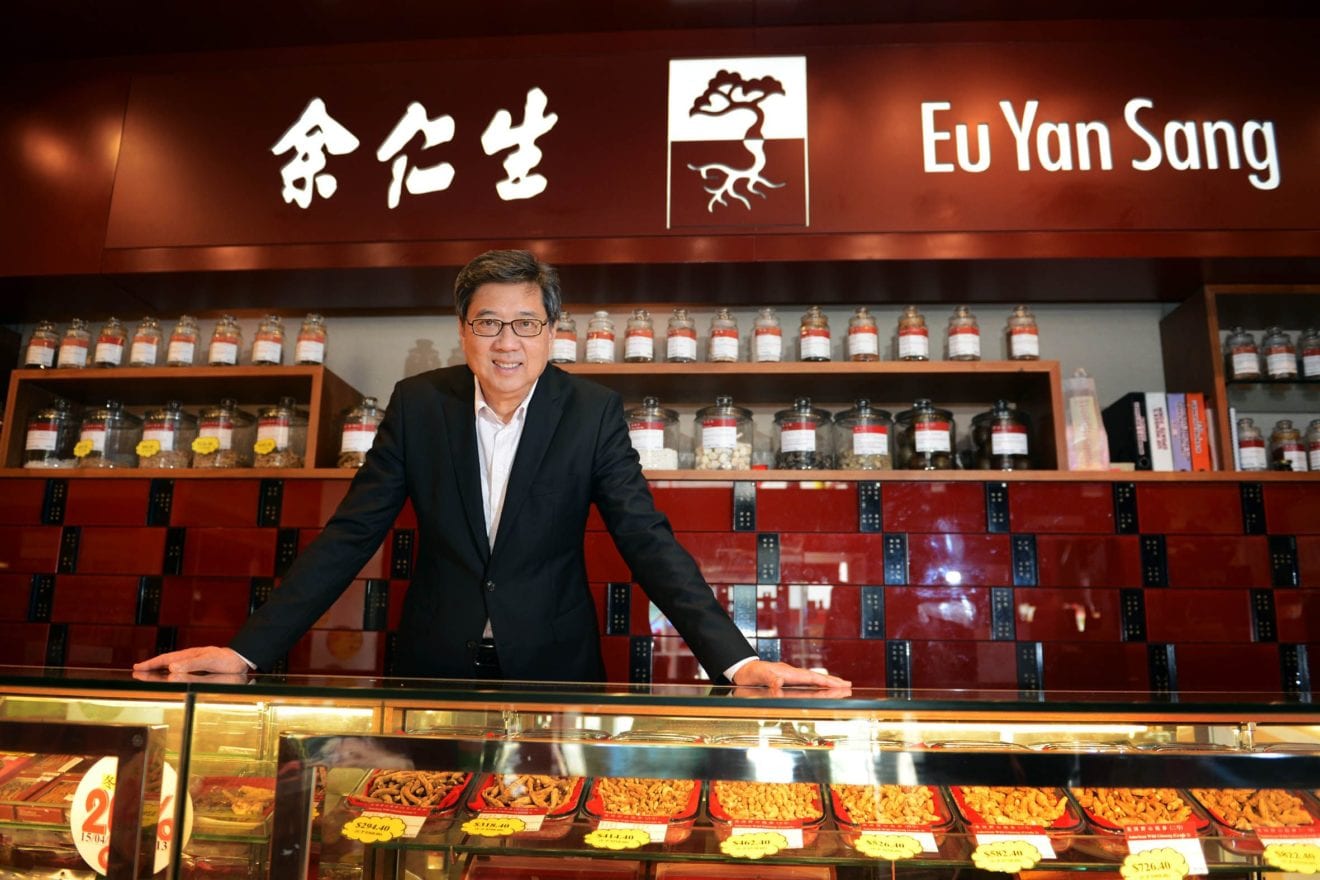
    Mainboard-listed Eu Yan Sang International said on Friday (Feb 12) its net profit for the second quarter plummeted 75 per cent, hurt by a weak Malaysian ringgit and lower revenue from the Hong Kong market.

    Net profit for the three months to Dec 31 was S$498,000, down from S$1.98 million in the same period a year ago.

    Revenue, however, was up 1 per cent at S$85.61 million, compared with S$84.69 million a year ago, mainly due to higher sales from Singapore and Australia.

    Revenue from Hong Kong declined 13 per cent in the quarter, due to a decline in spending by mainland Chinese tourists and the “ongoing challenging retail environment”, the company said. This was partially offset by the strong Hong Kong dollar, which helped to reduce the revenue decline to 5 per cent when translated to Singapore dollars.

    Revenue from Malaysia rose 14 per cent due to higher sales, but as a result of the weak ringgit, was down 8 per cent when translated into Singapore dollars.

    In Australia, revenue rose by 18 per cent due to an increase in the number of outlets and higher sales. However, the appreciation of the Singapore dollar against the Australian currency resulted in only an 8 per cent increment in revenue in Singapore dollars, Eu Yan Sang said.

    Revenue from Singapore improved by 13 per cent during the quarter, due to the launch of new products and promotional campaigns.

    “Despite the challenging business environments in key markets of Hong Kong and Malaysia, we are glad that Hong Kong’s rate of decline is showing signs of moderation and an improvement in Malaysia. Singapore and Australia have continued to show positive growth and added resilience to our Group’s results,” Group CEO Richard Eu said.

    The company plans to expand its retail network in Australia and Malaysia, and will also launch several joint ventures in China to boost its growth in the Chinese market, he added.

    Looking forward, Eu Yan Sang said it remains cautious on its business outlook. The company plans to reduce costs through the “rationalisation” of weak performing retail outlets, while continuing to improve its operational efficiency through technology, it said.

  • Starbucks COO Alstead takes leave from company

    Starbucks COO Alstead takes leave from company

    Starbucks Coffee Company chief operating officer Troy Alstead is taking an extended unpaid leave from the company.

    “Looking back on the 23 years we spent together side-by-side as Starbucks colleagues, I can recall so many memorable moments and accomplishments in which Troy can take pride in a job well done,” said Starbucks chairman, president and chief executive officer Howard Schultz.

    Lasted is a 23-year veteran of the company who also served for many years as the company’s chief financial officer, as well as leading the operations and development of Starbucks international business and its Europe, Middle East and Africa business unit.

    His last day in his current role will be 1 March 2015.

    “Troy is a beloved Starbucks partner and has played an invaluable role in our growth as an enterprise and in the development of our culture as a performance-driven company balanced with humanity, which is unique for our industry. Troy’s humanity and humility will be missed and we wish him the best,” Schultz added.