Tag: personal

  • Kimberly-Clark Braces for $170M Blow from Rising Oil Prices Amid Robust Personal Care Product Demand

    Kimberly-Clark Braces for $170M Blow from Rising Oil Prices Amid Robust Personal Care Product Demand

    Kimberly-Clark, the multinational personal care corporation, announced on Tuesday that sustained high oil prices could tally an additional US$170 million in expenses for the second half of the year. Despite the warning, the company maintained its annual forecast, citing steady demand for personal care products.

    Higher Oil Prices to Impact Input Costs

    Concerns about escalating oil prices have been reverberating throughout the consumer goods industry, particularly among Kimberly-Clark’s competitors such as Procter & Gamble. The ongoing conflict in the Middle East continues to push up the price of oil. The company’s CFO, Nelson Urdaneta, asserted that if oil prices remain at $100-per-barrel for the remainder of the year, the company could witness a surge in gross input cost inflation of between $150 million and $170 million. Urdaneta clarified that the forecasted potential impact is not yet included in the company’s current outlook. However, management is reportedly exploring ways to mitigate these potential losses.

    Additional Risks and Challenges

    The manufacturer of Huggies diapers also anticipates a $50 million loss in the second quarter due to a recent fire at one of their distribution centers in California. This is in addition to the already mounting costs related to the Middle East conflict.

    Despite facing a slowdown in demand and stringent competition, Kimberly-Clark has managed to stay on course to complete its $40 billion acquisition of Kenvue, the maker of Tylenol, in the latter half of 2026. Rising product sales and a wider array of affordable options have helped the company weather these challenges.

    Company Outlook

    Chief Marketing Strategist at Zacks Investment ​Management, Brian Mulberry, noted that Kimberly-Clark’s transformation, with its focus on value across its product tiers, places the company in a better position compared to its counterparts.

    The company anticipates its organic sales growth for fiscal 2026 to be in line with or slightly ahead of the average growth in the categories and markets it competes. In the past 12 months, these markets have grown at a rate of approximately 2.5 per cent. The company’s annual adjusted profit forecast remains unchanged.

    Following the announcement that Kimberly-Clark surpassed first-quarter sales estimates, its shares rose about 1 per cent. The corporation reported sales of $4.16 billion, exceeding the average analyst estimate of $4.09 billion. However, the quarterly adjusted profit declined to $1.60 per share from $1.62 a year ago, affected by price reductions and investments in product innovation.

    Questions & Answers

    What is the projected impact of sustained high oil prices on Kimberly-Clark’s expenses?
    The company estimates an additional $150 million to $170 million in costs for the second half of the year if oil prices remain at $100 per barrel.

    What other challenges is the company facing aside from high oil prices?
    Kimberly-Clark is dealing with a slowdown in demand, intense competition, and a $50 million loss due to a fire at a distribution center in California.

    What is the state of Kimberly-Clark’s sales growth and forecast?
    Kimberly-Clark expects its 2026 organic sales growth to align with or surpass the average growth in its competitive markets. The company’s annual adjusted profit forecast remains consistent.

  • Siri: The Underdog of AI Yet Surprisingly Handy – A Personal Journey

    Siri: The Underdog of AI Yet Surprisingly Handy – A Personal Journey

    I vividly recall the unveiling of the iPhone 4S. Being a high school senior at the time, it felt as if the future had arrived in the persona of Siri – a smart, virtual personal assistant that Apple had persuasively marketed as the dawn of a new era.

    While Siri was a groundbreaking introduction at the time, the first mainstream voice virtual assistant on a significant smartphone, it fell short of perfection. More than a decade has passed since then, with the development of more sophisticated and natural-sounding AI assistants that readily outperform Siri.

    Despite its limitations and the derision it often attracts, I’ve found myself unexpectedly impressed by Siri’s capabilities on several occasions. Here are a few instances where Siri demonstrated its value, despite being considered an underdog in the realm of voice assistants.

    Indispensable Music Companion

    One of my primary uses for Siri, apart from querying about the weather, is to identify currently playing tracks. This comes in handy when I’m driving, dining out, or streaming music from my own phone.

    While on the topic of music, I often command Siri to add songs to my favorites. This feature proves particularly convenient when I’m on a run and shuffling through my “Discover” playlist, as manually doing so can be cumbersome.

    Adjusting Specific Percentages

    Another surprising capability of Siri is its ability to adjust brightness and sound volume to a specific percentage. I’ve found this feature useful in scenarios where I’m unable to manually adjust these settings.

    Handy Utilities

    Despite being considered basic features, Siri’s ability to convert units and currencies, perform simple mathematical calculations, and set reminders has been surprisingly beneficial. I’ve also frequently used Siri as a dictionary and a tool to convert written content into a sort of podcast.

    One of the most useful features is Siri’s ability to remember where I’ve parked my car, especially in unfamiliar locations. Additionally, Siri’s capability to log details like weight and medication in the Apple Health app greatly simplifies the process.

    Future of Siri

    Apple is reported to be preparing one of Siri’s most significant upgrades ever, with a fully re-architected version in the works. This includes testing a chatbot system, Veritas, as the foundation for the revamped assistant.

    The new Siri will reportedly integrate more deeply with Apple Intelligence and include AI-driven “agents”, hinting at the evolution of Siri into a more personalized coach. There are also plans to allow third-party assistants to use the iPhone’s side button in certain regions, suggesting a shift towards a more flexible approach to voice assistants on the iPhone.

    If these upgrades materialize as expected, Siri could transition from being the underdog to a genuinely intelligent assistant in the coming year.

    Questions & Answers

    What are some surprising capabilities of Siri?
    Siri can identify currently playing tracks, add songs to a user’s favorites list, adjust brightness and sound volume to a specific percentage, convert units and currencies, perform mathematical calculations, set reminders, remember where a user has parked their car, and log details in the Apple Health app.

    What are the plans for Siri’s future?
    Apple is reportedly preparing a significant overhaul of Siri, including a fully re-architected version that incorporates a chatbot system, deeper integration with Apple Intelligence, and the introduction of AI-driven “agents”.

    Can Siri integrate with third-party assistants?
    Apple is testing a framework that allows third-party assistants to use the iPhone’s side button in certain regions, suggesting a move towards a more flexible approach to voice assistants on the iPhone.

  • Samsung Set to Shake Up Personal Finance: Barclays Partnership Brings Samsung Credit Card to Compete with Apple

    Samsung Set to Shake Up Personal Finance: Barclays Partnership Brings Samsung Credit Card to Compete with Apple

    Samsung is reportedly preparing to launch a Samsung-branded credit card in the United States, in a strategic collaboration with Barclays that will capitalize on Visa’s extensive global payment network.

    Samsung Eyes U.S. Financial Sphere

    Samsung is reportedly planning to broaden its financial services portfolio in the U.S. market. A partnership with the British banking giant, Barclays, would provide a solid foundation for both companies to further penetrate the U.S. market. For Samsung, this means fostering increased loyalty within its client base; for Barclays, it opens up opportunities for greater lending scope.

    The formal announcement of the partnership is expected by the end of the year, with Visa being selected to manage the payment network.

    If successful, the Samsung credit card is unlikely to be a singular venture. It has been suggested that the credit card could be the cornerstone of a more expansive financial product offering, potentially involving a high-yield savings account, a digital prepaid account, and even a buy-now, pay-later option.

    Samsung’s Bid to Emulate Apple’s Success

    With this move, Samsung is evidently looking to replicate Apple’s successful foray into the U.S. financial sector. Apple has already established a strong foothold in the country with the Apple Card and Apple Pay, while Samsung’s financial tools have yet to achieve similar success.

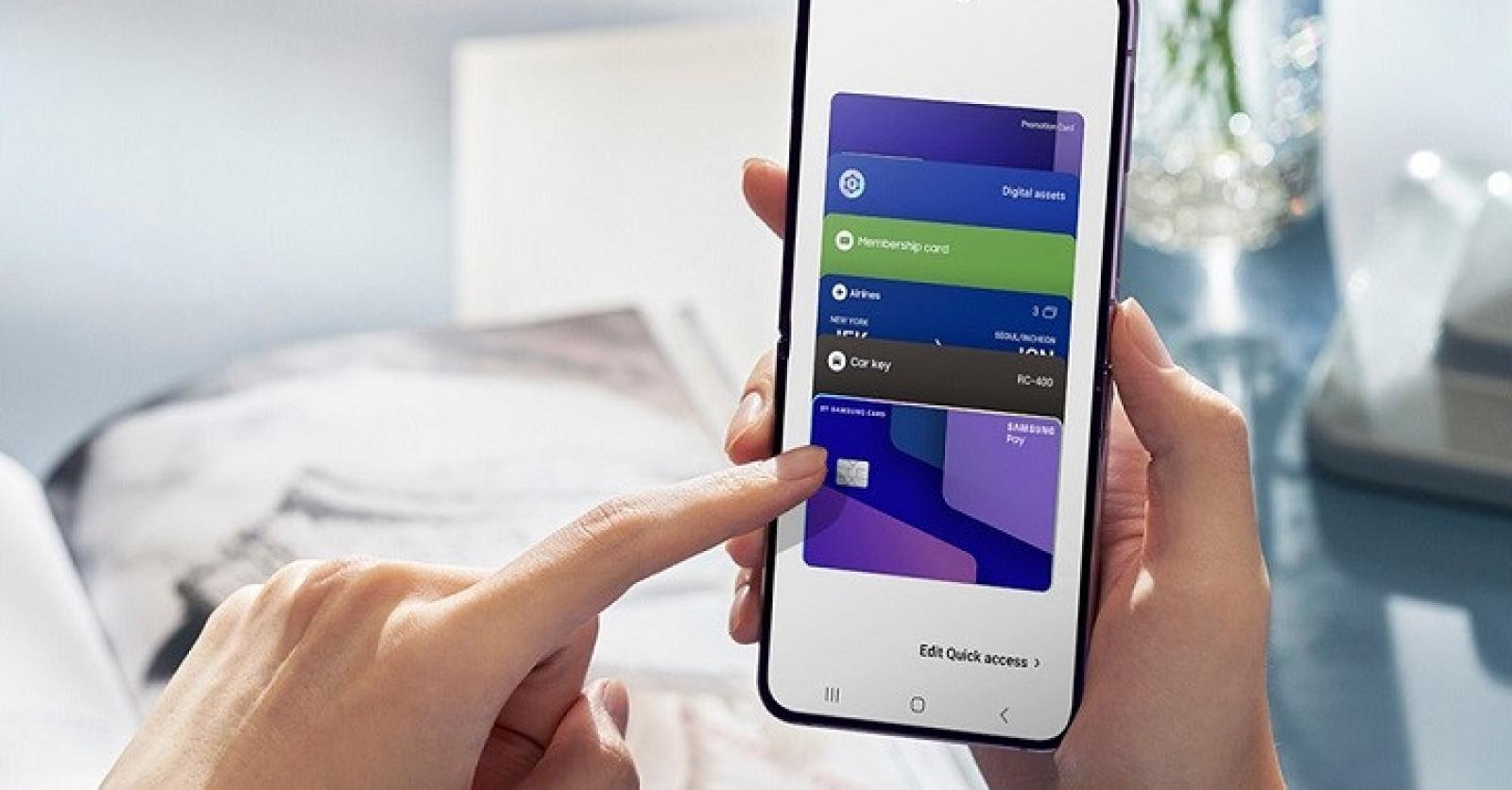
    Samsung anticipates that by launching its own credit card, it can further solidify its ecosystem through Samsung Wallet. The card could provide cashback rewards that are directly deposited into users’ Samsung accounts, offering them an easy way to finance future purchases. This setup is expected to encourage users to remain within Samsung’s ecosystem, regardless of whether they’re purchasing a new Galaxy phone, a TV, or even a smart refrigerator.

    This strategy reflects the approach taken by Apple back in 2019 when it launched the Apple Card, in cooperation with Goldman Sachs and Mastercard. The card, which offers cashback benefits and interest-free financing for Apple products, has been successful in substantial growth of Apple’s financial presence.

    Broadening Samsung’s Ecosystem

    Samsung and Apple have been longstanding competitors in the smartphone market, but as hardware advancements slow down, the focus of competition is shifting towards ecosystem services. Financial products such as the prospective credit card could enable Samsung to fortify its relationship with U.S. consumers, thereby enhancing the relevance of Samsung Wallet.

    If Samsung’s plans come to fruition, it could be a significant step into the realm of personal finance. It’s clear that the ongoing rivalry with Apple is evolving, moving from a battle over pocket space to a contest for wallet share.

    Questions & Answers

    What is Samsung’s projected strategy for the U.S. financial market?
    Samsung reportedly plans to launch a Samsung-branded credit card, in partnership with Barclays and utilizing Visa’s global payment network, with potential future offerings including a high-yield savings account and a digital prepaid account.

    What is the aim of Samsung’s credit card venture?
    Samsung hopes to enhance customer loyalty and keep users within its ecosystem by offering incentives such as cashback rewards which can be easily used for future purchases.

    How does this move reflect the changing competition between Samsung and Apple?
    As hardware development slows, competition is shifting to ecosystem services. Both companies are expanding into the financial sector, with Samsung’s credit card venture marking a new stage in its rivalry with Apple.

  • Revolutionize Your Fitness Journey with Fitbit’s Innovative AI-Powered Personal Health Coach

    Revolutionize Your Fitness Journey with Fitbit’s Innovative AI-Powered Personal Health Coach

    Fitbit Introduces Public Preview of Gemini-Powered Personal Health Coach

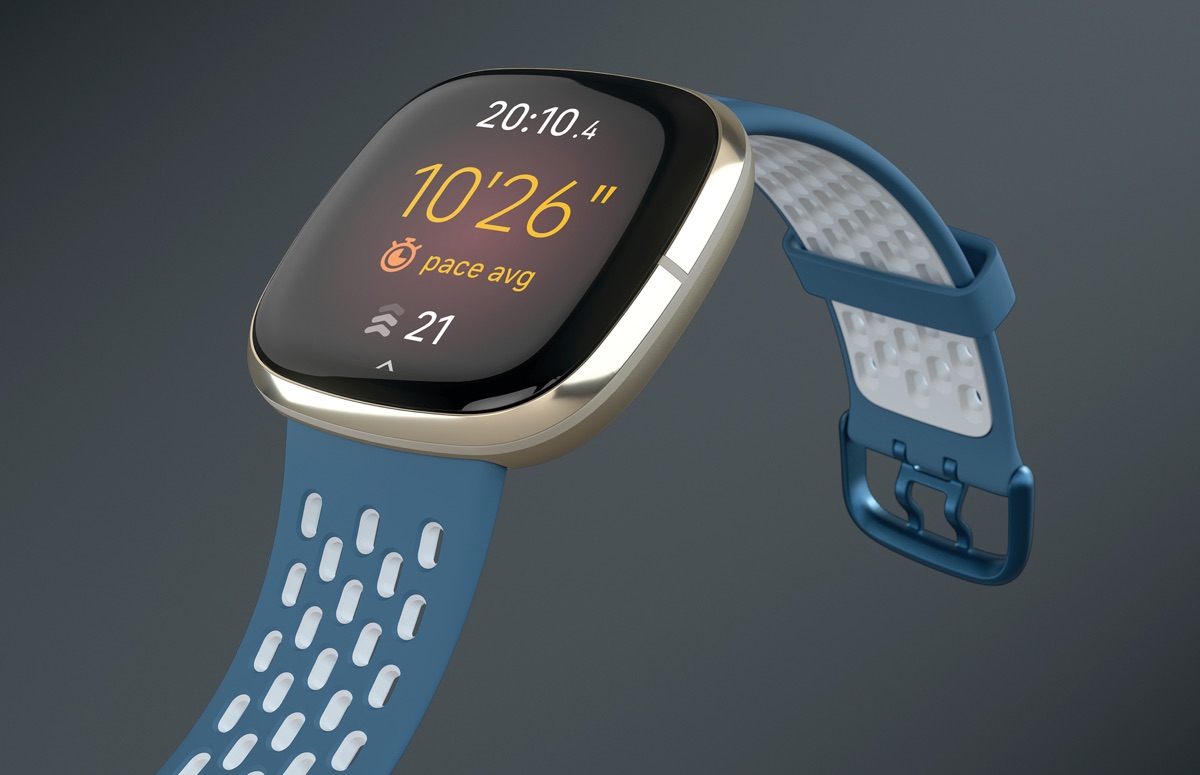
    The wearable device company, Fitbit, is unveiling a public preview of its new, Gemini-powered personalized health coach. This rollout serves as an intriguing introduction to the future of personalized fitness, and it will be available for eligible users to test from this week.

    The Launch of Fitbit’s AI-Powered Personal Coach

    Fitbit’s new artificial intelligence (AI)-powered coach, developed using Google’s Gemini technology, is set to revolutionize health and wellness practices. This AI coach is designed to function as a comprehensive fitness trainer, sleep counselor, and health advisor. Users can interact with the coach to establish goals or seek advice on their health-related queries. Examples of prompts that can be used include “Devise a 30-minute upper body workout I can do in my hotel room” or “Why did I wake up tired today?”. This AI can even assist you in framing questions for your next doctor’s consultation.

    However, it’s important to note that this AI coach is currently in its “preview” stage. It is being developed and modified based on active public feedback to improve its efficacy and user experience.

    Missing Features and Workarounds

    Since the AI coach is in its preview phase, it currently lacks some features that are standard in the traditional Fitbit app. Important elements such as health logging (including menstrual health, nutrition, and water logging), key metrics (the stress management score and cardio fitness score), and social features (friends, groups, leaderboards, and badges) are not included in the preview version.

    Recognizing these limitations, Google has designed a mechanism that allows users to switch between the new preview and the standard Fitbit app experience, providing the opportunity to test the AI coach while still being able to access the complete features of the traditional app.

    The Future of Health and Wellness

    This preview stands as a significant step towards Google’s grand vision of AI-driven health and wellness. The potential of a Gemini-powered coach to analyze user data and yield profound, actionable insights is phenomenal. Google emphasizes that the development of this AI coach is being conducted responsibly, backed by scientific evidence, and ensuring user data security and personalization. Early access for dedicated Premium users will enable them to test these potent features and provide valuable feedback.

    This development indicates the direction health and fitness technology is taking, with competitors such as Apple also rumored to be heading in a similar direction with their Health application. While it cannot replace professional medical advice or personalized gym training, this technology can assist in addressing quick health-related queries.

    The current version may be lacking some core features, but the objective of this preview is to provide a hands-on experience of the future of fitness technology, inviting users to be part of this exciting journey.

    Fitbit Premium users are encouraged to explore this new feature. Its easily toggled nature means users can try it with no downside. The updated experience will be available for Fitbit tracker and Pixel Watch owners, starting from October 28th.

    Questions & Answers

    What is the new Fitbit AI coach?
    The AI coach is a new personalized health guide developed by Fitbit, powered by Google’s Gemini technology. It acts as a fitness trainer, sleep counselor, and wellness advisor.

    What features are missing in the AI coach’s preview version?
    The preview version currently lacks certain features such as health logging (including menstrual health, nutrition, and water logging), key metrics, and social features.

    When will the updated experience be available?
    The updated experience will be available for Fitbit tracker and Pixel Watch owners from October 28th.

  • Old Spice Unveils Limited-edition Superman Collection In Collaboration With Dc

    Old Spice Unveils Limited-edition Superman Collection In Collaboration With Dc

    Old Spice, the renowned personal care brand, continues to expand its character-themed product line with the introduction of a limited-edition Superman collection. This new venture, developed in collaboration with DC, is a unique blend of pop culture and personal grooming products.

    Superman Collection: A New Scent for Heroes

    The Old Spice x Superman Collection features a brand new signature scent, Bright Citrus & Cosmos. This refreshing aroma is infused into a variety of products, including an aluminium-free deodorant stick, antiperspirant, body spray, and a two-in-one body and face wash to cater to all personal hygiene needs. There’s also a specially formulated shampoo, offering a complete set of Superman-themed grooming essentials.

    Continuing Collaboration with DC

    This latest product release signifies the ongoing partnership between Old Spice and DC. Prior to the Superman collection, Old Spice had already launched character-inspired personal care products based on Aquaman, with a signature scent of Fresh Ocean & Seastorm, and Batman, characterized by the scent of Black Cherry & Nightfall. This continuous collaboration demonstrates Old Spice’s innovative approach to creating themed personal care products that resonate with fans of these beloved characters.

    Availability and Pricing

    The Superman x Old Spice Collection is currently accessible to customers across major retailers in the US. The pricing for these superhero-inspired items starts at US$7.97, with prices varying depending on the retailer.

    Questions & Answers

    What is the signature scent of the Old Spice x Superman Collection?
    The signature scent of the Old Spice x Superman Collection is Bright Citrus & Cosmos.

    What products are included in the Old Spice x Superman Collection?
    The collection includes an aluminium-free deodorant stick, antiperspirant, body spray, body and face wash, and shampoo.

    What other character-themed personal care products has Old Spice released in collaboration with DC?
    Prior to the Superman collection, Old Spice and DC have jointly released character-inspired products based on Aquaman and Batman.

  • Over 100 million Americans had their personal data exposed

    Over 100 million Americans had their personal data exposed

    What we are going to tell you is something that is bound to get your mind thinking back about any embarrassing texts you might have written. Or whether you might have sent some personal information via text like your social security or credit card numbers, passwords or even PINs.

    The database belongs to an American outfit named TrueDialog. The latter provides “Enterprise-Grade SMS Texting Solutions.” The information available from the breached database not only includes tens of millions of texts from hundreds of millions of American users, but it also contained millions of usernames, passwords (some in cleartext, others encoded but easy to decrypt) and more. The report puts the blame for the data breach directly on TrueDialog for failing to protect the database. It also notes that discovering the identity of the database owner was not difficult. Over 100 million American citizens could be impacted by this data breach.

    The number of people affected by the breach is huge and the possibility that these texts could be read by bad actors is a very major deal; that puts companies like TrueDialog on the defensive. As vpnMentor notes, “Some affected parties deny the facts, disregarding our research or playing down its impact. So, we need to be thorough and make sure everything we find is correct and true. In this case, it was quite easy to identify TrueDialog as the database owner. Their host ID “api.truedialog.com” was found throughout. However, it was also clear that this was a huge data breach, compromising the privacy and security of over 100 million U.S. citizens across the country.”

    The database is hosted by Microsoft Azure and runs in the U.S. on the Oracle Marketing Cloud. It contains 1 billion entries adding up to 604GB of data. This data includes information about TrueDialog’s business, its business clients and the latter’s customers. All of this information could have been used by bad actors to steal identities and money from those with information exposed in the breach. Additionally, all of this data could have been sold to marketers and scammers. Knowing all of this information would make it easier for bad actors to engage in phishing schemes.

    Perhaps you have yet to understand the seriousness of this. Tens of millions of SMS messages that were sent via TrueDialog were leaked revealing the full names of message recipients, account holders and users of TrueDialog’s services. But even worse, the content of messages, email addresses, and recipients’ phone numbers were viewable along with the date and time that these messages were sent.

    TrueDialog itself could face a negative backlash because of this leak. The company’s reputation will take a hit and companies that pay it for providing leads will stop doing business with it if they fear that those leads will get leaked for free. And the amazing thing is that vpnMentor was able to discover the breach because the database was not only unsecured, it also was unencrypted. TrueDialog has been in business for ten years, says vpnMentor, works with more than 990 cellphone operators and reaches 5 billion subscribers globally.

    The date that vpnMentor discovered that the database was leaked was on November 26th. Two days later, it spoke with TrueDialog to report its findings while also offering to help it in the aftermath of the discovery. On November 29th, TrueDialog closed the database but never did get in touch with vpnMentor. While the database is now closed, it isn’t known whether any information that was exposed was stolen by a scammer, spammer, bad actor, or hacker.

  • Global personal luxury goods market growth endures

    Global personal luxury goods market growth endures

    Global personal luxury goods market growth has reached a “new normal” pattern, following back-to-back years of strong performance in 2017 and 2018, according to the luxury goods industry advisory service Bain & Company.

    Last year, 6 per cent global growth* led to €260 billion (US$292 billion) in sales, which is expected to balloon to €271–276 billion ($304.3–310 billion) this year, registering an expected 4-per-cent to 6-per-cent growth at constant exchange rates.

    According to Bain, the growth has been driven primarily by the acceleration in domestic spending of mainland Chinese consumers and an increase in European tourism, which, despite socio-political turmoil in countries like the UK and France, fuelled positive growth in the region through last year’s holiday season.

    Meanwhile a temporary weakening of consumer confidence in North America, as well as a decrease in traffic to malls and department stores, negatively impacted personal luxury spending during last year’s holidays stateside.

    The findings were part of the Bain Luxury Goods Worldwide Market Study, Spring 2019 presented this week in collaboration with Fondazione Altagamma, the Italian luxury goods manufacturers’ industry foundation.

    “This year looks to be on par with our new normal of growth in the market,” said Bain & Company partner and lead author of the study Claudia D’Arpizio. “China continues to dominate the luxury scene. Elsewhere we are continuing to see geopolitical uncertainty shape and reshape tourism spending patterns, with Chinese consumers choosing to spend domestically with more frequency. Overall we are seeing moderate growth in most markets.”

    The report showed that mainland Chinese consumers are demonstrating a strong preference for purchasing luxury goods at home thanks to price harmonisation, consumer-centered strategies, and governmental initiatives. Solid consumer confidence and willingness to buy, especially among young generations, are expected to drive year-over-year growth of 18–20 per cent* in the region.

    Japan remains an exclusive and attractive market for luxury brands, with forecasted growth of 2–4 percent* in 2019. Tourist spending is expected to rise ahead of the Tokyo Olympics in 2020, with Chinese consumers already confirming their interest in the area.

    Across the rest of Asia the outlook is positive, apart from Hong Kong and Macau, which continue to lose out to Mainland China. Bain & Company asserts that the luxury market in the region is set to grow by 10–12 percent*. An expanding middle class with increasing disposable income is fueling growth in Indonesia, Philippines and Vietnam, while sustained growth in South Korea is the result of local consumers and a mild rebound of tourism.

    The rest of the world is expected to be flat or see a slight decrease of 2 per cent*, with the Middle East remaining stagnant as domestic consumer spending begins to flow outside of the region.

    “We expect stable growth in 2019,” said D’Arpizio.  “But under the surface of this new normal, the future of luxury is taking shape with a number of key characteristics, including Chinese Generation Z, access, ownership, sustainability and social responsibility, the impact of digital across the entire value chain, preference for luxury experiences over products, and consumer networks as a new measure of value.”

  • Uniqlo shoppers Details Leaked Online

    Uniqlo shoppers Details Leaked Online

    Uniqlo parent Fast Retailing announced hackers may have gained access to personal information of 461,091 accounts registered on the company’s Japanese shopping websites.

    The retailer said in a statement Monday the hackers may have accessed customers’ personal information, purchase history and partial credit card numbers of some of the users of its Uniqlo Japan and GU Japan online stores from April 23 to May 10 by means of list type account hacking.

    List type account hacking is when user IDs and passwords are potentially leaked from other services or sites.

    The company said it is still investigating the breach and added the number of incidents and circumstances may change during the course of the investigation.

    In the meantime, the Japanese retailer advised its online store’s customers, the number of which the company has not disclosed, to use unique passwords and to avoid using passwords used from other websites to lower the chances of hackers accessing their accounts.

    “Fast Retailing sincerely apologizes for the trouble and concern this has caused to its customers and all others involved,” the company said.

    “Going forward, the company will further strengthen its security measures and take steps to ensure safety, in order to prevent similar incidents in the future.”

    The retailer said information that was potentially accessed includes:

    • Customer name (last name and first name)
    • The customer address (postal code, address, and apartment number)
    • Customer phone number, mobile phone number, email address, gender, date of birth, purchase history, and clothing measurements
    • Receiver name (last name and first name), address, and phone number
    • Customer partial credit card information (cardholder name, expiration date, and a portion of credit card number). The credit card numbers potentially accessed are hidden, other than the first four and last four digits. In addition, the CVV number (credit card security code) is not displayed or stored.

    In its announcement, Fast Retailing said it has identified the origin of the communication from which the unauthorized logins were attempted and has blocked access. The company added it is strengthening monitoring of other access points.

    The Japanese retailer said it has already disabled the passwords for the 461,091 user IDs that were compromised and is sending individual e-mails to each person affected, requesting that they reset their password.

    Fast Retailing has also filed a report of damages regarding the unauthorized logins with the Tokyo Metropolitan Police.

    Online sales made up 9.9 percent of Uniqlo sales in Japan and 20 percent in China in the company’s first-half report. The company said overall online sales rose 30.3 percent in that report.

  • New Google Feature will Automatically Delete your Personal Data

    New Google Feature will Automatically Delete your Personal Data

    It isn’t a secret that Google tracks your location, activities and web usage through your phone. By allowing the company to monitor your Location History, Google can recommend a nearby restaurant, and allowing the company access to your personal data makes other Google apps more useful to you. At least that is what Google says. There already is a way for you to manage this information, but in a new blog post that Google published today, the company said that it has received feedback from users who want an easier way to manage or delete their personal data.

    You can already manage this data using your Google Account. On an Android phone, go to Settings > Accounts > your Gmail address > Google Account > Manage your data & personalization. From there you can opt-out of Web & App Activity, Location History, Voice & Audio Activity, Device Information and YouTube Search History. Click on the section titled Manage your activity controls to stop Google from tracking your use of Chrome and other apps.

    But the auto-delete tools that Google announced today will allow you to select how long you want Google to save your personal data. You can choose to save it for 3 months, 18 months, or until you manually delete it. If you pick 3 months or 18 months, any data older than the option you select will automatically be deleted on an ongoing basis.

    “Whether you’re looking for the latest news or the quickest driving route, we aim to make our products helpful for everyone. And when you turn on settings like Location History or Web & App Activity, the data can make Google products more useful for you—like recommending a restaurant that you might enjoy, or helping you pick up where you left off on a previous search. We work to keep your data private and secure, and we’ve heard your feedback that we need to provide simpler ways for you to manage or delete it.”-Google

    This new feature will first be made available for Location History and Web & App Activity and Google will start pushing it out in a few weeks.

  • KoinWorks Indonesia Announces Investment From Quona Capital

    KoinWorks Indonesia Announces Investment From Quona Capital

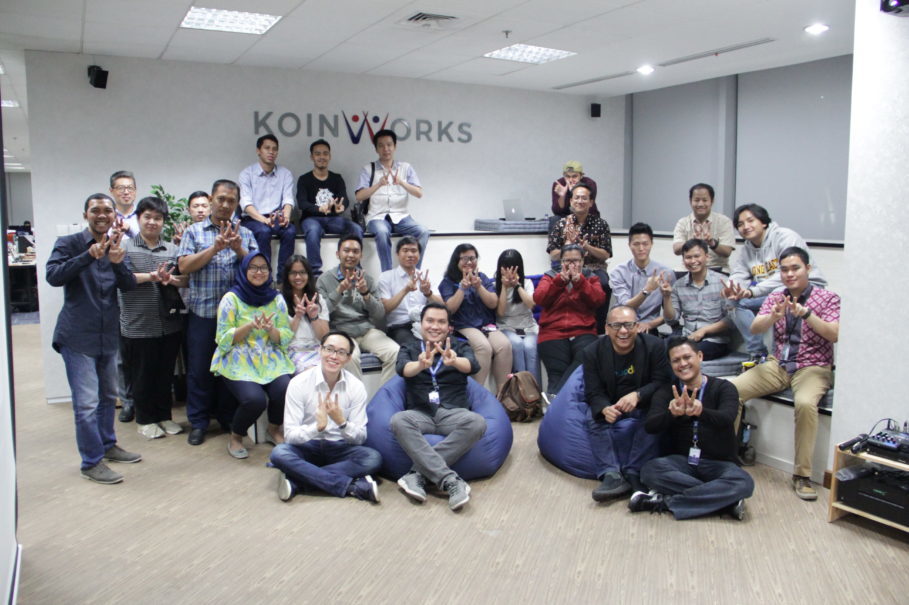
    Indonesian peer-to-peer lending platform KoinWorks said in a statement on Monday that it has received an investment from US-based venture capital firm Quona Capital. “We’re very happy we could collaborate with Quona as one of our investors,” said Benedicto Haryono, chief executive and co-founder of KoinWorks. “With the inclusion of Quona among our line of investors, it will further help develop KoinWorks in becoming a responsible peer-to-peer lending firm and continue to innovate and provide a positive impact for society,” Benedicto added.

    Quona Capital focuses on investment in financial technology companies it deems to have potential in facilitating access to financial products. The Washington-based company provides financial access in various regions, including Latin America, Africa, Britain and Asia.

    KoinWorks said in the statement that the collaboration between itself and Quona Capital is based on a mutual understanding that technology has a strong role in improving quality and access to financial access for those beyond the reach of traditional banks.

    The Jakarta-based fintech company, which has 100,000 investors on its platform, is one of the first fintech companies in the country to have obtained a license from the Financial Services Authority (OJK).

    KoinWorks bridges the gap between investors and investees through its online platform and provides unbanked individuals with access to financial services.

    The company focuses on business and educational loans. It won Bisnis Indonesia’s Most Innovative Fintech of the Year award in 2017.

  • APEJ consumers more wary of sharing personal data

    APEJ consumers more wary of sharing personal data

    Almost four in five (78%) of consumers in the APEJ region will not choose to purchase from a brand again if their data had been used without knowledge, according to the latest SAP Hybris Consumer Insight survey

    Despite that fact that more than 83% of respondents are willing to share at least some form of personal information with brands, APEJ consumers (67%) expect brands to protect their interest when using their personal data.

    Consumers also want transparency in data usage (52%) and want brands to ensure customer privacy in the event of criminal investigations (47%).

    Nicholas Kontopoulos, Global Vice President of Fast Growth Markets Marketing at SAP Hybris, said APAC accounts for half of the world’s total 3.6 billion internet users and the fastest growing region, accounting for 70 percent of total growth in global internet users in 2016.

    “This rapid growth of the internet, mobile phones, and other digital technologies has created opportunities and challenges for millions of consumers and brands in the region,” he said.

    The SAP Hybris survey found that APAC consumers are most comfortable with sharing the email addresses (58%), shopping history and preferences (49%), and mobile numbers (36%) with brands. However, while these allow brands to create personalized customer experience for the consumers, usage of consumer data has to be approached with extra caution.

    APAC consumers also have higher expectations. Over 80% of respondents in APAC indicated that they expect brands to respond to their queries within 24 hours, and 56% expect responses within three hours, setting that as the baseline expectations on the speed of response.

    Thailand and China are the most demanding markets in the region, with almost 1 in 2 (48%) expecting brands to respond to their queries within the hour. More than half (56%) of consumers from these two countries also indicated that there will not use of brand again if it makes a mistake twice.

    “With customer expectations higher than ever due with digitization, the pressure is on for marketers to keep up with tech-savvy, always-on consumers—or risk getting trampled by the competition,” Kontopoulos said.

    “In addition to speed and timeliness, relevance and personalisation of content served to consumers have also become key measures of success for brands attempting to connect with customers.”

  • China’s personal shoppers are cashing in

    China’s personal shoppers are cashing in

    Julie Li is laden with Harrods carrier bags full of cosmetics, but they are not hers; the 30-year-old finance graduate from Beijing is a fulltime freelance retail consultant, something known in China as a daigou.

    “I worked as a daigou alongside my day job for about three years, but six months ago, I decided to quit my job to fully concentrate on the business because the profit margin is lucrative and the hours are more flexible,” said Li, who asked to be known by a pseudonym.

    Dressed in a fashionable white Reiss dress and holding a light color Chanel leather handbag, Li is glued to her smartphone. She is using the messaging app Wechat to communicate with clients in China who are willing to pay a premium for authentic luxury goods that are usually relatively cheaper than they are in China.

    Having developed three major wholesale clients, each with around 300 customers, Li buys 10,000 pounds’ worth of top-end lipsticks on behalf of clients every day.

    “The weak pound after Brexit is also giving a boost to my business and sales have doubled in recent months,” Li said.

    Charging 5 percent of the retail price and handling large quantities on a daily basis, she is able to pocket as much as 20,000 pounds in commission during a good month.

    “My clients are usually middle-incomers in China who have a strong appetite for high-quality products,” she said. “I believe the quality standards, the product ranges and the cheaper prices are the main reasons why Chinese consumers look to the West.”

    Li said a high-end daigou has to know about products, prices, colors, range, and availability.

    Experts say the agents have challenges because customers need to be convinced the goods they receive are genuine and that suppliers are reliable.

    “An important issue is the uncertainty faced by consumers who wonder whether products are genuine because, the higher the demand for a product, the more there is a chance it will be a fake or an adulterated product,” said Pervez Ghauri, professor of international business at Birmingham Business School.

    The buyers are mainly from the Chinese mainland and specialize in helping customers in China buy luxury products, including bags and cosmetics, as well as health supplements, such as baby milk formula.

    Business has boomed in recent years, accounting for RMB 34 billion to RMB 50 billion ($5 billion to $7.4 billion) in global sales last year, according to a report from consultants Bain & Company.

    In 2008, the baby milk scandal, in which Chinese milk and infant formula was contaminated with melamine, led to many Chinese parents shopping overseas for milk formula. At the height of the boom in demand for milk formula, retailers in the UK rationed the sale of powdered baby milk to ensure availability for domestic parents.

    Observers note that safety standards are one of the reasons why some Chinese consumers buy Western products.

    Geoffrey Wood, dean of the Essex Business School, said many Chinese consumers believe Western countries have more rigorous production standards, and the will to enforce rules ensuring quality.

    Seizing the opportunity presented by the baby milk scandal, 29-year-old Jimmy Zhen-not his real name-began buying milk powder for his Chinese customers in 2009 while working a fulltime job.

    “In the beginning, I only shopped for family and friends who knew I was abroad and felt the authenticity of the products was assured. Through word of mouth, I developed a large customer base, and built trust with my clients,” he said. After demand rose, he became a fulltime shopper in 2011.

    A restriction brought in by the UK government in 2013 to cap the sales of milk formula at two cans per customer stacked the deck against Zhen’s business, but he managed to find a way out by paying students 50 pence above the retail price for every can they sold him. He currently ships more than 8,000 tins each month.

    Earlier this year, the Chinese authorities tightened regulations around cross-border online shopping. Commentators say the changes, to Chinese customs regulations and ecommerce has dented the daigou’s trade, but Zhen has adjusted by shipping four cans at a time instead of six. It ensures he avoids paying import tax.

    Daigou shoppers admit their industry exists in a grey zone legally and is likely to be short-lived, but Li is cashing in for as long as she is able.