Retail News CRM

Tag: personalized

  • Boost in Personalized E-Commerce Experience Demanded by Savvy Singapore Shoppers

    Boost in Personalized E-Commerce Experience Demanded by Savvy Singapore Shoppers

    Singaporean consumers are increasingly expecting more from their online shopping experiences, favoring personalised and relevant product discovery over novelty. This finding is according to a recent report called the Spark of Discovery 2026.

    Efficiency and Personalisation

    The study shared that Singaporeans are progressively seeking out efficient, customised experiences. Nearly half of the respondents (43%) stated that a swifter, more streamlined shopping process would be the most valuable improvement that retailers could offer them.

    In addition, the survey indicated that 63% of surveyed participants still find enjoyment crucial in online shopping, 62% prefer to stick with planned purchases, and 60% remain open to discovering new items. These data points signify a more purposeful approach to online browsing and purchasing.

    Trust Over Influence

    Trust is more important than influence when it comes to online shopping. Only 28% of Singaporean consumers admitted that content from influencers generates excitement about brands, which falls below the Asia-Pacific average of 34%. Meanwhile, positive reviews and readily accessible customer support emerged as the strongest factors driving engagement.

    Singapore is seen as a key indicator of the direction in which e-commerce in the Asia-Pacific region is moving, according to Sukesh Singh, MD, SEA at Criteo. Singh goes on to explain: “Consumers here are highly digitally literate; they know exactly what a great shopping experience looks like, and they have no patience for anything less. They want discovery to find them at the right moment, not interrupt them at the wrong one.”

    Artificial Intelligence and Personalisation

    These findings have emerged as retailers are boosting investments in artificial intelligence to enhance personalisation. Over half of the respondents declared that they are comfortable with brands leveraging their purchase history to provide customised recommendations, while 44% noted that timely and relevant advertisements enhance the shopping experience.

    On the retailer side, the report found that a vast majority (92%) plan on utilising AI to improve customer experiences, while 91% intend to employ it to make product discovery more efficient. These figures suggest that retailers are increasingly shifting their focus towards data-driven targeting as opposed to broad-reaching campaigns.

    The report also underscored the significant influence of shopping festivals on Singapore consumers, with 85% stating that they are swayed by such events. This reinforces the importance of providing pertinent recommendations during peak spending periods.

    Questions & Answers

    What value do Singaporean consumers see in online shopping experiences?
    Efficiency and personalisation are highly valued by Singaporean consumers in their online shopping experiences. A streamlined, less time-consuming shopping process is seen as the most valuable improvement that retailers could offer.

    How important is trust for Singaporean consumers when shopping online?
    Trust is crucial for Singaporean consumers when shopping online. Positive reviews and accessible customer support are among the strongest factors driving engagement.

    How are retailers responding to the demand for personalised experiences?
    Retailers are increasingly investing in artificial intelligence to enhance personalisation. They plan to utilise AI to improve customer experiences and make product discovery more efficient.

  • Experience Personalized Skincare Revolution at Laneige’s New Flagship Store in Seoul

    Experience Personalized Skincare Revolution at Laneige’s New Flagship Store in Seoul

    Korean beauty giant Laneige has recently unveiled its first worldwide flagship store, located in the heart of Seoul’s Myeongdong district. This landmark opening underscores the increasing significance of technology and personalization in the retail beauty industry.

    The newly reimagined store, Laneige Seoul, comes after an 18-month redesign process. It is a fusion of retail space, beauty services, and on-demand manufacturing, all housed under one roof. The central theme of the store is to provide a tailored beauty experience. Customers can create customized skincare, complexion, and lip products with the help of AI-powered diagnostics and advanced in-store production technology.

    A Unique Shopping Experience

    The president of the Laneige brand, Pilkyung Choi, emphasized that the new Laneige Seoul is more than just a store. According to Choi, it embodies the future of beauty, technology, and design. Each visit to the store will offer a unique experience, and every product purchased will be exclusively personalized.

    Among the store’s product offerings is an exclusive version of Laneige’s Lip Sleeping Mask. This allows customers to select from ten fragrances that can be combined to create 45 different scent combinations. Additionally, the store also presents a Neo Cushion service that is made-to-order. The foundation is color-matched to the customer’s skin tone from a selection of 150 shades and is manufactured on site using robotic technology.

    In terms of skincare, customers are provided with an AI-based skin analysis. Based on the results, they are then matched with a personalized version of Laneige’s Cream Skin toner. This product is mixed in-store using one of 25 formulations and is typically ready within about 20 minutes.

    Laneige Brand and Its Offering

    Founded in 1994, Laneige is a part of the Amorepacific family. The brand has gained recognition for its hydration-focused skincare offerings, including the popular Laneige Lip Sleeping Mask and Laneige Water Sleeping Mask.

    In 2024, Laneige appointed global pop icon and BTS member Jin as its brand ambassador.

    Questions & Answers

    What is the central theme of the new Laneige Seoul store?
    The central theme of the store is to provide consumers with a customized beauty experience through AI-powered diagnostics and advanced in-store production technology.

    What kind of personalized products can customers create at the Laneige Seoul store?
    Customers can create personalized skincare, complexion, and lip products. They can also have foundation that is color-matched from a selection of 150 shades.

    What is unique about the Laneige’s Lip Sleeping Mask at the Laneige Seoul store?
    Customers can select from ten fragrances that can be combined to create 45 unique scent combinations.

  • Guardian Unveils Enhanced Flagship Store in Marina Bay Sands: A New Era for Personalized Health & Beauty Shopping

    Guardian Unveils Enhanced Flagship Store in Marina Bay Sands: A New Era for Personalized Health & Beauty Shopping

    Guardian, a prominent health and beauty retailer, has recently unveiled its revamped flagship store situated at The Shoppes at Marina Bay Sands in Singapore.

    Revamp Aims at Personalised Shopping Experience

    The new alterations are aimed at delivering a more personalised shopping experience. This is achieved by amalgamating health, beauty, and personal care products under a single roof.

    Five Wellness-Led Zones

    The renovated store introduces five distinct wellness-led zones: Health and Wellness, Derma Skincare, Men’s, Trial and Travel, and Guardian’s Pick. These zones are strategically designed and curated to cater to a variety of customer’s wellness and beauty needs effectively.

    On-Site Pharmacy Services

    In addition, the store includes on-site pharmacy services, a novel feature that not only provides preventive care but also offers consultations and wellness advice to customers. This service further enhances the customer shopping experience, delivering more than just purchases.

    Future Plans

    Guardian has stated its intention to gradually implement this new store format across numerous locations in the future. As a forward-thinking retailer, Guardian aims to stay ahead of the curve and consistently deliver a personalised, seamless, and comprehensive shopping experience for its customers.

    Questions & Answers

    What is the objective of Guardian’s flagship store revamp?
    The objective is to deliver a more personalised shopping experience by integrating health, beauty, and personal care products in one location.

    What are the five wellness-led zones introduced at Guardian’s flagship store?
    The five distinct wellness-led zones are Health and Wellness, Derma Skincare, Men’s, Trial and Travel, and Guardian’s Pick.

    What services does the on-site pharmacy at Guardian’s flagship store provide?
    The on-site pharmacy at Guardian’s flagship store offers preventive care, consultations, and wellness advice to its customers.

  • Hyundai Duty Free Unveils AI-Driven Personalized Beauty Hub in Seoul: A New Era of Cosmetics Shopping

    Hyundai Duty Free Unveils AI-Driven Personalized Beauty Hub in Seoul: A New Era of Cosmetics Shopping

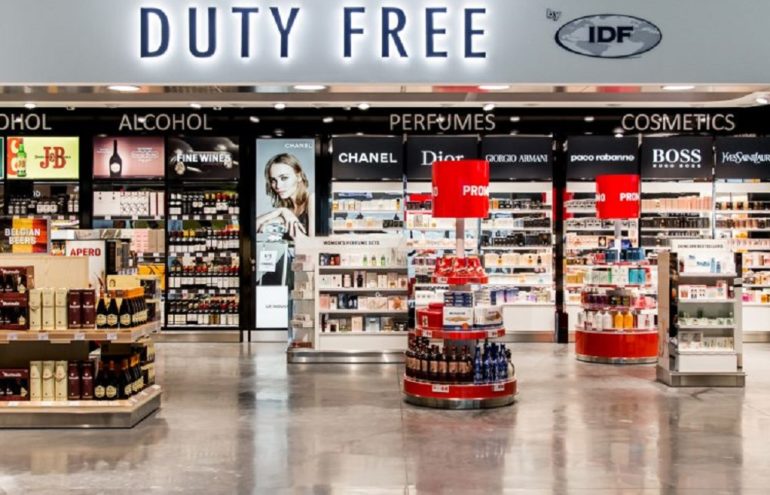
    Hyundai Duty Free recently announced the launch of an artificial intelligence (AI) powered beauty analysis zone at its Trade Centre location in Seoul, South Korea. The innovative space, known as ‘AI Beauty Trip’, offers customers unique, personalized skincare and makeup advice through cutting-edge digital tools.

    AI Beauty Trip: A Personalized Beauty Experience

    Situated on the ninth floor of the Trade Centre, the AI Beauty Trip will be operational until April 15th. The zone features two AI-powered devices that provide a sophisticated level of personalization for customers.

    The ‘Makeup AI’ device, a standing unit, uses photo imaging technology to analyze a patron’s facial structure, proportions, and individual color tones. Its counterpart, the ‘Skin Pro AI’, is a mirror-style device designed to evaluate skin conditions. It assesses factors such as pore size, oil levels, wrinkles, and signs of skin aging.

    After customers have undergone these detailed assessments, they can access a comprehensive diagnostic report and tailored product suggestions by scanning a QR code displayed on the screen.

    Participating Brands and Incentives

    Hyundai Duty Free has confirmed that 36 beauty brands participating in the store are integrated with this system. This means that customers have access to information on approximately 800 distinct products, helping to generate highly personalized product suggestions.

    In addition, customers spending at least US$50 on beauty products from participating brands at the Trade Centre store will receive a prepaid gift card worth 10,000 won. This gift card can be used immediately, offering an extra incentive for customers to engage with the AI Beauty Trip experience.

    Technology and Retail: A Perfect Blend

    This latest initiative from Hyundai Duty Free highlights the retailer’s commitment to integrating advanced technology with traditional in-store shopping experiences. As competition within the duty-free retail sector intensifies, and consumer preferences continue to evolve, such innovative approaches aim to boost customer engagement and satisfaction levels.

    Questions & Answers

    What is the ‘AI Beauty Trip’ initiative?
    The ‘AI Beauty Trip’ is an AI-powered beauty analysis zone at Hyundai Duty Free’s Trade Centre store in Seoul. It offers customers personalized skincare and makeup advice through innovative digital tools.

    What are the ‘Makeup AI’ and ‘Skin Pro AI’ devices?
    The ‘Makeup AI’ is a stand-type device that uses photo imaging technology to analyze facial structure, proportions, and color tones. The ‘Skin Pro AI’ is a mirror-style device that evaluates skin conditions such as pore size, oil levels, wrinkles, and signs of aging.

    What incentive does Hyundai Duty Free offer customers who engage with the AI Beauty Trip experience?
    Customers spending at least US$50 on beauty products from participating brands at the Trade Centre store will receive a prepaid gift card worth 10,000 won. This gift card can be used immediately.

  • Revolutionize Your Viewing: YouTube Tests AI Chatbot for Personalized Home Feed Customization

    Revolutionize Your Viewing: YouTube Tests AI Chatbot for Personalized Home Feed Customization

    YouTube is in the process of testing an Artificial Intelligence (AI) chatbot aimed at enhancing your home feed to better align with your video preferences. This development seeks to address the limitations currently presented by the platform’s algorithm, allowing you a greater degree of control over your feed.

    Algorithm Limitations and the Role of AI

    Your YouTube home feed is largely shaped by the platform’s algorithm. This algorithm works by continuously monitoring your viewing habits, the content you have previously liked or disliked, and the YouTube channels you follow. Despite its effectiveness, this system has its flaws as it can lead to an over-saturated feed based on a fleeting interest.

    For instance, viewing a few Marvel-related videos may lead the algorithm to categorize you as a die-hard Marvel fan and subsequently fill your home feed with Marvel content. YouTube is acknowledging this limitation and is experimenting with an AI chatbot that allows you to specify the type of content you wish to view.

    Introducing Your Custom Feed

    YouTube is testing a new feature, “Your Custom Feed,” which allows you to customize your home feed. Users involved in the experiment will find this feature on their home page. This feature allows you to update your feed recommendations based on simple prompts. This innovation is intended to provide an easy means of exerting greater control over your suggested content.

    Accessing the AI chatbot is as simple as tapping “Your Custom Feed” next to the Home option on your YouTube main page. You can then enter a prompt detailing the type of videos you wish to see on your home feed. This change will reset your current YouTube home feed to better reflect your stated preference.

    AI and Custom Feed

    YouTube is not alone in utilizing AI to help users customize their feeds. Platforms are increasingly using AI chatbots or manual topic selection to tailor content to users’ preferences, providing more control over content than relying solely on algorithms.

    However, it is worth noting that as technology giants like Google begin to integrate AI tools into their products, they are likely to use the data shared with these chatbots to train their AI models. This data-sharing means users may inadvertently become a source for training AI systems.

    Respecting User Preferences

    While some users may appreciate the more personalized feed offered by AI technologies, others may prefer to browse un-curated content. It is hoped that should this feature become widely available, Google will allow users to opt-out, respecting the preferences of users who do not wish to have their viewing habits learned by AI.

    Other User-Controlled Features

    YouTube has been taking steps to give users more control over their feeds. For instance, there is the “Customize Your Feed” option that occasionally appears on the home feed, which asks users to select their preferred types of videos. YouTube also frequently asks if you like a particular post or video to determine if it should show you similar content in your feed.

    In addition, YouTube introduced an option to remove pop-ups such as “subscribe to the channel” or “watch another video” that appear at the end of a video. These innovations suggest that YouTube is committed to refining the user experience on its platform.

    Questions & Answers

    What is YouTube doing to improve the user experience?
    YouTube is experimenting with an AI chatbot that allows users to customize their home feed. This gives users more control over their feed, addressing limitations of the platform’s algorithm.

    How can users interact with the AI chatbot?
    Users can interact with the chatbot by tapping the “Your Custom Feed” feature found on their home page. They can then enter a prompt detailing the type of videos they wish to see on their home feed.

    What if users do not wish to have AI learn their viewing habits?
    YouTube hopes to respect the preferences of all users. Should the AI feature become widely available, it is anticipated that users who do not wish to have AI learn their viewing habits will have the option to disable the feature.

  • Unlock Personalized Deals and Tailored Ads with Google Wallet’s Latest Update: Here’s How

    Unlock Personalized Deals and Tailored Ads with Google Wallet’s Latest Update: Here’s How

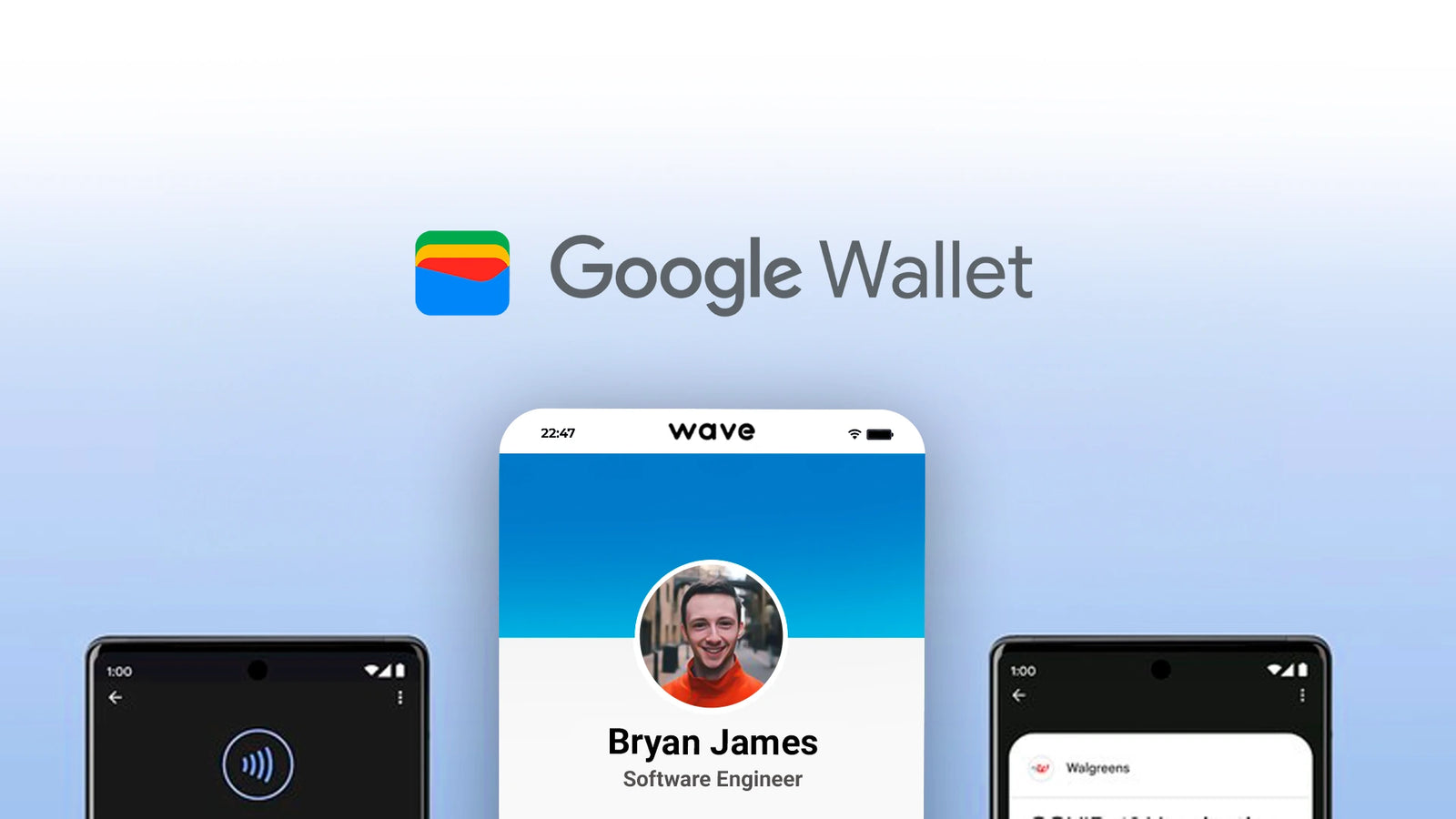
    Google has been improving its Google Wallet app, making it a convenient hub for Android users to digitally store items such as credit and debit cards, passports, tickets, and transit passes. Despite these features, Google Wallet may not be as frequently used as other Google apps, such as YouTube, Messages, Keep, Drive, Email, Chrome, and the Google app.

    Upcoming Changes to Google Wallet

    However, Google Wallet should not be disregarded. Reports suggest that Google has been undergoing modifications to enhance the app’s utility. Insights from a recent teardown of the Wallet app indicate that Google is developing the Google Transit Card. This feature will enable users to pay for public transportation using a specific card without the necessity to unlock their phone, an addition that will undoubtedly be beneficial and time-saving for daily commuters.

    Additionally, the Wallet app is set to offer unique deals based on the loyalty cards stored within the app, provided certain settings are enabled.

    Data Management and Privacy Settings

    A forthcoming update to the Google Wallet app will allow U.S. users to manage their data and privacy settings. These settings can be utilised to create personalised experiences across Google. With your Google Wallet payment information and activity enabled for personalising content and experiences across Google, you will be able to view recommendations or deals based on the loyalty cards in your wallet.

    Google can utilise your purchasing information and details about the loyalty cards in your wallet to provide special deals and personalised ads that may be of interest to you. If you are uncomfortable sharing information about your wallet’s loyalty cards and purchases with Google, these settings can be disabled.

    Enabling Personalisation Settings

    To enable this setting in the app, open the Google Wallet app and tap on the profile icon in the upper right corner. Navigate to Your data in Wallet > Manage data from Wallet and payments services, then toggle on or off the setting Use Wallet to personalise experiences across Google.

    If you’re using a desktop computer, go to wallet.google.com, select Settings from the left sidebar, then under “Data & Privacy,” toggle on or off Use Wallet to personalise experiences across Google.

    Wallet History for Personalised Ads

    The Wallet History feature uses information from Google Wallet and payment services to help Google serve you more customised and useful ads. This setting can be turned on within the app by navigating to Your data in Wallet > Manage data from Wallet and payments services > Use Wallet to personalise Google Ads. Users can toggle this setting on or off at My Ad Center.

    This setting can also be activated via desktop by going to wallet.google.com, selecting Settings on the left, then under “Data & Privacy,” toggling on or off Use Wallet to personalise Google Ads. Users will be directed to My Ad Center to complete the process.

    When both settings are enabled, Google will utilise the data from your purchases, loyalty cards, event tickets, and boarding passes to offer more personalised services. These can manifest as personalised ads, promotions, and recommendations.

    Rolling out the Update

    Google has stated that the update to Google Wallet will be gradually rolled out. Users who do not yet see these settings in the Google Wallet app should expect to receive them in due course. When the settings become available in your Google Wallet app, you will receive a notification from Google.

    Questions & Answers

    What updates are being made to the Google Wallet app?
    In addition to the existing features, Google is reportedly developing a Google Transit Card to simplify payments for public transportation, and is also enhancing data and privacy settings to offer personalised experiences based on stored loyalty cards.

    What is the Google Transit Card?
    The Google Transit Card is a new feature being developed for the Google Wallet app. It will allow users to pay for public transportation using a specific card, without having to unlock their phone.

    How can I personalise my experience on Google Wallet?
    With the upcoming update, users can manage their data and privacy settings, which will then be used to offer personalised deals and recommendations based on the loyalty cards stored in your wallet. You can also enable Wallet History to receive more customised ads.

  • Place to reate your own watch

    Place to reate your own watch

    The Mills officially opened at the end of 2018, becoming a new landmark that combines historical and cultural retailing, attracting a number of local brands in Hong Kong. The Mills is a revitalization project from Nan Fung Group scheduled for completion and actually completed in 2018. A destination consisting of a business incubator, experiential retail, and a non-profit cultural institution may be relatively unfamiliar to Hong Kong people; yet The Mills’ vision and history is a purely Hong Kong story.

    It witnessed the manufacturing heyday in the 1960s, and now it carries the legacy towards a future of applied creativity and innovation. Visitors can explore the continuity of an authentic Hong Kong story, where themes of textile and industry are woven into experiences of innovation, culture, and learning.

    Eoniq successfully raised funds for launching a project a few years ago on the Indiegogo crowdfunding network, which is for customers to make their own personalized unique watches at The Mills. Through engaging in different workshops such as designing automatic tourbillon, printing dial and burning blue steel pointer, customers may experience the watchmaking process.

    In recent years, Swiss watchmaking brands have opened shops all over Hong Kong, however, the Hong Kong local watch industry has also had a glorious history during the 1950 – 1980.

    Although local watchmaking has already faded out, Li Junguo (Quinn), one of Eoniq’s founders, decided to set up his own brand with two partners in 2014.

    “I started building up the brand after I left my work at McKinsey since 2011. It is because I am interested in watchmaking, so I find some fine caliber factory online, and  contact the French freelancer to help me ordering from France as the people from Swiss watch factory usually only speak in French,” he said.

    After buying the caliber from the factory, the brand will assemble the watch according to the custom design of the guests.

    In fact, Eoniq had opened stores in Sheung Wan and Tsim Sha Tsui K11 before, but the shop could hardly afford a monthly rental fee of 1 million HKD in Tsim Sha Tsui.

    In terms of online sales, Eoniq’s customer profile is diversified and located in different regions, namely, Taiwan, Malaysia, Australia, the United States, and Europe.

    “The Mills was interested in Eoniq, knowing that we were assembling the watchmaking on our own, and asked if we could make the watchmaking process transparent so that the visitors could see the process of watchmaking. Thus, we have been given a space on the ground floor at The Mills, which became our current flagship store.”

    For the Automatic Tourbillon design workshop, customers can engrave their name, special phrase, signature or pattern on the watch. With the assistance of a watchmaker, guests can assemble the watch by themselves.

    Guests can also add personal elements to the dial, such as handwritten words or patterns, and there is a traditional printing machine to allow customers experiencing the traditional printing method on the surface of the watches.

    “Our brand is getting bigger, so I hired more masters in watches, including a watchmaker who had previously worked in Omega. In addition to allowing our guests to design their own watches, we want to let more people understand the value of watchmaking.”

  • E-retailers must offer personalized services to win customer trust

    E-retailers must offer personalized services to win customer trust

    With its uniquely young population, the lack of big-box retail and unmatched digital adoption rates, Southeast Asia’s e-commerce market is growing much faster than the global rate.

    A report by Google and Singapore investment company Temasek forecasts that the e-commerce market in Southeast Asia will grow from $5.5 billion in 2015 (0.8 percent of the total retail market) to US$87.8 billion in 2025 (6.4 percent of the total).

    According to the report, Singapore’s e-commerce market was valued at $1 billion in 2015, with online shopping making up 2.1 percent of retail sales. By 2025, Singapore’s e-commerce market is expected to make up 6.7 percent of all retail sales, at a value of $87.8 billion.

    Unique characteristics, unique challenges

    While digital adoption in Southeast Asia is exceptionally high, the industry has some unique characteristics and faces some unique challenges.

    Southeast Asia’s later uptake of digital technology means that e-commerce ventures in the region have the luxury to learn from others’ mistakes made in mature e-commerce markets like the US and China.

    What we are seeing is a compressed timeframe of e-commerce business model development, with the established evolution from classified sites like Craigslist through C2C (eBay, Taobao), B2C (Amazon, JD.com), B2B2C (Amazon, Tmall, Lazada) to Brand.com (Estee Lauder, Nike) happening faster and in many cases, simultaneously.

    This pattern is very much influenced by consumer preferences and online behavior. The region is a unique e-commerce market. Consumers here are leapfrogging technologies. Outside of tier-one cities, many have bypassed PCs, accessing digital platforms primarily through mobile phones.

    In Thailand for example, 85 percent of consumers not living in major metropolitan hubs use mobile devices for their online purchases.

    While in mature e-commerce markets desktop C2C still plays a pivotal role, Southeast Asia’s leapfrogging towards mobile is disrupting traditional, desktop-first marketplaces. Mobile-only C2C marketplaces like Carousell and Garena-backed Shopee are making aggressive moves against their older desktop counterparts like Tarad in Thailand and Tokopedia in Indonesia.

    Kicking the tyres on social media

    As a result of this fragmentation, shoppers are more likely to head first to search engines when looking for products as opposed to checking company websites. They show little loyalty to retailers and shop via social media. More than 80 percent of Southeast Asia’s digital consumers use social media such as Instagram to research and review products.

    Since sales via social media comprise up to 30 percent of all transactions, companies are rapidly expanding their services to attract consumers. The message to retailers is that the game changer will be the use of data to build real relationships with customers.

    Capture the data – then interpret it

    Beyond ease of purchase and the ability to consult the opinion of other consumers, e-commerce has revolutionized the way information about a retail customer’s journey to purchase is captured.

    Today, such information is captured on a more individual basis. E-commerce enables retailers to know what particular customers looked for, how they reached the site, what they bought, and even associated and abandoned purchases.

    Reconstructing the customer’s journey was difficult when the sole purchasing channel was the physical store and the only traceable element the purchase. At best, the customer was only identified at the checkout, which militated against personalized recommendations.

    Thanks to a better understanding of the journey to purchase, e-commerce has made it possible to better understand customer behaviour and react in real time. Distributors have considered applying these concepts across all sales channels – stores, call centers, etc. So, retailers today are challenged with fully understanding the customer journey across each one, while benefitting from greater accuracy.

    This is not easy. Depending on the channel chosen by the customer, the knowledge obtained by the seller is not the same: as we know, while at the checkout, the customer will only be recognized if they own a loyalty card or have already visited the store. But, in the latter case, it will be extremely complex to make the link with past purchases.

    Similarly, a website may enable the collection of data on the intention to buy but it is extremely difficult to correlate these events with the purchasing transactions if they are not made online and in the same session. The stakes are high, given that 78 percent of consumers now do their research online prior to making a purchase .

    Talend suggests that one solution is to integrate sensors into the elements that constitute a customer’s purchasing journey, then analyze and cross-reference this data to extract information from it.

    Some of our customers are already engaged in this process. It all usually begins with a detailed analysis of the customer’s online journey, to collect information on intent, cross-reference it at an aggregated level with actual purchases, at the catchment area level, for example, to determine correlations and refine segmentations.

    Then, this information is cross-referenced for a second time with transactional data from the physical stores and the website, which enables us to map the customer’s journey from intention to buy to the purchase or beyond. Thirdly, it’s a matter of developing a recommendation system in real time throughout the customer’s journey to drive increased sales and greater loyalty.

    Value-added services

    The main future challenge facing distributors lies in the value-added services that they may be able to provide to customers, to accompany their products or service offering. Consumers have learned to be wary of digital technology. More than ever, they will only be inclined to share information on their intentions and their profiles if their trust has been gained and they can perceive the benefit in it.

    How do you create this trust? Via value-added services: when consumers see that their interests are being considered, they do not feel constrained or trapped by a commercial logic that is beyond them.

    Amazon, with its “1-Click” ordering, has shown the way. In other sectors, such as the taxi industry, newcomers have gone even further, revolutionizing the customer’s journey by utilizing digital technology, from searching for a service to payment through a range of innovative services that make the customer’s life easier, such as the automated capture of expense forms.

    In a world in which advertising and tracking are increasingly present, data analysis carried out with the sole aim of commercial transformation is doomed to failure, as it is based on an imbalance between the benefits offered to the customer and those gained by the supplier. Until now, personalization in retail has tended to limit itself to marketing and measure itself in conversion rates, except for distributors, who have increasingly relied on customer loyalty.

    Multichannel is not the invention of the distributors but a reaction to consumers’ wishes. Think about it, even Amazon is going to start opening physical stores. Why? Because it has fully understood that a key element was missing in its bid to become better acquainted with its customers’ journey, while responding more effectively to their wishes.