Tag: petrol

  • Ford India Will Continue To Sell Diesel Cars

    Ford India Will Continue To Sell Diesel Cars

    Maruti Suzuki’s move to phase-out all diesel models within a year has certainly raised eyebrows. Tata Motors also in the past has said that it will only convert its 1.5-litre and above displacement diesel engines to BS6 and the low displacement diesel engines won’t make it beyond the timeline. There were several speculations about other carmakers as well. However, Ford India has stated that it will go ahead with diesel models in India and won’t pull the plug on any model. The American carmaker will be ready with BS6 powertrains well ahead of the April 1, 2020 deadline.

    Speaking with PTI, Vinay Rana, Executive Director, Ford India said, “We will continue to offer the power of choice to consumers and will not stop diesel models. Ford will also be fully ready with its range of BS-VI compliant diesel powertrains ahead of April 2020 implementation.” Raina believes that customers of Utility Vehicles traditionally prefer diesel engines. He added, “For instance, over 65 per cent of the consumers today buy EcoSport diesel variants compared to petrol. Despite government lifting subsidies on diesel over the years, we have seen the demand for diesel stay and expect the same to continue in 2020 and beyond.” However, he said that the company is expecting the prices of passenger vehicles in the industry to increase by up to 8 to 10 per cent.

    He also pointed out that Ford has launched its first CNG vehicle- the Aspire to support any possible shift from diesel and will continue to launch petrol versions of the models to complement diesel cars. “Ford – with the introduction of EcoSport in 2013 – was among the first to bring petrol engines into the consideration set of UV buyers. To complement the diesel technology, we will continue to deepen the portfolio of petrol engines and offer more BS-VI compliant petrol engines options to our consumers,” Raina added.

    Ford has also tied up with Mahindra to develop a new C-segment SUV for India and other developing markets. The new SUV will be developed on Mahindra’s platform and it will also supply the powertrain to Ford.

  • Petronas Gas Q4 profit weighed down by Kimanis Power

    Petronas Gas Q4 profit weighed down by Kimanis Power

    Petronas Gas Bhd’s net profit fourth quarter ended Dec 31, 2018 fell 34.7% to RM317.90 million from RM486.70 million a year ago, largely attributed to share of losses from a joint venture company, Kimanis Power Sdn Bhd. The losses were due to de-recognition of deferred tax assets amounting to RM124.3 million (being 60% share of the group) in relation to certain tax benefits which now have a seven-year utilisation limit under the new Finance Act 2018.

    Its revenue grew 4.9% to RM1.39 billion compared with RM1.32 billion in the previous year’s corresponding quarter mainly contributed by the second liquiefied natural gas (LNG) regasification terminal in Pengerang, Johor which commenced commercial operations in November 2017, coupled with higher revenue from utilities and gas transportation segment.

    The group has approved a fourth interim dividend of 22 sen per share amounting to RM435.3 million in respect of the financial year ended Dec 31, 2018.

    For the full-year period, Petronas Gas’ net profit grew 0.98% to RM1.81 billion from RM1.79 billion a year ago, while revenue of RM5.5 billion was the highest in history, an increase of 12.3% compared to RM4.90 billion last year.

    The Energy Commission has approved the tariffs for the gas transportation and regasification services for 2019. While the tariffs are expected to affect the group’s transportation and regasification business segment revenues in 2019, both segments are anticipated to continue contributing positively to its earnings.

    The group’s gas processing segment is expected to deliver improved earnings pursuant to the higher fixed remuneration charge under the second term of the 20-year Gas Processing Agreement effective from 2019 until 2023.

  • RAM Malaysia lowers inflation forecast for 2019 to 2%

    RAM Malaysia lowers inflation forecast for 2019 to 2%

    RAM Ratings, which expects inflation to inch up to 0.3% in December 2018 from 0.2% in the previous month, has revised its full-year headline inflation forecast for 2019 to 2.0% from 2.7%. The rating agency said in a statement that inflation in December 2018 is estimated to rise to 0.3% from 0.2% in the preceding month due to dissipation of deflationary pressures from the transport fuel component.

    The price of RON95 petrol fell 3.3% year on year in December, after a 4.5% drop in November.

    On that note, overall inflation is envisaged to come in at 1.0% in 2018.

    As for 2019, RAM Ratings has revised its headline inflation projection downwards to 2.0%, mainly due to changing expectations on global oil prices, which are increasingly pointing to a lower average range of US$60-US$65 (RM248-RM269) per barrel for 2019.

    RAM head of research Kristina Fong said the rating firm’s sensitivity analysis indicates that for every US$5/barrel move in the price of Brent crude, headline inflation potentially changes 0.3 percentage point.

    “The move back to the weekly Automated Pricing Mechanism for pump prices – effective January 2019 – is not expected to exert any significant downward pressure on inflation given the short period it will be in place ahead of the anticipated targeted fuel subsidy mechanism to be implemented in second quarter 2019.

    “Moreover, global oil prices are expected to trend a little higher compared to the start of the year, An escalation in oil (petrol) prices beyond RM2.20/litre will trigger the use of subsidies to maintain this ceiling. This will also contain inflationary pressure,” she added.

    The Department of Statistics released the December inflation data yesterday.

  • Vietnam’s largest oil refinery begins commercial operations

    Vietnam’s largest oil refinery begins commercial operations

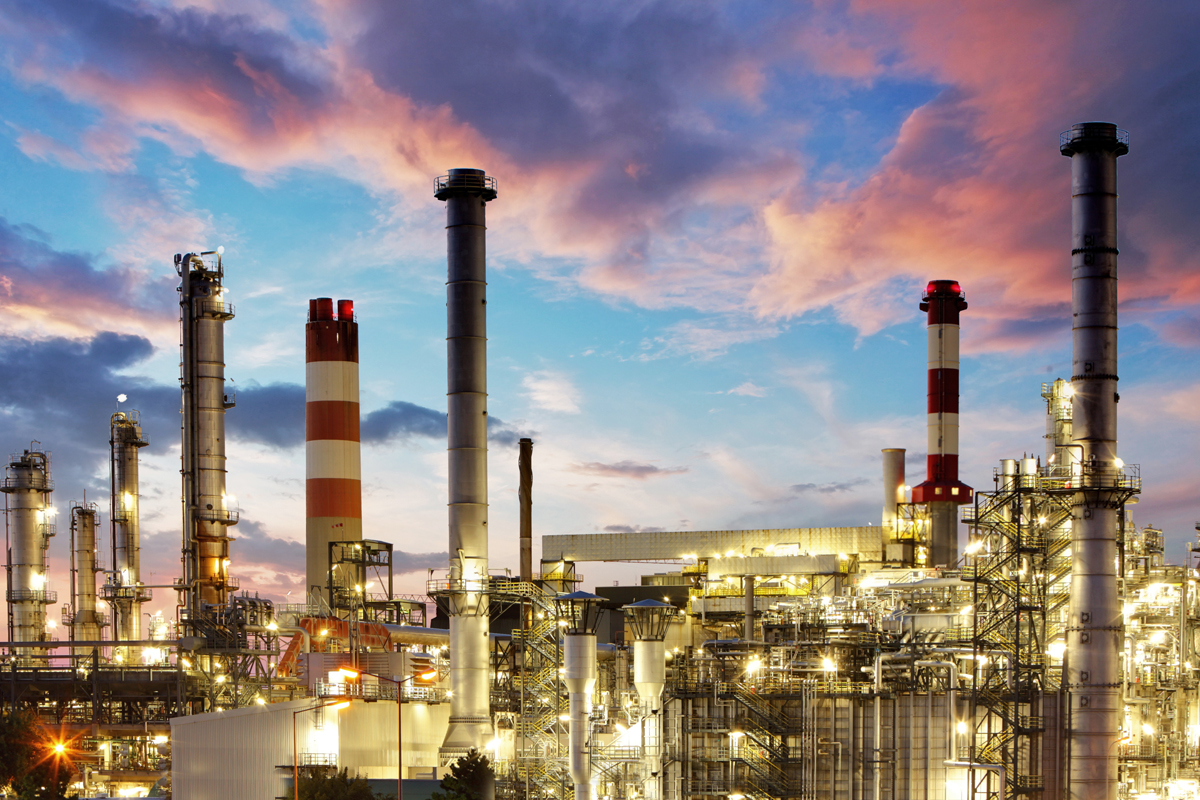
    The Nghi Son Refinery began commercial operation Sunday, and is expected to meet about 40 percent of domestic petroleum demand in 2019.

    Speaking at its inauguration, Prime Minister Nguyen Xuan Phuc emphasized the key role of the project.

    The refinery will process 200,000 barrels of crude per day in the first phase, equivalent to 10 million tons a year, double the capacity of Dung Quat, Vietnam’s only other refinery, in the central Quang Ngai Province.

    Situated in the Nghi Son Economic Zone, 200 km south of Hanoi in the central province of Thanh Hoa, Nghi Son is expected to hit 80 percent of capacity next year.

    According to the Thanh Hoa People’s Committee, last June the refinery was already capable of 10 refined petroleum products such as liquefied petroleum gas, gasoline A92, A95, diesel oil, and kerosene.

    As of December the plant has processed around five million tons of crude.

    Nghi Son together with Dung Quat is expected to meet 80-90 percent of domestic petroleum demand, reducing Vietnam’s dependence on imports.

    The $9 billion refinery is 35.1 percent owned by Japan’s Idemitsu Kosan Co, 35.1 percent by Kuwait Petroleum, 25.1 percent by state-run PetroVietnam and 4.7 percent by Mitsui Chemicals Inc.

  • Vietnam’s PVOIL seeks multiple partners

    Vietnam’s PVOIL seeks multiple partners

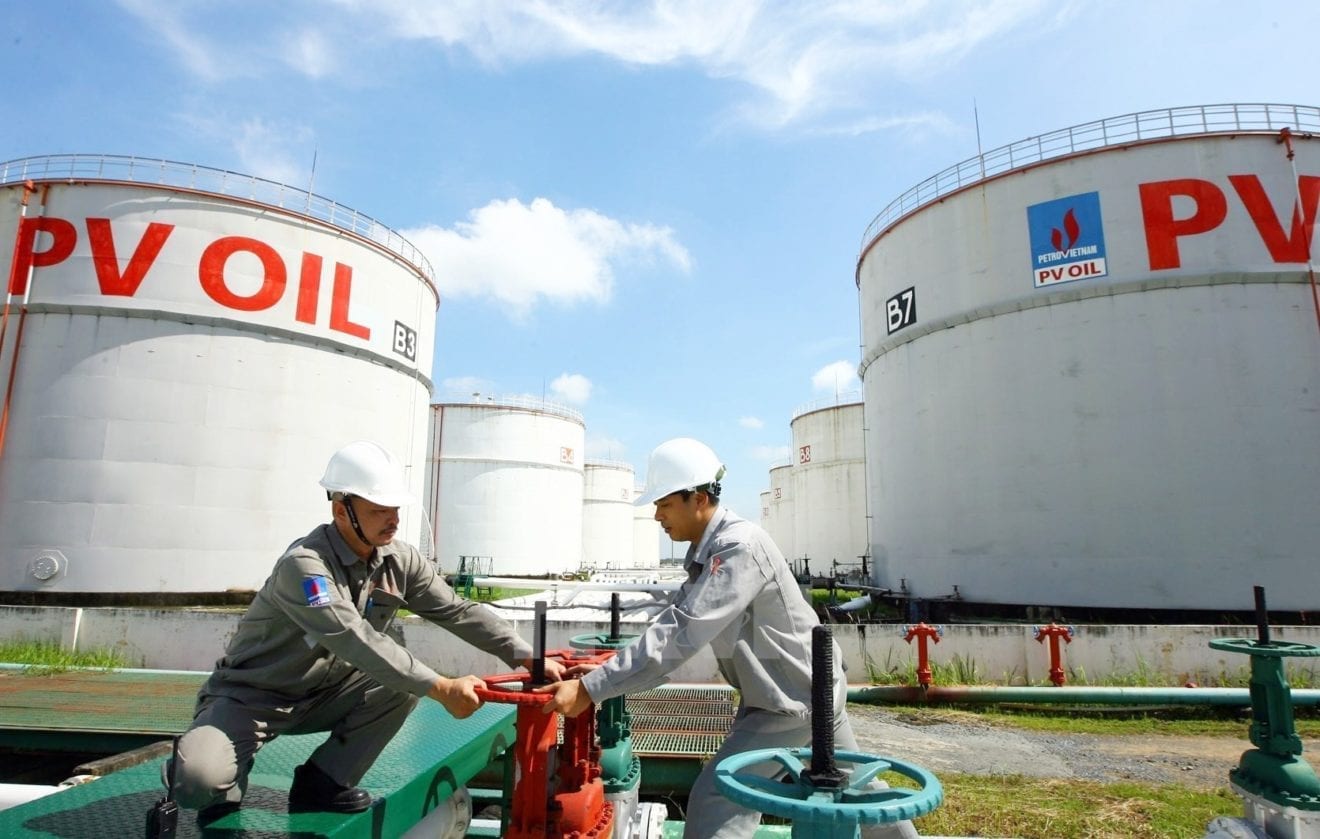
    Vietnam’s second-largest oil retailer, PV Oil, is seeking multiple buyers, instead of a single strategic investor, for a 44.72 percent stake. Although many investors expressed interest in becoming strategic partners with PetroVietnam Oil (PV Oil), including British-Dutch oil company Shell, South Korea’s SK Energy, and Idemitsu, a Japanese petroleum company, complicated administrative procedures have discouraged them, analysts say.

    PV Oil requires a strategic partner to hold the stake for at least 10 years.

    According to a new and revised divestment plan for PV Oil, the company is expected to raise at least $300 million from the divestment, Cao Hoai Duong, CEO of PV Oil, said.

    The bidding is expected to start in 2019.

    Last December, Deputy Prime Minister Vuong Dinh Hue had approved that state-owned PetroVietnam, the parent company of PV Oil, would reduce its ownership in PV Oil to 35.1 percent by selling a 44.72 stake to strategic investors.

    In January this year, VND4.18 trillion ($184 million) was raised through the sale of a 20 percent stake in PV Oil in an initial public offering (IPO).

    Vietnam maintains a 49 percent cap on foreign ownership limit in PV Oil.

    PV Oil runs 540 filling stations on its own and has about 3,000 locations operated by agents, mostly in northern Vietnam, as well as about 120 gas stations in Laos.

    PetroVietnam is one of the three biggest state-owned groups in Vietnam and a major contributor to state coffers.

  • ShopBack Partners Petron to Launch Petrol Redemption Programme

    ShopBack Partners Petron to Launch Petrol Redemption Programme

    Malaysians can now utilise cashback from ShopBack every time they refuel at petrol stations. The No.1 Cashback portal in the country recently inked a partnership with Petron Malaysia, becoming the first in the country to allow users to convert cashback to Petron Miles (PMiles) Points and vice versa.

    “Previously, after our users get cashback from their online purchases, they can choose to transfer the cash to their bank accounts or use it to offset Maxis phone bills. The collaboration with Petron is a first for both parties – the first long-term online to offline redemption for ShopBack, and the first offline to online redemption (PMiles Points to cashback) for Petron as well,” says Alvin Gill, Country General Manager of ShopBack Malaysia.

    He mentions that the number of users who accumulated five figures cashback savings through ShopBack is on the rise. Malaysians are getting more familiar with cashback benefits and the company has been exploring opportunities to continue shaping a smarter consumer spending habit offline, of which it feels the priority should be on ways that meet the practical needs of Malaysians’ daily life.

    “It is reported that about 23.9 per cent of Malaysians’ disposable income was spent on petrol, housing and utilities in 2016. Hence we decided to pursue petrol redemption as the second non-cash withdrawal option. ShopBack is excited to launch this with Petron and we definitely look forward to similar collaborations in the future.”

    The PMiles Points redemption option is now available on all ShopBack platforms (web, mobile web, and app).

    To convert cashback to PMiles points, users just need to log onto their accounts, select withdraw – points redemption and thereafter fill in the required information. For every RM10 cashback, users can convert it to 600 PMiles points.

    According to Choong Kum Choy, Head of Retail Business for Petron Malaysia, the collaboration with ShopBack underscores Petron’s commitment to provide the best customer experience for PMiles members. “We are committed to giving our customers the best products, the best service, and the best rewards. Our collaboration with ShopBack gives our PMiles holders more value with the cashback option, while significantly enhancing their shopping experience.”

    Currently, Petron Malaysia has more than 620 service stations in the country. PMiles members can also convert their points at Petron Service Stations Nationwide or download the form from PMiles Website. Every 1000 PMiles points can be converted to RM10 Cashback, which will be credited into the user’s ShopBack account.

  • Higher revenue lifts Petronas’ Q3 net profit to RM14.3 billion

    Higher revenue lifts Petronas’ Q3 net profit to RM14.3 billion

    Petroliam Nasional Bhd’s (Petronas) net profit for the third quarter ended Sept 30, 2018 rose 43% to RM14.3 billion from RM10 billion a year ago due to higher revenue. The group said in a statement today that the higher revenue was partially offset by higher product costs in tandem with higher prices, coupled with increased depreciation and amortisation.

    Earnings before interest, taxation, depreciation and amortisation (ebitda) rose 25% to RM26.9 billion from RM21.5 billion a year ago.

    The state-owned oil company attributed the higher earnings to its continuous execution of business improvement activities, focused on increased operational excellence and supported by higher commodity prices.

    Revenue for the quarter rose 19% year-on-year to RM63.9 billion, mainly driven by higher average realised prices for key products coupled with increased efficiency throughout the group.

    Higher sales were partially offset by the strengthening ringgit and lower sales volume, mainly for liquefied natural gas (LNG). Capital investments for the quarter stood at RM6.7 billion, mainly attributed to upstream projects.

    For the nine months ended Sept 30, 2018, Petronas’ net profit rose 50% year on year to RM41 billion, due mainly to higher revenue, lower net impairment on assets as well as other expenses. These were partially offset by higher product costs in tandem with higher prices coupled with increased depreciation and amortisation as well as tax expenses.

    Revenue for the period rose 12% year-on-year to RM181.1 billion mainly due to the impact of higher average realised prices for key products as well as increased efficiency efforts, largely offset by the effect of the ringgit strengthening against the US dollar.

    Capital investments for the period stood at RM26.5 billion mainly attributed to upstream projects while total assets rose to RM623.1 billion as at end-September, compared with RM599.8 billion as at end-December 2017.

    Shareholders’ equity rose to RM402.1 billion as at end-September from RM389.8 billion as at end-December 2017. The gearing ratio remained at 16.1% while return on average capital employed rose to 12.6% from 9.8% during the same period.

    The Pengerang Integrated Complex achieved 95% progress as at end-September and successfully received its first crude oil cargo at the Pengerang Deepwater Terminal 2. The project is on track to be ready for startup in 2019.

    President and group CEO Tan Sri Wan Zulkiflee Wan Ariffin said Petronas is on track to deliver a strong year-end performance by maintaining focus on driving efficiency efforts across its operations.

    “The recent drop in oil prices demonstrate the volatile and cyclical nature of the industry and we will continue to maintain our prudent outlook amidst this landscape while remaining steadfast in pursuing our growth strategies to ensure the long-term sustainability and progress of the company,” he said.

  • Vietnam’s new oil refineries to quadruple capacity by 2023

    Vietnam’s new oil refineries to quadruple capacity by 2023

    Vietnam’s total oil refining capacity will nearly quadruple by 2023 as two new refineries go on stream, market data provider Fitch Solutions reports. The Dung Quat refinery in the central province of Quang Ngai operated by the state-owned PetroVietnam’s subsidiary Binh Son Refinery Limited (BSR) remains the sole facility now, with a crude oil processing capacity of 148,000 barrels per day (b/d).

    Dung Quat will soon be joined by Nghi Son refinery in the central Thanh Hoa Province. Nghi Son is currently testing at full capacity and is scheduled to start commercial operations this month.

    The $9 billion Nghi Son project is owned by the Nghi Son Refinery and Petrochemical LLC (NSRP), a joint venture between PetroVietnam, Kuwait Petroleum, Japan’s Idemitsu Kosan and Mitsui Chemical. It will have a designed capacity of 200,000 b/d of crude oil.

    Meanwhile, the long-delayed construction of the Long Son refining and petrochemical complex in the southern province of Ba Ria-Vung Tau resumed in February this year, putting it on track to go on stream by the first half of 2023.

    Licensed in 2008 and initially slated to begin operations in 2014, Long Son hit a roadblock due to site clearance issues and disagreements over the development strategy between the project partners.

    This caused Qatar Petroleum to withdraw from the project in 2015. Thailand’s Siam Cement Group (SCG) increased its stake to 71 percent after it bought the 25 percent stake owned by Qatar Petroleum, while PetroVietnam held the remaining 29 percent.

    In May this year SCG agreed to acquire PetroVietnam’s 29 percent. The refinery is expected to cost $5-6 billion. Once completed it will be able to process 200,000 b/d of crude oil and produce 1.6 million tons of olefins annually.

    “The two new refineries would increase competition in the domestic fuel market, which could require refiners to upgrade, cut costs and move up the value chain to win market share,” Fitch Solutions said in a report released Monday.

    This also spells an end to Dung Quat’s status as the country’s sole refiner, which it has enjoyed since 2010.

    New oil refineries to quadruple Vietnam capacity 2023

    Competition from Nghi Son will be stiff as the government has granted a host of incentives to successfully commission its second standalone refinery, including tax concessions, tariff exemption on crude imports from primary feedstock provider Kuwait and an offtake guarantee from PetroVietnam for the first 15 years of operation.

    The Quang Ngai provincial government in early November sought the same incentives for the Dung Quat refinery to ensure “fair competition”.

    BSR is also planning to invest $1.8 billion over the next three years to expand Dung Quat’s capacity by 23,000 b/d and upgrade the quality of its fuels to Euro 5 from the current Euro 2.

    Fitch Solutions said the upgrade would enable Dung Quat to process higher-sulphur crudes, helping reduce its dependence on Vietnamese light, sweet crudes, mostly from the Bach Ho field, which is depleting and thus becoming more expensive.

    Besides the competition between themselves, the refineries also face significant pressure from imports, mostly from South Korea and Southeast Asian countries, which are of higher quality and priced competitively due to free trade agreements, the report noted.

    “Competition is likely to peak in 2024, when tariffs on fuel imports from ASEAN and South Korea are scheduled to be cut to zero. Concerns about mounting competition have also led both Dung Quat and Nghi Son to consider exports to countries like Laos, Cambodia and Indonesia.

    “Vietnam’s improving self-sufficiency in refined fuels would reduce its need for imports, reorienting trade flows from some of its major fuel suppliers to alternative markets.”

    While insufficient to entirely meet domestic demand, this nevertheless would weigh on the market positions of Singapore, Malaysia, South Korea, Thailand and China, which account for nearly 95 percent of Vietnam’s fuel imports, according to Fitch Solutions.

    Malaysia and Thailand have the highest exposure to Vietnam’s fuel market — 11 percent and 16 percent of imports.

    Major international fuel suppliers are also likely to find room for growth in the Vietnamese market increasingly hard to come by as their quality advantage over locally produced fuels dissipates with the ongoing upgrades, the firm added.

  • Korea’s gas prices fall quickly thanks to fuel tax cuts

    Korea’s gas prices fall quickly thanks to fuel tax cuts

    The government fuel tax cut, which was implemented to ease the burden on rising crude oil prices, has turned out to be more effective than initially expected. According to the Ministry of Trade, Industry and Energy on Sunday, the average price of gasoline at gas stations nationwide was 1,575.2 won ($1.40) per liter during the second week of November. This is an 85.2 won, or 5 percent, drop, from the 1,660.4 won average just a week earlier.

    Diesel prices have also dropped to an average 1,419.2 won per liter, down 56.2 won, or 3.8 percent, from the first week of this month, when it was an average 1,475.4 won for the same amount.

    On Saturday, the ministry said the average price of gasoline had further fallen to 1,556.8 won per liter – 133.5 won less than the 1,690.3 won it sold for on Nov. 5, the night before the government’s fuel tax cut went into effect.

    On average, the government cut 15 percent off of all fuel taxes including gasoline and diesel in the hopes of easing the burden created by rising international crude prices. It was the first fuel tax cut adopted in a decade.

    “As the situation [of low-income households and small and medium-sized enterprises] becomes more difficult with rising international crude prices, we have decided to aim for a psychological effect that will help the economy by increasing disposable incomes,” Ko Hyoung-kwon, deputy finance minister said in late October.

    Among gas stations, the government-supported Altteul Gas Station saw the biggest drop in prices – its gasoline costs 135.5 won less than it did on Nov. 5.

    Other major brands including SK, GS, S-Oil and Hyundai Oilbank have cut gasoline prices by 133.3 won.

    By region, Jeju lowered its gasoline prices the most. The island has seen a 169.4 won drop in average price compared to Nov. 5. Daejeon followed, as prices have fallen an average of 149.6 won, while Incheon came in third after seeing a 142 won drop.

    Seoul gas stations on average lowered their prices by 134.9 won while Gyeonggi gas prices fell by 137.2 won per liter.

    Seoul and Gyeonggi account for 39 percent of all fuel sold in the country.

    However, as of Saturday, 173 gas stations around the country – 1.5 percent of the nation’s gas stations – have not taken part in lowering fuel prices. The ministry said that these gas stations failed to deplete all of the gas that they had stockpiled before the Nov. 6 fuel tax cut was implemented.

    The fuel tax cut will be applied for six months.

  • Moody’s downgrades Petronas LNG’s ratings outlook to negative

    Moody’s downgrades Petronas LNG’s ratings outlook to negative

    Moody’s Investors Service has downgraded Petronas LNG Ltd’s (PLL) ratings outlook to “negative” from “stable”, following the same outlook revision for its parent company Petroliam Nasional Bhd’s (Petronas) yesterday. At the same time, the rating agency has affirmed PLL’s A3 foreign and local currency issuer ratings.

    Moody’s said the changes reflects its negative outlook on Petronas’ ratings and its expectation of PLL’s continued strong support from and linkages with its ultimate parent.

    PLL is 100%-owned by Petronas, which is in turn wholly-owned by the government.

    Moody’s said given the negative ratings outlook, a ratings upgrade is unlikely and it will revise PLL’s ratings outlook to stable from negative only if Petronas’ ratings outlook is stabilised.

    It said that PLL’s ratings will be downgraded if: Petronas’ rating is downgraded; there is a decrease in Petronas’ ownership of PLL; there is a reduction in Petronas’ supervision of and operational and financial support to PLL; or there is a material increase in PLL’s risk appetite.

    PLL’s ratings were assigned using a top down approach by evaluating the company’s full ownership by Petronas, its strong operational and financial integration with Petronas, and the willingness and ability of Petronas to extend support to PLL in an event of distress.

    Meanwhile, Moody’s assistant vice president and analyst Rachel Chua said PLL’s A3 ratings are positioned two notches below the A1 ratings of its ultimate parent.

    She noted that PLL enjoys ongoing liquidity support from Petronas and it can draw from Petronas’ umbrella credit facility for liquidity management, adding Petronas has continued to support PLL financially through cash injections of almost $400 million over the past three years.

    “Petronas’ support for PLL extends beyond financial assistance. Petronas also provides PLL with significant management support and oversight, including monthly reporting on risk and governance to a committee chaired by Petronas.

    “PLL also has an integrated treasury function with Petronas, where its cash is held centrally by Petronas and cash flow requirements are shared with its parent,” she added.

  • Vietnam to increase environment tax on fuel

    Vietnam to increase environment tax on fuel

    The National Assembly’s Standing Committee decided at a meeting Thursday to hike the environment tax on fuel from next year.

    Starting January 1 the tax on petrol will increase from VND3,000 (13 cents) per liter to VND4,000 (17 cents), and on diesel from VND1,500 to VND2,000.

    The tax on kerosene will go up from VND300 to VND1,000, and on fuel oil and lubricants from VND900 (3.9 cents) to VND2,000 (8.6 cents).

    The hike is scheduled for next year so that the government’s goal to keep inflation under 4 percent will be guaranteed.

    Speaking at the meeting, Chairman of the NA Committee on Foreign Affairs Nguyen Van Giau expressed concern that the tax hike would have an inflationary effect.

    But Nguyen Van Hai, Chairman of the NA Budget Finance Committee, said the new rate is still only 39 percent on fuel base price, which is lower than the rate in neighboring countries such as Cambodia where it is 49 percent, China (52 percent) and Laos (56.5 percent).

    The new tax would only increase transport cost by 0.83 percent in the first three months, while power prices would basically be unaffected, he said.

    NA Vice Chairman Phung Quoc Hien said the hike would bring VND15.7 trillion ($676.8 million) each year to the government’s coffers, and this would be used to deal with environmental issues.

    House Chairwoman Nguyen Thi Kim Ngan said that the money must be used to protect the environment.

    “That way, people will see that the money is not spent for other purposes.”

    Fuel prices in Vietnam are still lower than in 120 other economies in the world, according to the Ministry of Finance.

    As Southeast Asia’s fastest-growing economy, Vietnam is facing an air pollution problem. The capital Hanoi enjoyed little more than one month of clean air last year, according to a January report by the Green Innovation and Development Center.

    Fuel is a major source of revenue for Vietnam. Import tariffs from fuel, which are paid by local businesses, now account for around 7 percent of the state’s income, according to the petroleum association.

    Vietnam gained VND42.4 trillion ($1.84 billion) in revenue from environmental protection taxes in 2016, jumping nearly 57 percent from 2015.

    During the same period, spending on environmental protection reached just VND12.3 trillion, accounting for 29 percent of the tax revenue.

  • Vietnam government urged to limit petrol imports

    Vietnam government urged to limit petrol imports

    The Nghi Son Refinery, which is now in its trial phase, is burdened by unsold inventories, Chairman of Thanh Hoa Provincial People’s Committee Nguyen Dinh Xung said at a recent government meeting.

    The unsold inventories signal challenges in product sale when the oil refinery commercially operates this August/September. If the current situation continues, it will cause difficulties for enterprises and negatively affect the province’s budget, says Xung.

    Thanh Hoa’s authorities suggested that the Government and the Ministry of Industry and Trade set up a mechanism to consume all products from the refinery.

    “We suggest that the government issues policies to limit petrol imports and prioritize products from Nghi Son refinery,” Xung said.

    A month ago, the $9 billion refinery produced its first commercial gasoline product – more than 5,000 cubic meters of RON92 gasoline.

    According to Thanh Hoa authorities, during the trial period, Nghi Son oil refinery has produced 14 percent of the province’s total industrial production value. With a planned production of 4-4.3 million tons of gasoline when commercial operations officially begin in August or September 2018, the plant is expected to contribute more than 15 percent to the province’s growth.

    The Nghi Son Refinery, located in the Nghi Son Open Economic zone in Thanh Hoa province, will have a capacity of 200,000 barrels of crude oil per day in the first operational phase, equaling 10 million tons of crude oil per year. This is almost double that of the Dung Quat oil refinery in Quang Ngai Province.

    This project has been invested in by 4 domestic and international investors: Vietnam National Oil and Gas Group (PetroVietnam), Kuwait Petroleum International (Kuwait), Idemitsu Kosan and Mitsui Chemicals (Japan). Total investment for the project is $9 billion.

    It is expected that the Nghi Son and Dung Quat refineries will together meet 80 percent of Vietnam’s fuel demand.

  • Petrol prices continue to decrease

    Petrol prices continue to decrease

    Prices of oil and petrol products continued to decrease from 3pm on Saturday, following the latest price adjustment by the Ministry of Industry and Trade and the Ministry of Finance.

    The prices of RON 92 gasoline slightly dropped by VNĐ211 per litre, while that of E5 bio-petrol and diesel oil declined by VNĐ197 and VNĐ343 per litre, respectively.

    Following a joint decision by the ministries, RON 92 and E5 bio-petrol will be sold at a maximum price of VNĐ17,063 (US$0.75) and VNĐ16,871 per litre, respectively.

    Meanwhile, the new ceiling prices of diesel 0.05S and kerosene are VNĐ13,260 ($0.58) and VNĐ11,792 ($0.52) per litre.

    The average global price of RON 92 during the last 15 days until May 20 was $61,084 per barrel, down $1 compared with the previous price adjustment.

    The prices of petrol and oil are adjusted every 15 days by the two ministries depending on the changes in the world market.

  • BN explains why petrol prices have gone up

    BN explains why petrol prices have gone up

    The price of petrol has gone up because the price of refined petrol has increased, even though crude oil prices have dropped.

    In refuting allegations by the opposition, the Barisan Nasional Strategic Communications Team said today Malaysians used refined petrol, not crude oil.

    It noted that refined petrol prices might differ from crude oil prices due to global supply and demand factors.

    Also, Malaysia uses a managed float system which is dependent on global petrol prices.

    “Knowing that it is a managed float system, it is ridiculous that opposition leaders blame the government when petrol prices increase due to global market price increases but when petrol prices go down, they claim this is due to global prices and give no credit to the government,” said the statement.

    It said MPs Dr Wan Azizah Wan Ismail (PKR) and Tony Pua (DAP) had pointed out that the crude oil price for January had dropped and that the ringgit did not weaken compared with the previous month when criticising the increase in petrol prices.

    “We would like to inform both these Members of Parliament, the other opposition leaders and their propagandists that Malaysians do not pump crude oil into their cars.

    “The majority of Malaysians pump refined petrol in the form of RON95 or refined diesel.”

    The prices of RON95 and RON97 went up by 20 sen to RM2.30 (up 9.5%) and RM2.60 (8.3%) respectively, while diesel went up by 10 sen to RM2.15 (4.9%) today.

    The statement said as part of the move away from inefficient blanket subsidies, where the rich had benefited more than the poor, to more direct targeted assistance, Malaysia had adopted the managed float system from Dec 1, 2014, to determine the price of retail petrol and diesel.

    “Our managed float system uses the average price of the refined product — not crude oil — for the previous month to determine the retail pump price for the next month. Specifically, Malaysia uses the Singapore Means of Platts (MOPS) pricing for petrol and diesel.

    “While global oil prices had increased in recent months due to an agreement to cut production by oil-producing countries — which also benefits Malaysia — the price of refined oil products has increased further due to other reasons.”

    It said a check on the MOPS would show that the average price of motor gasoline 95 unleaded for January had stabilised in a range of US$69 to US$70 per barrel and was materially higher than the average price in December 2016 where the price had steadily increased from US$62 at the beginning of the month to US$68 by December’s end.

    The statement noted that oil refineries in Southeast Asia had enjoyed “higher pricing and margins due to an unusually higher than normal number of refineries around the world shutting down due to fires and major maintenance”.

    This, it said, had reduced supply and increased the refineries’ margins and pricing — hence the higher motor gasoline 95 prices.

    The statement advised Wan Azizah and Pua to “better understand the economics and market reality of petrol prices instead of making baseless statements that are untrue — or worse — designed to intentionally mislead and incite Malaysians.

    “It is like a monthly game that never ends and a game that opposition leaders do not seem to tire of playing.”

    The statement said that while Malaysians had reason to complain that the price of RON95 in February at RM2.30 per litre was higher than what they had enjoyed in the past, Malaysia’s petrol prices were still consistently the cheapest in Southeast Asia (except Brunei) and among the 15 cheapest among 180 countries in the world.

    “This is unusual as Malaysia is not a big producer and exporter of oil when compared with the other countries in the top 15 cheapest retail petrol list.

    “In Asean, our RM2.30 per litre price for February compares favourably to Indonesia (RM2.73), Thailand (RM4.10), the Philippines (RM3.72) and Singapore (RM6.56).

    “Malaysia’s RON95 price was also at RM2.30 per litre in October and November 2014. It is also interesting to note that in 2008, RON92 had reached RM2.62 per litre.”

    The statement noted that while a managed float would mean that Malaysians had to bear with higher petrol prices when global prices increased, this also meant “we had also benefited from a prolonged period of low refined petrol prices over the past two years when it had reached as low as RM1.60 per litre”.

    This, it added, was unlike before 2004 when Malaysians did not benefit from low global oil prices, which had ranged from US$10 to US$20 per barrel compared with US$55 to US$60 per barrel now as Malaysians were taxed 58.62 sen per litre for petrol and 19.64 sen per litre for diesel for decades. These taxes, it noted, were abolished only in the year 2004.
  • Petrol, diesel prices go up in January

    Petrol, diesel prices go up in January

    As expected, retail fuel prices will see an increase across the board as of midnight. For January, RON95 petrol will be priced at RM2.10 per litre, marking an increase of 20 sen compared to December retail price. RON97 petrol will be priced at RM2.40 per litre, up by 15 sen.

    The same applies to diesel and Euro 5 diesel, which are priced at RM2.05 per litre and RM2.15 per litre respectively – an increase of 20 sen for both. These new fuel prices were confirmed by Petrol Dealers Association of Malaysia president Datuk Khairul Annuar Abdul Aziz. “Prices are in line with global petrol prices. However, the diesel prices which exceeded the RM2 mark will be a concern for the business community,” he told.

    The country’s petrol and diesel prices have been placed on a managed float system from Dec 1, 2014 following the removal of fuel subsidies. Yesterday, Finance Ministry Strategic Communications director Datuk Lokman Noor Adam reportedly said that the retail prices of RON95 and diesel would go up in Jan due to an increase in the price of crude oil in the world market.

    He said the retail price of RON95 and diesel were set according to the average prices of fuel in the world market for a month, as well as being influenced by the ringgit’s movement against US dollar.