Retail News CRM

Tag: petroleum

  • Fuel Prices Plunge in Vietnam as US-Iran Ceasefire Cools Global Petroleum Market

    Fuel Prices Plunge in Vietnam as US-Iran Ceasefire Cools Global Petroleum Market

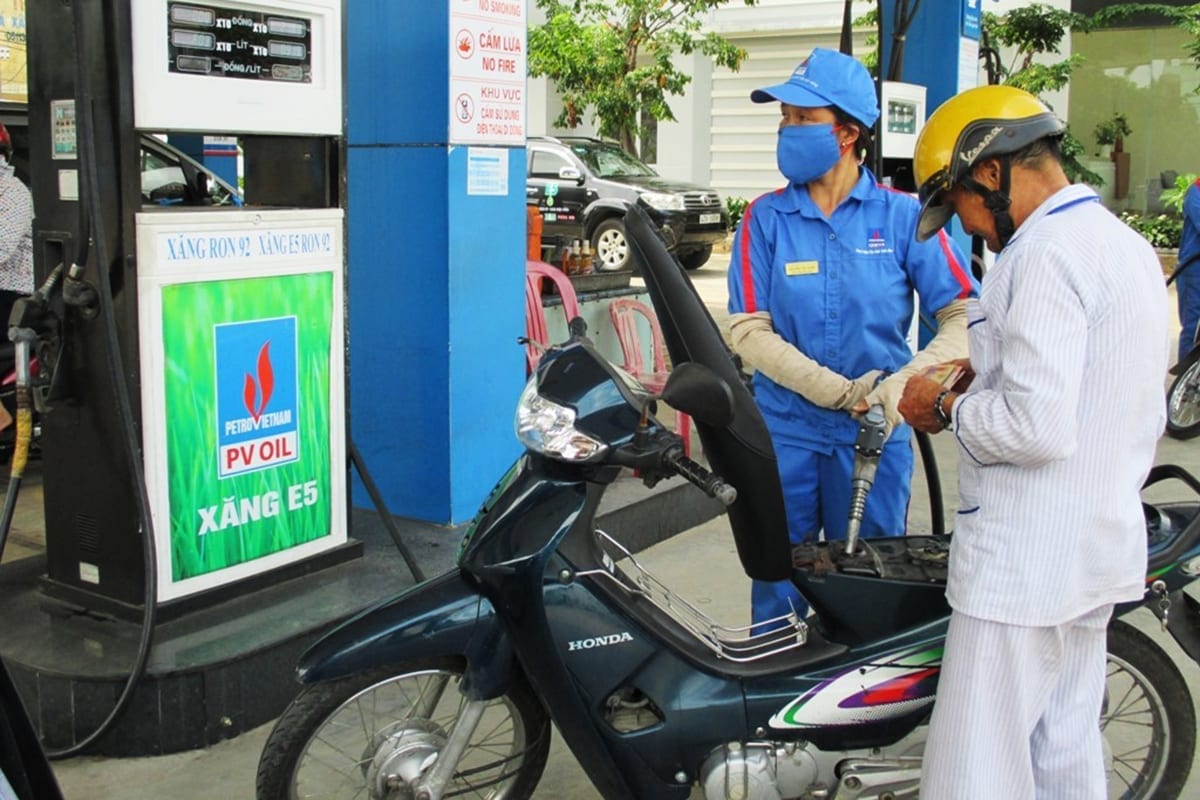
    On Wednesday afternoon, a decrease in gasoline prices was observed in Vietnam, a result of the global markets stabilizing after a ceasefire agreement was reached in the Middle East. The well-known fuel variant, RON95, witnessed a drop of 1.63%, bringing the per-litre price to VND26,530.

    Global Petroleum Markets Trending Downward

    According to the Ministry of Industry and Trade, global petroleum markets have been demonstrating a downward trend following the two-week ceasefire agreement between the United States and Iran. In the last four days alone, the average prices of RON95 gasoline have decreased by 1.8%, diesel has seen a drop of 14.5%, and mazut has declined by 1.5%.

    In the context of regional pricing, Vietnam’s retail fuel prices maintain an average level. These rates are lower than those in Singapore, Laos, Cambodia, Thailand, and China.

    Impact of Middle East Conflict on Global Fuel Supplies

    The conflict in the Middle East, which has been escalating since late February, has had a significant impact on worldwide fuel and gas supplies. The magnitude and implications of this crisis surpass the oil shock of the 1970s, an event that disrupted economies and energy markets around the globe.

    Such developments have led to substantial fluctuations in Vietnam’s domestic energy market. Since the conflict’s escalation in late February, there have been 14 pricing adjustments.

    Local Refineries Secure Supply

    During a government press briefing held last week, Deputy Minister of Industry and Trade, Nguyen Sinh Nhat Tan, confirmed that Vietnam’s two domestic refineries, Dung Quat and Nghi Son, have successfully secured enough crude supply to maintain production until the end of April.

    In March, principal fuel distributors imported 3.2 million cubic meters of petroleum products. Given the current inventories of 2.6-2.8 million cubic meters, the domestic fuel supply is estimated to meet demand until the end of the current month.

    Questions & Answers

    What led to the decrease in gasoline prices in Vietnam?
    The falling global petroleum market prices, triggered by a ceasefire agreement in the Middle East, led to a decrease in gasoline prices in Vietnam.

    How has the Middle East conflict affected the global fuel and gas supplies?
    The ongoing conflict in the Middle East has significantly disrupted worldwide fuel and gas supplies, even surpassing the impact of the 1970s oil shock.

    What measures has Vietnam taken to ensure a steady fuel supply?
    Vietnam has taken steps to secure its fuel supply by importing petroleum products and maintaining sufficient crude supply in its two domestic refineries, Dung Quat and Nghi Son.
  • Fuel Frenzy: Vietnam’s Gasoline and Diesel Prices Tumble Amid Global Petroleum Market Fluctuations

    Fuel Frenzy: Vietnam’s Gasoline and Diesel Prices Tumble Amid Global Petroleum Market Fluctuations

    On Thursday, Vietnam saw a decrease in its petrol and diesel prices, following a surge in the previous week. The frequently-used fuel RON95 saw a 0.15% drop in price, falling to VND20,540 (US$0.78) per litre from its price the preceding Thursday.

    Fuel Price Declines

    Additionally, Biofuel E5 RON92, another widely used fuel in Vietnam, experienced a 0.20% price decrease, bringing its price down to VND19,800. Diesel, another key fuel type, mirrored this trend with a 0.20% price drop, taking its price to VND19,820.

    Global Influence on Fuel Prices

    The global petroleum market, within the last week, was influenced by several factors which had an impact on Vietnam’s fuel prices. The Ministry of Industry and Trade cited the OPEC+ agreement to marginally enhance oil production in December, coupled with the reopening of the U.S. government, as major influences.

    RON95’s global price fell by 0.3%, landing at $82.4 per barrel. Diesel, too, followed suit and saw a 0.3% dip to $93.35 per barrel.

    Questions & Answers

    What was the percentage drop in RON95’s price?
    The price of RON95 fell by 0.15% from the previous week.

    What caused the global petroleum market to be influenced in the past week?
    The global petroleum market was affected by several factors including OPEC+’s decision to slightly increase oil production in December and the reopening of the U.S. government.

    What was the new price for Diesel?
    Diesel’s new price was VND19,820, marking a 0.20% drop.

  • IOC eyes petroleum retailing in Myanmar

    IOC eyes petroleum retailing in Myanmar

    The state-run firm currently has marketing subsidiaries in Sri Lanka, and West Asia. IOC, as part of its overseas expansion, is set to come up with its first international product pipeline to Nepal.

    “We have submitted a bid to start retail outlets and also to set up plants in Myanmar,” said Anish Aggarwal, director (pipelines) of IOC, on the sidelines of a summit organised by Project Management Institute.
    The concept of this pipeline was first proposed in 2006 as a joint venture between and Oil Corporation (NOC). However, it never took off as was not keen on the project.
    “We are awaiting the statutory clearance from the government. Once it is in place, the project can be commissioned with in 30 months,” Aggarwal added.

    India exports $1.1 billion worth of petroleum products to annually.

    It was in 2015 that signed a memorandum of understanding with to lay the pipeline between Raxaul in Bihar to Amlekhganj in at a capacity of 1.3 million tonnes per annum. The project would cost about Rs 275 crore and cover 41 km.

    Currently, all petroleum products are trucked from IOC’s depot in Bihar to Nepal. The project includes expansion of the Amlekhgunj Amlekhganj depot.

    Thirty-nine km out of the 41-km pipeline lie in India. Currently, supplies petroleum products to from Haldia, and refineries.