
Tag: petron

  • ShopBack Partners Petron to Launch Petrol Redemption Programme

    ShopBack Partners Petron to Launch Petrol Redemption Programme

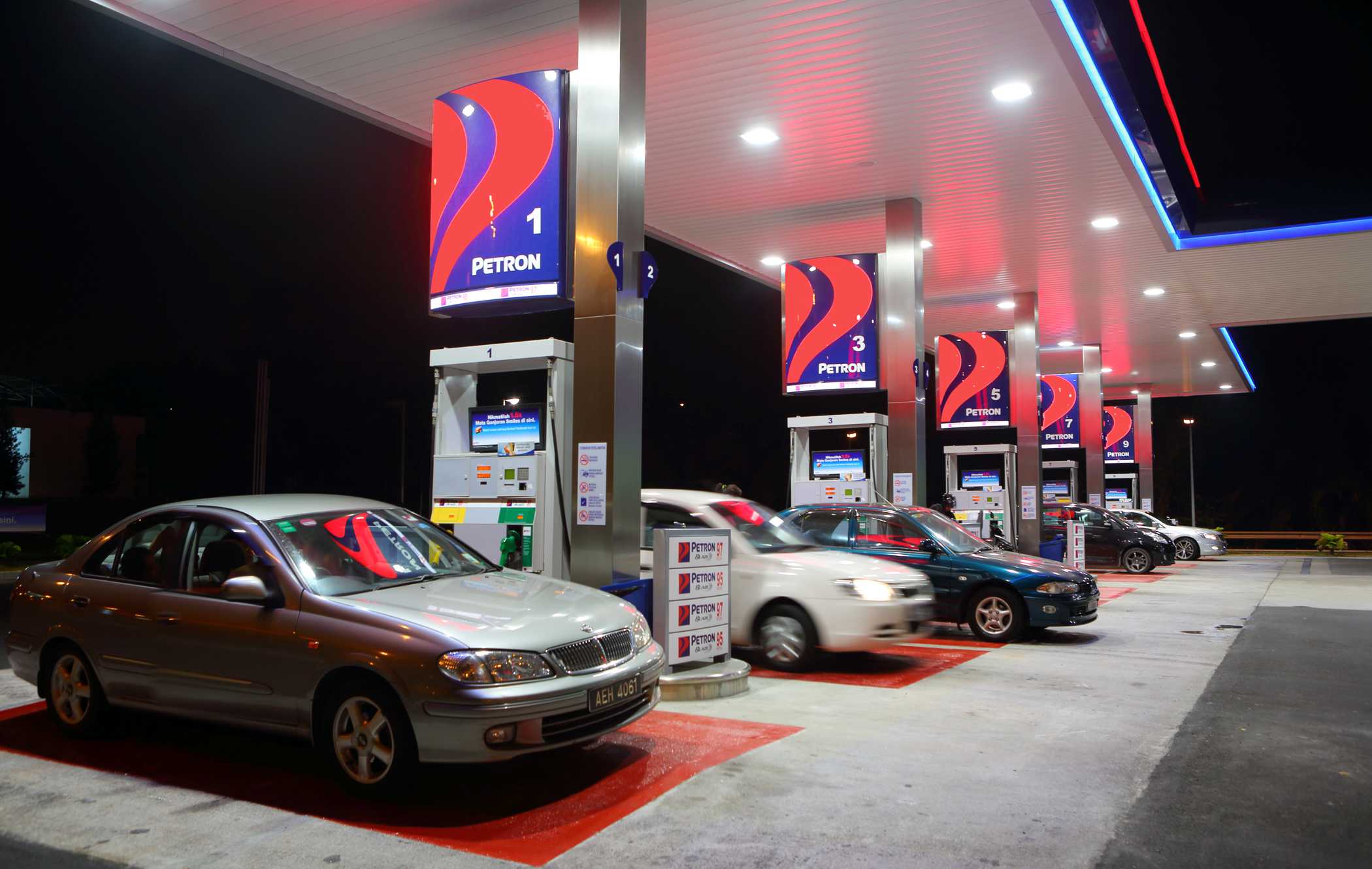
    Malaysians can now utilise cashback from ShopBack every time they refuel at petrol stations. The No.1 Cashback portal in the country recently inked a partnership with Petron Malaysia, becoming the first in the country to allow users to convert cashback to Petron Miles (PMiles) Points and vice versa.

    “Previously, after our users get cashback from their online purchases, they can choose to transfer the cash to their bank accounts or use it to offset Maxis phone bills. The collaboration with Petron is a first for both parties – the first long-term online to offline redemption for ShopBack, and the first offline to online redemption (PMiles Points to cashback) for Petron as well,” says Alvin Gill, Country General Manager of ShopBack Malaysia.

    He mentions that the number of users who accumulated five figures cashback savings through ShopBack is on the rise. Malaysians are getting more familiar with cashback benefits and the company has been exploring opportunities to continue shaping a smarter consumer spending habit offline, of which it feels the priority should be on ways that meet the practical needs of Malaysians’ daily life.

    “It is reported that about 23.9 per cent of Malaysians’ disposable income was spent on petrol, housing and utilities in 2016. Hence we decided to pursue petrol redemption as the second non-cash withdrawal option. ShopBack is excited to launch this with Petron and we definitely look forward to similar collaborations in the future.”

    The PMiles Points redemption option is now available on all ShopBack platforms (web, mobile web, and app).

    To convert cashback to PMiles points, users just need to log onto their accounts, select withdraw – points redemption and thereafter fill in the required information. For every RM10 cashback, users can convert it to 600 PMiles points.

    According to Choong Kum Choy, Head of Retail Business for Petron Malaysia, the collaboration with ShopBack underscores Petron’s commitment to provide the best customer experience for PMiles members. “We are committed to giving our customers the best products, the best service, and the best rewards. Our collaboration with ShopBack gives our PMiles holders more value with the cashback option, while significantly enhancing their shopping experience.”

    Currently, Petron Malaysia has more than 620 service stations in the country. PMiles members can also convert their points at Petron Service Stations Nationwide or download the form from PMiles Website. Every 1000 PMiles points can be converted to RM10 Cashback, which will be credited into the user’s ShopBack account.
  • Petron investing $3.5b in Malaysian oil refinery

    Petron investing $3.5b in Malaysian oil refinery

    Petron Corp. is pursuing a $3.5-billion expansion of its refinery in Malaysia that would significantly improve the company’s bottomline, a top executive said.

    “One we complete the expansion there, we are projecting that it will give $600 million a year from $20 million,” Petron president Ramon Ang said.

    Petron acquired Esso Malaysia’s Port Dickson refinery and fuel retail network in Malaysia  in 2011.

    Ang said Petron Malaysia showed consistent strong financial results.

    “We acquire Malaysia before with $20 million Ebitda [earnings before interest, taxes, depreciation and appreciation]. This year, we will end at $270 million Ebitda,” Ang said.

    Ang said once the planned expansion was given an approval, the construction would be completed by 2020.

    The Malaysian refinery currently produces around 80,000 barrels per day. Petron ranks third in terms of market share in Malaysia.

    “It will add  another 90,000 [barrels] a day,” Ang said.

    “The Malaysia expansion, if we will add 90,000 barrels per day, [would cost] $3.5 billion,” Ang said, adding that most equipment in the refinery needed to be replaced and upgraded.

    Petron is also embarking on a $5-billion refinery expansion in the Philippines that will bring the existing capacity of its Bataan refinery to 360,00 barrels per day in  three years.

    Ang said the expansion of the existing Bataan facility would be done in phases at 90,000 barrels per day for each phase. The first phase is expected to be completed by 2019 and the next phase by 2020.

    “[For] the next expansion of our refinery, we will be adding another 90,000 bpd.  So from 180,000 bpd, we will be hitting 270,000 bpd,” Ang said earlier.

    Petron owns the existing 180,000 bpd refinery in Limay, Bataan.

    “We can start [the first phase] in 2018, to be completed in 2019. We forecast an increase in income,” he said.

    Ang said the first phase of the expansion would cost $1.5 billion while the second phase would amount to $3.5 billion.

    He said the expansion would help produce more  petrochemical products.

    Petron already invested $2 billion to upgrade its Bataan refinery and make it at par with the most advanced refineries in the region.

  • Petron sees $600M in annual earnings

    Petron sees $600M in annual earnings

    Petron Corp., the largest oil refining and marketing company in the Philippines, is projecting earnings of about $600 million a year once the planned expansion of its refinery in Malaysia is completed.

    “Once the expansion is finished, we are expecting earnings before interest, taxes, depreciation and amortization (EBITDA) of $600 million annually from $20 million [in 2012],” Petron President and Chief Operating Officer Ramon Ang said.

    For 2017, the Malaysian business is expected to generate EBITDA earnings of $270 million.

    He added that expanding the capacity of the Malaysian refinery will entail an investment of $3.5 billion and would add 90,000 barrels per day (bpd) to its output. The current crude distillation capacity is 88,000 bpd.

    Petron is currently running the Port Dickson Refinery, which is located about 90 kilometers from Kuala Lumpur in Port Dickson, Negeri Sembilan. It is equipped with a crude distillation unit, a naphtha hydro treating unit, two semi-regeneration reformer units, and a kerosene hydro treating unit.

    The complex has amenities such as wastewater treatment facilities, steam generator, cooling water plant, flare and safety relieving unit, crude storage tanks, refined petroleum products storage tanks, as well as spheres for liquefied petroleum gas (LPG) storage.

    Petron, which supplies almost 40 percent of the country’s oil requirements, has a combined retail network of almost 2,900 service stations, more than a fifth of which are in Malaysia. Since 2012, the company has rebranded and built an extensive retail network of nearly 600 stations in Malaysia.

    The oil company also exports different petroleum and non-fuel products to Asia-Pacific countries including India, Japan, Malaysia, Singapore, South Korea, Thailand, and Pakistan, as well as to the United Arab Emirates.

    Shares of Petron slipped 1.19 percent to P9.17 on Friday.

  • Petron posts 56% jump in income

    Petron posts 56% jump in income

    Petron Corp. saw its consolidated net income in the first semester surge 56 percent year-on-year to P8.2 billion this year from P5.3 billion last year, despite supply issues brought about by refinery maintenance.

    The oil refiner and retailer said in the first half of 2017, it saw its crude oil inventory go down while its Bataan refinery went through a 45-day maintenance shutdown, scheduled as part of a 10-year inspection program.

    “With our upgraded refining capabilities, we derived more value and produced more profitable products,” Petron president and chief executive Ramon S. Ang said in a statement.

    “This is strongly complemented by our extensive expansion efforts in both our logistics and retail businesses,” Ang said.

    He said the strong showing during the first semester of the year was driven by a deliberate focus on more profitable segments and improved refinery production yields, while sustaining sales volumes.

    With volumes reaching record levels in 2016, Petron sold a total of 52.9 million barrels of products in the Philippines and Malaysia or just about the same as the level in the same period last year of 52.6 million barrels.

    Petron has a combined retail network of about 2,900 service stations, of which more than a fifth or about 600 are in Malaysia.

    With petrochemical sales revving up by 78 percent year-on-year, Petron saw consolidated sales revenue jump 28 percent to P207 billion in the six months to June.

    Also, operating income leaped 27 percent year-on-year to P14.6 billion from P11.5 billion.

    In both the Philippines and Malaysia, Petron is building “dozens” of service stations.

    “With the country’s economy growing at a rapid pace, we are expanding our facilities not just for the needs of today but also to ensure a reliable and continuous supply of quality fuels for tomorrow,” Ang said.

    “Our expansion projects mean more employment opportunities and economic activity, which help in nation-building,” he added.

  • Petron to start $20B oil refinery in early 2018

    Petron to start $20B oil refinery in early 2018

    Petron, the country’s biggest oil refiner and retailer, has partnered with two foreign firms to start building a new oil refinery worth $15 million to $20 billion by early 2018.

    This is the biggest investment in the Philippine history so far. Have you seen a plant that is worth that much?” Ramon Ang, president and chief executive officer of Petron, said in a media roundtable in Pasig City.

    Ang said the oil refinery will mainly produce petrochemicals, with a capacity of 250,000 barrels per day. “It will process petrochemical and by-products.”

    Right now, we have a target location and we are in the process of acquiring or doing a lease or a joint venture agreement with the land owners. A new oil refinery project with this size requires at least 2,000 hectares and a deep sea port,” Ang told reporters.

    The chief of Petron said he cannot reveal yet the location and the names of his partners as the project has yet to secure government approvals.

    We have to wait for ECC (environmental compliance certificate) and other government approvals. We may start early next year, once the partners agree on equity. Financing is huge, we have to process it in different countries,” Ang said in Filipino.

    He said the construction period for the greenfield project will take two to 3 years. Ang said his group is looking at 30% equity and 70% loan for the financing of the project.

    “World market potential for petrochemical is very very high, so we are gearing for that,” Ang said.

    Expansion in Malaysia, Philippines

    Other than its greenfield project, Ang said Petron plans to earmark a spending budget of another $2 billion to expand its plants in Bataan and Malaysia.

    He said Petron plans to spend at least $1.5 billion to expand the capacity of its oil refinery in Malaysia to 150,000 barrels a day from 88,000 barrels a day. Petron also plans to spend about $500 million to upgrade its refinery in Bataan.

    “Right now, Malaysian investment contributes about 25% of our revenue. It will only grow if we invest in the Malaysian refinery upgrade. Otherwise, it is just like buy and sell. So, the Malaysian refinery, we have to upgrade. At the moment, we are finalizing the study to do the upgrade,” Ang told reporters.

    He said the Malaysian market is promising, with about 25 million population, consuming around 600,000 barrels a day.

    Petron acquired in 2011 Esso Malaysia’s Port Dickson refinery and fuel retail network in Malaysia.

    Meanwhile, the Petron Bataan Refinery is the country’s largest integrated crude oil refinery and petrochemicals complex. Inaugurated in 1961 with a capacity of 25,000 barrels per day, it has grown to its current rated capacity of 180,000 barrels-per-day.

    “Bataan upgrade will start within the next two months. If you notice, during the time of the government, they already know how to do oil refinery upgrade… it is just that the investment is too big. For us, this is where we are strong at,” Ang said.

    Petron registered a net income of P5.6 billion in the first quarter of 2017, doubling the P2.8 billion it posted for the same period last year.

    Combined volumes from the Philippines and Malaysia were 3% higher at 26.2 million barrels. 

    Domestic retail segment volumes grew 6%, with LPG and lubricants growing 5% and 16%, respectively. 

    Petrochemical export volumes also more than doubled. Petron Malaysia’s commercial and lubcricants sectors also posted double-digit growth.

  • Petron to open more than 250 gas stations in Malaysia and the Philippines

    Petron to open more than 250 gas stations in Malaysia and the Philippines

    The Philippines’ largest oil refiner and distributor Petron Corporation is set to further expand its retail business as it continues to enjoy stronger sales and positive growth potentials, reported The Standard.


    Source: Petron Corporation Facebook Page

    This year, Petron targets to add more than 250 gas stations to the existing 2,800 Petron stations in Malaysia and the Philippines.

    The company, in fact, has already carried out a significant gas station network expansion in Malaysia with the acquisition and rebranding of approximately 550 ExxonMobil stations.

    It also plans to upgrade its Port Dickson Refinery, according to Petron president and chief executive Ramon Ang.

    Ang also disclosed plans to put up 12 retail stations along the Philippines’ 88.5-kilometer, two-lane Tarlac-Pangasinan-La Union Expressway (TPLEX).

    TPLEx has a high traffic volume as it connects the central and northern Luzon provinces to Manila through the Subic-Clark-Tarlac Expressway and the North Luzon Expressway.

    Petron’s parent firm San Miguel Corporation (SMC), through the Private Infra DevCorporation (PIDC), the concessionaire in TPLEx, provides management services, toll collection, traffic safety and security management, toll road maintenance, and other related services along the expressway.