Retail News CRM

Tag: petronas

  • Petronas Chemicals share price up on higher profit

    Petronas Chemicals share price up on higher profit

     Petronas Chemicals Group Bhd’s share price up 0.66% or 6 sen this morning, after its net profit jumped 27.9% to RM1.29 billion for the fourth quarter ended Dec 31, 2018 (Q4). As at 11.56am, the stock stood at RM9.22 with 2.93 million shares changing hands. The group said the higher profit was due to lower tax expenses and higher share of profits from joint ventures and associates.

    Its revenue also increased by 6.8% to RM5.06 billion compared with RM4.74 billion in the previous year’s corresponding quarter.

    It has proposed to declare a second interim dividend of 18 sen per share amounting to RM1.44 billion in respect of the financial year ended Dec 31, 2018.

  • Petronas Gas Q4 profit weighed down by Kimanis Power

    Petronas Gas Q4 profit weighed down by Kimanis Power

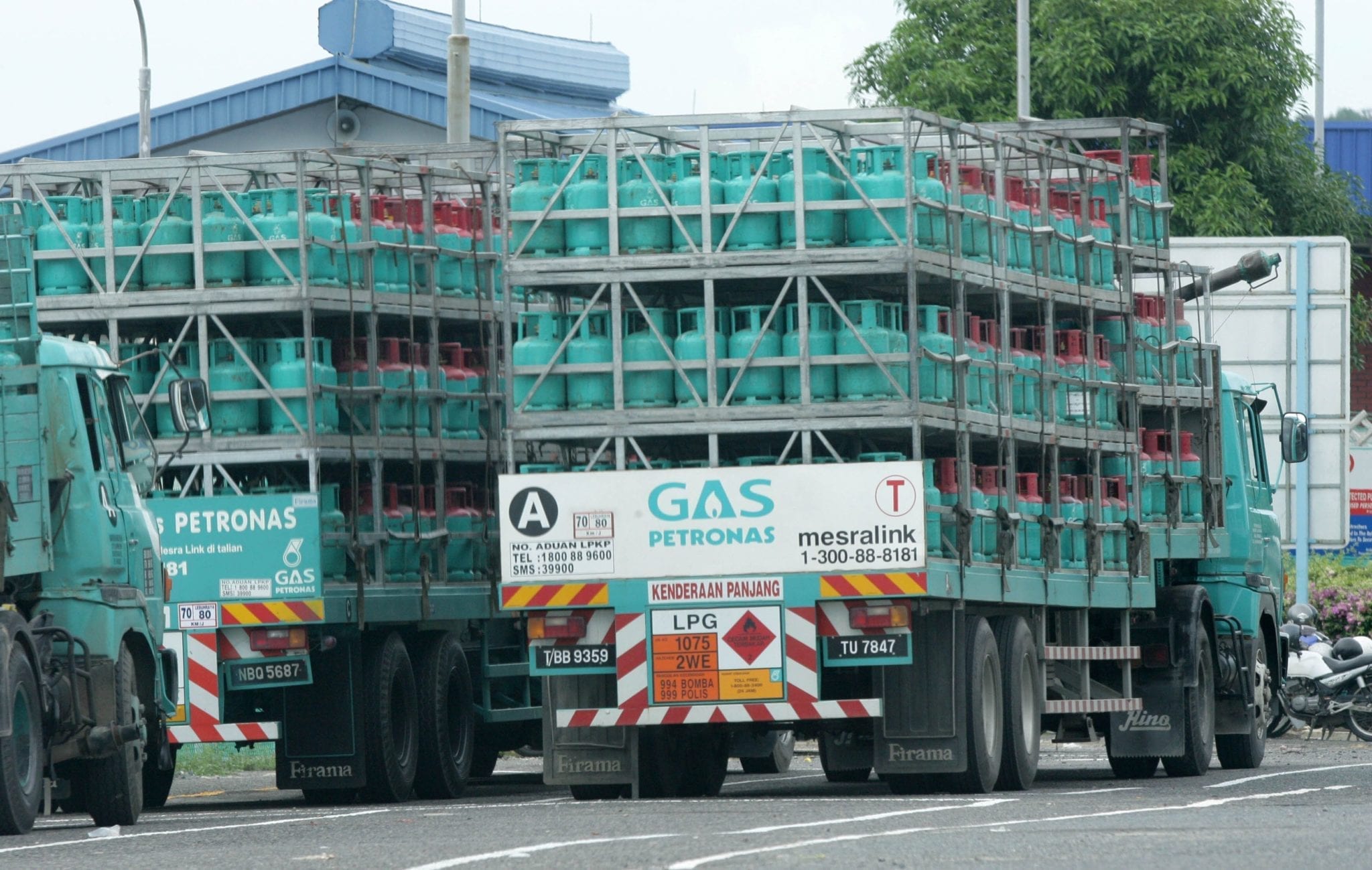
    Petronas Gas Bhd’s net profit fourth quarter ended Dec 31, 2018 fell 34.7% to RM317.90 million from RM486.70 million a year ago, largely attributed to share of losses from a joint venture company, Kimanis Power Sdn Bhd. The losses were due to de-recognition of deferred tax assets amounting to RM124.3 million (being 60% share of the group) in relation to certain tax benefits which now have a seven-year utilisation limit under the new Finance Act 2018.

    Its revenue grew 4.9% to RM1.39 billion compared with RM1.32 billion in the previous year’s corresponding quarter mainly contributed by the second liquiefied natural gas (LNG) regasification terminal in Pengerang, Johor which commenced commercial operations in November 2017, coupled with higher revenue from utilities and gas transportation segment.

    The group has approved a fourth interim dividend of 22 sen per share amounting to RM435.3 million in respect of the financial year ended Dec 31, 2018.

    For the full-year period, Petronas Gas’ net profit grew 0.98% to RM1.81 billion from RM1.79 billion a year ago, while revenue of RM5.5 billion was the highest in history, an increase of 12.3% compared to RM4.90 billion last year.

    The Energy Commission has approved the tariffs for the gas transportation and regasification services for 2019. While the tariffs are expected to affect the group’s transportation and regasification business segment revenues in 2019, both segments are anticipated to continue contributing positively to its earnings.

    The group’s gas processing segment is expected to deliver improved earnings pursuant to the higher fixed remuneration charge under the second term of the 20-year Gas Processing Agreement effective from 2019 until 2023.

  • Petronas starts trial runs at crude distillation unit for Rapid

    Petronas starts trial runs at crude distillation unit for Rapid

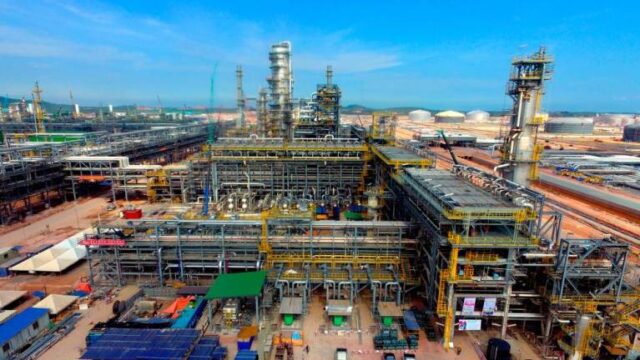
    Malaysian state oil company Petroliam Nasional Bhd (Petronas) started trial runs at the crude distillation unit (CDU) for a joint-venture refinery with Saudi Aramco in Malaysia last week, two sources with knowledge of the matter said this week. The move marks a major milestone for the US$2.7 billion (RM11 billion) project known as Rapid – or Refinery and Petrochemical Integrated Development – in Pengerang, Johor. The test runs put the project on track for commercial operation in 2019.

    The company also received its second cargo of 2 million barrels of Saudi crude last week, according to the sources and data on Refinitiv Eikon.

    Petronas could not be immediately reached for comment.

    Rapid consists of a 300,000-barrel-per-day (bpd) refinery and secondary refining units that will allow the companies to produce refined oil products that meet Euro 5 fuel specifications. The refinery is linked to a petrochemical complex with a capacity of 7.7 million tonnes a year.

    The first crude oil cargo for Rapid was offloaded at Pengerang in September.

    The refinery is one of four new complexes in Asia that represent a combined processing capacity of nearly 1.3 million bpd scheduled to start up from late 2018 to 2019.

    Another of the four complexes, a 400,000 bpd refinery, owned by Hengli Petrochemical in Dalian in northeast China, started trial runs in December.

    These plants will increase Asia’s crude demand while adding to fuel output in the region.

  • Petronas buys 10% of Block 61 onshore Oman

    Petronas buys 10% of Block 61 onshore Oman

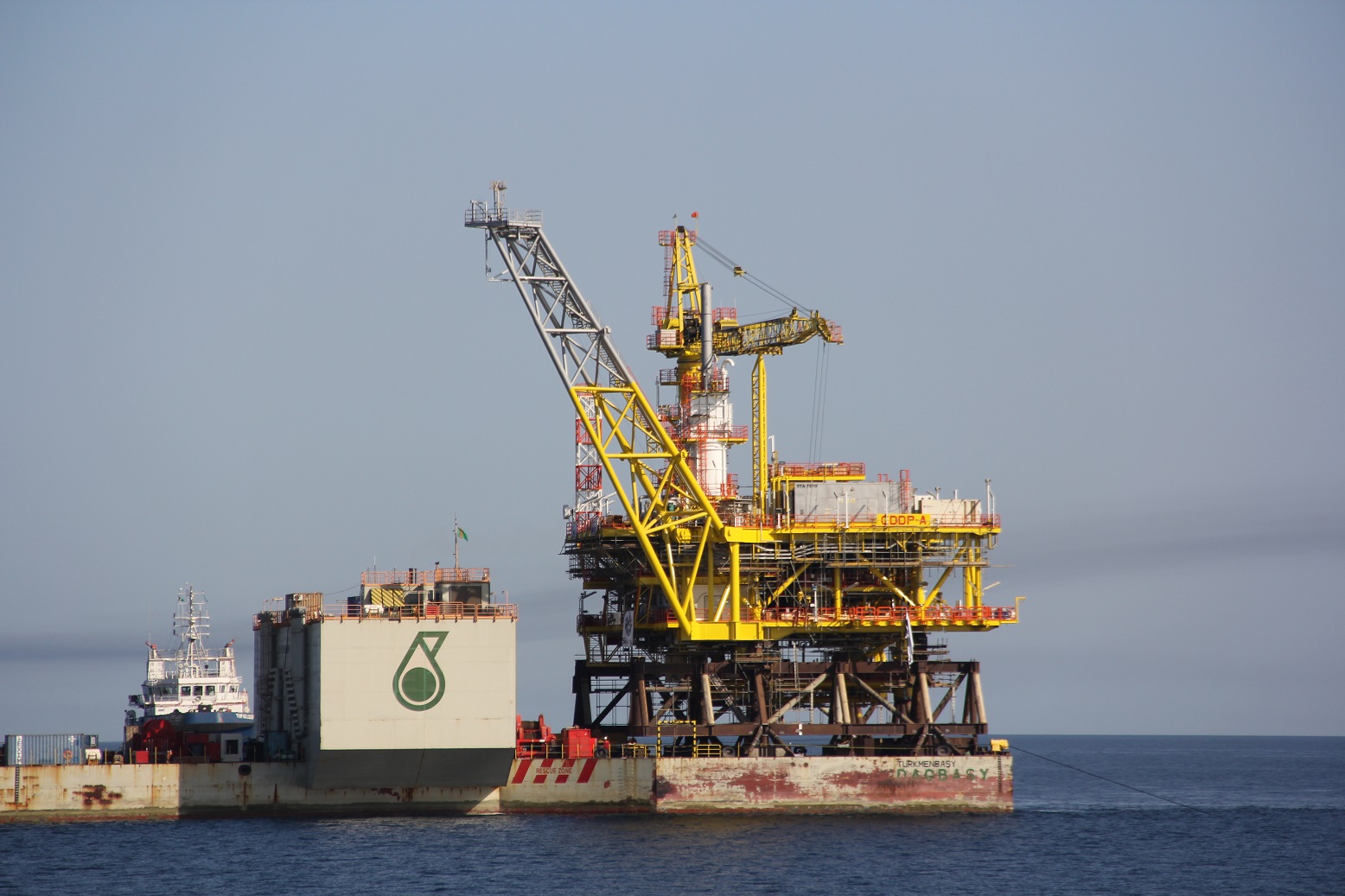
    Petroliam Nasional Bhd (Petronas), through its subsidiary, PC Oman Ventures Ltd (PCOVL) has acquired a 10% stake in Block 61, onshore Oman from Makarim Gas Development LLC (MGD), after the conditions for the completion of the transaction were fulfilled. MGD is a subsidiary of Oman Oil Company Exploration & Production LLC. Petronas said the completion of the transaction was formalised at an event held in Muscat, Oman on Dec 27.

    Following the deal, MGD’s stake in Block 61 will be reduced to 30%, while P Exploration (Epsilon) Ltd as the operator holds the remaining 60% stake.

    Petronas noted that the acquisition of Block 61 marks an important step in realising the group’s growth strategy in the upstream sector in the region and globally, as it aligns its activities to ensure sustainable energy supply.

  • LNG Canada investor Petronas signs gas supply deal with Vitol

    LNG Canada investor Petronas signs gas supply deal with Vitol

     LNG Canada, the US$30 billion (RM125.7 billion) liquefied natural gas (LNG) export project, has bagged another client after project shareholder Petroliam Nasional Bhd (Petronas) signed an initial sales deal with trading house Vitol.

    Royal Dutch Shell decided in October to construct the export terminal. It was the first major investment decision in a new North American LNG export project for two years and was expected to launch a new wave of such projects in the region.

    Petronas, the Malaysian state-owned oil and gas company that bought a 25% stake in the project in May, will supply Vitol with 0.8 million tonnes per year (mtpa) of LNG starting from 2024 for 15 years, Vitol said in a statement.

    “The primary supply to Vitol will come from LNG Canada as well as from (Petronas’) other global LNG supply portfolio,“ Vitol said.

    Vitol joins Asian utilities Tokyo Gas, Toho Gas and Korea Gas Corp (Kogas) as buyers, committing to offtake around 2.4 mtpa collectively.

    Such long-term agreements normally underpin project finance and are critical before a final investment decision is taken. But because Shell and partners Petronas, PetroChina, Mitsubishi and Kogas are such large players in the LNG market, they can absorb the output into their global portfolios without needing to find significant other buyers.

    Under previously announced deals, Toho Gas will buy 0.3 mtpa, Tokyo Gas 0.6 mtpa and Kogas 0.7 mtpa from LNG Canada.

  • Higher revenue lifts Petronas’ Q3 net profit to RM14.3 billion

    Higher revenue lifts Petronas’ Q3 net profit to RM14.3 billion

    Petroliam Nasional Bhd’s (Petronas) net profit for the third quarter ended Sept 30, 2018 rose 43% to RM14.3 billion from RM10 billion a year ago due to higher revenue. The group said in a statement today that the higher revenue was partially offset by higher product costs in tandem with higher prices, coupled with increased depreciation and amortisation.

    Earnings before interest, taxation, depreciation and amortisation (ebitda) rose 25% to RM26.9 billion from RM21.5 billion a year ago.

    The state-owned oil company attributed the higher earnings to its continuous execution of business improvement activities, focused on increased operational excellence and supported by higher commodity prices.

    Revenue for the quarter rose 19% year-on-year to RM63.9 billion, mainly driven by higher average realised prices for key products coupled with increased efficiency throughout the group.

    Higher sales were partially offset by the strengthening ringgit and lower sales volume, mainly for liquefied natural gas (LNG). Capital investments for the quarter stood at RM6.7 billion, mainly attributed to upstream projects.

    For the nine months ended Sept 30, 2018, Petronas’ net profit rose 50% year on year to RM41 billion, due mainly to higher revenue, lower net impairment on assets as well as other expenses. These were partially offset by higher product costs in tandem with higher prices coupled with increased depreciation and amortisation as well as tax expenses.

    Revenue for the period rose 12% year-on-year to RM181.1 billion mainly due to the impact of higher average realised prices for key products as well as increased efficiency efforts, largely offset by the effect of the ringgit strengthening against the US dollar.

    Capital investments for the period stood at RM26.5 billion mainly attributed to upstream projects while total assets rose to RM623.1 billion as at end-September, compared with RM599.8 billion as at end-December 2017.

    Shareholders’ equity rose to RM402.1 billion as at end-September from RM389.8 billion as at end-December 2017. The gearing ratio remained at 16.1% while return on average capital employed rose to 12.6% from 9.8% during the same period.

    The Pengerang Integrated Complex achieved 95% progress as at end-September and successfully received its first crude oil cargo at the Pengerang Deepwater Terminal 2. The project is on track to be ready for startup in 2019.

    President and group CEO Tan Sri Wan Zulkiflee Wan Ariffin said Petronas is on track to deliver a strong year-end performance by maintaining focus on driving efficiency efforts across its operations.

    “The recent drop in oil prices demonstrate the volatile and cyclical nature of the industry and we will continue to maintain our prudent outlook amidst this landscape while remaining steadfast in pursuing our growth strategies to ensure the long-term sustainability and progress of the company,” he said.

  • Moody’s downgrades Petronas LNG’s ratings outlook to negative

    Moody’s downgrades Petronas LNG’s ratings outlook to negative

    Moody’s Investors Service has downgraded Petronas LNG Ltd’s (PLL) ratings outlook to “negative” from “stable”, following the same outlook revision for its parent company Petroliam Nasional Bhd’s (Petronas) yesterday. At the same time, the rating agency has affirmed PLL’s A3 foreign and local currency issuer ratings.

    Moody’s said the changes reflects its negative outlook on Petronas’ ratings and its expectation of PLL’s continued strong support from and linkages with its ultimate parent.

    PLL is 100%-owned by Petronas, which is in turn wholly-owned by the government.

    Moody’s said given the negative ratings outlook, a ratings upgrade is unlikely and it will revise PLL’s ratings outlook to stable from negative only if Petronas’ ratings outlook is stabilised.

    It said that PLL’s ratings will be downgraded if: Petronas’ rating is downgraded; there is a decrease in Petronas’ ownership of PLL; there is a reduction in Petronas’ supervision of and operational and financial support to PLL; or there is a material increase in PLL’s risk appetite.

    PLL’s ratings were assigned using a top down approach by evaluating the company’s full ownership by Petronas, its strong operational and financial integration with Petronas, and the willingness and ability of Petronas to extend support to PLL in an event of distress.

    Meanwhile, Moody’s assistant vice president and analyst Rachel Chua said PLL’s A3 ratings are positioned two notches below the A1 ratings of its ultimate parent.

    She noted that PLL enjoys ongoing liquidity support from Petronas and it can draw from Petronas’ umbrella credit facility for liquidity management, adding Petronas has continued to support PLL financially through cash injections of almost $400 million over the past three years.

    “Petronas’ support for PLL extends beyond financial assistance. Petronas also provides PLL with significant management support and oversight, including monthly reporting on risk and governance to a committee chaired by Petronas.

    “PLL also has an integrated treasury function with Petronas, where its cash is held centrally by Petronas and cash flow requirements are shared with its parent,” she added.

  • Petronas has sufficient headroom to absorb one-off exceptional dividend

    Petronas has sufficient headroom to absorb one-off exceptional dividend

    Petroliam Nasional Bhd’s (Petronas) solid balance sheet, sizeable net cash position and ample liquidity provide ample buffer against the payment of one-off dividend to the government that could reach RM30 billion. According to S&P Global Ratings, the financial impact of a one-off dividend of this size is moderate considering Petronas’ cash position and balance sheet quality.

    “The company can finance this dividend, given cash and short-term equivalent of nearly RM180 billion as of June 30, 2018; immaterial reported debt of about RM66.3 billion as of June 30, 2018 and a net cash position of nearly RM114 billion as of June 30, 2018; and solid operating cash flows,” it said in a statement.

    It added that the exceptional dividend of RM30 billion would effectively offset inflows of nearly RM30 billion the company received following the completion of the transaction with Saudi-based oil and gas producer Saudi Aramco in the first quarter of 2018.

    “We project Petronas will remain in a net cash position in 2019 and, depending on the pace of capital spending disbursement, in 2020 as well. This underpins our ‘aa’ stand-alone credit profile on the company.

    “We currently project operating cash flows of at least RM80 billion in 2019 amid higher hydrocarbon prices. These are sufficient to fund capital spending that we forecast at about RM55 billion and regular dividends to the government and minority interest that we estimate at about RM25 billion,” it said.

    The rating agency said the special dividend will not affect Petronas’ solid liquidity as the group’s short-term debt maturities were minimal at about RM11.5 billion as of June 30, 2018, representing less than 10% of its cash balance.

    “We estimate that Petronas’ balance sheet can absorb negative discretionary cash flows of RM40 billion for two years before the headroom under its ‘aa’ stand-alone credit profile starts to reduce. Assuming no change to the company’s investment plan, this implies additional one-off dividends of RM40 billion to RM50 billion, on top of the regular and exceptional dividends in the 2019 budget,” it said.

    It said that the special dividend validates its long-standing credit view that Petronas can be subject to periodic cash calls from the government given its solid financial position, high importance to the national budget and ownership control by the government.

    It added that a sustained period of higher oil prices over the next two to three years will translate into higher dividends from Petronas, and potentially, additional one-off dividends to the state.

    “We cap our issuer credit rating on Petronas (foreign currency A-/Stable/–; local currency A/Stable/–) to that of the sovereign of Malaysia (A-/Stable/A-2; local currency A/Stable/A-1), despite Petronas’ stronger stand-alone credit profile, given this government intervention risk.”

  • Petronas Gas shares fall further despite higher Q2 earnings

    Petronas Gas shares fall further despite higher Q2 earnings

    Petronas Gas Bhd’s share price continued to fall by 14 sen or 0.75% this morning despite reporting a 19.7% jump in its net profit to RM509.3 million in the second quarter (Q2) ended June 30 from RM425.3 million previously.

    At 11.08 am, the stock stood at RM18.52 with 62,900 shares changing hands.

    The group told the stock exchange that the higher profit was in tandem with improved in revenue during the quarter.

    Revenue for the quarter grew 15.7% to RM1.36 billion, compared with RM1.17 billion in the same period last year, mainly contributed by the group’s new LNG regasification terminal in Pengerang, Johor which commenced commercial operations in November 2017.

    “This was further supported by higher revenue from all segments,” it added.

  • Petronas committed to help Sarawak become major oil industry player

    Petronas committed to help Sarawak become major oil industry player

    Petroliam Nasional Bhd (Petronas) is committed to supporting Sarawak’s aspiration to become a major player in the petroleum industry and has so far invested RM183 billion in the upstream sector in the state alone via production sharing contracts (PSCs).

    According to infographics released to Bernama, the national oil company, since 1976 and up to last year, made cash payments worth RM33 billion to Sarawak.

    In addition, through the state government’s equity in Petronas’ liquefied natural gas (LNG) complex in Bintulu, the state also received RM18 billion in dividends.

    Through the Sarawak Joint Working Committee, Petronas also works closely with the state government to ensure Sarawakians and local companies get priority in career and business opportunities in both upstream and downstream activities in the region.

    Petronas also spent RM411 million on scholarships and aid programmes for over 6,000 Sarawakian students while 5,000 Sarawakian professionals are working in Petronas operations, worldwide.

    The Sarawak government, in March this year, launched state-owned Petroleum Sarawak Bhd (Petros) to boost its own participation in the industry.

    The infographics also explained in detail the Petroleum Development Act 1974 , a Federal law enacted by Parliament, having the legislative competence under the Federal Constitution to promulgate laws relating to petroleum.

    The PDA 1974 gives Petronas exclusive ownership to oil and and resources in Malaysia and makes it the sole regulatory body for upstream oil and gas activities through PSCs.

    The PSC system addresses the need for a greater centralised management of the petroleum industry for the benefit of the nation and the states.

    This has allowed Petronas to create significant value for the nation, hence contributing to the well-being and development of the nation and the respective states.

    “The PDA 1974 serves to protect the interest of all Malaysians, ensuring that the nation will benefit the most from its petroleum resources,” Petronas said in the infographics.

    Under the Act, profit share is split between Petronas, contractors and income tax payment to the government with the states and Federal government getting five per cent royalty each from the Profit Oil, Petronas and the contractors sharing 12.5% each from the 1985-type PSC and 15% for income tax.

    From two other types of PSC, Profit Oil is only 10% with 3% each for both parties and 4% for income tax (under Deepwater/Ultra Water PSC) and for Revenue/Cost PSC, Profit Oil is at 20% of which 6% each is for Petronas and contractors and 8% for income tax.

    The infographics also highlighted the fact that PSCs are risky, highly capital intensive and take a long time to provide returns while exploration took between three and five years with no income and the probability to discover oil rated at only between 20% and 25%.

    The risks is extended to the development period of between four and six years’ spending to monetise the discovery, a period when still no income is made.

    Once production commences, the 10% cash payment to the federal government and the states starts while both Petronas and the contractors pay 38% income tax from the profits made.

    The national oil company also pays annual dividends to the federal government.

    Contrary to general perception, these cash payments are paid, twice a year, irrespective of whether the production from the field is profitable or not.

    According to the infographics, an increase of the royalty payment from 5% to 20% as demanded by producing states will have an adverse impact on the industry.

    Such an increase in cash payment would also reduce the attractiveness of Malaysia as an oil and gas investment destination for many players.

    There are currently over 40 investors in PSCs of which about 80% are foreign companies which view the Malaysian petroleum sector as stable and favourable based on current PSC arrangements.
  • Petronas buys 25% stake in LNG project in Canada

    Petronas buys 25% stake in LNG project in Canada

    Petroliam Nasional Bhd (Petronas) is acquiring a 25% stake in a liquefied natural gas (LNG) project in Kitimat, Canada after it scrapped plans for the Pacific NorthWest LNG project in the country last July due to challenging market conditions as a result of prolonged depressed prices.

    Petronas said in a statement that its wholly owned entity the North Montney LNG Ltd Partnership had entered into a purchase and sales agreement for the deal. The purchase sum was not disclosed.

    Other shareholders of the project are Royal Dutch Shell plc’s subsidiary Shell Canada Energy (40%), PetroChina Canada Ltd (15%), Mitsubishi Corp’s subsidiary Diamond LNG Canada Ltd (15%) and Kogas Canada LNG Ltd (5%).

    The transaction is subject to international regulatory approvals and the completion of other associated agreement. It is slated for completion in the next few months.

    “Petronas is pleased to be part of the LNG Canada project. As one of the world’s largest LNG producers, Petronas looks forward to adding value to this venture through our long-term expertise and experience across the LNG value chain. We are committed to deliver LNG and natural gas, the cleanest fossil fuel in the world, to the growing global energy market,” said Petronas president and group CEO Tan Sri Wan Zulkiflee Wan Ariffin.

    “Petronas is in Canada for the long-term and we are exploring a number of business opportunities that will allow us to increase our production and accelerate the monetisation of our world-class resources in the North Montney. LNG is just one of those opportunities,” he added.

    The proposed project includes the design, construction and operation of a gas liquefaction plant and facilities for the storage and export of LNG, including marine facilities.

    The plant will initially consist of two world-scale LNG processing units referred to as “trains”, with an option to expand the project in the future to four trains.

    Canada is Petronas’ second largest resource holder after Malaysia, with vast unconventional gas and oil resources in the North Montney.

    Petronas and its North Montney joint venture partners are one of the largest natural gas resource owners in Canada with over 52 trillion cubic feet of reserves and contingent resources.

  • QSR and PETRONAS tie-up to open 50 new KFC drive-thru outlets

    QSR and PETRONAS tie-up to open 50 new KFC drive-thru outlets

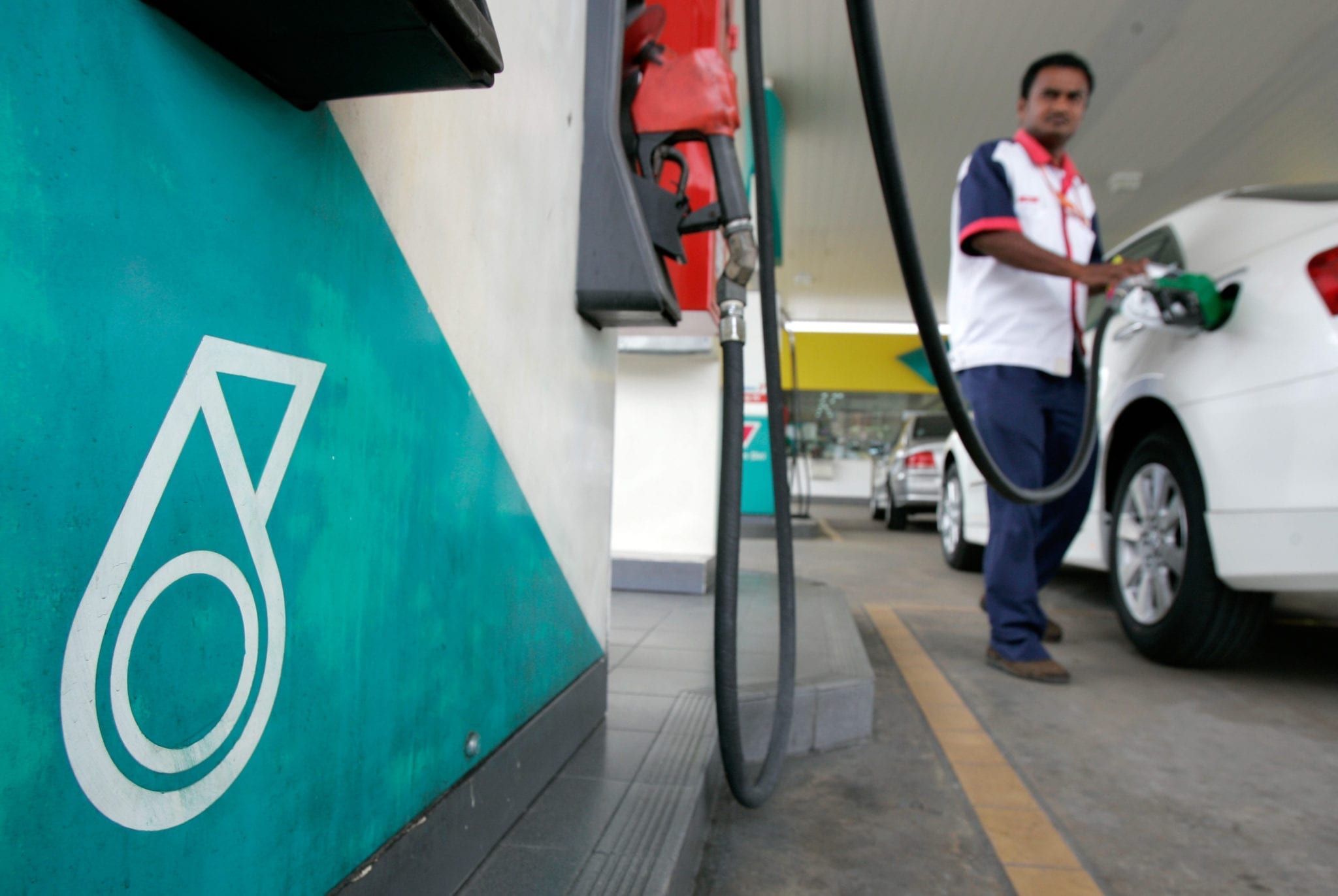
    QSR Brands Holdings’ wholly owned subsidiary QSR Stores has signed a memorandum of understanding with Petronas Dagangan to gradually open 50 KFC Drive-Thru outlets at Petronas gas stations within the next three years.

    QSR Brands MD Mohamed Azahari Mohamed Kamil says the strategic collaboration provides an excellent opportunity for the quick-service restaurant group to expand its business and restaurant services in Malaysia.

    “While continuing to strengthen our core product and service offerings, we place a great emphasis on our expansion strategies to meet the elevated demands of our customers,” says Azahari.

    QSR has more than 1250 KFC and Pizza Hut restaurants in Malaysia, Singapore, Brunei and Cambodia.

  • Petronas: Biggest risk now is stronger oil price

    Petronas: Biggest risk now is stronger oil price

    Petronas which saw its net profit soar 91% last year, considers the biggest risk in the horizon to be the improved oil price which looks to already be making oil and gas players abandon hard-won cost efficiencies achieved over the last three years.

    Although the recovery of global oil prices played a key role in its strengthened performance for 2017, its president and group CEO Tan Sri Wan Zulkiflee Wan Ariffin at a briefing last Friday cautioned that the sustainability of the oil price at current levels, which are supported by the Organisation of Petroleum Exporting Countries (Opec) and non-Opec production cuts, remains to be seen.

    “A concern here, is that with the oil price recovery, costs are showing signs of increasing at a worrying rate. This is likely being driven by a premature exuberance among industry players. If we do not keep these escalating costs in check, the industry as a whole runs the risk of negating the value we have gained from intensive cost-efficiency efforts over the last three years,” he added.

    Wan Zulkiflee said the industry should continue to ensure costs are kept under control, increase efficiencies and drive up value.

    For the fourth quarter ended Dec 31, 2017, Petronas’ net profit rose 61% to RM18.2 billion from RM11.3 billion a year ago due to higher revenue and lower net impairment on assets and well costs.

    Revenue for the quarter rose 14% to RM61.8 billion from RM54.3 billion a year ago due to higher average realised prices for major products and higher sales volume from liquefied natural gas and petroleum products, partially offset by the ringgit strengthening against the US dollar.

    For the full year, its net profit nearly doubled with a 91% jump to RM45.5 billion from RM23.8 billion a year ago while revenue for the year rose 15% to RM223.6 billion from RM195.1 billion a year ago.

    A dividend of RM16 billion was paid to government last year, while it is committed to paying out RM19 billion this year.

    The group is expecting a higher capital expenditure (capex) this year of RM55 billion compared with RM44.5 billion last year.

    “The stronger ringgit will have an impact on our bottom line but it also works in our favour in terms of capex, which is priced in US dollars. The amount of ringgit that we need to spend on those will be lower,” said executive vice-president and group CFO Datuk George Ratilal.

    He said the stronger ringgit will also benefit Petronas when its borrowings, of which 80% are in US dollars, are translated into ringgit.

    The group managed to sign on nine production sharing contracts in 2017, almost double that of less than five in 2016, a feat the state-owned oil multinational attributes to the regulatory environment for oil and gas investments here, where Petronas is the single point of reference.

    Moving forward, Petronas is driving a three-pronged growth strategy that includes maximising its cash generators by sweating its assets and building a solid foundation for growth; expanding its core business by growing its resource base and integrated business model; and stepping out to build capabilities and venture into new business areas such as specialty chemicals and new energy.

    The strategy will see Petronas focusing on regions like Asean, the Indian sub-continent, the Middle East and the Americas.

    Commenting on its plans to venture into new business areas, Wan Zulkiflee said oil and gas will remain its core business but contribution from renewable energy will grow, to some 18% in 2037-2040.

    On the establishment of Petroleum Sarawak (Petros), he said it welcomes the participation of Petros and any other state-owned company that wants to engage in the oil and gas sector, as long as it is within existing arrangements. He did not elaborate.

  • Petronas Gas proposes 19 sen dividend on better Q4 earnings

    Petronas Gas proposes 19 sen dividend on better Q4 earnings

    Petronas Gas Bhd saw its net profit increase 4.7% to RM486.7 million for the fourth quarter ended December 31, 2017 compared with RM465.06 million in the same quarter a year ago, thanks to new contribution from its liquefied natural gas (LNG) regasification terminal in Pengerang, Johor and higher revenue from the gas processing and utilities segments on the back of higher performance-based structure income and favourable selling price.

    Its revenue expanded 13% from RM1.15 billion to RM1.3 billion.

    The group has proposed to declare a dividend of 19 sen per share amounting to RM376 million for the quarter under review.

    Petronas Gas’ full-year net profit rose 3.1% from RM1.74 billion to RM1.79 billion. Revenue came in at RM4.81 billion, 5.4% higher than the RM4.56 billion made a year ago.

    Looking ahead, the group expects its performance to remain robust in 2018, backed by its strong and sustainable revenue streams from existing gas processing agreement and gas transportation agreement signed with Petronas.

    “Furthermore, revenue stream for the regasification segment will grow with the first full year of operations at the group’s new LNG regasification terminal in Pengerang, Johor.”

    On Bursa Malaysia today, Petronas Gas ended down 2 sen or 0.1% at RM17.66, on volume of 827,800 shares.

  • Former Petronas regional marketing head to Pizza Hut as CMO

    Former Petronas regional marketing head to Pizza Hut as CMO

    QSR Brands, one of the largest quick service restaurants operator in Malaysia as well as a leading brand in the Southeast Asia region, is promoting Merrill Pereyra to chief executive officer.   Along with Pereyra’s promotion, it is also appointing Jean Ler as chief marketing officer for Pizza Hut Malaysia.

    Ler will head up marketing, including brand management, innovations and consumer insights to rejuvenate the Pizza Hut brand in Malaysia. She will look to strengthen the relevance and connection to consumers by bringing them delicious products, renewed marketing communications and exciting enhanced experiences.

    Ler has a marketing career that spans 20 years across various reputable local and multinational food & beverage companies. She was most recently regional head of Marketing for Petronas Lubricants AsiaPac following various positions of increased responsibility at Dutch Lady and KraftFoods/Mondelez where she successfully regained market leadership position for the Dairy and Biscuits portfolio of the respective brands.

    Meanwhile, CEO Pereyra joined QSR Brands in June 2016 as COO to further shape the company’s growth story in the region. His current CEO role includes leadership of KFC and Pizza Hut in Malaysia, Singapore, Brunei, and Cambodia. His promotion follows the departure of Rohan St. George who helmed QSR Brands from 2013 to 2016.

    With over 25 years of years of innovative and energetic leadership in the Middle East, South Pacific, Australia and Asia, Pereyra is renowned for leveraging global resources, capabilities, and relationships to promote growth of brands in new markets. He has a successful track record in setting up new businesses in six countries, in developing and implementing strategic business plans as well as fast tracking high potential employees to leadership positions.

    Over the last 30 years, Pereyra has assumed senior leadership, sales and marketing positions at various leading quick service restaurants such as Domino’s, Healthy Habits and McDonald’s. In his last two roles, he was CEO of Domino’s and managing director of Healthy Habits in Australia. Prior to that, he spent 23 years at McDonald’s in four different countries.

    Eric Leong has also been appointed as GM for Pizza Hut and will oversee the planning, coordinating, and managing field activities including restaurant and delivery management, quality assurance, and implementing special projects. This is in line with Pizza Hut’s drive for superior customer service and operational efficiencies to cement a solid foundation for ambitious business growth.

    He brings more than 27 years of experience in the food and beverage industry, with extensive experience in sales and retail. Prior to joining Pizza Hut Malaysia, he was the managing director at Minor Food Group Singapore, which is part of Minor International, one of the largest leisure, F&B and retail companies in the Asia Pacific.

    He was also supervising director and general manager at Berjaya Corporation Berhad in 2012, holding both portfolios comprising Papa John’s Pizza Malaysia and Philippines, as well as Wendy’s Malaysia.

    Both Ler and Leong witll report to  Pereyra in his new role as CEO.

    Pereyra said, “At the heart of everything we do at QSR Brands, is our consumers. This is something Eric and Jean truly understand and embody. They both bring a wealth of experience and a fresh perspective to Pizza Hut.” “I look forward to working closely with them to deliver our plans for 2017 and beyond to improve our brand value and provide Malaysians with new and exciting dining experiences that appeal to their tastes and hearts.”

    This year Pizza Hut celebrates its 35th anniversary in Malaysia