Tag: petrovietnam

  • Petrovietnam and KEPCO Speed up Talks on Ninh Thuan 2 Nuclear Project

    Petrovietnam and KEPCO Speed up Talks on Ninh Thuan 2 Nuclear Project

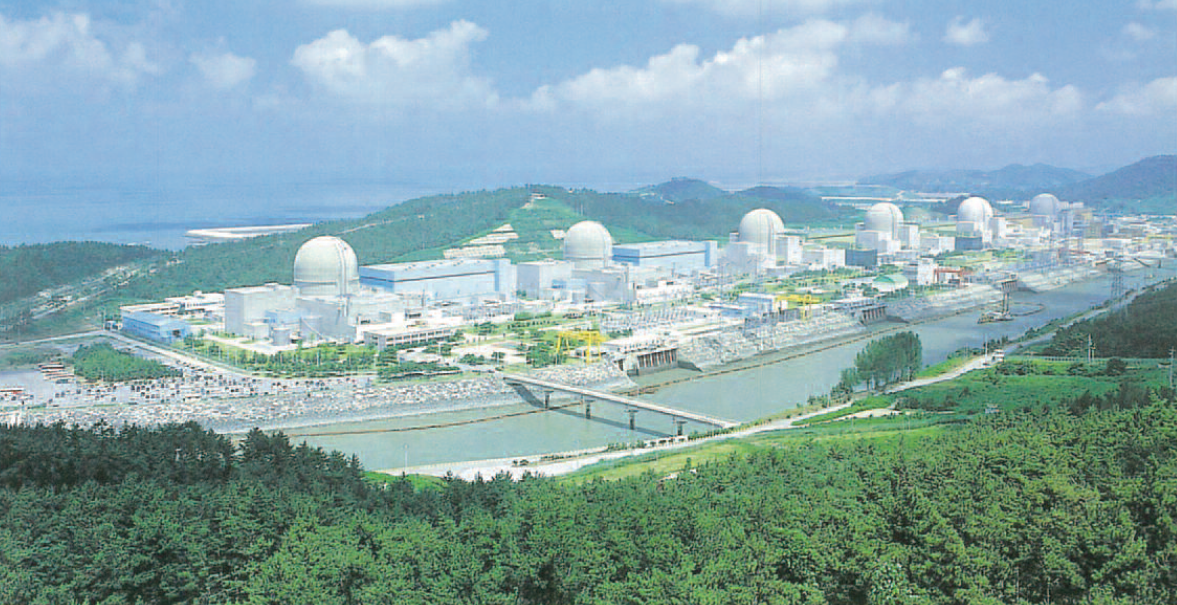
    Petrovietnam and South Korea’s Korea Electric Power Corp have accelerated negotiations to construct Vietnam’s Ninh Thuan 2 nuclear plant. Workers have already cleared 97.5 per cent of the site land.

    Chief Executive Le Manh Cuong met KEPCO President Kim Dong-cheol in Seoul on Tuesday. They met to advance technology, investment, and project financing frameworks for the commercial nuclear facility.

    Land Clearances and Financing Talks

    Hanoi assigned Petrovietnam to lead development of the Ninh Thuan 2 station to revive nuclear power generation. In July, the Ministry of Industry and Trade confirmed KEPCO as the primary foreign partner candidate following preliminary discussions with Vietnamese authorities.

    Site preparation in Ninh Thuan province is almost complete. Petrovietnam confirmed that remaining clearance operations will finish shortly. That clears a key requirement before commercial construction agreements can proceed.

    South Korean Reactor Push in Southeast Asia

    KEPCO presented its delivery of the Barakah nuclear power plant in the United Arab Emirates as an operational blueprint for Vietnam. The four-reactor Barakah complex represents Seoul’s main export reference. It gives KEPCO an edge in discussions over procurement models and long-term project debt financing.

    Choosing KEPCO creates a deliberate split in Vietnam’s nuclear procurement program. Hanoi previously designated Russia’s state atomic agency Rosatom to develop the separate Ninh Thuan 1 project. The strategy distributes technological reliance across competing nuclear suppliers rather than committing to a single foreign vendor.

    Power Demand and Grid Readiness

    Vietnam shelved nuclear power planning in 2016 because of cost constraints and fiscal discipline. Rising baseload electricity demand from industrial clusters has forced trade officials to bring atomic power back into the long-term national power development master plan.

    Factories and industrial operators in Vietnam face ongoing grid capacity constraints as export manufacturing expands. High-capacity nuclear baseload addresses supply reliability. However, commercial terms and safety licensing still require bilateral government approvals.

    Next, Hanoi and Seoul will run financial structuring reviews while Petrovietnam finishes the final 2.5 per cent of site clearance work.
  • Petrovietnam reports 26 percent hike in revenues last year

    Petrovietnam reports 26 percent hike in revenues last year

    Vietnam National Oil and Gas Group has announced its 2018 results, which show it exceeded its revenue and state budget contribution targets. The state-run giant (Petrovietnam or PVN) reported revenues of VND626.8 trillion ($26.92 billion), 18 percent higher than the target and a year-on-year rise of 26 percent. As of December 10 it had achieved its domestic crude oil production target of 11.31 million tons. Total oil and gas output reached 23.98 million tons (gas converted into oil equivalent).

    The group contributed VND121.3 trillion ($5.22 billion) to the state coffers, exceeding the target by 64.3 percent and 24.3 percent more than the previous year.

    “These achievements came at a time when global oil price movements were difficult to predict, production in mature fields were in rapid decline while new fields brought on stream were small and marginal and there was pressure to minimize costs per barrel,” CEO Nguyen Vu Truong Son said in the company’s 2018 business performance report.

    These are large enterprises with the state equity estimated at VND89 trillion ($3.83 billion), according to auditors’ conclusion.Last year the group wrapped up equitization of three of its subsidiaries: PetroVietnam Power Corporation (PV Power), Vietnam Oil Corporation (PVOIL) and Binh Son Refinery and Petrochemical Joint Stock Company (BSR).

    The proceeds from their IPOs reached VND16.5 trillion ($710 million). Petrovietnam managed to raise VND18.6 trillion ($801 million) from the three firms’ equitization and state divestments.

    With a capacity to process 200,000 barrels of crude a day, it, along with Dung Quat, can meet more than 80 percent of the country’s petroleum demand, reducing dependence on imports.In late last year, the $9 billion Nghi Son Refinery and Petrochemical Complex, one of the key national oil and gas projects, began commercial operation.

    Situated in the Nghi Son Economic Zone, 200 km south of Hanoi in the central province of Thanh Hoa, Nghi Son is invested by Idemitsu Kosan Co, Kuwait Petroleum, Petrovietnam and Mitsui Chemicals Inc.

  • Vietnam’s new oil refineries to quadruple capacity by 2023

    Vietnam’s new oil refineries to quadruple capacity by 2023

    Vietnam’s total oil refining capacity will nearly quadruple by 2023 as two new refineries go on stream, market data provider Fitch Solutions reports. The Dung Quat refinery in the central province of Quang Ngai operated by the state-owned PetroVietnam’s subsidiary Binh Son Refinery Limited (BSR) remains the sole facility now, with a crude oil processing capacity of 148,000 barrels per day (b/d).

    Dung Quat will soon be joined by Nghi Son refinery in the central Thanh Hoa Province. Nghi Son is currently testing at full capacity and is scheduled to start commercial operations this month.

    The $9 billion Nghi Son project is owned by the Nghi Son Refinery and Petrochemical LLC (NSRP), a joint venture between PetroVietnam, Kuwait Petroleum, Japan’s Idemitsu Kosan and Mitsui Chemical. It will have a designed capacity of 200,000 b/d of crude oil.

    Meanwhile, the long-delayed construction of the Long Son refining and petrochemical complex in the southern province of Ba Ria-Vung Tau resumed in February this year, putting it on track to go on stream by the first half of 2023.

    Licensed in 2008 and initially slated to begin operations in 2014, Long Son hit a roadblock due to site clearance issues and disagreements over the development strategy between the project partners.

    This caused Qatar Petroleum to withdraw from the project in 2015. Thailand’s Siam Cement Group (SCG) increased its stake to 71 percent after it bought the 25 percent stake owned by Qatar Petroleum, while PetroVietnam held the remaining 29 percent.

    In May this year SCG agreed to acquire PetroVietnam’s 29 percent. The refinery is expected to cost $5-6 billion. Once completed it will be able to process 200,000 b/d of crude oil and produce 1.6 million tons of olefins annually.

    “The two new refineries would increase competition in the domestic fuel market, which could require refiners to upgrade, cut costs and move up the value chain to win market share,” Fitch Solutions said in a report released Monday.

    This also spells an end to Dung Quat’s status as the country’s sole refiner, which it has enjoyed since 2010.

    New oil refineries to quadruple Vietnam capacity 2023

    Competition from Nghi Son will be stiff as the government has granted a host of incentives to successfully commission its second standalone refinery, including tax concessions, tariff exemption on crude imports from primary feedstock provider Kuwait and an offtake guarantee from PetroVietnam for the first 15 years of operation.

    The Quang Ngai provincial government in early November sought the same incentives for the Dung Quat refinery to ensure “fair competition”.

    BSR is also planning to invest $1.8 billion over the next three years to expand Dung Quat’s capacity by 23,000 b/d and upgrade the quality of its fuels to Euro 5 from the current Euro 2.

    Fitch Solutions said the upgrade would enable Dung Quat to process higher-sulphur crudes, helping reduce its dependence on Vietnamese light, sweet crudes, mostly from the Bach Ho field, which is depleting and thus becoming more expensive.

    Besides the competition between themselves, the refineries also face significant pressure from imports, mostly from South Korea and Southeast Asian countries, which are of higher quality and priced competitively due to free trade agreements, the report noted.

    “Competition is likely to peak in 2024, when tariffs on fuel imports from ASEAN and South Korea are scheduled to be cut to zero. Concerns about mounting competition have also led both Dung Quat and Nghi Son to consider exports to countries like Laos, Cambodia and Indonesia.

    “Vietnam’s improving self-sufficiency in refined fuels would reduce its need for imports, reorienting trade flows from some of its major fuel suppliers to alternative markets.”

    While insufficient to entirely meet domestic demand, this nevertheless would weigh on the market positions of Singapore, Malaysia, South Korea, Thailand and China, which account for nearly 95 percent of Vietnam’s fuel imports, according to Fitch Solutions.

    Malaysia and Thailand have the highest exposure to Vietnam’s fuel market — 11 percent and 16 percent of imports.

    Major international fuel suppliers are also likely to find room for growth in the Vietnamese market increasingly hard to come by as their quality advantage over locally produced fuels dissipates with the ongoing upgrades, the firm added.

  • PetroVietnam says Tokyo Gas may help with power plant project in Vietnam

    PetroVietnam says Tokyo Gas may help with power plant project in Vietnam

    Tokyo Gas is interested in cooperating with Vietnam’s PetroVietnam Power Corp (PV Power) to develop a natural gas-fired power project in the Southeast Asian country. On Friday, PV Power’s parent said that Tokyo Gas wants to help secure long-term liquefied natural gas supplies and funds for the construction of the Nhon Trach 3 & 4 power plants in the southern province of Dong Nai, state-run Vietnam Oil and Gas Group said in a statement on its website.

    Tokyo Gas did not immediately respond to a request for comment made via its website.

    The statement follows a meeting between senior executives from PV Power and Tokyo Gas in Hanoi this week, PV Power said.

    The two plants, with a combined capacity of 1,500 megawatts, would be operational from 2020, according to PV Power.

  • Japan bank mulls PetroVietnam plan

    Japan bank mulls PetroVietnam plan

    The Japan Bank for International Cooperation (JBIC) is considering funding the Block B&52/97 project of the Việt Nam Oil and Gas Group (PetrolVietnam) with loans without a government guarantee.

    General Director of PetroVietnam Nguyễn Vũ Trường Sơn recently worked with JBIC representatives on the financial arrangements for the project.

    According to PetroVietnam, the project, worth nearly US$10 billion, is one of the two largest gas projects in Việt Nam. The capital arrangement for the project is one of the main concerns of foreign partners involved in the project.

    The Block B&52/97 project’s oilfield development report was approved by contractors and the State appraisal council, while its environmental impact assessment report was ratified by the Ministry of Natural Resources and Environment. The quantitative risk assessment report was also submitted to the Ministry of Industry and Trade.

    As scheduled, the contract will be awarded in June 2018, and the signing of Engineering Procurement Construction and Installation (EPCI) contracts for the project will be done in July.

    The Block B&52/97 project includes two sub-projects. The first aims to develop the Block B oilfield, with PetroVietnam owning maximum capital in the project (42.896 per cent). Other investors are PetroVietnam Exploration and Production Corporation (26.788 per cent), Mitsui Oil Exploration Company (MOECO) of Japan (22.575 per cent), and Thailand’s PTT Exploration and Production Public Company Limited (PTTEP) (7.741 per cent).

    The second is to build the Block B-Ô Môn gas pipeline having a total length of 430km. PetroVietnam, PetroVietnam Gas Corporation (PV Gas), MOECO and PTTEP have invested in this project.

    The Block B&52/97 project is expected to bring ashore 5.06 billion cu.m of gas per year within 20 years, meeting the gas demand of power plants in the south.

    It is expected to contribute some $18 billion to the State budget.