Tag: Pfizer

  • Drugmakers Turn to Gyms and Metros to Drive China Weight-Loss Sales

    Drugmakers Turn to Gyms and Metros to Drive China Weight-Loss Sales

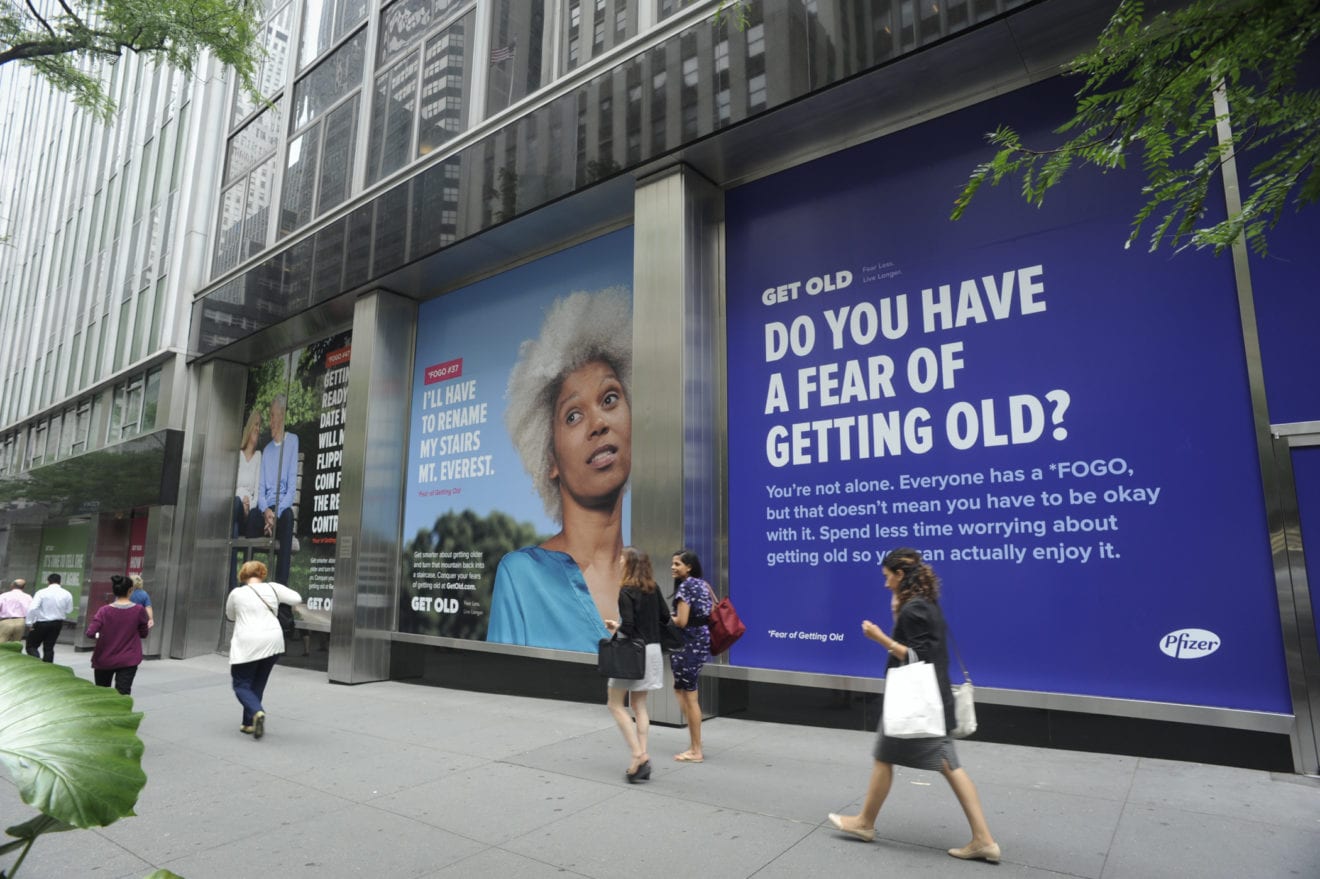
    Global and local drugmakers are plastering Chinese metro stations, gyms, and sports stadiums with obesity campaigns to capture a 30 billion yuan weight-loss market. China bans direct-to-consumer advertising for prescription medicines, forcing pharmaceutical companies to sell lifestyle interventions rather than brand names to a population where overweight rates could top 65 per cent by 2030.

    Eli Lilly, Novo Nordisk, Pfizer, and domestic group Innovent Biologics are vying for early dominance in once-weekly GLP-1 injections. In the second quarter, Lilly took the top spot in sales on Alibaba’s Tmall and JD.com, according to Jefferies data. To sustain demand, companies place unbranded warnings about sleep apnoea and fatty liver disease in high-traffic public transit hubs and fitness chains.

    Sidestepping the Ban on Drug Ads

    Regulations permit pharmaceutical brands to discuss disease symptoms publicly, provided they omit specific prescription product names. Lilly ran subway displays in Shanghai’s Jing’an district alerting commuters to the links between snoring and excess weight, while Innovent partnered with delivery giant Meituan on transit billboards highlighting fatty liver reversal. Innovent also promoted weight management messages during football matches in Suzhou and featured a mascot named Madudu, echoing the generic name of its mazdutide injection.

    Pfizer collaborated with gym chain Supermonkey on public workout events in Shanghai. State broadcaster CCTV worked with Novo Nordisk on a public health exhibit in Beijing featuring group dancing. These street campaigns drive consumers directly to hospital consultation rooms. Doctors at clinics in Shanghai and Guangzhou report that patients increasingly ask for specific treatments by name, shifting from Novo’s semaglutide to Lilly’s tirzepatide and Innovent’s mazdutide.

    The Race for a Four Billion Dollar Market

    China’s prescription weight-loss segment generates between 3 billion and 4 billion yuan today. JP Morgan projects that total will hit 30 billion yuan, or roughly $4 billion, within five to seven years. Novo Nordisk started the race with a late 2024 rollout, Lilly entered in January 2025, Pfizer issued its first prescriptions in April, and Innovent rolled out its drug in July 2025.

    RetailNews Asia notes that healthcare brands across East Asia have long used subtle educational pushes to bypass medical marketing restrictions, but the intensity in China now mirrors consumer FMCG marketing more than traditional clinical outreach. Competitors are actively adjusting their public phrasing to match consumer vocabulary, moving budget away from purely hospital-focused sales representatives.

    Regulators in the region are watching the grey area closely. Lilly paused an obesity awareness campaign in India earlier this year after local authorities raised concerns that public outreach coincided directly with the market launch of Mounjaro. In China, market regulators will determine whether mascot branding and metro displays cross into unlawful prescription drug promotion as rollout volumes climb through the end of 2026.
  • GSK plans to split into 2 as part of Pfizer joint venture

    GSK plans to split into 2 as part of Pfizer joint venture

    GlaxoSmithKline (GSK) plans to split into two businesses – one for prescription drugs and vaccines, the other for over-the-counter products – after forming a new joint venture with Pfizer’s consumer health division. The revamp is the boldest move yet by Emma Walmsley, the GSK chief executive who took over last year.

    It will lead to the creation of a consumer health giant with a market share of 7.3 percent, well ahead of its nearest rivals Johnson & Johnson, Bayer and Sanofi, all at around 4 percent.

    Walmsley has previously played down the idea of breaking up the group, something that a number of investors have called for over the years.

    On Wednesday, however, she announced that GSK and Pfizer would combine their consumer health businesses in a joint venture with sales of 9.8 billion pounds ($12.7 billion), 68 percent owned by the British company, in an all-equity transaction.

    GSK said the deal laid the foundation for the creation of two new U.K.-based global companies focused on pharma, vaccines and consumer health care within three years of the transaction closing.

    For Pfizer, the deal resolves the issue of what to do with its consumer health division, which includes Advil painkillers and Centrum vitamins, after an abortive attempt to sell it outright earlier this year.

    GSK – whose consumer products include Sensodyne toothpaste and Panadol painkillers – had withdrawn from that earlier Pfizer auction process, but Walmsley said the opportunity to strike an all-equity deal cleared the way for the new agreement.

    “It’s something we’ve been able to do quickly and quietly,” she said.

    “What this deal is all about is the opportunity to strengthen two businesses – a world-leading consumer health care business, and a new GSK that is focused on pharma and vaccines.”

    Shareholders welcomed the news and the shares jumped 7 percent, with Jefferies analysts saying the future separation could crystallize value.

    The new joint venture with Pfizer is expected to generate total annual cost savings of 500 million pounds by 2022 for expected total cash costs of 900 million and non-cash charges of 300 million. GSK plans divestments of some 1 billion pounds.

  • Pfizer doubles its web sales of its health products in China

    Pfizer doubles its web sales of its health products in China

    Online shoppers in China are steadily increasing their purchases of health products, and that offers an opportunity for popular U.S. brands of nutrition supplements. E-commerce sales of Pfizer’s health products, including popular supplements like Caltrate and Centrum, are growing at a more than 100% every year in China, according to Don Kerrigan, Pfizer’s vice president of Global Commercial Excellence & Activation.

    In fact, China has become Pfizer’s second-largest market for health products, exceeded only by the U.S. More than 200 million Chinese consumers have purchased health products from Pfizer, Kerrigan says.

    Many of those consumers purchase Pfizer products online, even though Pfizer does not operate its own e-commerce site in China. Instead, it has been selling since 2012 through an official storefront Tmall in 2012, one of the two giant online shopping portals operated by China’s leading e-commerce company, Alibaba Group Holding Ltd. Pfizer also sells on JD.com, Alibaba’s leading competitor, and other marketplaces in China, including Yhd.com, which is owned by Wal-Mart Stores Inc.

    Leveraging marketplaces enabled Pfizer to quickly begin selling online in China, Kerrigan says.

    The massive traffic to Alibaba’s online marketplaces in China—those marketplaces, mainly Taobao and Tmall, generated $449 billion in sales in 2015, Alibaba says—means companies like Pfizer can gather a tremendous amount of information quickly about what Chinese consumers like, Kerrigan says. That lets relatively new players like Pfizer test the market and respond quickly.

    “An e-commerce platform like Tmall can provide data on what consumers are buying in different categories,” Kerrigan says. “You can gain insight into what else they’re buying, and how consumers are managing their health or their wellness. That is helpful to us in how we build out broader solutions for consumers.”

    While many overseas brands employ e-commerce service providers to manage their web sales in China, Pfizer relies on its own 17-person team in China.

    The explosive growth of online shopping in China can make it difficult for brands like Pfizer to anticipate demand. Kerrigan says his business ran out of stock within hours of the beginning of the annual Singles’ Day online sale last Nov. 11.Alibaba says its Singles’ Day 2015 sales grew 60% over the 2014 event to $14.3 billion.

    Pricing is another issue as some merchants or individuals sell a brand’s products at low prices on China’s big web marketplaces. To differentiate itself from these sellers, Pfizer has developed specific products to sell only through e-commerce channels in China.