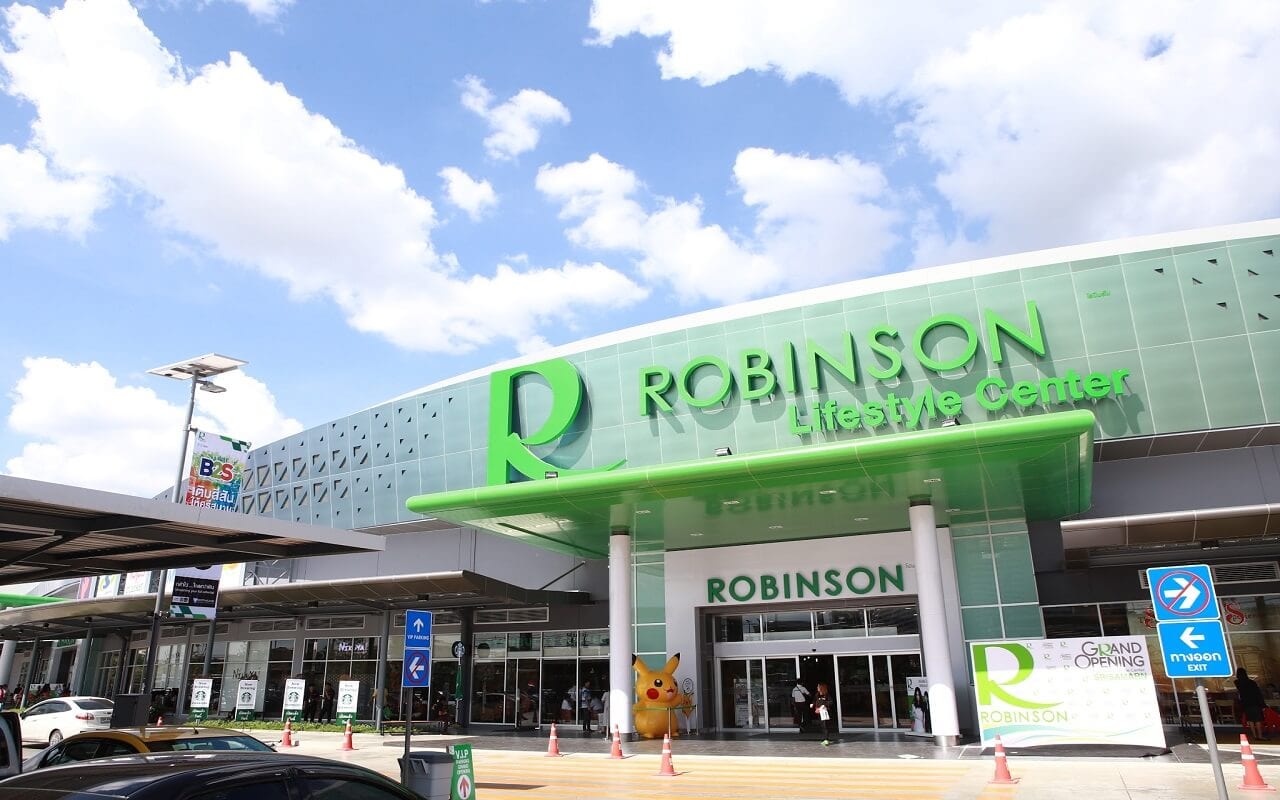
Tag: pharmacy retail

  • Robinsons Retail Expands Network Beyond 4,800 Outlets Across the Philippines

    Robinsons Retail Expands Network Beyond 4,800 Outlets Across the Philippines

    Robinsons Retail Holdings Inc. Now runs over 2,700 branches alongside more than 2,100 franchised pharmacy locations nationwide. Group president and chief executive officer Stanley Co leads the business alongside chair Robina Gokongwei-Pe and director Lance Gokongwei.

    Franchised storefronts under TGP The Generics Pharmacy form the 2,100-door network, while core corporate banners cover food, drugstores, department stores, hardware, appliances and electronics, toys, mass merchandise, beauty, pet retail, lifestyle sneakers and motorcycles.

    The business trace its start to a single Robinsons Department Store launched in Ermita in 1980 by late founder John Gokongwei Jr., who opened the retail location himself after prospective department store tenants declined to lease space in his commercial center.

    Scale Across Formats

    Today the multi-format structure handles volume purchasing across distinct supply chains, from neighborhood pharmaceuticals to shopping mall anchor units.

    Gokongwei-Pe, who entered the business in 1984 as a warehouse receiving clerk, logged 41 years of service alongside James Go at 46 years and Lance Gokongwei at 38 years. Go serves as vice chair, while Lance Gokongwei leads parent conglomerate Gokongwei Group.

    Logistics Realities and Operating Margins

    Running separate formats under one corporate umbrella forces Robinsons Retail to balance differing margin profiles and supply chain complexities. Grocery, pharmacy and mass merchandise demand rapid inventory turnover and tight distribution cycles, whereas fashion, footwear and consumer tech expose working capital to higher holding costs and obsolescence risk.

    Rival operators like SM Retail maintain denser exposure to large-format department stores and hypermarkets, whereas Robinsons has pushed aggressively into franchised medicine counters and neighborhood specialty niches. That pharmacy exposure delivers defensive cash generation when discretionary spending contracts, but franchise networks offer lower revenue per square meter than corporate-owned flagship boxes.

    Early Mechanics at Ermita

    Initial operations relied on basic manual systems and decentralized stock control. At the Ermita depot, manual inventory clerks handled physical receiving and handwritten documentation on carbon paper without automated backup power systems or barcode logistics. The group has since replaced those manual processes with central procurement workflows, integrated vendor management and dedicated inventory tracking across regional distribution hubs.

    Lance Gokongwei began on the department store floor ticketing apparel during the late 1980s before joining executive management. The group recently recognized 85 staff members who have spent 25 years or more with the operating company.

    Next Capital Milestones

    Management attention remains fixed on store expansion density across provincial growth corridors outside Metro Manila, particularly through drugstore additions and community supermarket footprints. Investors will track whether the retail holding firm can lift trading margins across its non-food retail banners as supply chain automation and direct vendor programs roll out nationwide.

  • Jessica Sepel Tracks Decade-Long Shift to Preventative Wellness

    Jessica Sepel Tracks Decade-Long Shift to Preventative Wellness

    Consumer wellness is experiencing a fundamental change as shoppers move away from reactive remedies toward proactive health routines, according to Jessica Sepel in September 2026.

    Over the past decade, consumers have increasingly prioritized daily habits and preventative measures to safeguard their future wellbeing rather than waiting to address emerging health concerns.

    Surging Adoption Meets Low Shelf Satisfaction

    Shoppers are replacing reactive remedies with preventative routines. They are buying supplements, specialized nutrition, and metabolic support earlier in life. Women in transition stages try an average of 3.3 more interventions than women at other life stages, and 2.9 more than male consumers.

    Retail shelves have failed to keep pace. In the consumables category, 90 per cent of surveyed women in menopause have purchased at least one wellness product. Only 35 per cent report that the product met their health requirements. The shortfall stems from generic formulation strategies that ignore sex-differentiated hormonal aging.

    The Healthspan Deficit Driving Basket Size

    Underlying the commercial disconnect is a structural gap between lifespan and healthspan. Women outlive men by roughly five years worldwide. However, they spend 25 per cent more of their lives managing illness or disability.

    This disparity drives steady demand across Asia-Pacific markets, including China, India, and Japan. Retailers stocking unisex longevity lines miss out on high-spending shoppers seeking targeted hormone, sleep, and metabolic formulas. Brands offering verified clinical efficacy can take market share directly from legacy multivitamin labels.

    Category Shifts Across Asian Pharmacies and E-Commerce

    For health retailers and cross-border platforms, preventative longevity signals a structural break from quick-fix symptom treatments. Wellness brands built on broad lifestyle positioning now face buyers demanding targeted clinical data before committing to repeat subscriptions.

    Supply chain priorities are shifting for vitamin and dietary supplement manufacturers. Formulators who relied on standard herbal blends must invest in specialized compounds for hormonal transitions, bone density, and cellular aging to protect distribution in major pharmacy chains.

    Earlier Baseline and Future Commercial Benchmarks

    The product gap follows years of longevity protocols built on male clinical baselines. Research published in December 2024 by JAMA Network Open documented systematic healthspan-lifespan disparities across 183 World Health Organization member states, opening doors for direct-to-consumer disruption.

    Manufacturers and retail category buyers will review updated demographic conversion metrics at the upcoming St. Moritz Longevity Forum proceedings as brands prepare 2027 product pipelines for key Asian and Western consumer markets.

  • China Jo-Jo finds gold online

    China Jo-Jo finds gold online

    While its physical stores and wholesale revenues slipped, pharmacy retailer China Jo-Jo Drugstores recorded an increase of about 96.7 per cent in its online revenues during the third quarter ended December 31.

    Through its own retail stores (59 in Zhejiang Province), wholesale distribution and online pharmacy, the New York-listed company is a leading provider of pharmaceutical and healthcare products in China.

    Overall, its revenues of about $24.7 million for the period were up 15.9 per cent. Its retail drugstores brought in $12.9 million, down 2.7 per cent, while its wholesale businesses netted about $3.1 million, a decrease of of 13.8 per cent. However, its online pharmacy revenue rose 96.7 per cent to total about $8.6 million.

    This gave the company a gross profit of about $4.8 million for the quarter, up 52.3 per cent on the previous year. The online profit soared 194.1 per cent to about $1.8 million, while its stores had a 20.3 per cent increase to about $2.8 million.

    Over the nine months of the financial year, revenue totalled $68.6 million, up 22 per cent, with gross profit up 56.1 per cent to about $13.2 million.

    Sales and marketing expenses grew by $1.1 million, or 50.5 per cent, mainly because of higher labour costs and service fees for its eCommerce platforms.

    “We are seeing improvements in gross margin from increased volume in our online business as our revenue mix continues to shift to our fast-growing online business,” says chairman/CEO Lei Liu, who predicts a strong quarter to end the fiscal year.

    “Investments and efforts in building critical mass to service China’s consumer needs in the pharmacy space is taking shape, creating new opportunities to diversify our revenue base.”

    Closer collaborations with large local pharmaceutical vendors are also providing cost advantages. Co-operation with business-to-consumer online vendors have expanded, with the company’s products listed on such platforms as Taobao, JD and www.yhd.com and customers being directed back to China Jo-Jo’s website.

    Meanwhile, the company continues to benefit from working with large insurance companies such as The People’s Insurance Company of China. Commercial health insurance in China continues to expand to supplement the nation’s social health insurance.

    Lei Liu says there is a “relentless call” for healthcare reform in China, including an end to hospitals dominating prescription sales. Meanwhile, China Jo-Jo has also seen its loyalty program expand to embrace more than 2 million customers.